-
-
Presentation
-
Introduction
-
Uniqueness
-
Problem Statement
-
Proposed Solution
-
Impact and Target Audience
-
Feasibility and Challenges faced and how we overcame it
-
Thank You
Call the Live AI Voice Agent now
+1 657-332-0285
Inspiration
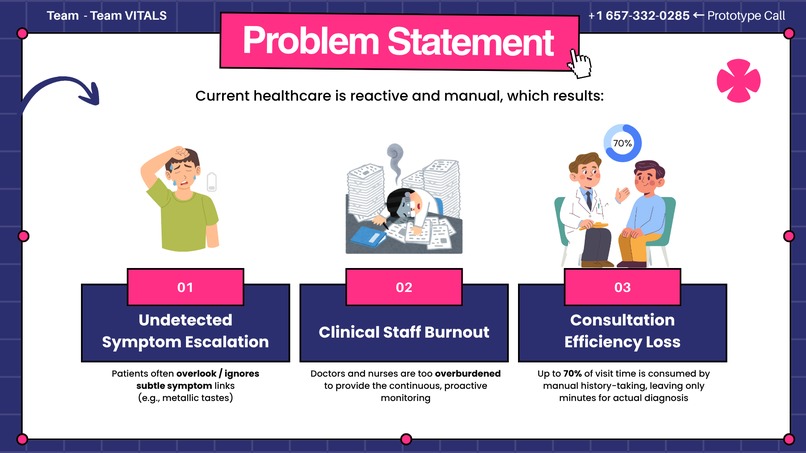
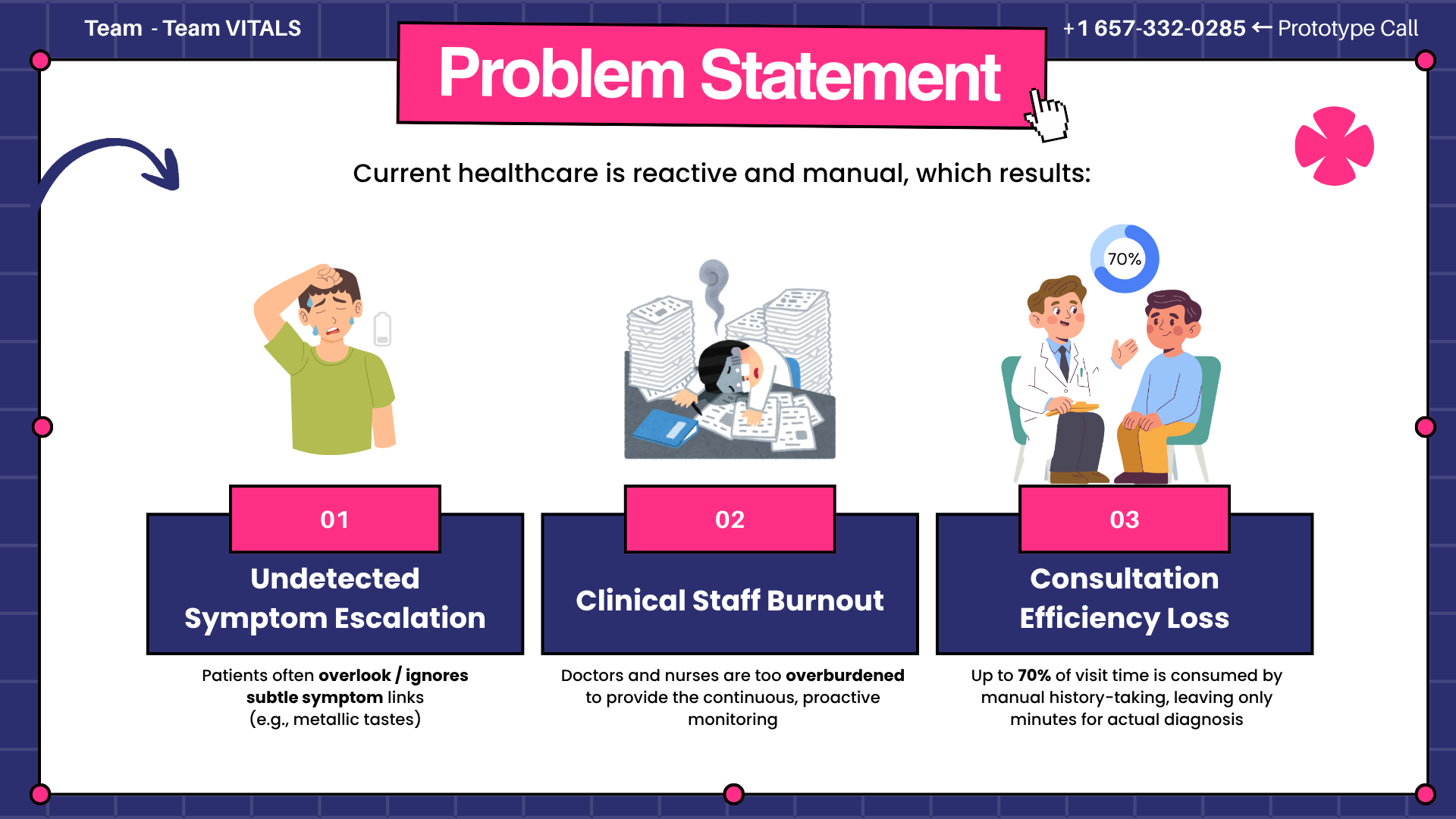
Current healthcare is largely reactive and manual. We were motivated by the fact that patients often ignore subtle symptom links, such as a metallic taste in tea, and that doctors lose up to 70% of consultation time to repetitive history-taking. We built VITALS to bridge the care gap between overburdened clinical staff and chronic patients, aligning with SDG 3 (Health and Well-being).
What it does
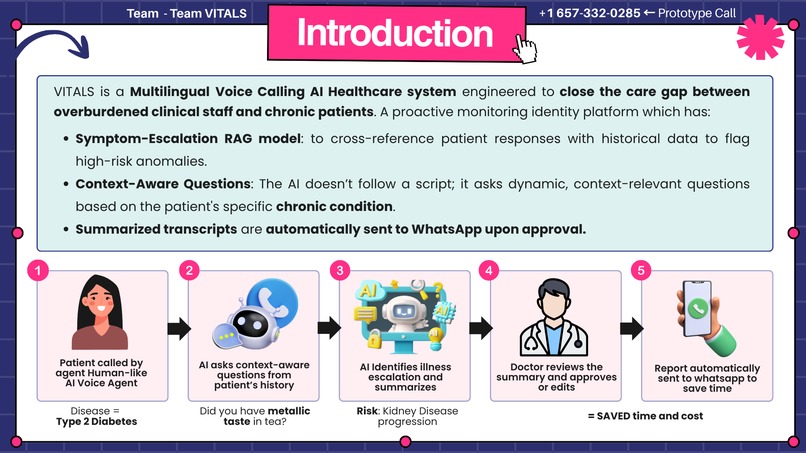
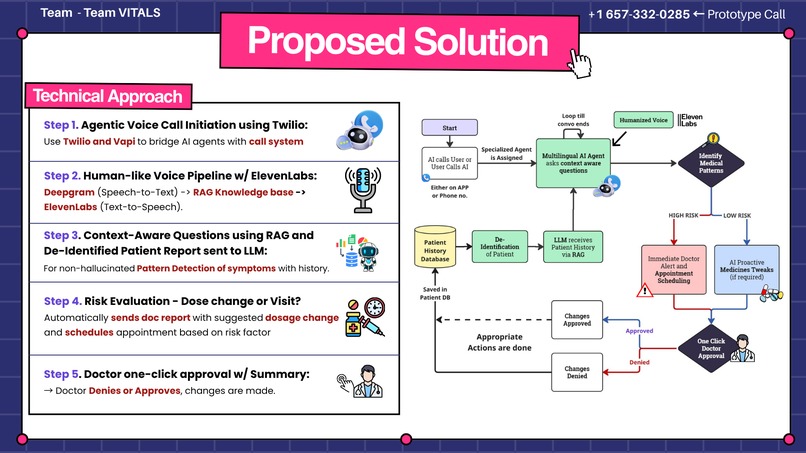
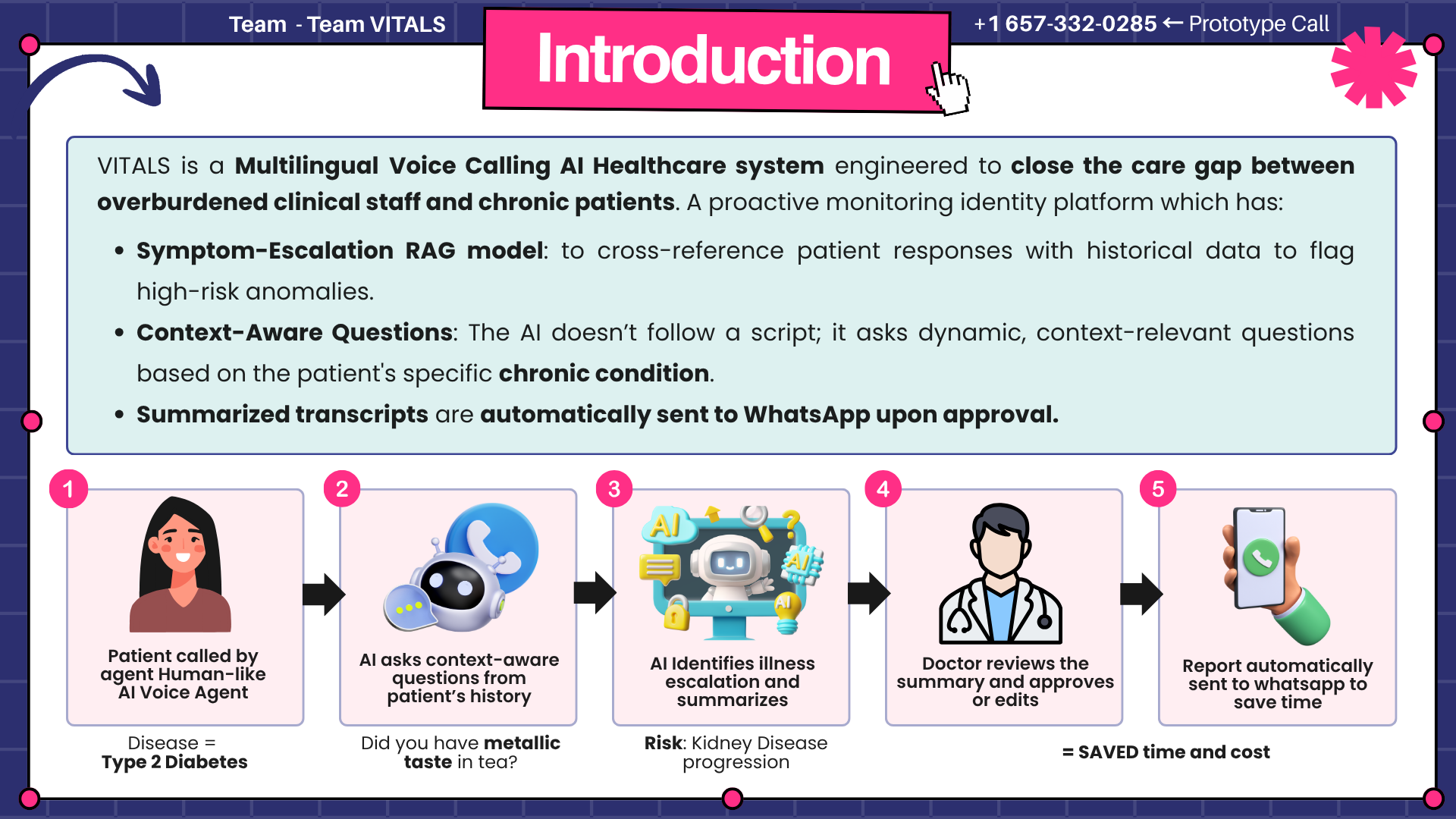
VITALS is a RAG-powered multilingual AI voice agent designed to detect early illness escalation.
- It conducts automated, human-like check-in calls to monitor chronic patients autonomously.
- The system uses a Symptom-Escalation RAG model to cross-reference patient responses with historical data to flag high-risk anomalies.
- It asks dynamic, context-aware questions based on the patient's specific chronic condition rather than following a script.
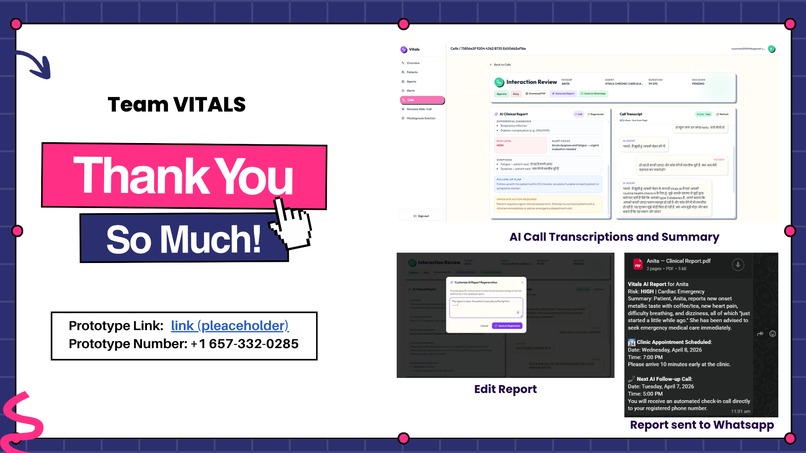
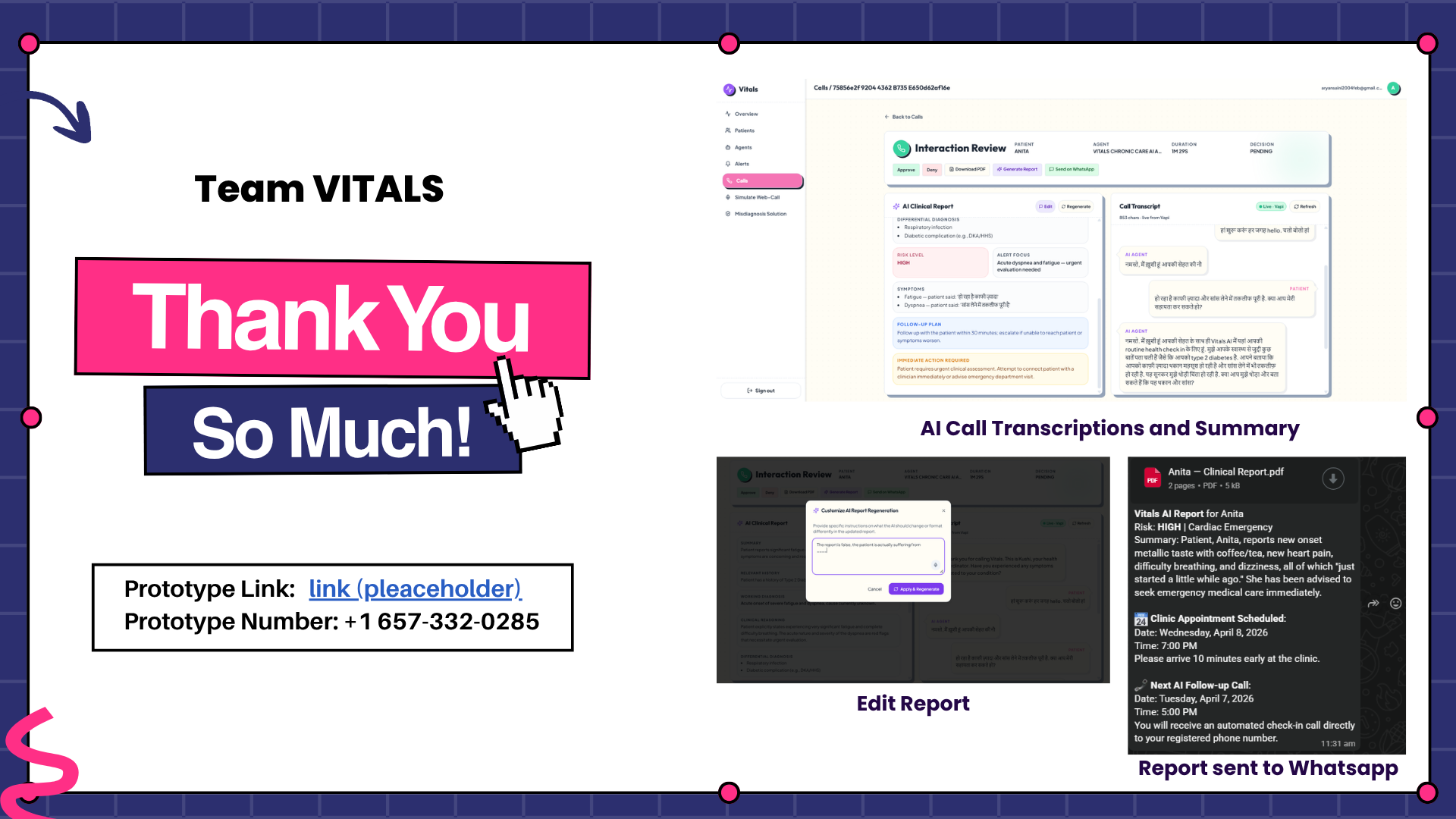
- Summarized clinical transcripts and reports are generated for doctor approval.
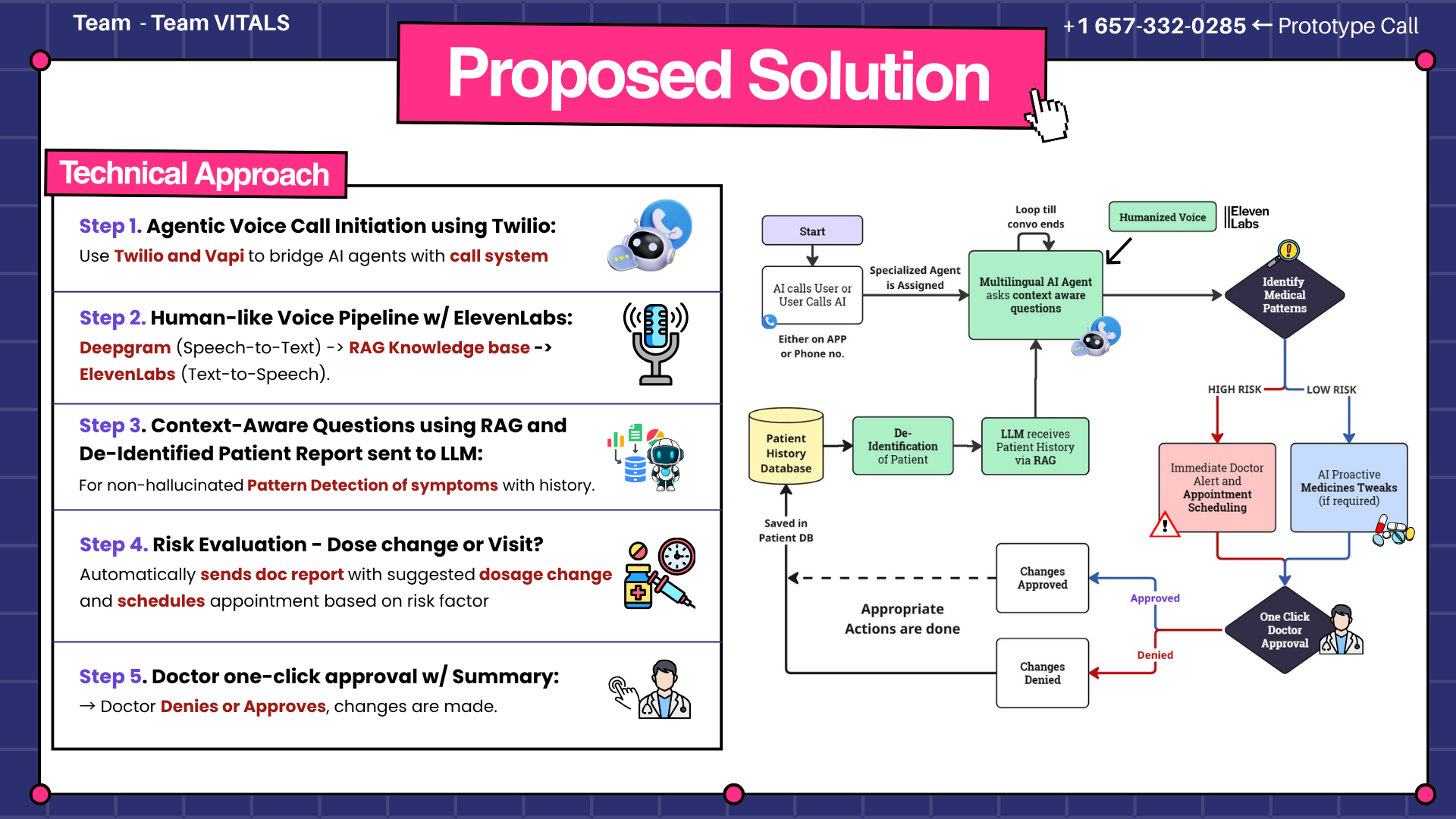
- Upon approval, actions like dosage changes or emergency appointments are automatically sent to the patient via WhatsApp.
How we built it
We utilized a cutting-edge AI stack to ensure a seamless and professional experience:
- Voice & Telephony: Built using Twilio and Vapi to bridge AI agents with the telephony system.
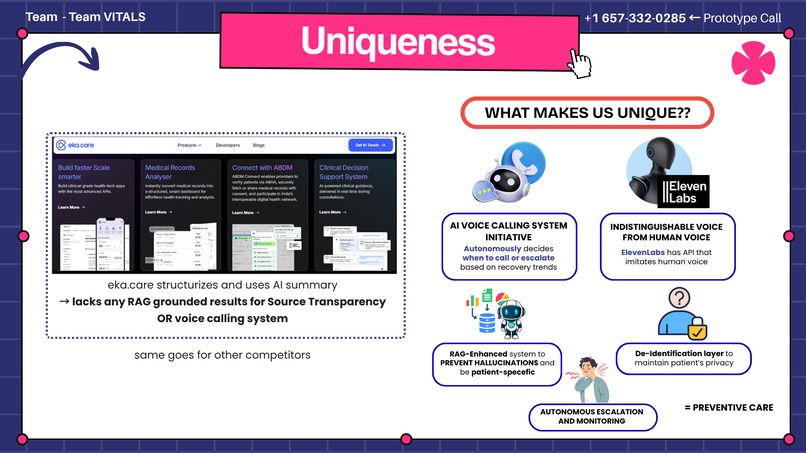
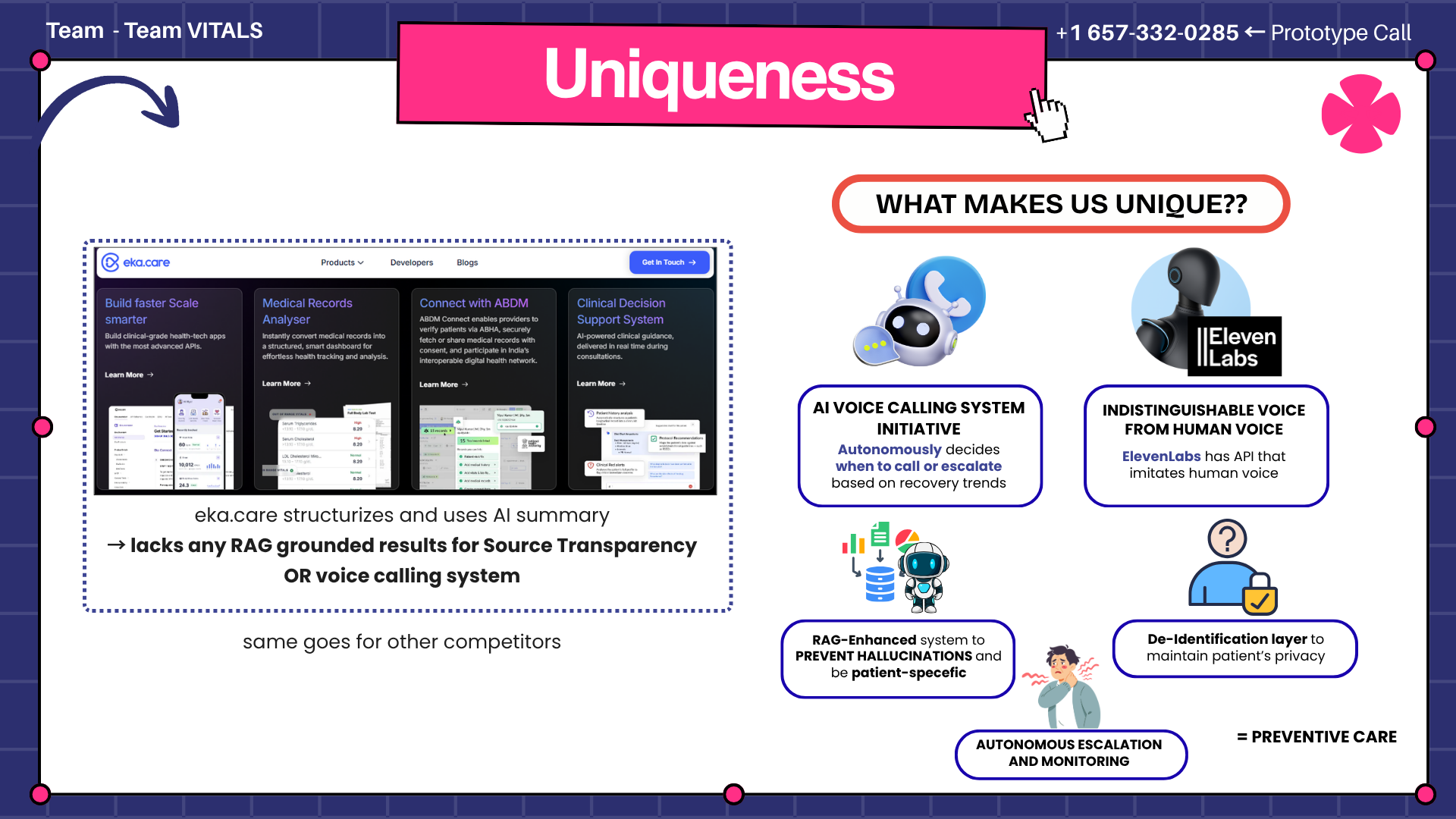
- Human-like Pipeline: Integrated Deepgram for Speech-to-Text and ElevenLabs for indistinguishable Text-to-Speech.
- Intelligence: Leveraged Retrieval-Augmented Generation (RAG) to prevent hallucinations and maintain source transparency.
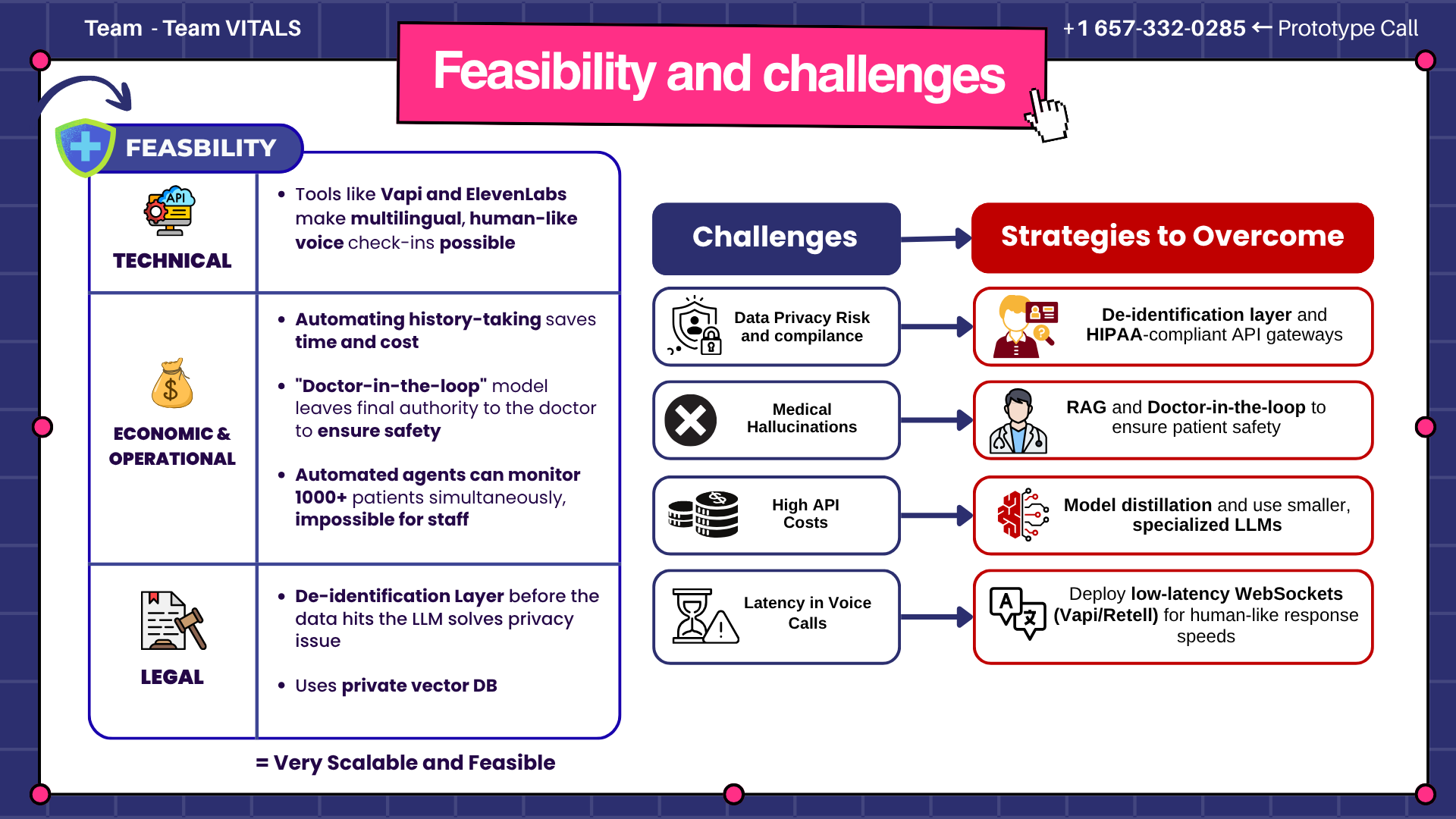
- Privacy: Developed a De-identification layer to strip patient identities before data hits the LLM.
Challenges we ran into
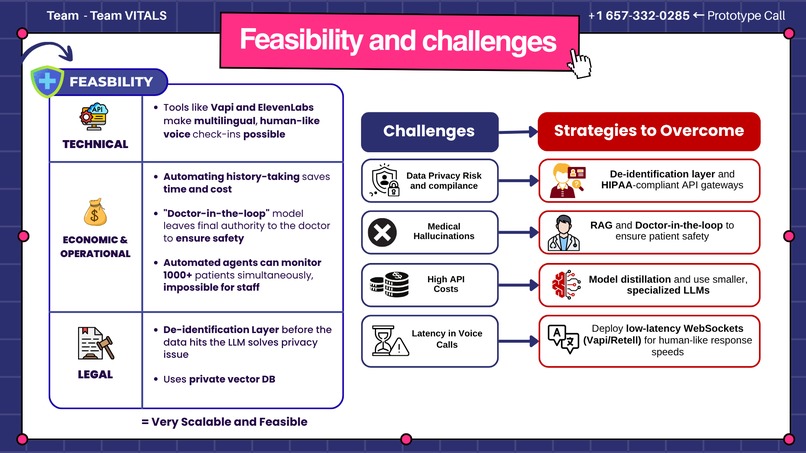
- Medical Accuracy: Addressing potential "Medical Hallucinations" required a strict RAG-grounded approach and keeping a doctor-in-the-loop for final safety.
- Latency: Reducing voice call delays required implementing low-latency WebSockets (Vapi/Retell) to maintain natural conversation speeds.
- API Costs: Managing high costs for specialized models necessitated strategies like model distillation and the use of smaller, specialized LLMs.
Accomplishments that we're proud of
- Human-Like Interaction: Successfully engineered an AI voice pipeline that is indistinguishable from a human voice, fostering the trust necessary for chronic patient monitoring.
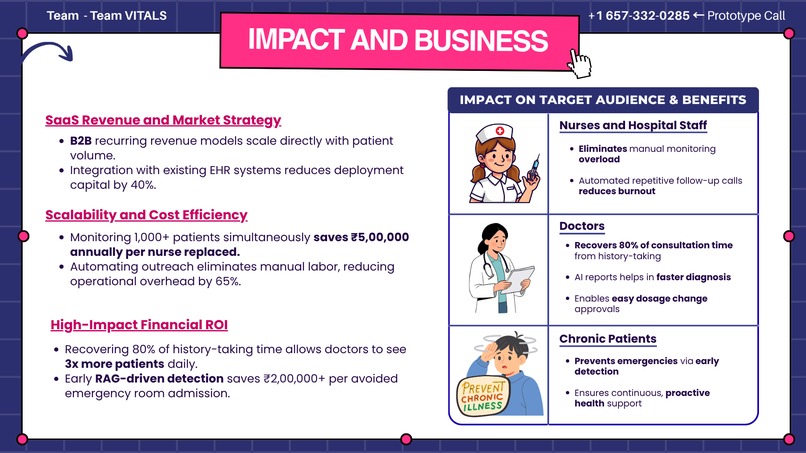
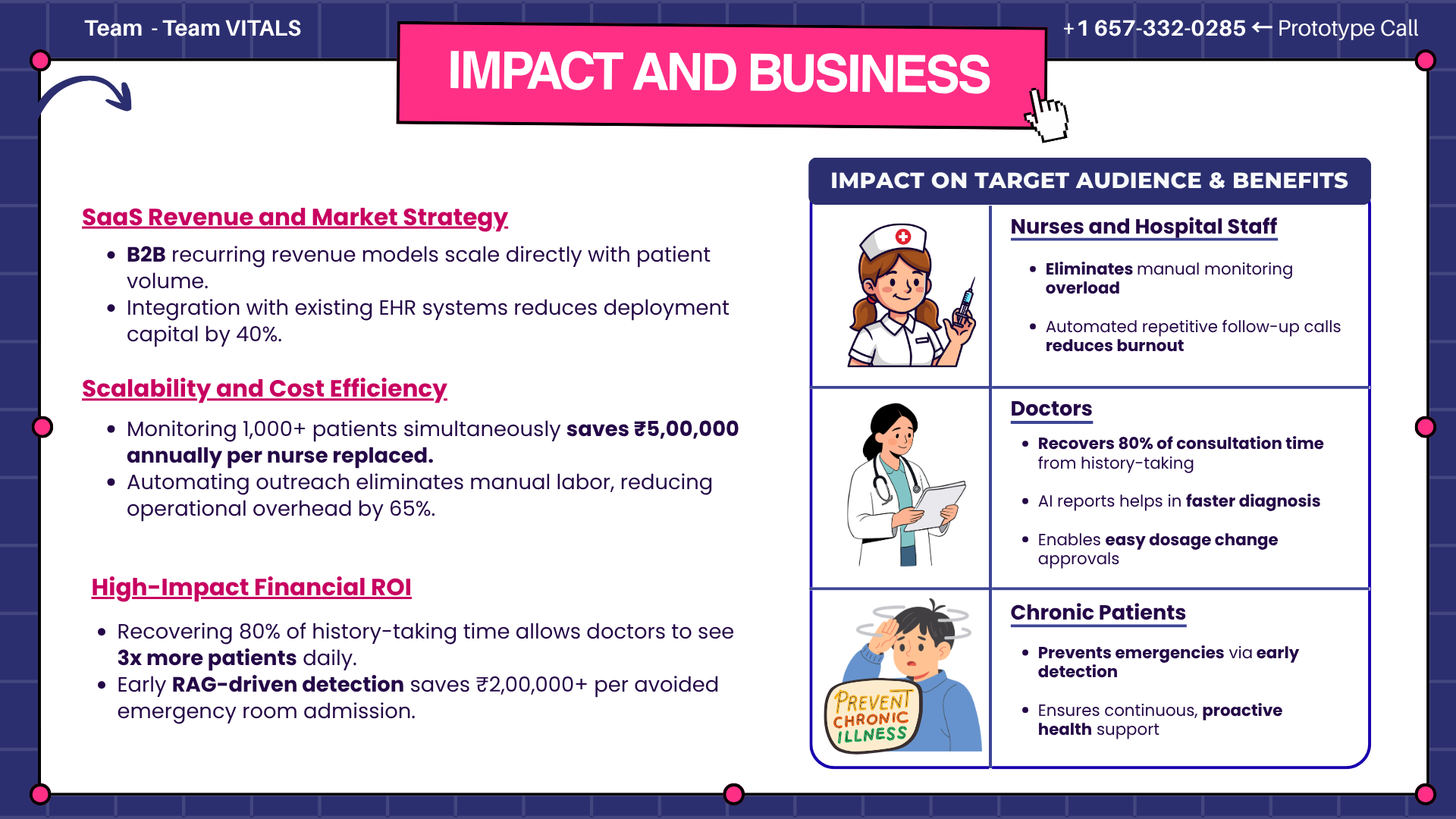
- Clinical Time Recovery: Developed a system that automates the initial history-taking process, which typically consumes up to 70% of a doctor's consultation time.
- Preventive Healthcare: Implemented a RAG-driven detection system that identifies high-risk anomalies early, helping to prevent the progression of chronic illnesses into acute emergencies.
- Staff Burnout Reduction: Designed an automated outreach framework capable of handling repetitive follow-up calls, reducing the administrative monitoring burden on nursing staff by an estimated 65%.
- Scalable Monitoring: Built an infrastructure that allows for monitoring hundreds of patients simultaneously, providing a level of proactive care that is impossible for manual staff alone.
What we learned
We learned that Source Transparency is critical in health-tech; unlike competitors that may lack grounded results, our RAG-enhanced approach provides the clinical-grade accuracy needed for diagnosis. We also gained experience in overcoming legal and privacy hurdles through the implementation of a de-identification layer and private vector databases.
What's next for VITALS
Our roadmap includes deeper integration with existing EHR systems to reduce deployment capital by 40%. We also plan to expand our autonomous escalation capabilities to better handle recovery trends and continue developing proactive support for chronic populations globally.
Experience the live prototype: Call +1 657-332-0285


Log in or sign up for Devpost to join the conversation.