Inspiration
The idea for VitalRoute came from something we've all seen but rarely think twice about — an ambulance stuck behind a wall of cars, siren blaring, going nowhere. It's easy to blame the drivers in front, but the truth is most of them simply don't realize an ambulance is approaching until it's right behind them, and by then it's too late to move safely. That one realization — that this isn't a "people don't care" problem, it's an "information" problem — is what got us thinking. If drivers just knew a few seconds earlier, they'd move. So why isn't anyone telling them?
What we learned
Digging into the research, the scale of the problem hit harder than we expected — response times in India averaging well beyond the golden hour, ambulances literally arriving too late in documented cases. We also learned that most existing solutions solve half the problem: they alert the ambulance driver about traffic, or they alert traffic police, but almost nothing directly alerts the actual drivers blocking the road — the people who can act on it immediately. That gap became the core of what we wanted to build.
How we built it
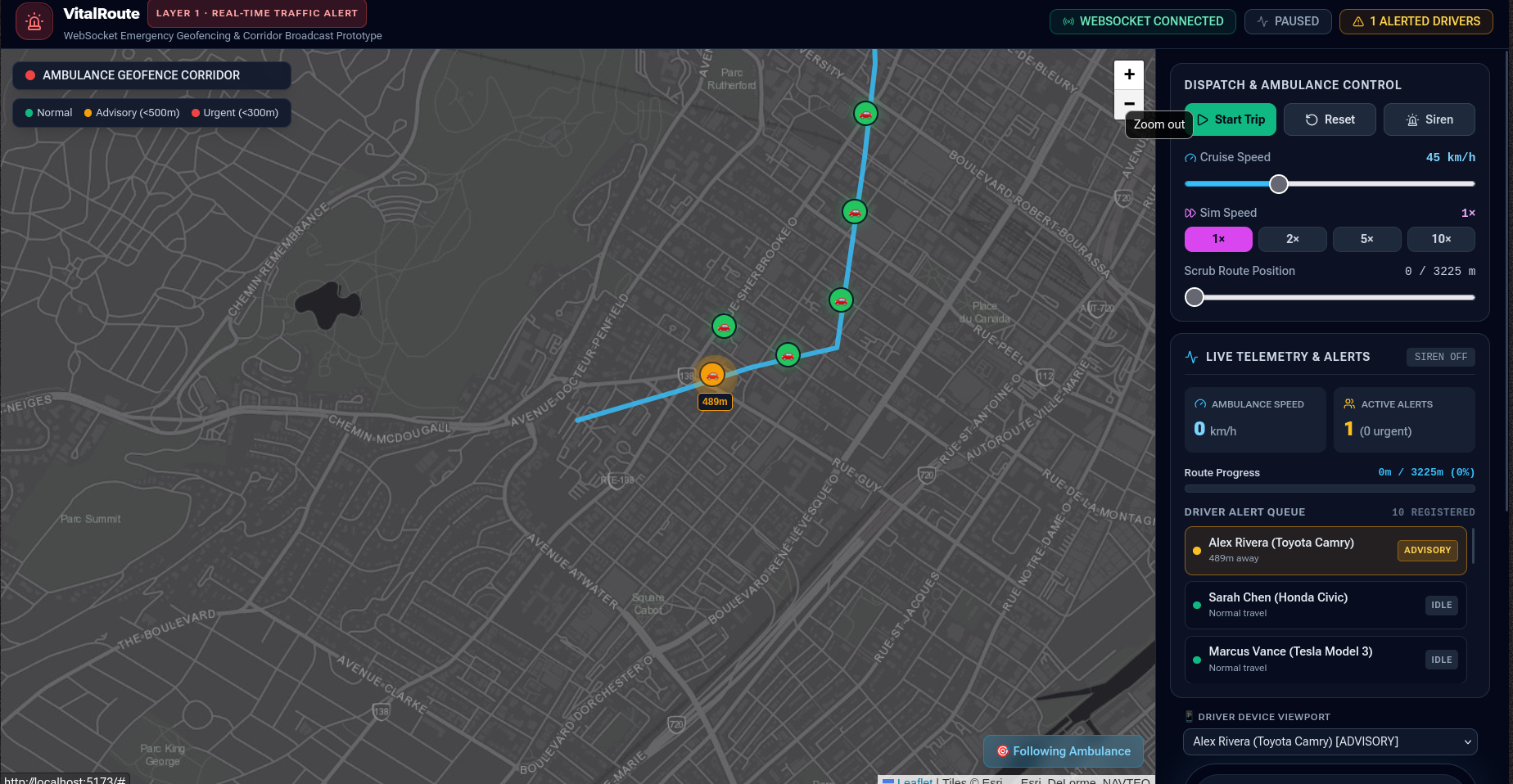
We split VitalRoute into two connected layers. The first is a real-time traffic corridor — the ambulance's live location is broadcast, and nearby drivers within a geofenced radius get a push alert telling them exactly where to move and from which direction the ambulance is coming. The second layer runs in parallel: while the ambulance is en route, the patient's medical profile — conditions, allergies, blood type — is sent ahead to the nearest appropriate hospital, so the ER can prep before the patient even arrives.


Log in or sign up for Devpost to join the conversation.