-
-
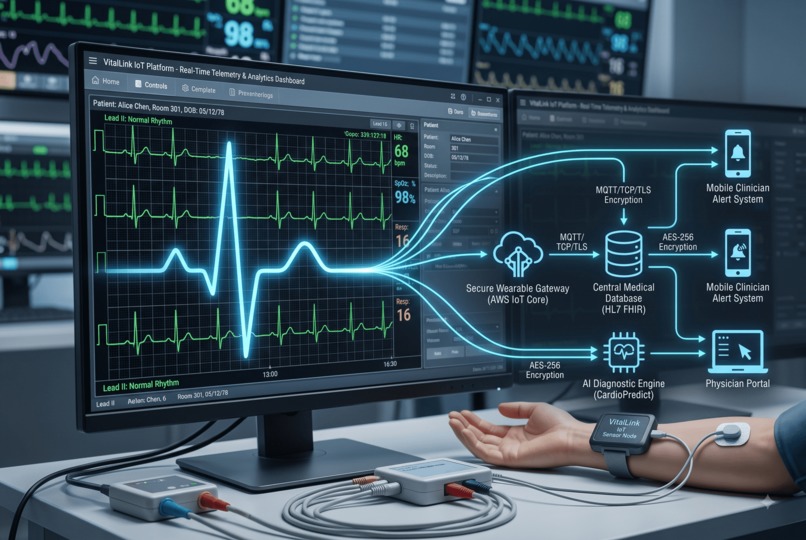
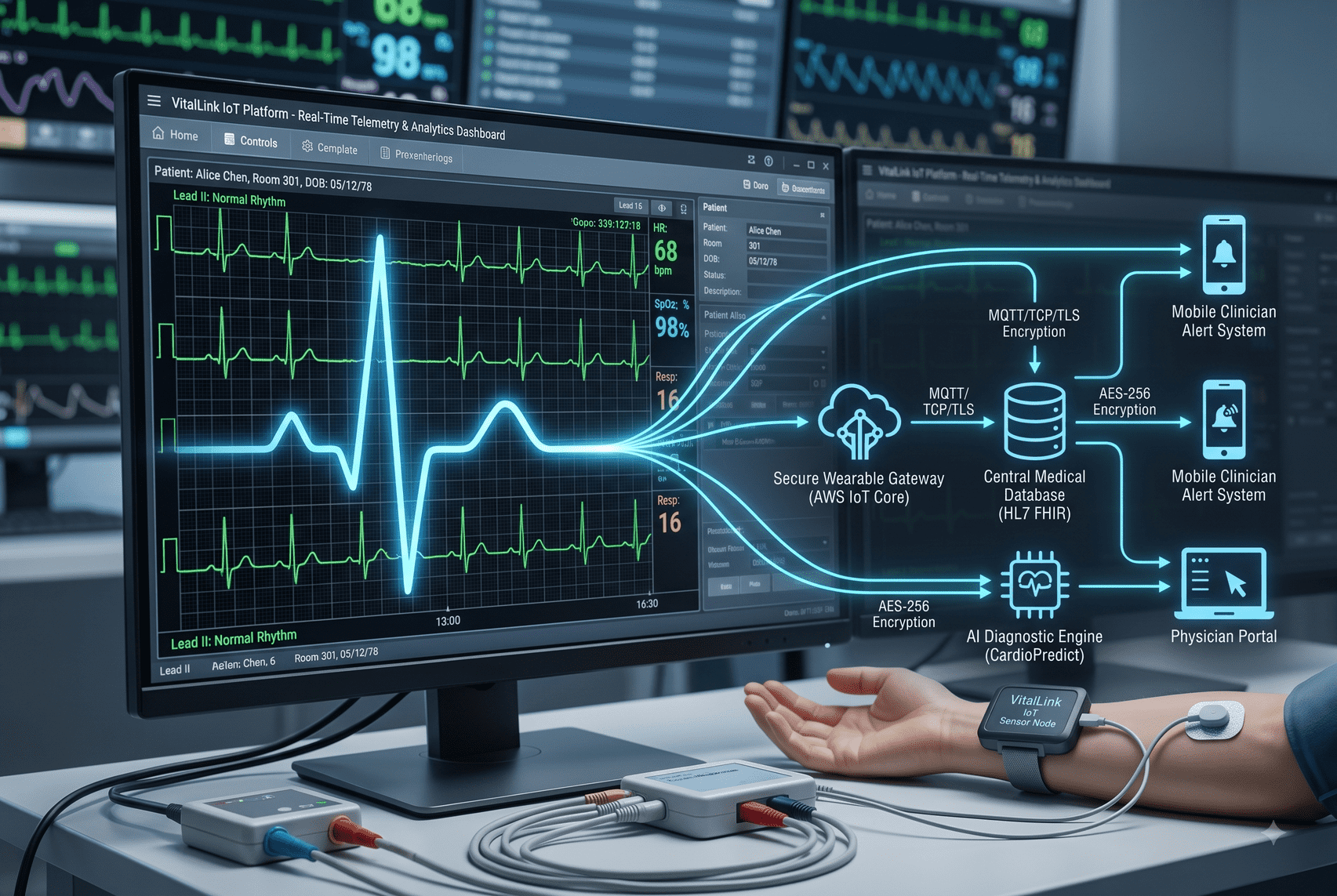
Real-time ECG telemetry streaming from the edge sensor node to AWS IoT Core and the clinician dashboard.
-
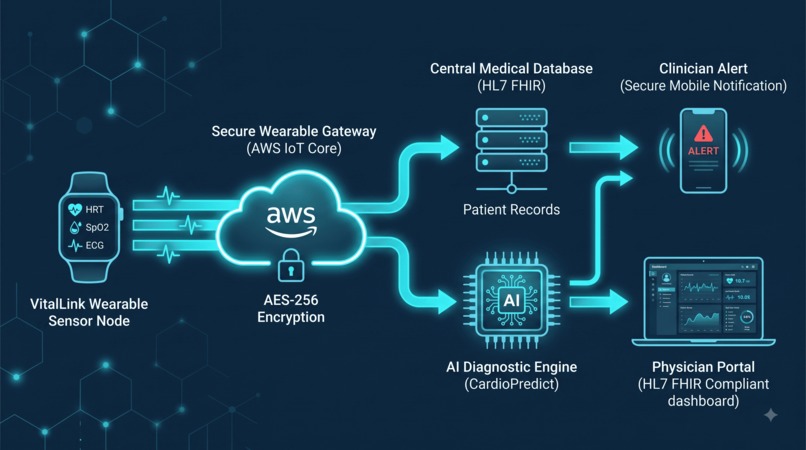
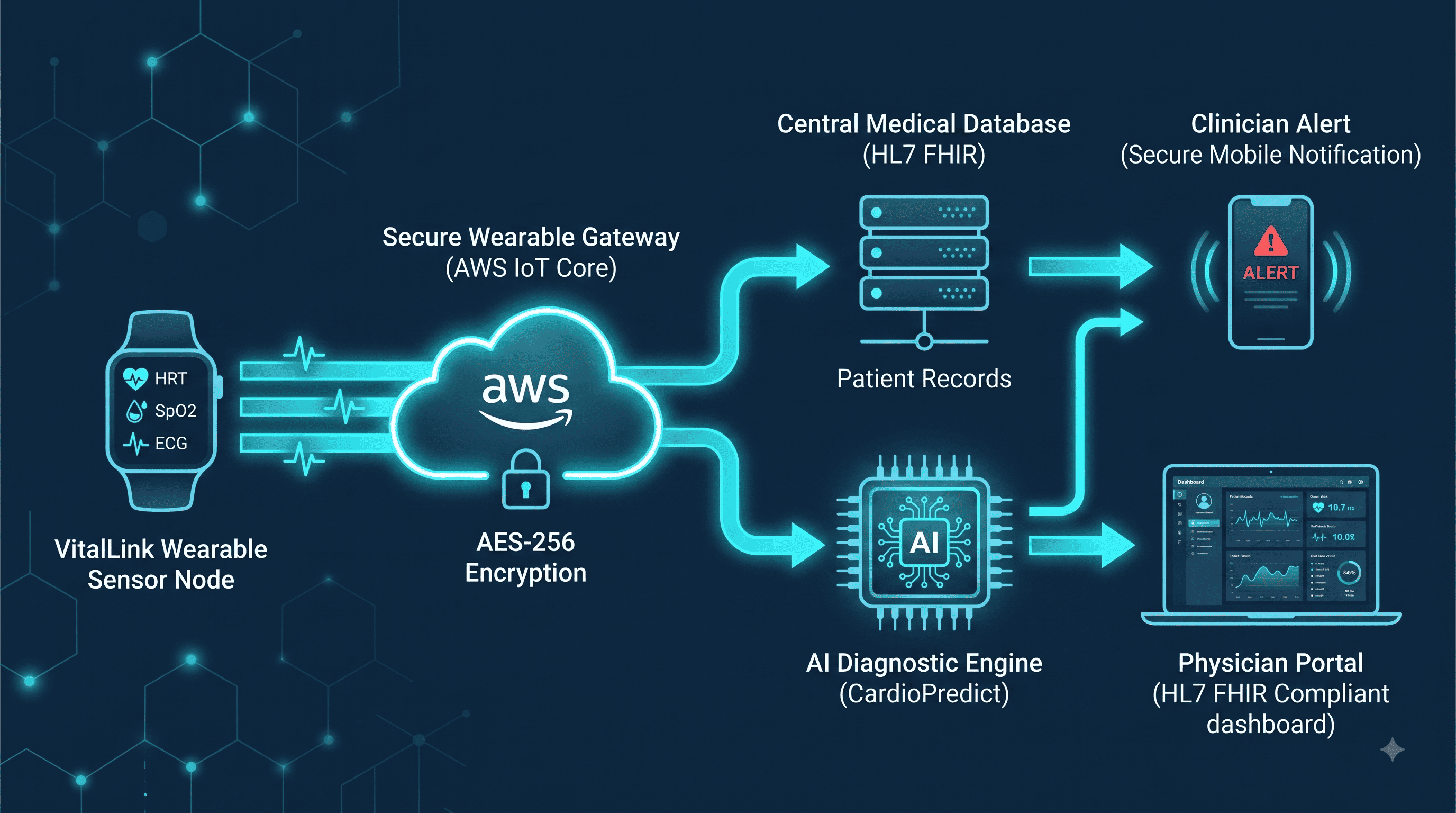
Secure data flow overview: from wearable node via AES-256 to the cloud, AI diagnostics, and HL7 FHIR portal.
-
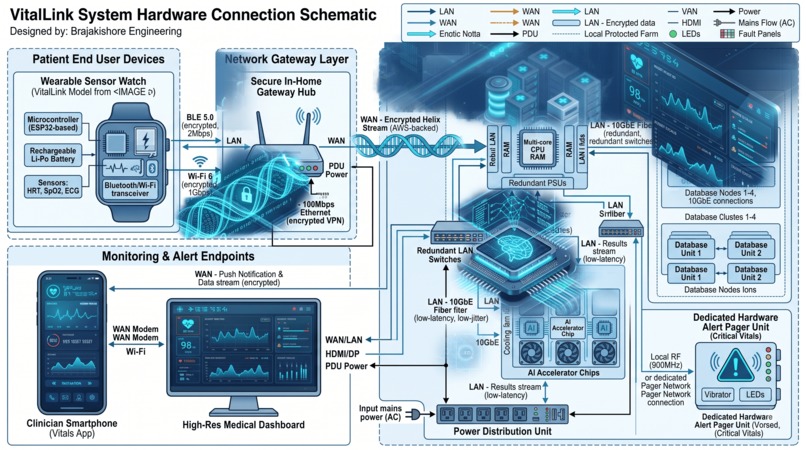
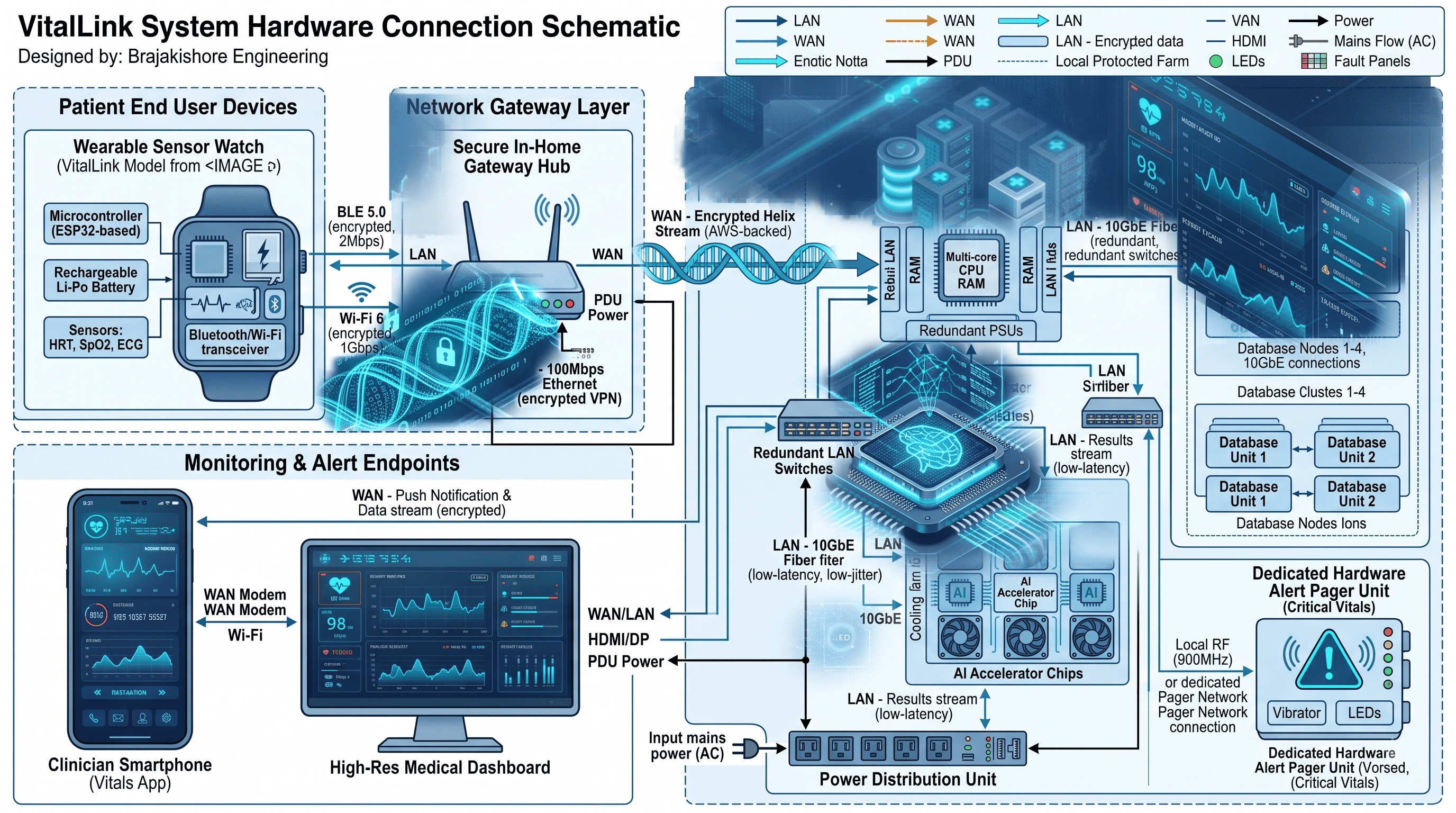
Comprehensive hardware schematic detailing ESP32 edge nodes, network gateways, and AI processing server clusters.
-
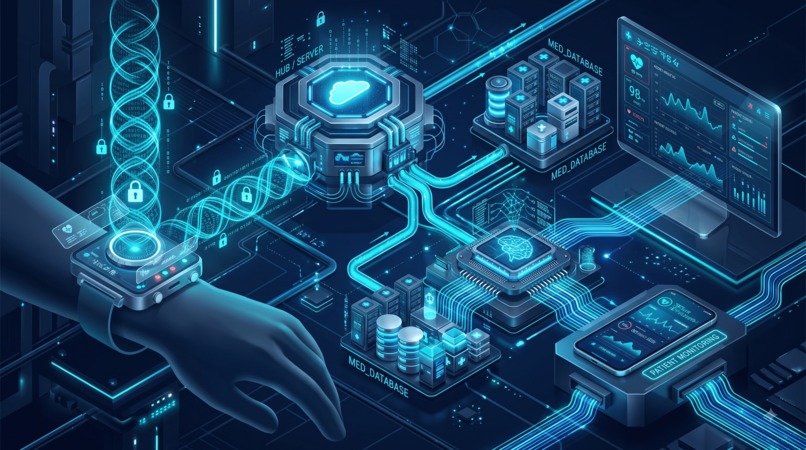
3D visualization of VitalLink's secure data pipeline, routing encrypted patient vitals to the CardioPredict AI engine.

Inspiration
There is a critical need to bridge the accessibility gap in continuous patient monitoring, particularly in rural or under-resourced areas where immediate specialized care is scarce. We were inspired to upgrade standard, localized diagnostics into an autonomous, real-time telemetry network. By doing so, this system ensures that critical health anomalies are detected and acted upon instantly, saving valuable response time and ultimately saving lives.
What it does
VitalLink captures continuous patient telemetry—including ECG rhythms, heart rate, respiration, and SpO2 levels—via an intelligent wearable sensor node. This data is securely streamed to a cloud gateway, where our CardioPredict AI diagnostic agent evaluates the vitals in real-time.
Upon detecting an anomaly or dangerous threshold, the agent acts autonomously. It dispatches priority notifications to a mobile clinician alert system and instantly updates a centralized, secure physician portal for immediate remote intervention.
How we built it
- Hardware & Edge: We engineered the IoT sensor nodes using C and ESP32/Arduino microcontrollers for continuous, low-latency data acquisition, effectively capturing real-time bodily signals.
- Cloud Gateway: We implemented AWS IoT Core to handle secure, high-volume data streams from the wearable nodes.
- Networking & Security: We established robust communication pipelines using MQTT, TCP, and TLS protocols. Every data state is reinforced with end-to-end AES-256 encryption to protect sensitive patient information.
- Database & Compliance: The Central Medical Database is structured around industry-standard HL7 FHIR protocols to ensure strict medical compliance and interoperability.
- AI Engine: The
CardioPredictdiagnostic engine was developed in Python, leveraging machine learning models to analyze streaming telemetry and act as the autonomous decision-making agent.
Challenges we ran into
Handling high-frequency, continuous time-series data from the ECG sensors required heavy optimization on the edge devices to prevent latency and packet loss. Additionally, ensuring that our data pipeline met strict healthcare data security standards (simulating HIPAA compliance) meant we had to rigorously implement AES-256 encryption without bottlenecking the real-time AI inference.
Accomplishments that we're proud of
Successfully deploying an autonomous agent that can not only ingest real-time medical data but also make immediate, accurate routing decisions for emergency alerts. Building a seamless bridge between raw hardware sensors and a secure cloud architecture was a major milestone.
What we learned
We significantly deepened our understanding of embedded systems (C/C++), secure cloud architecture (AWS IoT), and the implementation of medical data standards like HL7 FHIR. We also learned how to optimize Python-based AI models for streaming rather than batch data.
What's next for VitalLink
Expanding the CardioPredict model to recognize a wider array of arrhythmias and integrating Augmented Reality (AR) to provide emergency responders with localized, step-by-step navigation to the patient's exact room or location.
Built With
- aes-256
- arduino
- aws-iot-core
- c
- esp32
- hl7-fhir
- iot
- java
- machine-learning
- mqtt
- python


Log in or sign up for Devpost to join the conversation.