-
-
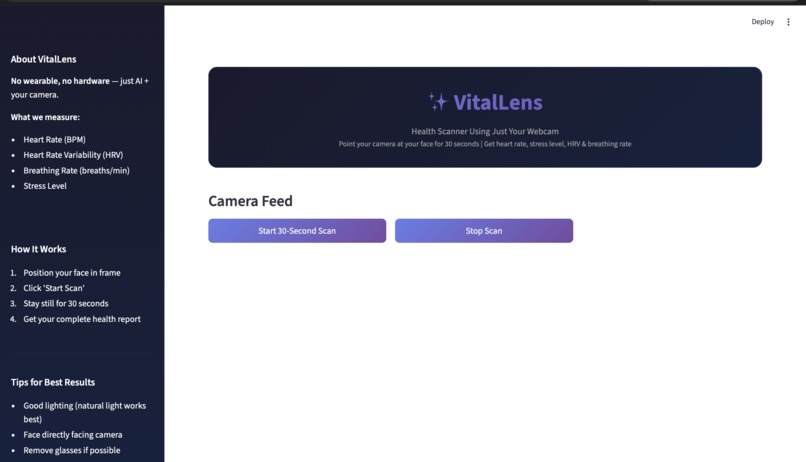
A zero-hardware health scanner. Start your 30-second webcam scan to monitor vitals instantly with an intuitive, user-friendly UI.
-
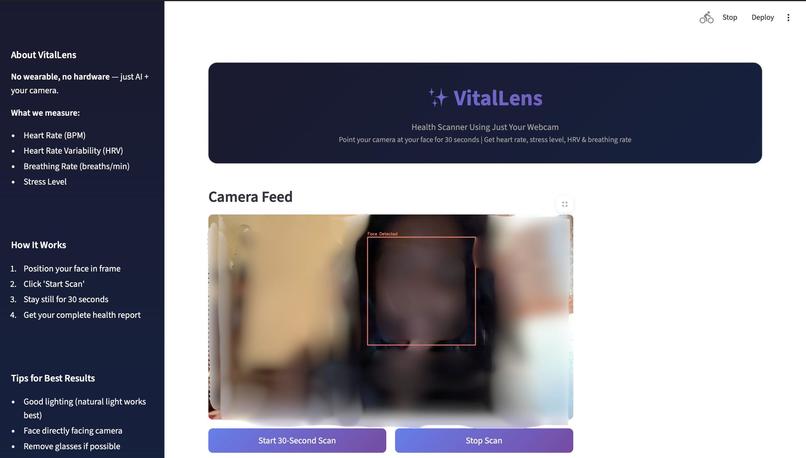
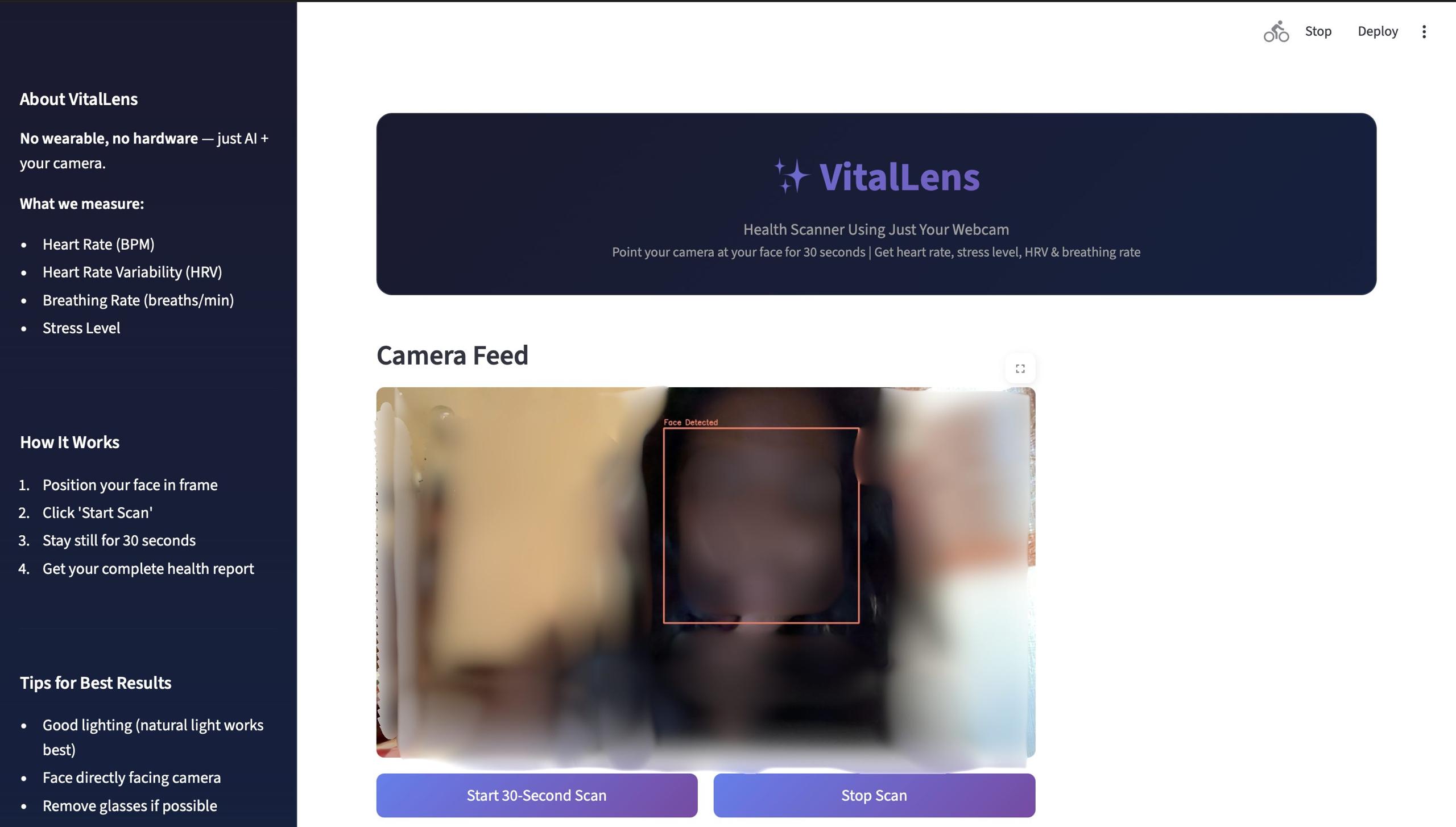
Powered by OpenCV. VitalLens AI isolates skin regions to track micro-vascular changes and extract high-precision heart rate signals.
-
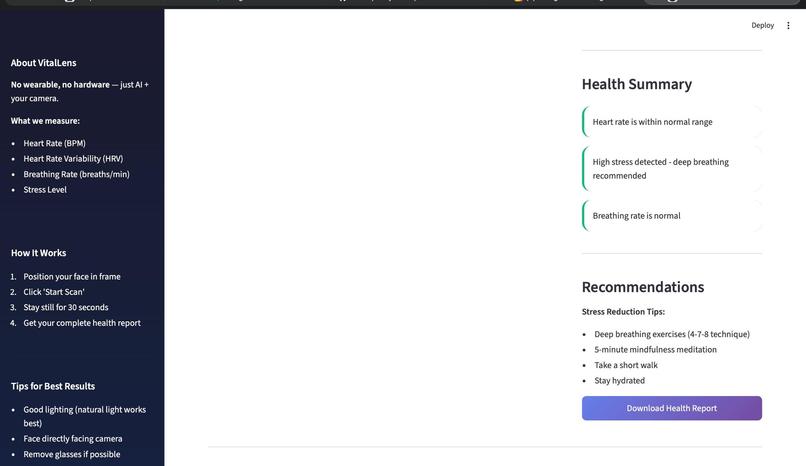
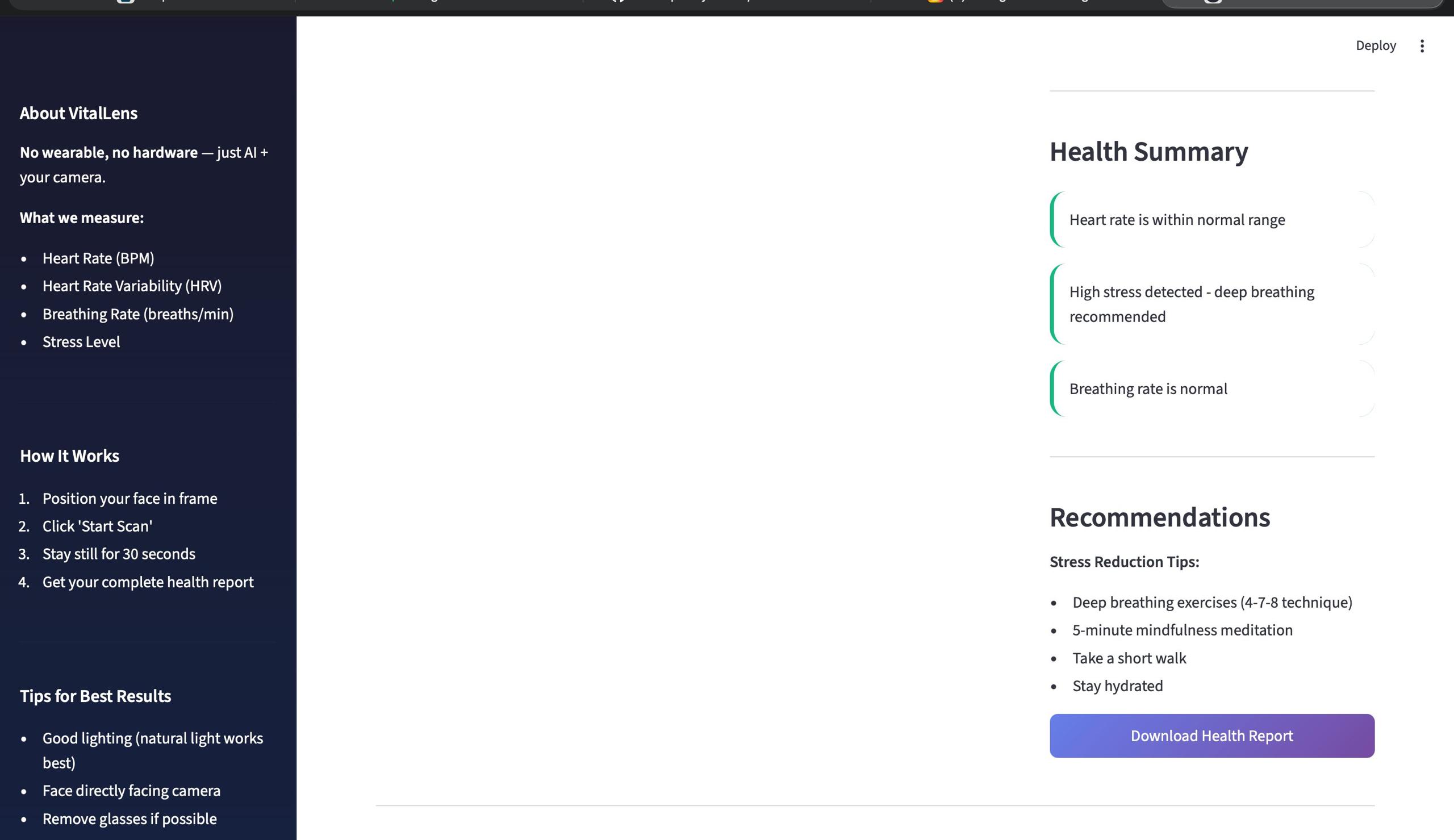
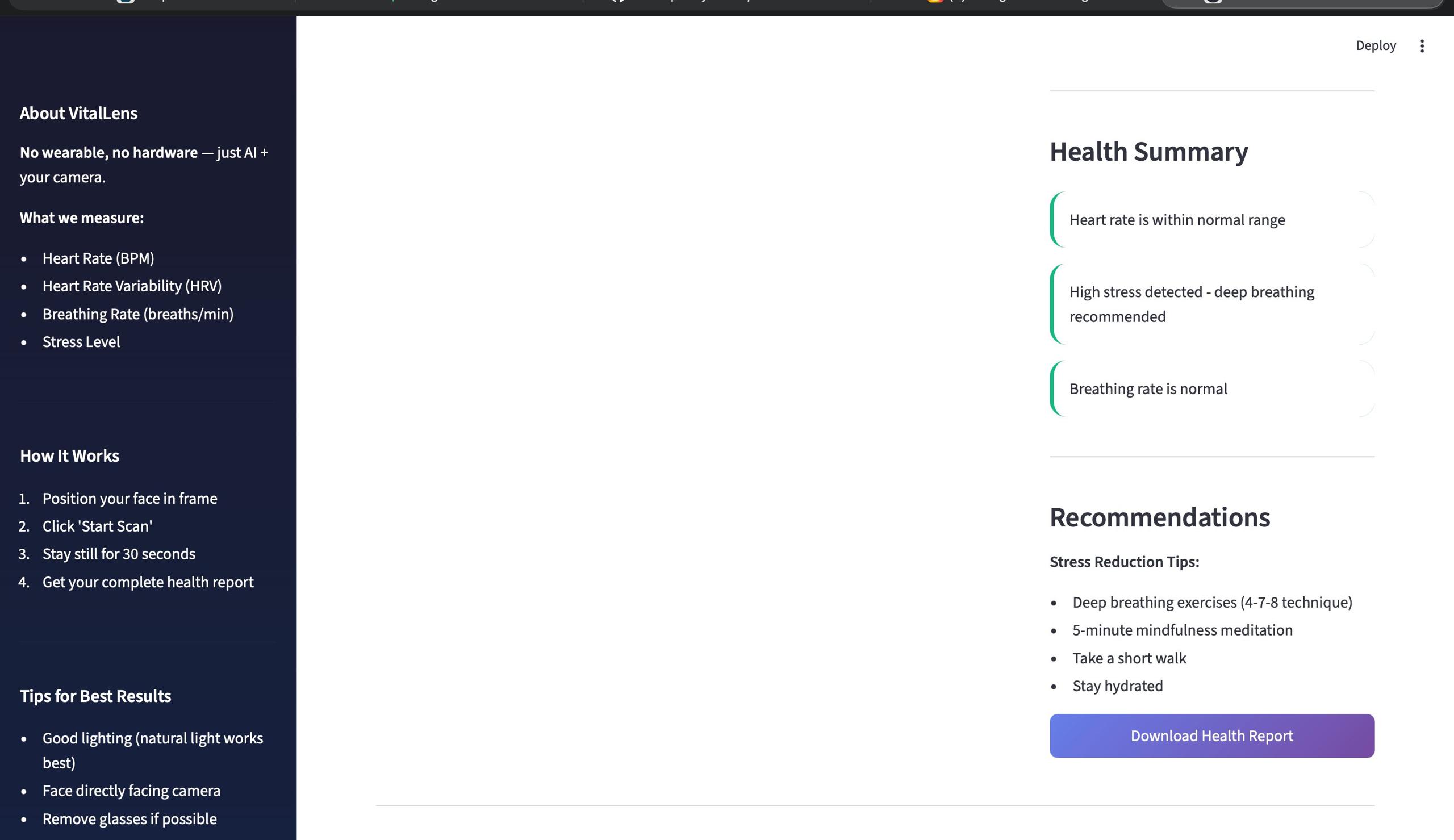
Instant health feedback. Real-time BPM and stress tracking with clear status indicators for immediate physiological awareness.
-
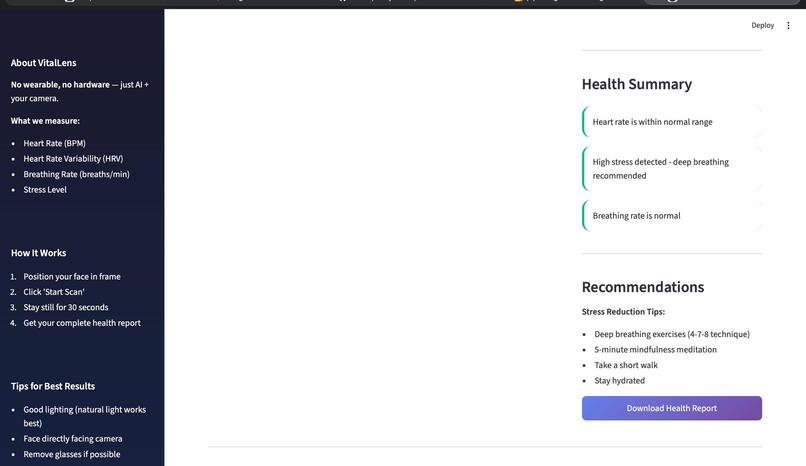
Data-driven wellness. Post-scan reports provide HRV analysis and custom recommendations to help you manage stress effectively.
-
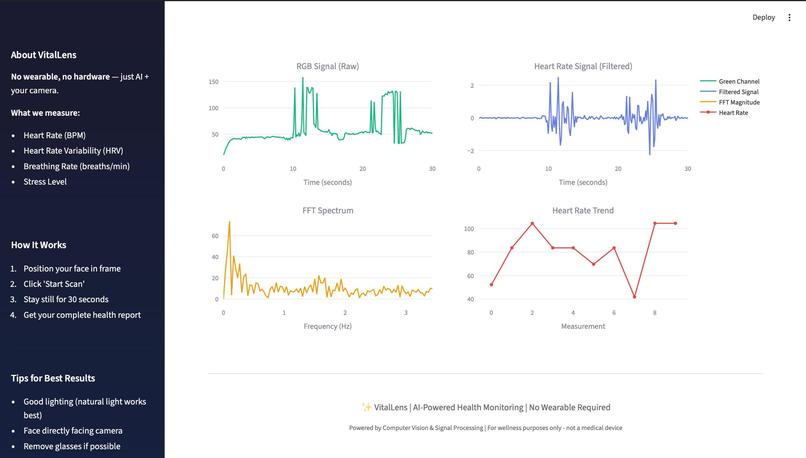
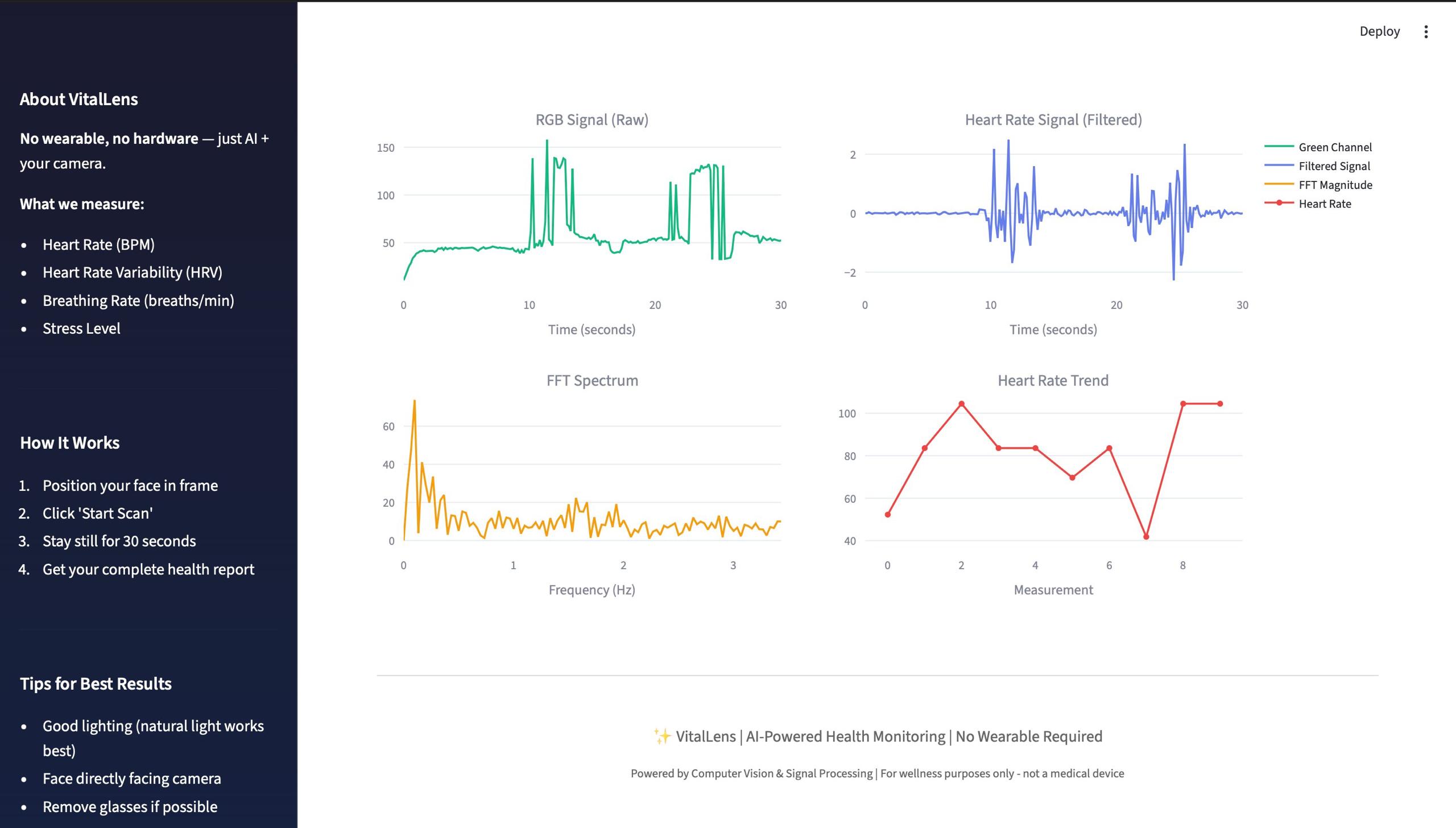
Professional-grade rPPG. Using Butterworth filters and FFT to turn raw RGB webcam data into clinical-grade biometric insights.
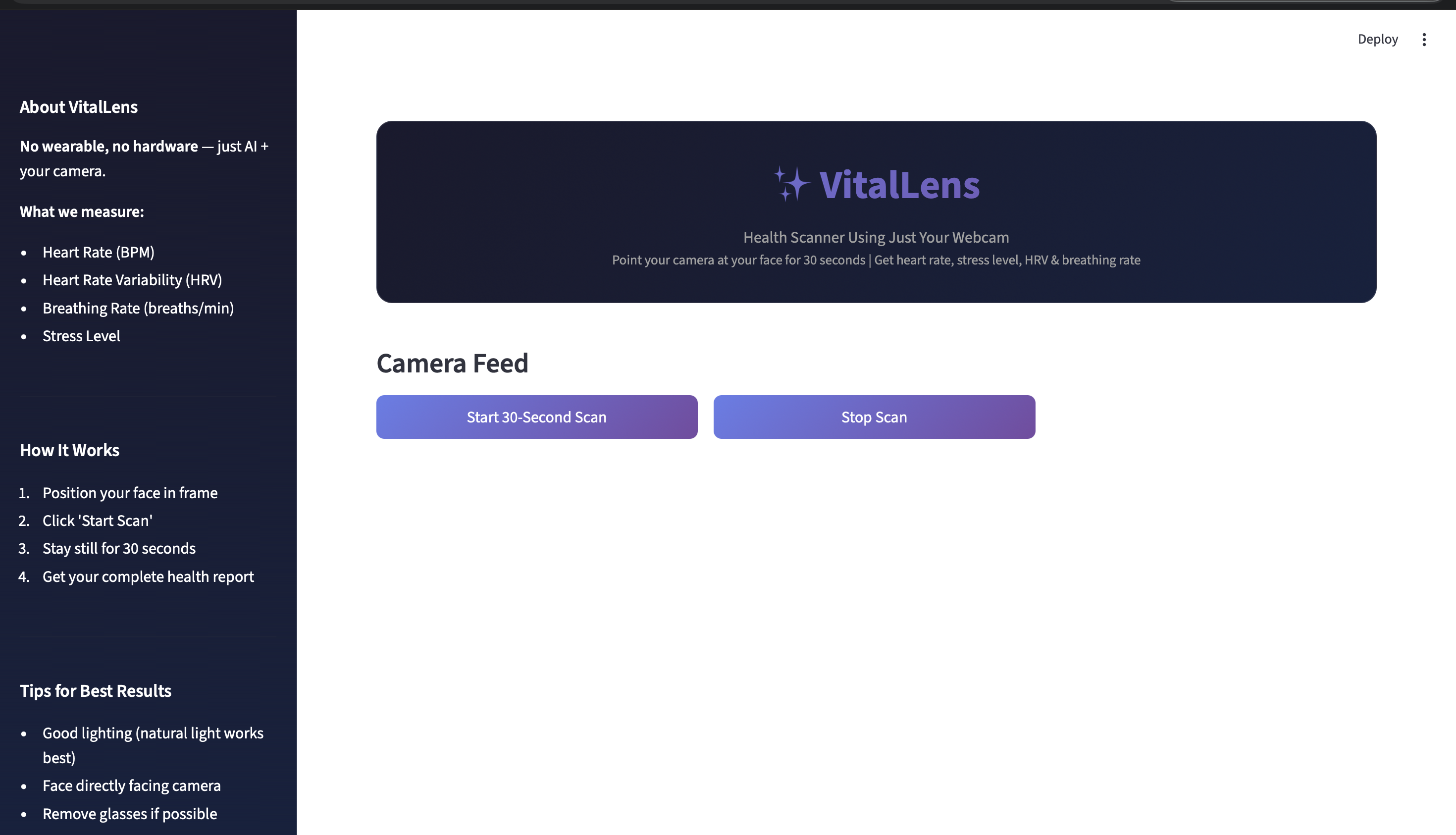
Inspiration High-quality health monitoring is often expensive and requires specialized wearables. My goal was to leverage Applied AI to democratize access to biometric data. By using the camera already built into our laptops, VitalLens AI provides a zero-cost, zero-hardware solution for tracking essential vitals, making health intelligence accessible to everyone with a computer.
What it does VitalLens AI transforms a standard RGB webcam into a clinical-grade biometric sensor. By analyzing a 30-second video feed of a user's face, the app provides:
Heart Rate (BPM): Precise pulse detection via skin color analysis.
Heart Rate Variability (HRV): A window into the autonomic nervous system.
Breathing Rate: Monitoring respiratory patterns through subtle physiological shifts.
Stress Intelligence: A comprehensive score calculated from heart rate trends and HRV.
How we built it The project utilizes a sophisticated signal processing pipeline optimized for Apple Silicon (M2):
Computer Vision: OpenCV is used for real-time face tracking and isolating the Region of Interest (ROI).
Signal Processing: I implemented a 4th-order Butterworth Bandpass Filter to isolate the pulse frequency (0.8Hz - 3.0Hz) from environmental noise.
Quantification: Fast Fourier Transform (FFT) converts time-domain color shifts into frequency-domain heart rate peaks.
Frontend: An interactive dashboard built with Streamlit and Plotly provides users with real-time signal visualizations.
Challenges we ran into The primary challenge was maintaining a consistent 30 FPS for accurate rPPG analysis while handling the electronic noise inherent in standard webcams. I optimized the processing loop using NumPy vectorization on my M2 MacBook Air, ensuring smooth performance and accurate results without needing external GPU acceleration.
Accomplishments that we're proud of I am particularly proud of implementing the rPPG algorithm from scratch as a solo developer. Successfully bridging the gap between raw pixel data and meaningful health metrics like HRV and Stress Levels—while maintaining 100% on-device privacy—is a significant milestone for this project.
What we learned This hackathon was a deep dive into Biomedical Signal Processing. I gained hands-on experience with frequency-domain analysis and learned the importance of robust filtering when dealing with non-stationary biometric data. It also reinforced the power of building lightweight, privacy-focused AI tools for public health.
What's next for VitalLens AI The next step is to integrate Causal Inference to help users understand why their vitals change—correlating stress levels with daily habits or environmental factors. I also plan to implement MediaPipe for more advanced facial landmark tracking to further improve accuracy during head movement.


Log in or sign up for Devpost to join the conversation.