Inspiration
In high-pressure environments such as workplaces, healthcare, research labs, and remote operations, people often experience stress, fatigue, and declining health without realizing it. Most monitoring systems require wearable devices or manual reporting, which makes continuous monitoring difficult.
We wanted to explore whether health insights could be obtained using only a camera and AI. This led us to build Vitalis, a system that uses remote photoplethysmography (rPPG) and machine learning to estimate physiological signals such as heart rate and stress from facial video.
Our goal was to create a simple, non-invasive health monitoring platform that can help organizations monitor wellbeing and detect early signs of fatigue or stress.
What it does
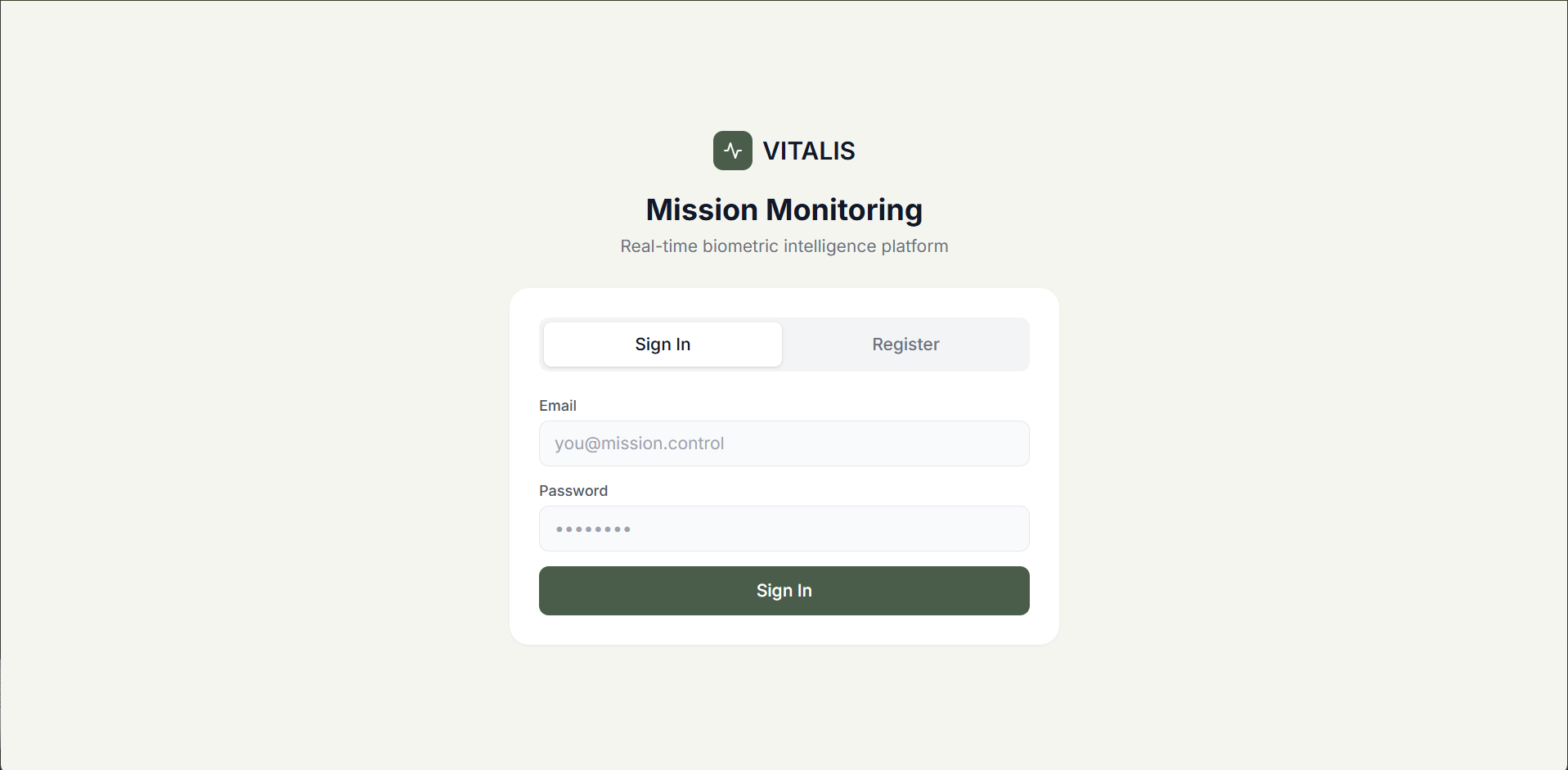
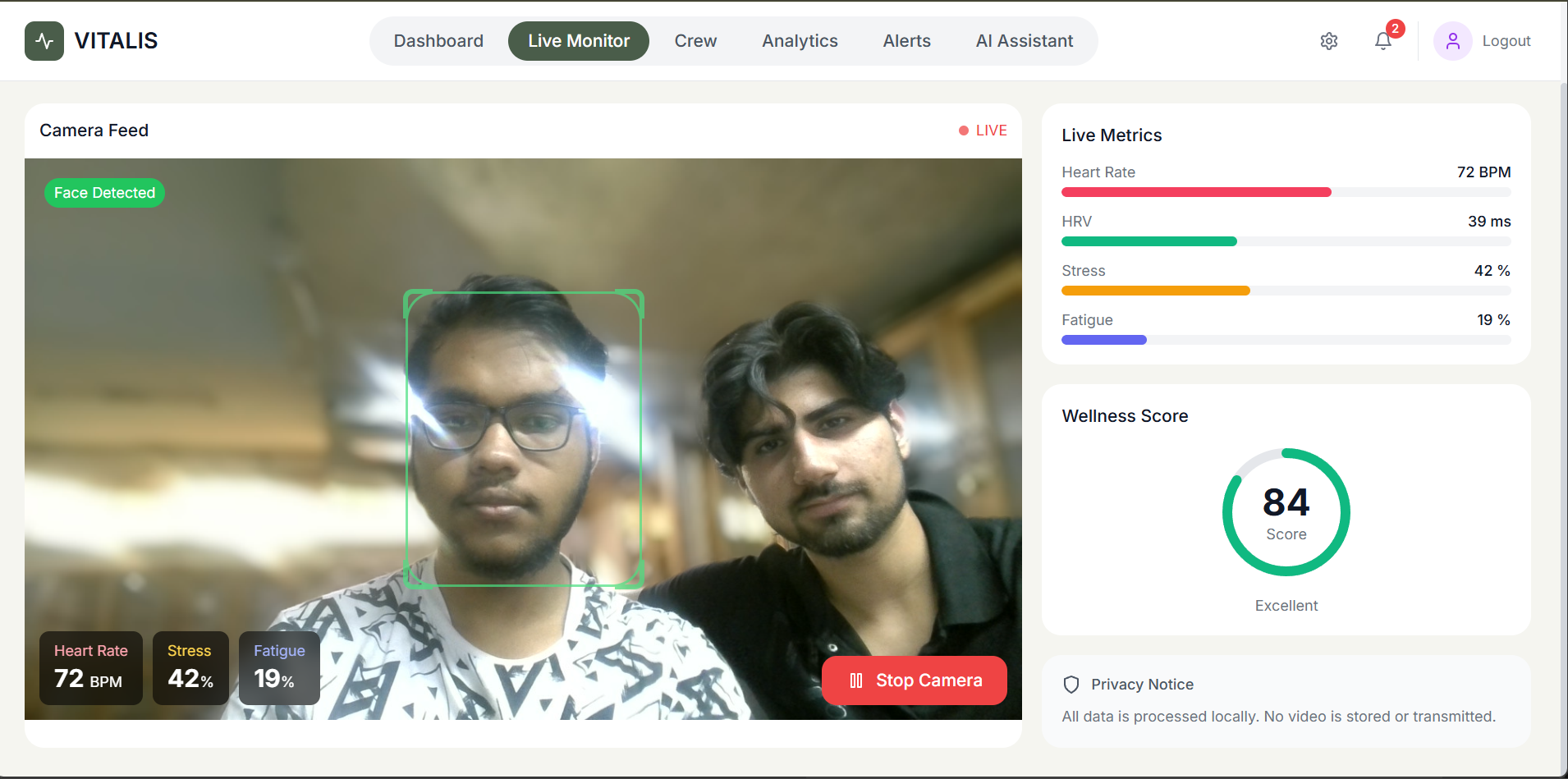
Vitalis is an AI-powered health monitoring platform that analyzes facial signals using a device camera to estimate key wellness indicators.
The system uses rPPG technology to detect subtle color changes in the skin caused by blood flow. From these signals, Vitalis estimates:
- Heart Rate
- Heart Rate Variability (HRV)
- Stress Levels
- Fatigue Indicators
- Mood estimation
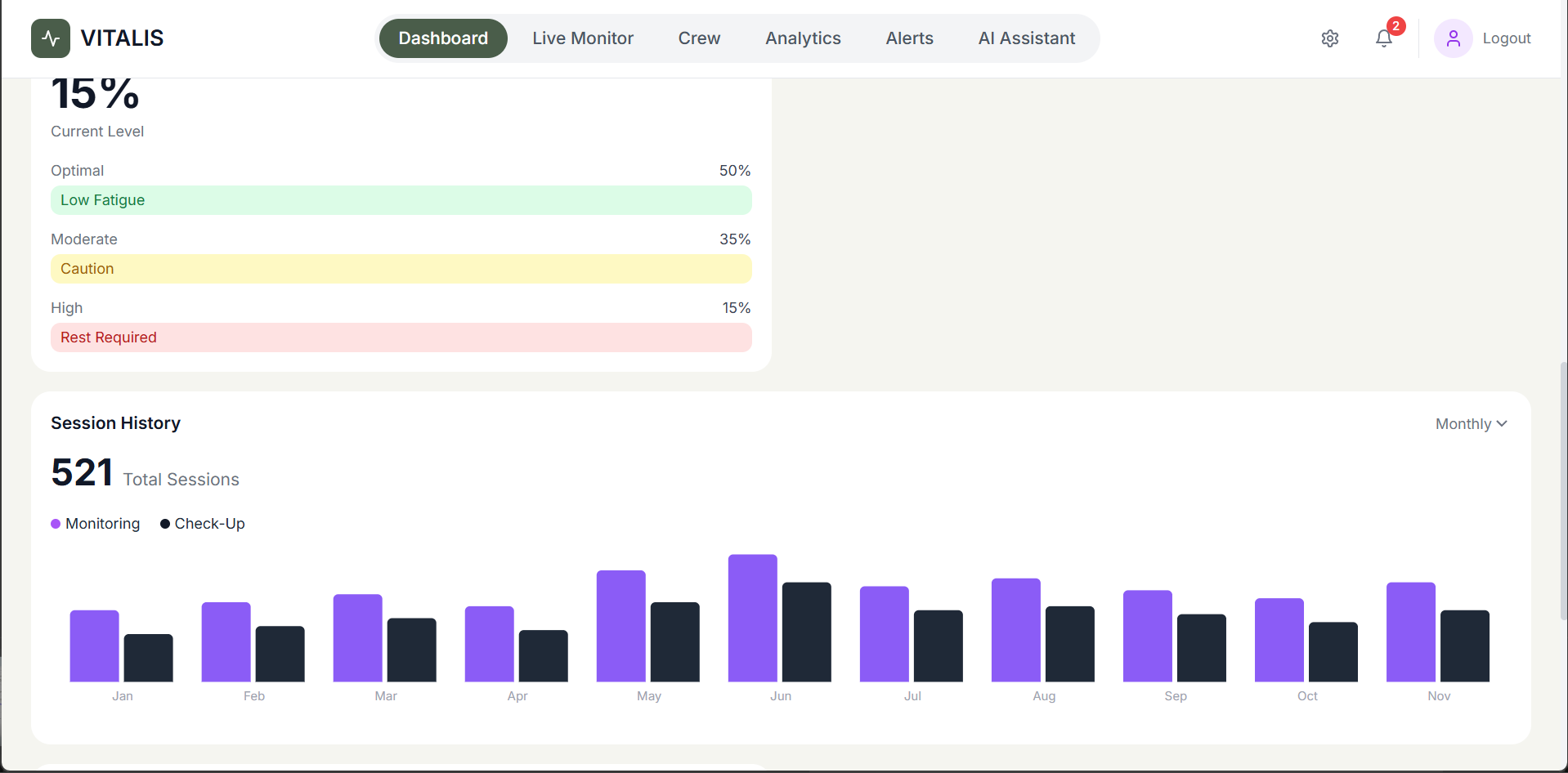
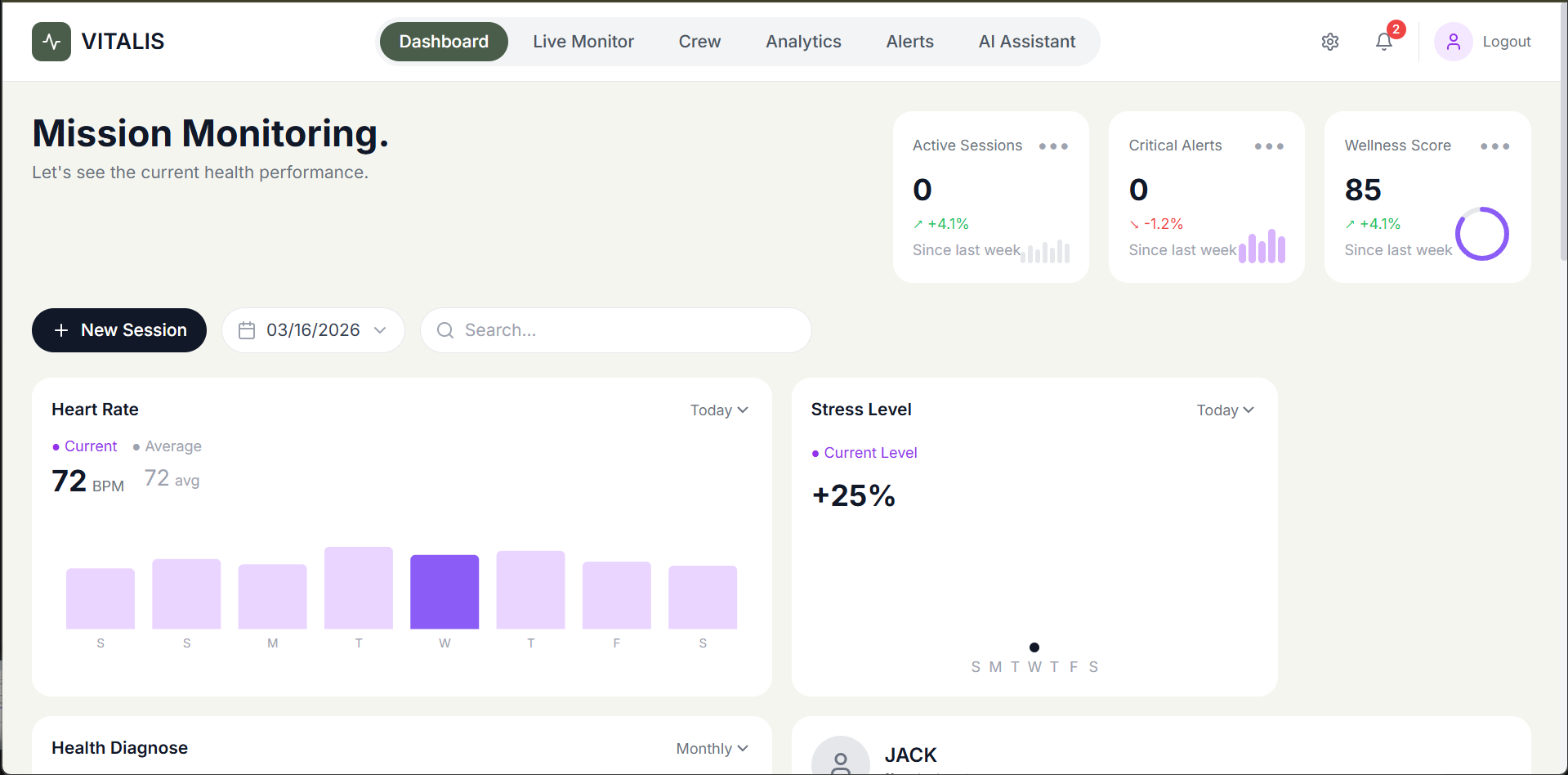
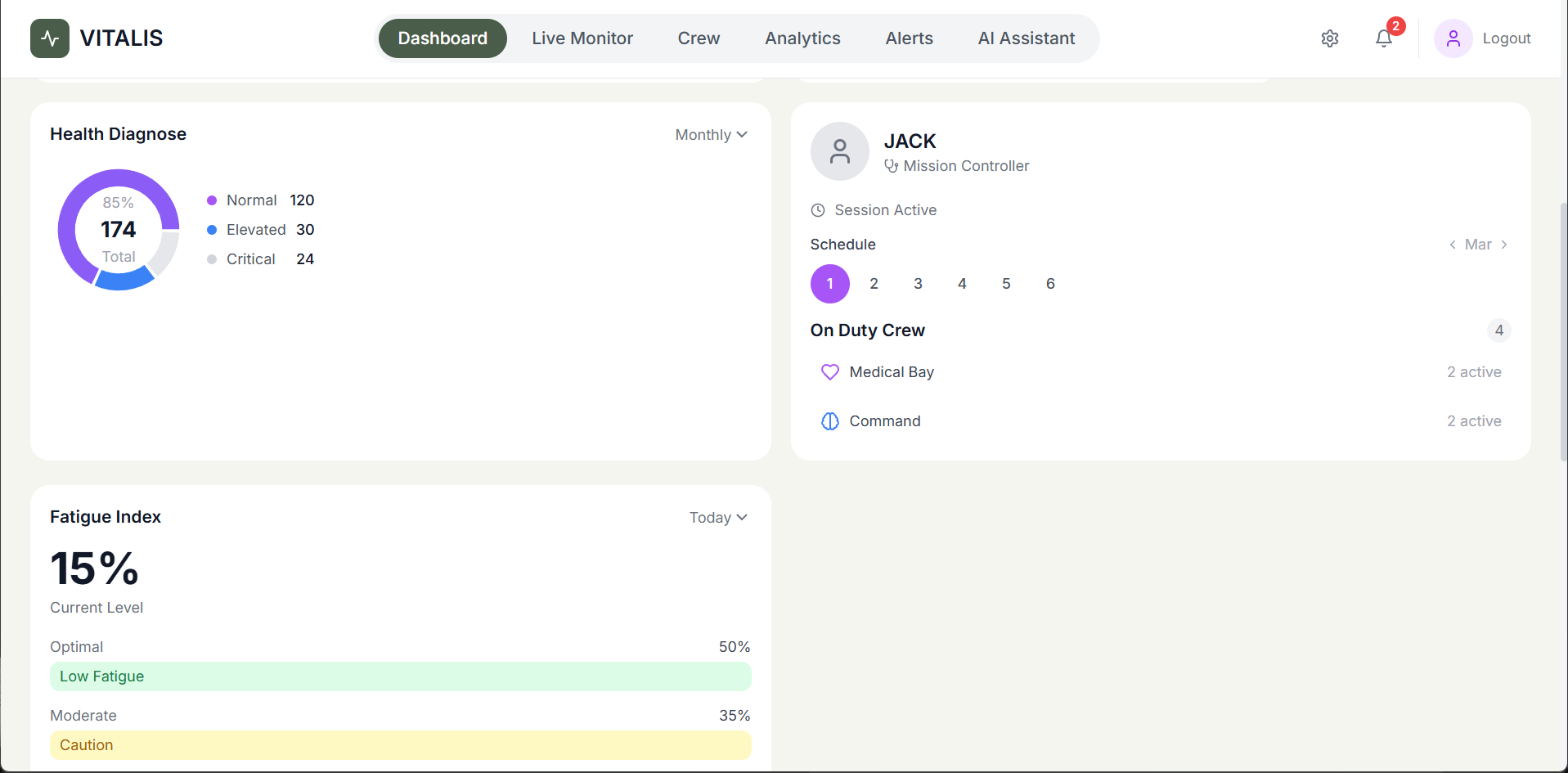
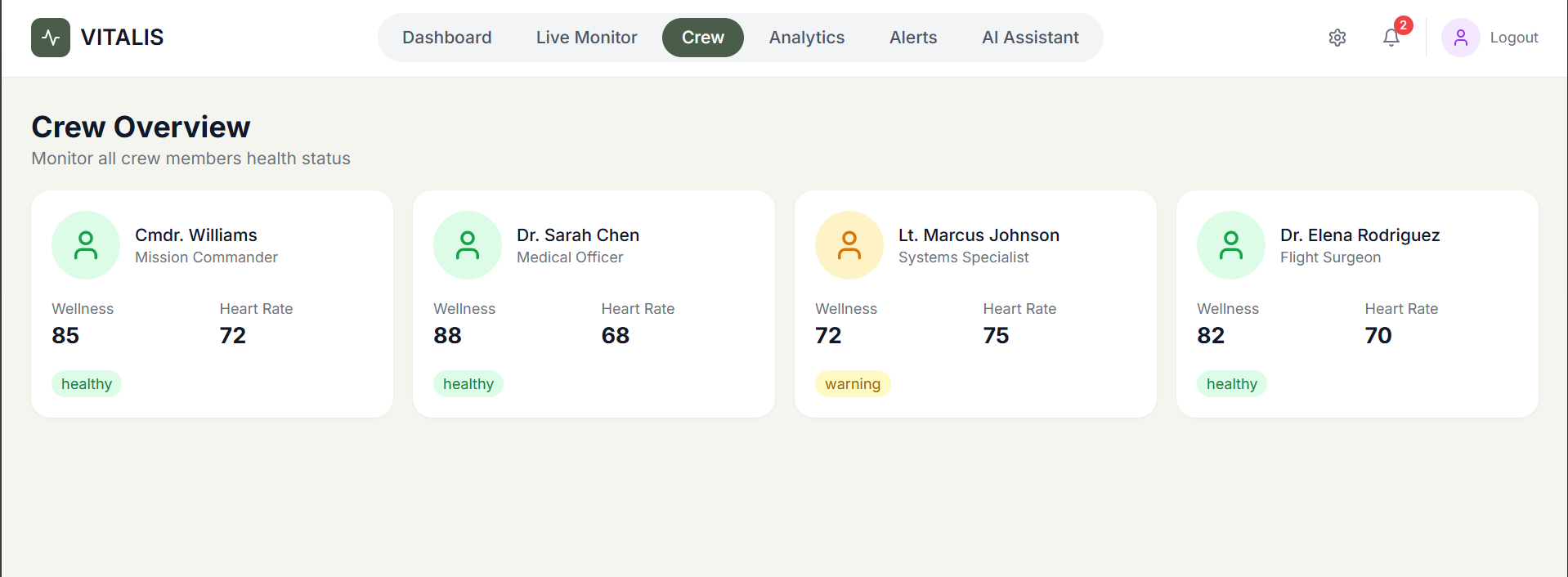
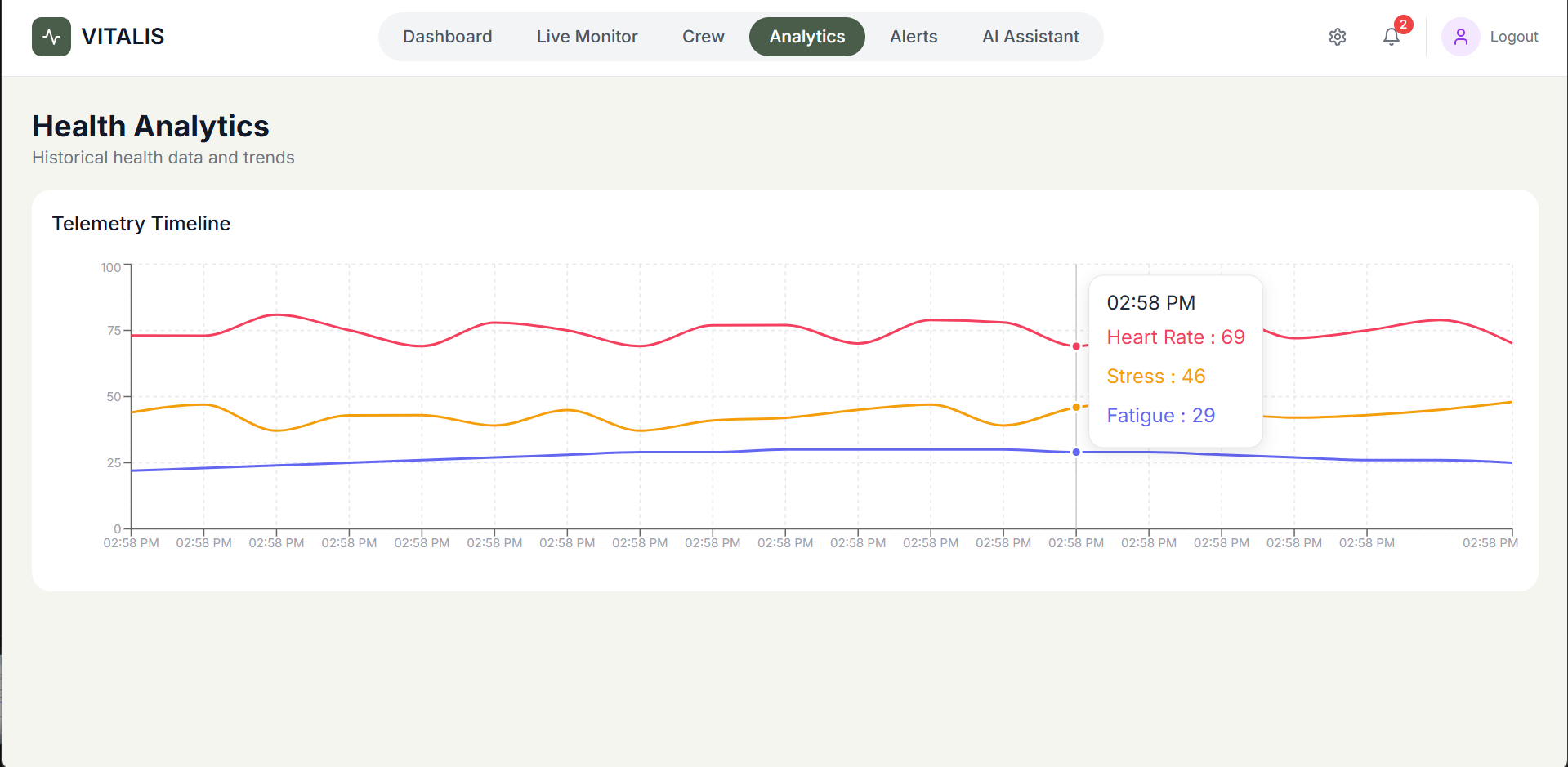
These signals are analyzed in real time and presented in a clean dashboard that shows:
- A wellness index score
- Vital sign monitoring
- Health trend analysis
- Biometric scanning
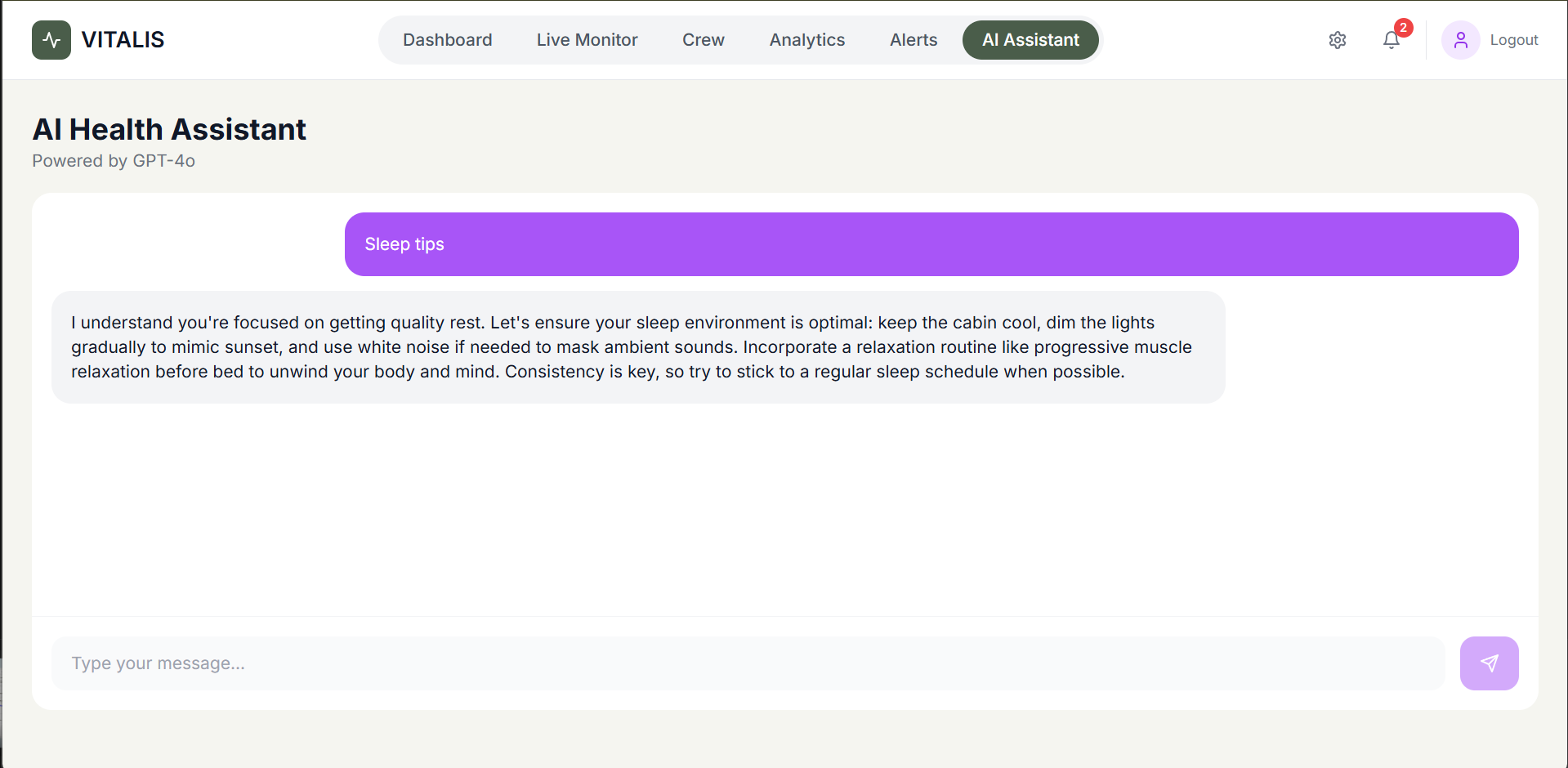
- AI wellness support
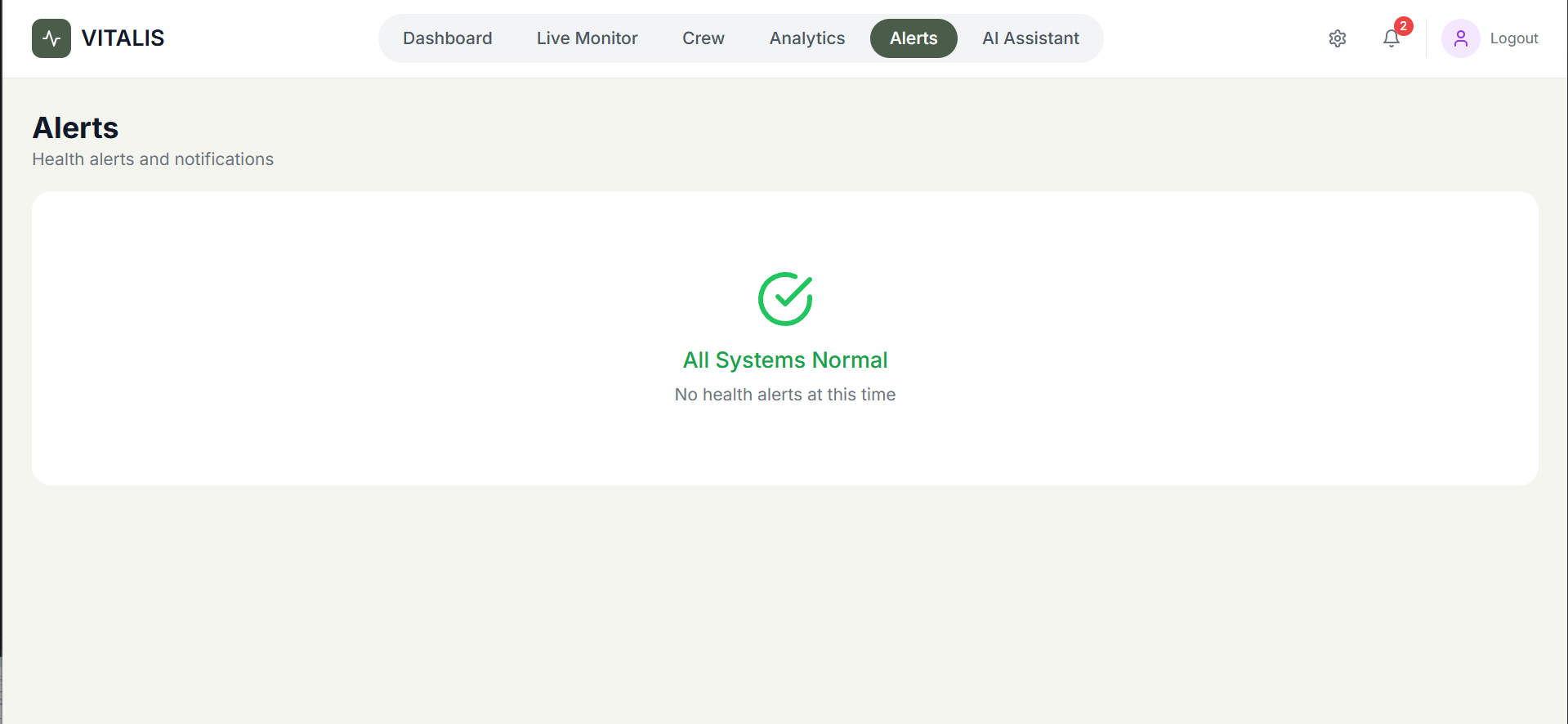
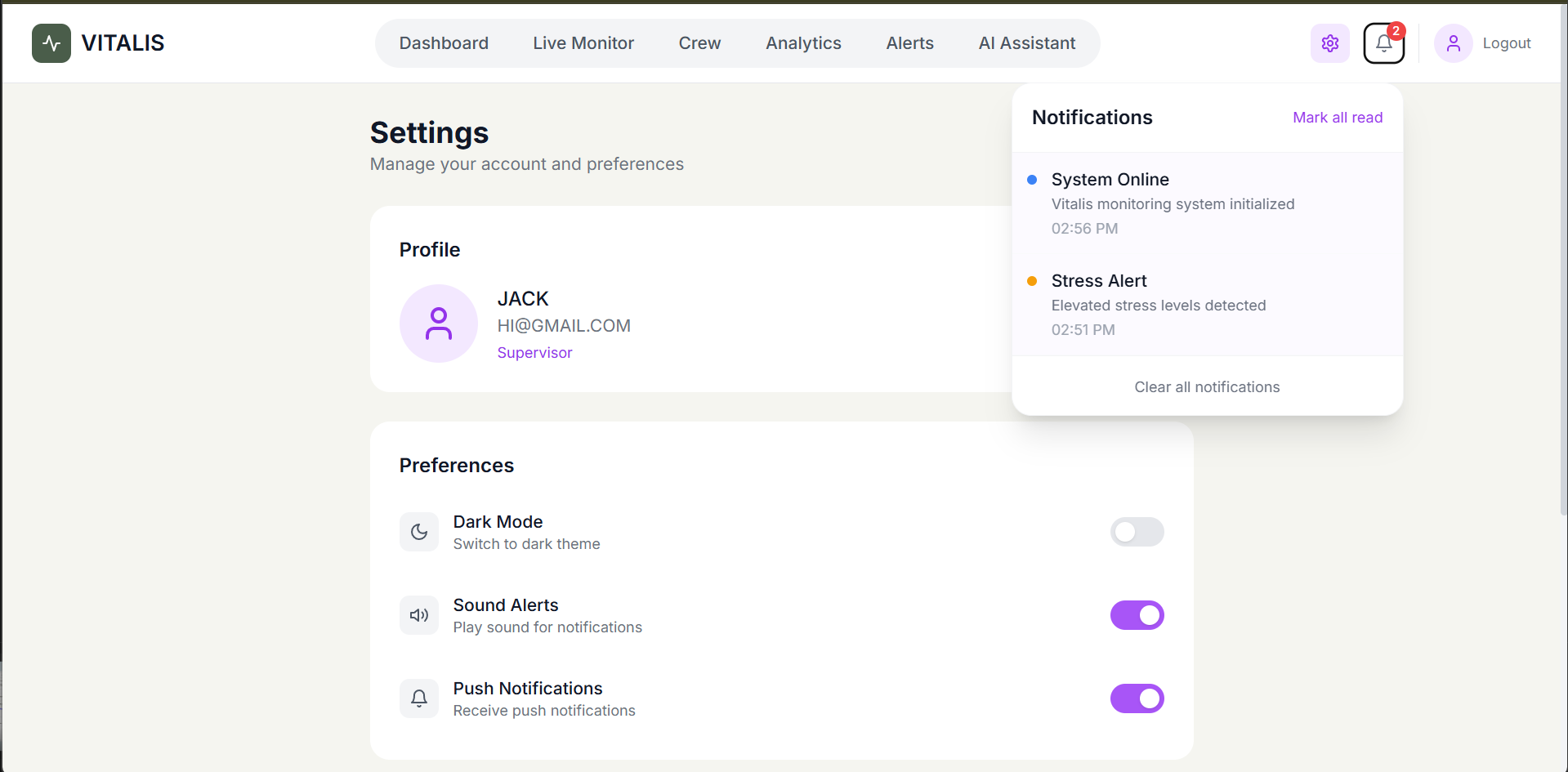
- Alert system for potential risk conditions
The platform can help organizations identify early warning signs of stress or fatigue and take preventive action.
How we built it
Vitalis combines computer vision, signal processing, and AI analytics to create a non-contact health monitoring solution.
Core components include:
- rPPG signal extraction from facial video
- Computer vision models for face detection and tracking
- Signal processing algorithms to extract heart rate signals
- AI analysis layer to estimate stress and fatigue levels
- Interactive dashboard for visualization and monitoring
The platform was built using:
- React.js for the frontend interface
- Tailwind CSS for modern UI design
- Python for signal processing and health analysis
- Computer vision libraries for facial tracking
- AI models for wellness insights
- Real-time data visualization for health metrics
Challenges we ran into
One of the biggest challenges was implementing rPPG-based signal extraction, which requires detecting extremely small color variations in the face caused by blood flow.
Other challenges included:
- Handling variations in lighting conditions
- Maintaining accurate facial tracking
- Extracting stable physiological signals from video data
- Designing a dashboard that is simple but informative
Balancing technical complexity with a clean user interface was also an important challenge.
Accomplishments that we're proud of
We successfully built a working prototype that can:
- Estimate heart rate using a camera
- Analyze wellness indicators in real time
- Visualize health insights in an intuitive dashboard
- Demonstrate how non-contact health monitoring could be applied in workplaces and other environments
Most importantly, we proved that AI and rPPG can enable accessible health monitoring without wearables.
What we learned
During the development of Vitalis, we learned about:
- Remote photoplethysmography (rPPG)
- Signal processing for physiological data
- Computer vision for facial tracking
- Designing effective health dashboards
- Integrating AI analysis with real-time visualization
This project helped us explore how AI can be applied to preventive healthcare and wellbeing monitoring.
What's next for Vitalis
In the future, we want to expand Vitalis by:
- Improving rPPG signal accuracy
- Adding additional biometric indicators
- Integrating wearable data for hybrid monitoring
- Building predictive AI models for early health risk detection
- Creating mobile and enterprise versions of the platform
Our vision is to develop Vitalis into a comprehensive AI-powered health monitoring platform that helps organizations support the wellbeing of their teams.


Log in or sign up for Devpost to join the conversation.