-
-
-
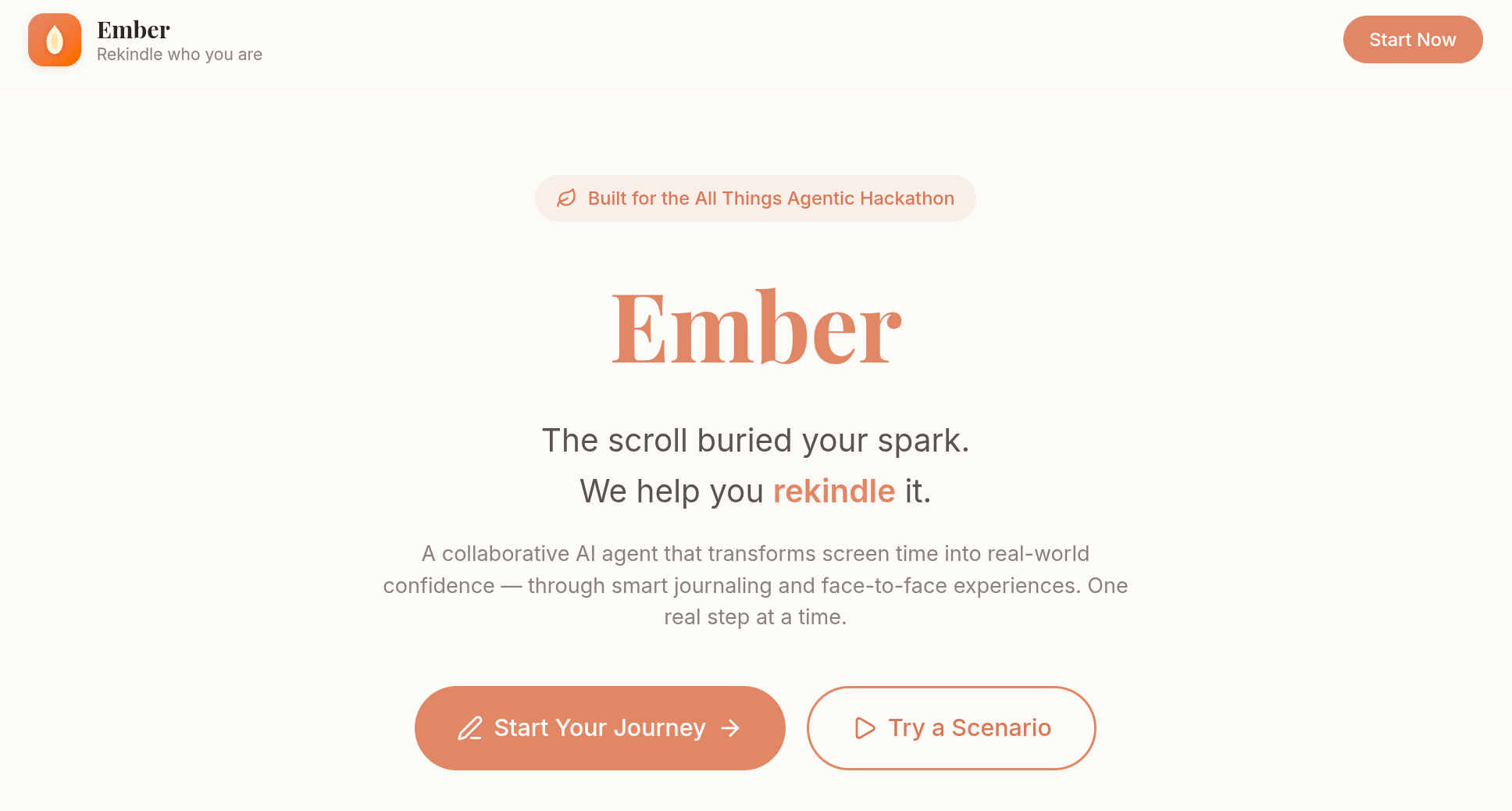
Ember Rekindle who you are
-
Ember is multimodal
-
Journal
-
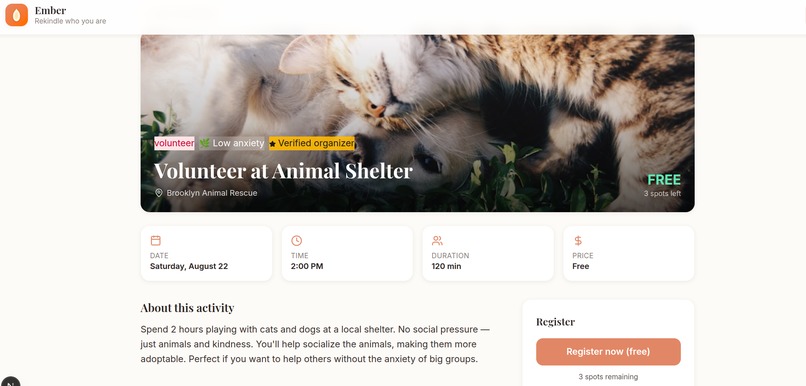
Activities
-
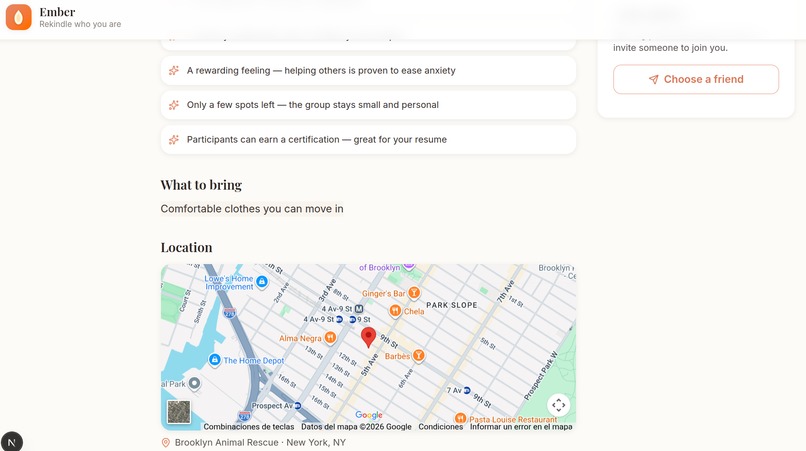
Geolocation of Activities
-
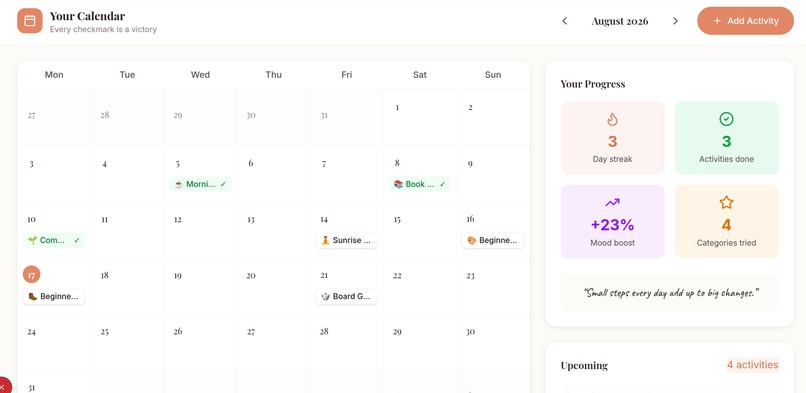
Calendar for activities
-
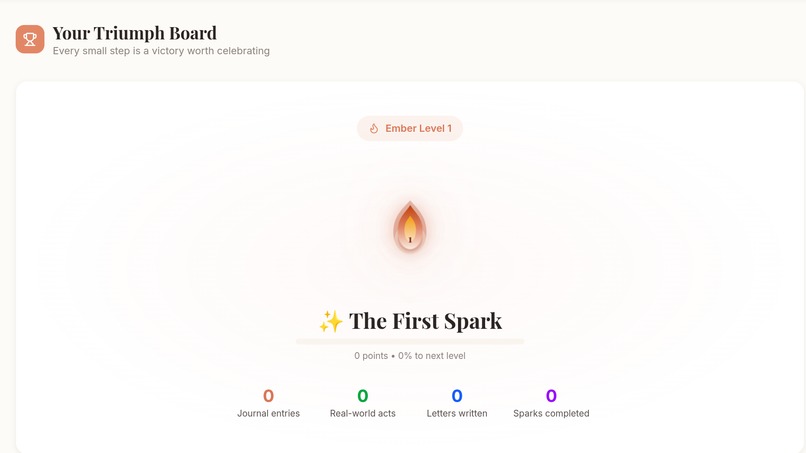
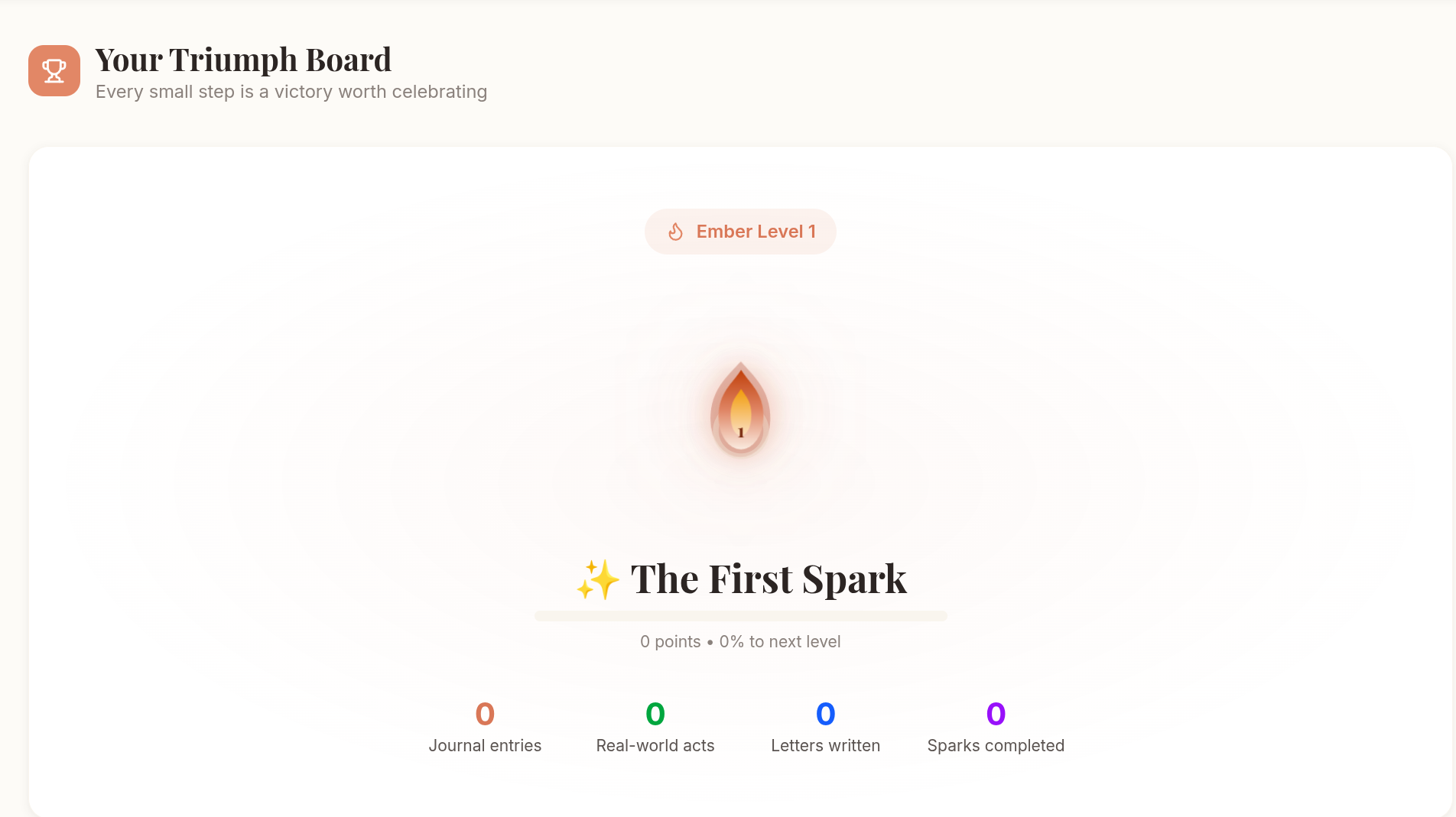
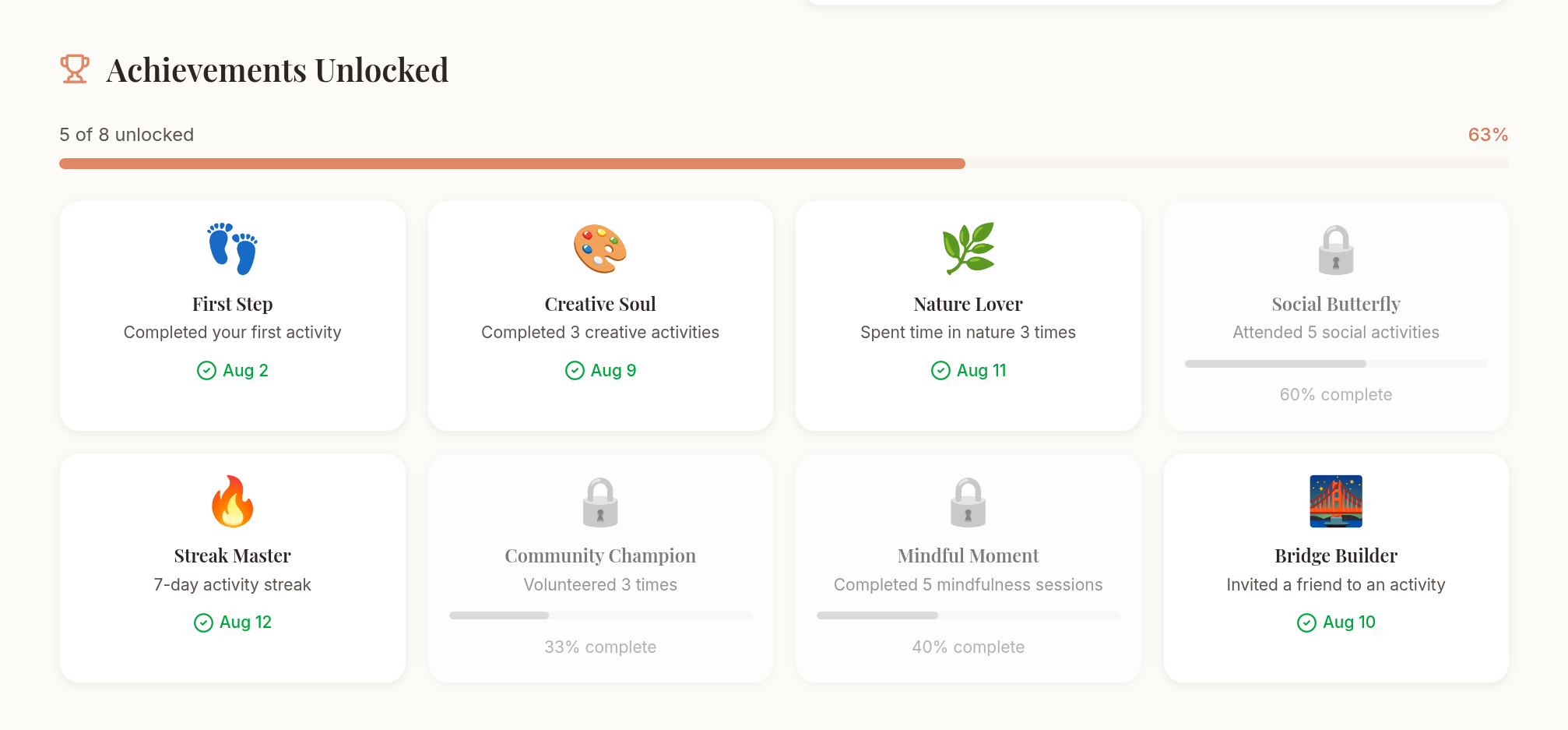
Dashboard1
-
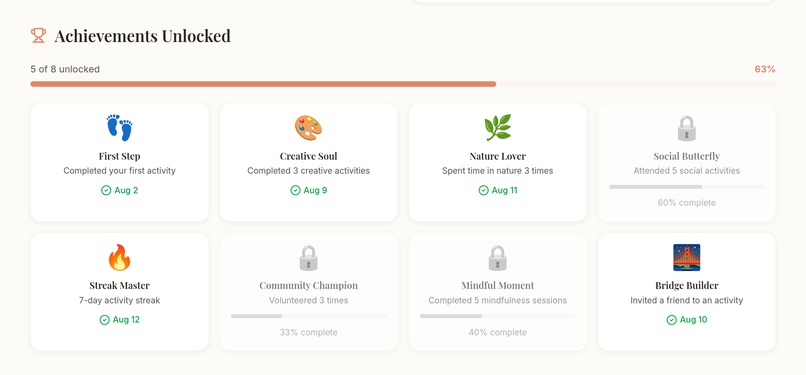
Dashboard2
-
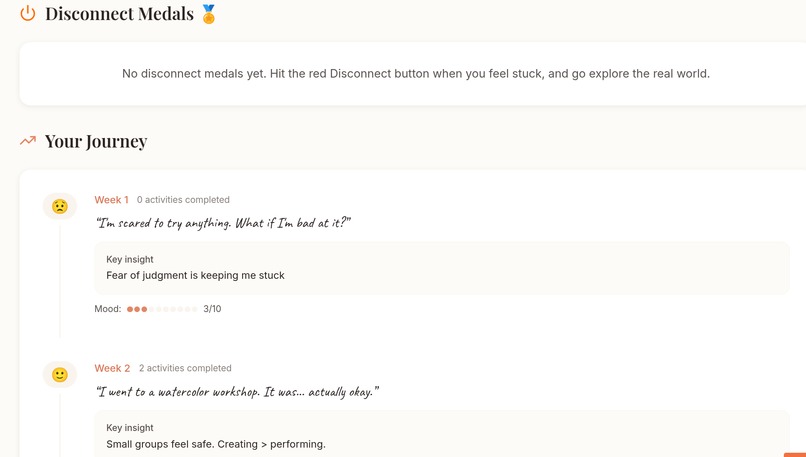
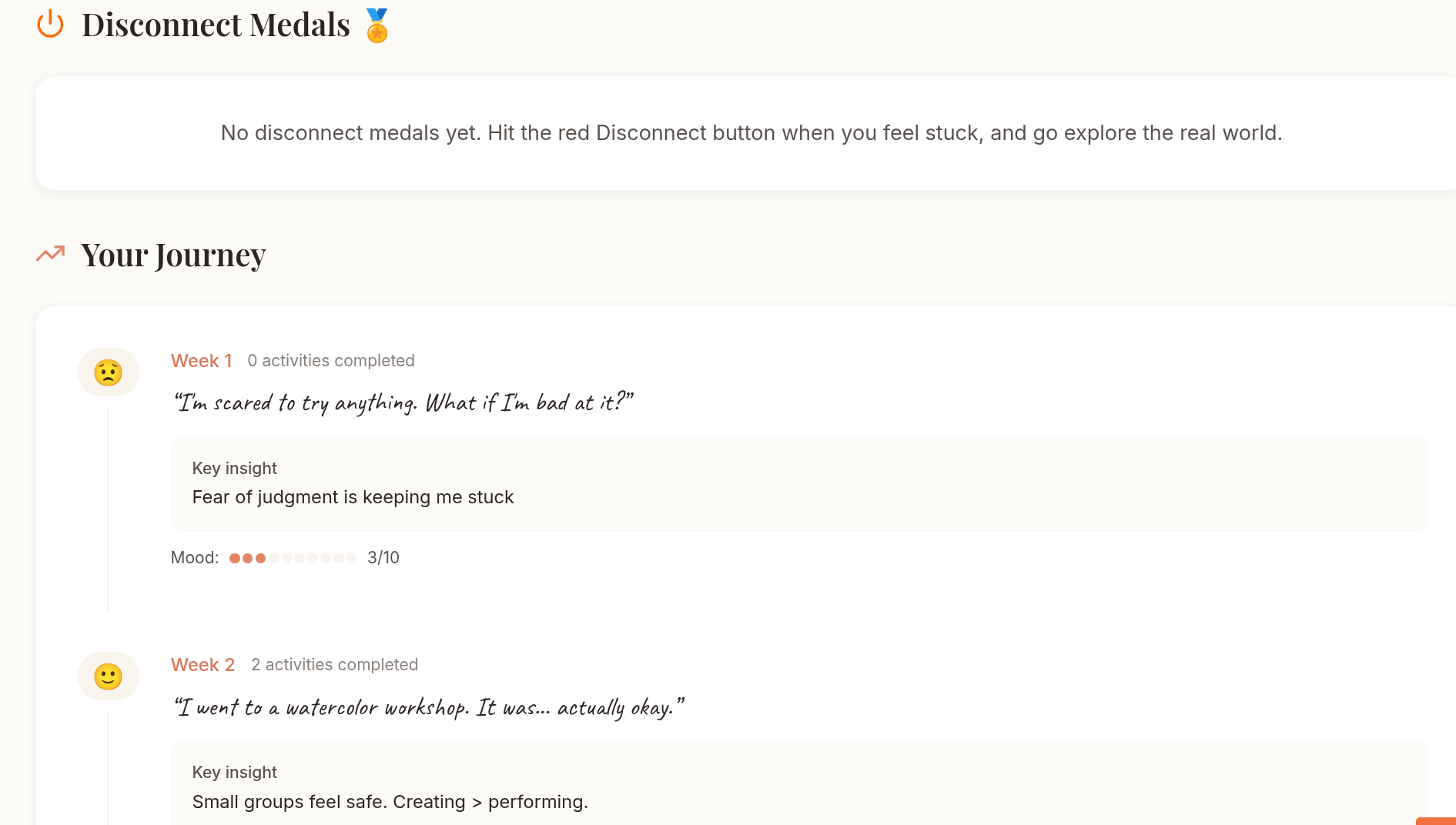
Disconnect medals
-
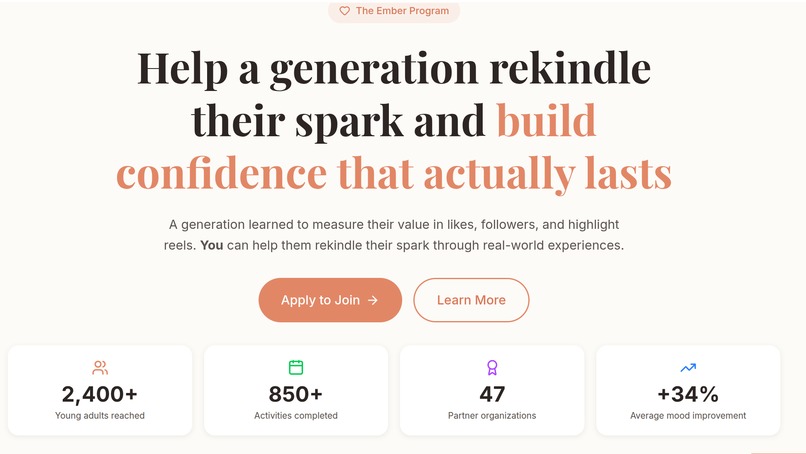
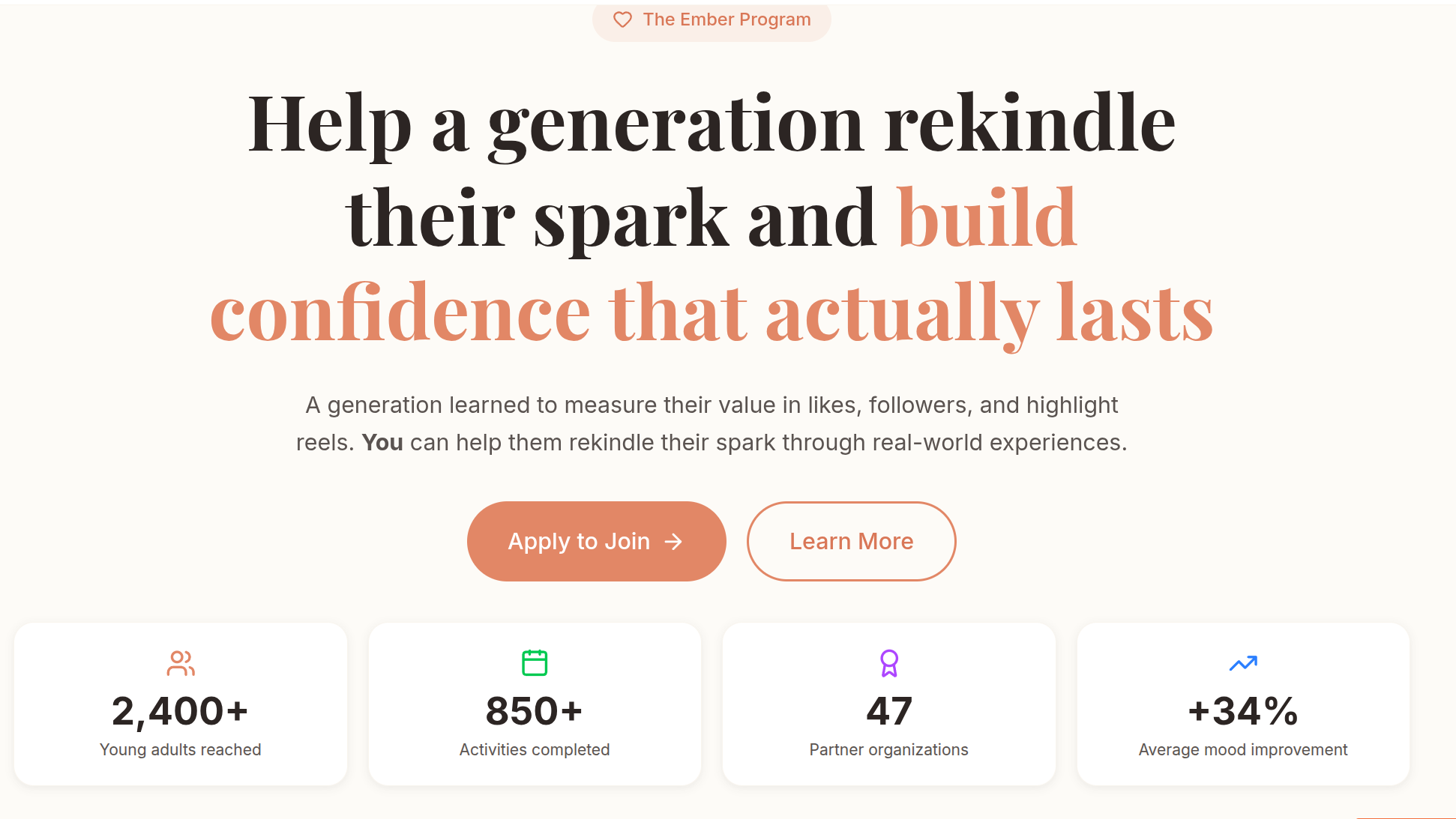
Ember program
-
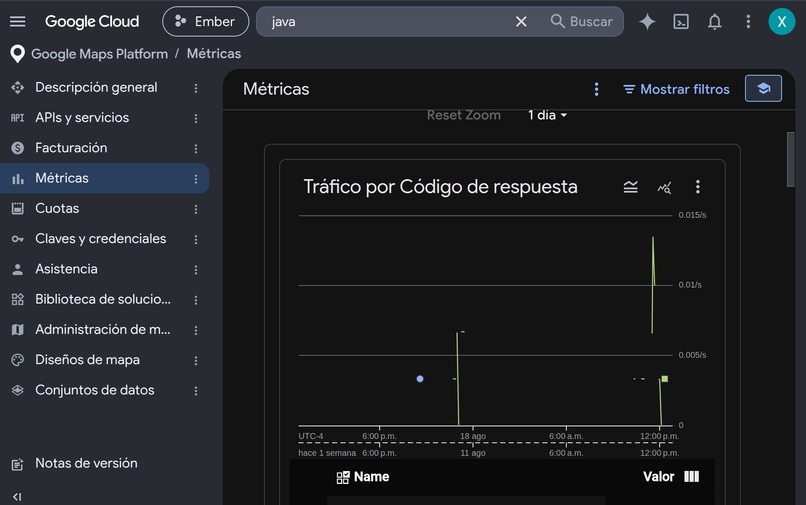
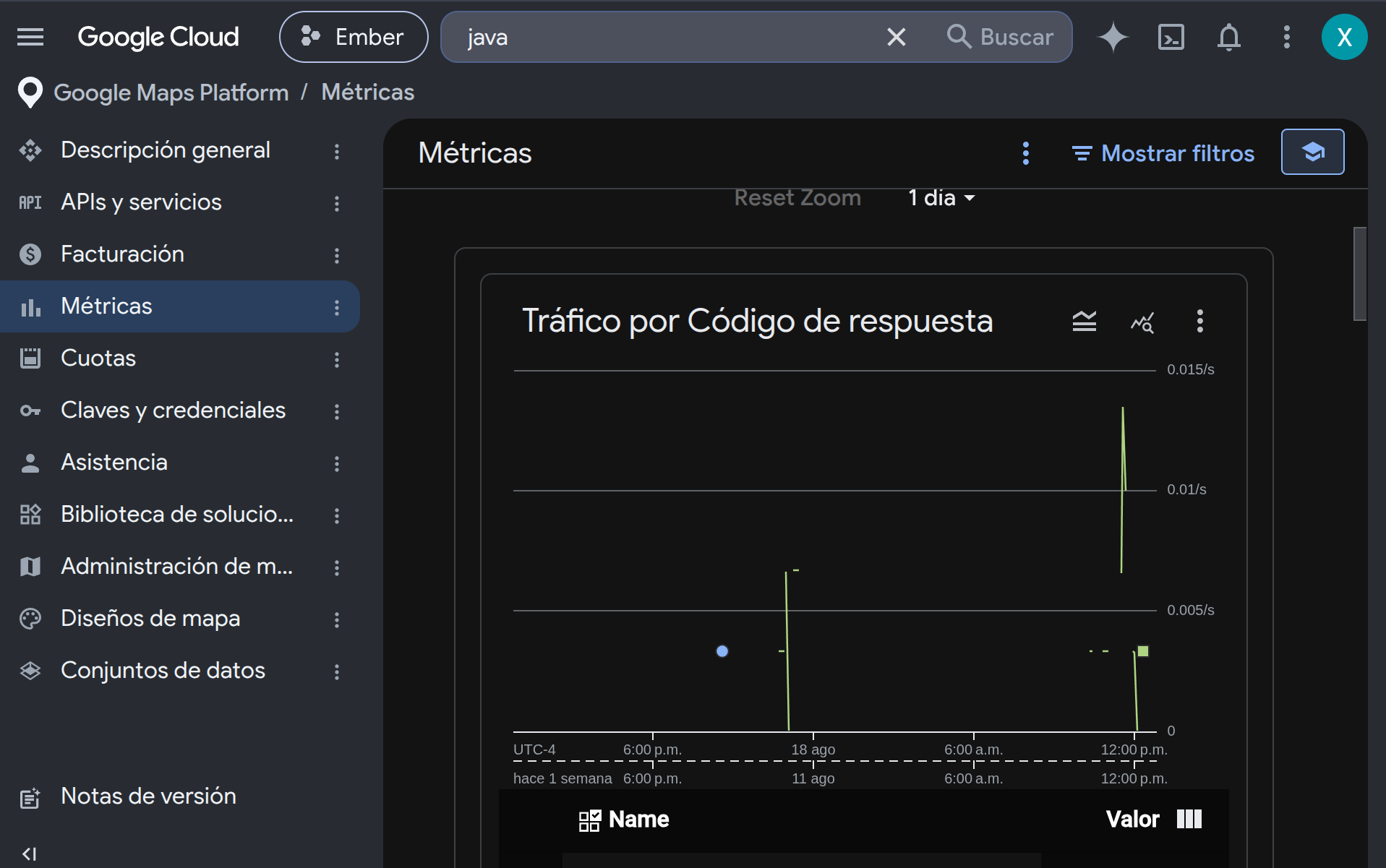
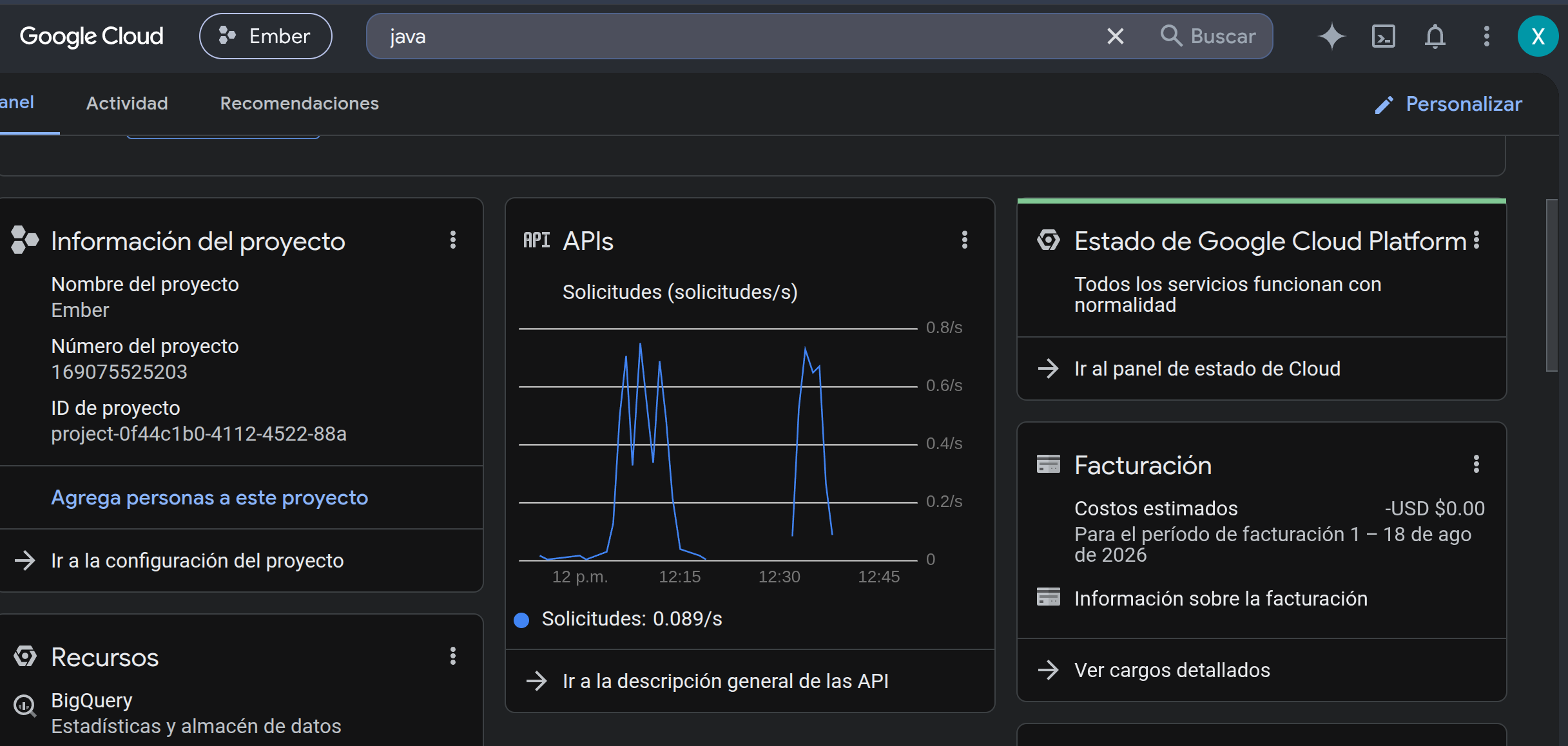
Ember in Google Cloud1
-
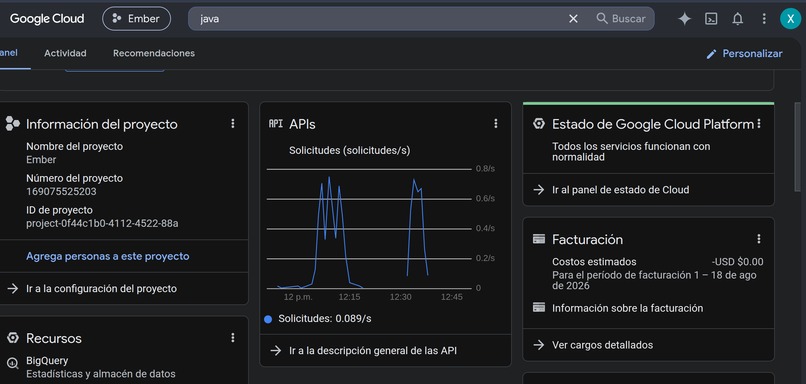
Ember in Google Cloud2
Inspiration
In reality, Ember grew out of a genuine concern regarding my own son. I felt he was using his phone too much and spending excessive time immersed in video games, which was damaging his self-esteem. I wanted to create Ember to foster his personal growth through writing—an inherently introspective tool—and through face-to-face activities with others, such as sports, music, and art. I truly hope I’ve achieved that goal with Ember, so that it helps him and the many other young people who find themselves in the same situation—even if they aren't aware of it.
Why a journal? Writing is one of the most powerful tools for self-reflection we have. When you translate a feeling into words, the chaos becomes concrete, the invisible becomes something you can actually look at. In Ember, the journal isn't a diary. It's a conversation with the person you've been too busy to meet: yourself.
What it does
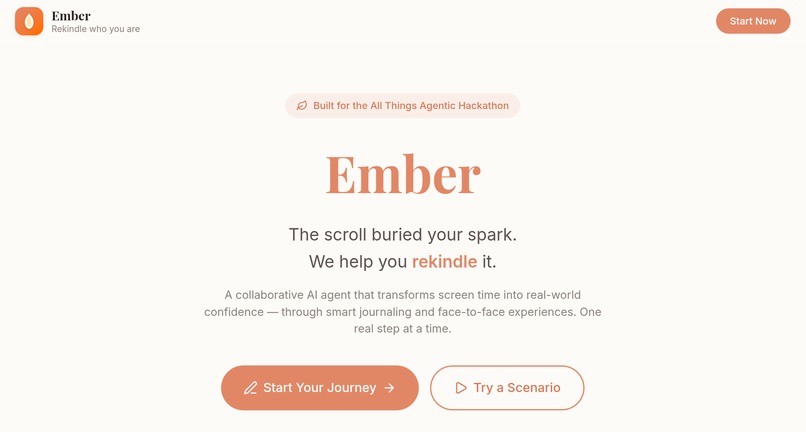
Ember is a collaborative AI agent that helps young adults (18-23) rebuild self-worth through real-world actions, not digital validation.
THE PROBLEM A generation is losing itself one scroll at a time. 48% of teens say social media hurts their self-worth. 81% feel crushing pressure to have a "perfect life plan" by 25. Only 58.5% feel emotionally supported, while 93% of parents believe they're providing that support — a 34.5-point gap where young people suffer in silence. Sources: Common Sense Media 2024; Borkovec et al. on worry
Traditional mental health apps keep users IN the digital world. More notifications, more tracking, more screen time. It's like trying to cure a hangover with more alcohol.
THE SOLUTION Ember is the opposite. It's a bridge back to real life, built on three pillars:
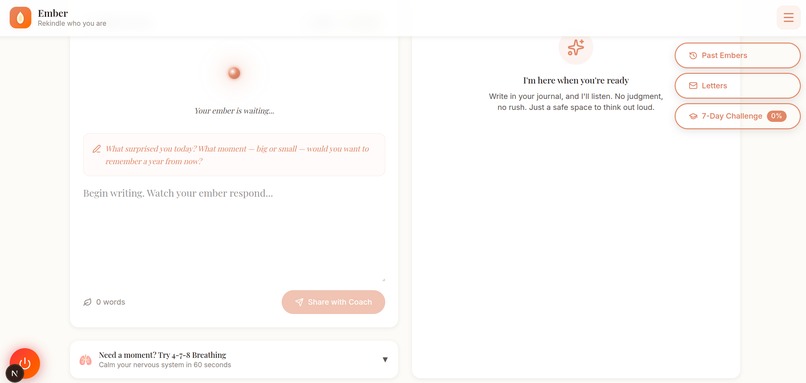
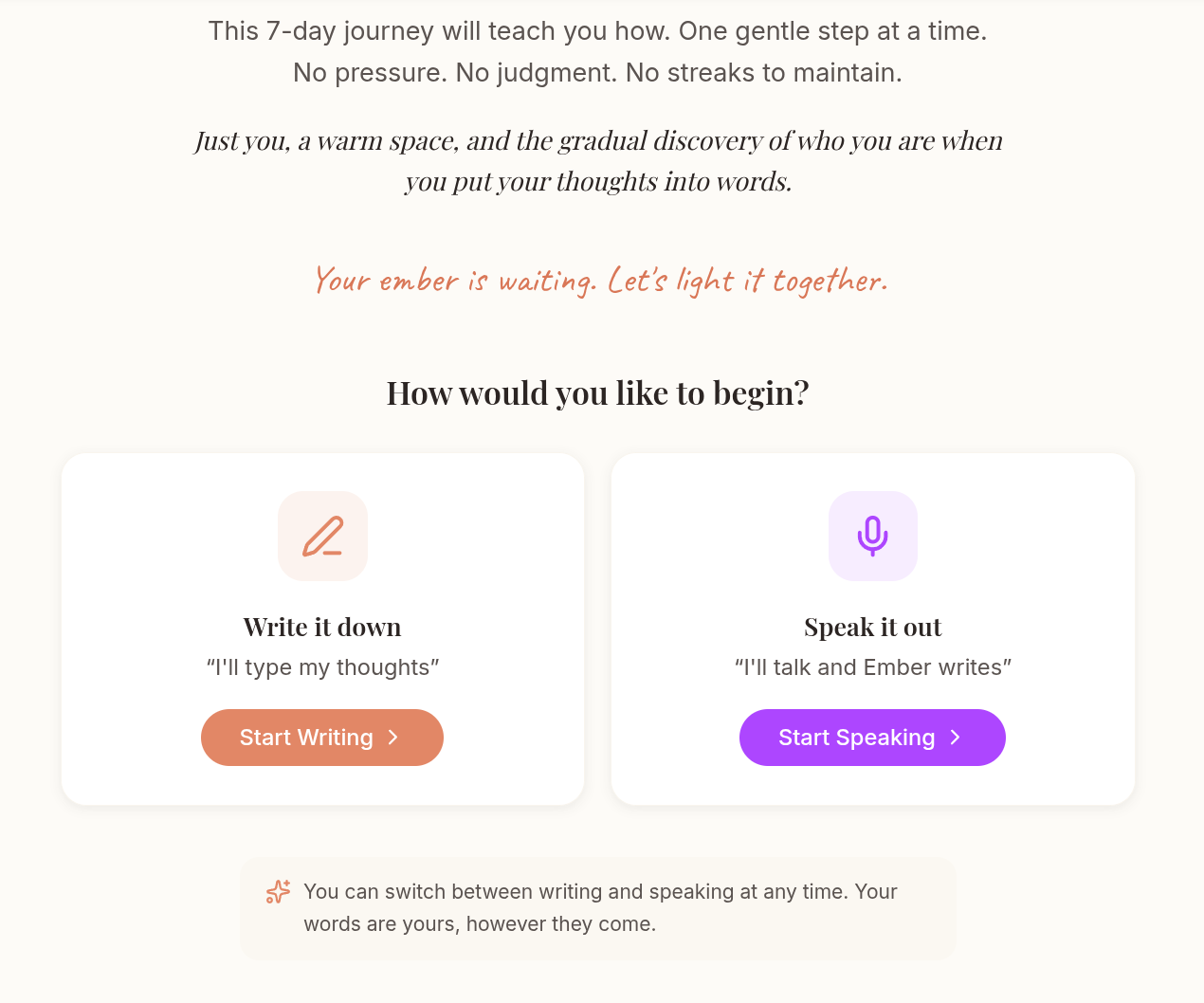
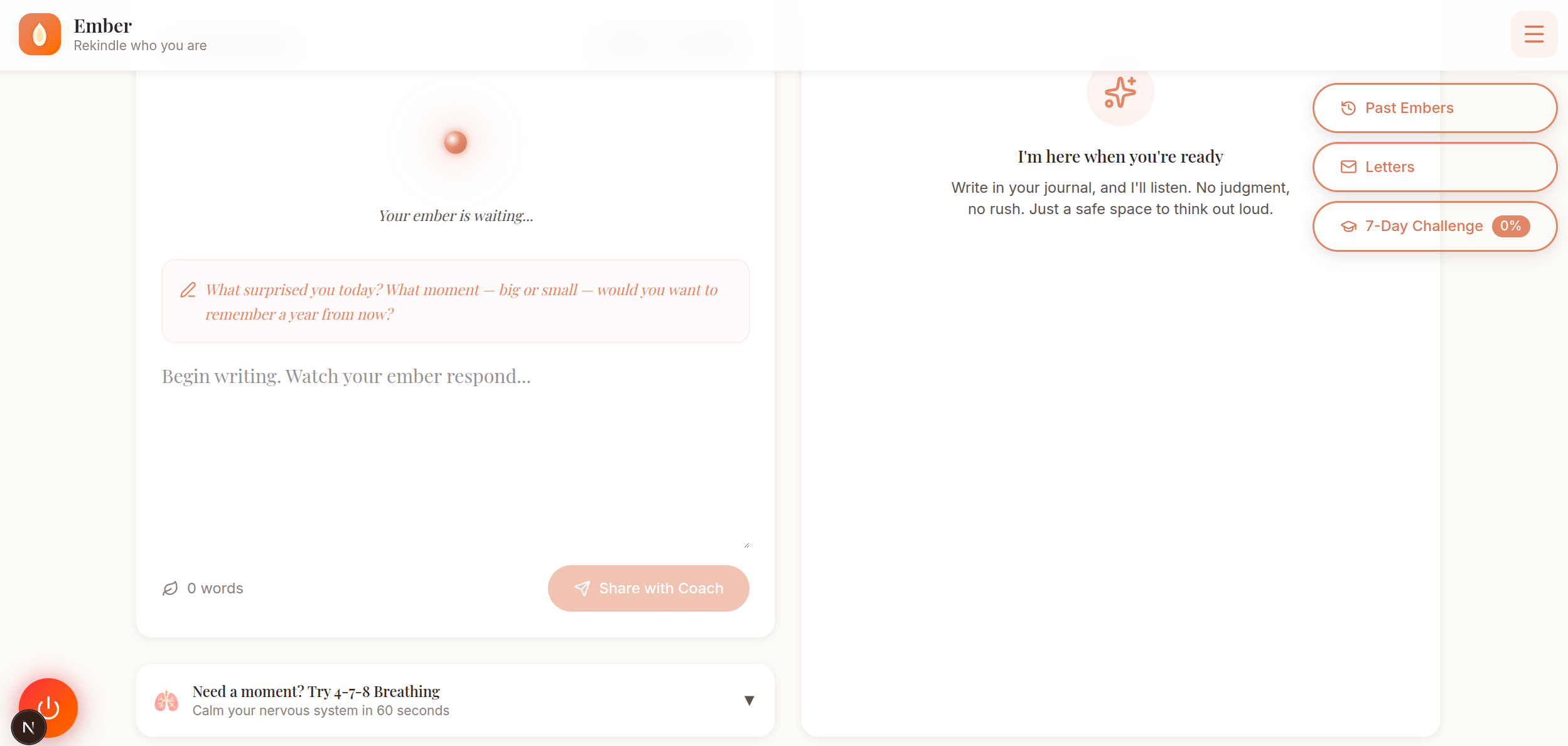
THE LIVING JOURNAL — A journal that responds to you. A visual "Living Ember" breathes and changes color as you write. Five writing rituals, multimodal voice/text input, and a 7-day onboarding that teaches WHY writing works.
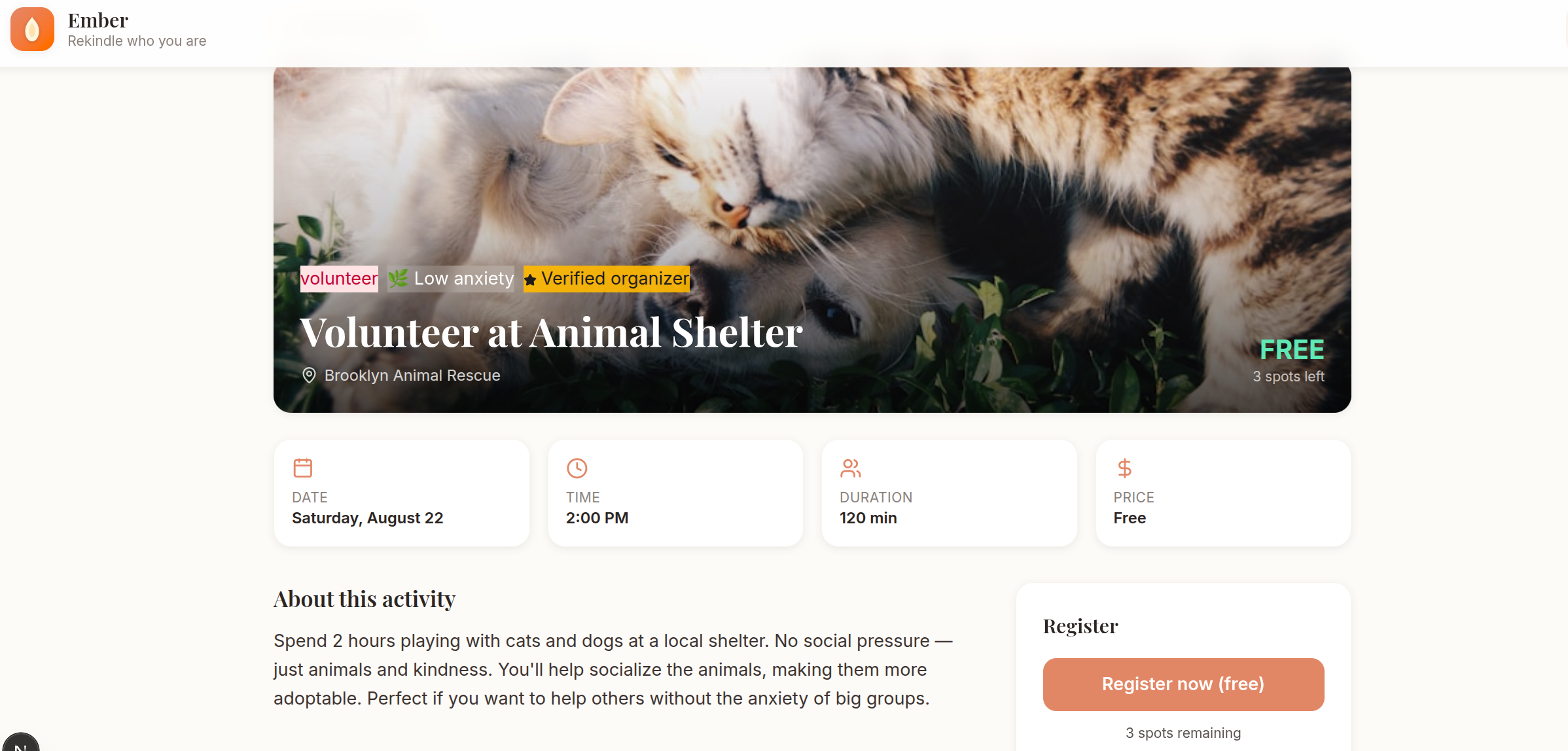
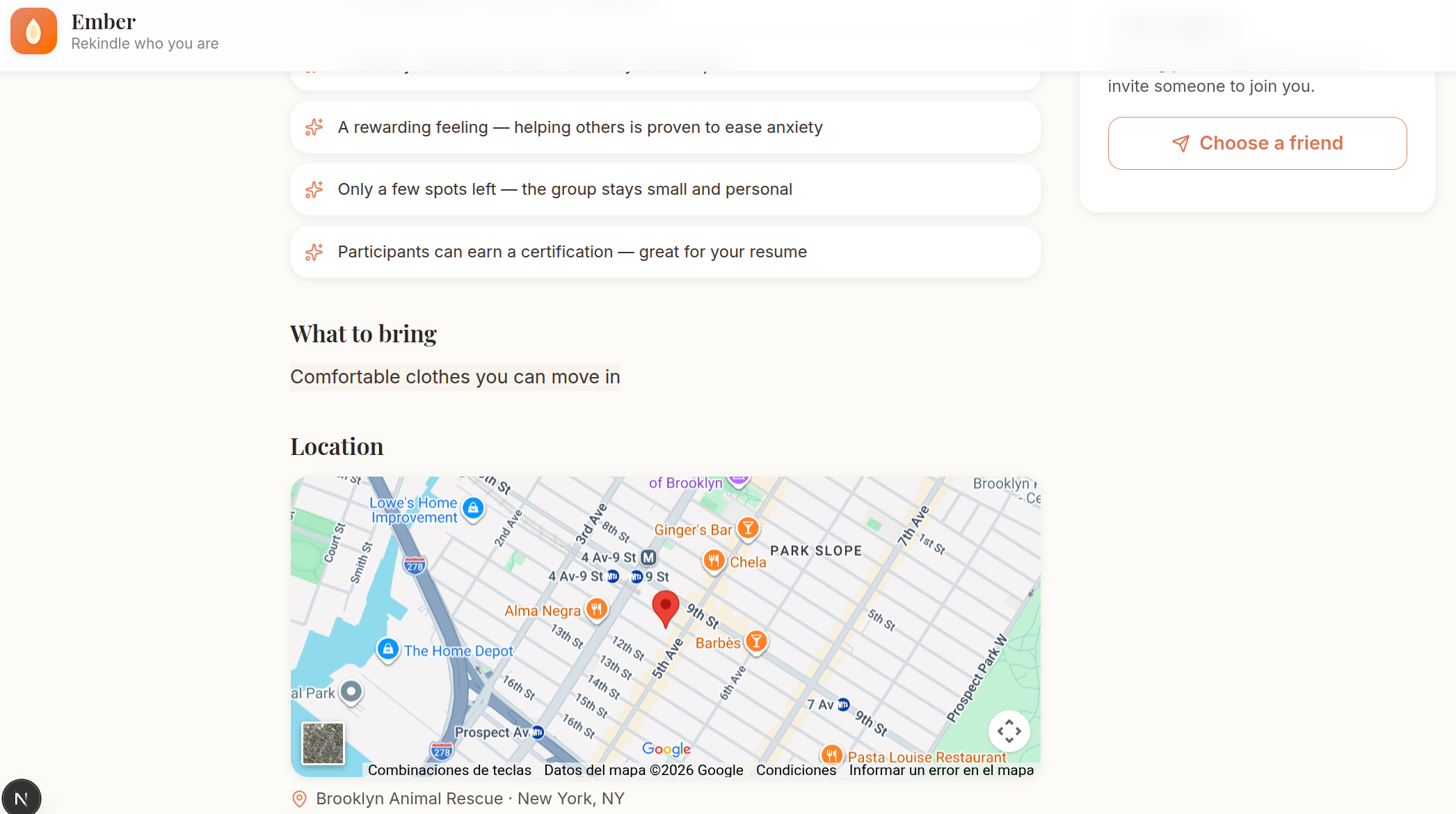
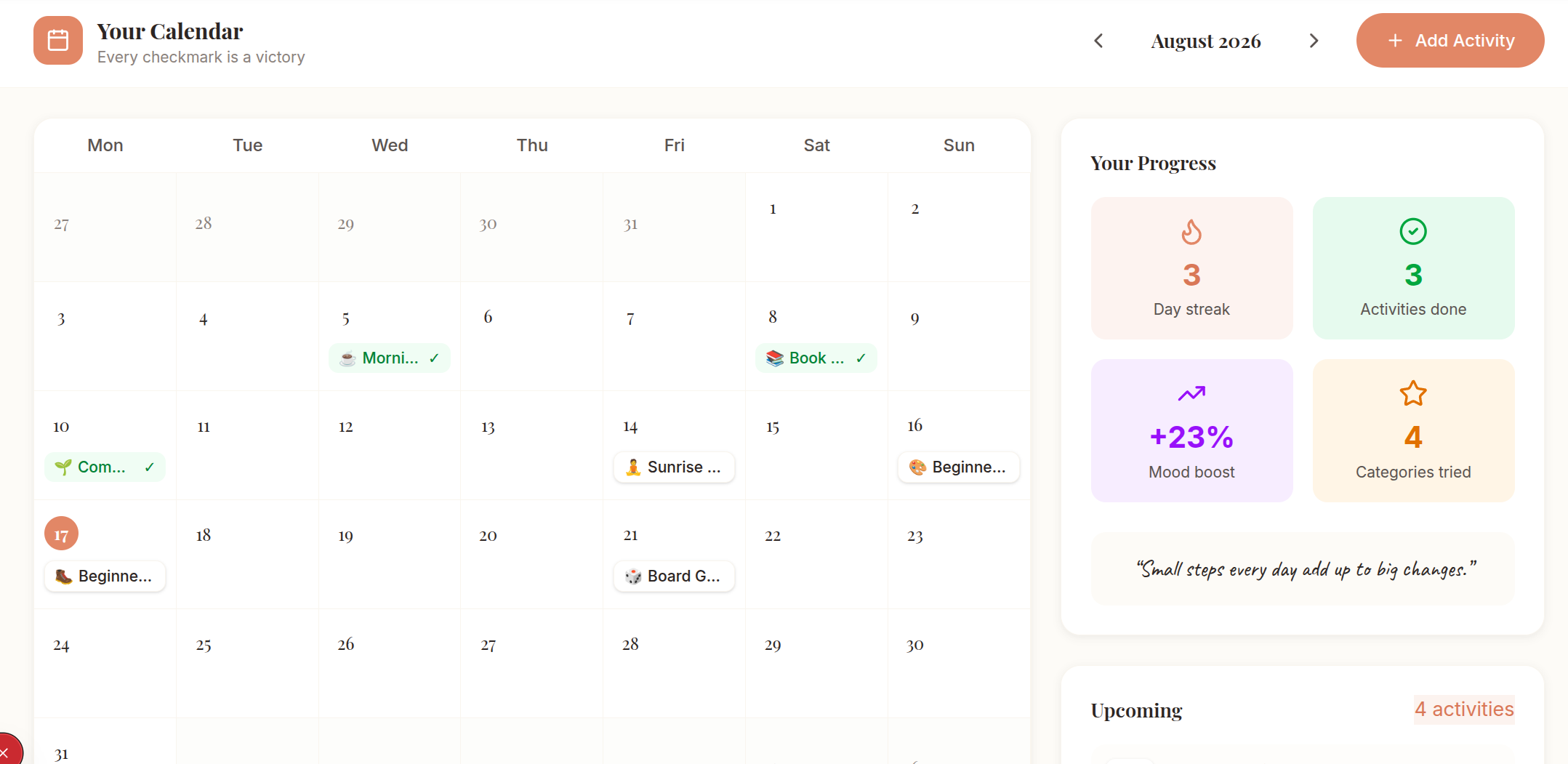
FACE-TO-FACE ACTIVITIES — A curated catalog of low-pressure, real-world experiences matched to your anxiety level. The agent handles logistics: scheduling, reminders, and AI-drafted friend invitations.
THE INNER CIRCLE — Manage trusted friends and invite them to activities with personalized, relationship-aware email/SMS messages.
PRIVACY-FIRST HYBRID ARCHITECTURE Before any intimate text is analyzed, it passes through a Privacy Layer powered by Gemma 4 on Vertex AI: names, schools, and locations are anonymized, and a millisecond-level crisis check runs first — triggering the 988 lifeline if needed. Only anonymized text ever reaches Gemini 3.5 Flash for deep emotional coaching — a privacy-first step no other hackathon entry performs. Maximum empathy. Maximum privacy. Raw text is never exposed.
How i built it
Ember runs on a dual-layer hybrid AI architecture, built entirely on Google Cloud:
FRONTEND (Next.js 16 + React 19 + Tailwind CSS v4)
- 8 pages: Landing, Journal, Activities, Friends, Calendar, Dashboard, Ember Program (for partner organizations), and interactive Scenarios
- The "Living Ember" — a real-time visual representation of the user's inner state that breathes, grows, and changes color based on emotion analysis
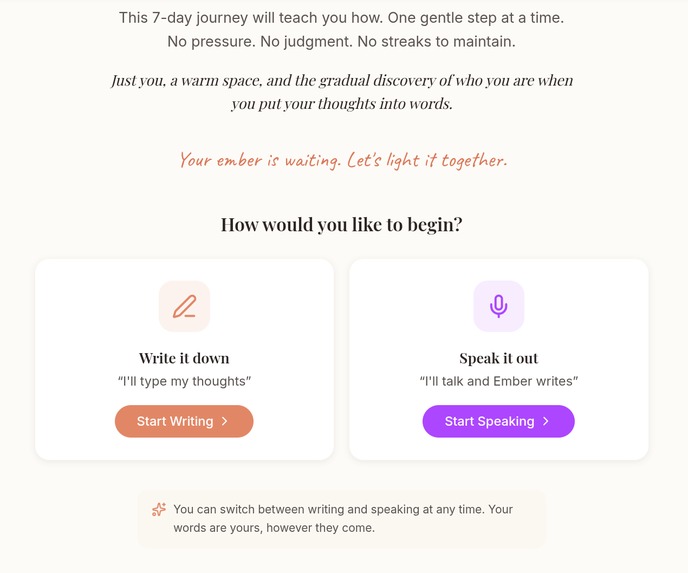
- Multimodal UX: voice input, voice writing mode, voice coach output, and a guided 4-7-8 breathing exercise
BACKEND (FastAPI + Python on Google Cloud Run)
- Google ADK (Agent Development Kit) orchestrates a "Resilience Coach" agent with 5 tools: journal analysis, activity discovery, calendar scheduling, email invitations, and reflection capture
- Gemini 3.5 Flash (Vertex AI) powers deep emotional reasoning
- Gemma 4 (Vertex AI Model Garden) runs the Privacy Layer: PII anonymization, crisis detection, and instant mood analysis
- Google Cloud Firestore stores the Identity Graph, journal entries, and the activity catalog
- Google Places API powers "Disconnect Mode" — geolocated real-world interventions that pull users out of the scroll
KEY FEATURES
- Spark Challenges: pattern detection generates personalized micro-challenges that turn insight into action
- Letters to Future You: sealed letters that prove ~87% of feared predictions never come true
- Pattern Reveal: weekly analysis of emotional landscape and growth
- The Ember Program: a dedicated initiative inviting organizations (art studios, libraries, sports clubs) to join the movement
The entire system is designed so every digital interaction leads to a concrete action in the physical world.
Challenges i ran into
Creating a self-help app aimed at a young audience strikes me as a huge challenge in itself, since you have to make it interesting enough to motivate them to use it without putting them under pressure. Balancing empathy with safety. Mental health is a sensitive domain. I had to design the agent to support without diagnosing, and to detect crisis locally (via Gemma) so help resources appear in milliseconds, not after a cloud round-trip.
Making privacy real, not a slogan. Young people won't write honestly if they fear their secrets go to the cloud. The Gemma 4 Privacy Layer was my answer: anonymize first, coach second.
Avoiding "another journaling app." The market is saturated with apps that capture insights but never translate them into action. Ember's differentiator — the bridge to face-to-face experiences — required building geolocation, activity matching, and friend-invitation flows that most journaling apps skip.
Choosing the right model size. I deliberately picked Gemma 4 (under 2GB) over larger models so the privacy layer stays accessible on mid-range devices, not just flagships.
Accomplishments that i'm proud of
A privacy-first hybrid architecture: Gemma 4 anonymizes and checks for crisis before Gemini 3.5 Flash does the deep emotional reasoning.
The "Living Ember" — turning introspection into a visible, breathing metaphor that users fall in love with.
Turning insight into action: Spark Challenges, Disconnect Mode with real Google Places data, and AI-drafted friend invitations.
A complete design system ("Warm Sunset") that feels like a café, not a hospital.
Responsible AI: clear mental-health disclaimers, crisis detection with the 988 lifeline, and a self-help (not clinical) positioning.
What i learned
I’m just starting to get to know the Google Cloud platform, as this is my first time working on a project there. I have to admit it’s a bit intimidating at first, but as you deploy things, you begin to understand and familiarize yourself with the platform. You realize it has immense power if you learn how to use it effectively.
Agentic AI is most powerful when it DOES things, not just talks: scheduling, inviting, geolocating, and adapting.
Privacy is a feature, not an afterthought — especially for young users.
The best mental-health technology is the kind that helps you put the phone down.
Small models (Gemma 4 can handle safety-critical preprocessing while large models (Gemini 3.5 Flash) handle deep reasoning — a cost-effective, accessible division of labor.
What's next for Ember
On-device Gemma via Google AI Edge SDK for true local processing on mobile
Twilio SMS integration for direct friend invitations
Guardian Mode: user-controlled scroll awareness and alternatives
Mobile apps (iOS/Android) with haptic feedback
Scaling the Ember Program to onboard real partner organizations and that society becomes aware of the major issues confronting today's youth.
Longitudinal research partnerships to validate the Identity Graph approach
Built With
- fastapi
- gemini-3.5
- gemma-4
- google-adk
- google-cloud
- google-cloud-firestore
- google-places
- next.js
- python
- react
- typescript
- vertex-ai
- web-speech-api

Log in or sign up for Devpost to join the conversation.