-
-
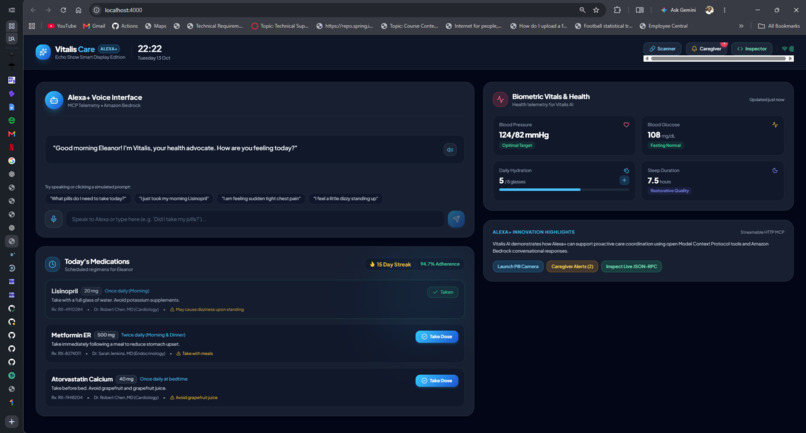
Vitalis-AI-Dashboard
-
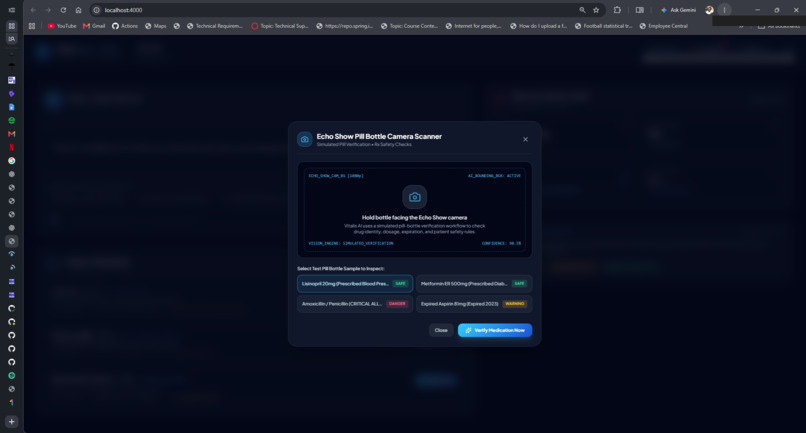
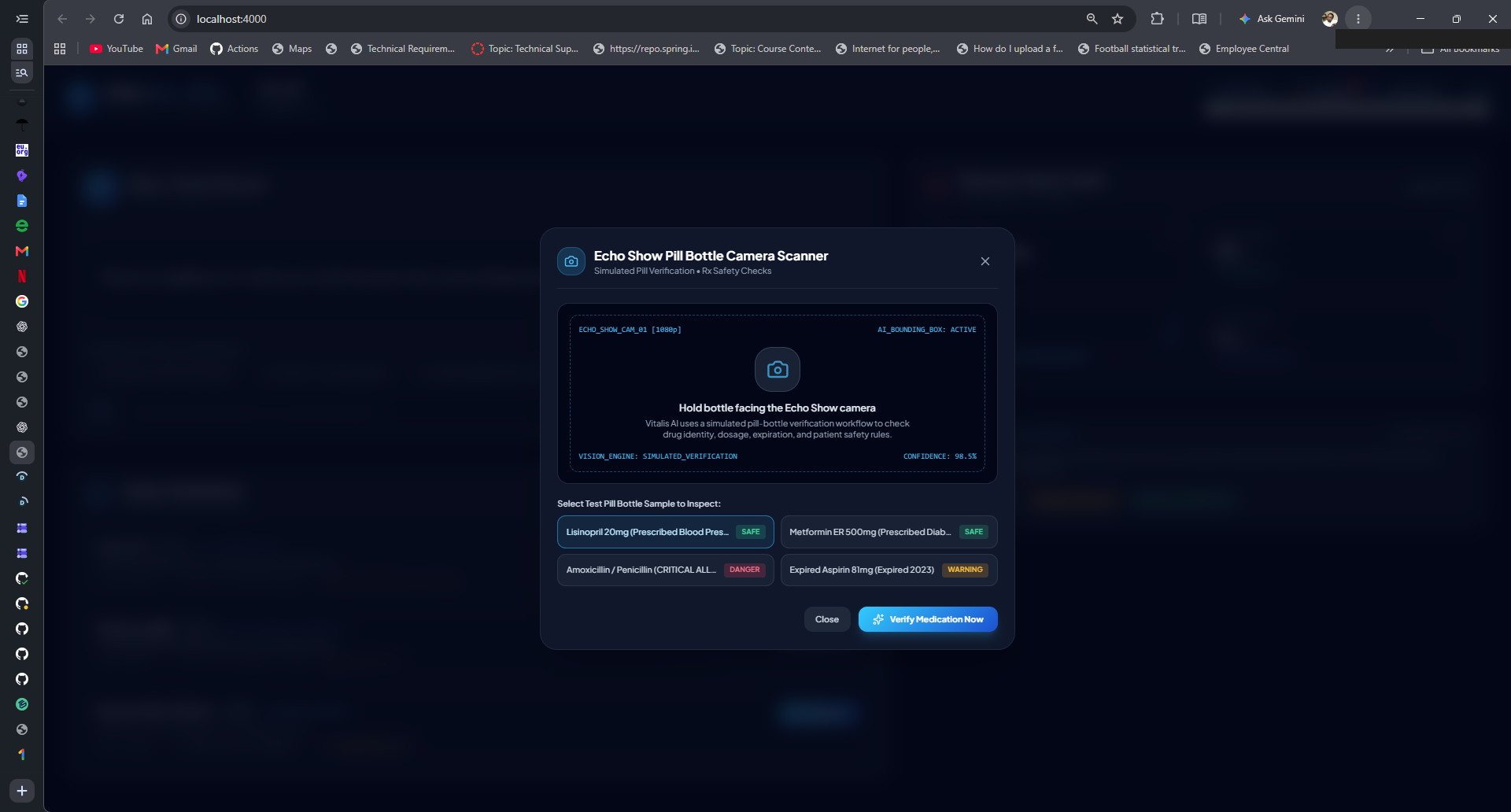
Pill Scanner
-
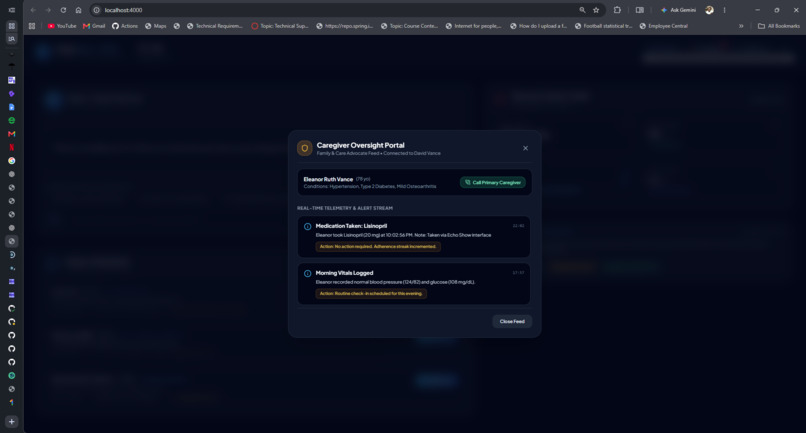
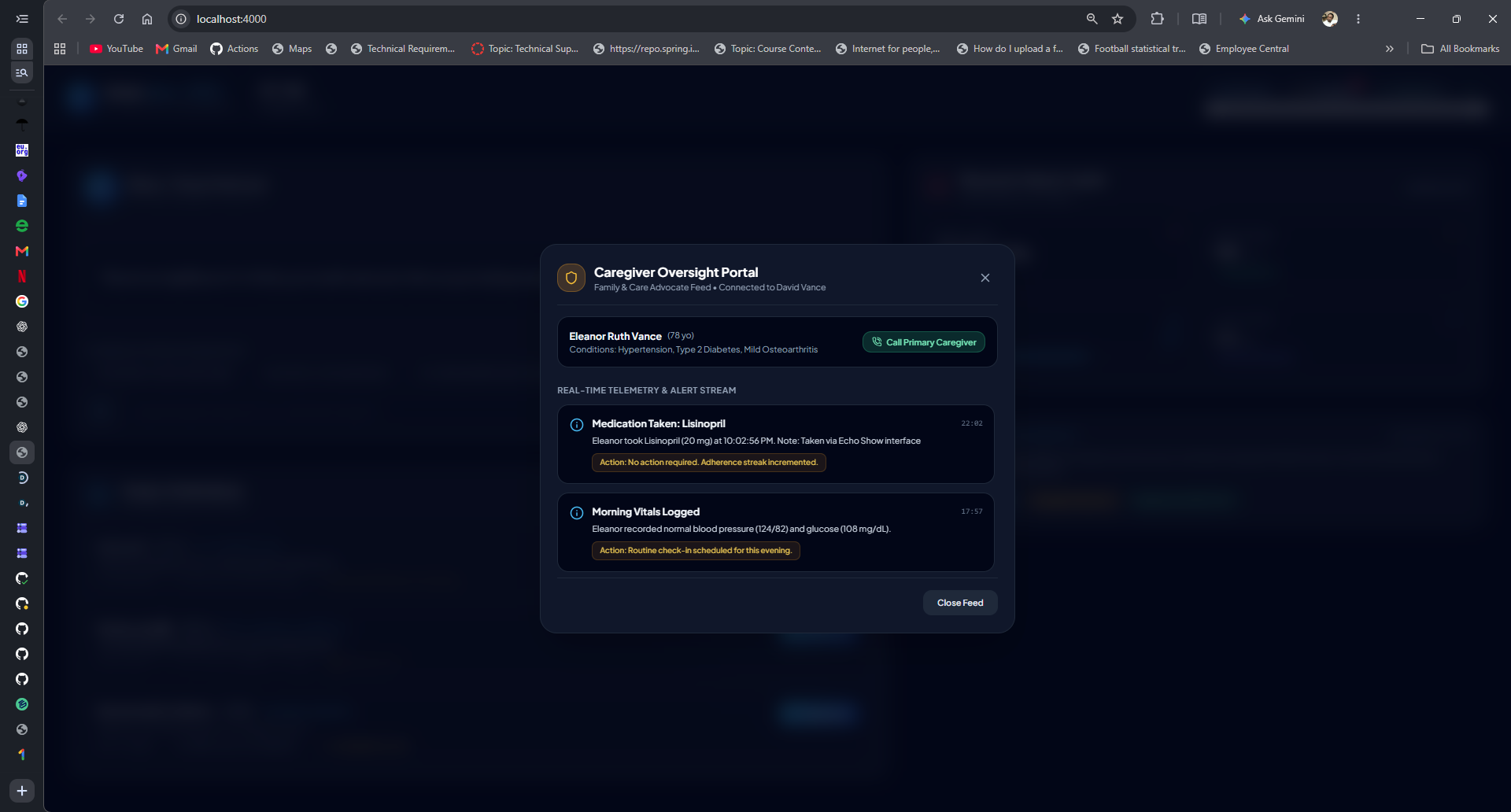
Caregiver Portal
-
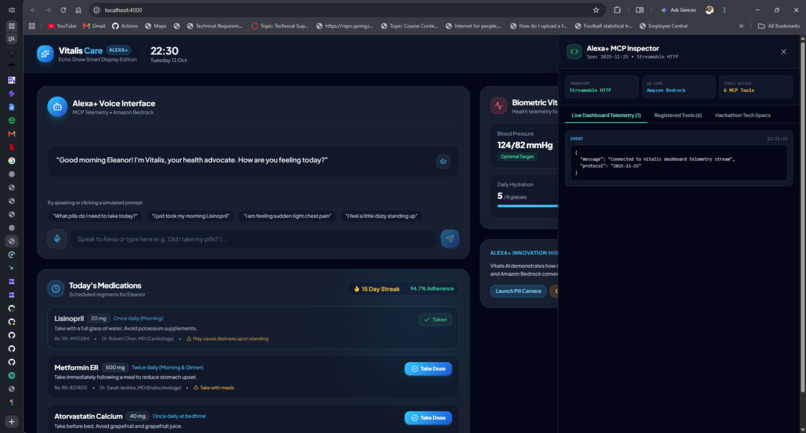
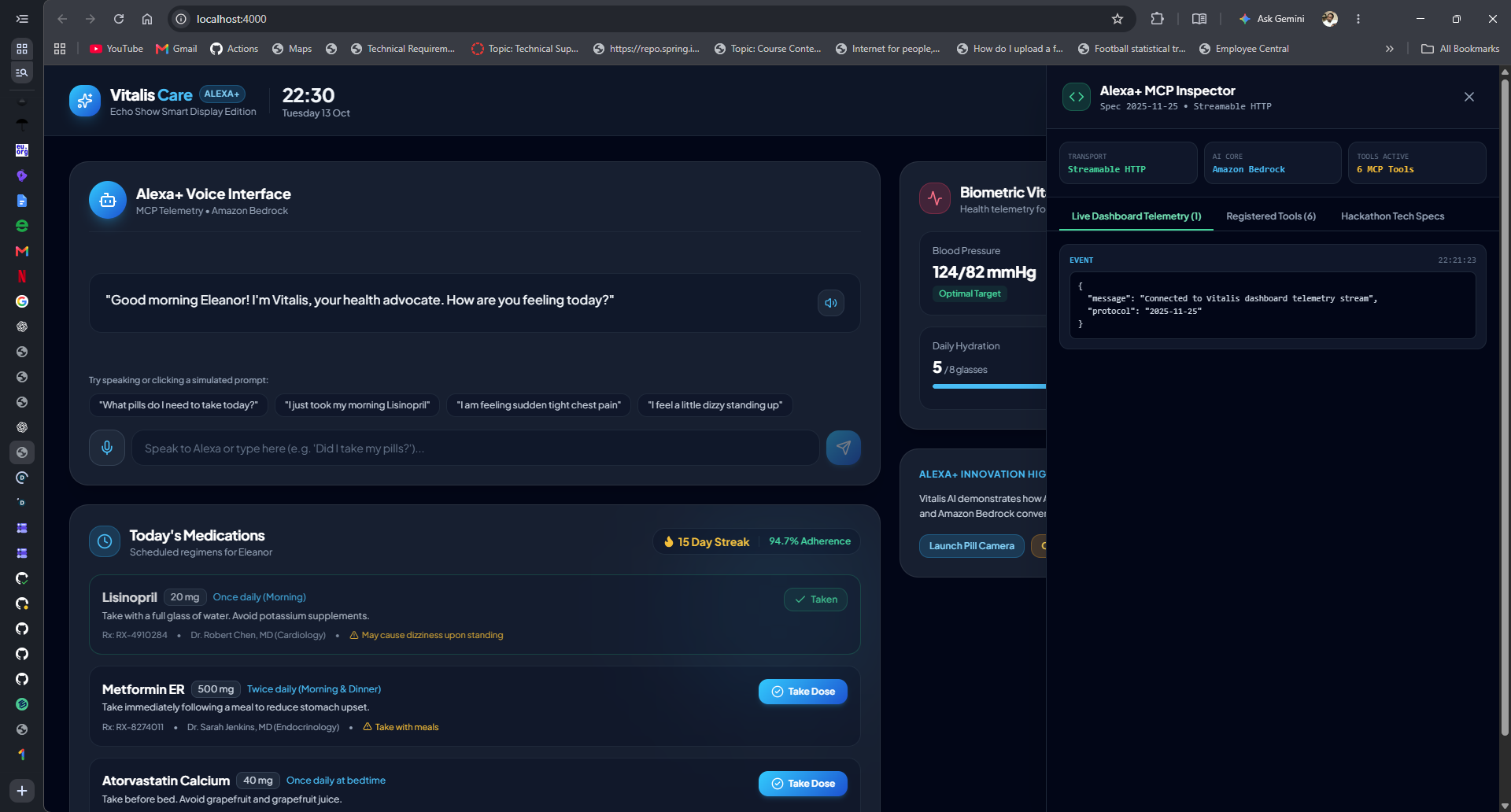
MCP Inspector
-
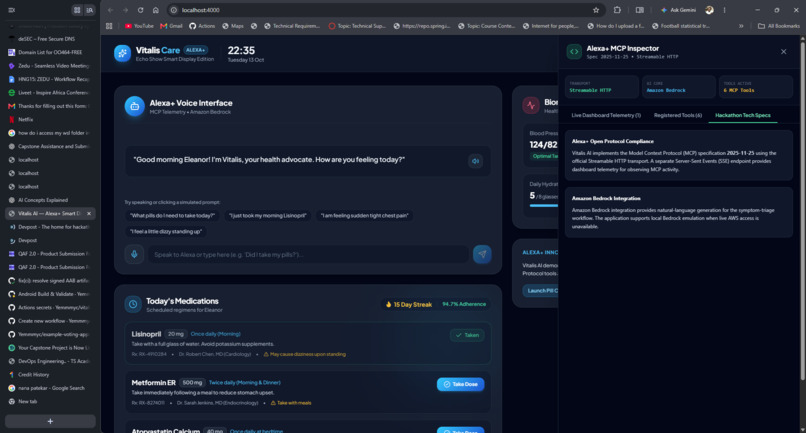
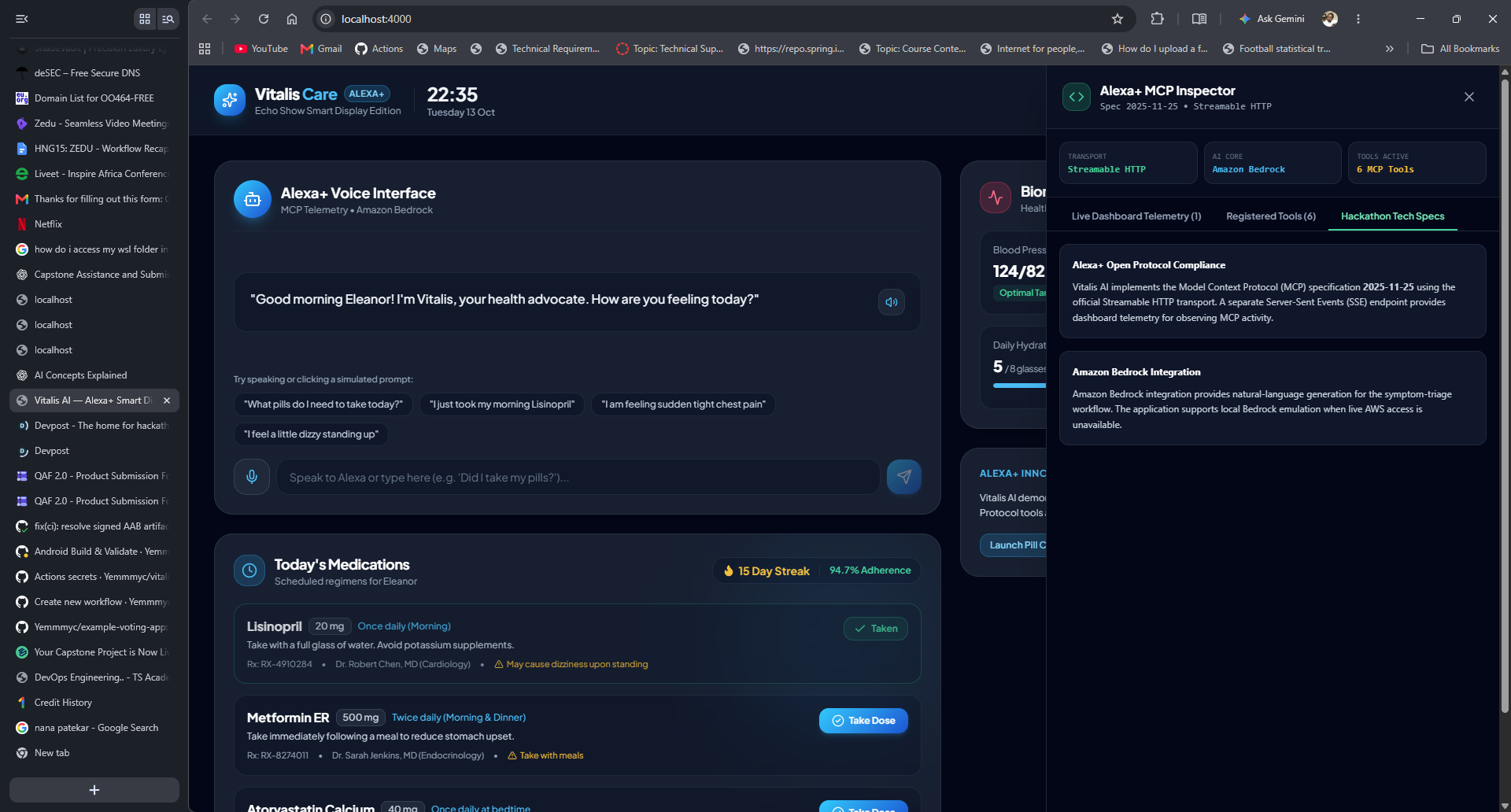
Hackathon Technical Specifications
-
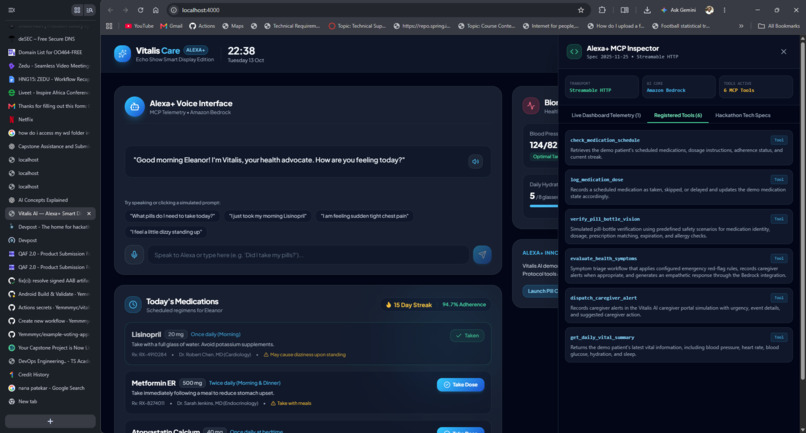
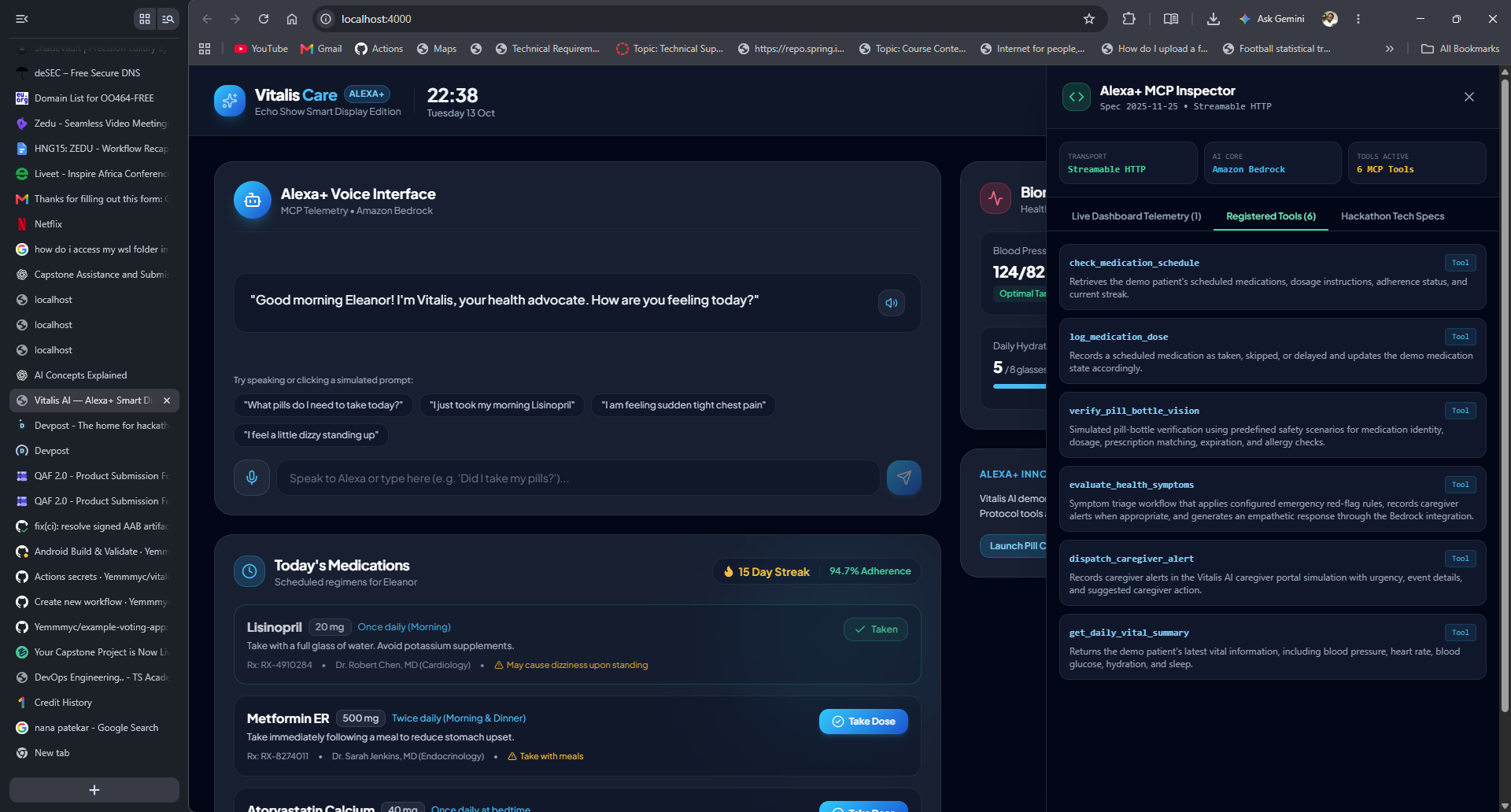
Registered MCP Tools
Vitalis AI — Autonomous Eldercare & Health Advocate for Alexa+
Inspiration
Vitalis AI was inspired by a practical problem: older adults and their caregivers often need simple, timely help with everyday health-management tasks such as medication schedules, medication logging, symptom assessment, vital-sign review, and caregiver escalation.
The goal was to explore how an Alexa+-style agentic experience could coordinate these workflows through natural conversation while keeping safety-sensitive decisions explicit and understandable.
What We Built
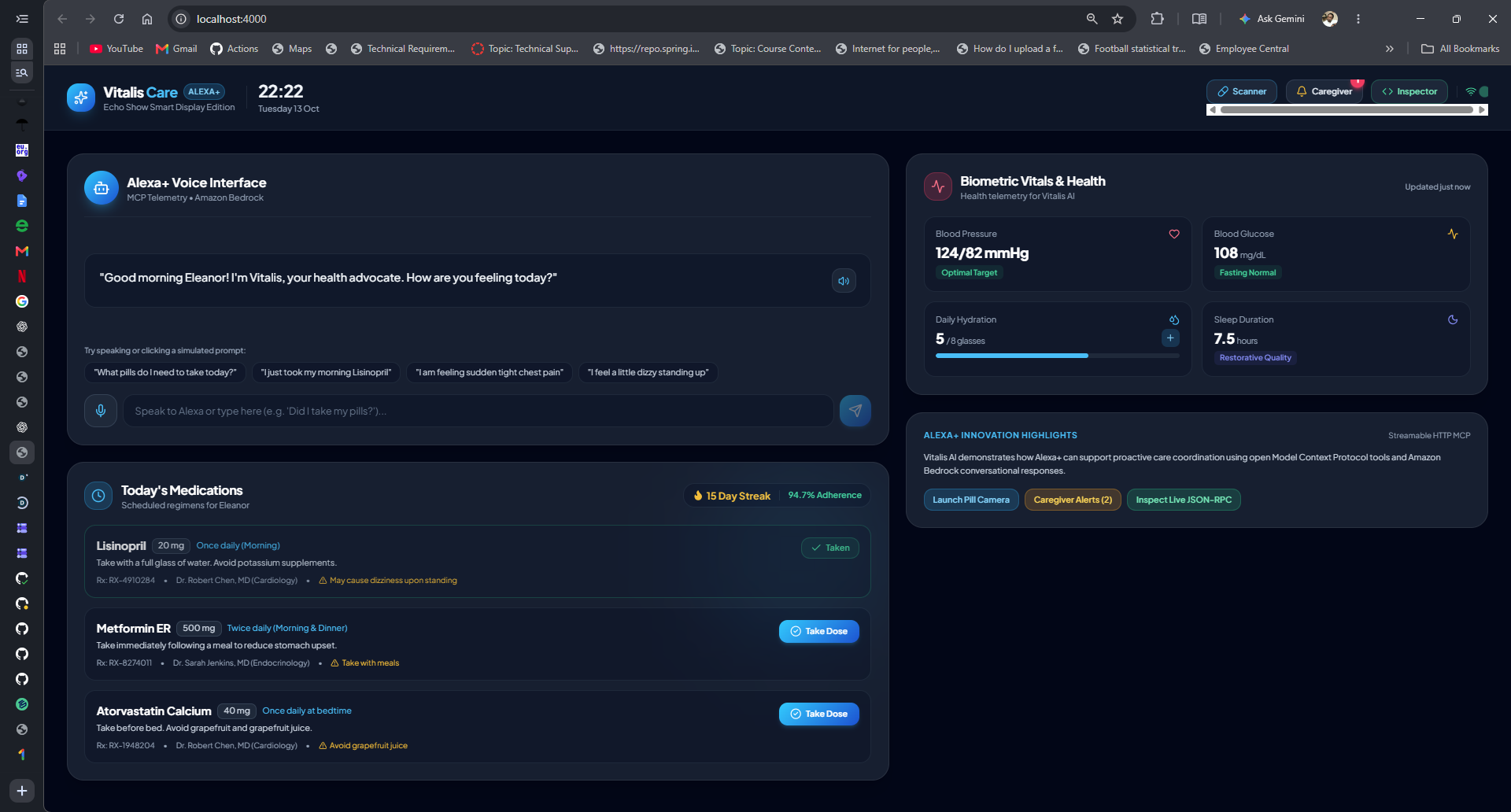
Vitalis AI is a self-hosted MCP-based eldercare and health advocacy assistant designed for an Alexa+-style experience.
The project uses the Model Context Protocol (MCP) over Streamable HTTP and implements MCP protocol version 2025-11-25. An Echo Show-style interface provides the user-facing experience while the MCP server exposes six application tools:
check_medication_schedulelog_medication_doseverify_pill_bottle_visionevaluate_health_symptomsget_daily_vital_summarydispatch_caregiver_alert
The MCP server uses the official TypeScript MCP SDK and maintains stateful Streamable HTTP sessions.
Architecture
The application combines deterministic application workflows with Amazon Bedrock for natural-language generation.
The deterministic layer handles structured health workflows and safety-sensitive rules. For example, symptom evaluation uses explicit red-flag rules rather than allowing a language model to independently determine whether an emergency exists.
Amazon Bedrock is integrated through the AWS SDK and InvokeModelCommand for conversational natural-language generation.
The project also includes a local fallback so the application remains demonstrable when live Bedrock model access is unavailable.
For the Alexa+ track, the project demonstrates a self-hosted MCP architecture rather than claiming an official Alexa+ production integration.
Safety and Simulation Boundaries
Vitalis AI is a hackathon prototype and is not a medical diagnostic system or a replacement for professional medical care.
Some capabilities are intentionally simulated:
- Pill-bottle verification uses predefined demonstration presets rather than live computer vision.
- Caregiver alerts are represented through a simulated caregiver portal rather than real SMS, push notifications, or external emergency services.
- Daily vital-sign data is demonstration data.
- Symptom triage combines deterministic red-flag rules with conversational generation.
These boundaries are explicitly shown in the application and documentation.
What We Learned
The project provided practical experience implementing MCP with the official TypeScript SDK and Streamable HTTP, including stateful session management, tool registration, schema handling, and runtime testing.
We also learned that demonstrating an agentic workflow requires more than producing plausible language-model responses. Safety-sensitive actions need explicit application logic, clear boundaries, and transparent handling of simulated capabilities.
The project also exposed real-world onboarding friction with Amazon Bedrock Anthropic model access. The application successfully integrates the Bedrock Runtime SDK, but the AWS account's Anthropic first-time-use authorization remains pending with AWS Support. The project therefore uses a documented local fallback rather than claiming live Anthropic access that has not been granted.
Challenges
The main technical challenges included migrating the MCP implementation to the official SDK, implementing stateful Streamable HTTP sessions correctly, handling MCP session headers during testing, normalizing tool schemas, and maintaining truthful boundaries between implemented, simulated, and unavailable capabilities.
The project was tested locally with automated tests and production builds before submission.
Open Source Contribution
Alongside Vitalis AI, we created a separate open-source project during the hackathon window:
It provides a minimal TypeScript example of a stateful MCP server using Streamable HTTP, the official MCP SDK, an example tool, automated tests, and an MIT license.
The companion project captures reusable transport and session-handling knowledge developed while building Vitalis AI.
Additional Mobile Deliverable
Alongside the web-based hackathon demonstration, Vitalis AI also has an Android application branded Vitalis Care, packaged as an installable APK. This extends the project into a mobile format while keeping the web application, Echo Show-style simulator, and self-hosted MCP server at the centre of this hackathon submission.
Both deliverables are maintained in the same public GitHub repository, with their respective implementations and documentation clearly distinguished.
Built With
- alexa+
- amazon
- amazon-web-services
- bedrock
- context
- express.js
- http
- mcp
- model
- node.js
- protocol
- react
- sdk
- streamable
- typescript
- vite
- web


Log in or sign up for Devpost to join the conversation.