-
Hardware
-
Software
Inspiration
Hypertension is a very prevalent but often overlooked disease. Around a third of the US population (76.4 million over 20 years old) suffers from high blood pressure, and about 8% have hypertension unknowingly, making it a silent killer; more than half of all peoples 65 and older suffer from hypertension. We wanted to create something to help determine whether someone may have complications from hypertension, because it is the most common risk factor for strokes and heart attacks.
What it does
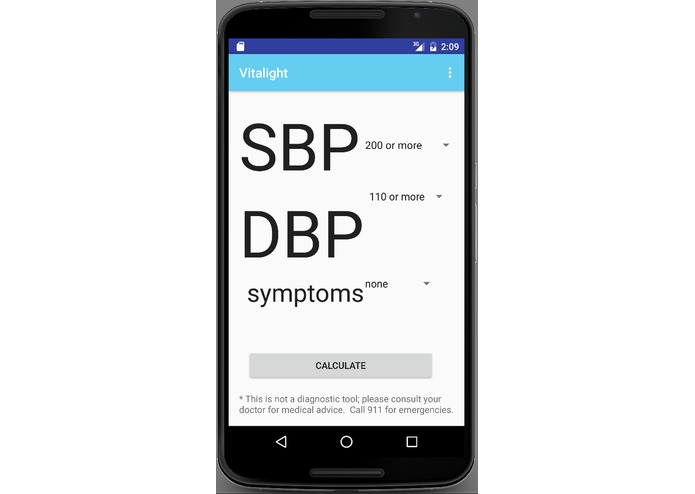
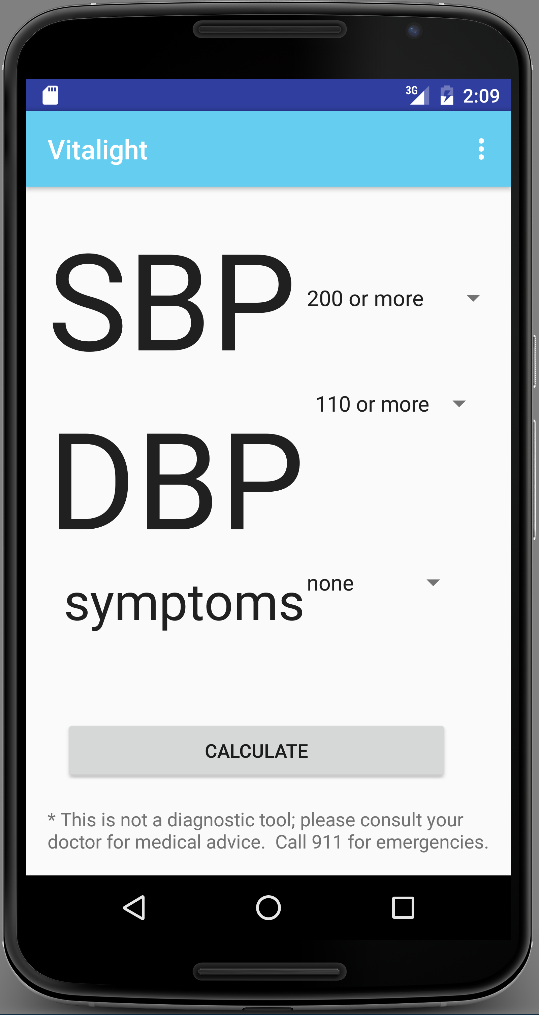
Vitalight, a portmanteau of "vital" from "vital signs" and "light," is a simple yet effective tool for notifying users if they may have hypertension issues. The user inputs his/her systemic blood pressure, diastolic blood pressure, and symptoms and is alerted of his/her hypertension state. Through clinical, well-established research, directions are given in the results: green means the user is healthy, yellow warns the user of potential health problems, and red directs them to the hospital.
How we built it
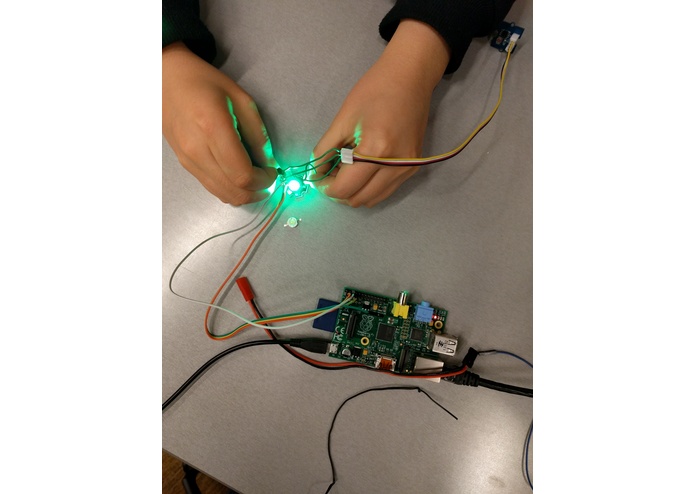
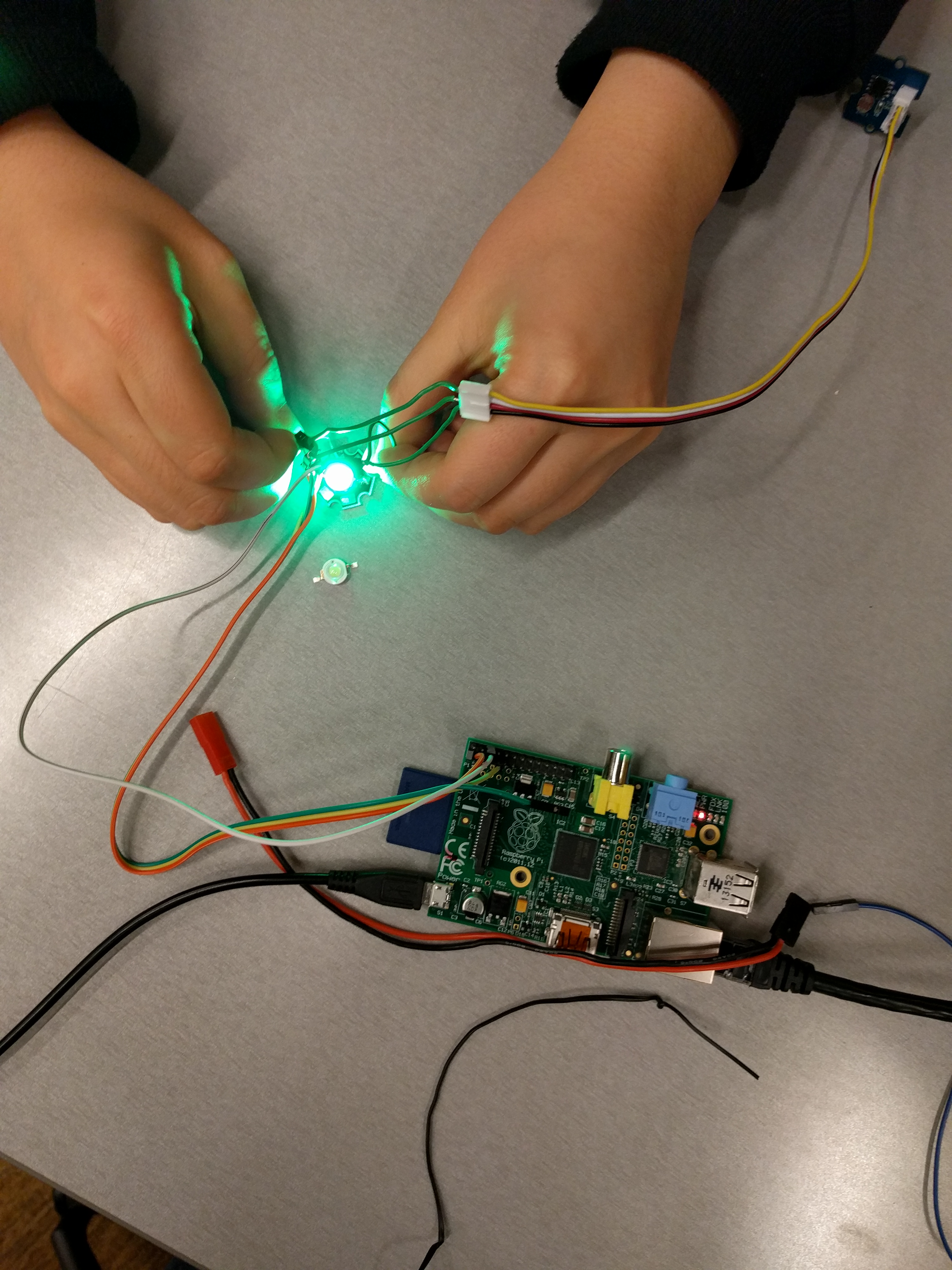
Raspberry Pi was connected to lights and sensors to determine heart rate and blood oxygenation. The user puts his/her finger on the sensor to get his/her pulse read.
Additionally, Android Studio was used to create the application for Vitalight.
Challenges we ran into
Due to time, experience, and resource limitations (ie. lack of soldering rods, insulation tape, etc.), the hardware and software was not fully developed.
Accomplishments that we're proud of
We believe the idea of the product can potentially help millions of lives. The tool is intended to be very simplistic to target a wide demographic, in particular, the aging population.
What we learned-
We came with limited experience in Arduino and app development, so we learned a lot about different technologies and programs.
What's next for Vitalight
We could develop additional functions for the app, such as a BMI calculator. Additionally, data could be uploaded to the cloud to map hypertension densities around the world. We could also integrate the tool into wearables. We may also add more comorbidities.
Built With
- android-studio
- arduino
- java
- luminosity-sensor
- raspberry-pi

Log in or sign up for Devpost to join the conversation.