Inspiration
About Vitalea 🌿
The Inspiration
Like many developers, I've watched friends and family struggle with diet apps that treat them like strangers every single day. My breaking point came when my sister said, "MyFitnessPal has no idea that I stress-eat every Thursday after my team meetings, even though I've logged it for months."
That's when it hit me: Netflix remembers every show you've glanced at. Spotify predicts your mood better than you do. But health apps? Complete amnesia.
I realized we could use GPT's conversational abilities not just to chat, but to build genuine long-term memory and pattern recognition. What if your diet app actually remembered that you do great until Thursday meetings? What if it noticed you succeed when you meal prep on Sundays? What if it learned YOU?
What We Built
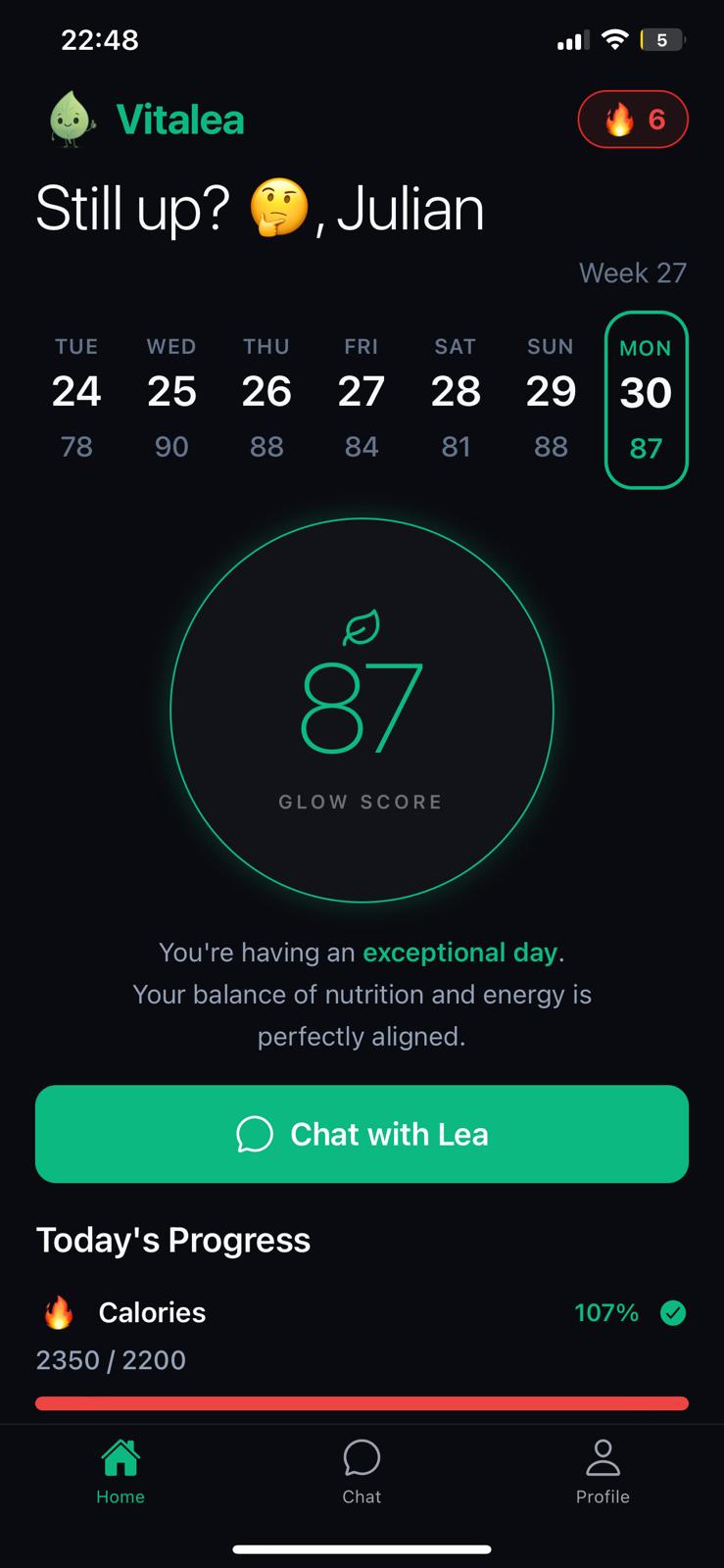
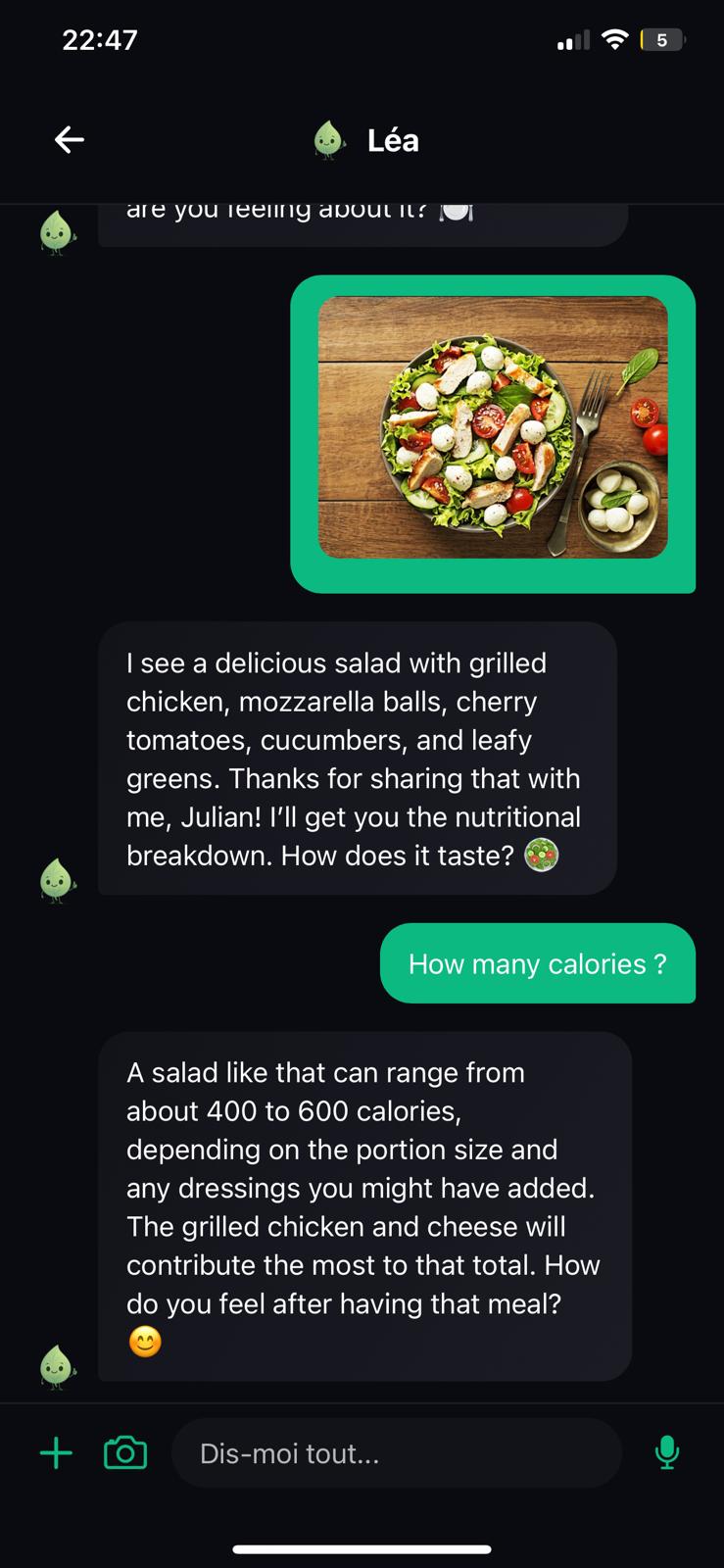
Vitalea is an AI nutrition companion powered by GPT-4o-mini that maintains persistent memory of each user's journey. Unlike traditional diet apps that focus on calorie counting, Lea (our AI) recognizes patterns, understands triggers, and provides contextual support based on your entire history.
Key Technical Features:
- Conversational AI with Long-term Memory: Every interaction is analyzed and stored, building a comprehensive understanding of each user
- Real-time Pattern Recognition: Custom algorithms detect behavioral patterns across time (stress eating, weekend habits, success factors)
- Photo Analysis Integration: GPT-4 Vision API analyzes meal photos while maintaining context
- LLM-Powered Scoring: Daily wellness scores that consider life context, not just calories
How We Built It
Tech Stack:
- Backend: Python FastAPI + PostgreSQL for persistent storage + Redis for caching
- AI/ML: OpenAI GPT-4o-mini for conversations, GPT-4 Vision for food analysis
- Mobile: React Native (Expo) + TypeScript
- Infrastructure: Railway (backend) + Supabase (database) + RevenueCat (monetization)
Architecture Highlights:
Conversation Excellence Engine: Every message passes through our context extraction pipeline, updating user patterns in real-time without blocking the chat experience
Dual-Model Approach: We use GPT-4o-mini for cost-effective conversations while leveraging specialized extraction prompts to build structured data from unstructured chats
Smart Caching: User context is compiled and cached in Redis, providing <50ms response times while maintaining conversation fluidity
Pattern Detection System: Background jobs analyze user data to identify correlations between mood, timing, food choices, and success rates
Challenges We Faced
1. Balancing Context Without Overwhelming the LLM
- Challenge: How do you give GPT enough context to be helpful without hitting token limits?
- Solution: We built a dynamic context builder that prioritizes recent patterns and relevant historical data based on the current conversation topic
2. Real-time Extraction Without Latency
- Challenge: Extracting structured data from conversations while maintaining chat-like response times
- Solution: Asynchronous pipeline that responds immediately while processing extractions in the background
3. Cost Management at Scale
- Challenge: Photo analysis and conversations could get expensive quickly
- Solution: Implemented smart caching, batch processing, and a freemium model with 3 photos/day to maintain unit economics
4. Making AI Feel Human
- Challenge: Avoiding the "robotic nutritionist" feel while maintaining accuracy
- Solution: Carefully crafted prompts that emphasize empathy, celebration of small wins, and understanding of human imperfection
What We Learned
Context is Everything: The same 500-calorie meal means something different after a stressful day vs. a workout. LLMs excel at understanding this nuance when given the right context.
Memory Creates Trust: Users opened up more when Lea remembered previous conversations. The retention difference between "another diet app" and "Lea remembers me" was dramatic in beta testing.
Simplicity Wins: We initially planned complex features but found that users valued one thing above all: being remembered and understood. We stripped back to focus on that core experience.
AI + Human Psychology: The technical challenge wasn't just implementing GPT - it was understanding how to make AI feel like a supportive friend rather than a judge.
Vitalea proves that the future of health tech isn't more tracking - it's AI that truly understands and remembers each individual's journey.
"The best technology disappears. With Vitalea, the AI fades into the background, leaving users with something more valuable: a companion who actually gets them."

Log in or sign up for Devpost to join the conversation.