-
-
-
-
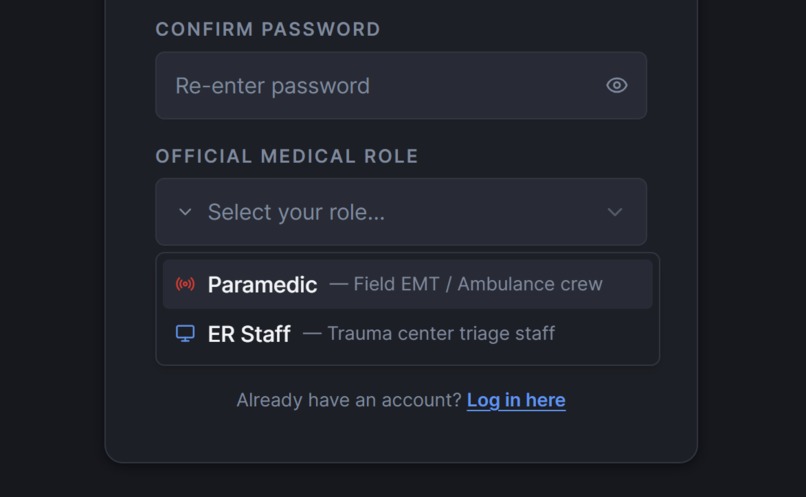
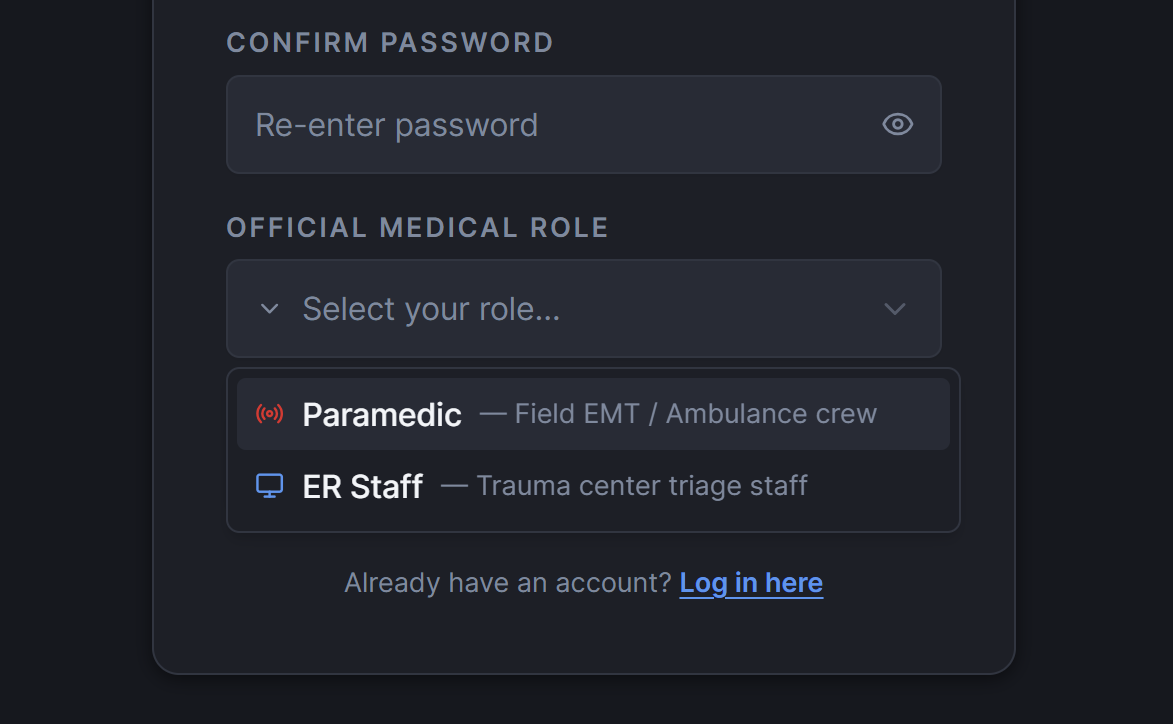
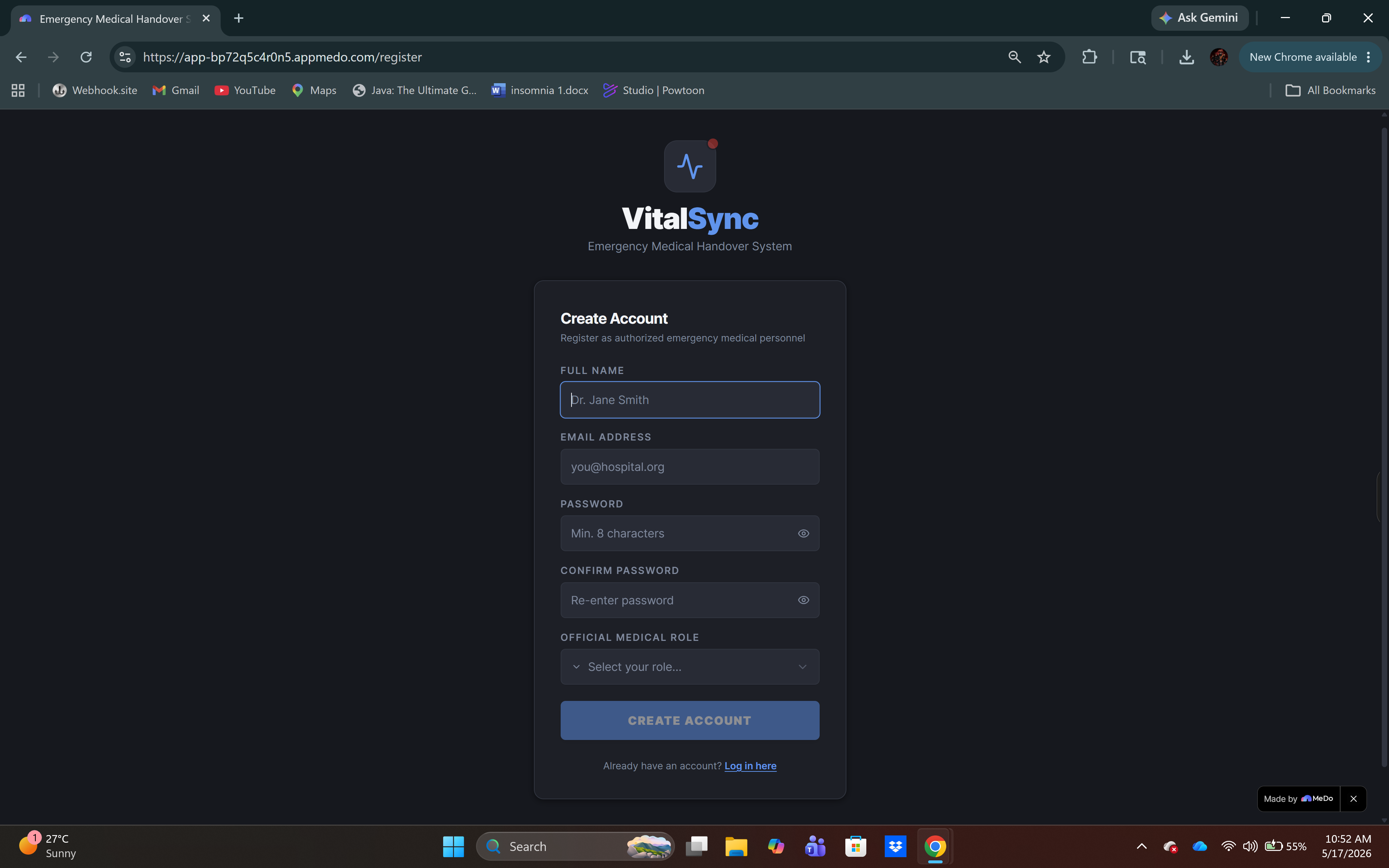
Two role registration option
-
-
-
-
-
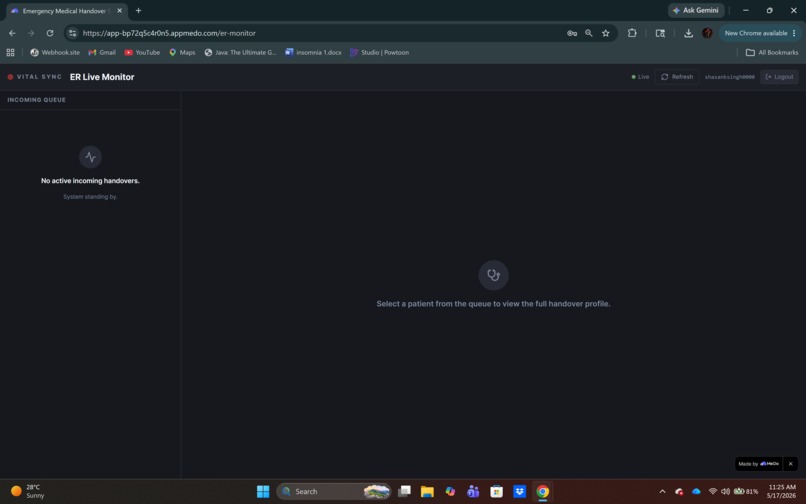
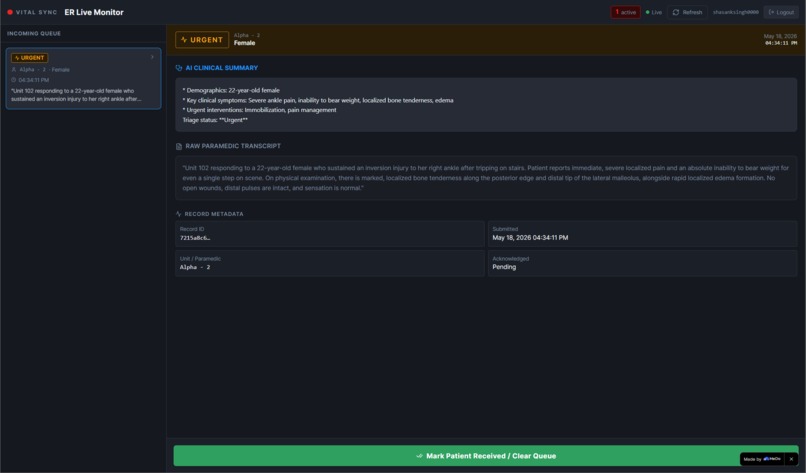
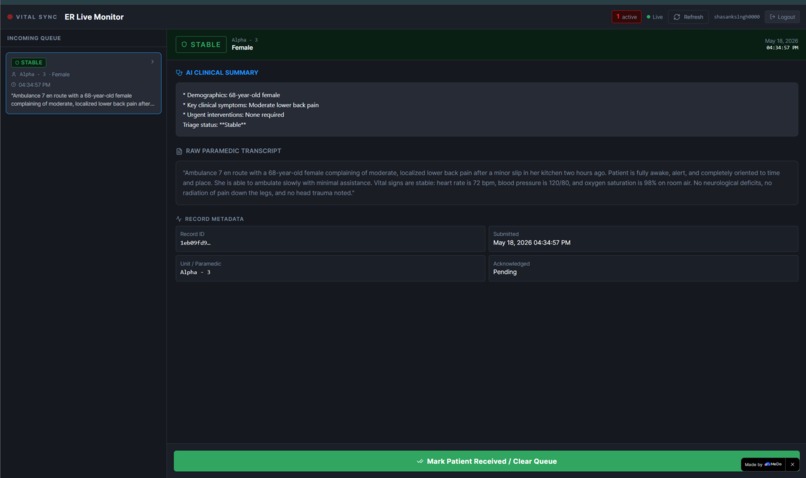
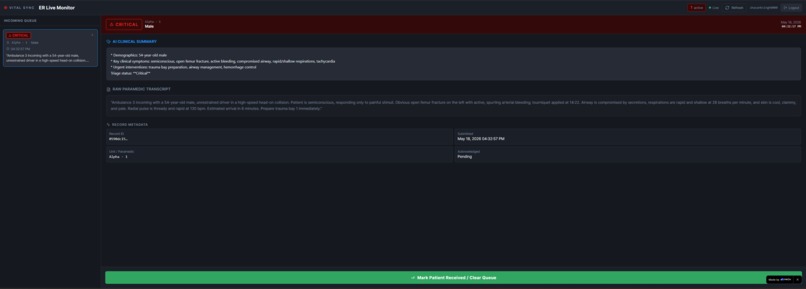
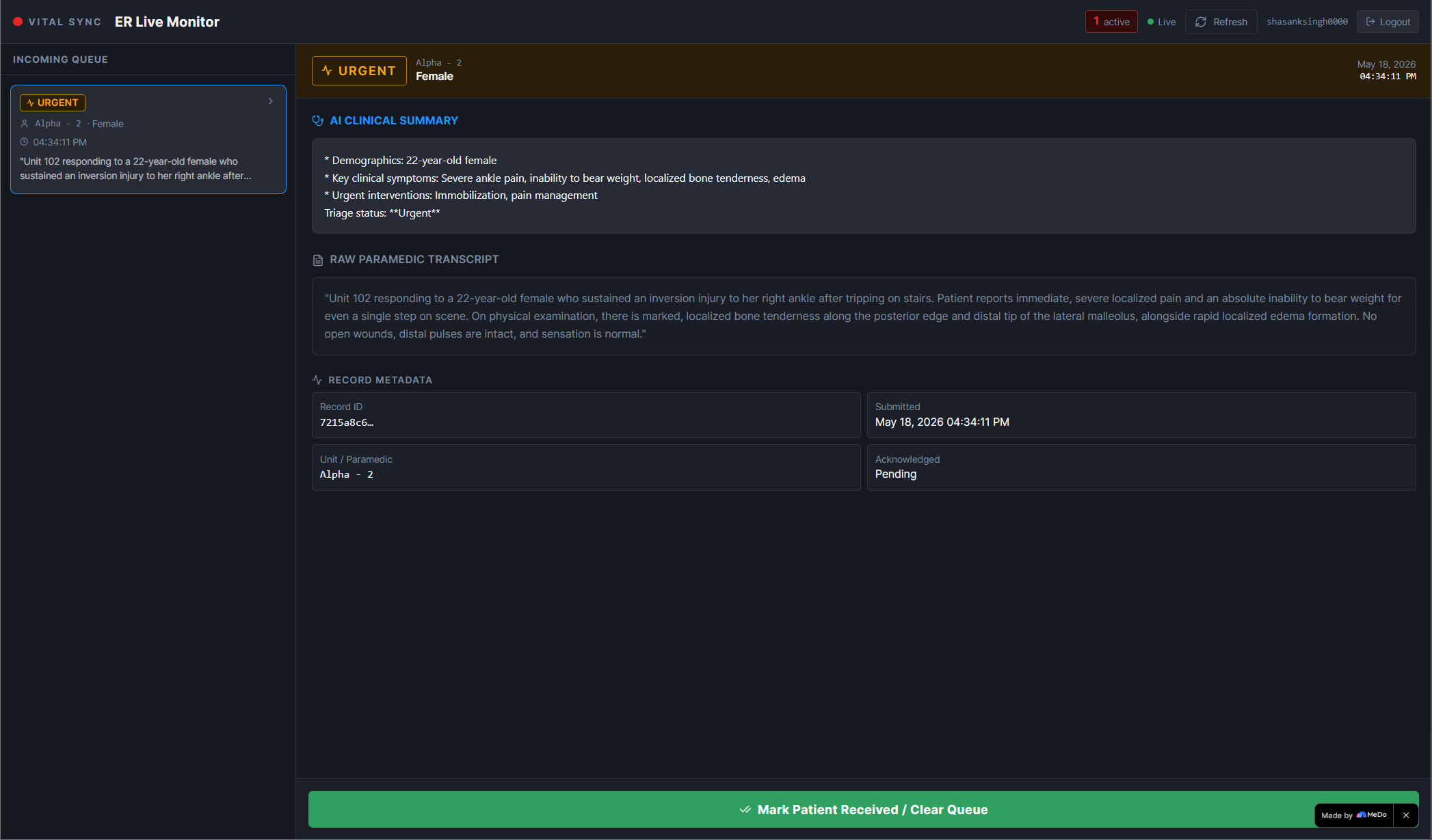
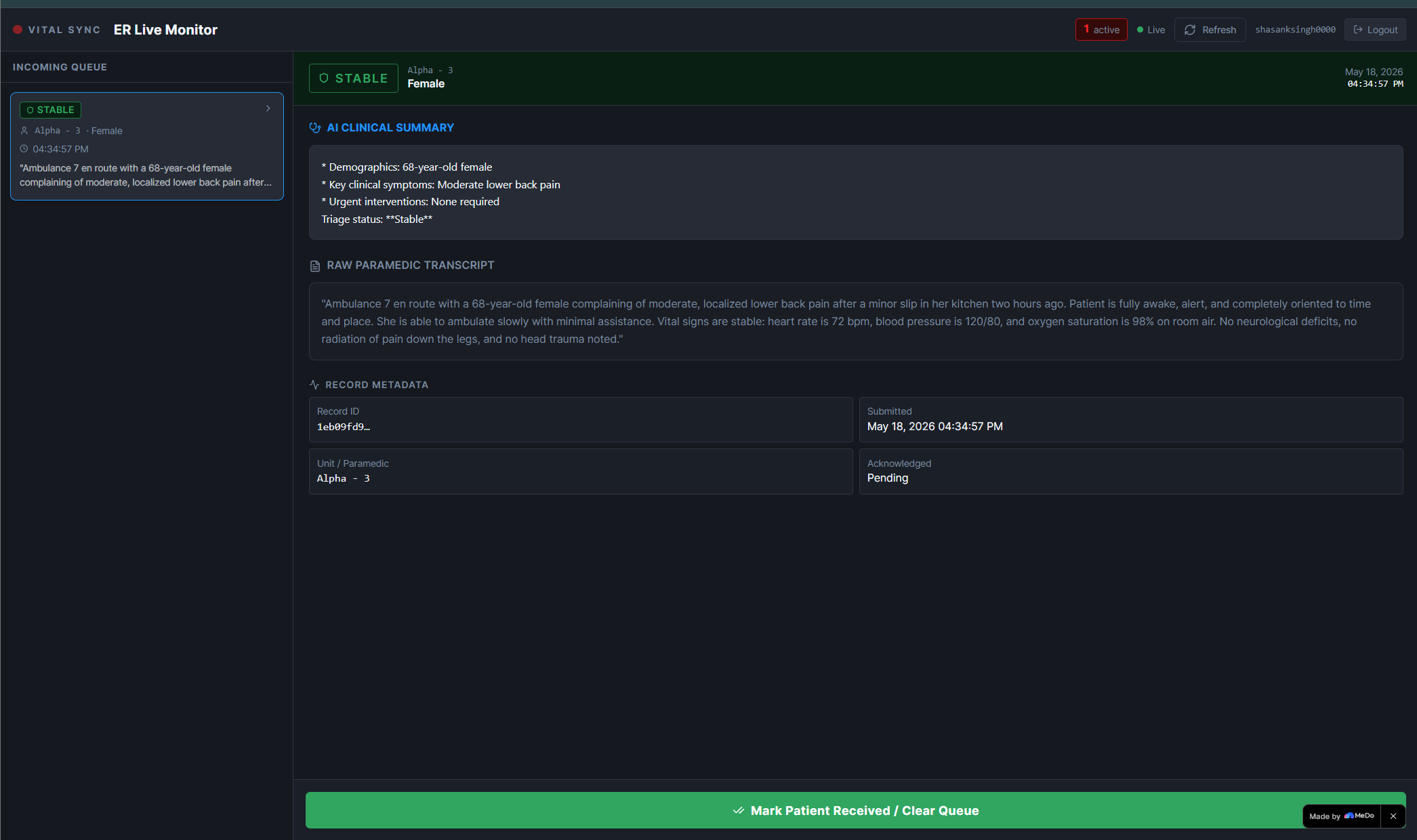
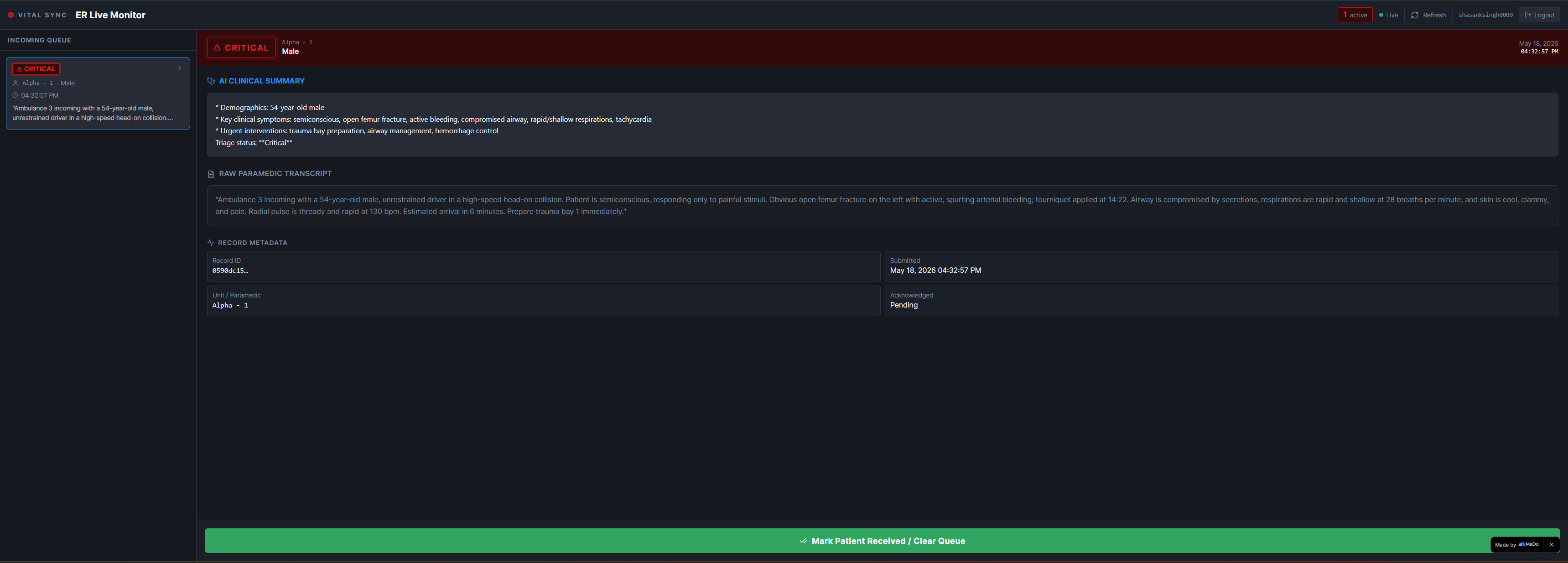
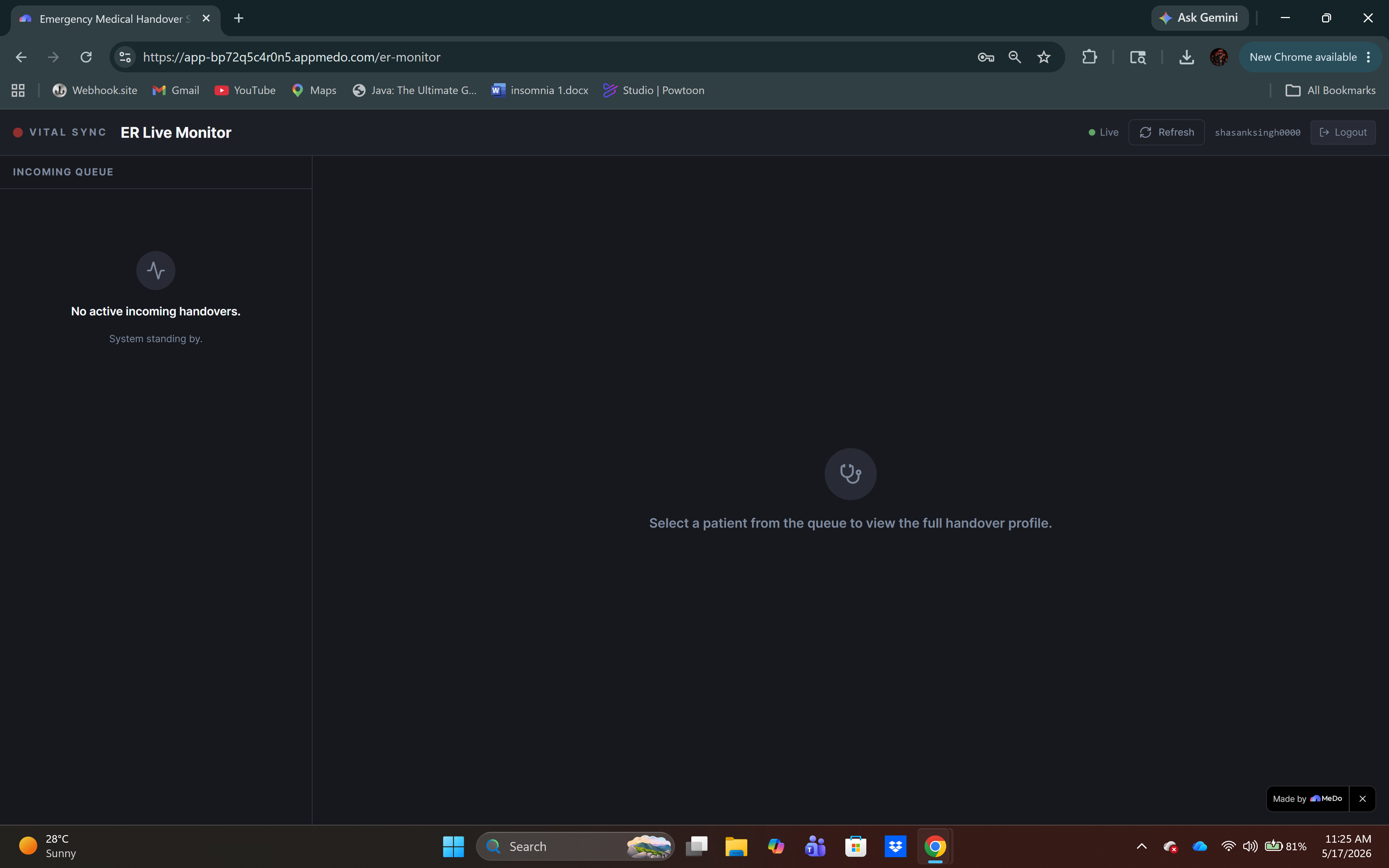
ER screen
-
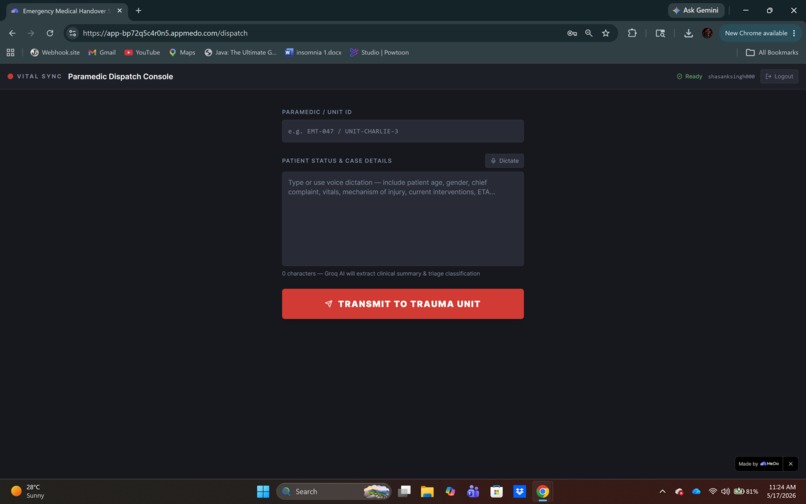
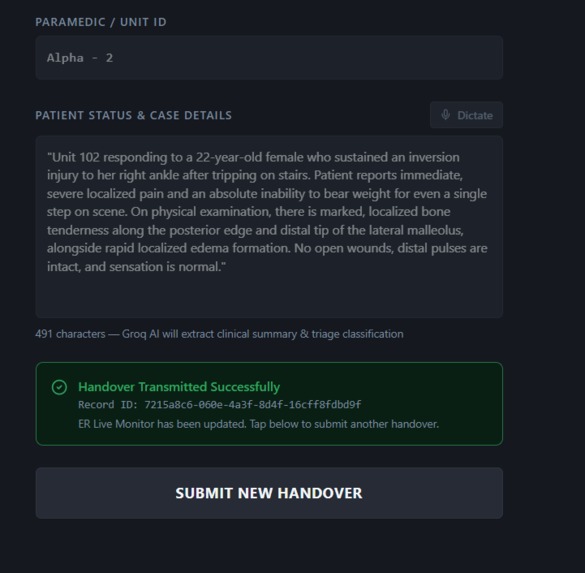
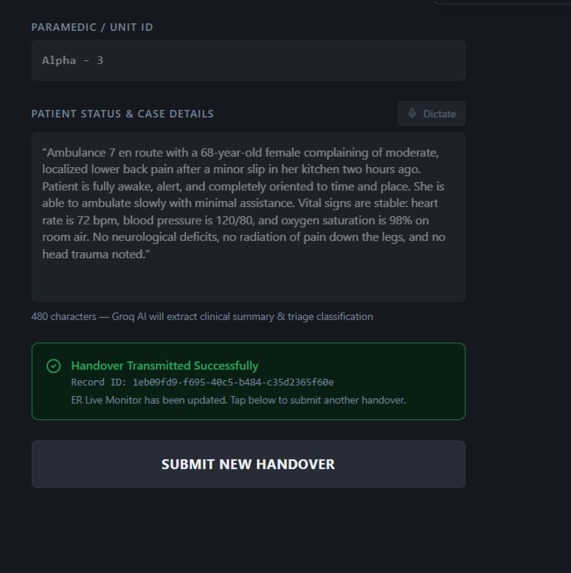
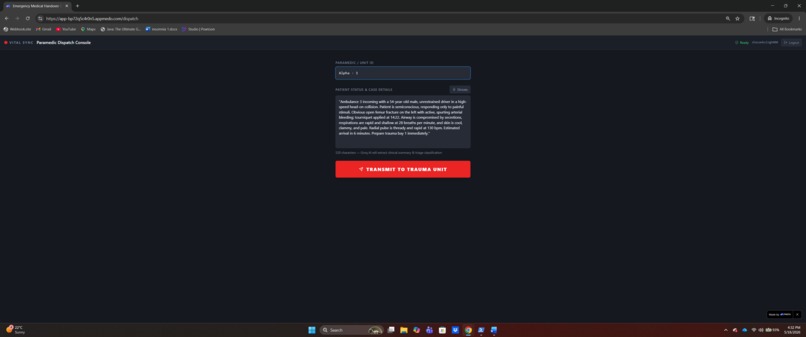
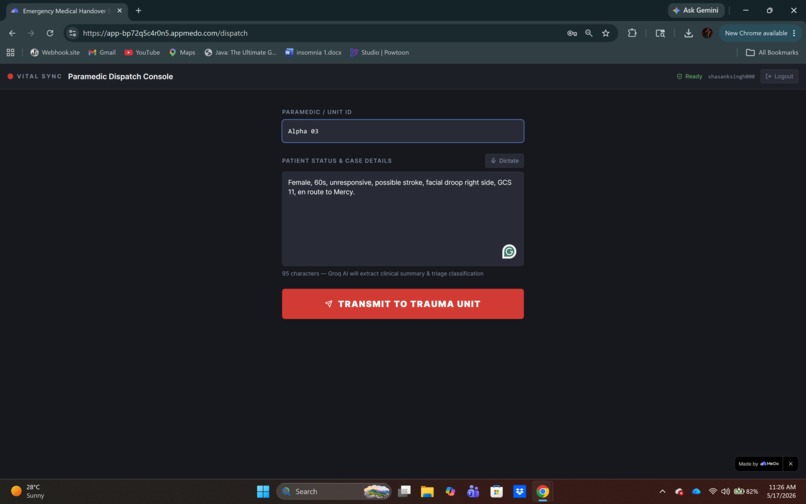
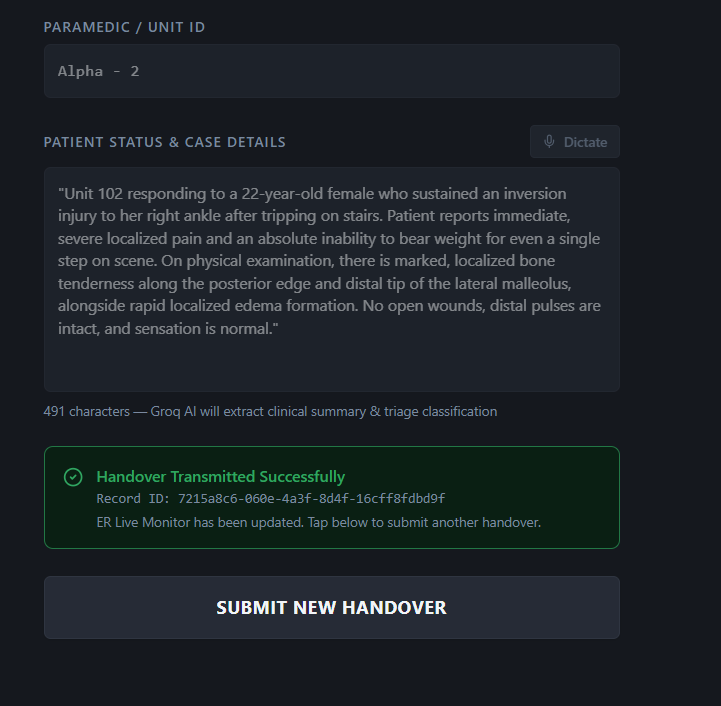
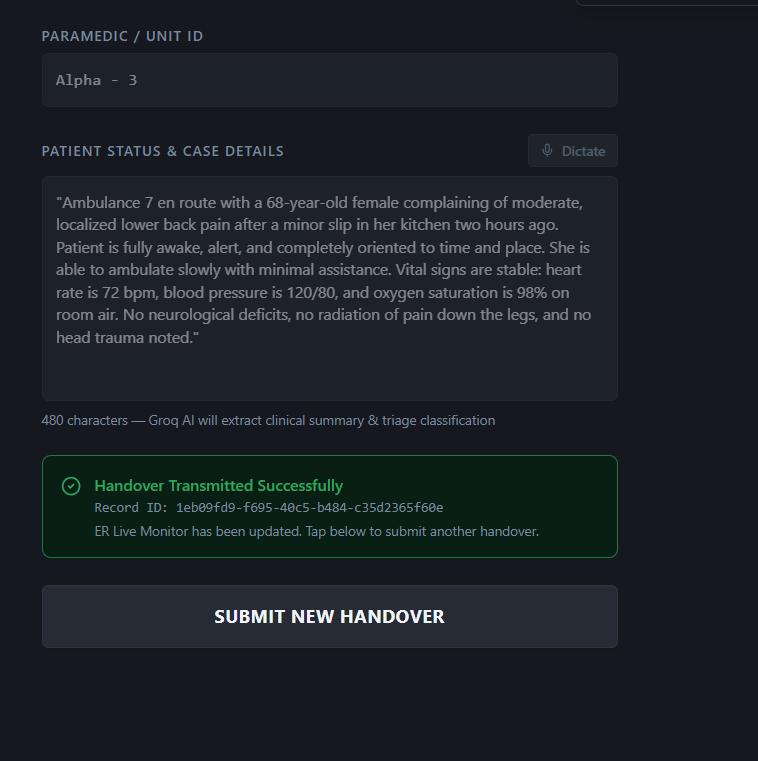
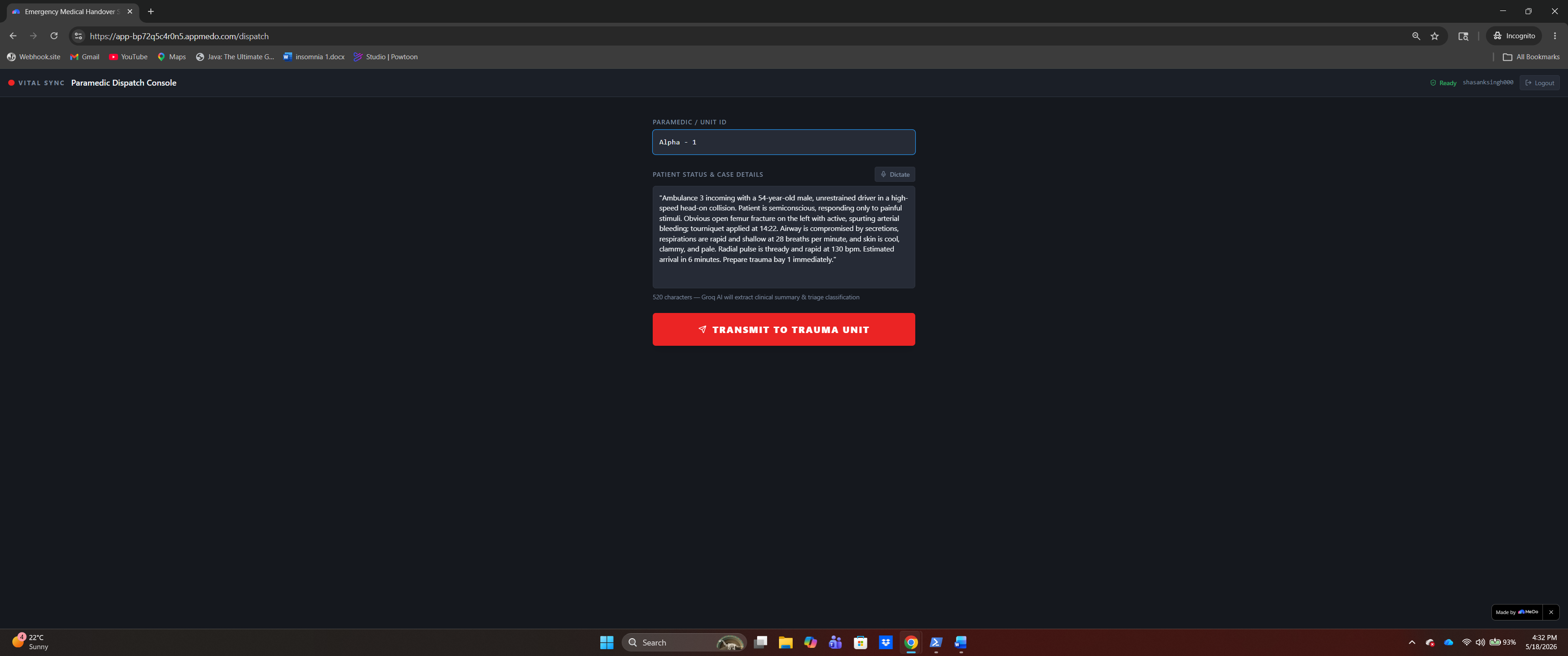
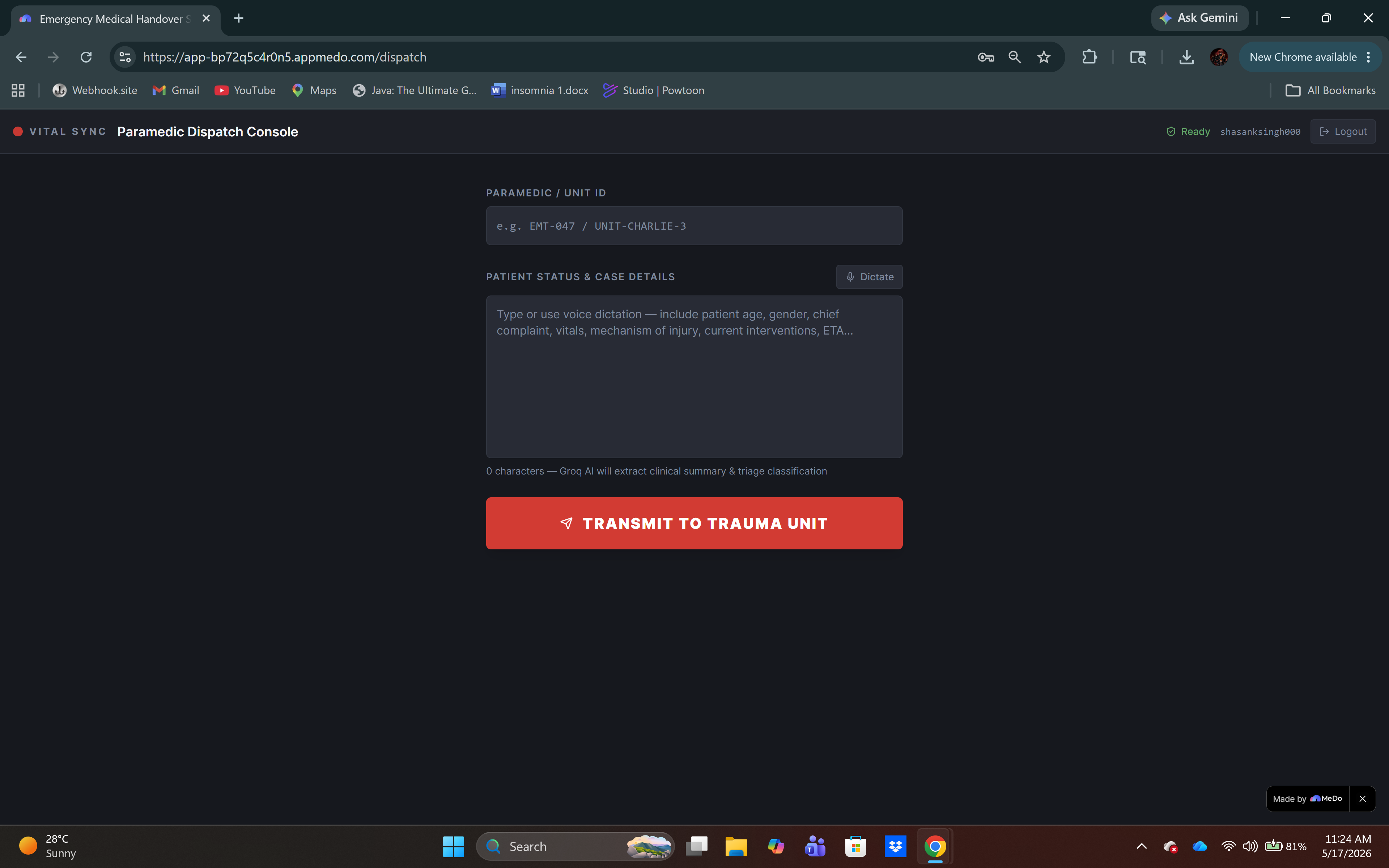
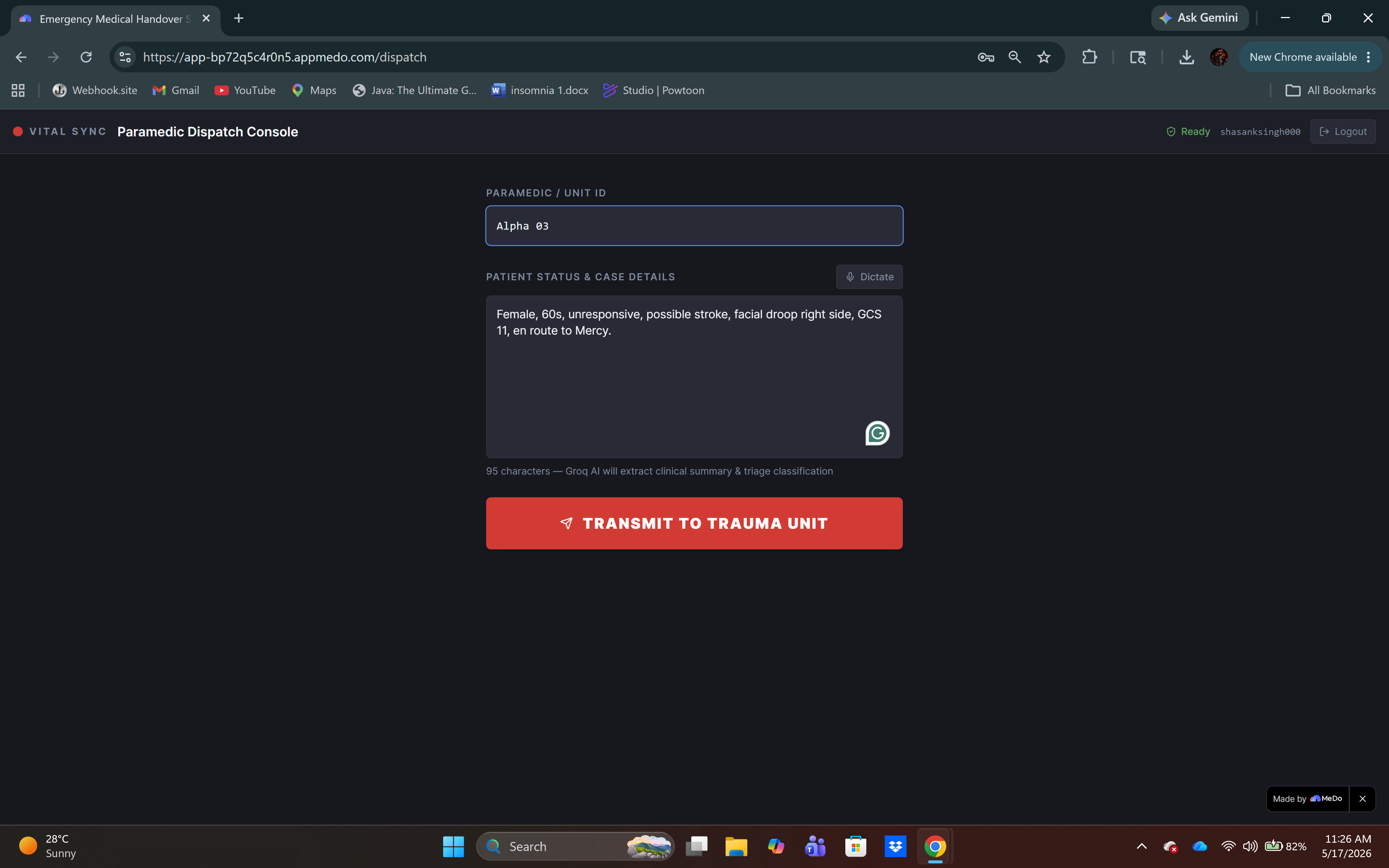
Paramedic screen
-
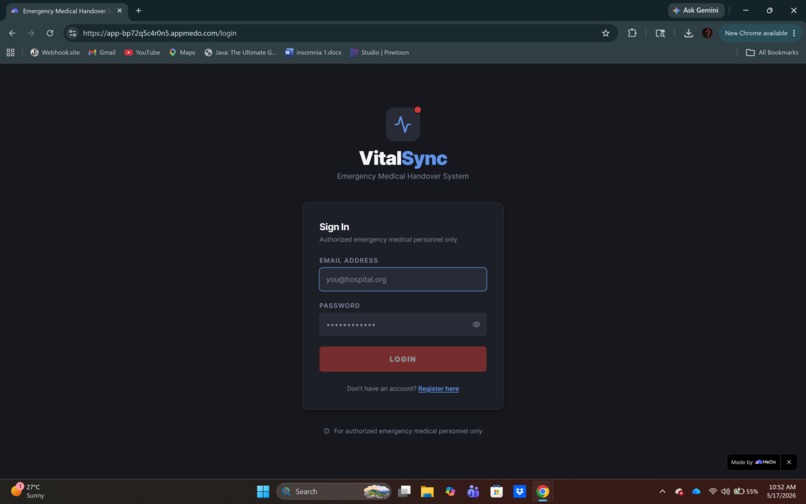
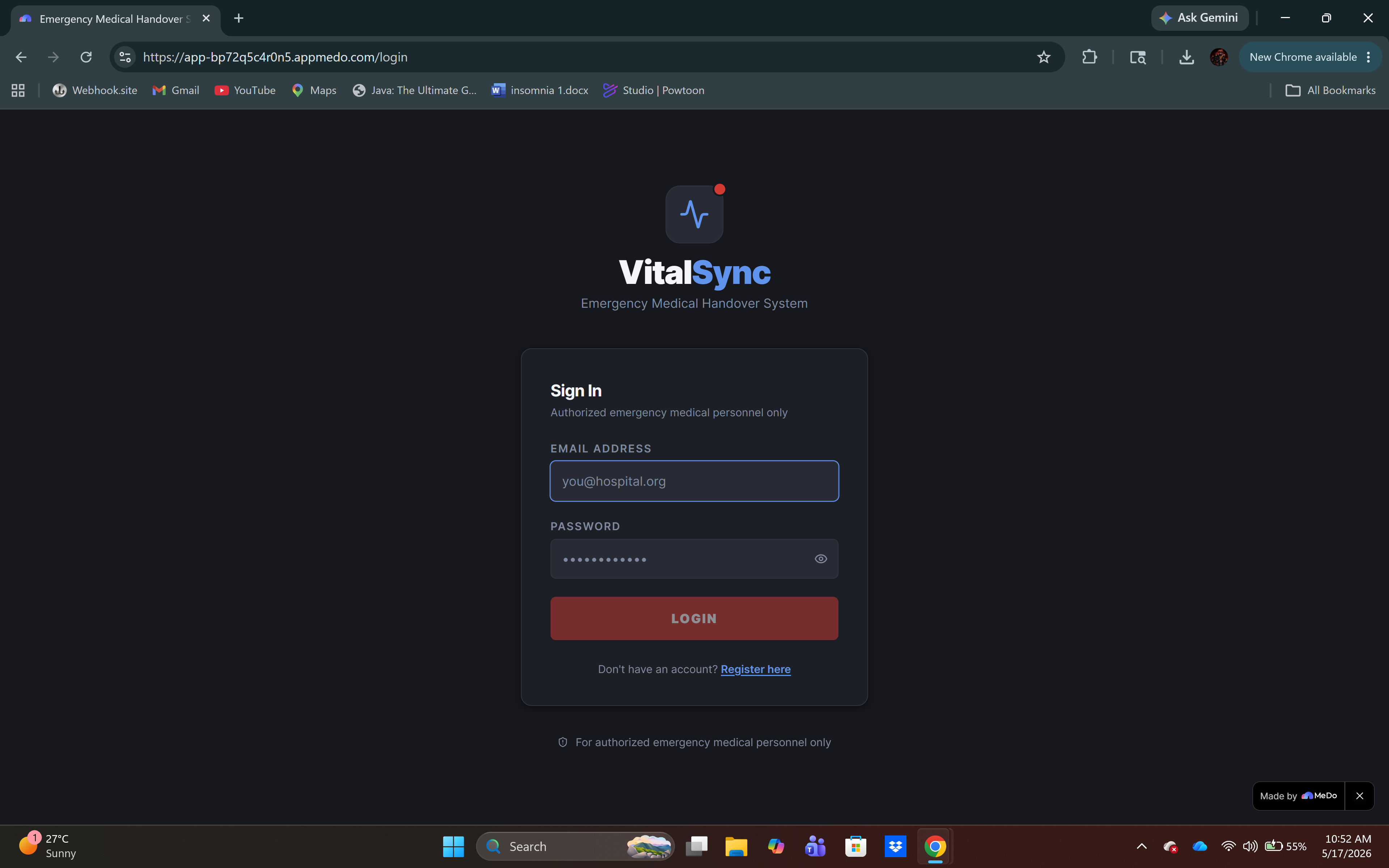
Login screen
-
-
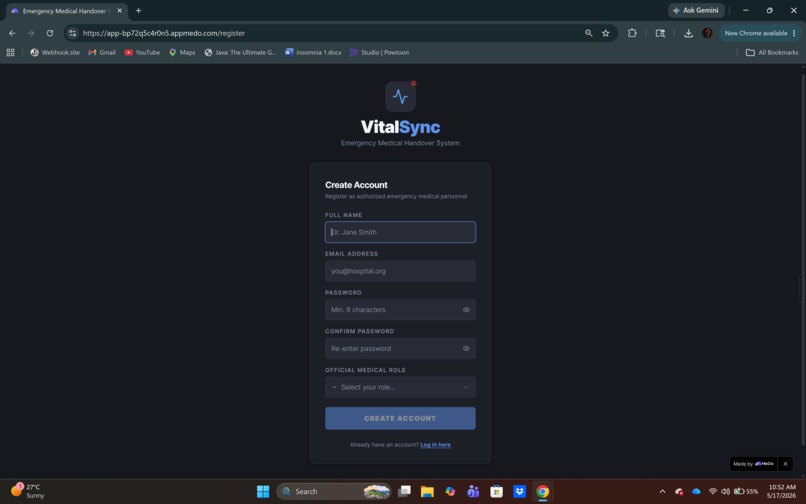
Registration screen
Vital Sync: The Story Behind the Intelligent Trauma Handover Pipeline
1. The Inspiration
In high-stress emergency medicine, the most critical window of care is the transition from the field to the hospital. Our team was inspired by a sobering clinical reality: time is tissue.
When a paramedic is in a speeding, high-vibration ambulance managing a critical polytrauma patient, communicating vital signs and injury mechanics to a chaotic emergency room via frantic radio calls or phone networks is incredibly inefficient. Data points get dropped, transcription lag occurs, and trauma surgeons waste precious minutes re-evaluating the patient upon arrival. We wanted to build a zero-latency system that takes the data burden off the paramedic and delivers immediate, protocol-mapped situational awareness straight to the triage nurses before the ambulance even pulls into the bay.
2. The Problem Statement
The pre-hospital handover window suffers from a profound data format mismatch:
$$\text{Paramedics} \longrightarrow \big[\text{Unstructured, High-Fidelity Narratives}\big]$$ $$\text{Emergency Rooms} \longrightarrow \big[\text{Structured, Protocol-Mapped Telemetry}\big]$$
Currently, translating an unstructured field story into structured clinical columns requires manual transcription, mental mapping, and cognitive overhead under extreme pressure. This communication friction delays triage classification, miscalculates case severity, and slows down downstream resource mobilization (such as operating room preparation and blood bank deployment).
3. How We Built It
We engineered Vital Sync as an intelligent, full-stack data orchestration pipeline utilizing low-code automation paired with high-speed serverless infrastructure.
- Role-Isolated Authentication Gate: We built a strict onboarding sequence (Registration $\rightarrow$ Login) that mandates a user profile role (
ParamedicorER_Staff). This determines their routing layer, ensuring paramedics are locked into a mobile-first ingestion tool and nurses see a centralized monitoring matrix. - Server-Side API Orchestration: When a paramedic transmits raw text, the application executes a secure serverless HTTP POST request to the Groq API running
llama-3.3-70b-versatile. To guarantee absolute endpoint safety, API keys are completely isolated as environment variables (VITAL_SYNC_GROQ_SECRET_KEY), protecting them from browser console exposure. - Structured Data Contracts: We forced the model to return an immutable JSON object matching our database columns. The system parses this string payload on the fly, instantly mapping variables into separate columns:
- JSON.summary -> clinical_summary (concise, bulleted overview under 100 words)
- JSON.triage -> triage_status (strictly validated as Critical, Urgent, or Stable)
- Active Database Synchronization: The hospital monitor UI listens actively to the database. The moment a parsed record drops into the table, it materializes instantly in the ER queue via web-sockets—sorted dynamically by priority using high-contrast design tokens (Red for Critical, Amber for Urgent, Muted Green for Stable).
4. Challenges We Faced
Our biggest obstacle was deterministic parsing control. Large language models are naturally conversational and prone to wrapping outputs in markdown text blocks or varying their response formats. If the model returned plain text or a broken JSON structure even once, the database compilation would throw an error, breaking our real-time queue.
We solved this by tightening our integration contract: setting the API temperature parameter to a highly deterministic $0.1$ and explicitly enforcing a native JSON-object response format constraint. This stripped out conversational hallucinations and guaranteed a flawless data pipeline write every single time.
Additionally, working under a strict, finite pool of generation tokens forced us to stop "vibe-prompting" for visual tweaks. We adapted by using visual drag-and-drop mechanics for frontend modifications, preserving our remaining processing credits purely for high-value server-side logic compilation.
5. What We Learned
Building Vital Sync taught us that effective systems architecture is about data orchestration, not data entry. We learned how to build robust error tolerances—such as configuring fallback triage rules where any ambiguous classification defaults to Urgent to prevent under-triaging critical field patients.
Most importantly, we discovered that advanced AI infrastructure doesn't have to be sluggish. By combining targeted system instructions with high-speed, server-side inference engines, you can turn unstructured field chaos into actionable, structured medical telemetry in near zero-latency—saving minutes that directly save lives.
Built With
- groq
- medo
- next.js
- node.js
- postgresql
- react
- supabase


Log in or sign up for Devpost to join the conversation.