-
-
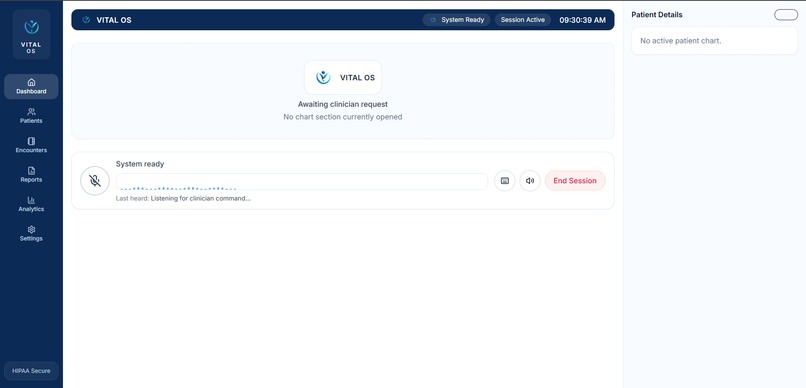
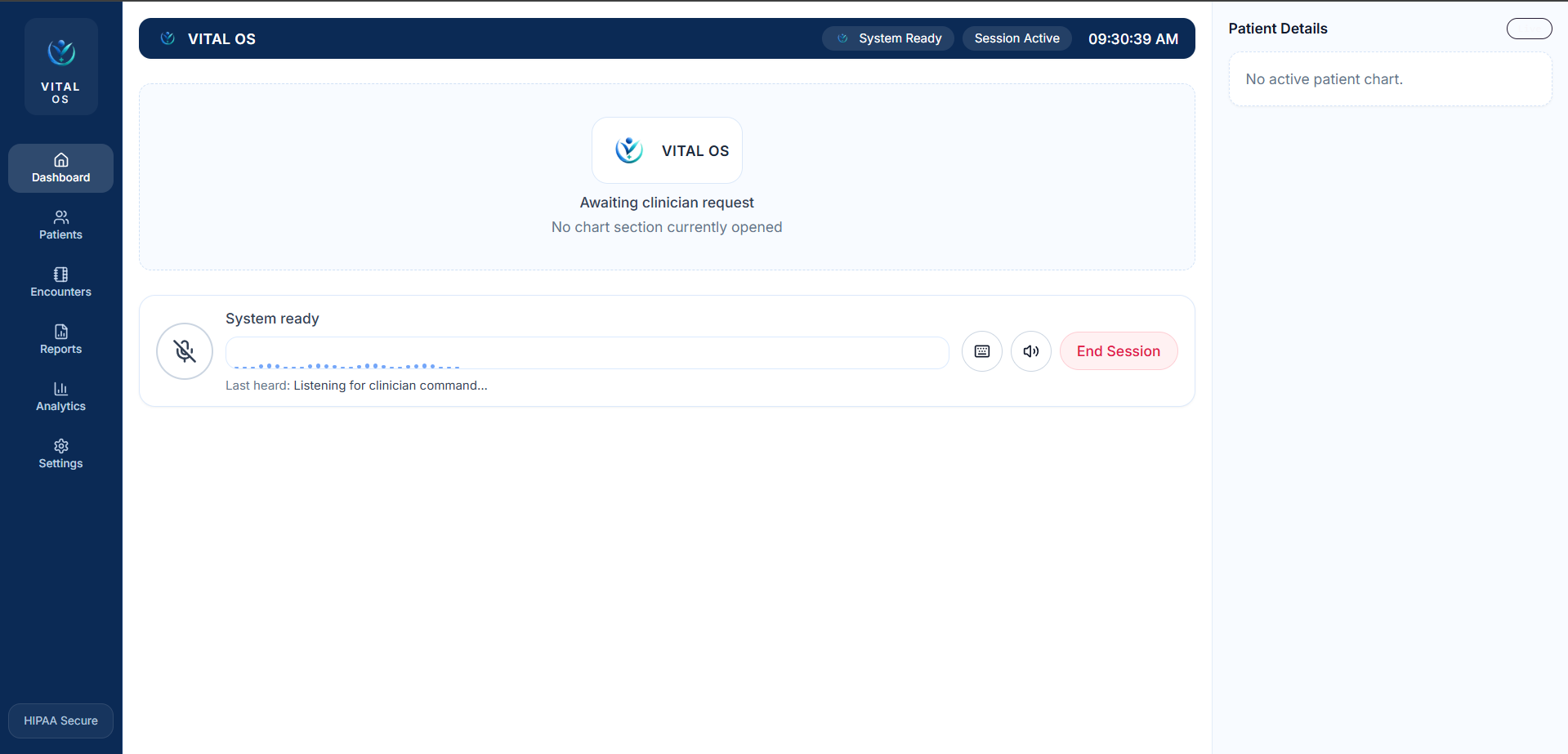
Homepage.
-
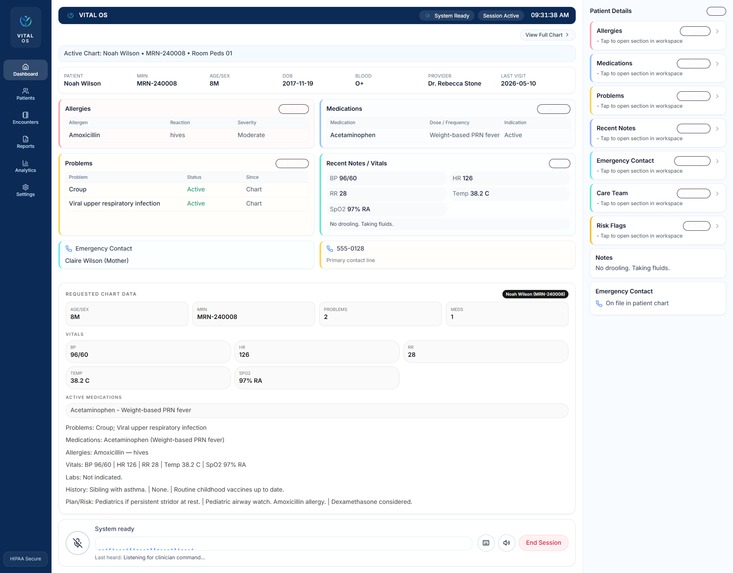
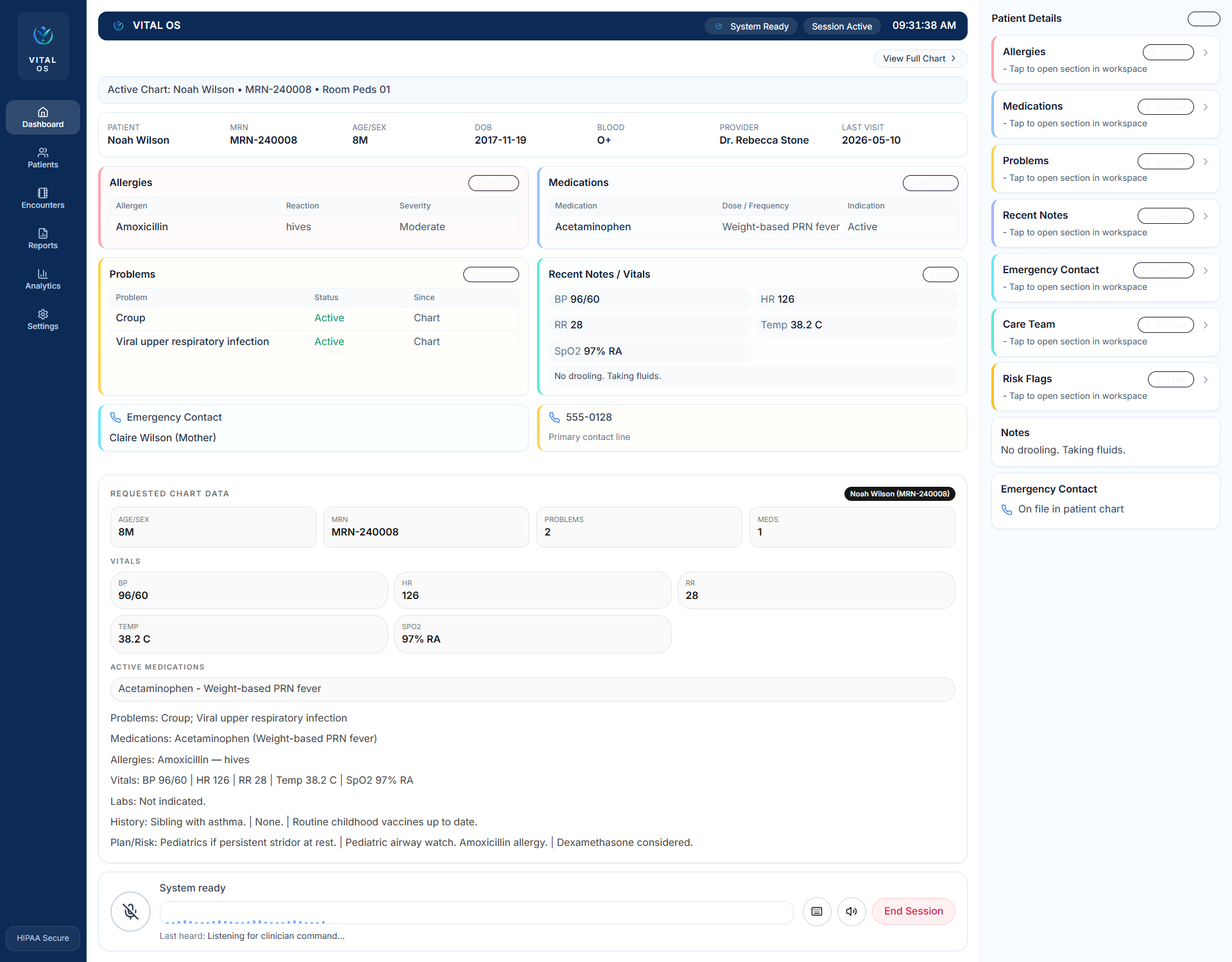
Once a patient's info is dialed in.
Inspiration
We wanted to build something that felt genuinely useful in high-pressure medical situations instead of another generic AI chatbot.
One thing we noticed is that during emergencies or even normal patient interactions, a lot of important information gets lost:
- symptoms are explained unclearly
- timelines get forgotten
- documentation takes time
- triage is stressful
- and clinicians are already overloaded
At the same time, most AI healthcare tools today feel disconnected from how real medical conversations happen.
Doctors and clinicians speak naturally. They do not type prompts into a chatbot during emergencies.
That inspired us to build VITAL OS, a speech-first clinical AI assistant that listens in real time, structures conversations, identifies urgency, generates SOAP notes, and helps clinicians during patient interactions.
We wanted it to feel less like “ChatGPT for healthcare” and more like an actual clinical copilot.
What it does
VITAL OS is a real-time AI-powered clinical intelligence system designed for doctor-to-AI interaction.
The platform allows clinicians to:
- speak naturally during patient encounters
- receive live AI assistance
- generate structured SOAP notes
- detect medical red flags
- create handoff summaries
- analyze visible injuries using AI vision
- organize patient case information in real time
Key features include:
- speech-first live clinical sessions
- real-time transcription
- AI-generated clinical follow-up questions
- urgency detection and triage
- emergency escalation logic
- wound / injury image analysis
- structured symptom extraction
- SOAP note generation
- handoff report generation
- local case history dashboard
Instead of acting like a chatbot, VITAL OS acts like an ambient medical intelligence layer inside the room.
How we built it
We built VITAL OS using a modern web stack focused on speed, accessibility, and real-time interaction.
Frontend:
- Next.js 15
- TypeScript
- Tailwind CSS
- shadcn/ui
- Framer Motion
AI + Voice:
- Groq API
- Browser Speech Recognition API
- SpeechSynthesis API
State + Logic:
- Zustand
- Deterministic triage engine
- Local storage for session persistence
We designed the system around a speech-first workflow:
- clinician speaks naturally
- transcript streams live
- AI processes the conversation
- urgency + red flags update dynamically
- SOAP notes and handoff reports are generated in real time
We also built a deterministic emergency triage layer alongside the AI so that critical red flags are never dependent on AI output alone.
The UI was designed to feel like a futuristic medical command center rather than a messaging app.
Challenges we ran into
One of the biggest challenges was real-time voice interaction.
Getting live speech recognition, transcript streaming, AI processing, and speech synthesis to all work together smoothly in-browser was much harder than expected.
We also had to carefully think about:
- latency
- browser compatibility
- emergency escalation logic
- AI safety
- and how to structure medical information responsibly
Another major challenge was avoiding the “chatbot” feel.
Most AI interfaces naturally become chat UIs, but we wanted VITAL OS to feel more like a clinical operating system with live intelligence panels, urgency indicators, and structured medical extraction.
Balancing functionality, performance, and polished UI/UX within a hackathon timeframe was also a huge challenge.
Accomplishments that we're proud of
We are especially proud of:
- building a fully speech-first AI clinical workflow
- creating real-time SOAP note generation
- implementing emergency-aware triage logic
- designing a polished futuristic interface
- integrating AI vision analysis for visible injuries
- making the experience feel like a true clinical copilot rather than a chatbot
We are also proud that the project combines:
- voice
- vision
- triage
- structured documentation
- and emergency intelligence
into a single cohesive experience.
Most importantly, we built something that feels genuinely impactful and practical.
What we learned
During this project we learned a lot about:
- real-time AI systems
- browser audio processing
- speech interfaces
- AI safety considerations
- clinical workflow design
- low-latency UI architecture
- and designing around human stress situations
We also learned that building AI for healthcare is not just about generating responses.
The real challenge is:
- presenting information clearly
- detecting urgency responsibly
- reducing friction
- and helping people make faster decisions during critical moments.
What's next for Vital OS
Our next goal is to evolve VITAL OS into a more advanced clinical intelligence platform.
Future plans include:
- secure clinician authentication
- speaker verification
- real-time EHR integration
- multilingual support
- wearable device integration
- ambulance / ER handoff support
- advanced medical memory systems
- and deployment-ready infrastructure
We also want to improve:
- voice accuracy
- medical reasoning
- emergency escalation
- and accessibility for high-pressure environments.
Long term, we see VITAL OS becoming an AI infrastructure layer that assists clinicians before, during, and after patient care.
Built With
- api
- css
- framer-motion
- next.js
- node.js
- react
- tailwind
- typescript


Log in or sign up for Devpost to join the conversation.