
Inspiration
Dealing with invasive species costs $30 billion in Canada; in the United States, $120 billion. Globally, the estimated cost is $1.4 trillion (roughly 5% of the global economy). Very few of us think about this on a daily basis, but there are certain demographics that spend a great amount of time outside and discovering the world: the children! Why not have them take images and track invasive species under the guise of a game?
What It Does
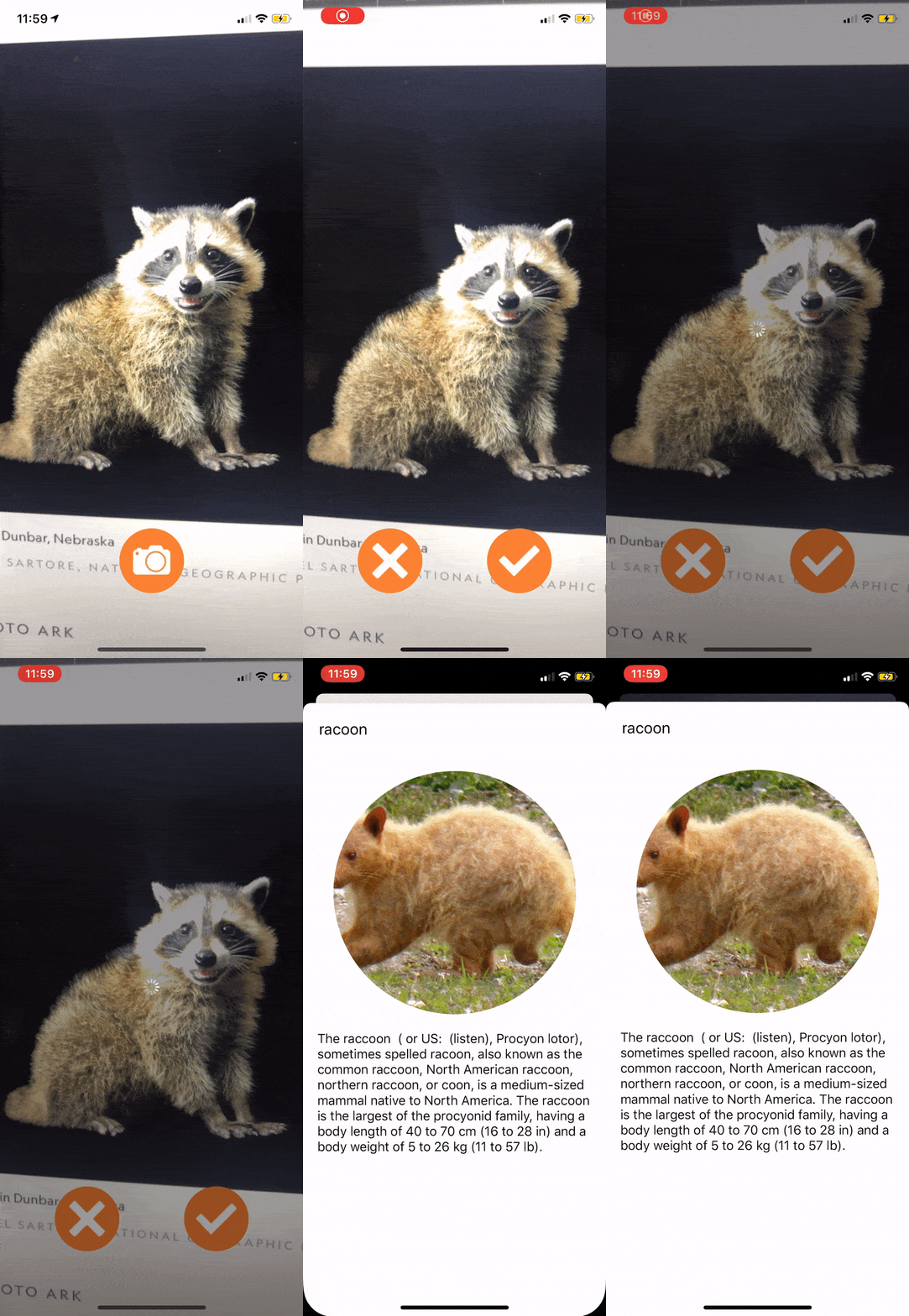
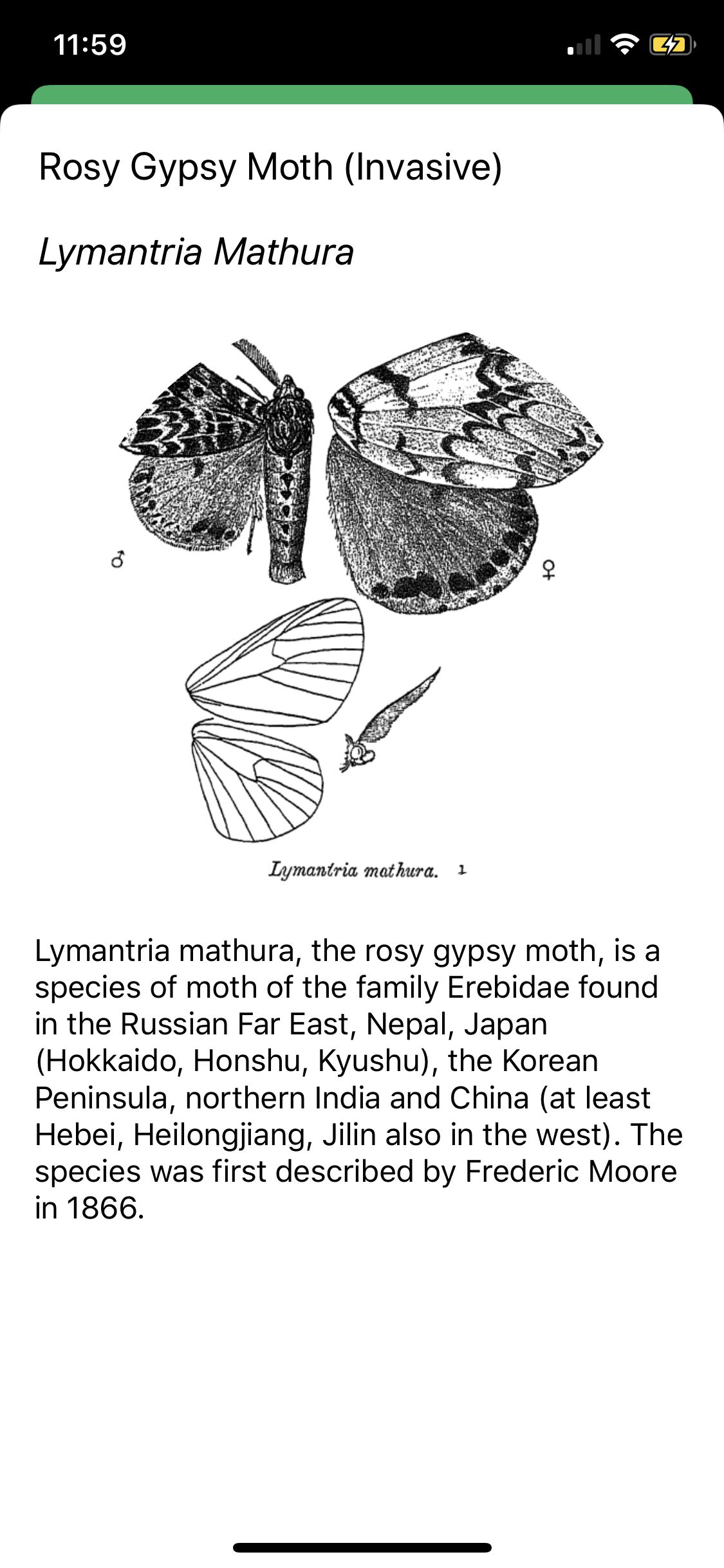
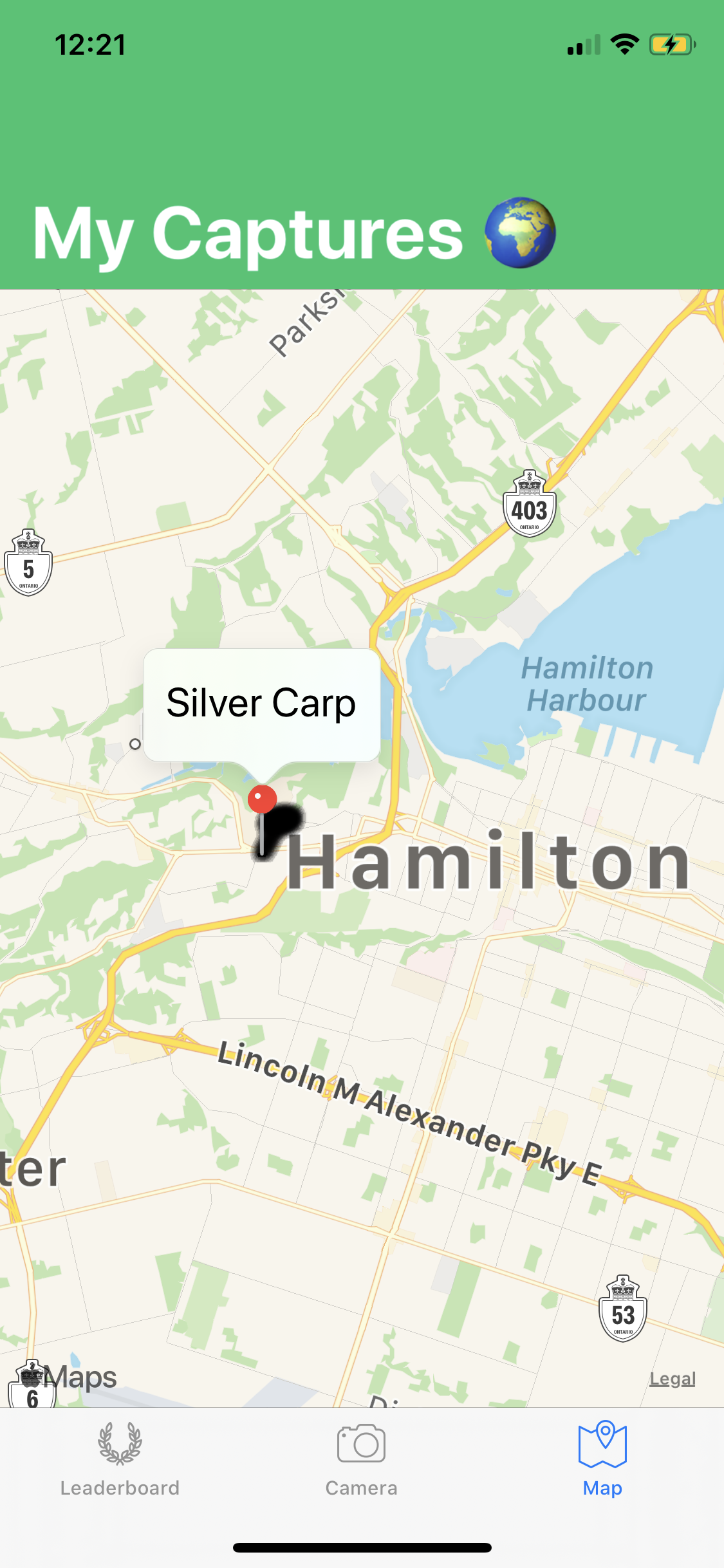
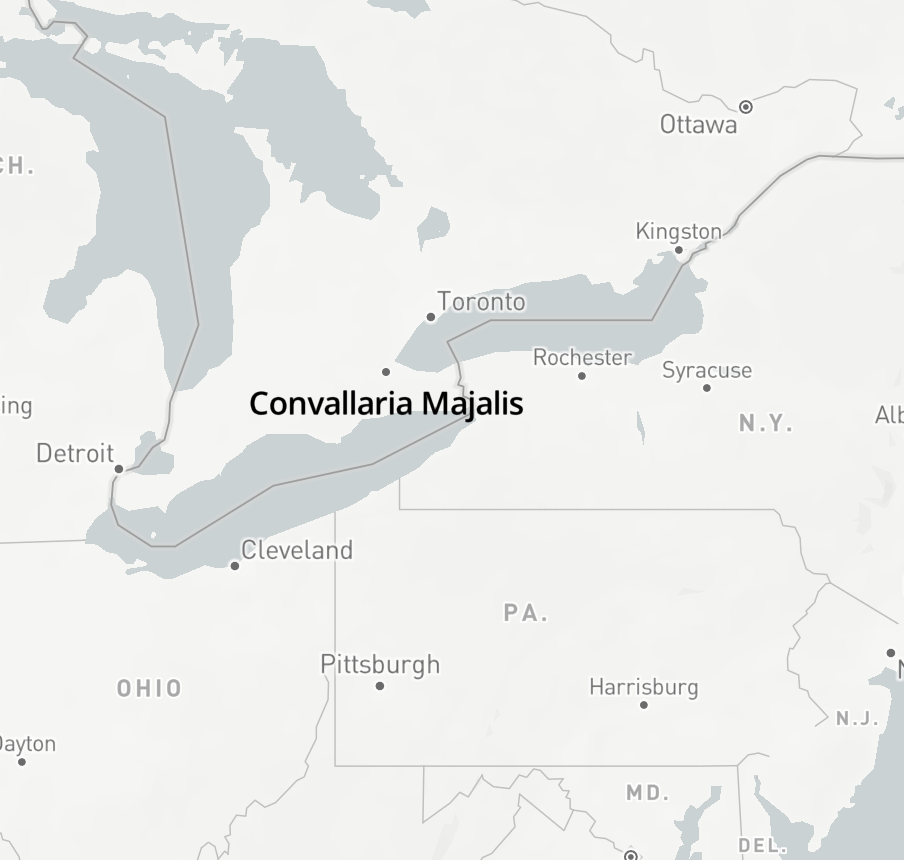
The app provides a fun and interactive game intended to incentivize children to go outside and explore the nature, all the while collecting data. It allows users to take a photo of a wide range of species (plants, animals, fish, etc.), then uses a tailor-made ML model to classify it. The user then receives points for a successful classification (bonus points if the species is invasive) and is able to see all of their past "captures" on an interactive map. Lastly, there is a web page that contains a map of all the invasive species captured by users.
How We Built It
The front-end was developed in Swift, and communicates with the back-end via HTTP requests and the Google Firebase SDK. The back-end is a Flask server that also contains a custom fastai model, trained on over 100 invasive species found in Ontario. All user data is stored on Google Firebase. The web map was done with the Mapbox API.
Challenges We Ran Into
We had many, many issues trying to get the Flask server running on other platforms. We originally planned to have the back-end hosted on Google Cloud's App Engine; this worked fine until we tried deploying the model (we tried different workarounds for 5 hours). We then tried DigitalOcean, but multiple email addresses we used had their accounts automatically locked for some strange reason. We finally were able to get a DigitalOcean droplet running, but once again were able to deploy everything but the model (we figured it was some problem with the fastai library). Next was Heroku; setup went smoothly, but we were unable to deploy yet again. We finally settled on just running the back-end on locally on one of our computers since our time could be used more productively elsewhere.
Accomplishments That We're Proud Of
We were really proud of our idea and working from scratch. Our classification model was trained from scratch, the front-end was done in Swift with few libraries and packages, and the back-end was developed with bare-bones Flask and Google Firebase imports. We were also proud of our app idea, and thought it could have a real-world impact on the environment and possibly even education (provided we add more features to the app).
What We learned
On the technical side, this was the first time our mobile developer had integrated a map or camera functionality into an iOS app. This was also the first time for us to try to host something on Google App Engine or Digital Ocean; while it didn't work in the end, we learned a bit about each platform and Docker. We also learned about invasive species, and the power of teamwork!
What's next for Vitae
Our first change would be to host it as a proper instance on a third-party platform so it could actually be used; this would allow users to begin populating the database. Then end-goal is to have enough geotagged data to provide research with enough information to get a general sense of where invasive species are spreading to, and at what rate. We'd also like to train the model on even more species/images.


Log in or sign up for Devpost to join the conversation.