What inspired us
Pregnancy is often treated as nine months of baby tracking, but physiologically, it is one of the most demanding cardiovascular stress tests a woman’s body will ever face. Complications like preeclampsia and gestational hypertension are not isolated events; they are early signals that heart disease risk can rise for decades afterward. Yet roughly 40% of women miss consistent postpartum follow-up, and most consumer health apps optimize for fetal growth while the mother’s longitudinal cardiac data disappears into a black hole.
We built VitaCore for women ages 20-80: a single place to establish baselines, log warning signs, and connect personal history to long-term heart health—not only during pregnancy, but across every life stage where cardiovascular risk shifts (pre-conception, pregnancy, postpartum, menopause, and beyond).
Our Solution: VITACORE
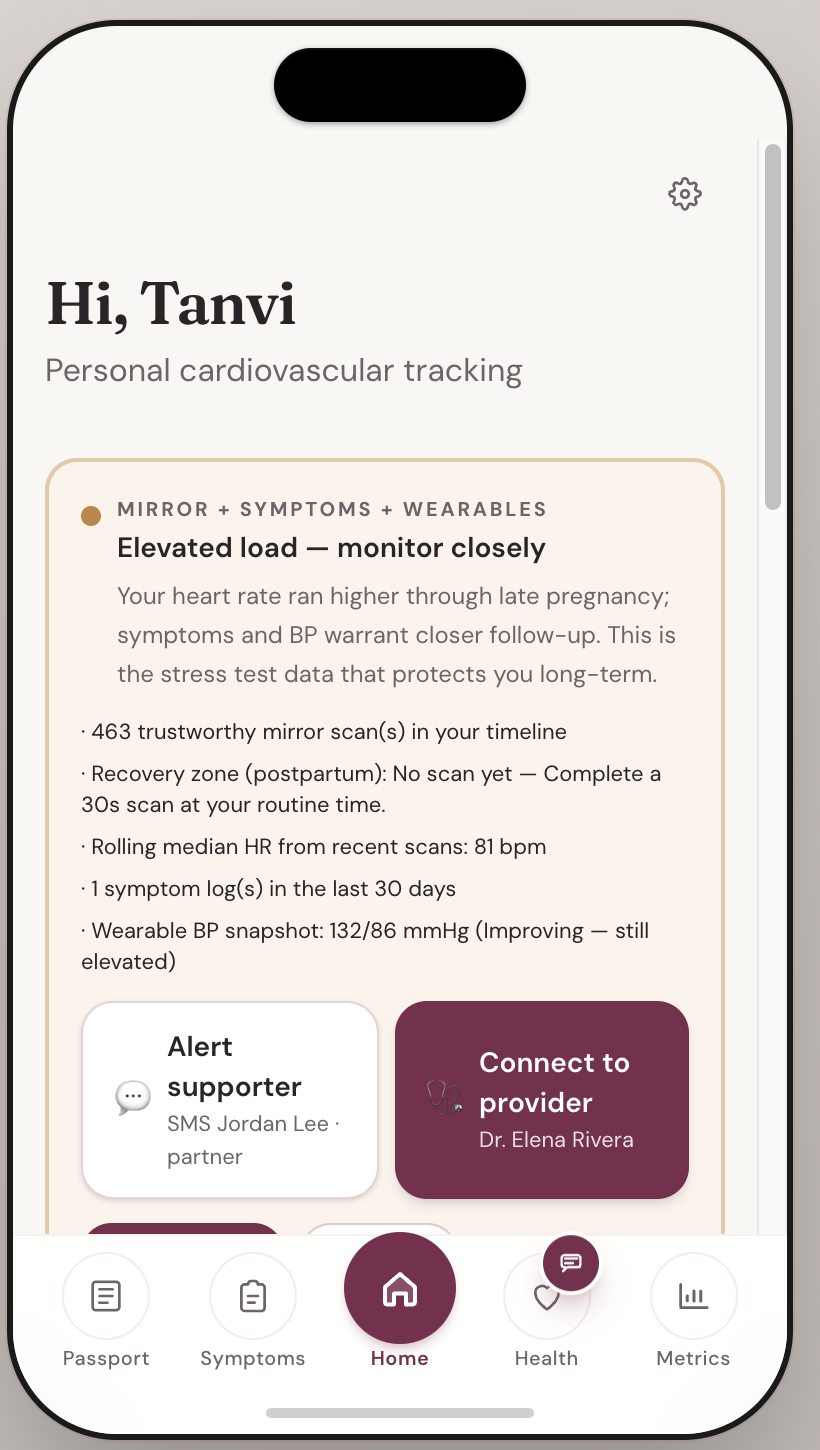
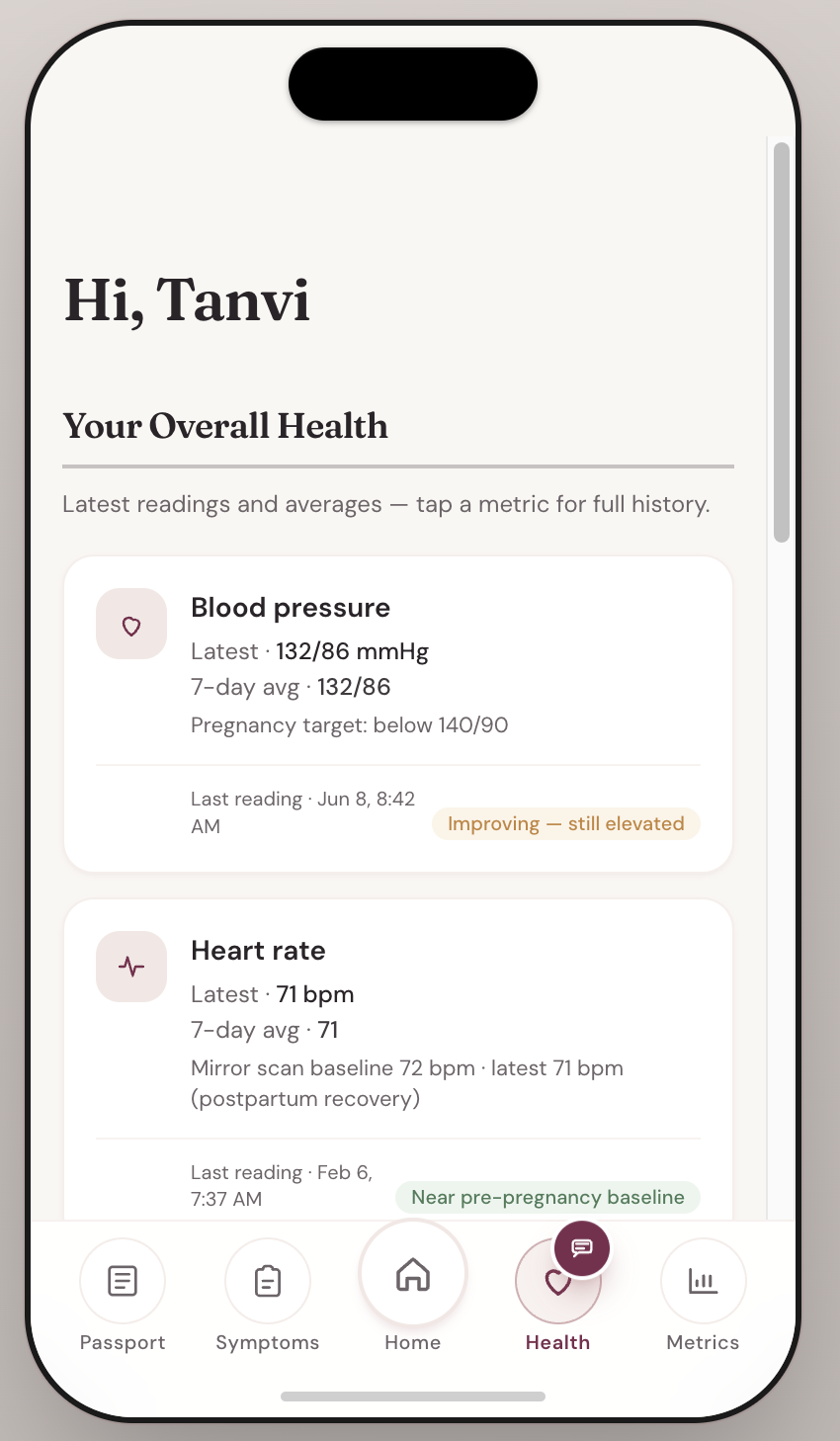
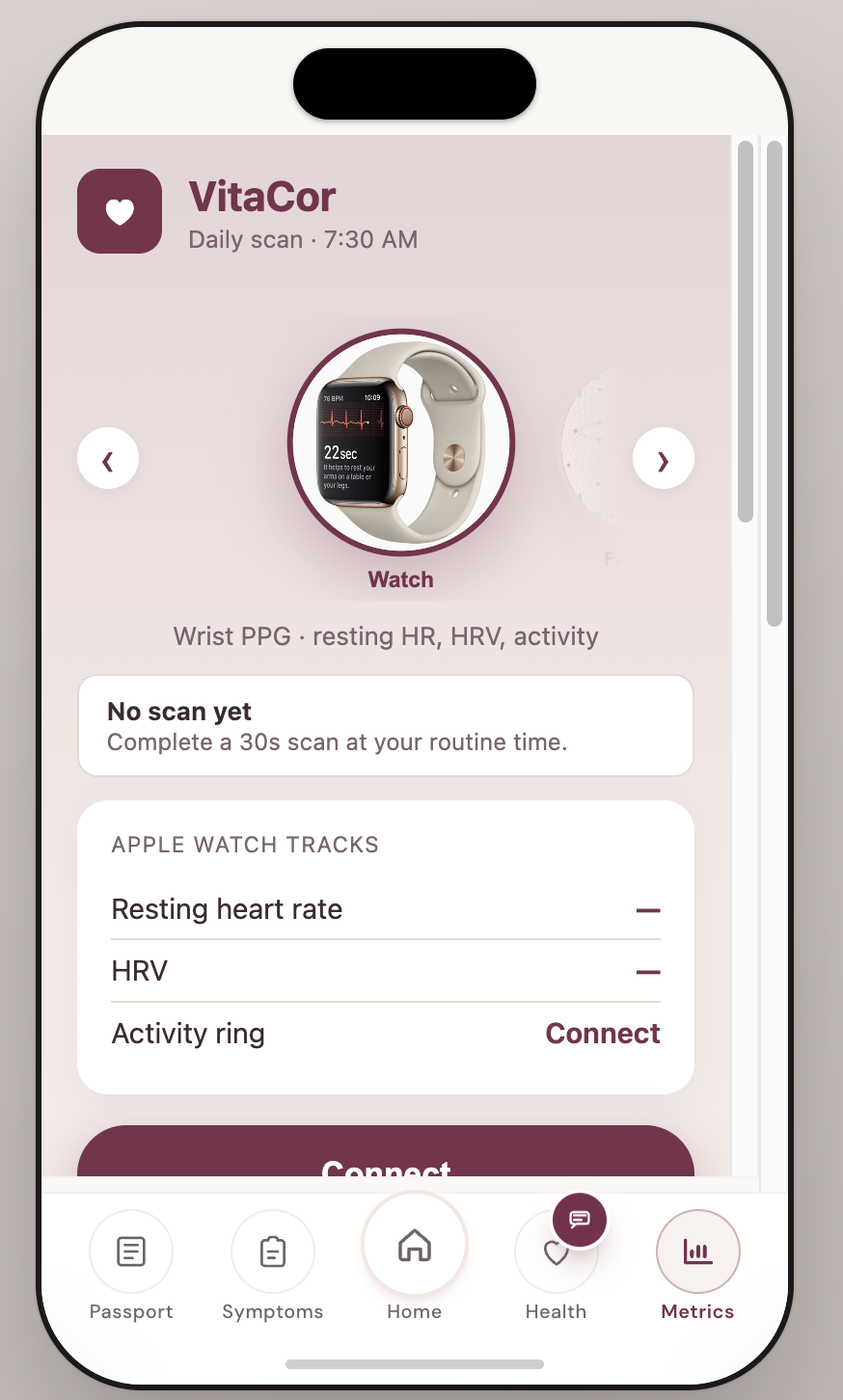
An end-to-end hemodynamic pipeline. We use the iPhone’s camera and existing wearables to establish a pre-pregnancy baseline, monitor the pregnancy stress test, and track postpartum recovery to prevent chronic disease 20-40 years down the line.
Onboarding & health profile
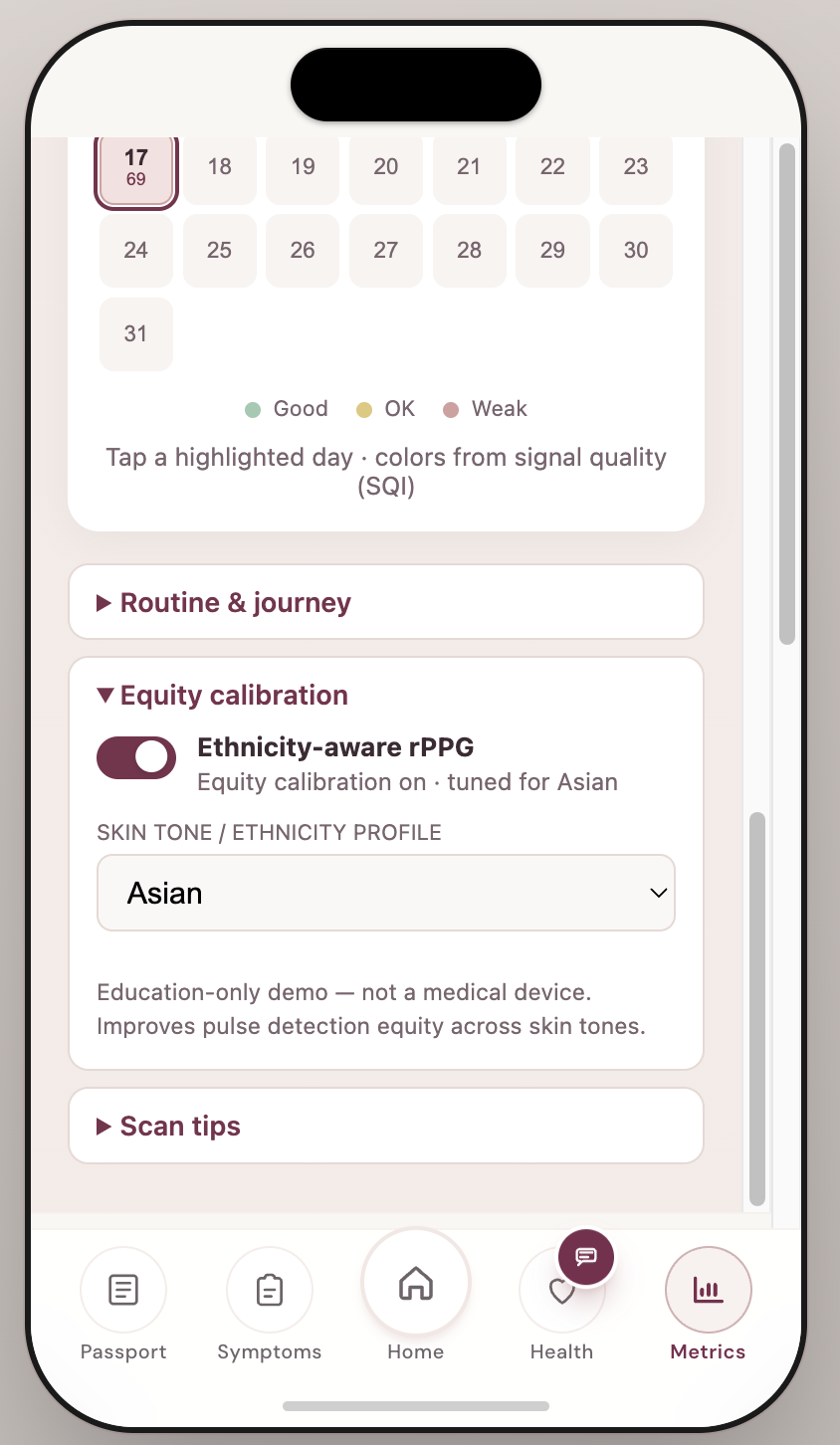
A multi-step sign-up captures demographics (including ethnicity for future sensor calibration), lifestyle factors, family cardiac history, wearable intent, and pre-existing conditions via the NIH Clinical Tables API (condition IDs and ICD codes when available).
Symptoms module
Users log daily and momentary states through a guided flow:
- Mood capture with dynamic theming and a glass “mood heart” visualization Searchable symptom selection from a large curated catalog (pregnancy and general cardiovascular warning signs)
- Local persistence of logs, summary cards for “today,” and mood charts for pattern review
Design & demo experience
An iPhone 15–style device frame on desktop makes the hackathon demo feel native, with safe-area handling for notch/Dynamic Island and scroll behavior tuned for a contained mobile shell.
Tech Stack
- React 19 + TypeScript with Vite 6 and Tailwind CSS 4
- React Router 7 for onboarding and symptom flows
- Firebase Authentication (email/password + Google) and Firestore for user profiles
What we learned
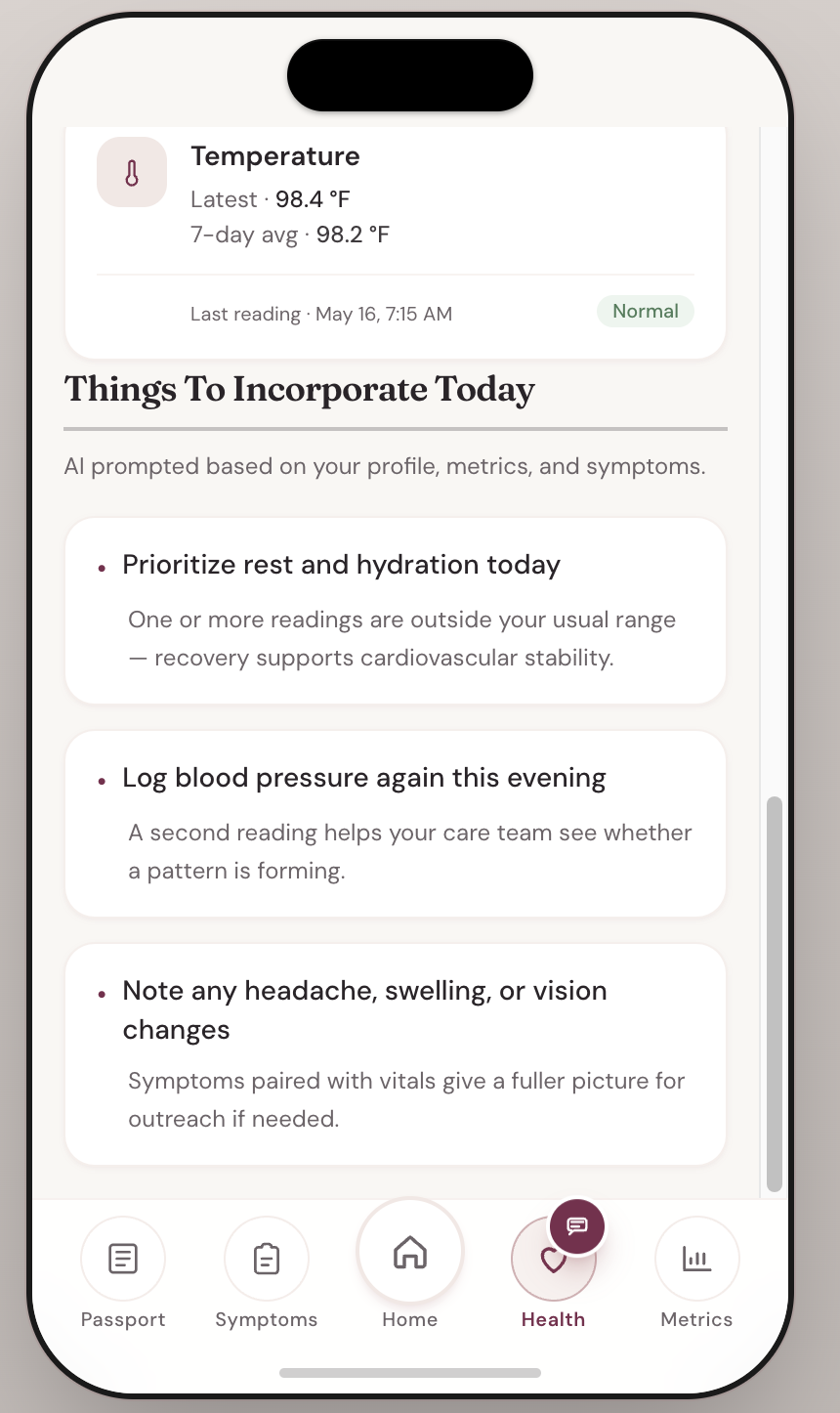
Symptoms are data—not noise. Headache, vision changes, swelling, and mood shifts are not only “how you feel”; in context, they are warning patterns that clinicians use to triage risk. Building a structured symptom catalog (with pregnancy-specific and general cardiovascular entries) taught us that UX must be fast enough for tired users and precise enough for clinical storytelling later.
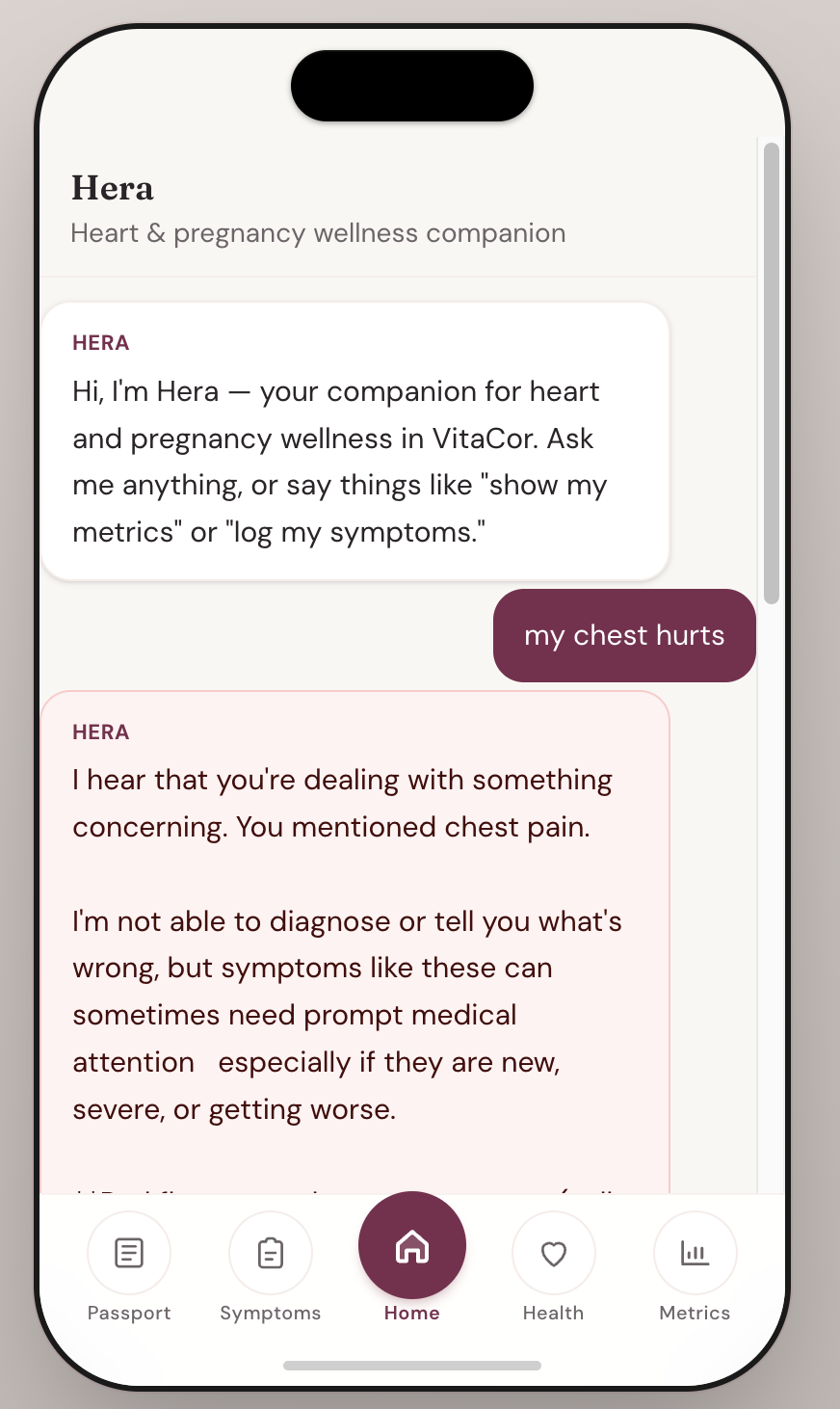
Trust requires restraint. General-purpose LLMs are tempting for “explain my labs,” but maternal and cardiovascular guidance demands grounded answers. We designed VitaCore Intelligence around retrieval-augmented generation (RAG) tethered to verified sources (AHA, ACOG, CDC maternal health archives)—a lesson in choosing citation over charisma.
Lifespan products need lifespan architecture. A woman at 25 needs baselines; at 35, pregnancy monitoring; at 55, menopause-era trend shifts. One app must support locked pre-conception baselines, present vitals, and forward-looking risk views without resetting her history at every life event.
VitaCore Accomplishments
- The Mirror: 30s contactless rPPG face scan (BPM, HRV, respiratory rate) with ethnicity-aware calibration
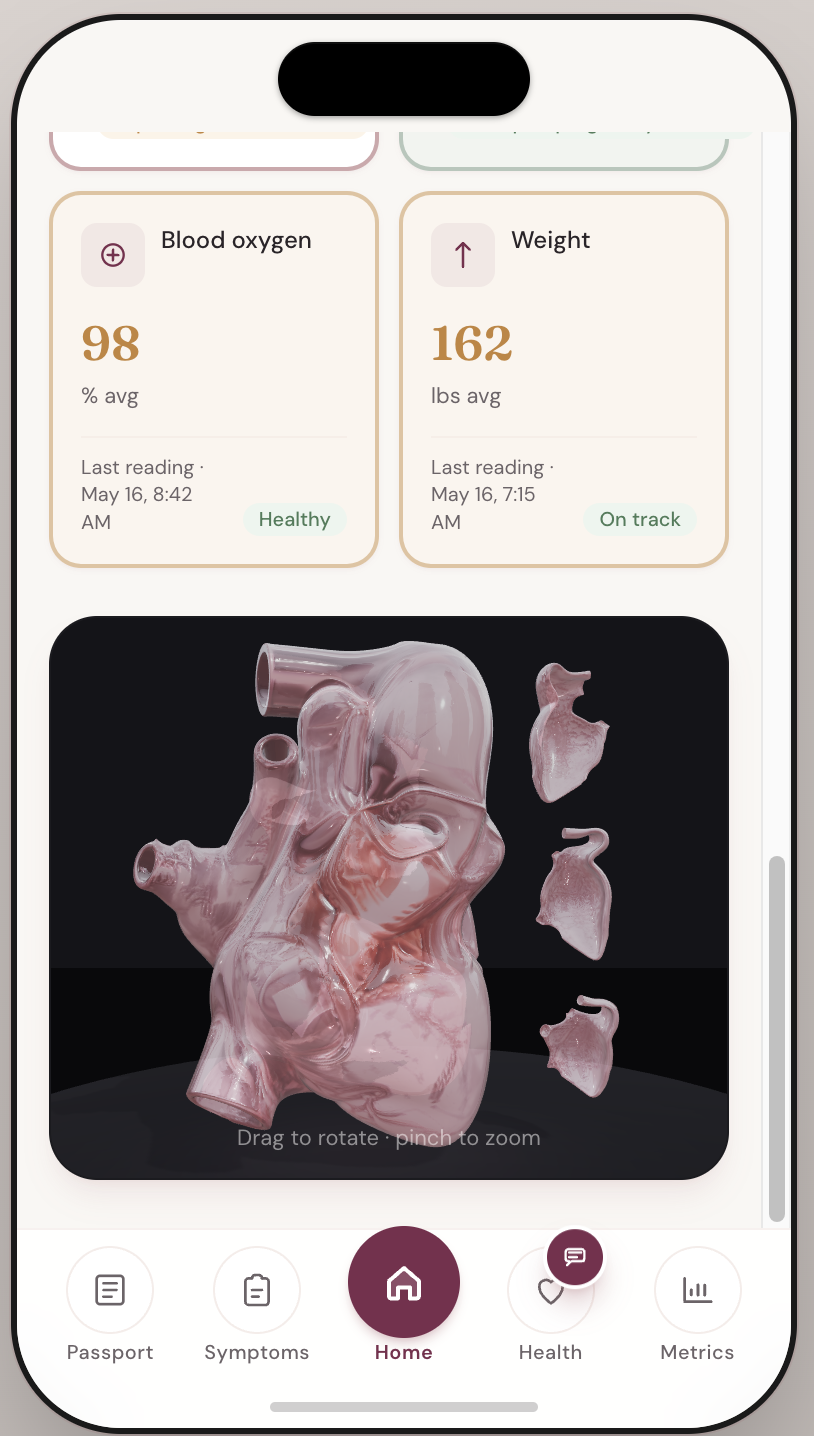
- The Lifeline: Three.js 3D heart pulsing with live metrics; green/amber/red status
- Data fusion: Apple HealthKit validation of snapshot scans
- VitaCore Intelligence: RAG chatbot over verified medical corpora + personal history
- Support loop: Supporter alerts and provider handoff for high-risk flags
Challenges we faced
Scope vs. hackathon time.
A true end-to-end hemodynamic pipeline—rPPG signal processing (OpenCV/MediaPipe), HealthKit integration, 3D vitals, and a medically safe RAG layer—is multiple products in one. We prioritized a credible, demo-ready foundation: auth, rich profiles, and symptom logging that prove the longitudinal record concept.
Clinical credibility without overclaiming.
Remote photoplethysmography and consumer wearables are not diagnostic devices. We separated education and trend awareness from clinical decision-making and kept disclaimers visible—balancing innovation with responsible copy.
Equity in sensing (design now, ship next).
Skin-tone bias in optical vitals is well documented. Capturing ethnicity at onboarding is the first step; the harder engineering work—recalibrating rPPG models across tone—remains on our critical path.
Making “20–80” feel real in the UI.
Our deepest flows today center pregnancy and symptom surveillance (the highest-acuity window), while the architecture (baselines → present → forecast) is life-stage agnostic. Unifying messaging and adding non-pregnancy exemplar journeys is an active design challenge.
Polish under pressure.
Mobile scroll behavior, animation performance (CSS heart pulse keyframes), and Firebase edge cases (partial profiles after Google sign-in) required iterative UX fixes—small details that make a health app feel trustworthy.
Closing thoughts
We do not want women to merely survive pregnancy—we want their hearts to thrive for decades after. Cardio treats the most physiologically intense chapter of many women’s lives as the start of a 40-year advantage, not the end of a story.
Built With
- css
- fastapi
- gemini
- javascript
- next.js
- python
- react
- tailwind
- typescript


Log in or sign up for Devpost to join the conversation.