
Inspiration
In a world of "hustle culture," we often ignore the subtle signals our bodies send us. Brittle nails, restless sleep, or sudden fatigue are often dismissed as "stress," when they are actually cries for essential nutrients. I realized that while everyone has a smartphone, very few have easy, affordable access to nutritional guidance. VitaCheck was born to bridge the gap between feeling "off" and understanding why, turning complex biology into a simple, accessible health lifehack.
What it does
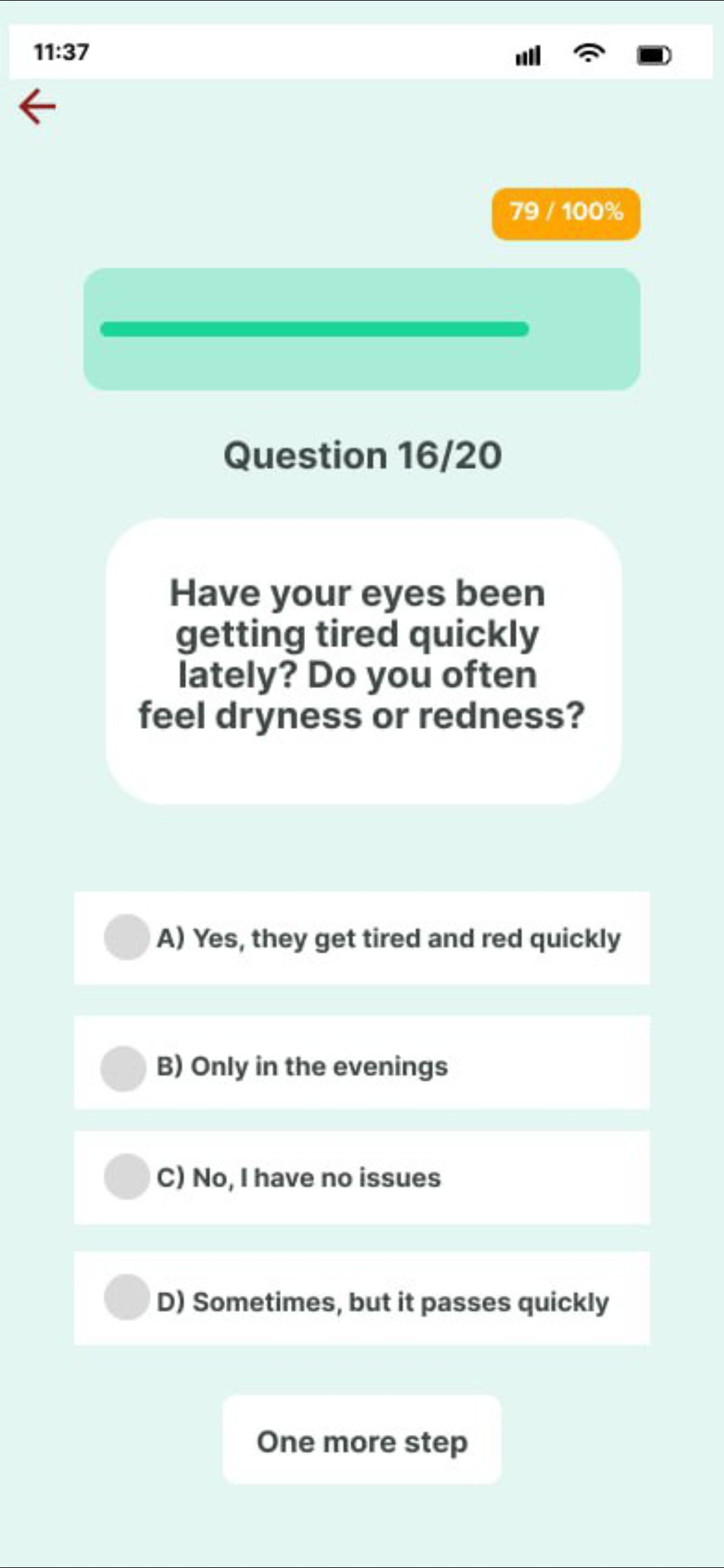
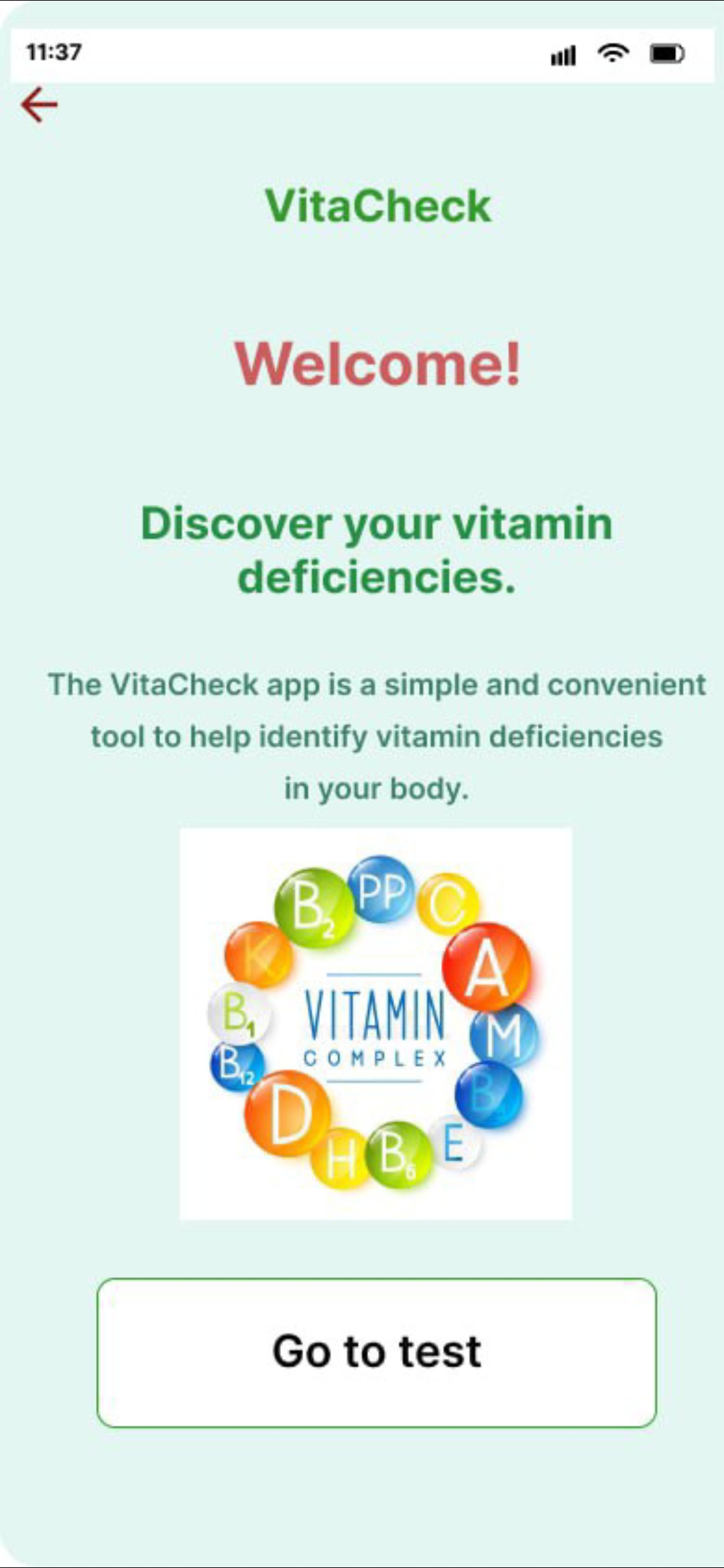
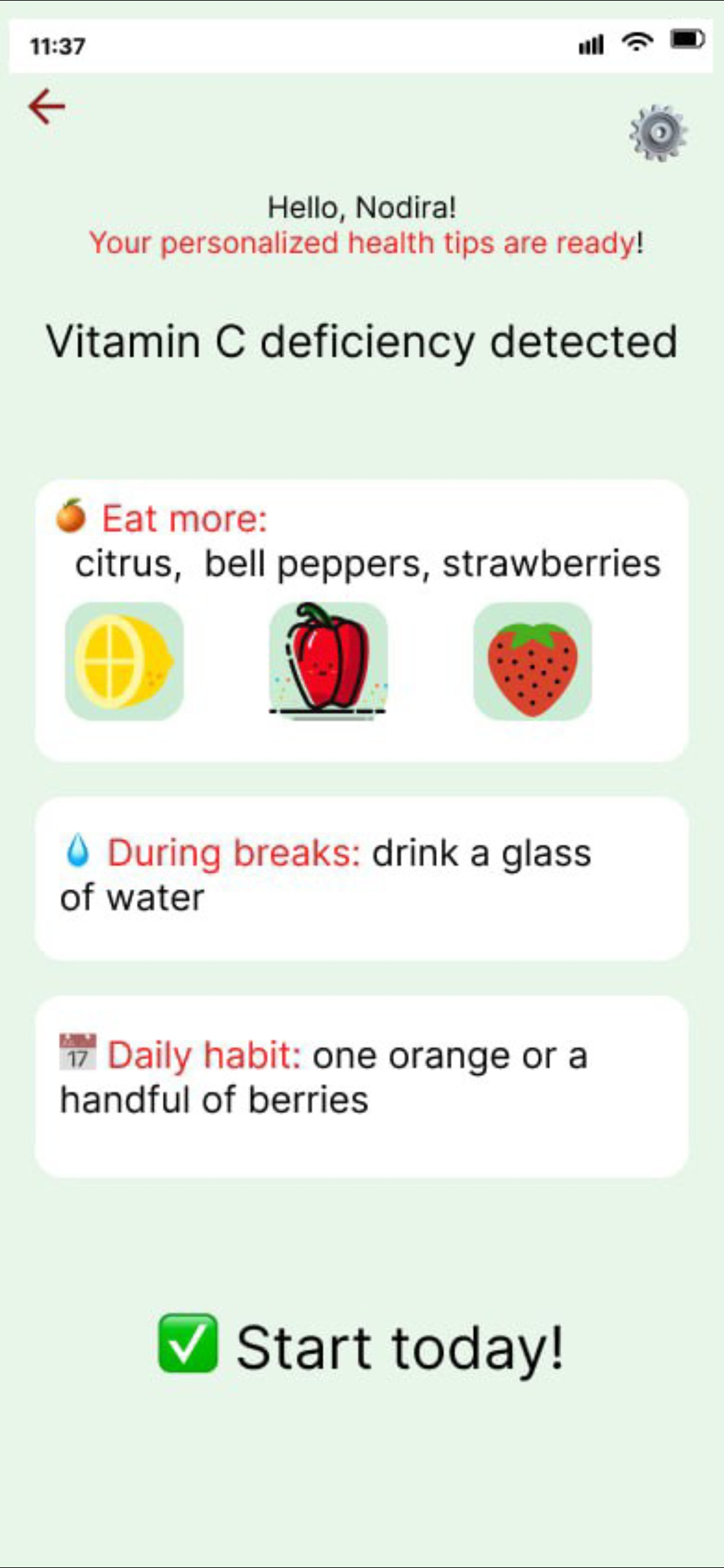
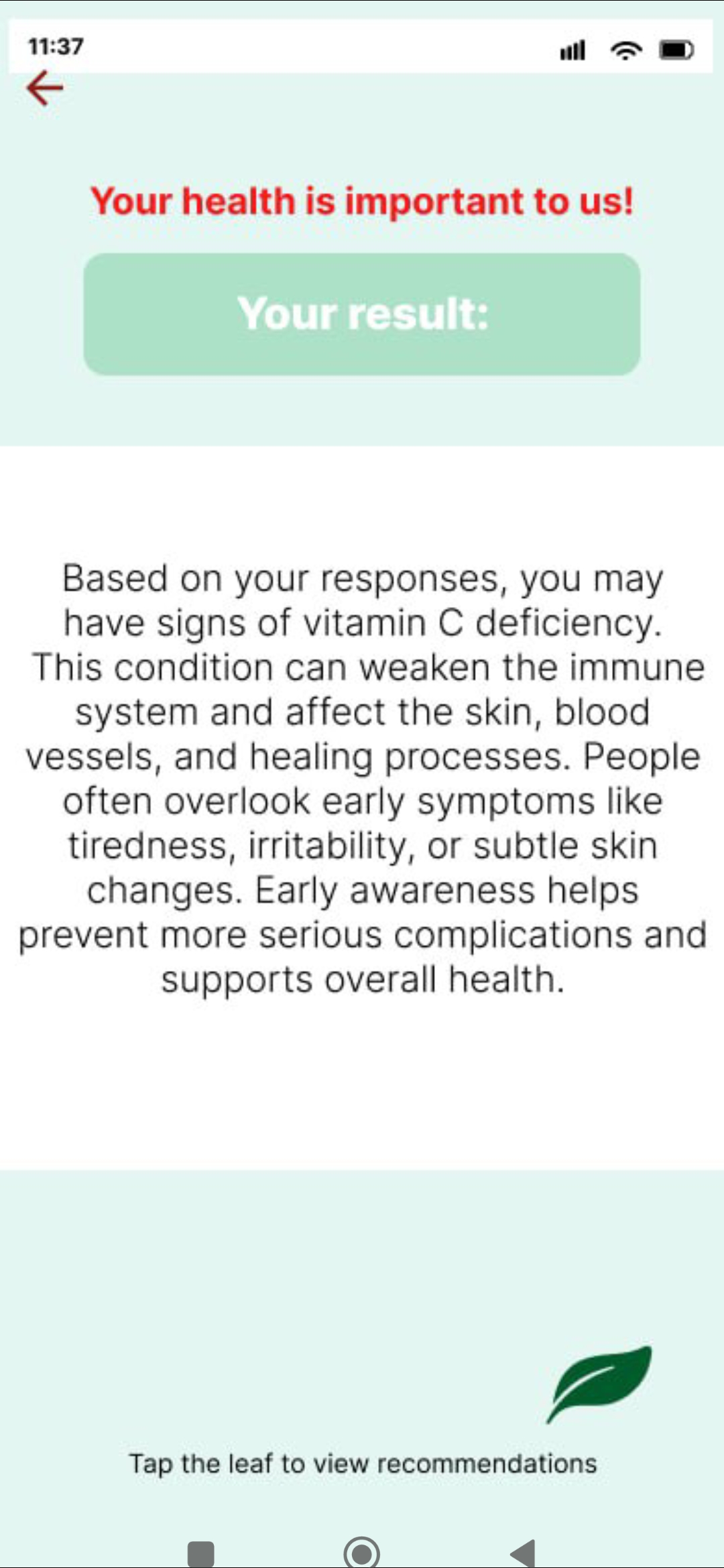
VitaCheck is a mobile health assistant that uses a non-invasive, symptom-based assessment to identify potential vitamin and mineral deficiencies. Users walk through a 2-minute "smart survey" covering physical symptoms and lifestyle habits. The app’s logic engine then cross-references these inputs with established nutritional data to provide a personalized risk profile and suggest natural food-based improvements.
How we built it
The project was designed with a focus on User Experience (UX) and Clinical Logic. Prototype Design: I used Figma to build a high-fidelity interactive flow. Logic Engine: I mapped over 20+ common symptoms to their corresponding micronutrient deficiencies (e.g., Magnesium, Vitamin D, B12) based on public health guidelines. Interface: Focused on a "Beginner-Friendly" UI to ensure that users of all ages can navigate their health data without confusion
Challenges we ran into
The biggest challenge was translating clinical "medical speak" into language that everyday users understand. I had to balance the depth of the diagnostic logic with a simple interface that didn't feel overwhelming. Additionally, ensuring the app clearly communicates that it is a support tool rather than a medical diagnosis was a key priority in the UX design.
Accomplishments that we're proud of
I am proud of creating a tool that can provide immediate value without requiring a lab test. Seeing a functional flow that can accurately point a user toward a potential B12 deficiency just by asking about their energy and skin health felt like a major win for health accessibility.
What we learned
During this month-long hackathon, I delved deep into nutritional science and the "HealthTech" landscape. I learned that data visualization is just as important as data collection; if a user doesn't understand their results, the tool isn't effective.
What's next for VitaCheck
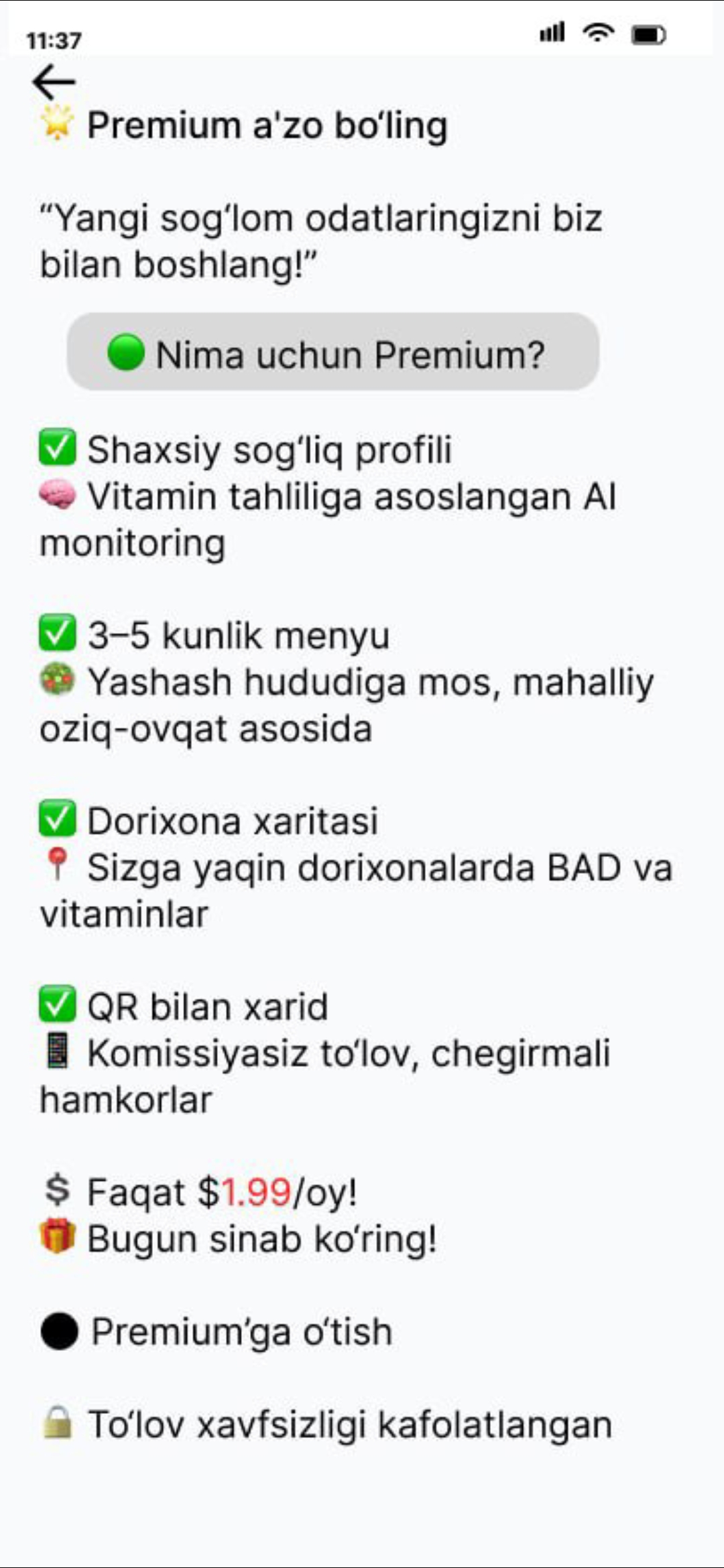
The next step is to integrate an AI-driven camera feature to analyze physical signs (like skin texture) and a personalized meal-planning API to provide recipe suggestions based on the user's specific deficiencies.


Log in or sign up for Devpost to join the conversation.