-
-
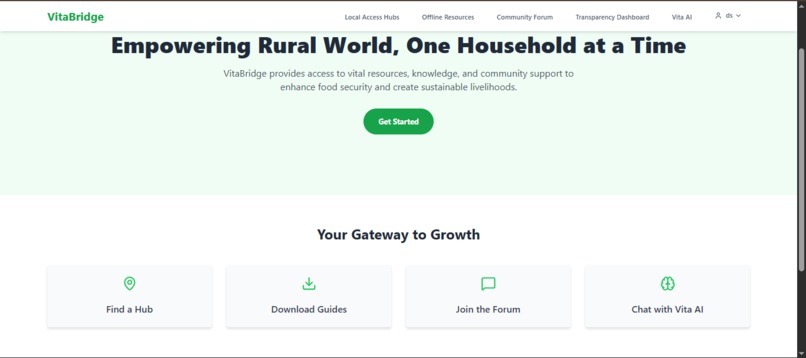
Home
-
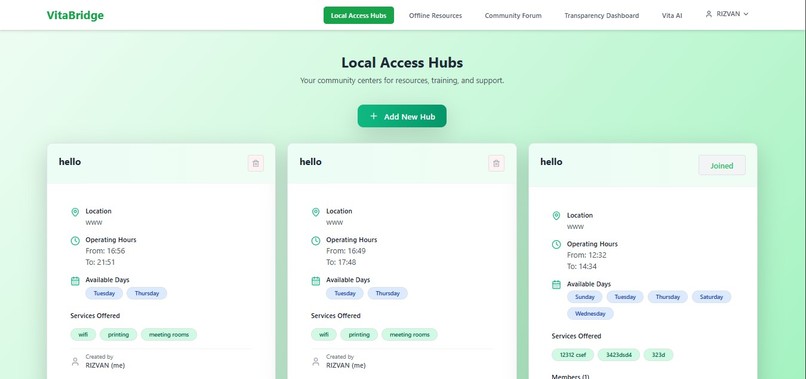
Local Hubs
-
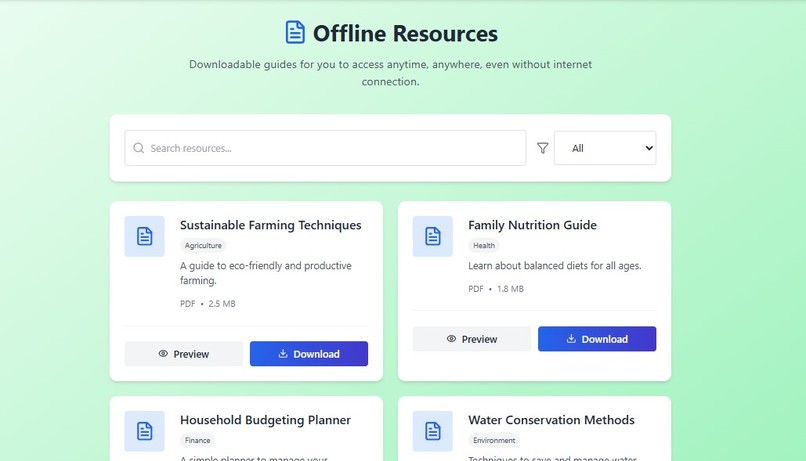
Offline Resourses
-
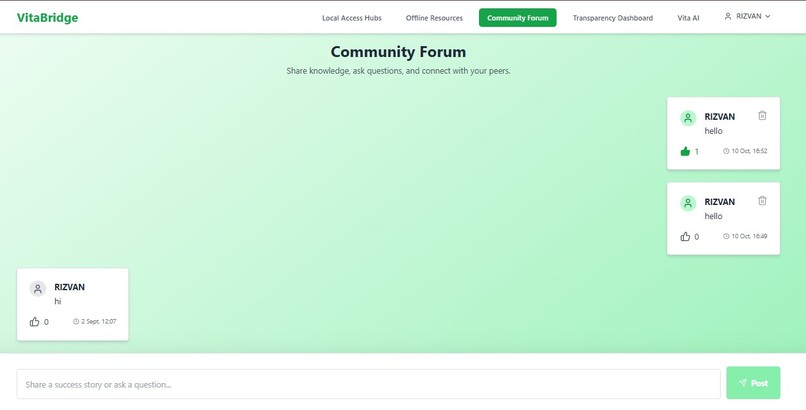
Community Forum
-
DashBoard
-
Vita AI
Inspiration
One night, while walking along the roadside eating a biscuit, I noticed a stray dog and threw it a couple of pieces. A man nearby was watching me and quietly said, “Humanity.” I didn’t fully understand at first and kept walking, but he followed me. When I turned back, he gave me a shy smile and softly asked, “Can you please give me your biscuit?” I was completely shocked and speechless. At that moment, I realized he wasn’t just hungry—he was desperate. I had only $200 with me, and I gave him $120. But as I walked away, the truth struck me even harder: he was not the only one. There are millions of people like him, unseen and unheard.
Over 700 million people worldwide still live in extreme poverty, and more than 800 million suffer from hunger. These are not just statistics—they are real families, mothers, fathers, and children struggling every day. We were inspired by the UN Sustainable Development Goals (SDG 1: No Poverty and SDG 2: Zero Hunger) to build something meaningful. We studied why many previous initiatives failed, and found common issues:
- Heavy dependence on constant internet access.
- Lack of transparency and trust within communities.
- Overlooking local literacy, affordability, and accessibility challenges.
That’s where VitaBridge was born — a project designed to bridge the gap, by delivering knowledge, resources, and opportunities directly to the people who need them most, in a way that is inclusive, transparent, and accessible.
What it does
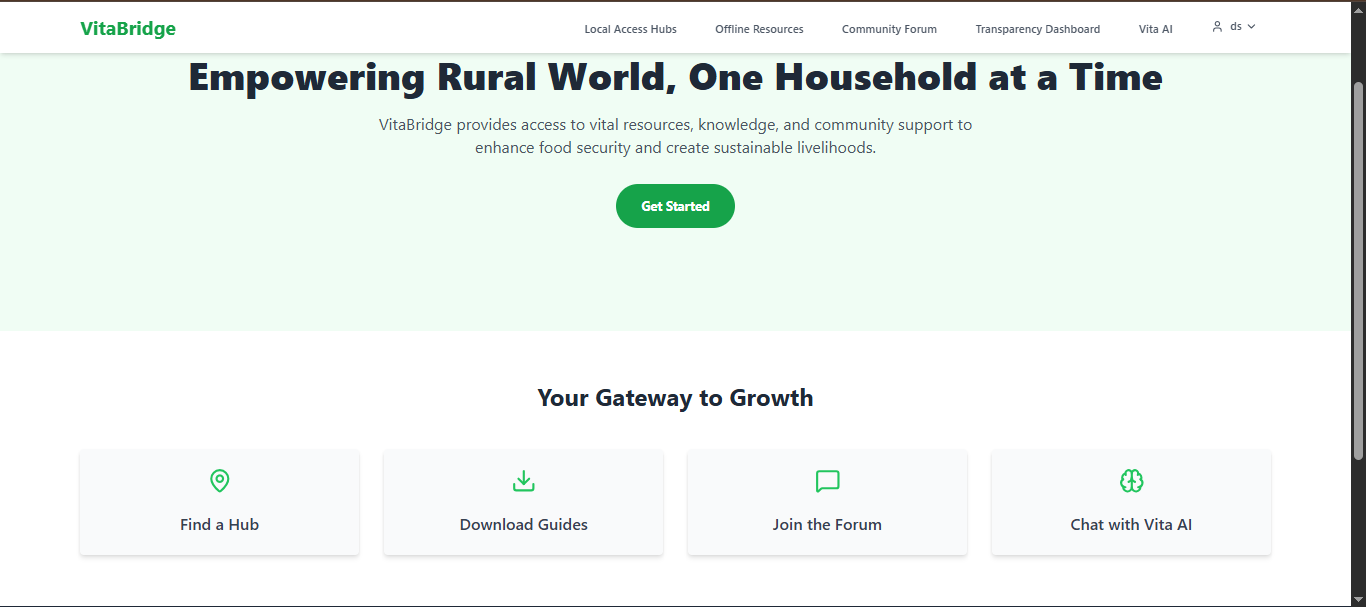
VitaBridge is a web-based ecosystem designed to empower rural households:
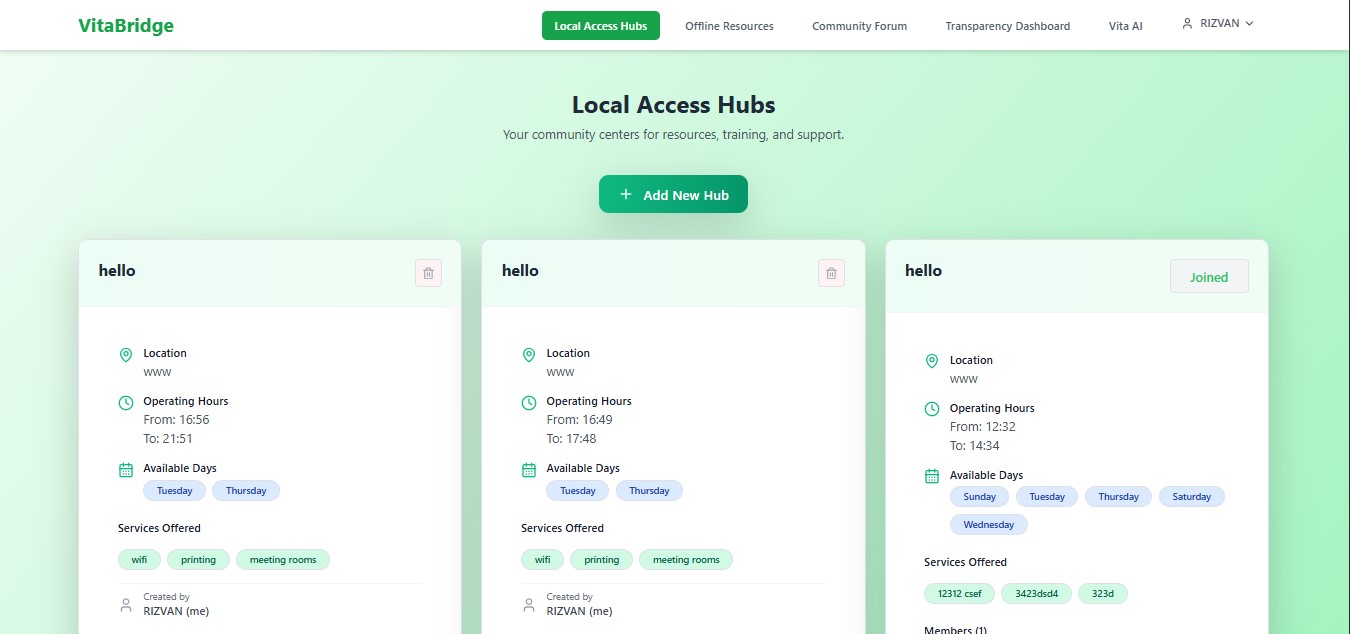
🌍 Local Access Hubs – People can create a join in a Hub.
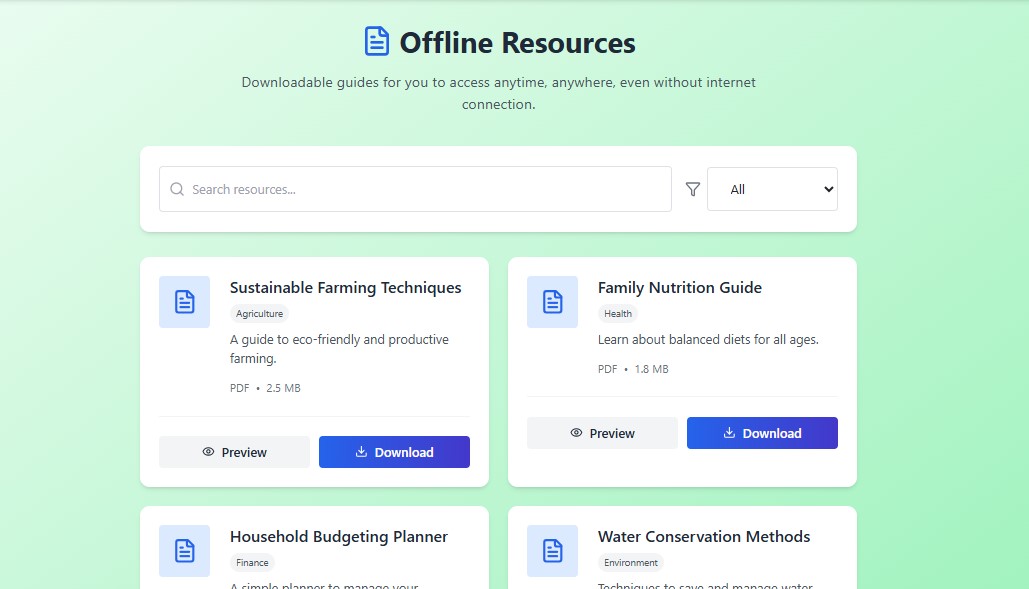
📚 Offline Resources – downloadable guides on farming, nutrition, and budgeting.
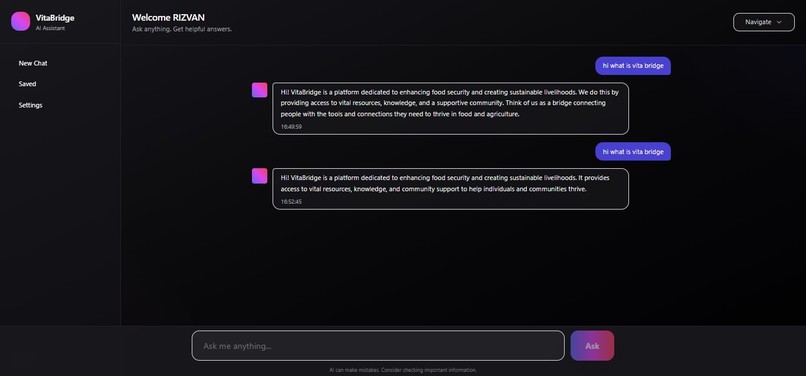
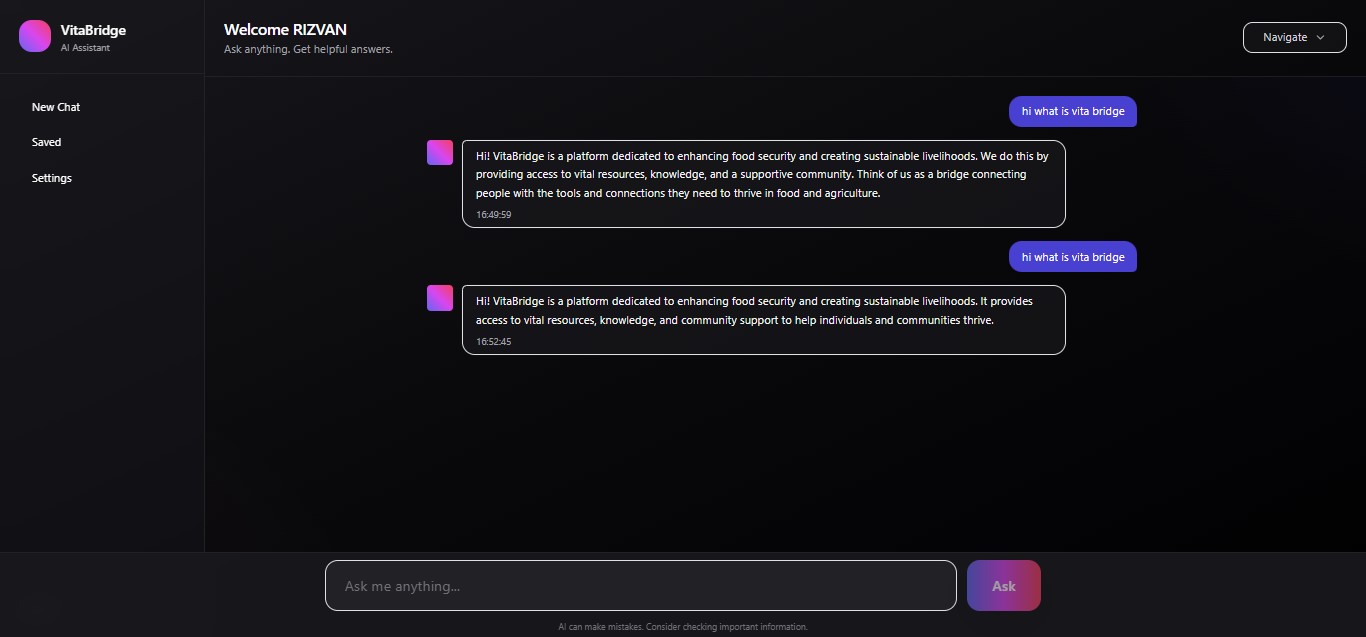
📲Vita AI– Gemini based AI (api) that gives you information about everything.
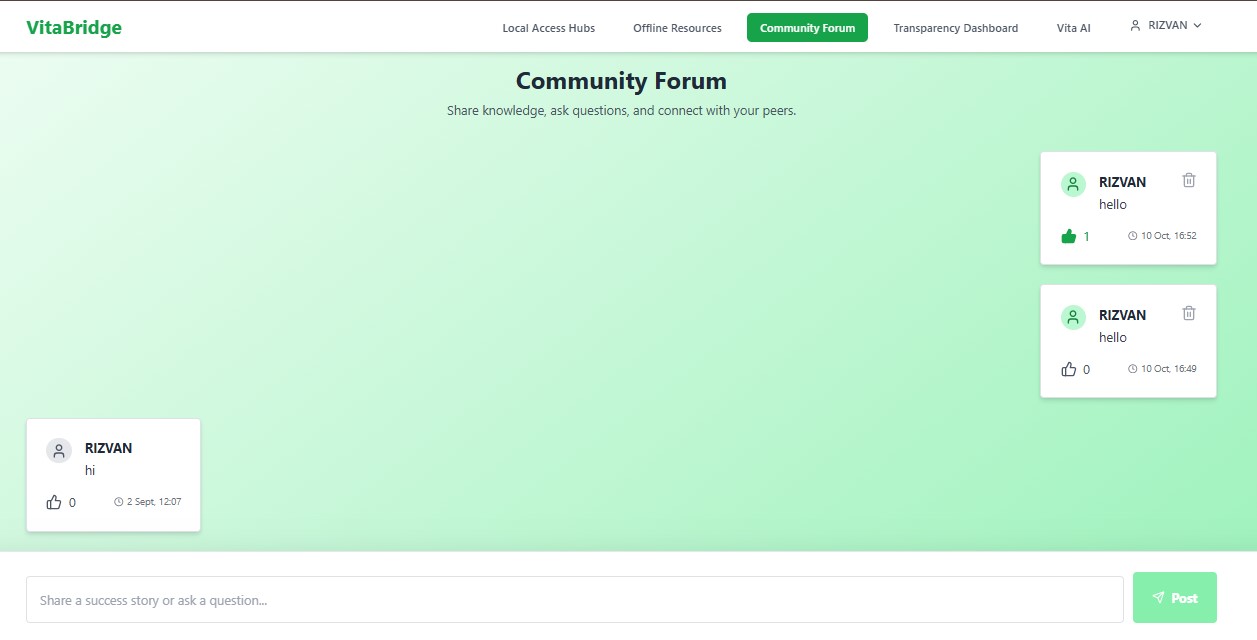
🗣 Community Forum – moderated space for NGOs, trainers, and users to connect.
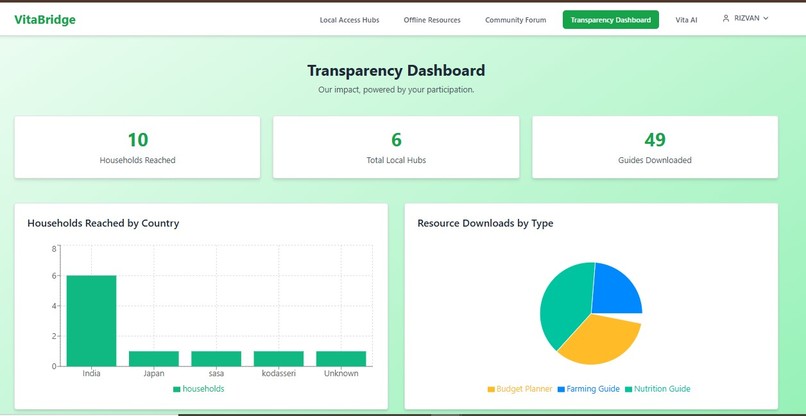
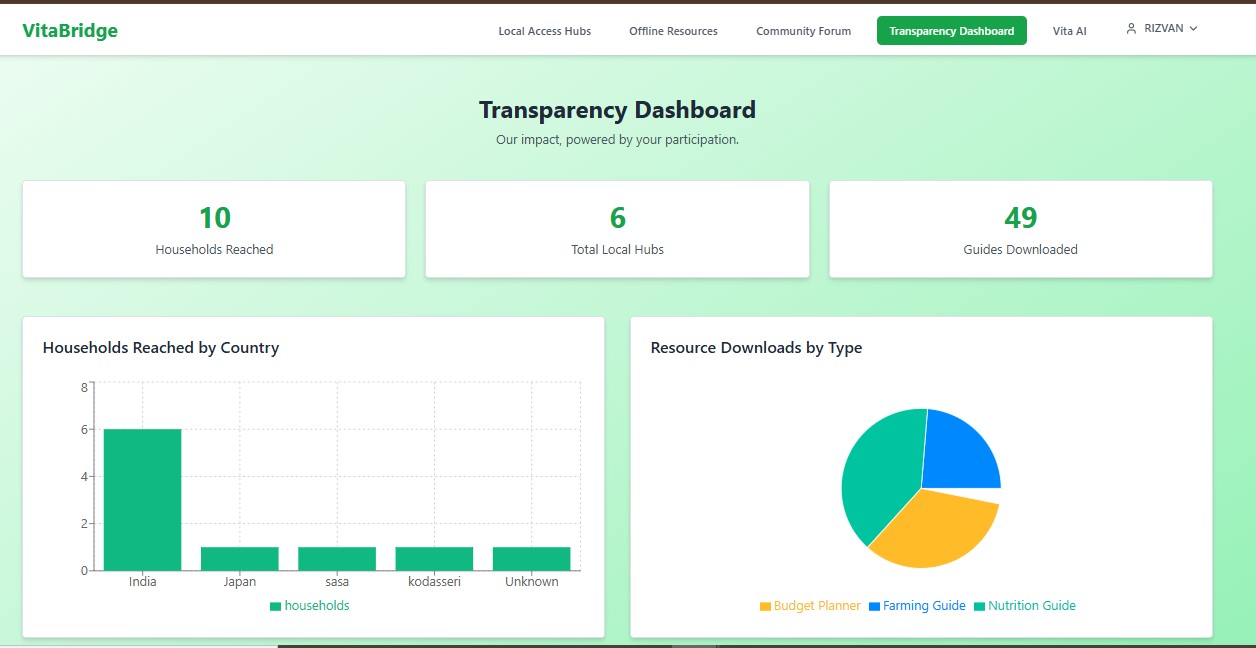
📊 Transparency Dashboard – showcasing metrics like “number of households reached” and “resources downloded.”
How we built it
Frontend: React.js + TailwindCSS for a responsive, accessible UI. Backend: Node.js + Express for API handling. Database: Firebase for scalable data storage. Offline Support: Service Workers + PWA features for guide access without internet. Deployment: Vercel (frontend) + Heroku/Render (backend).
Challenges we ran into
The major challenge is the backward people were unaware of technology Designing for low-connectivity environments without compromising user experience. Creating offline-first functionality with downloadable content. Building a trust layer so users believe in the platform’s transparency and usefulness. Balancing tech complexity with hackathon time limits.
Accomplishments that we're proud of
Building a solution that doesn’t just work in cities but is tailored for rural challenges. Creating an inclusive platform where both NGOs and community members can contribute. Designing a transparency dashboard to foster trust and accountability.
What we learned
Real innovation means simplicity and accessibility, not just advanced technology. Offline-first web apps are critical in rural contexts. The importance of designing with empathy for users with different literacy levels and resources. Collaboration between NGOs, tech, and local communities is essential for sustainable solutions.
What's next for VitaBridge
Expanding to cover multi-language support for diverse communities. Partnering with local NGOs for real-world pilot programs. Adding AI-powered recommendation systems for personalized livelihood advice. Integrating with government welfare schemes to increase impact.
✨ VitaBridge: Bridging life, opportunities, and resources for a hunger-free, poverty-free world.

Log in or sign up for Devpost to join the conversation.