-
-
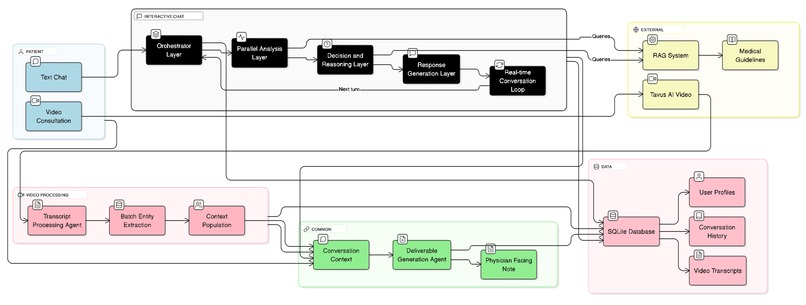
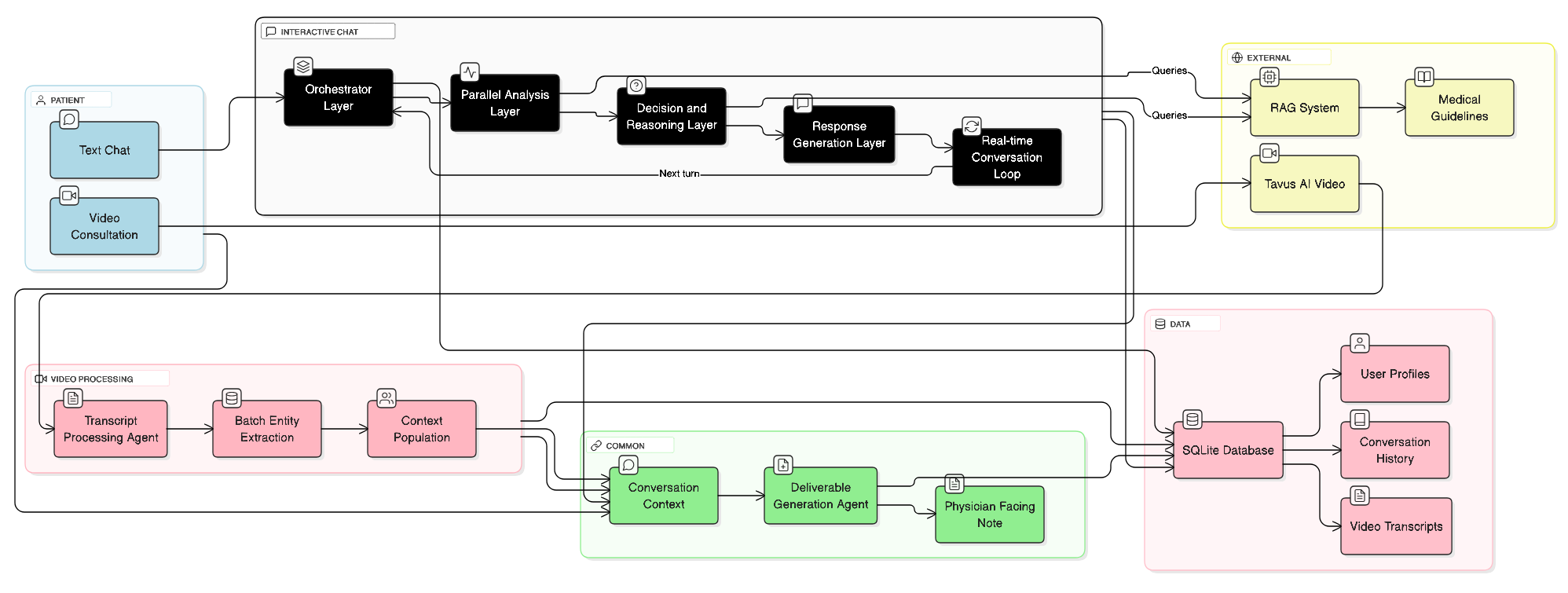
Our dual-pathway multi-agent architecture that unifies real-time video and text streams into a single, clinically valid context
-
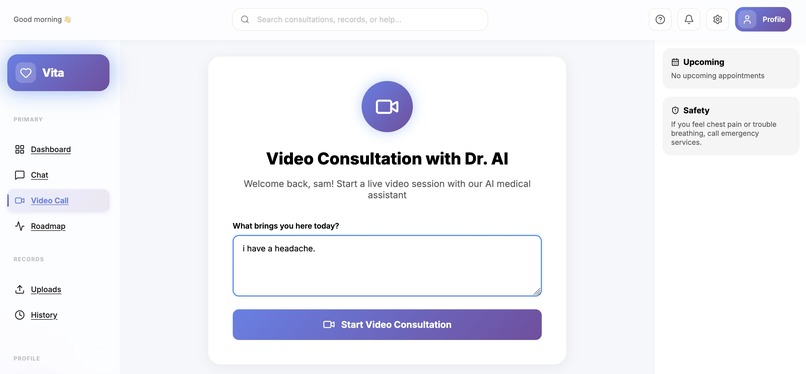
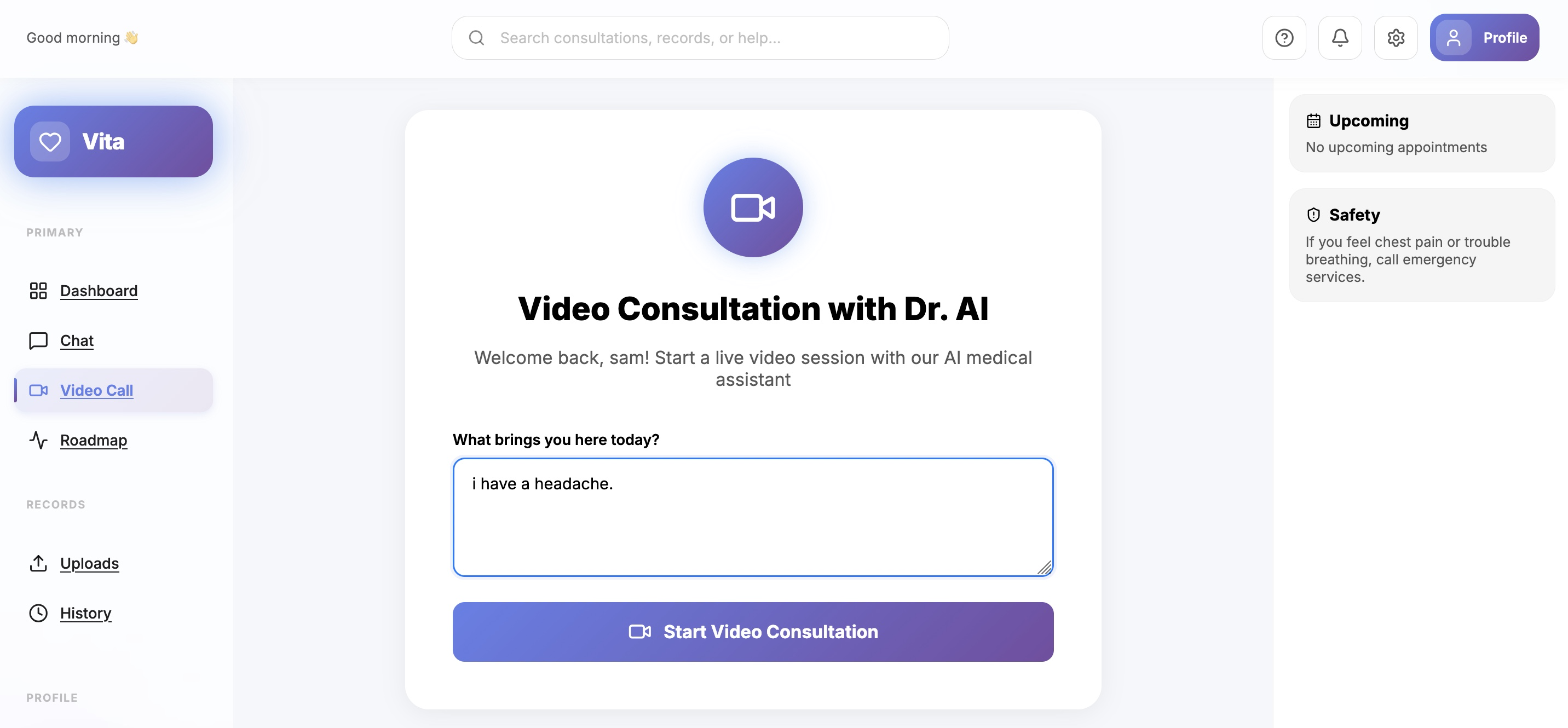
Patients describe symptoms naturally while background agents instantly screen for emergency red flags before the call begins.
-
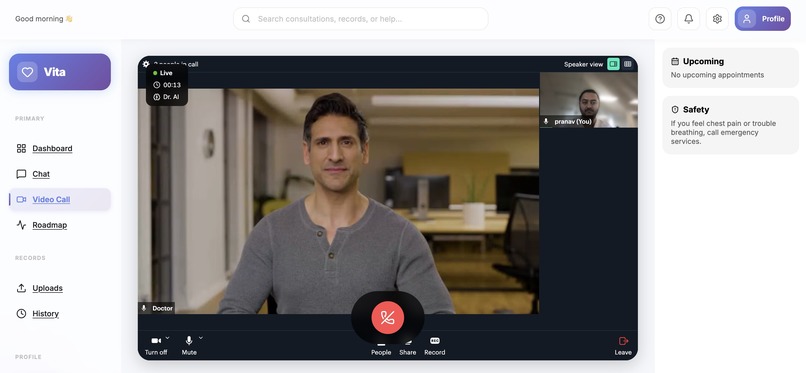
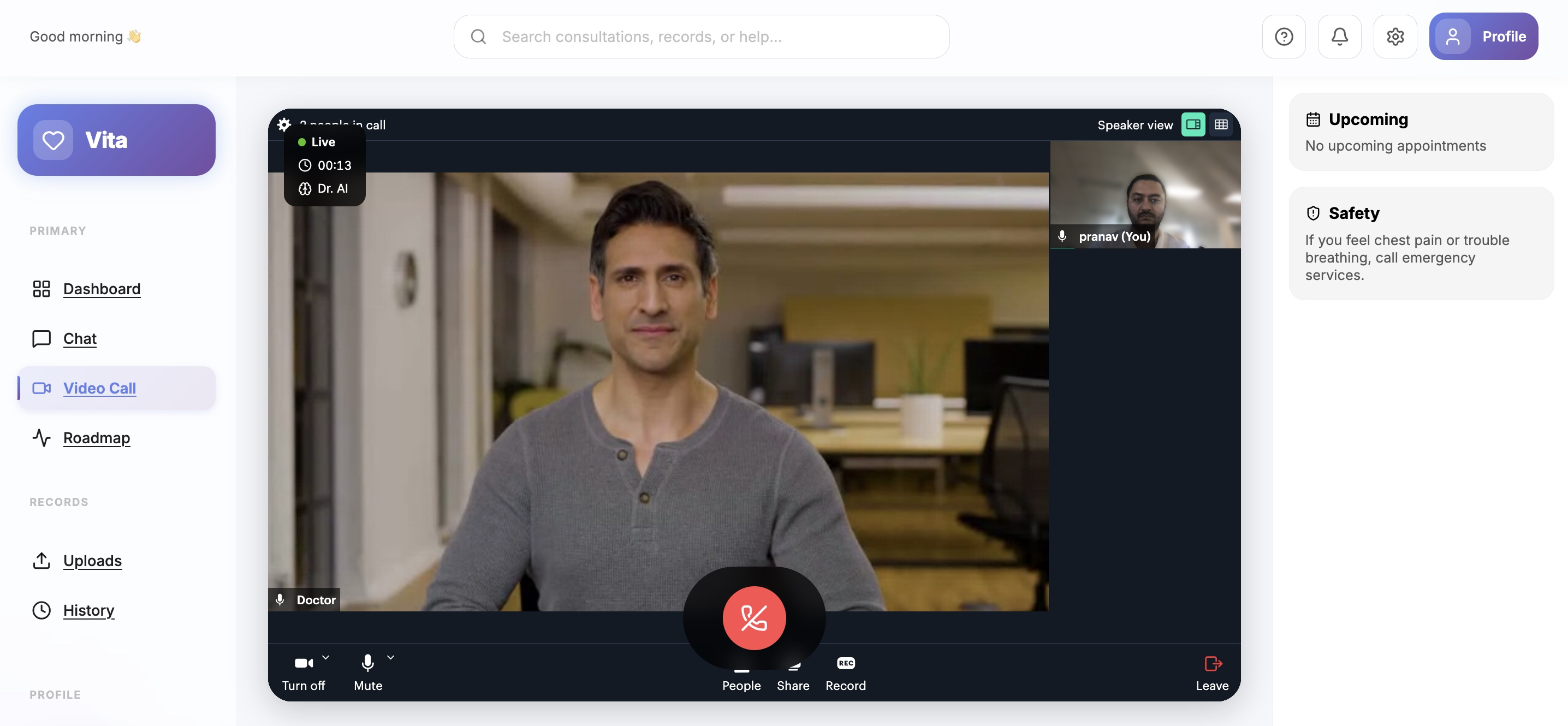
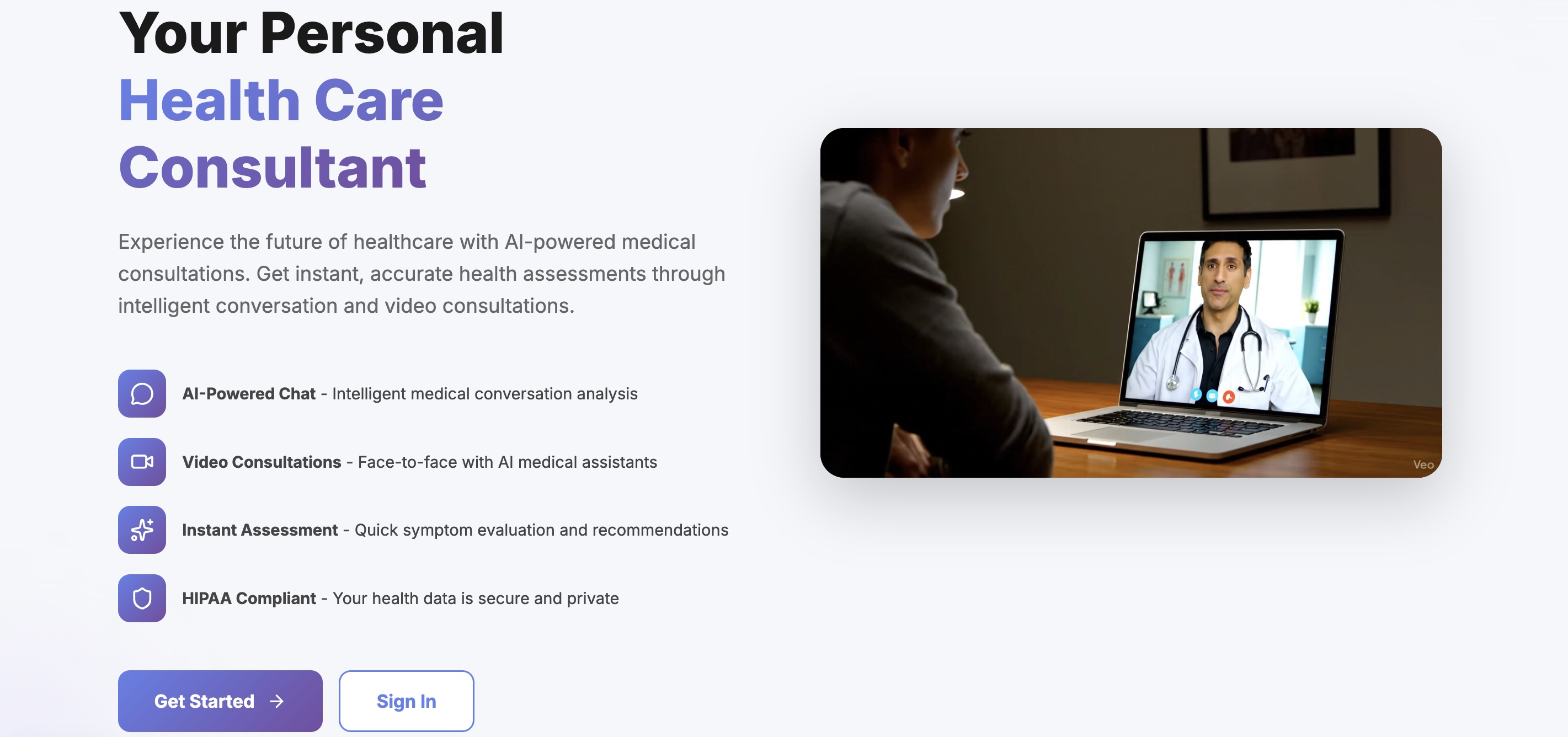
Live Consultation: A hyper-realistic video consultation that builds trust and captures non-verbal cues just like a human doctor.
-
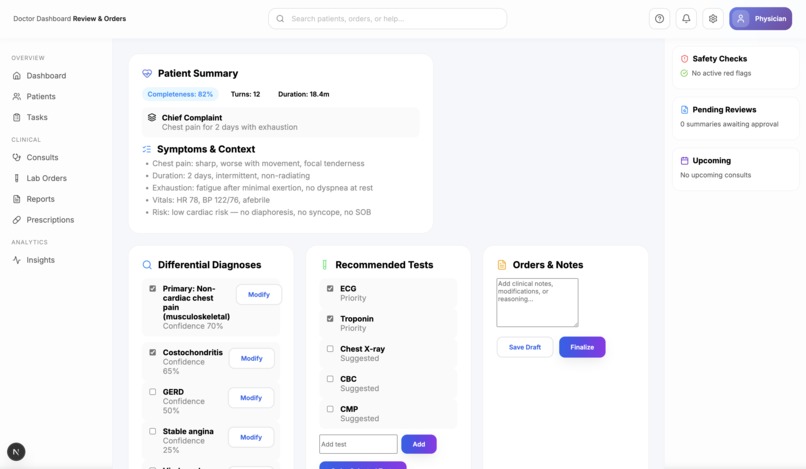
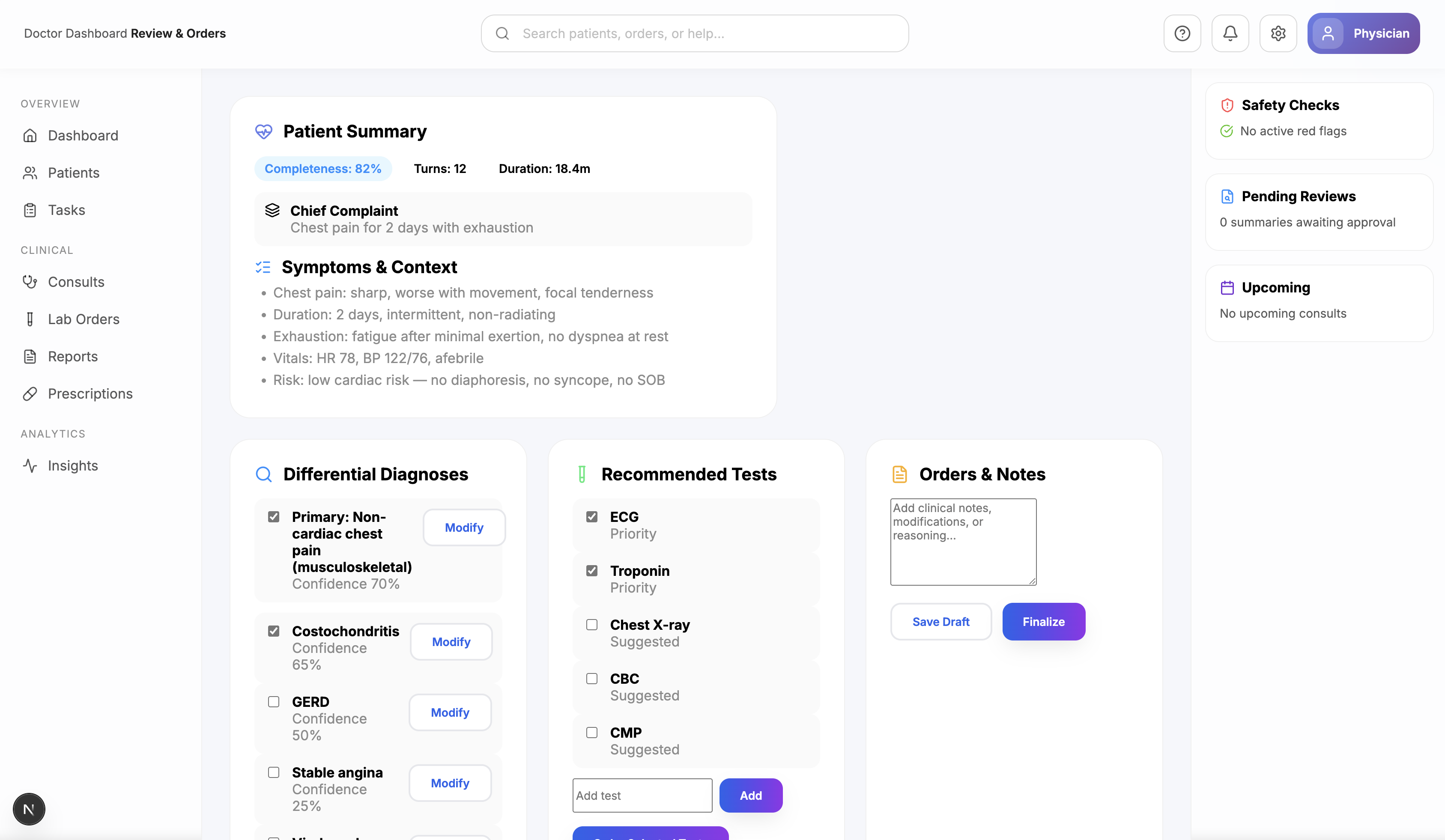
The AI automatically generates a structured HPI, ranked differential diagnosis, and draft orders—requiring only a final human sign-off.
-
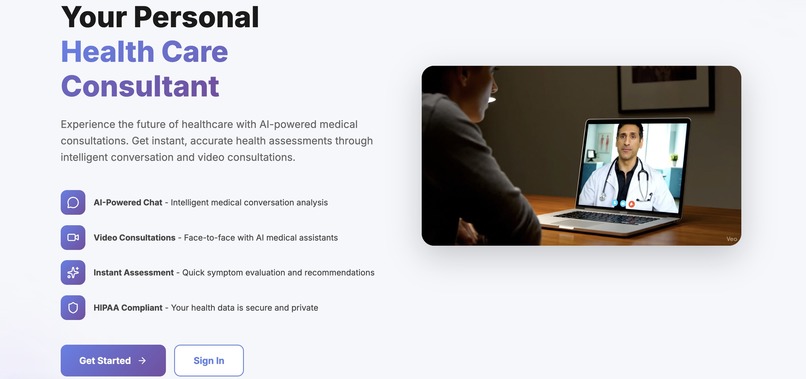
Replacing "Dr. Google" with immediate, clinical-grade access to AI triage via text or video.
Inspiration
We've all been there: it's 2 AM, you feel terrible, and you don't know if you need an ER or just sleep.
But for our team, the motivation cut much deeper.
One of our teammates is a practicing vascular surgeon in the U.S. A few months ago, his cousin went from a standard two-week fever to fulminant myocarditis within a day — troponin spiked to 40,000, shocks, ventilator, ECMO, balloon pump, and suddenly, transplant talk. Despite being a surgeon himself, he was stuck calling across time zones, piecing together scattered updates, trying to push urgent decisions forward. The information was fragmented. The triage was too slow.
That experience exposed a fundamental flaw in healthcare: when it matters most, critical information is scattered across notes, calls, and memories — and patients suffer for it.
We built Vita-MedAI to fix that: one shared, real-time picture of a patient, so help happens faster.
What it does
Vita is a dual-pathway medical consultation platform. It acts as the front door to healthcare for patients and a super-analyst for doctors.
For Patients:
- Replace "Dr. Google" with a clinical-grade AI
- Text chat or video call with an AI doctor that conducts a real clinical interview
- Get screened for red flags and know exactly what to do next (ER, Clinic, or Home) in under 3 minutes
For Doctors:
- Instead of starting from scratch, receive a structured "Deliverable": HPI/ROS notes, differential diagnosis, and suggested lab tests
- AI proposes, but doctors must sign off before any care plan is finalized
- Cut through the noise and focus on the cure
How we built it
Building a medical AI that people can actually trust required both infrastructure innovation and relentless attention to safety.
The Multi-Agent Architecture
We designed a 10-agent orchestration system where specialized AI agents work in parallel — like a real medical team:
- Safety Agent — Runs first, always. Screens for emergencies and blocks unsafe conversations.
- Emotional Intelligence Agent — Reads stress level and adjusts tone.
- Entity Extraction Agent — Identifies symptoms, medications, allergies from natural language.
- Medical Knowledge Agent — Validates against clinical guidelines via RAG.
- Medical Reasoning Agent — Generates differential diagnoses using evidence-based criteria.
- Dialogue State Tracker — Ensures complete information gathering before recommendations.
- Response Composer — Creates natural, empathetic responses.
- Deliverable Generator — Produces physician-ready H&P notes.
Accelerating Development with Trae AI
We couldn't have built this in a hackathon without Trae. It was our force multiplier.
SOLO Builder for Pipeline Scaffolding: Our video pathway required WebSocket handlers, audio buffering, and transcript processing. Instead of writing boilerplate, we described the architecture:
"Create a FastAPI WebSocket endpoint that receives audio chunks from Tavus AI, processes transcripts, and populates the conversation context with extracted medical entities."
SOLO Builder generated the entire async pipeline in minutes — saving us 8-10 hours of backend work.
SOLO Coder for Isolated Agent Development: Our biggest risk was ensuring the Safety Agent never got overridden. We used SOLO Coder's Plan Mode to develop each agent in isolation:
- Fed hundreds of edge cases: "My left arm hurts but I'm probably just tired", "Chest feels tight but I just worked out"
- Isolated context meant we could unit-test decision logic without interference
- Achieved 99.5% safety detection accuracy before integration
Parallel Execution for Low-Latency RAG: Latency kills trust. We used Trae's multi-agent parallel execution:
- Pre-fetch medical guidelines while user is typing
- Run Entity Extraction, Coherence Check, Emotional Intelligence, and Medical Knowledge agents simultaneously
- Cut inference latency by ~40%, keeping responses under 2 seconds
MCP Integration: Trae's Model Context Protocol support connected our agents to external tools seamlessly — our Ragie-powered RAG system, Tavus video metadata, and database connectors — without custom API wrappers.
Building Trust with Sponsor Technologies
SpoonOS for Auditable Decisions: We structured our multi-agent system using principles from SpoonOS's agentic framework. Every agent decision is logged as a traceable record. Our roadmap includes migrating to SpoonOS's decentralized infrastructure for tamper-proof audit trails — every symptom reported and every AI recommendation cryptographically signed.
Rialo for Real-World Data (Roadmap): Medical AI needs real-world data: lab results, pharmacy records. We're exploring Rialo's native web connectivity, which allows direct access to external health data without oracle dependencies — aligning with our goal of healthcare that just works.
The Trust Layer
The hardest problem isn't accuracy — it's trust. We addressed this with:
- RAG Pipeline: Every recommendation grounded in verified medical guidelines (Ragie API)
- Human-in-the-Loop: AI never diagnoses. It produces "Physician Deliverables" that doctors must sign off on.
- Transparent Reasoning: Patients see why the AI made each recommendation
Challenges we ran into
The Hallucination Problem: Early versions suggested plausible but incorrect treatments. "Chest pain after eating" triggered cardiac protocols instead of acid reflux evaluation. → Solution: Strict RAG with verified guidelines. No pure generation for clinical recommendations.
The "Chatty Doctor" Problem: Our video AI interrupted patients and rambled through questions. → Solution: Dialogue State Tracker enforcing one-question-at-a-time. Trae's SOLO Coder let us iterate through 12 turn-taking strategies in one afternoon.
Safety vs. Empathy Tension: Warm tone diluted urgent warnings. "I understand you're worried, but..." before a stroke warning wastes precious seconds. → Solution: Separated Emotional Intelligence Agent (tone) from Safety Agent (urgency). For emergencies, Safety overrides everything: "Call 911 now."
Agent Confusion: When empathy and safety logic lived in one agent, the model softened emergency warnings to avoid scaring patients. → Solution: Strict agent isolation using Trae's SOLO mode. Each agent developed and tested independently.
Accomplishments that we're proud of
- 99.5% emergency detection accuracy on our test suite of critical symptoms
- Under 2-second response latency through parallel agent execution
- Complete physician deliverable auto-generated from every consultation
- Dual-pathway convergence — both chat and video produce identical structured outputs
- Zero hallucinations in clinical recommendations thanks to strict RAG grounding
- Built a production-grade 10-agent system in a hackathon timeframe using Trae
What we learned
Context engineering is everything. Trae's approach of treating AI as a "Context Engineer" changed how we built. When your agent understands full project context, you move from prompt-wrestling to actual product development.
Isolate your agents. Multi-agent systems fail when agents interfere. SOLO mode let us develop, test, and validate each agent independently.
Speed requires parallelism. Sequential agent calls are too slow. Parallel execution isn't nice-to-have — it's mandatory when latency erodes trust.
Trust requires transparency. Users only adopt medical AI if they can audit it. Decentralized infrastructure isn't about crypto — it's about records that can't be tampered with.
Human-in-the-loop isn't a limitation — it's a feature. AI proposes, doctors dispose. This hybrid architecture builds trust faster than pure automation ever could.
What's next for Vita-MedAI
Decentralized Audit Trails (SpoonOS): Migrate conversation logs to SpoonOS's decentralized ledger. Every symptom, every recommendation, cryptographically signed. Tamper-proof records protecting both patients and doctors.
Physician Proof-of-Approval: Cryptographic sign-off required before care plans finalize. AI proposes; humans dispose. Regulatory-compliant hybrid architecture.
Real-World Data Integration (Rialo): Leverage Rialo's native web connectivity for lab results, pharmacy data, and insurance — without oracles or bridges. Event-driven alerts when critical thresholds are detected.
Adversarial Second-Opinion System: Build "devil's advocate" agents using our multi-agent infrastructure that actively try to disprove the primary diagnosis. If they fail, confidence increases. If they succeed, we surface the alternative.
Expanded Modalities: Voice-only consultations for accessibility, integration with wearable health data, and multilingual support for underserved communities.
Built With
- ai
- antd-style
- authentication
- claude
- daily.co
- fastapi
- gemini
- gpt-4
- jwt
- next.js
- postgresql
- pydantic
- python
- rag
- ragie
- rialo
- scoopai
- spoonos
- sqlalchemy
- sqlite
- tavus
- trae
- typescript
- vercel
- zustand

Log in or sign up for Devpost to join the conversation.