-
-
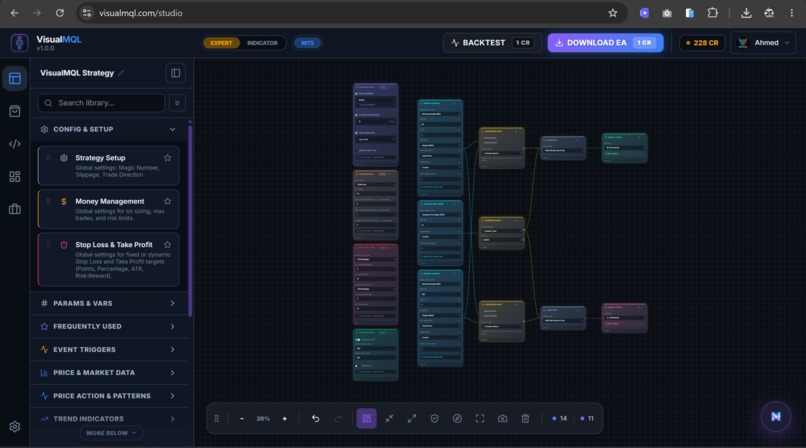
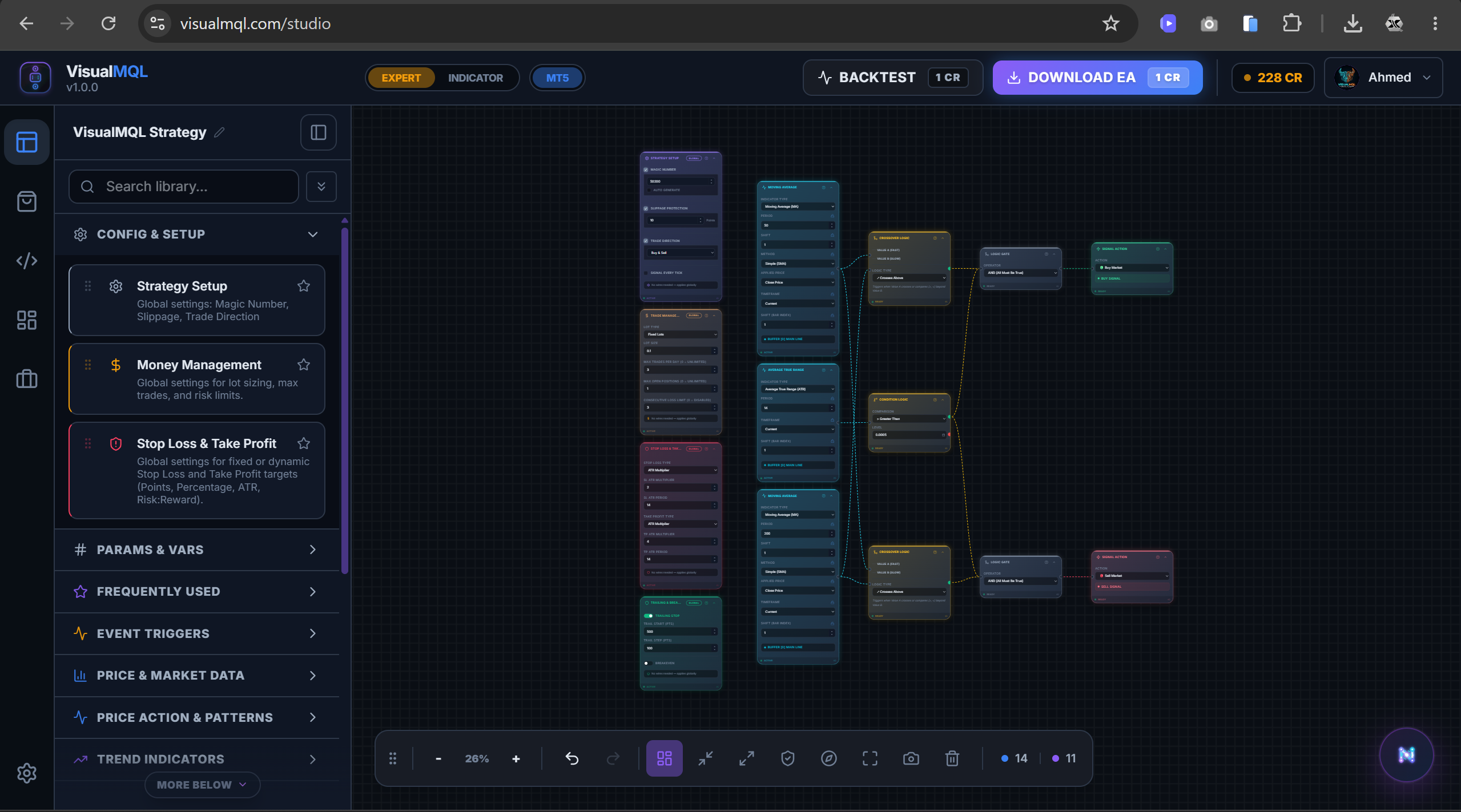
A complete visual strategy with indicators, filters, risk controls, and buy/sell logic.
-
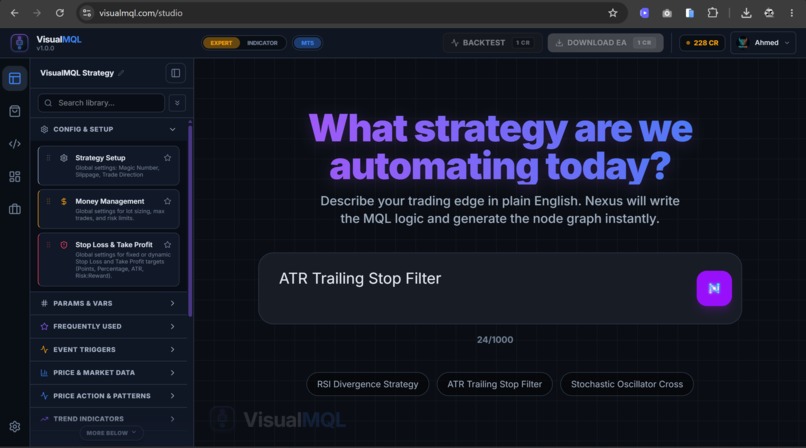
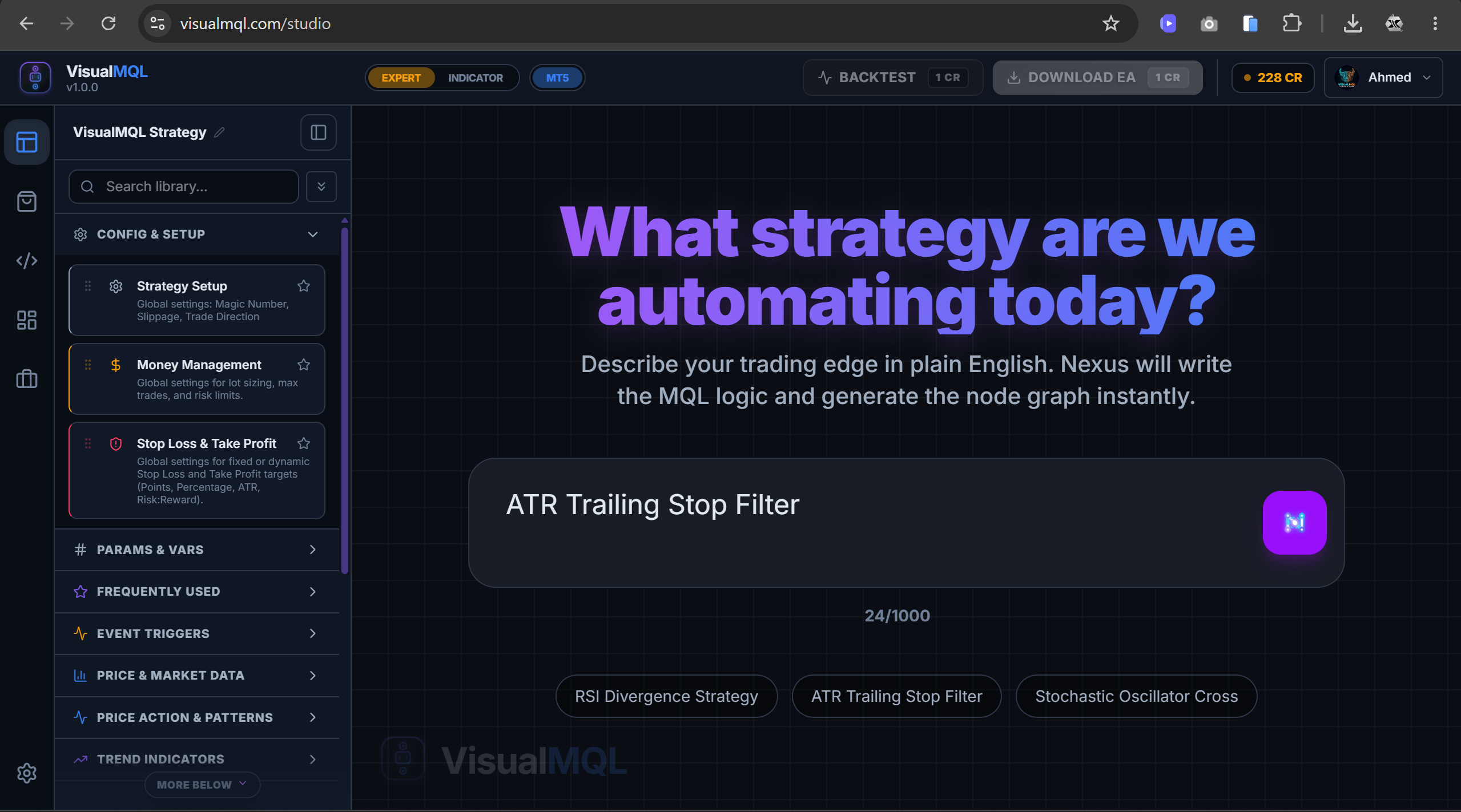
Describe a trading strategy in plain English and let Nexus generate the editable node graph.
-
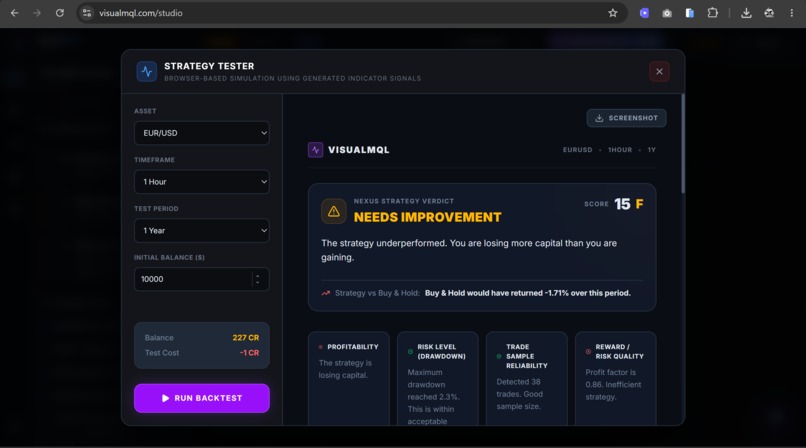
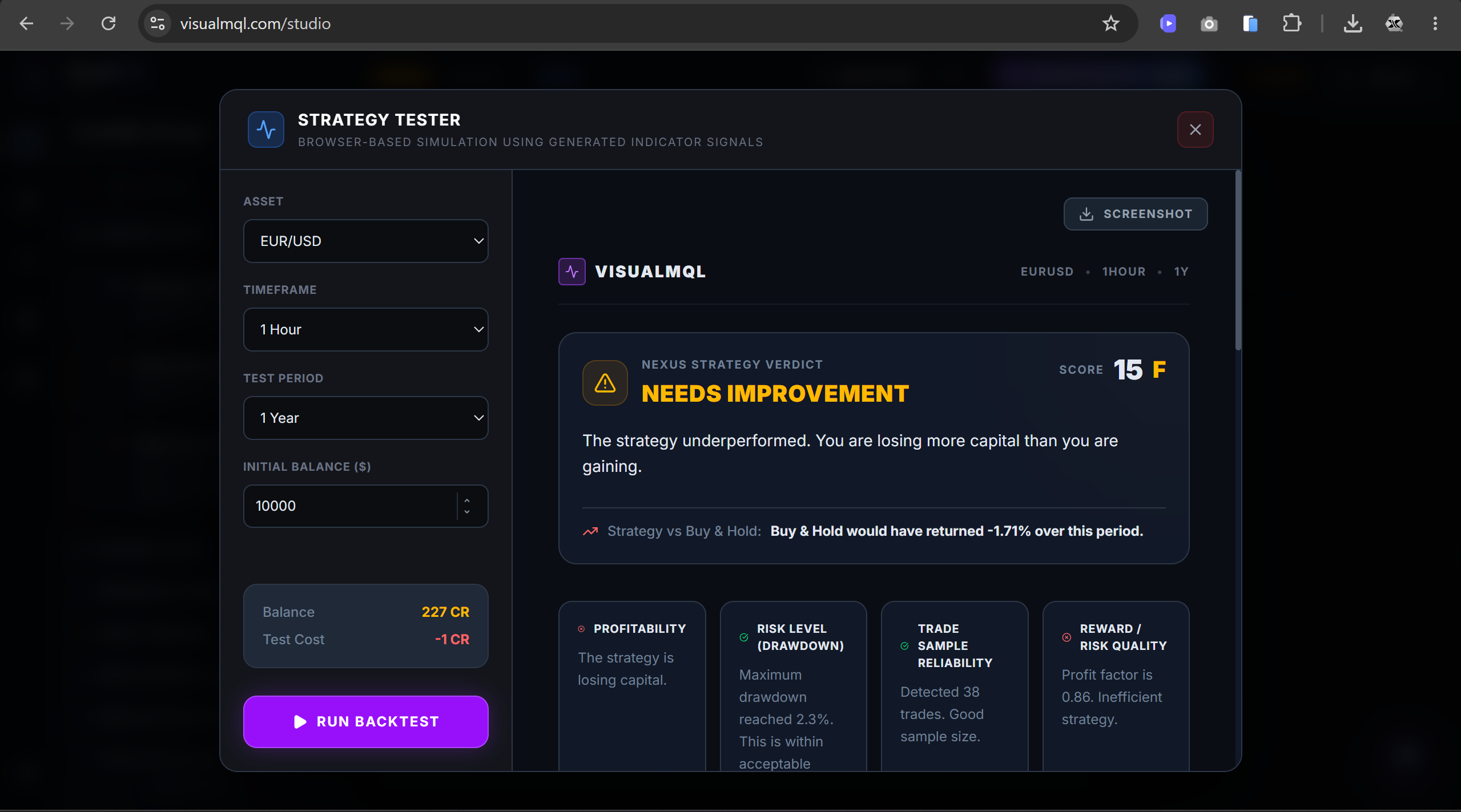
Test the strategy in the browser and review profitability, drawdown, and trade quality before export.
-
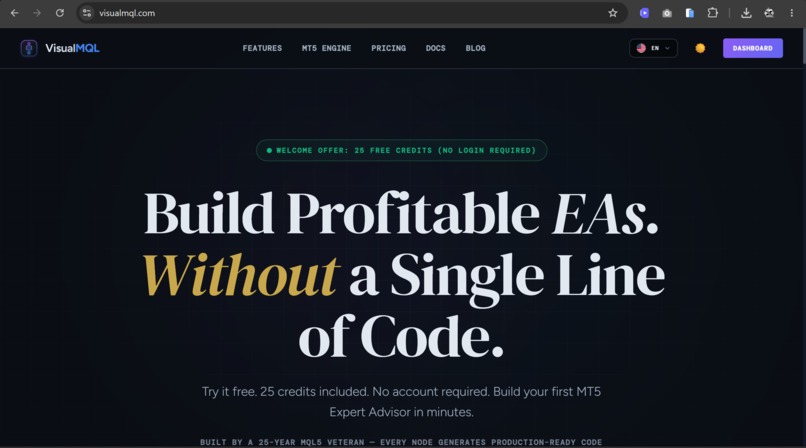
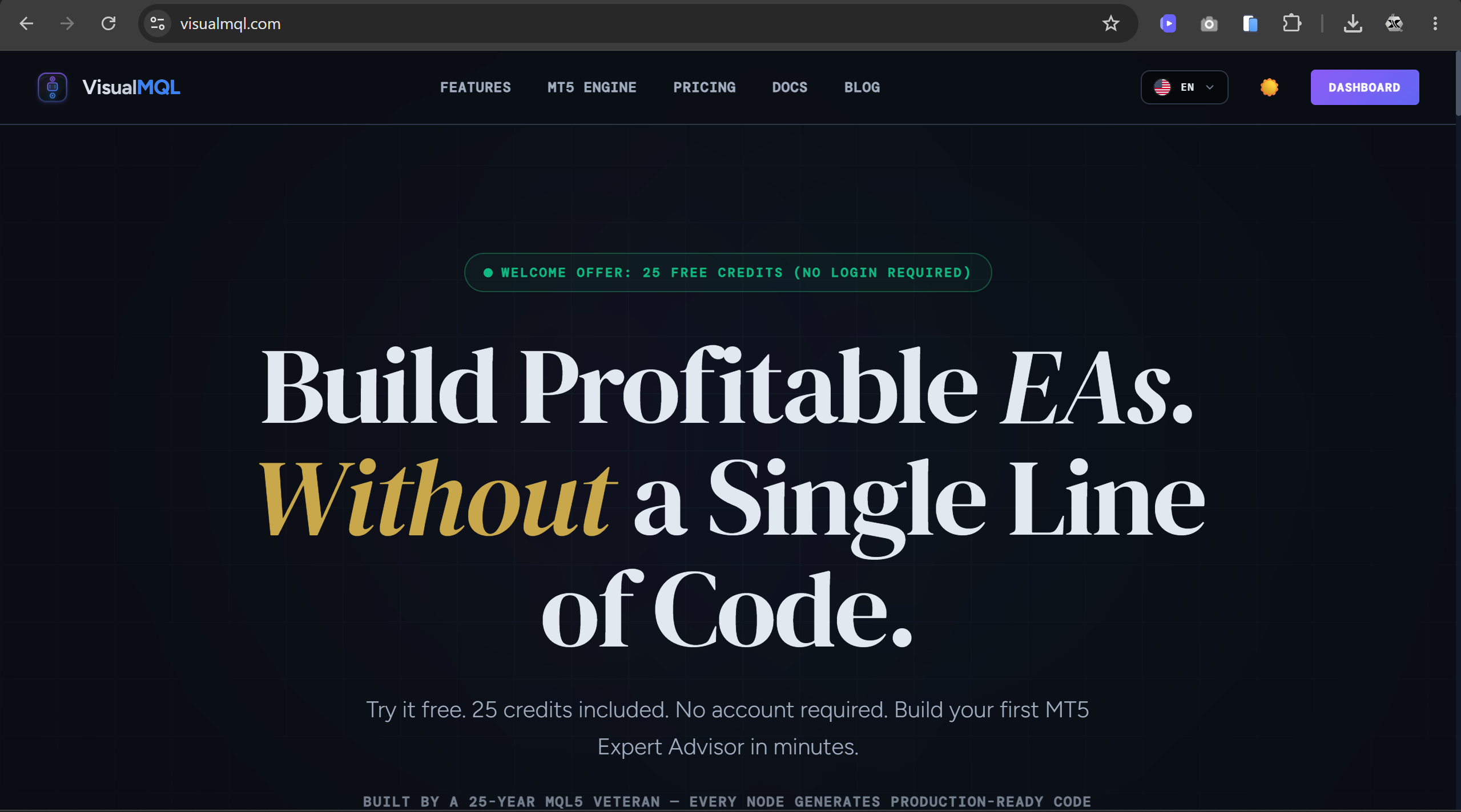
Build, test, and generate MetaTrader 5 Expert Advisors with an AI-assisted visual workflow.
Inspiration
Algorithmic trading development natively requires deep mastery of complex MQL4/MQL5 syntax and event-driven loops (OnInit, OnTick). Most quantitative strategy designers have excellent market logic but lack programming mastery. Over the last three months, I set out to build VisualMQL to bridge this gap—providing a responsive visual IDE that allows engineers to model trading systems visually and compile them natively using state-of-the-art AI code generation.
What it does
VisualMQL is a developer-facing visual environment for structuring, validating, and compiling automated trading systems. Users construct strategies by connecting technical indicator nodes, execution rules, and risk management parameters. Our system compiles this visual topology into high-context prompts that leverage OpenAI to produce commentary-rich, perfectly structured MQL code blocks.
How I built it
The frontend architecture features a high-performance 120 FPS node canvas built using React and Tailwind CSS. The backend API is constructed natively using Python to map the graphical metadata safely. For the hackathon, we entirely migrated our backend from old frameworks to the modern OpenAI SDK, natively connecting our logical prompt builders to the gpt-5.6-terra model structure. Additionally, the backend integrates an isolated execution pipeline utilizing a headless MetaEditor compiler running via Wine on Ubuntu servers to produce broker-ready .ex5 binary files.
Challenges I ran into
The primary engineering challenge was mapping multi-layered graphical node paths into perfect object-oriented code architecture that complies with MetaTrader's strict runtime rules. Ensuring that indicators initialize correctly in OnInit and cleanly deallocate memory in OnDeinit required creating deep graph validation rules. Stripping legacy multi-platform API endpoints and implementing a secure, leak-free environment variables pipeline for the OpenAI integration right before the deadline was another major hurdle.
Accomplishments that I'm proud of
Building an intuitive visual language capable of expressing institutional risk protection tools (like dynamic trailing stops and max-drawdown locks) from scratch. We are incredibly proud of migrating our runtime infrastructure natively to OpenAI's GPT-5.6 Terra model, producing instant, syntactically flawless MQL scripts.
What I learned
I learned the profound power of structured, high-context prompt engineering when working with complex niche programming languages like MQL5. Pairing explicit structural constraints with the cognitive capability of GPT-5.6 Terra yields dramatically fewer compiler errors than generic LLM code generation.
What's next for VisualMQL
We plan to introduce a public Creator Marketplace allowing systematic developers to upload custom technical indicator manifests as modular visual nodes. We will also introduce direct, one-click automated server deployment straight from the VisualMQL canvas to live MetaTrader cloud servers.
Built With
- codex
- git
- gpt-5.6-terra
- javascript
- mql5
- openai-sdk
- python
- react
- tailwind-css
- ubuntu
- wine


Log in or sign up for Devpost to join the conversation.