-
-
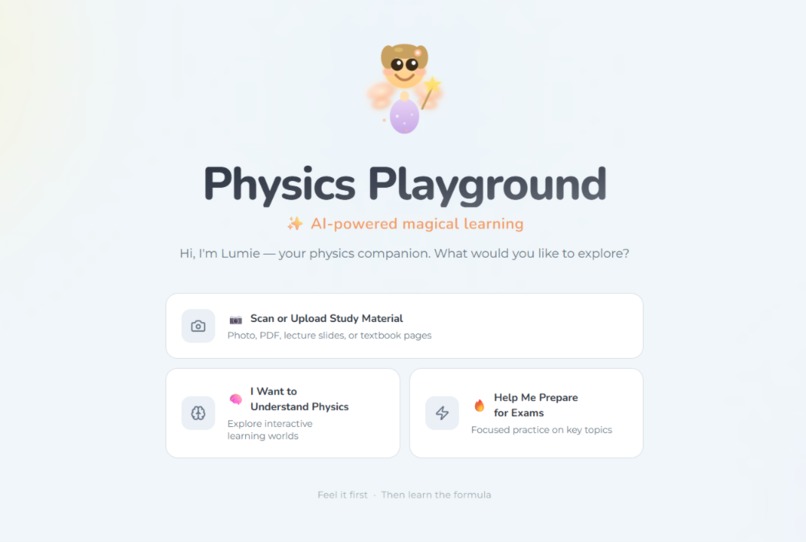
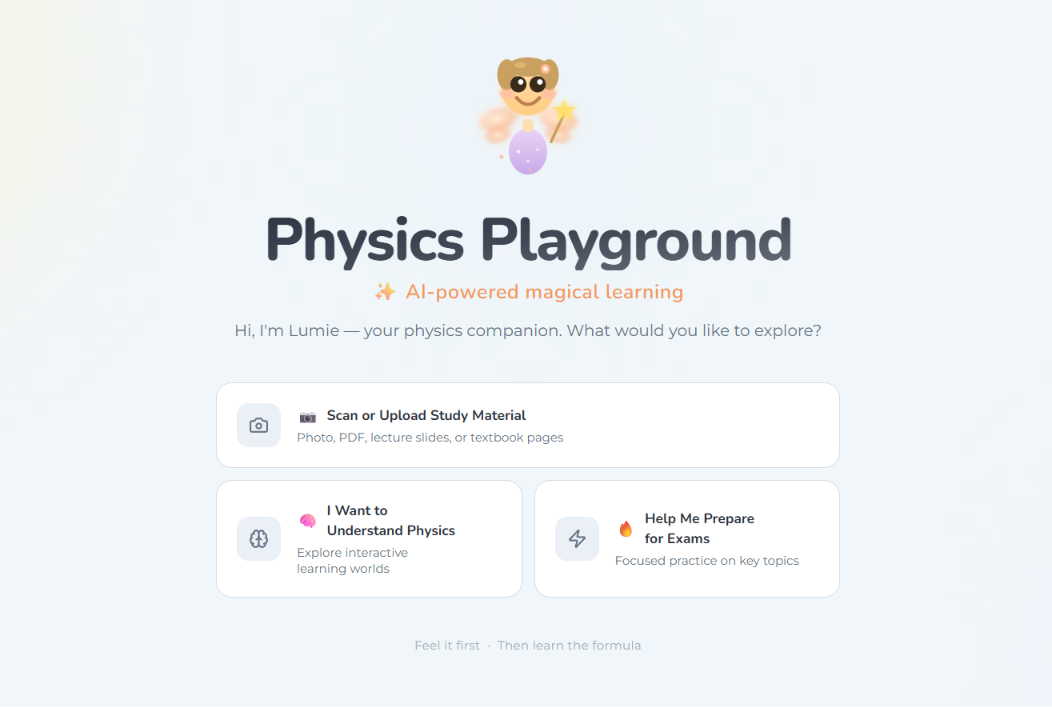
the home page
-
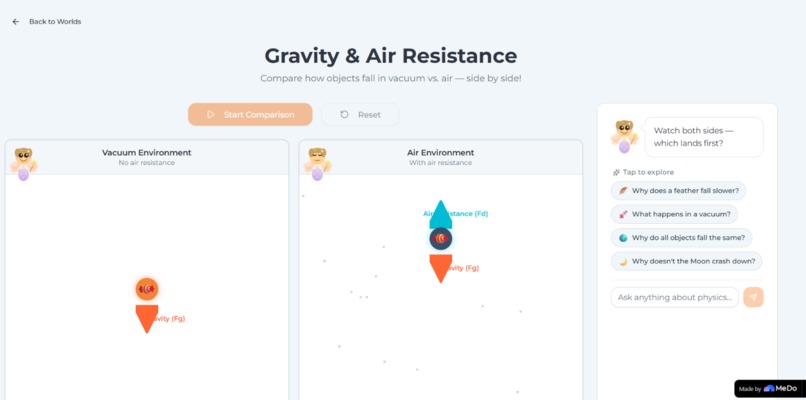
some physic related formula will be explained simplely with the help of AI fairy
-
-
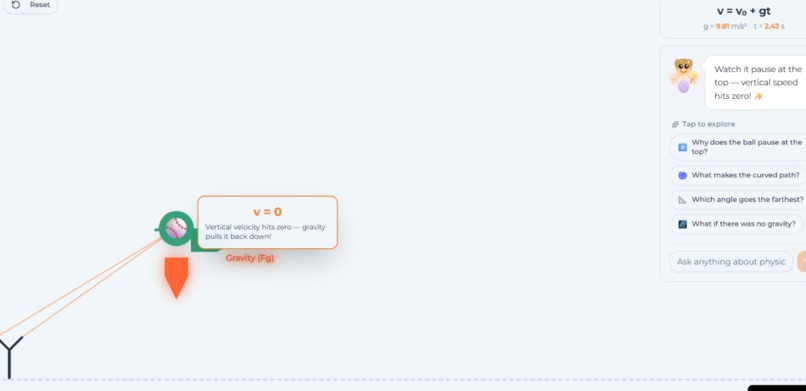
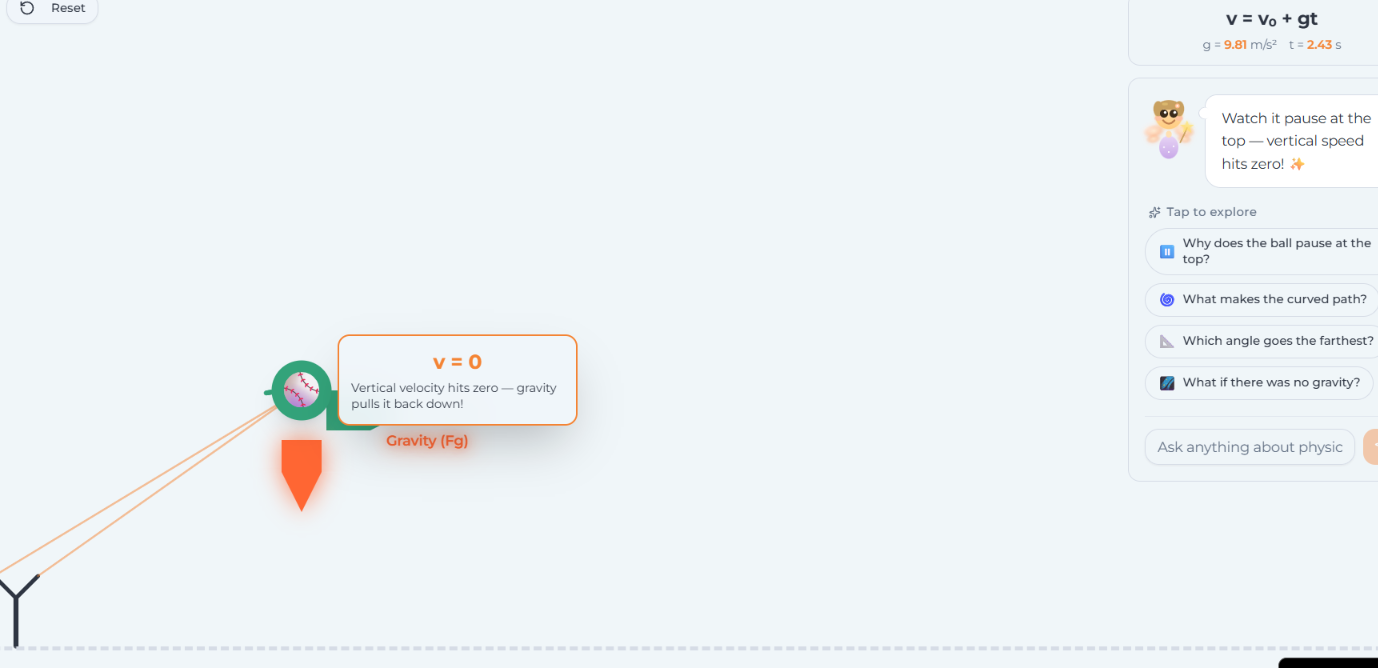
Projectile Motion
Inspiration
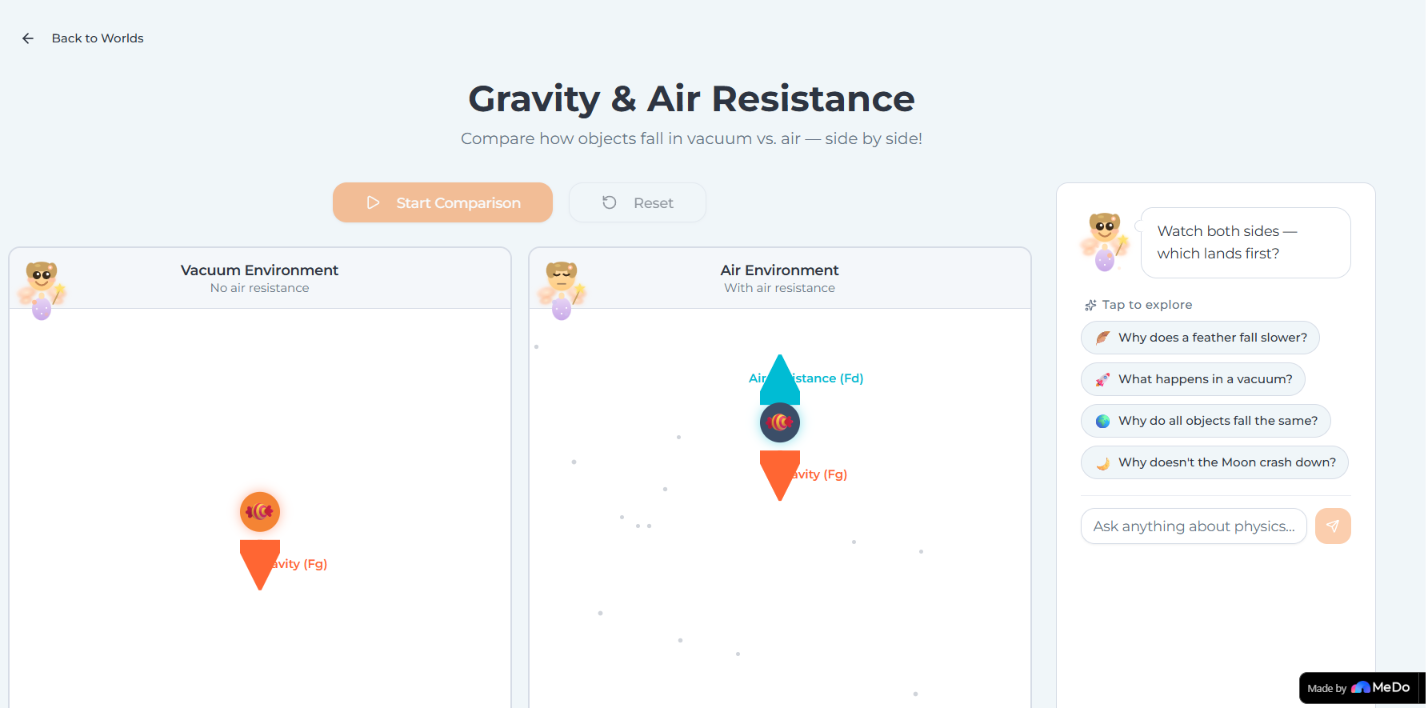
As a first-year Software Engineering student, I often found myself staring at physics formulas like F=mg or F=mg-R without truly "seeing" the physical reality they represent. Static textbooks make it hard to visualize how different forces fight against each other. I wanted to build a "Visual Translator" that bridges the gap between abstract math and physical intuition.
What it does
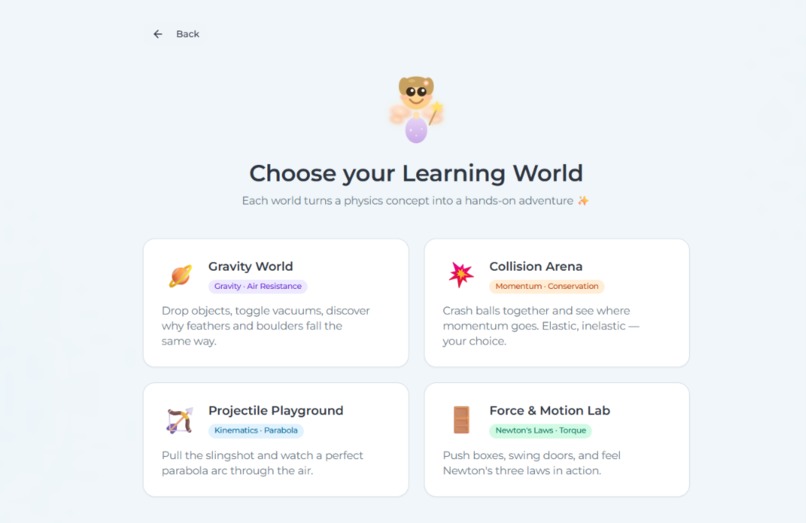
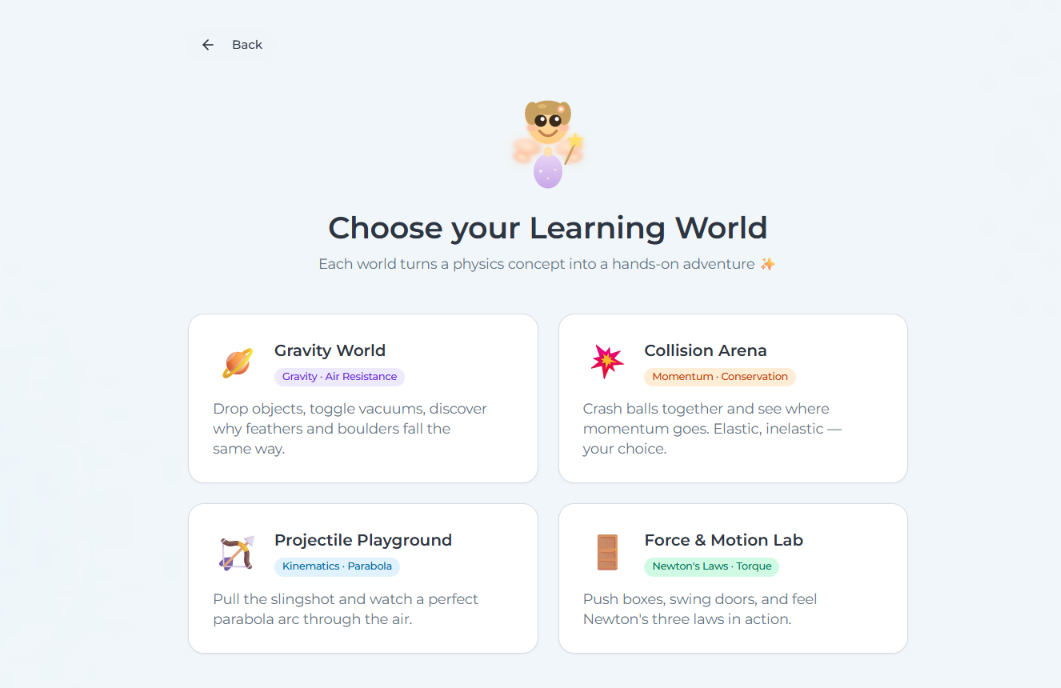
Physic Playground is an AI-powered interactive physics learning platform that helps students understand physics visually instead of memorizing formulas. Students can upload lecture slides, study outlines, or textbook pages, and the AI organizes related concepts, formulas, and learning paths automatically. The platform also includes interactive physics worlds such as Gravity, Projectile Motion, Collision, and Newton’s Laws, where students learn through animations, simulations, and simple AI explanations. Students can freely ask physics questions through the AI Physics Buddy, while the Fairy Companion guides them using short, intuitive explanations designed to make physics feel less intimidating and more engaging.
How we built it
We built Physic Playground using MeDo as the core development platform, combining interactive UI design, animations, AI-powered explanations, and physics simulations into one learning experience. We integrated external AI APIs to support conversational learning, allowing students to ask open-ended physics questions naturally. The platform was designed around visual learning and guided curiosity, using animations, force indicators, comparisons, and cinematic slow-motion teaching moments to help students intuitively understand concepts like gravity, momentum, torque, and projectile motion. We also focused heavily on creating a playful and emotionally engaging experience through the Fairy learning companion and interactive learning worlds.
Challenges we ran into
One of our biggest challenges was simplifying difficult physics concepts without losing educational accuracy. Many physics explanations quickly become too technical, so we had to redesign the teaching flow multiple times to make explanations shorter, clearer, and visually intuitive. Another challenge was building animations that felt physically believable while still remaining simple enough for students to understand instantly. We also faced technical limitations involving AI integration, UI responsiveness, animation timing, and MeDo credit limitations, which forced us to carefully prioritize features and optimize the learning experience.
Accomplishments that we're proud of
We are most proud that Physic Playground feels different from a traditional educational app. Instead of presenting static notes and formulas, the platform transforms physics into an interactive visual experience where students can explore, observe, and ask questions naturally. We are especially proud of the AI Fairy Companion, the interactive learning worlds, the visual force simulations, and the AI-powered conversational learning system. Most importantly, we are proud that the project focuses on helping students truly understand physics concepts through intuition, motion, and curiosity instead of pure memorization.
What we learned
Through building this project, we learned that many students struggle with physics not because they dislike the subject, but because they cannot visualize what is happening. We discovered that short, simple, emotionally engaging explanations are often far more effective than long technical paragraphs. We also learned how important interaction, animation pacing, and guided curiosity are in educational design. On the technical side, we gained experience with AI integration, educational UX design, prompt engineering, animation systems, and building AI-assisted interactive learning experiences.
What's next for Physic Playground
Our next goal is to expand Physic Playground into a larger AI-powered science learning ecosystem with more physics topics, deeper simulations, multilingual support, and adaptive learning experiences based on student skill levels. We also want to improve the AI tutor so it can generate personalized learning journeys directly from uploaded lecture slides and syllabus pages. In the future, we hope to include more advanced engineering and mechanics visualizations while continuing to make difficult scientific concepts feel intuitive, interactive, and enjoyable for students of all levels.
Built With
- css3
- github
- html5
- javascript
- medo-ai-platform
