-
-
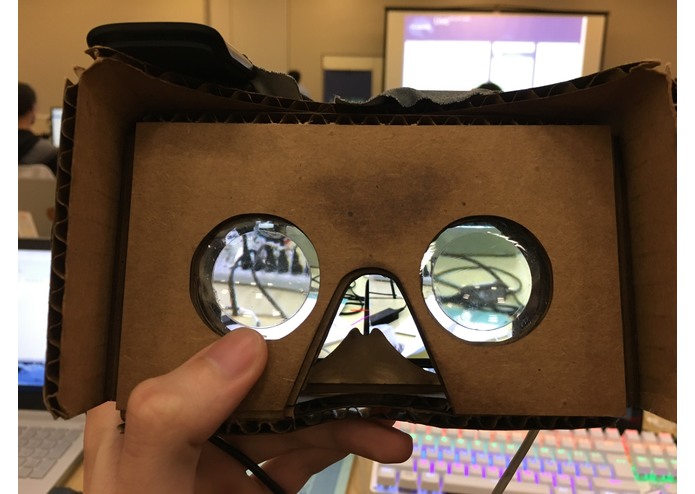
View through the eyeholes
-
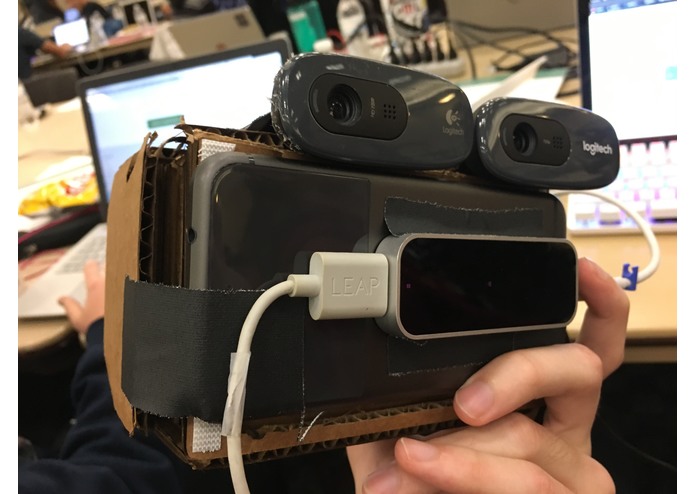
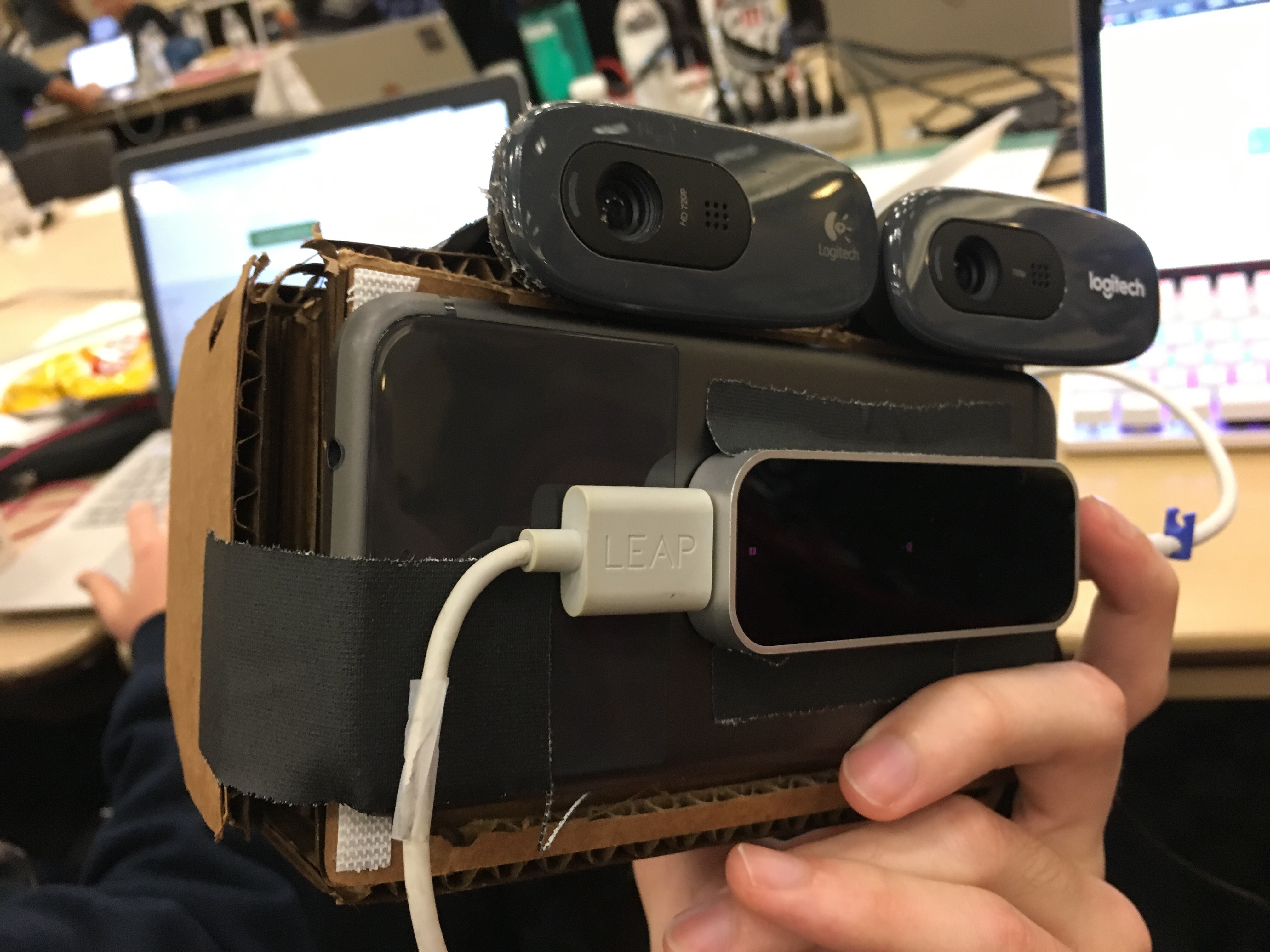
Front view

Inspiration
Data visualization and augmented reality are rad, so we're putting them together
What it does
The user wears looks through the headset, and when they hold out their hand a graph appears in their palm that they can rotate and view
How we built it
Duct-taping a webcam, a Leap Motion, and a smartphone to the Google Cardboard headset. We run a python web server on a laptop, and connect to the webpage with the phone, and the image from the webcam is streamed to the smartphone display.
Challenges we ran into
Lining up the coordinate systems between the opencv object that are drawn and the data gathered from the Leap Motion proved pretty much impossible to get perfect. Also, using two cameras to make the image 3 dimensional posed a similar problem of lining up the coordinate systems between cameras.
Accomplishments that we're proud of
Successfully linking input from the Leap Motion to objects generated in OpenCV.
What we learned
How to use the Leap Motion and how to use the Python interface for OpenCV. Also the principles involved in AR.
What's next for Visualize
Using two cameras for a more 3 dimensional display, and improving the latency between the two images.


Log in or sign up for Devpost to join the conversation.