Our hackathon experience
Our hackathon team was one of the most diverse, with participants ranging in ages from 12 to 20. Regardless of our existing knowledge of quantum computing, the hackathon proved to be a valuable learning experience. The most difficult aspect of this hackathon was coming up with a problem statement that was basic enough for a 12-year-old to grasp and technical enough for a 20-year-old to implement. In pursuit of a challenge, we went back to the fundamentals of theoretical quantum physics and discovered gold. This project demonstrates how when we are seen from a different angle, even the most basic notions may provide a challenging problem to tackle. During the process, we were able to read some fantastic community blogs about particle simulation and the usage of quantum computing. We also learned a lot of new things, such as Split operators, Fourier Transform Algorithms, and Wave Function Dynamics, while also becoming more comfortable with Qiskit.
Description of Problem
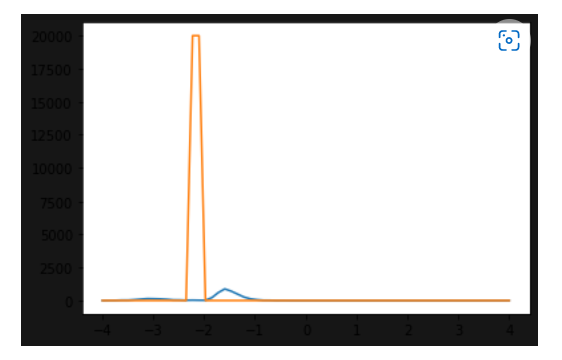
A quantum mechanical phenomenon in which a wave function can propagate across a potential barrier is known as quantum tunnelling. One of several possible scenarios in which we can witness the evolution of quantum operators over time. The transmission through the barrier can be finite and is proportional to the height and width of the barrier. On one side of the barrier, the wave function vanishes and resurfaces on the other.
In a physical phenomenon such as nuclear fusion, quantum tunnelling is critical. It has uses in the scanning tunnelling microscope, quantum computer hardware, and tunnel diodes. One of the mechanisms of proton decay could be quantum tunnelling. Because electrons can tunnel beyond transistors that are too small, quantum tunnelling is expected to put physical constraints on the size of transistors used in microelectronics. Therefore, simulation of the quantum tunnelling phenomenon or quantum time evolution, in general, is a significant problem, which if solved could lead to a plethora of industrial use cases.
Description of Solution
Quantum tunnelling is not predicted by the Laws Of Classical Mechanics, where surmounting a potential barrier requires potential energy. Thus, this provides us with an exciting opportunity to try and simulate the phenomenon using Quantum computers, which inherently use quantum physics. Our solution uses the Split operator Fourier transform algorithm to simulate the Quantum tunnelling phenomenon in Qiskit.
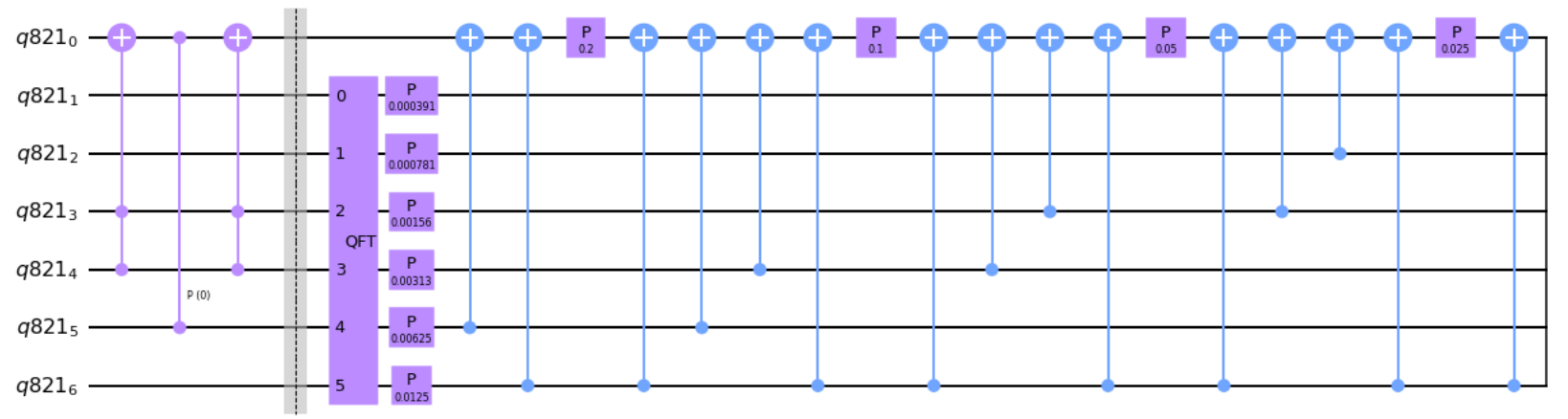
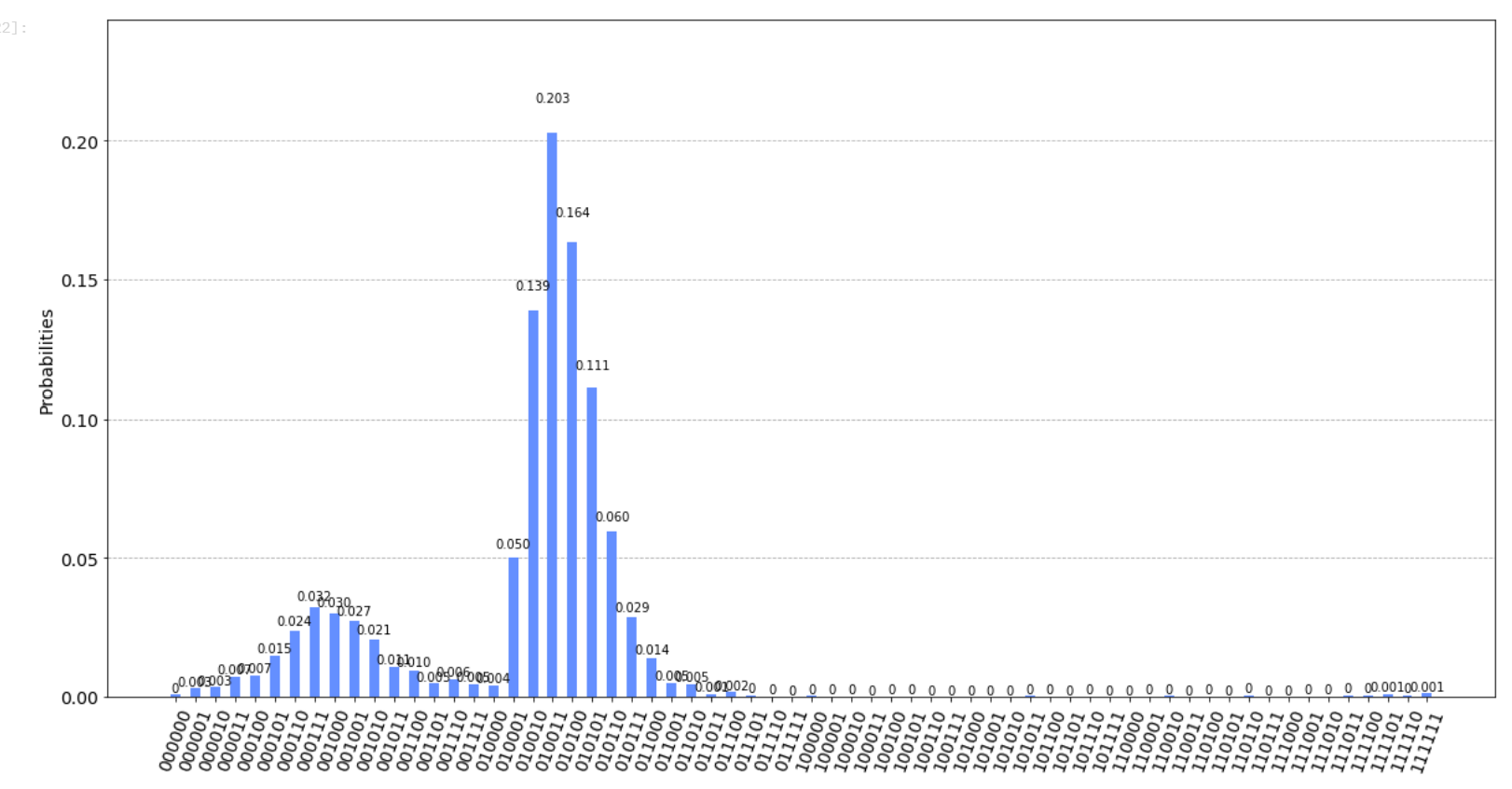
In our proposed solution, we started with the time-evolution wave function of a quantum particle. The hamiltonian of our system is broken down and split into an infinite amount of smaller steps alternating between kinetic and potential propagators using the Lie-Trotter product formula. We initialized the wave function discretized into 2^N grid points where N is the number of qubits (excluding ancillary) used in the circuit. Following this, we applied the potential operator the Quantum Fourier Transform (QFT), the kinetic operator, and the inverse QFT, in the desired number of iterations. The circuit is then measured and represented as a histogram, which gives us a clear visualization of the Quantum-tunneling phenomenon.
After understanding the fundamentals of using the split operator approach to simulate one particle moving, the next step is to investigate particle interactions and chemical dynamics, which has tremendous research applications in domains. Such as drug development, condensed matter physics, and material science.
Built With
- python
- qiskit


Log in or sign up for Devpost to join the conversation.