-
-
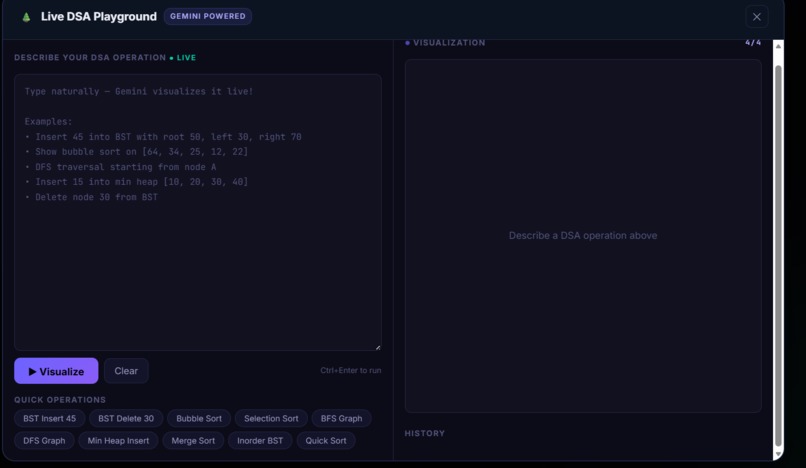
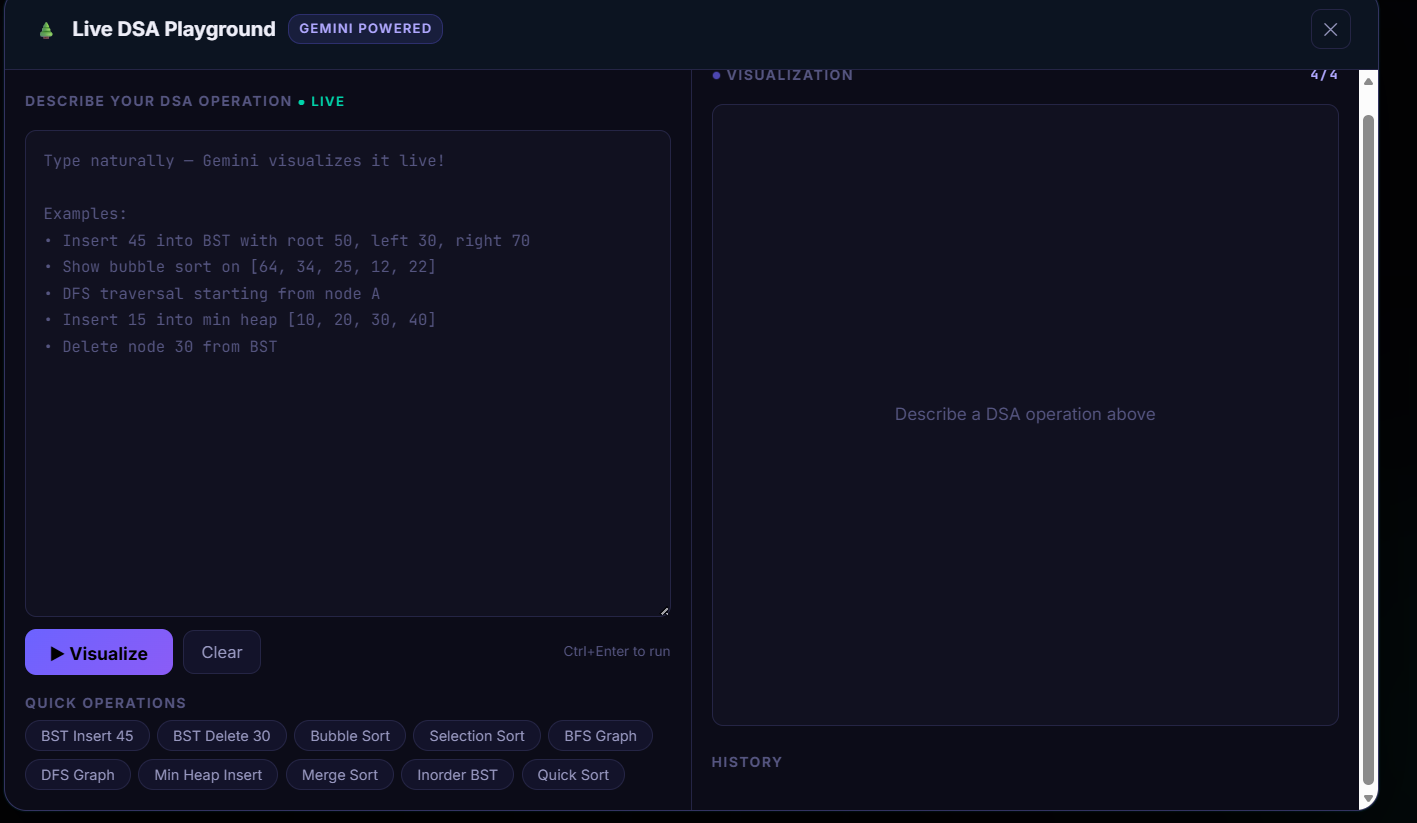
Live DSA Engine
-
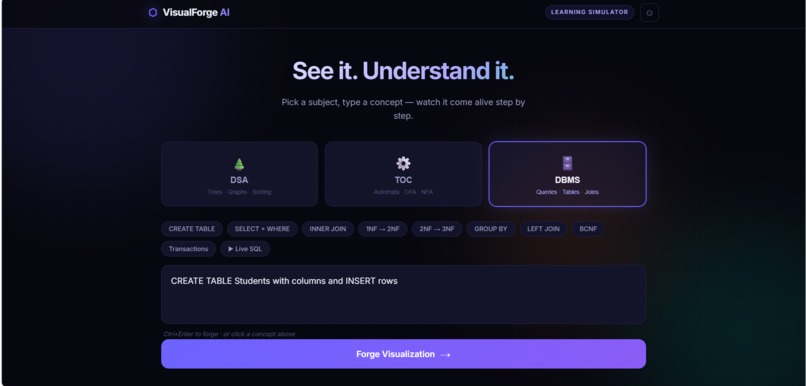
Landing Page
-
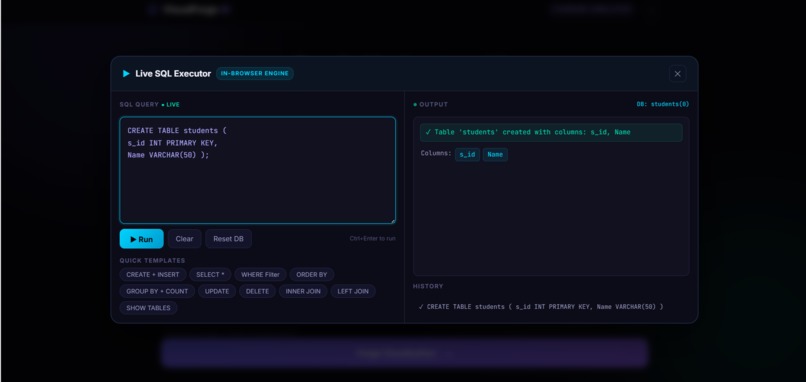
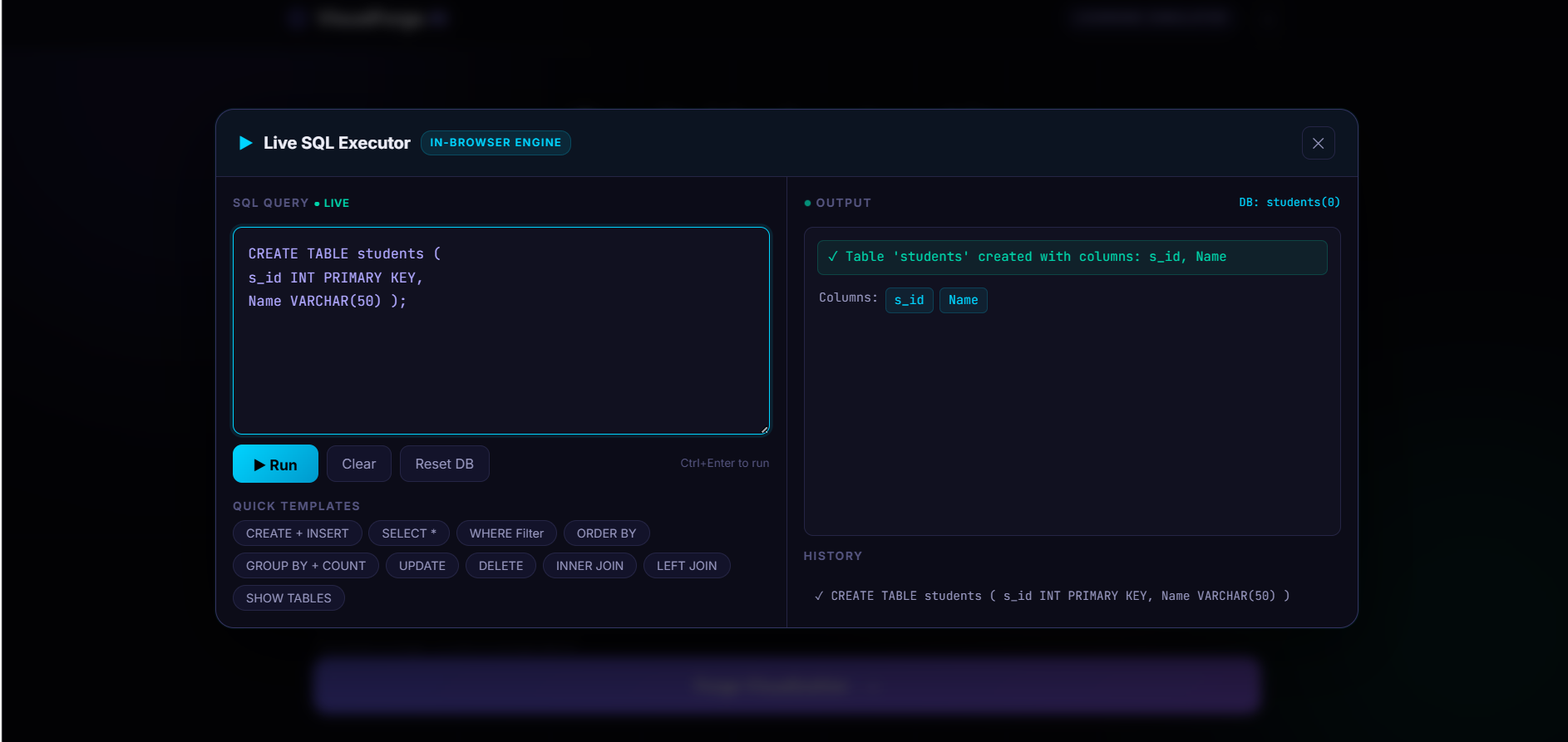
Live SQL engine
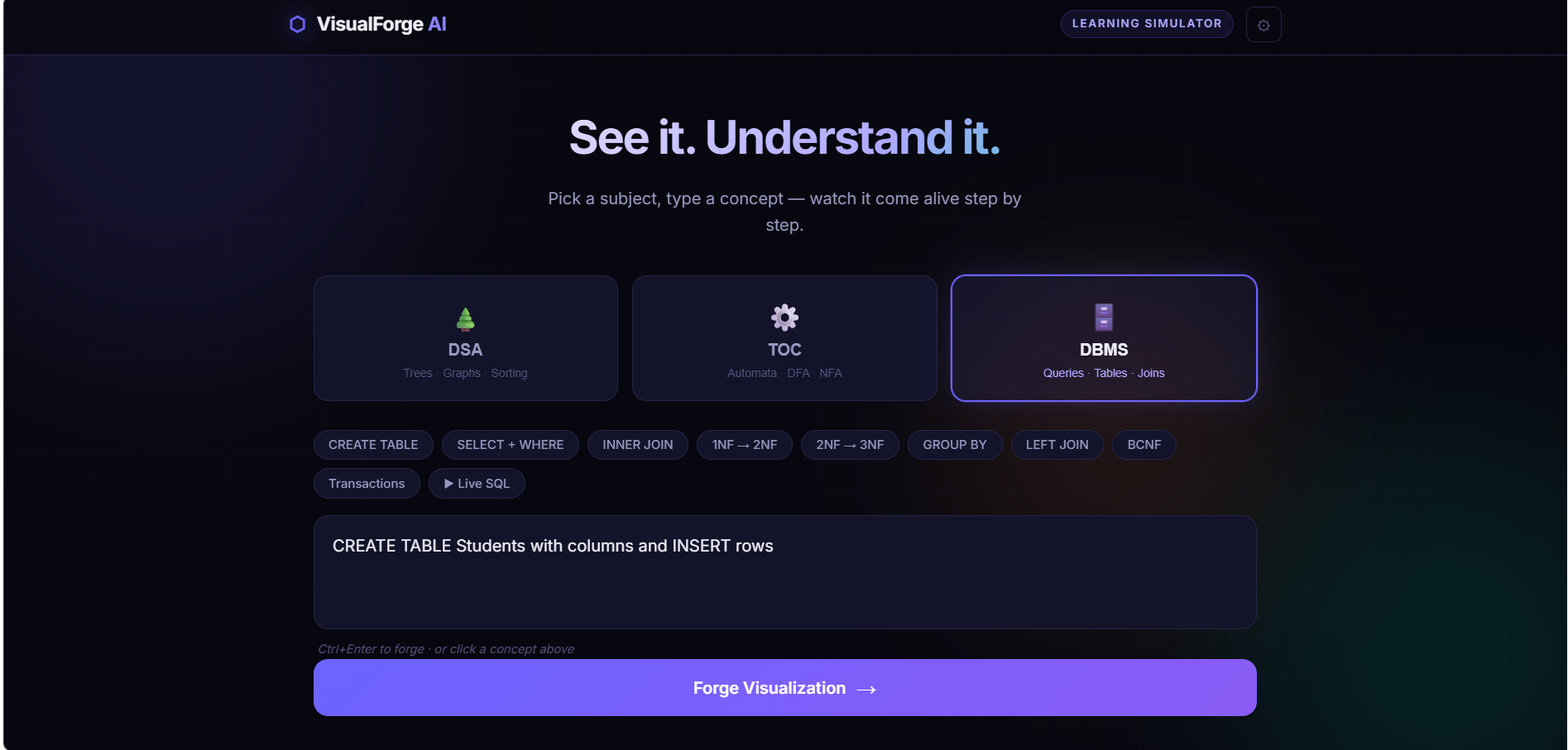
Inspiration Computer Science students often struggle with abstract concepts like BST insertion, DFA transitions, SQL JOINs, and DBMS normalization because they are usually taught as theory rather than through visualization. Most students end up memorizing instead of understanding, which creates weak fundamentals, poor interview performance, and fear during exams and placements. We wanted to solve this problem by making theory visible and interactive instead of static and boring. That idea became VisualForge AI.
What it does VisualForge AI is a Gemini-powered concept visualization engine for DSA, DBMS, and Theory of Computation. It converts complex concepts into step-by-step visual simulations so students can learn by seeing instead of memorizing. Key features include:
DSA visualization (BST, arrays, graphs)
TOC visualization (DFA, state transitions)
DBMS visualization (Normalization, SQL concepts)
Live SQL Executor with instant result updates
Explain More feature powered by Gemini
Understanding Meter for engagement tracking
Real-world application cards for concept relevance
It feels like a learning simulator, not just another chatbot.
How we built it We built VisualForge AI as a dark-theme single-page web application. Frontend:
HTML
CSS
JavaScript
Backend / Infrastructure:
Node.js static server
Deployment on Vercel
AI Engine:
Google Gemini API for:
concept understanding
visualization step generation
deeper explanations
SQL query explanation
DSA live playground generation
Visualization Engine:
Custom visualizer.js for:
DSA trees using Reingold-Tilford layout
Graph auto-layout
DFA state machine rendering
SQL and DBMS table visualization
We also added model fallback handling to improve API reliability during rate limits.
Challenges we ran into The biggest challenge was making the project feel like a real visualization engine instead of a text-based chatbot. Some major challenges were:
Designing clean non-overlapping tree layouts
Creating understandable DFA state machine visualization
Building a full browser-based SQL executor without dependencies
Managing Gemini API rate limits and fallback models
Making step-by-step outputs visually meaningful instead of plain text
Keeping the UI simple while handling multiple subjects and modules
Balancing technical depth with a smooth user experience was our toughest challenge.
Accomplishments that we're proud of We are proud that VisualForge AI became more than just an educational project—it became an actual learning product. Our biggest achievements:
Built a working concept visualization engine
Added live SQL execution directly in the browser
Integrated Gemini as the core reasoning engine, not just an add-on
Created interactive step-by-step learning controls
Designed a system that solves a real student problem
Delivered a clean deployable product with GitHub + live demo
Most importantly, we built something students would genuinely use.
What we learned This hackathon taught us that solving a real problem matters more than adding random features. We learned:
Gemini API becomes powerful when used as the product brain, not decoration
Visualization creates stronger learning than static explanations
Simplicity with strong execution beats overbuilding
User experience matters as much as technical implementation
Educational tools can be powerful when designed like products
We also improved our frontend architecture, API handling, and system design thinking.
What's next for VisualForge AI We want to expand VisualForge AI into a full concept learning platform for Computer Science students. Future plans include:
More DSA, DBMS, TOC, OS, and CN topics
Personalized learning paths
Voice-based explanations
PDF export for notes and revision
Faculty mode for classroom teaching
Student progress dashboard
Placement preparation mode
College-level LMS integration
Our long-term goal is to make VisualForge AI the go-to platform where students truly understand Computer Science instead of memorizing it.
Built With
- css
- gemini
- html
- javascript
- vannila


Log in or sign up for Devpost to join the conversation.