-
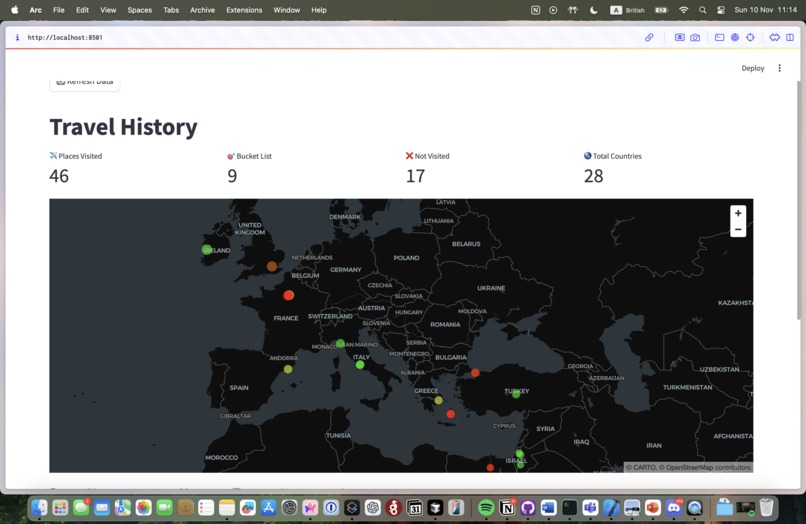
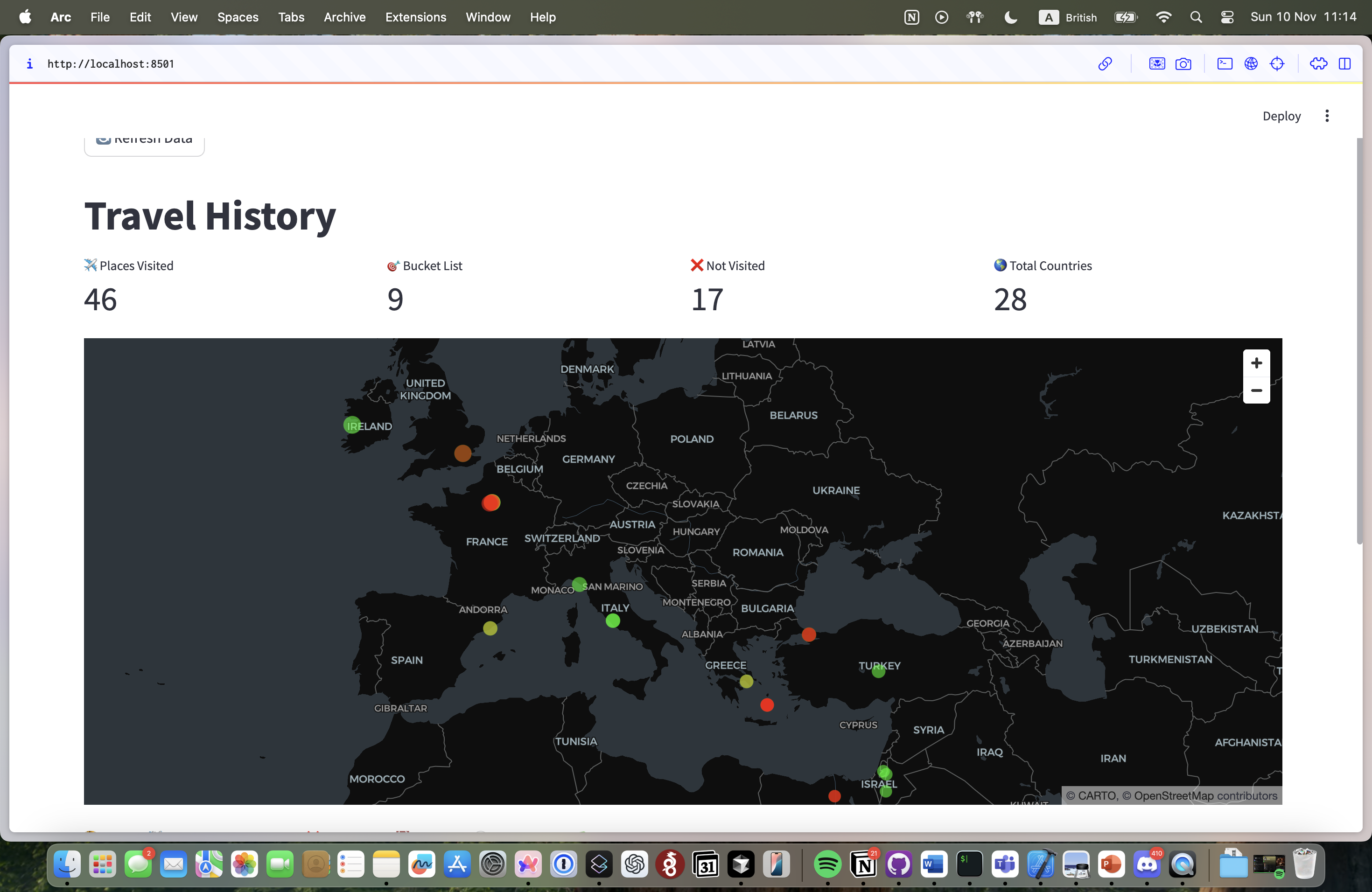
User Interface using StreamList
-
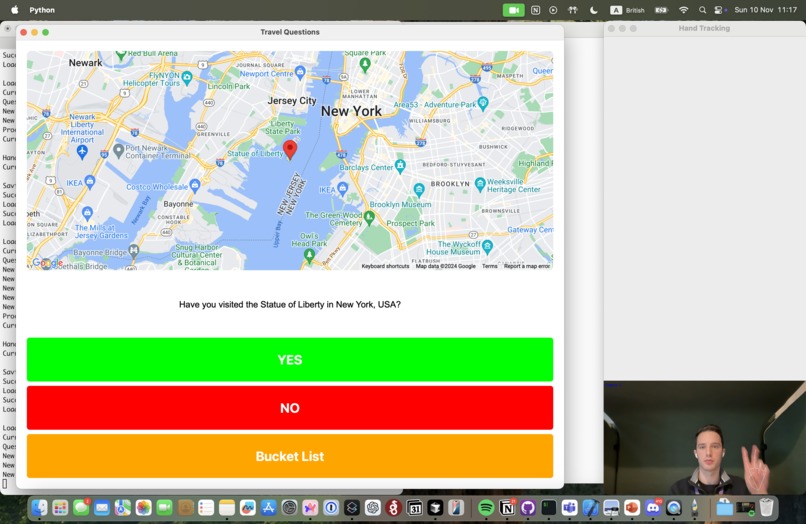
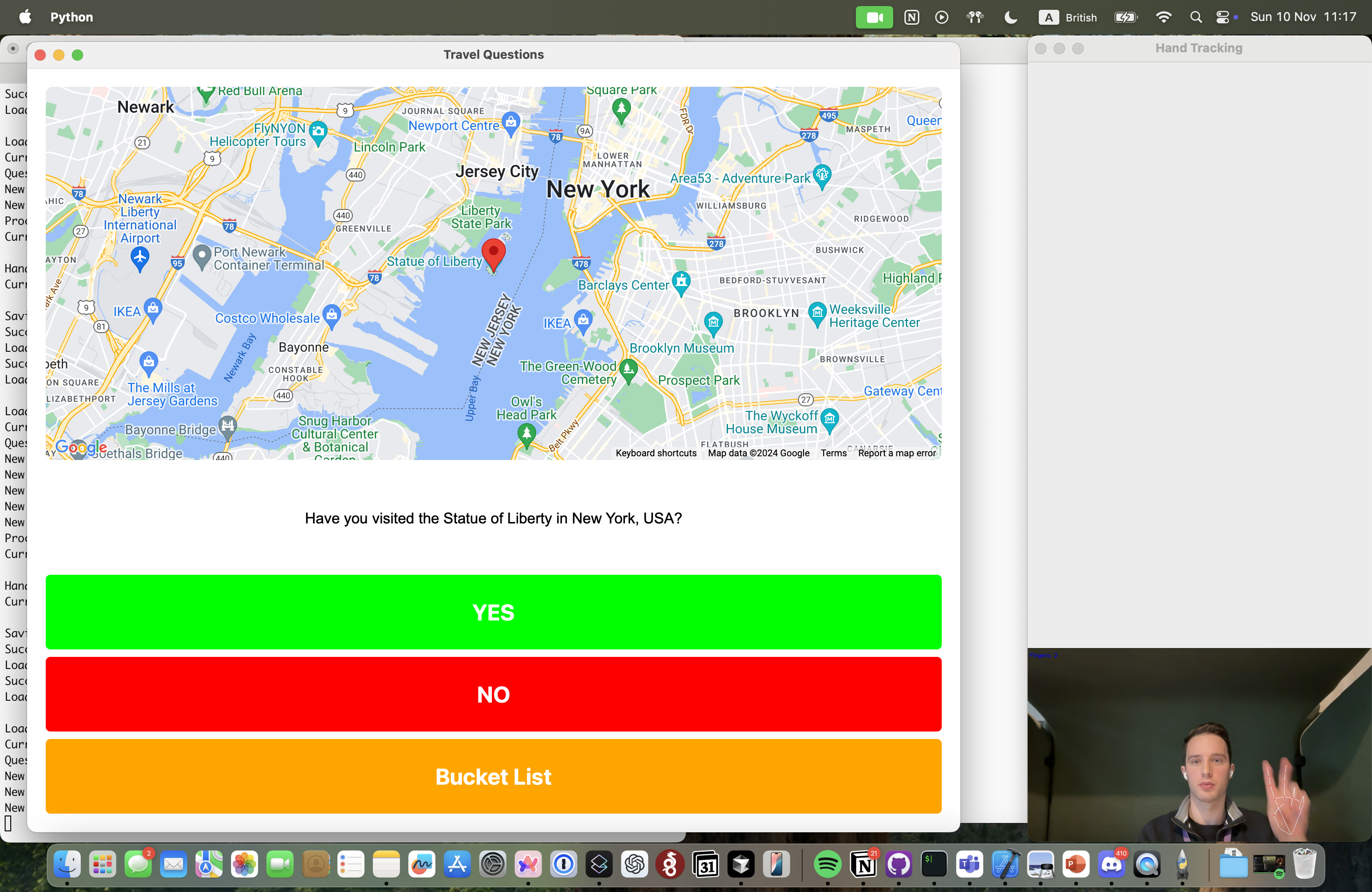
Open CV to enter user input using Google Maps API
-
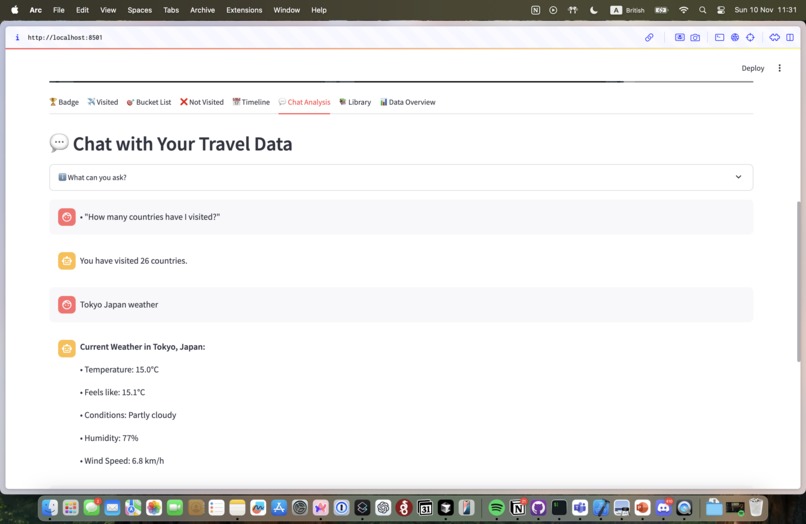
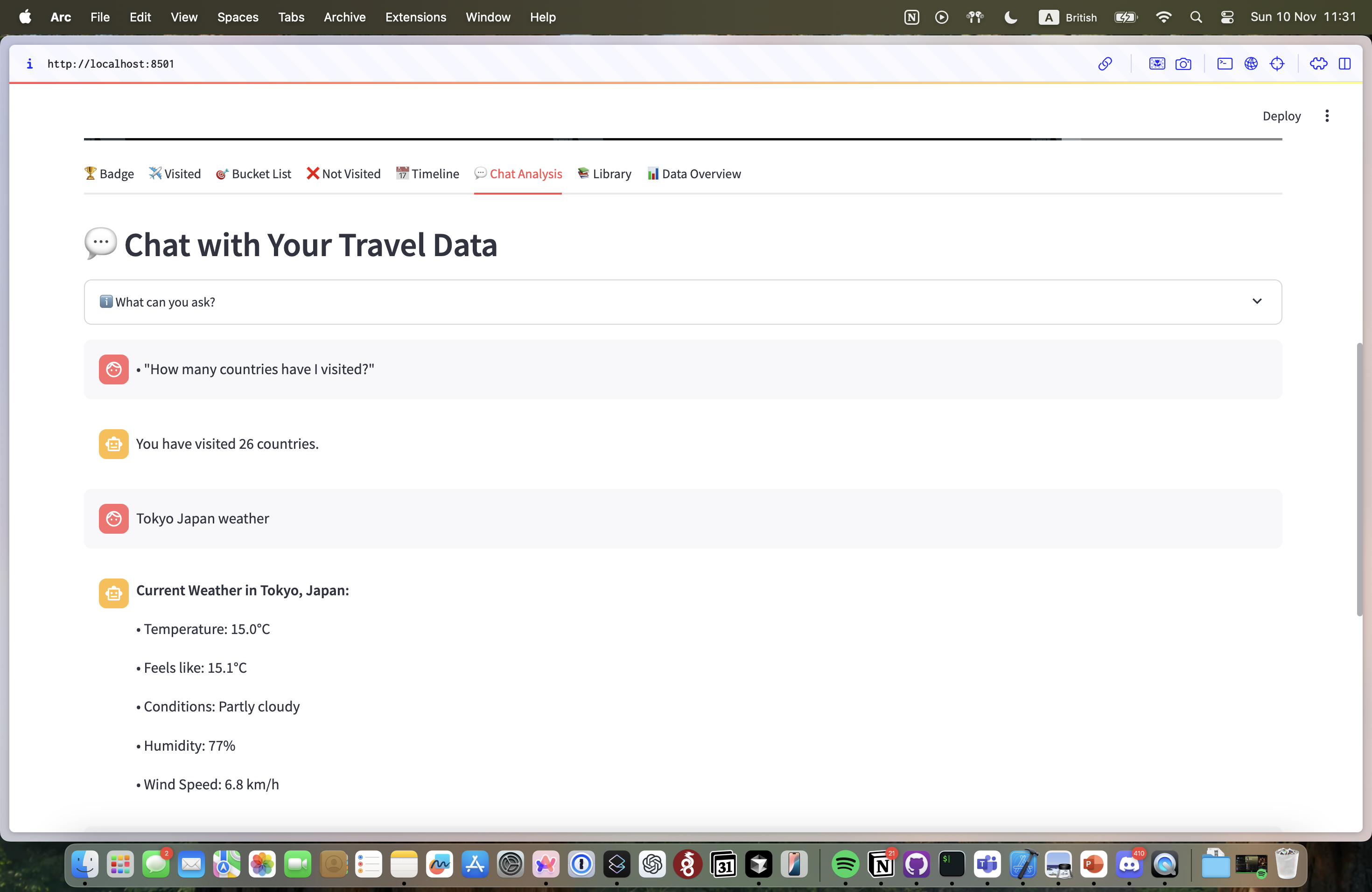
AI agent that helps you learn about your past trips and tells which trips to take in the future and finds the weather.
Based on the code and functionality I've seen, here's a brief description for each section:
Inspiration
Visual Traveler was born from the desire to make travel planning more interactive and personal. We wanted to create a tool that combines travel history visualization with AI-powered insights to help people better understand and plan their adventures.
What it does
- Interactive world map showing visited, bucket list, and unvisited locations
- Personal travel statistics and achievement badges
- AI-powered chat interface for travel insights
- Timeline view of travel history
- DALL-E integration for generating travel preview images
- Photo management system for travel memories
How we built it
Built using Python with Streamlit for the frontend, leveraging PyDeck for map visualization, OpenAI's GPT-4 for chat analysis, and DALL-E for image generation. The application uses JSON for data storage and includes real-time data editing capabilities.
Challenges we ran into
- Managing state and data persistence in Streamlit
- Implementing an efficient chat interface with streaming responses
- Optimizing the map visualization for performance
- Creating an intuitive user experience for data editing
Accomplishments that we're proud of
- Created a seamless integration between visualization and AI features
- Developed an engaging badge system for user progression
- Built a responsive and interactive map interface
- Implemented real-time chat with AI analysis
What we learned
- Advanced Streamlit development techniques
- Integration of multiple APIs (OpenAI, mapping services)
- Effective data visualization strategies
- User experience design for travel applications
What's next for Visual Traveler
- Integration with flight booking APIs
- Social features for sharing travel experiences
- Mobile application development
- Enhanced AI travel recommendations
- Integration with popular travel planning tools
Built With
- open
- opencv
- pyqt5
- streamlit


Log in or sign up for Devpost to join the conversation.