-
-
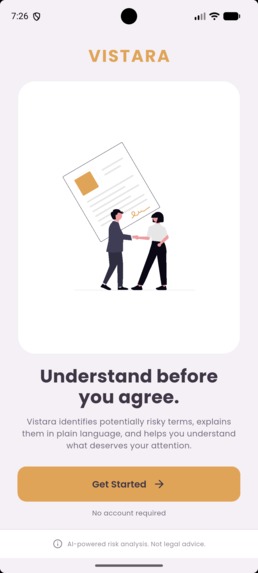
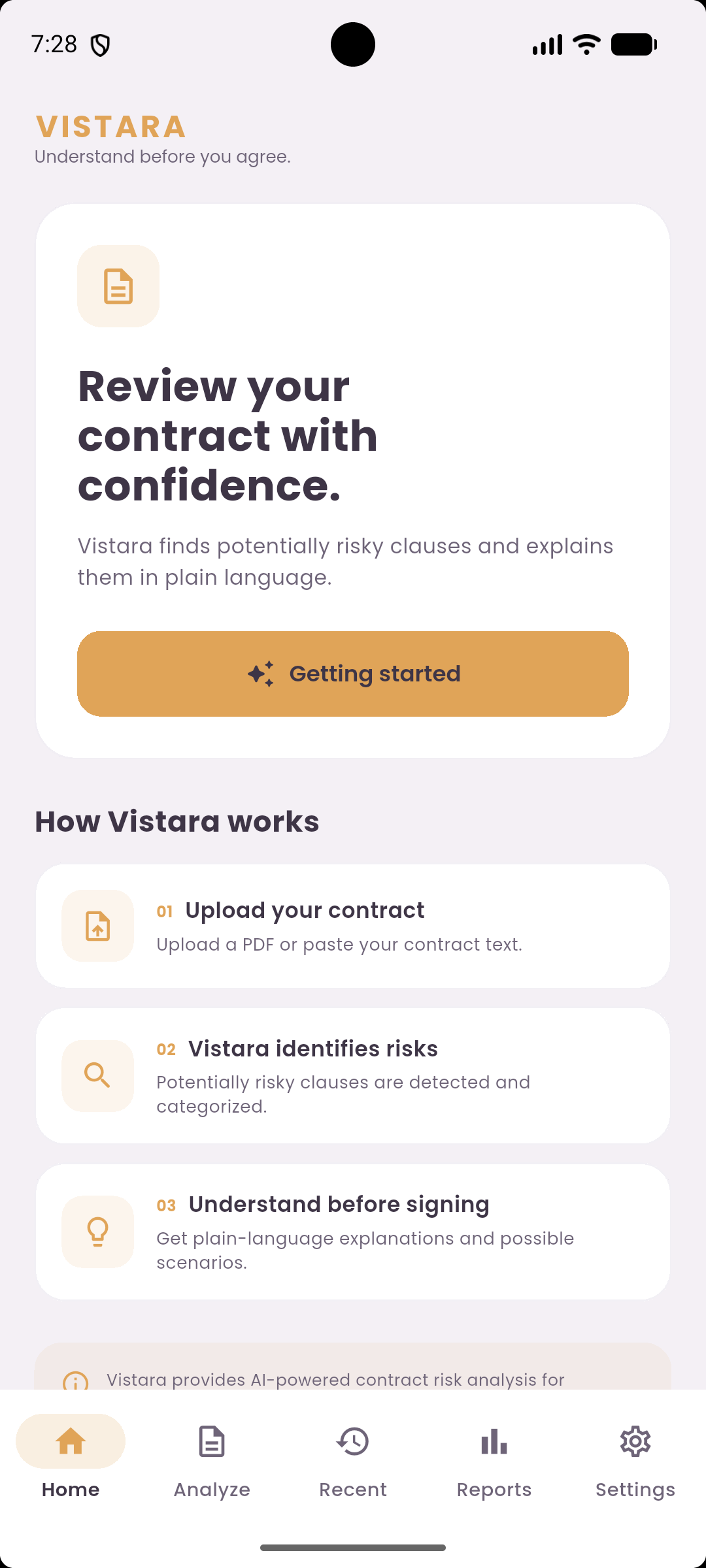
Home page
-
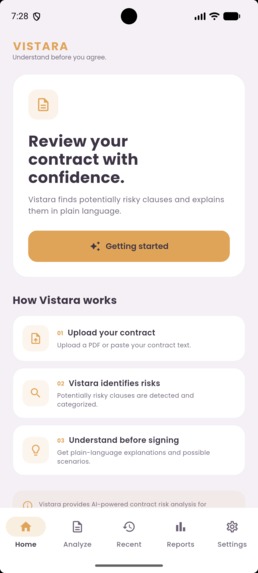
home dashboard
-
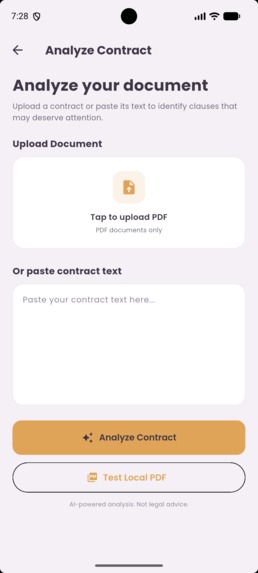
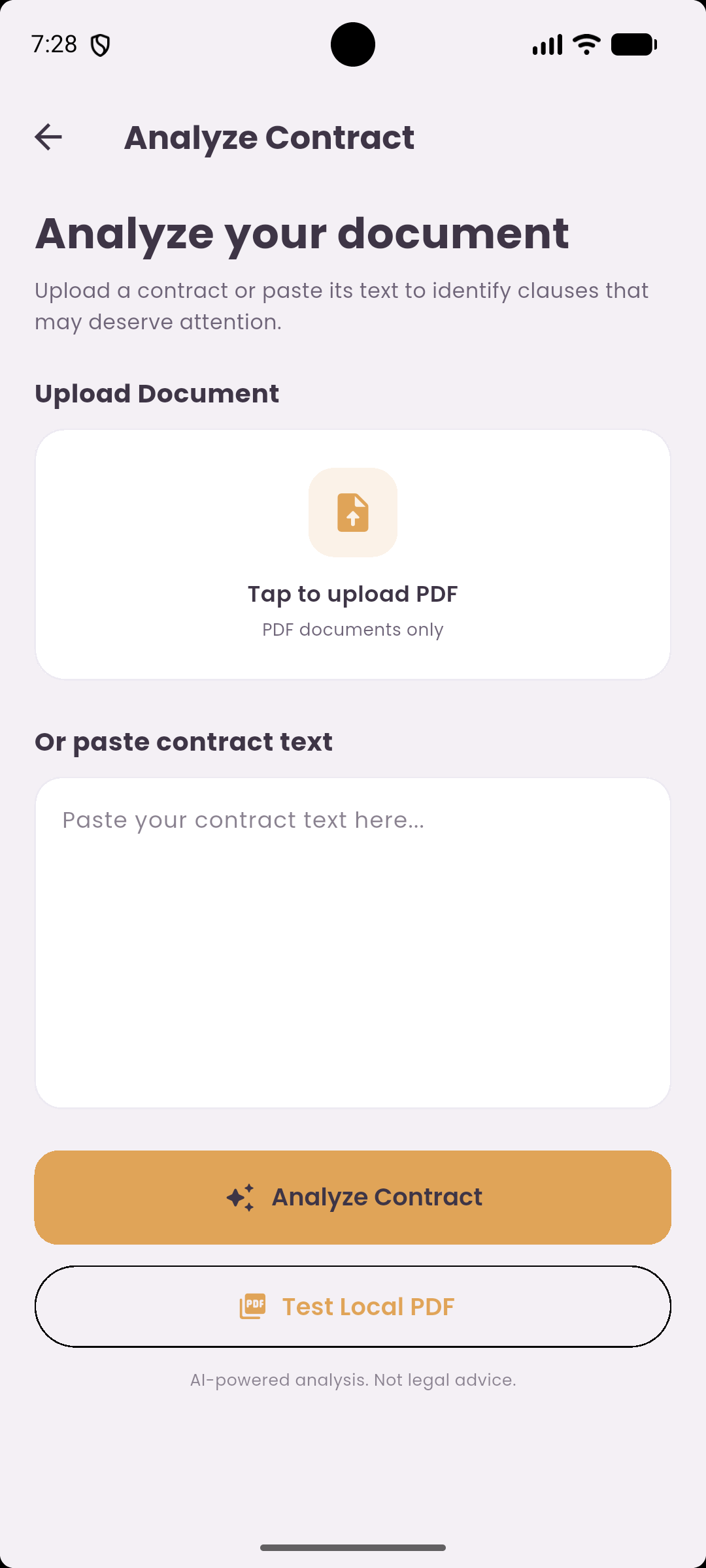
pdf upload screen
-
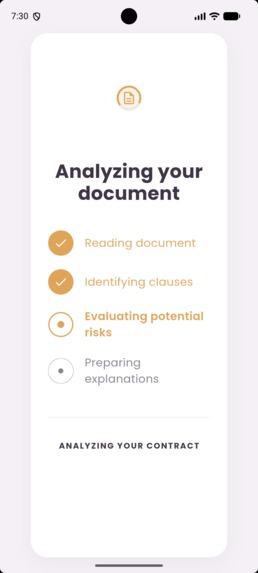
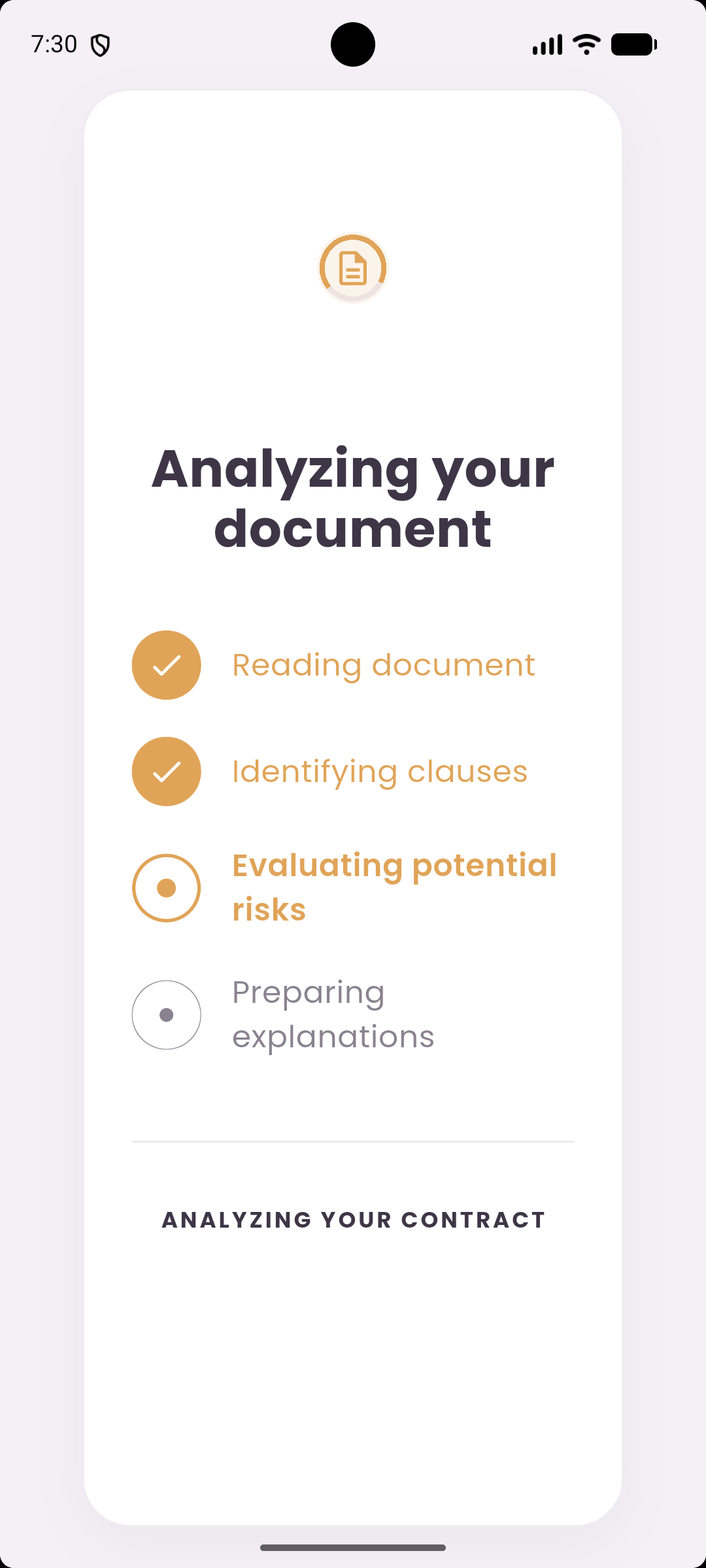
analyzing screen
-
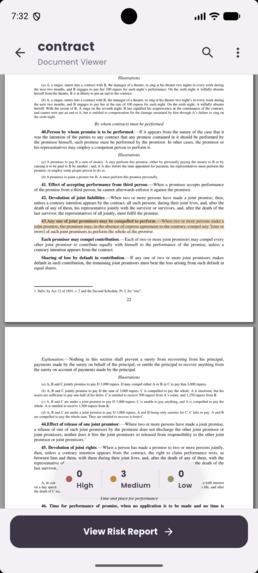
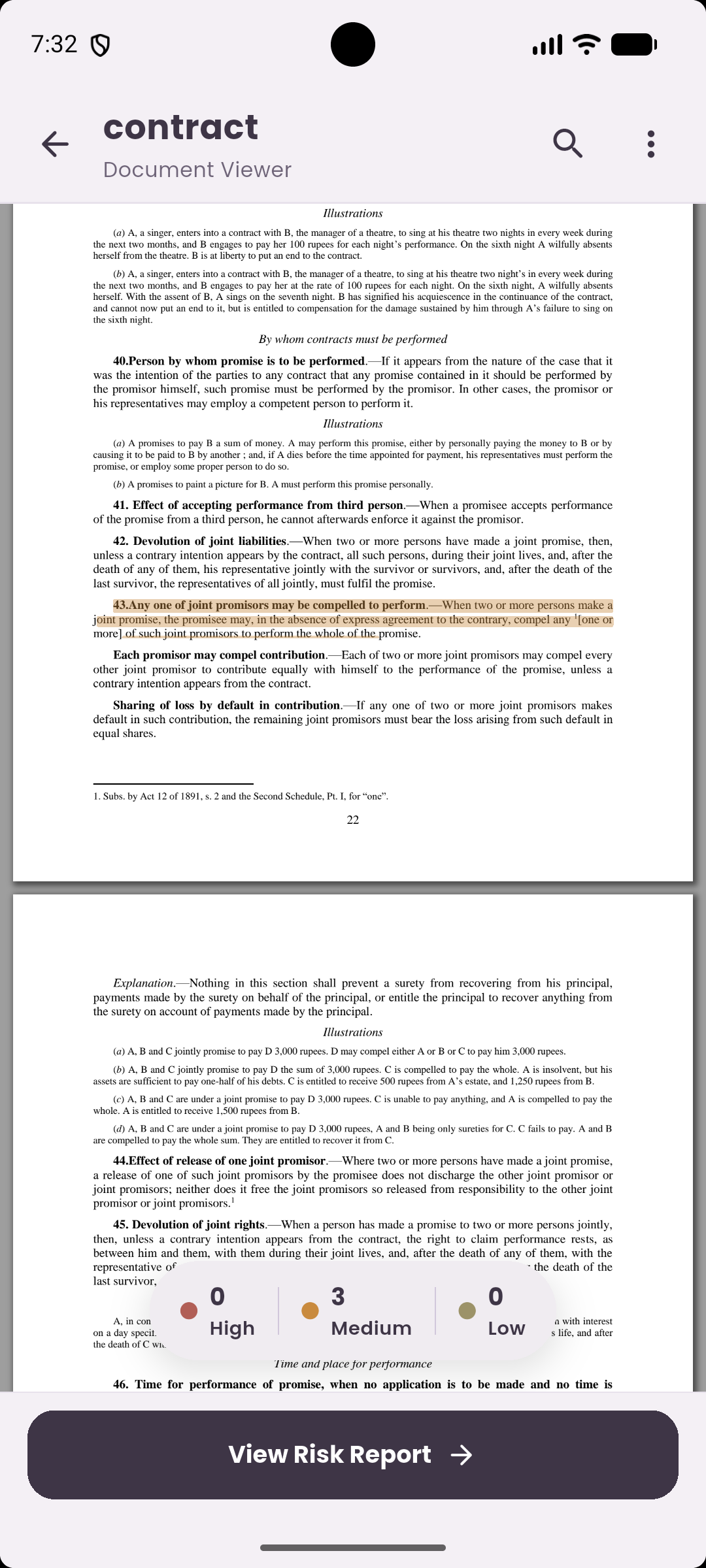
document viewer risk highlight screen
-
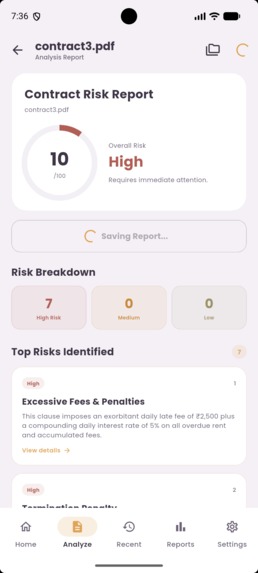
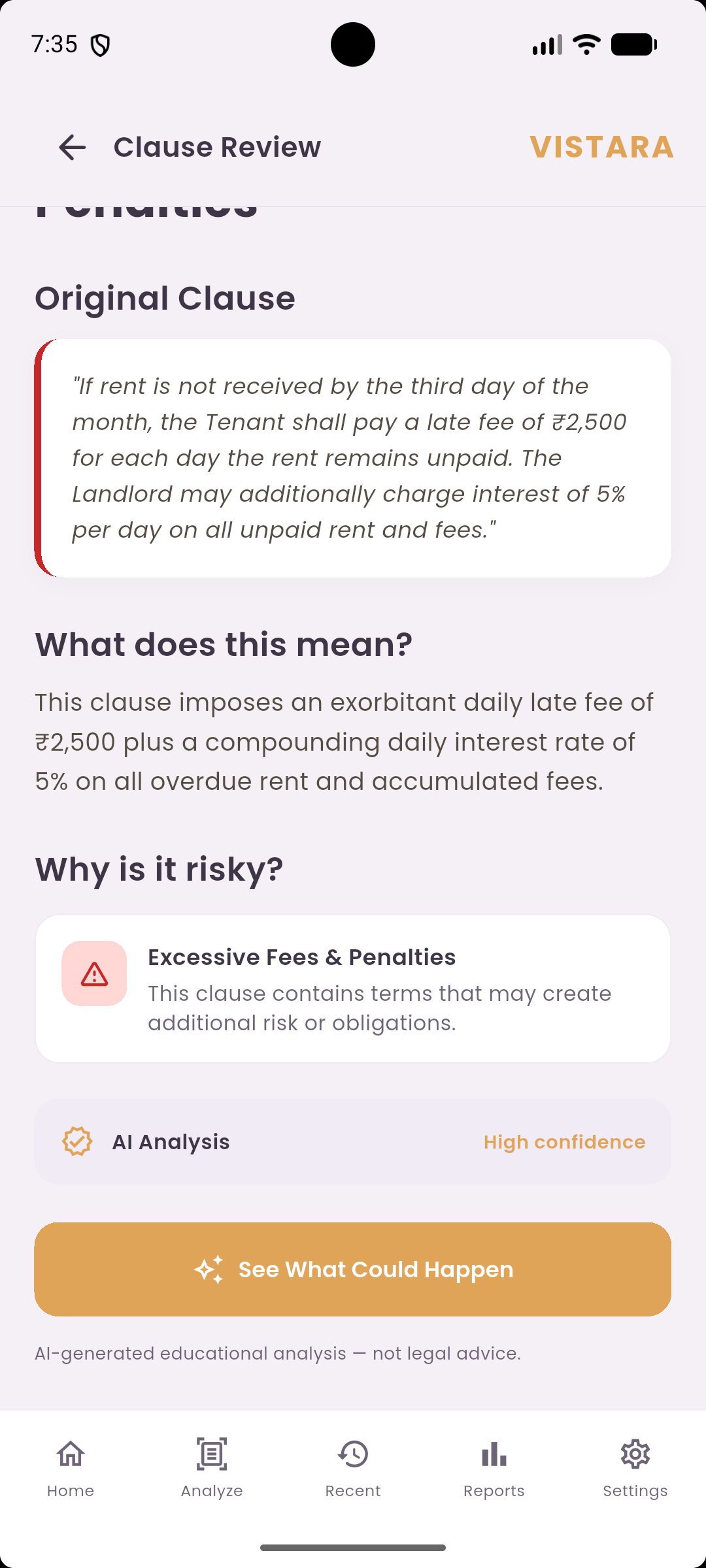
risk details
-
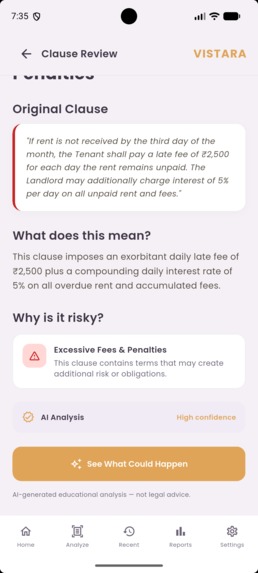
clause explanation
-
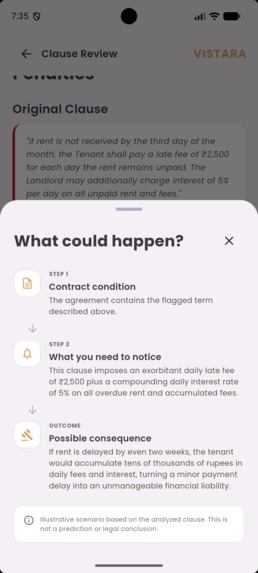
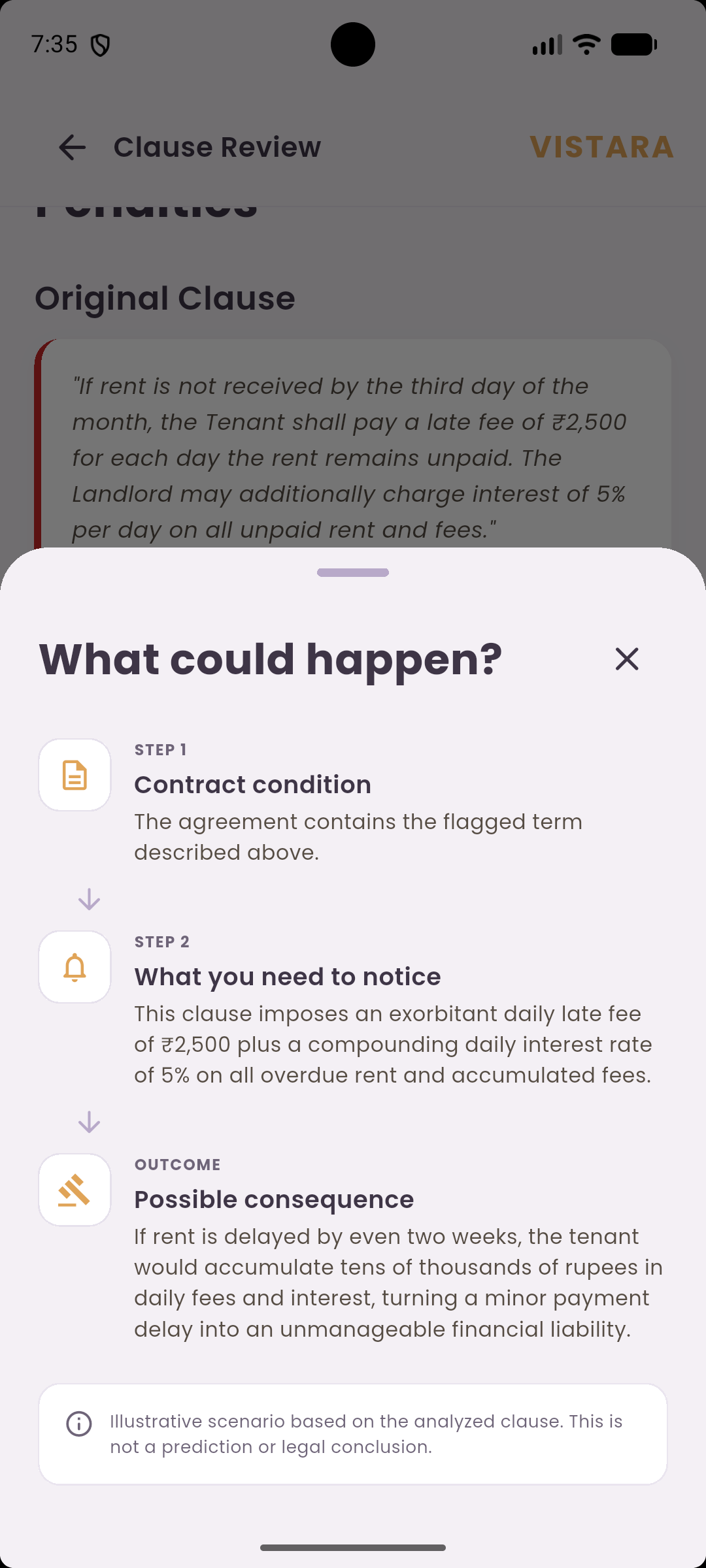
what could happen screen
-
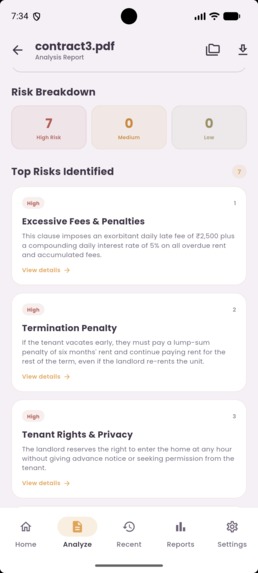
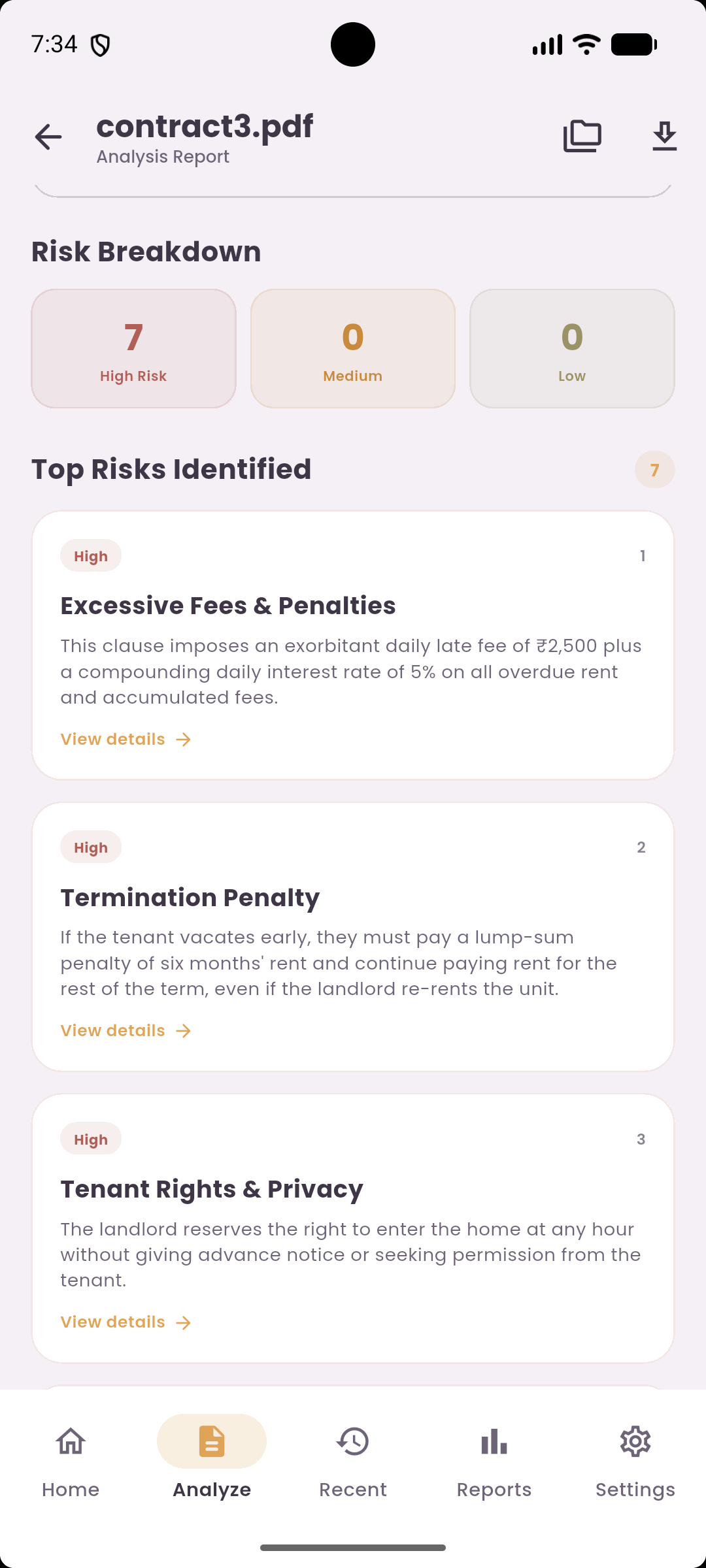
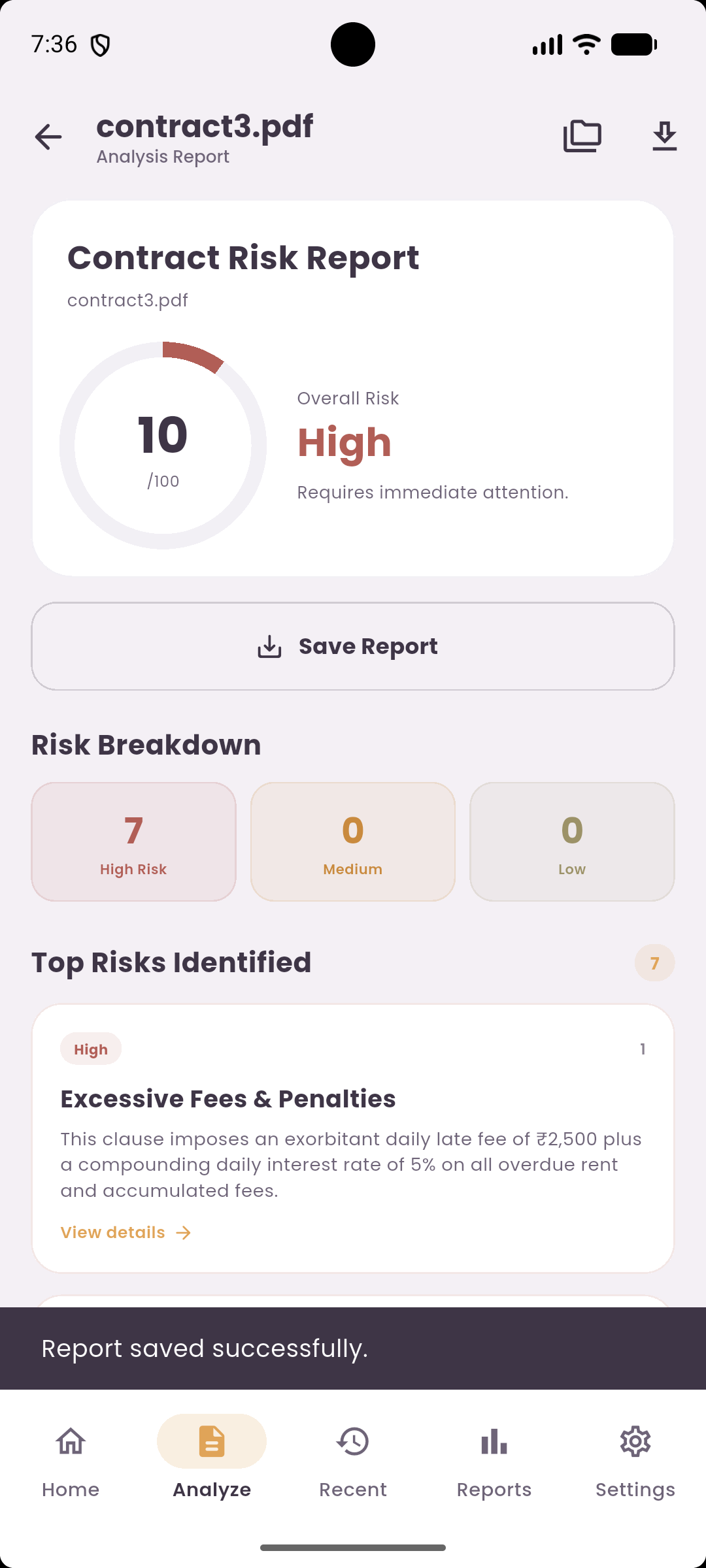
top risk identified
-
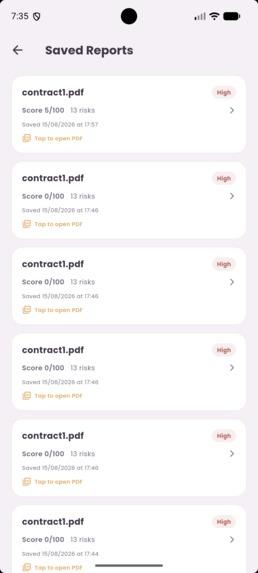
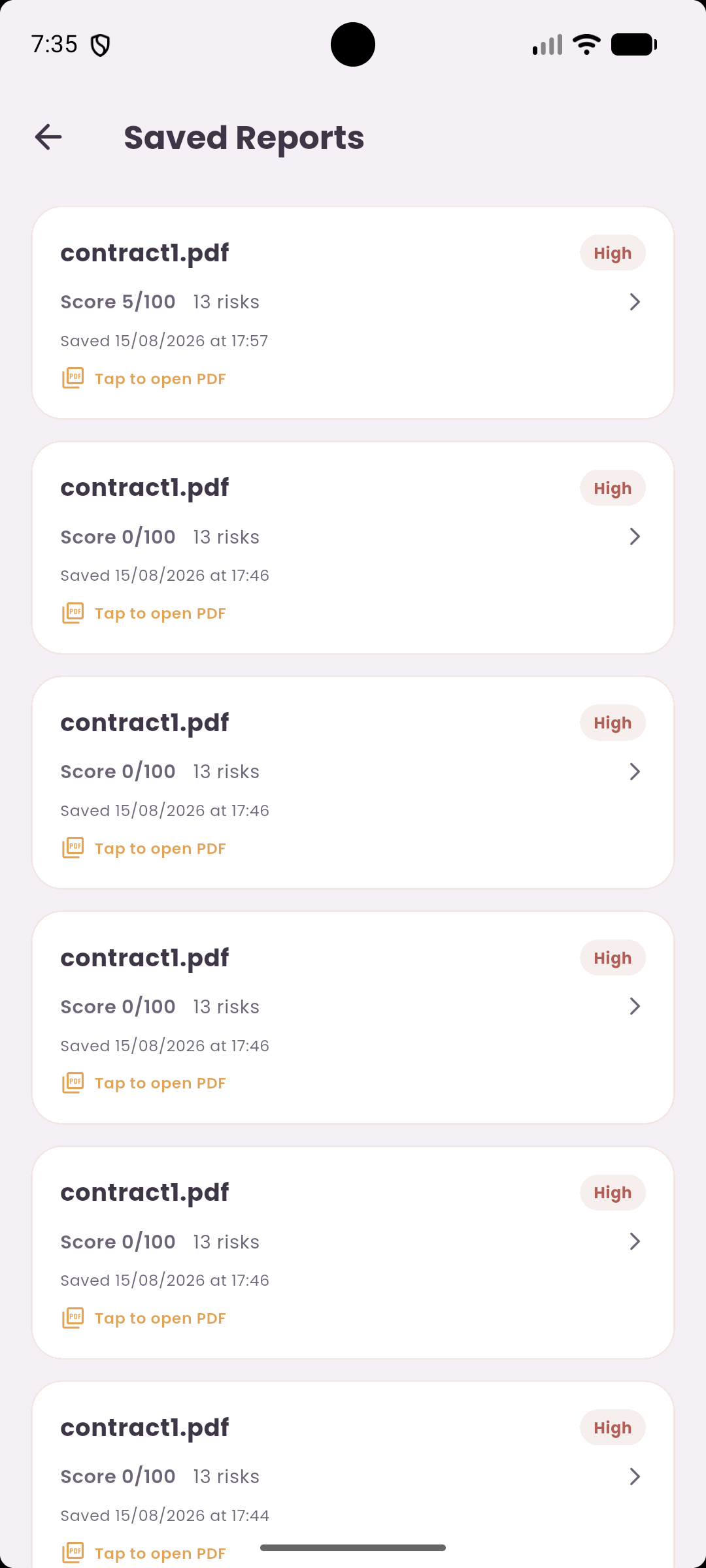
saved reports
-
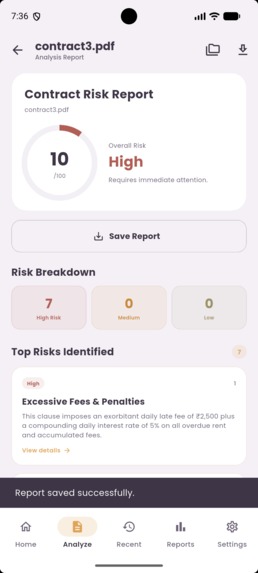
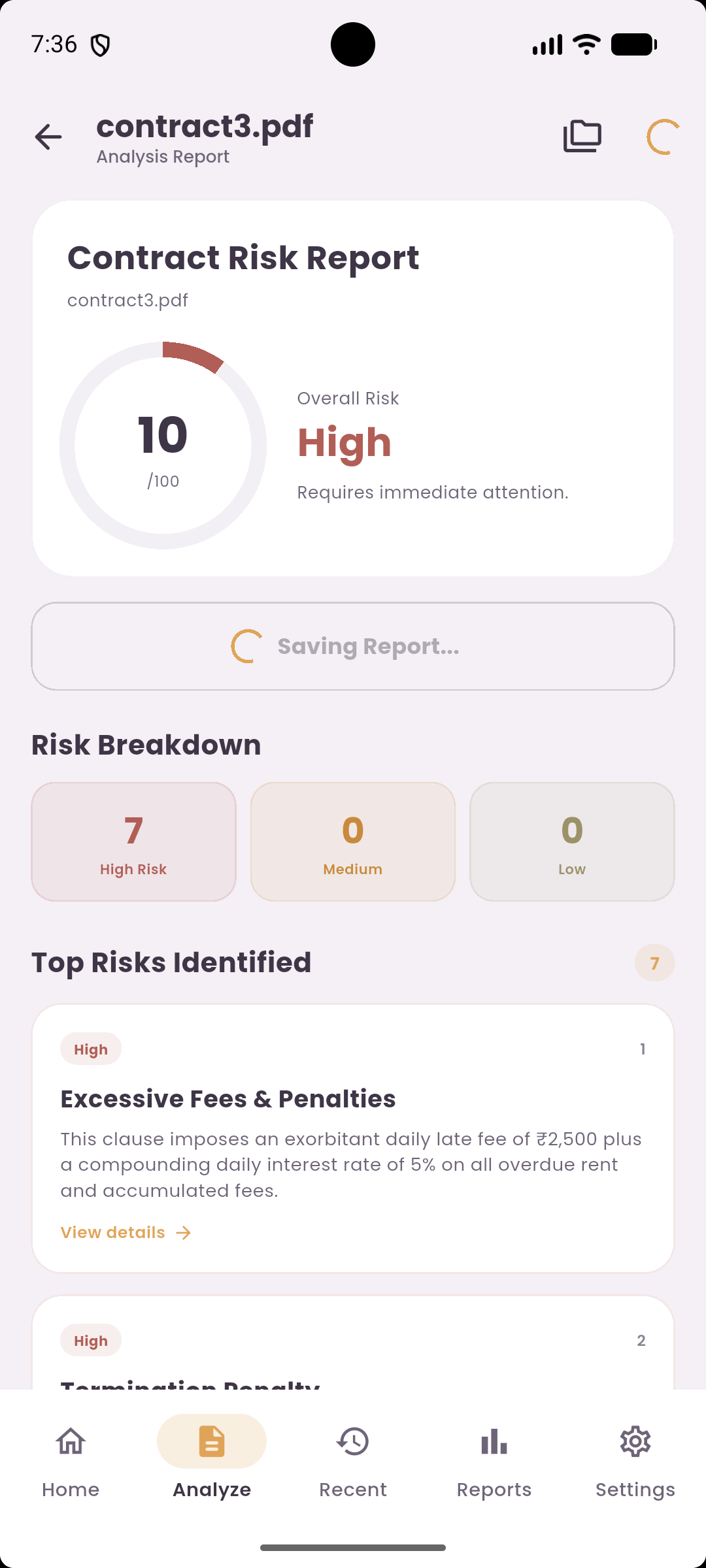
risk report
-
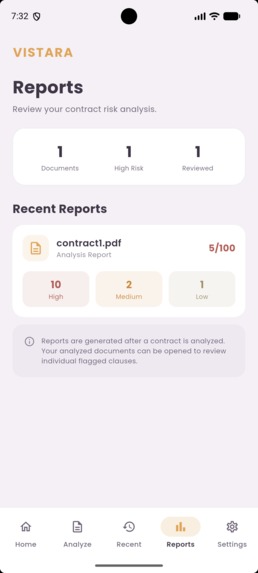
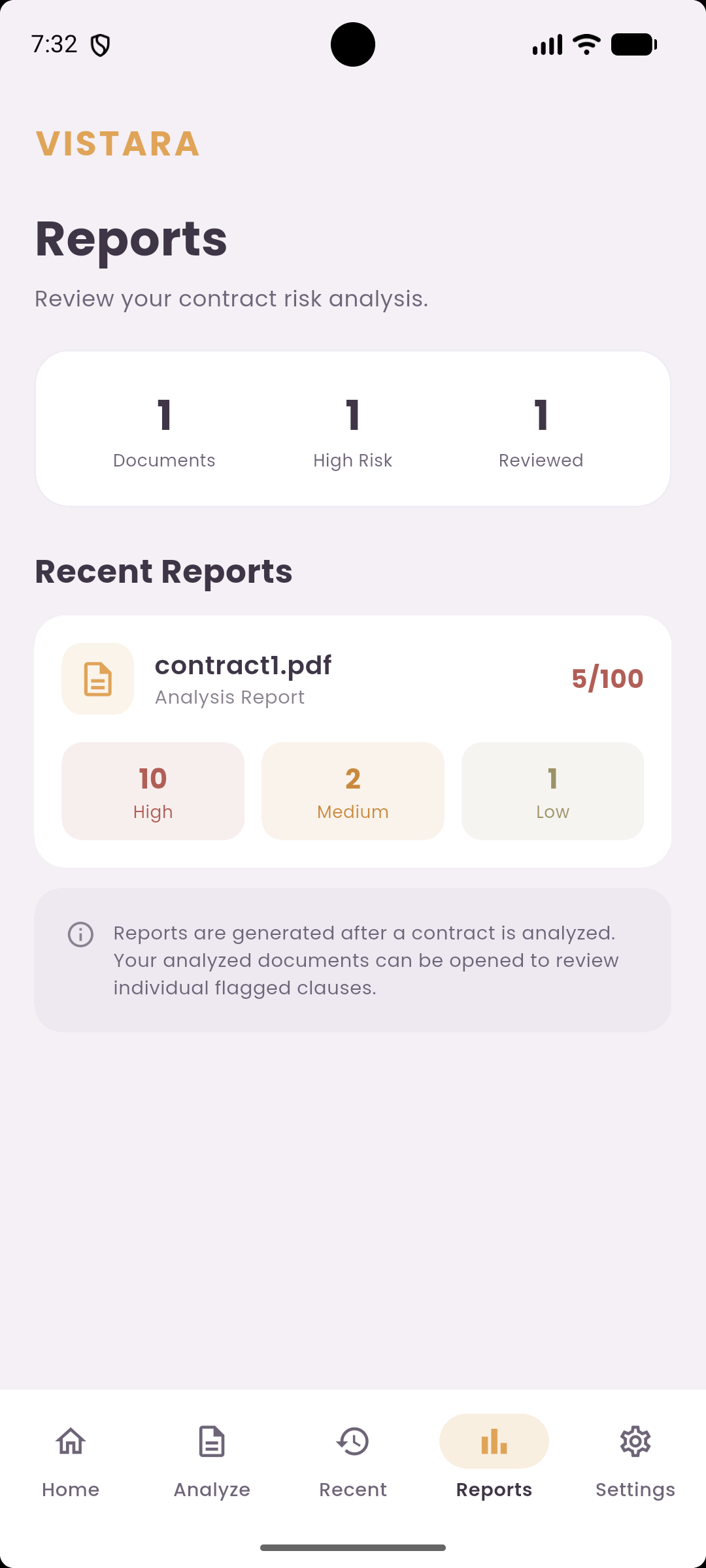
reports screen
-
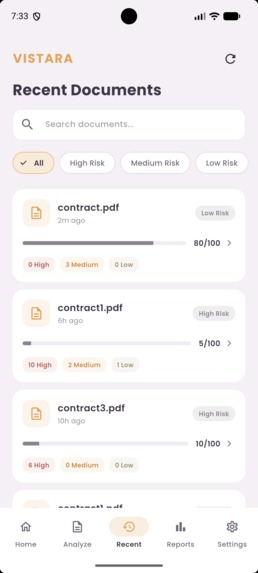
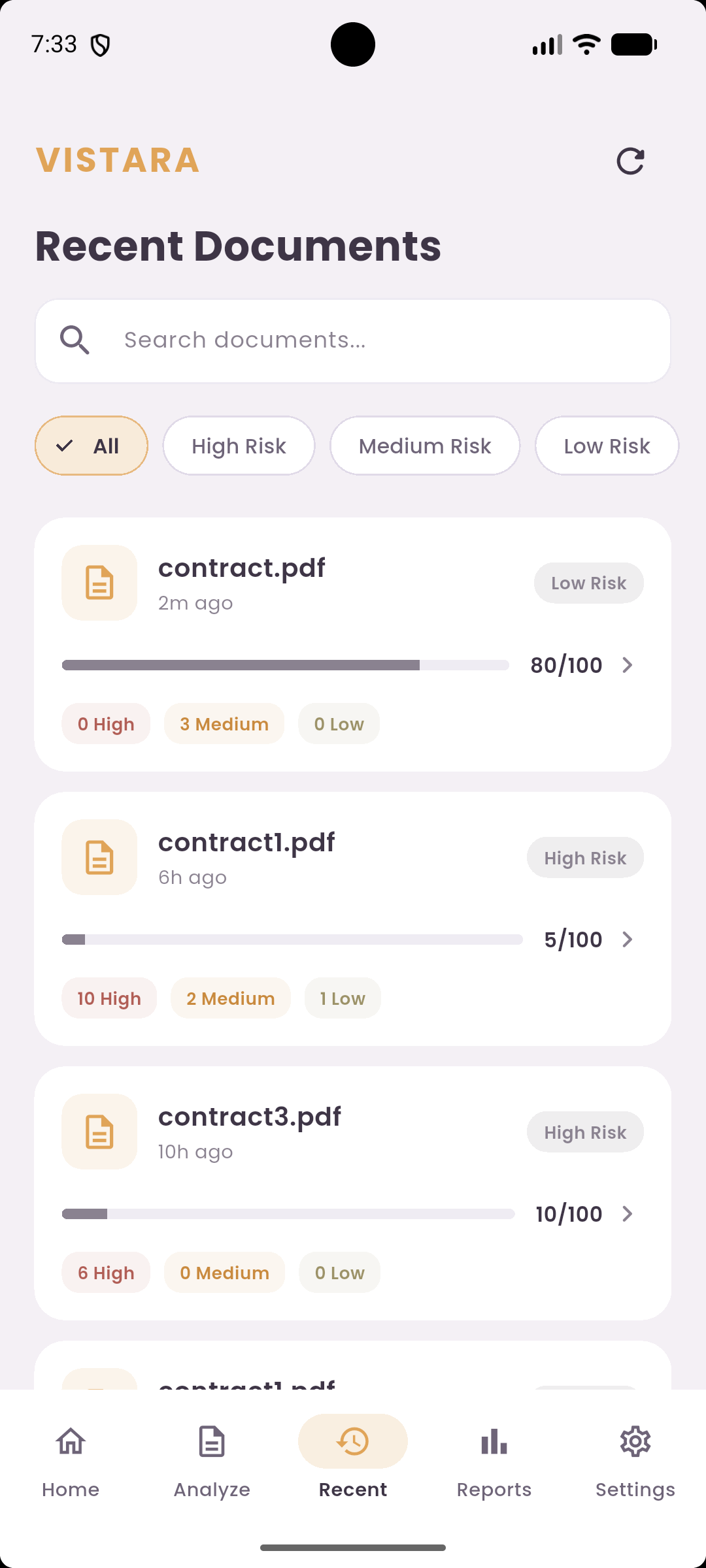
recent reports screen
-
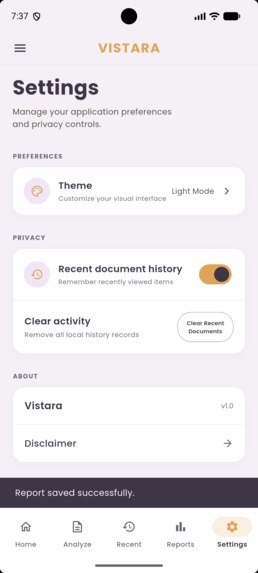
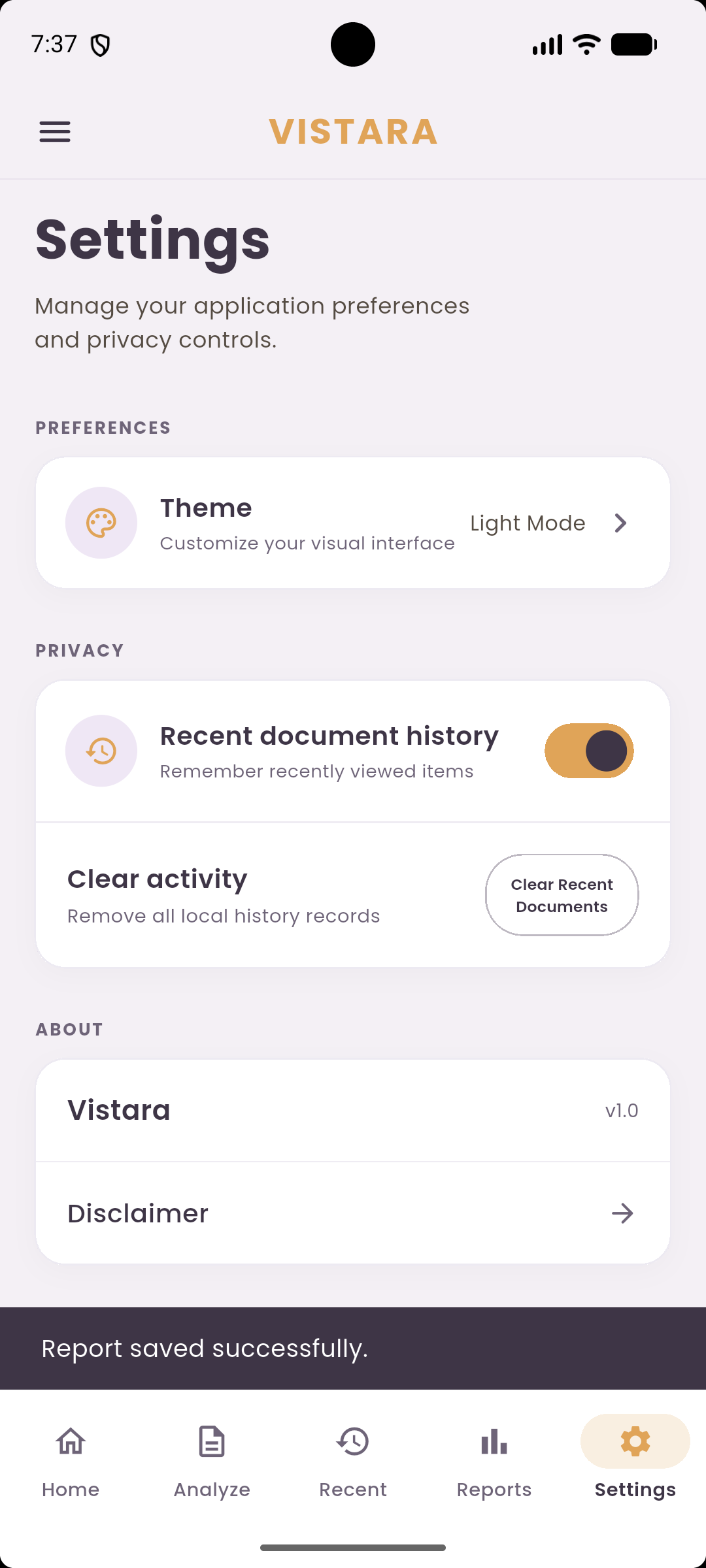
settings screen
About the Project
It started with Ummulkiram’s rental agreement
When Ummulkiram rented a place, she was handed a rental agreement that she was expected to read and sign. It looked ordinary—but it was filled with formal legal wording, long clauses, and terms she could not confidently interpret.
The problem was not simply that the agreement was long. The problem was uncertainty.
Were there hidden responsibilities? Was there a condition that could create a financial penalty later? Did a clause give the landlord more control than she realized? Was she agreeing to something unfair simply because it was written in language she had never been taught to understand?
Jahanvi could read the words, but she could not reliably understand their legal consequences. Hiring a lawyer just to review a rental agreement was not always practical or affordable. So, like many people, she faced the pressure of making an important decision without feeling fully informed.
Later, when Ummulkiram became the person renting a place to someone else, she saw the same issue from the other side. She wanted an agreement that protected her property, but she also did not want to accidentally include a clause that could harm or unfairly burden the person signing it.
That is where Vistara AI began: with a question that felt personal to us—why should someone have to gamble on a contract simply because legal language is difficult to understand?
What we built
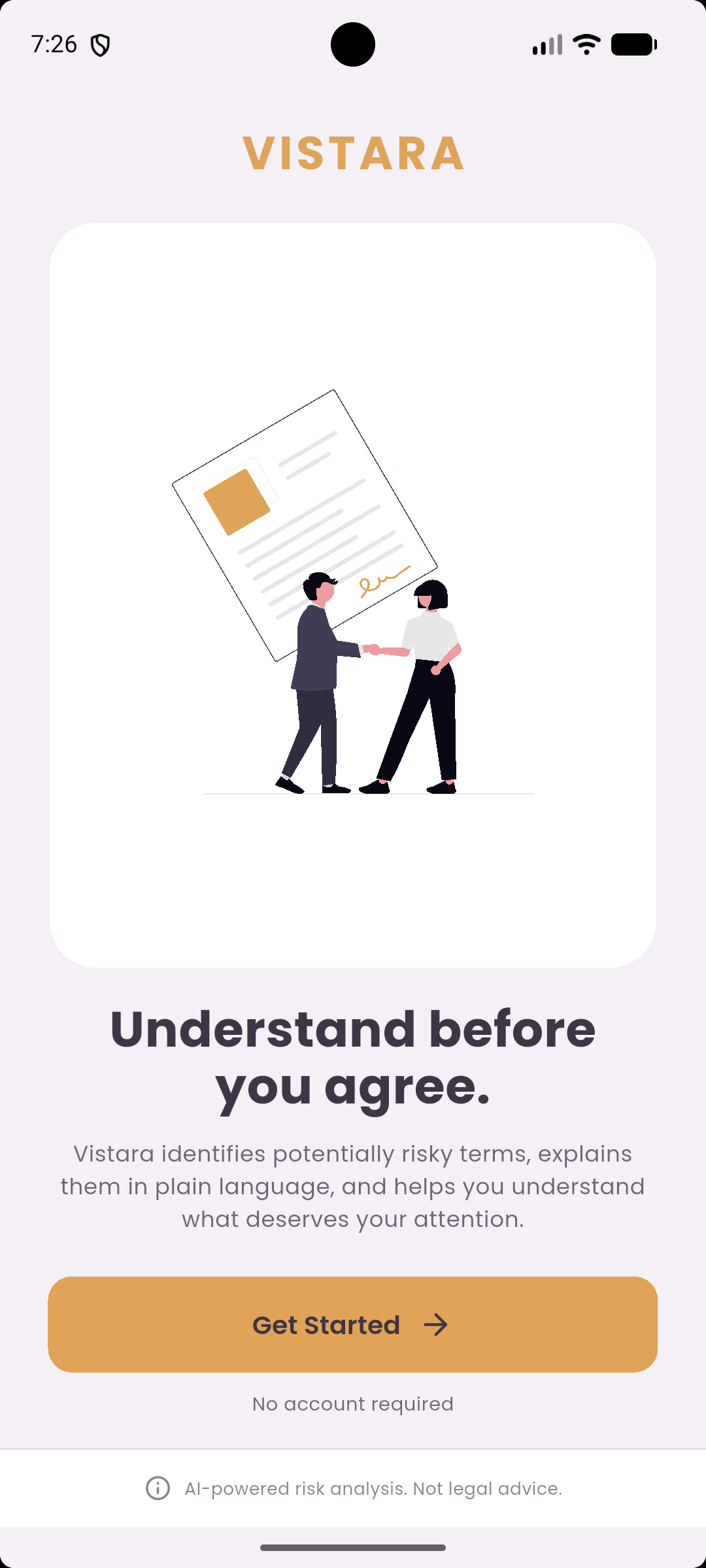
Vistara AI is an intelligent contract analysis and risk intelligence platform for people who need clarity before they sign.
Users upload a PDF agreement or paste contract text into the app. Vistara processes the document, detects potentially risky clauses, classifies them as High, Medium, or Low risk, and gives the contract an overall safety score from 0 to 100.
More importantly, it translates difficult legal language into plain English and describes possible worst-case outcomes. Instead of leaving users with a vague warning, Vistara helps them understand:
- What clause may create a risk
- Why that clause matters
- How serious the risk is
- What could happen in the worst case
- Where that clause appears in the original agreement
Vistara is not meant to replace a lawyer. It is designed to make legal information less intimidating, help users identify what deserves attention, and give them a clearer starting point before making a serious commitment.
How we built it
We built Vistara AI as a cross-platform Flutter application connected to a FastAPI backend.
The app accepts contract PDFs and text. Our backend validates and extracts the document content, cleans it, separates it into meaningful clauses, and prepares it for AI analysis. We use Google Gemini to identify risks, classify severity, generate structured results, explain legal language in simple terms, and create realistic worst-case scenarios.
The user then receives a clear risk report with an overall score, categorized findings, explanations, and an in-app view of the original document.
Our team divided the work into three connected systems:
- Ummulkiram — Vistara Extract: PDF ingestion, validation, text extraction, preprocessing, clause segmentation, and structured contract data.
- Jahanvi — Vistara Intelligence: Gemini-powered analysis, prompt engineering, risk detection, severity scoring, risk categories, plain-language explanations, worst-case scenarios, and recommendations.
- Hiral — Vistara Insight: Risk dashboards, clause-to-risk mapping, document highlighting, severity visualization, and the decision-support interface.
Our hardest challenge
Our hardest challenge was making Vistara point to the risky language inside the PDF itself.
At first, AI could identify a concern and return an explanation. But that was not enough. If a user sees “High Risk,” they should not have to search through several pages trying to find the relevant sentence. They should be able to see the clause, read it in context, and understand why Vistara flagged it.
Making that happen required fuzzy matching between extracted contract text and the original PDF. This was challenging because PDFs do not always preserve text consistently: formatting changes, text can be split across lines or pages, and the same words may appear in more than one place.
None of us had built this kind of document-highlighting workflow before. We had to learn text extraction, clause mapping, and fuzzy matching while still building the rest of the application during the hackathon. We also faced API bugs that interrupted the analysis flow, and resolving them was a key moment that allowed Vistara to become a complete working product.
What we learned
Vistara taught us how to build a complete cross-platform AI product—not just an AI demo.
We learned how to connect Flutter and FastAPI, process real PDF documents, structure LLM prompts for reliable outputs, and design an interface that explains AI findings instead of overwhelming users with them.
We also learned an important lesson about legal AI: detecting a problem is only the first step. People need to see the original clause, understand it in ordinary language, and know why it matters. That is why Vistara focuses on explainability and visual context rather than just generating a contract summary.
What we are proud of
We are most proud of the PDF highlighting feature. It was the most difficult part of the project, but it is also what makes Vistara feel grounded in the user’s actual agreement rather than like a black-box AI tool.
We are also proud that we overcame integration bugs, created an intuitive interface, and built a working experience that takes a user from a confusing legal document to a clear, structured risk report.
What’s next
We want to make Vistara available to even more people through multilingual analysis, OCR for scanned and photographed documents, voice-to-text interaction, offline availability, stronger privacy controls, a specialized contract-analysis model, a community forum, and a Vistara browser extension for reviewing online agreements.
Our goal is simple: no one should have to sign an important contract without understanding what it could mean for them.


Log in or sign up for Devpost to join the conversation.