-
-
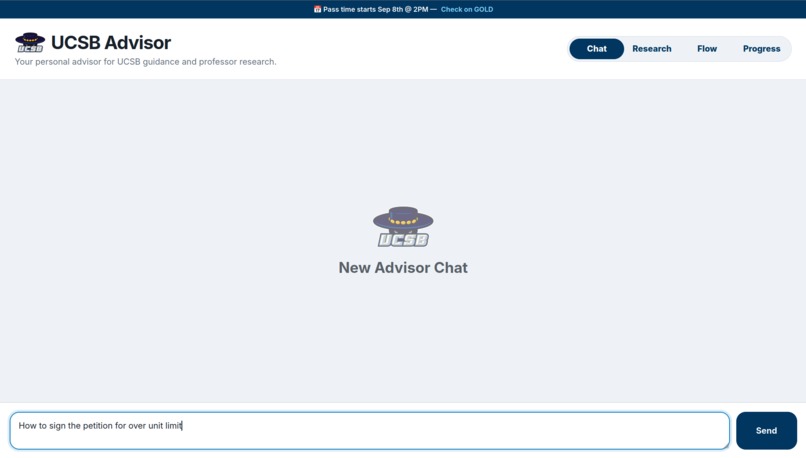
UCSB Chatbot
-
-
-
Flow
-
Researcher clusters
-
Points
-
Inspiration
Only 10-15% of the students that go into academic advisor actually need to be there, the other 85-90% are are asking questions that they could have just found online. Those students are waiting 1-1.5 hours in a queue to meet with an advisor that simply tells them the answer to their question in minutes. There are simply too many students and not enough advisors, and students aren't equipped to formulate their schedules and understand/utilize all the information despite it being at the tip of their fingertips. This demand for advising has causes the wait times to speak with an advisor be many hours. If most of these students don't need it, then they are taking time away from the students who do. We decided to fix this inefficiency.
Other important statistics. We surveyed 52 people and interviewed 5 advisors and found:
- 96% of students would use an app like this
- Only 40% of U.S. college students graduate on time
- 88% of students noted an app like this would be very helpful
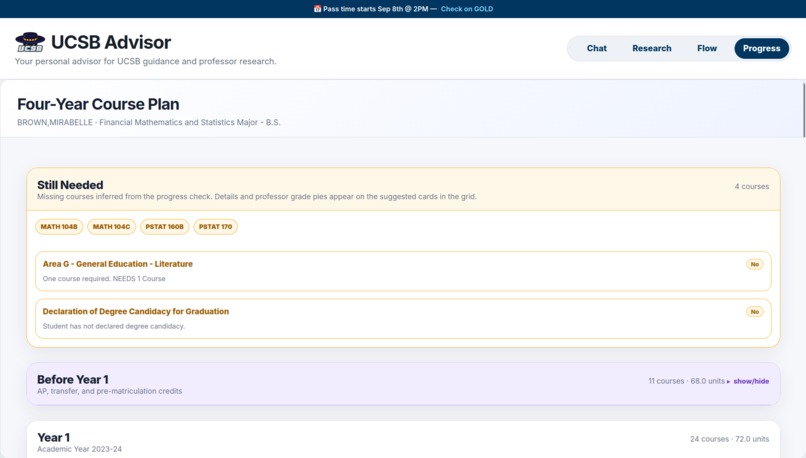
- The most important features requested by students and advisors alike was a 4-year planner, GE + Major tracker, Prequisite Trackers, and Graduation Progress Trackers.
What it does
It has multiple key features
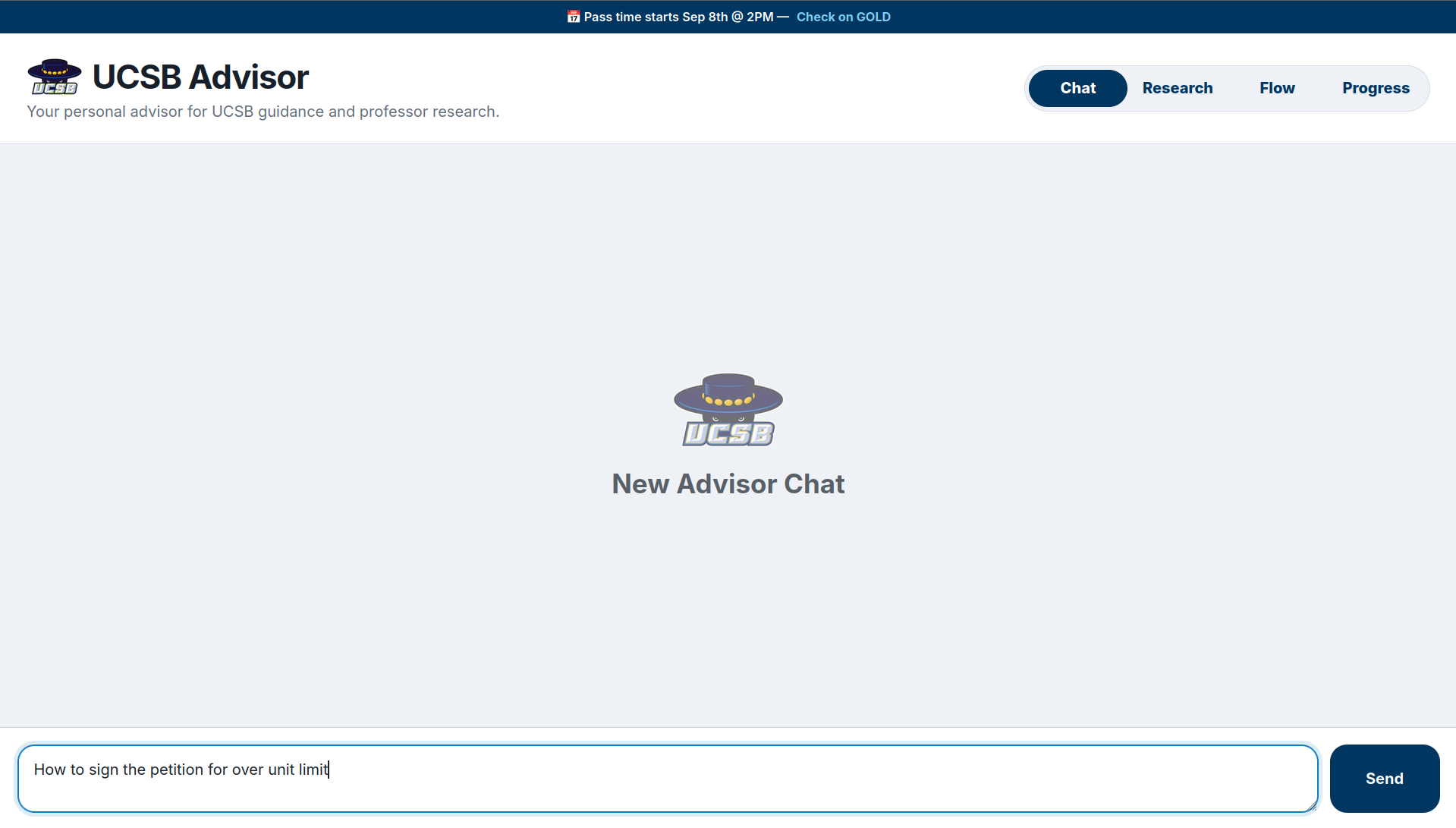
1) A UCSB-Specific advising chatbot that tells you exactly what you need to know, which UCSB pages to visit, and which petitions to fill out. If you actually need to talk to an advisor, it will tell you. Only scrapes from UCSB websites because this ensures 100% accuracy.
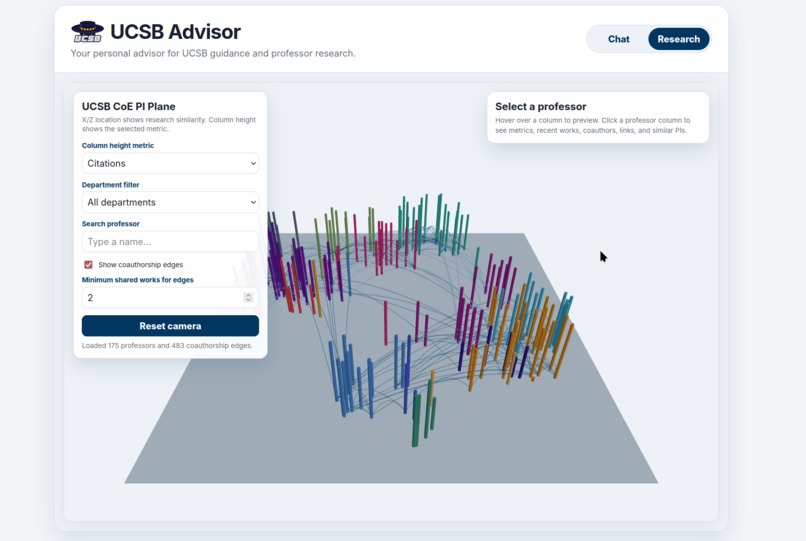
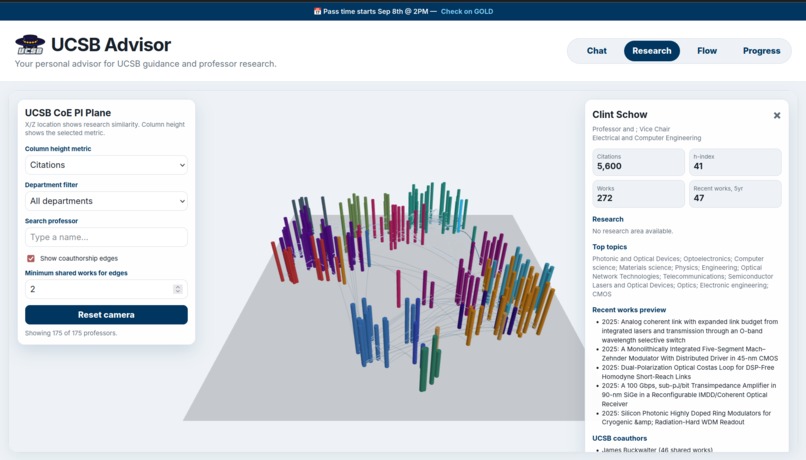
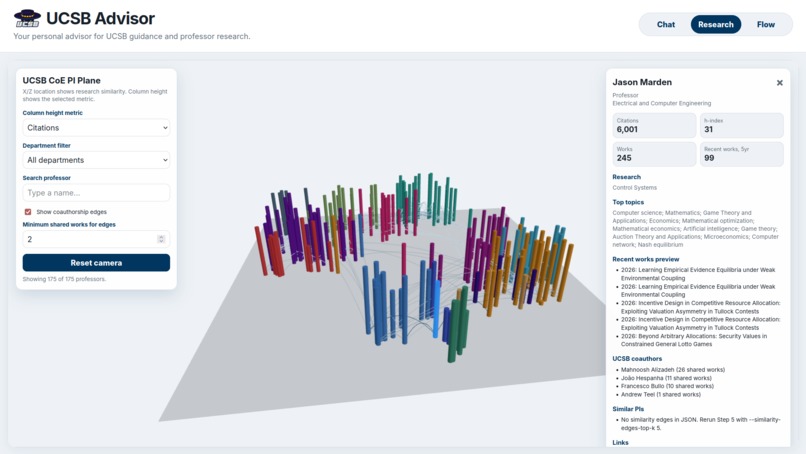
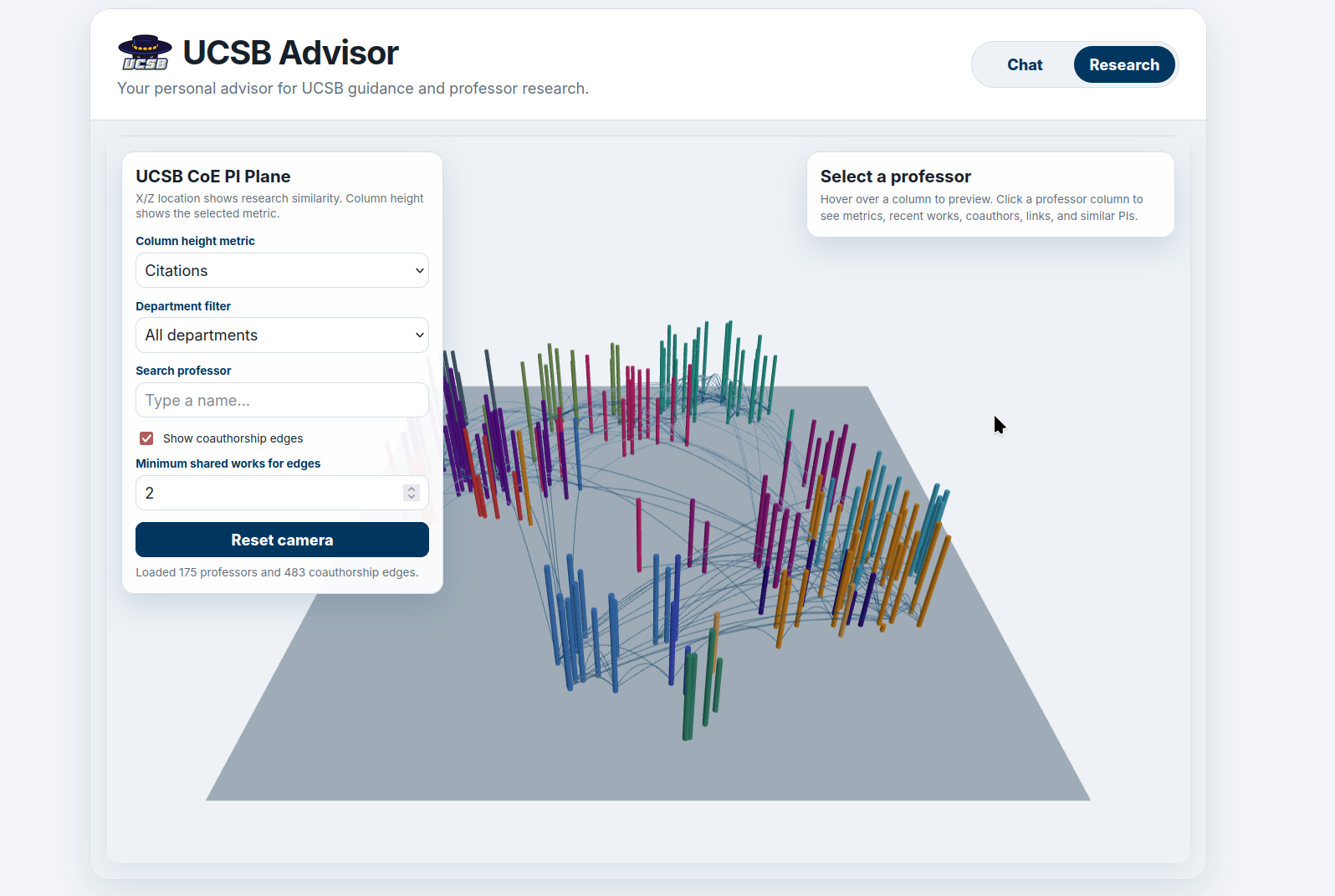
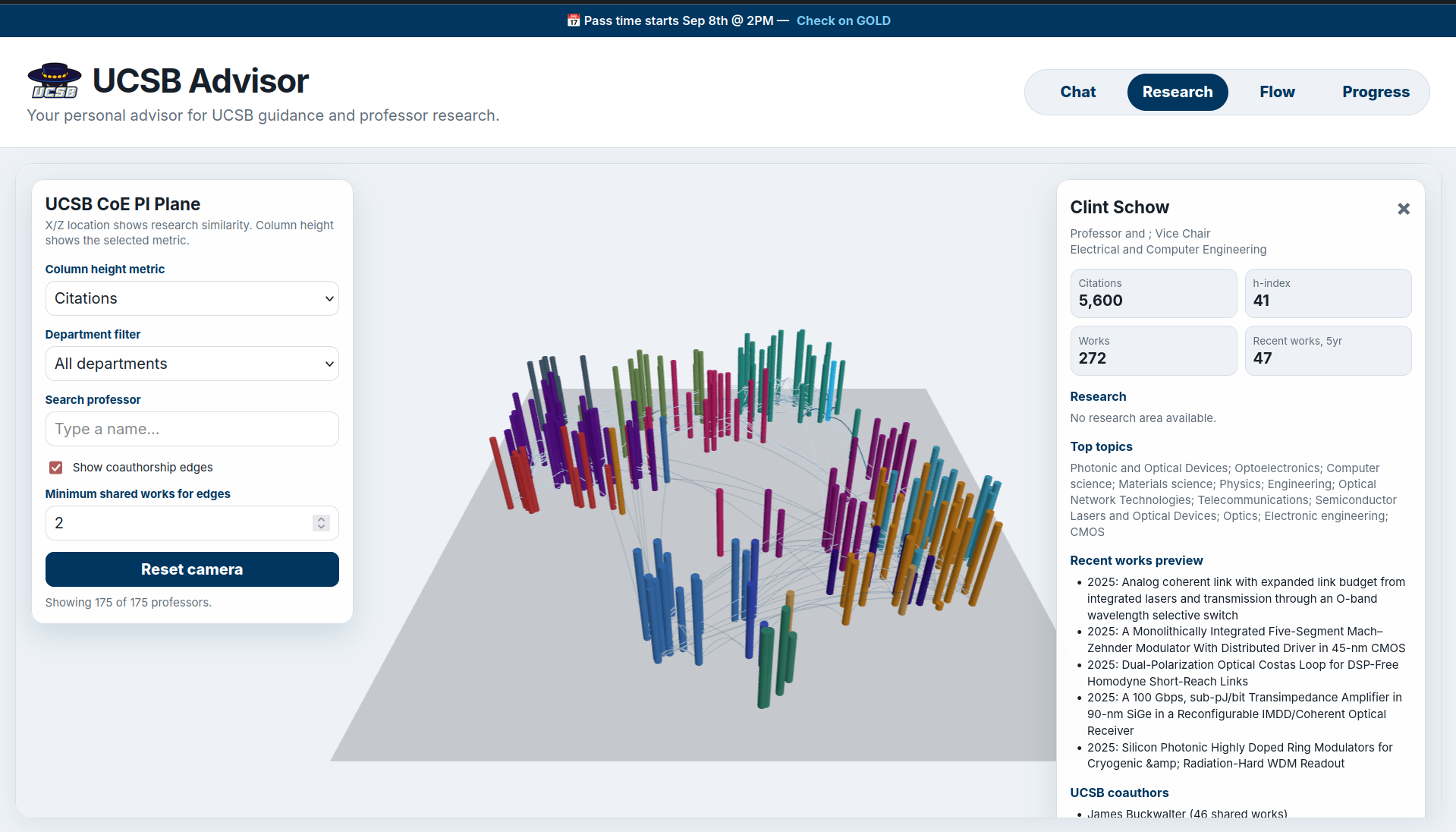
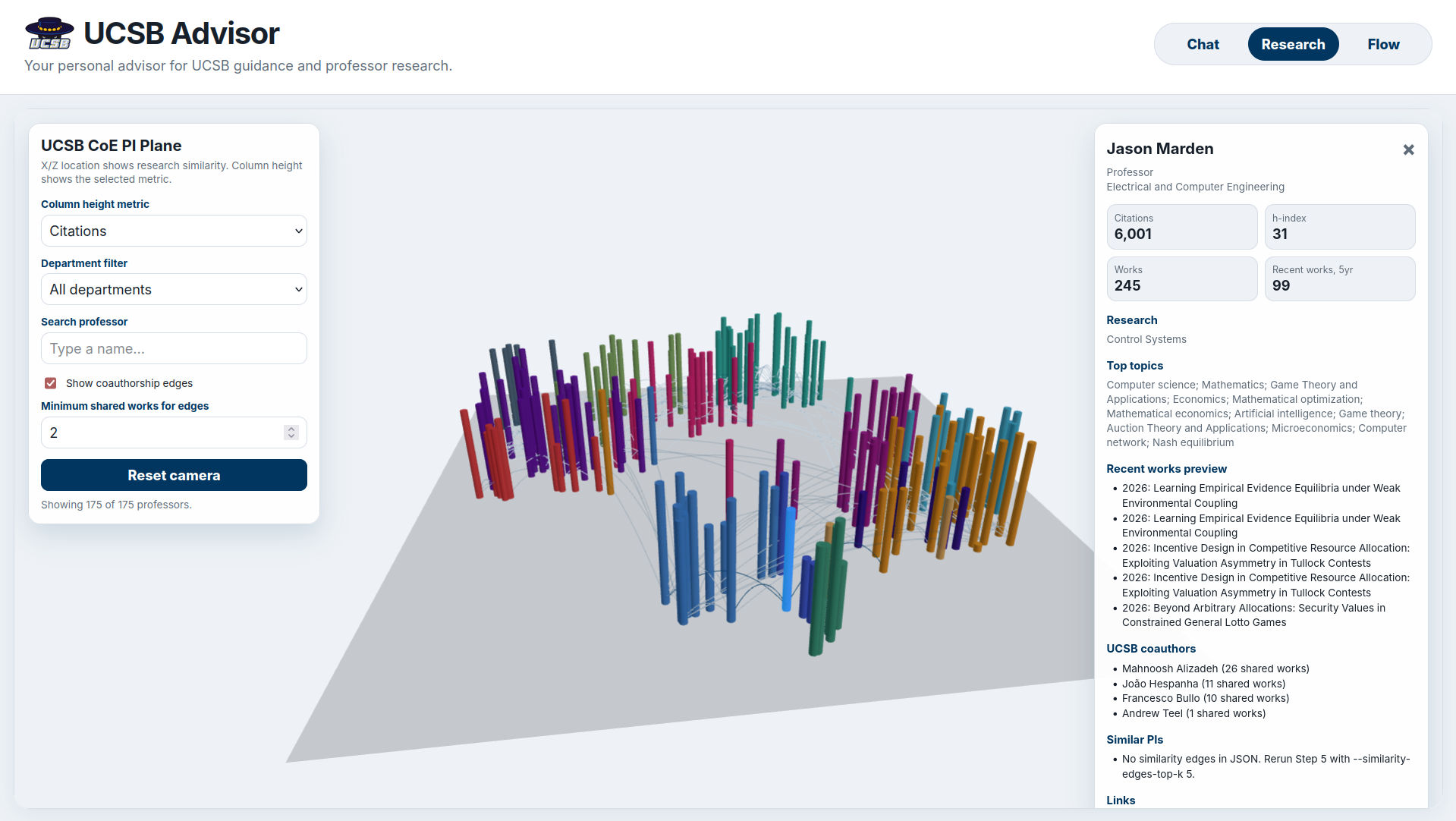
2) PI-finder, for students interested in doing research at UCSB but don't know what professors to reach out to, we built a 3D visual of professors that are semantically clustered by high-dimensional embedding that were generated based on their research topics. These embeddings were projected down to 2D using UMAP compression and we rendered it on a plane. Connections are made between the professors who have co-authored paper together, the colors are determined by their topic cluster, and the height of each point is based on how credible their research is (h-index).
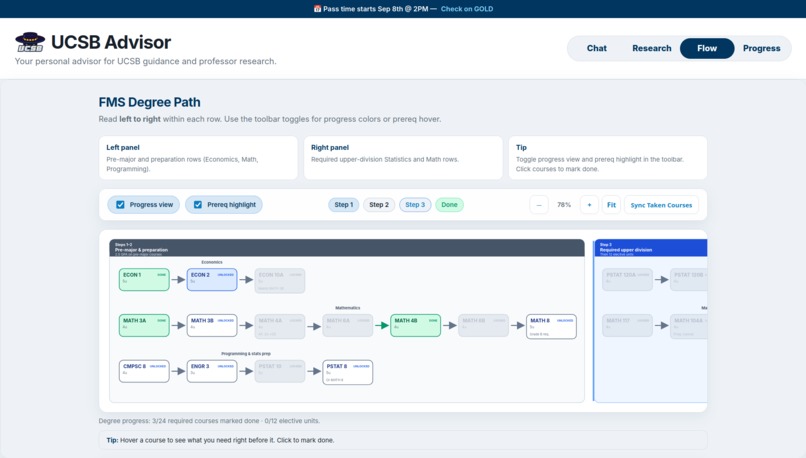
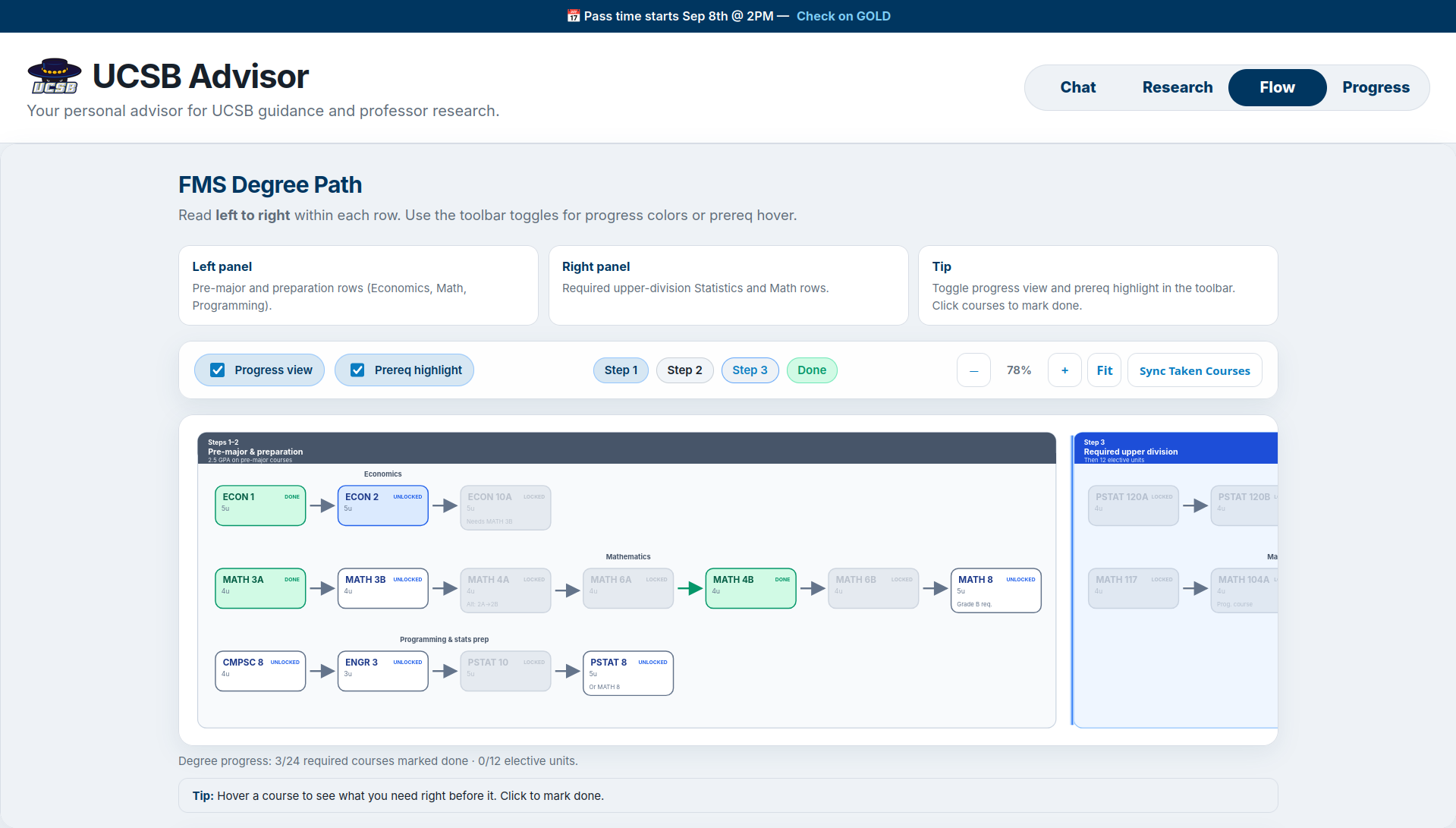
3) Prerequisite visualizer of topologically sorted classes that visualizes what you need to take in the right order
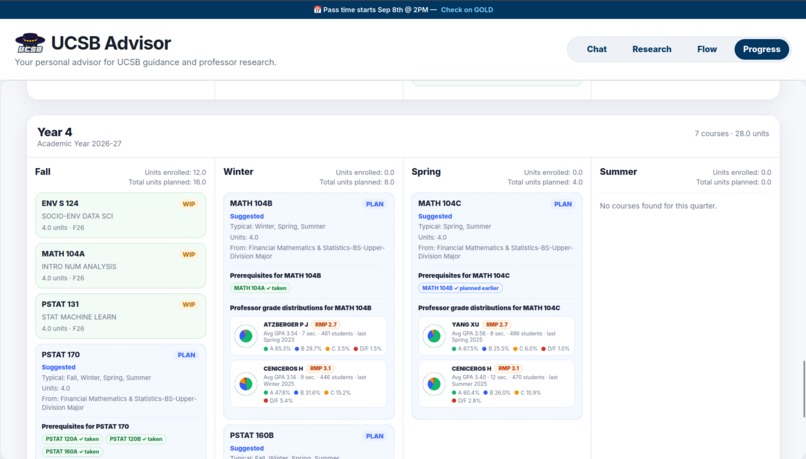
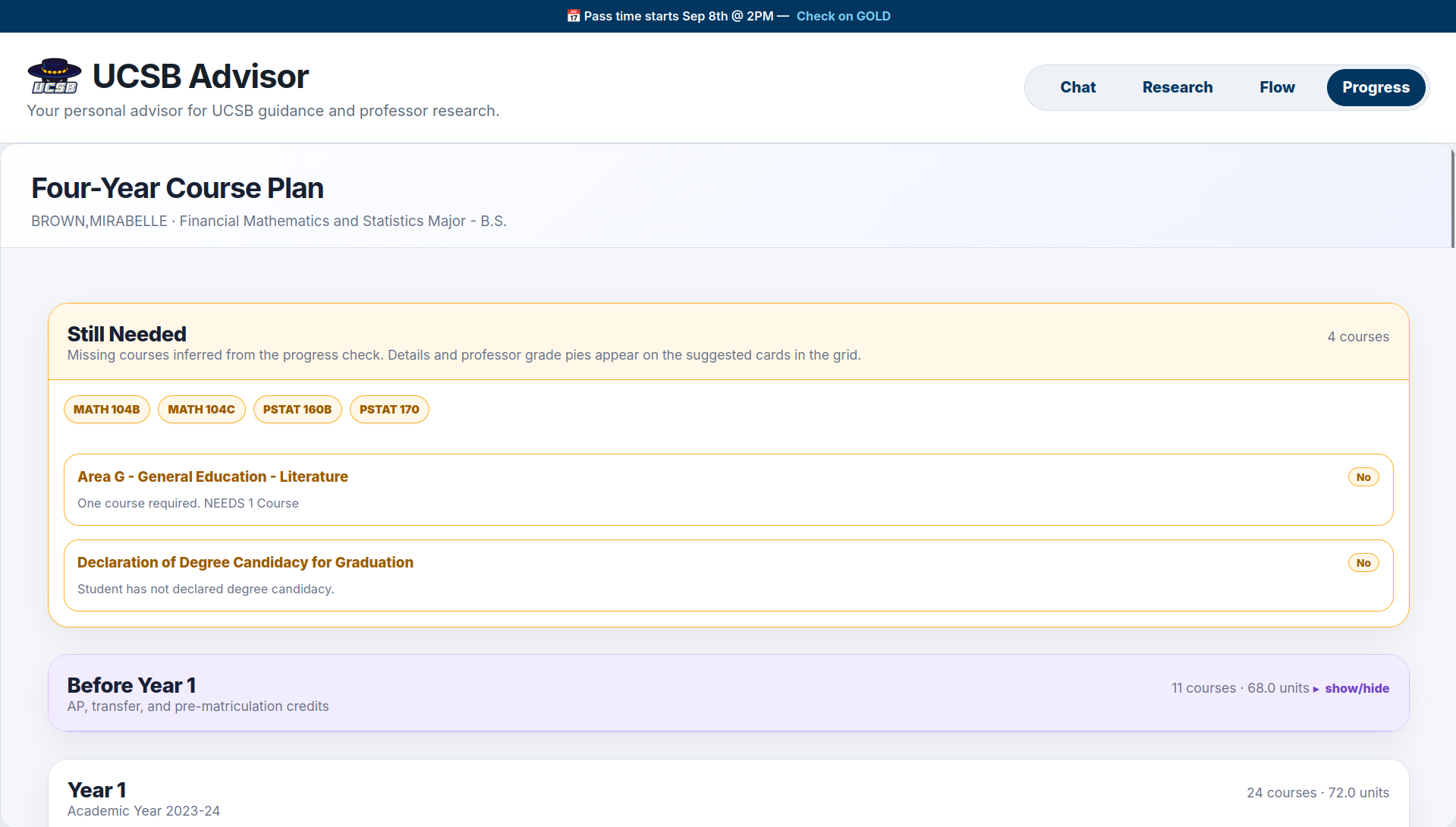
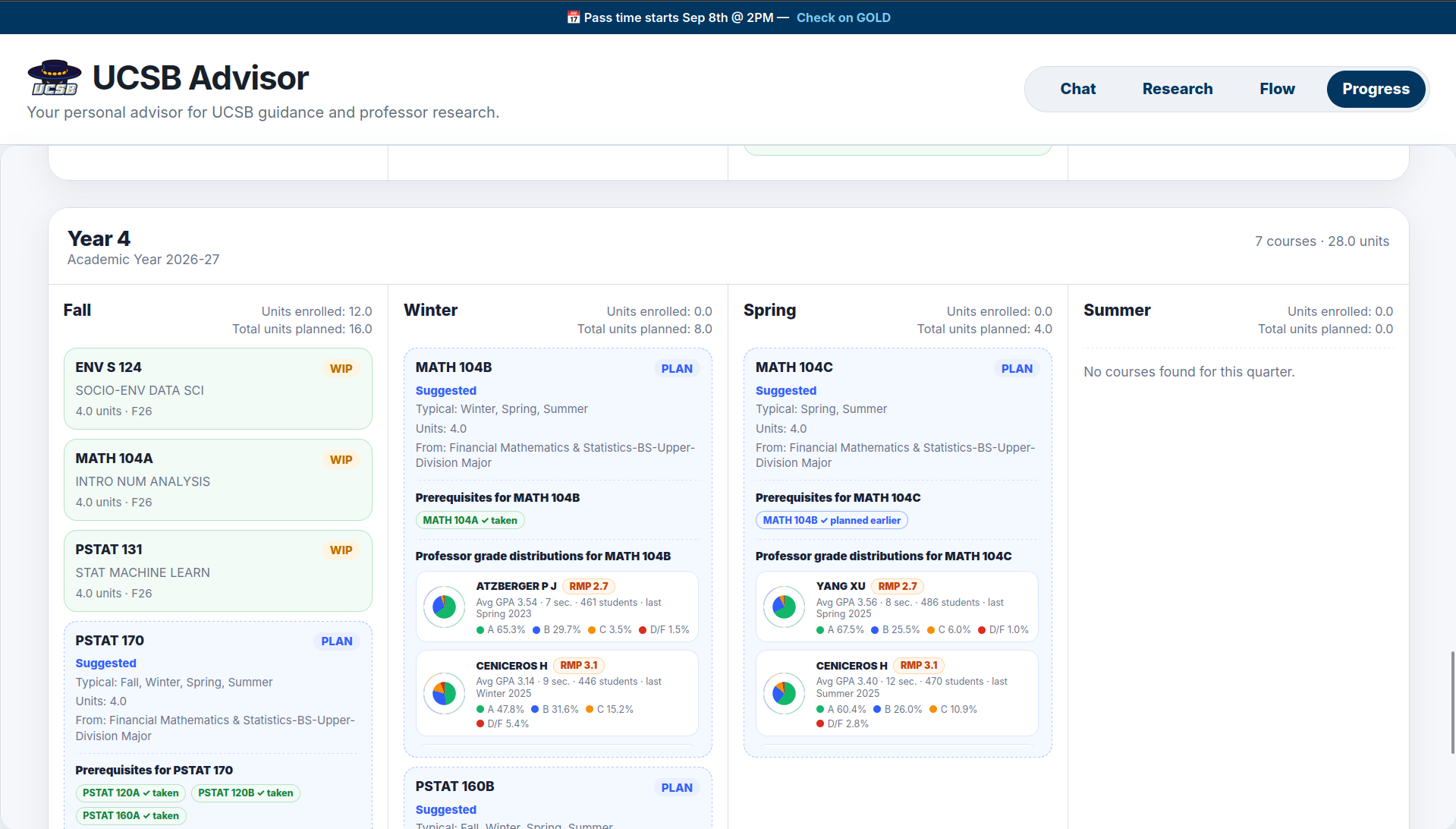
4) A four 4-year plan that includes important information like Daily Nexus grade distributions and logic that forces classes to be ordered based on prereqs. It also integrates Rate My professor and prevents students from scheduling a class in their 4 year plan if they do not meet the prerequisites for it.
How we built it
We used AWS Bedrock for the AI, Exa for search, Titan text embeddings, Flask, and other technologies to build this product.
Challenges we ran into
Scraping data was hard but then we found AlexNet. Uploading progress was also hard but then we realized that the best way was with a traditional script instead of an LLM. We also found collaborating a bit hard because version controll is hard during hackathons
What's next for Visor
We want to work on distribution to make this a service students would actually use for free, if it provides enough value, we want it to get sponsored by UCSB.
Monetization has two potential revenue models. Ads sponsored by local businesses and organizations since this website will incur high traffic from UCSB students. Other model is Enterprise B2B which involves a departmental license with the school. Up next is making it work for other UC schools and eventually across the nation at the almost 3,000 4-year colleges in America for over 19M students!


Log in or sign up for Devpost to join the conversation.