-
-
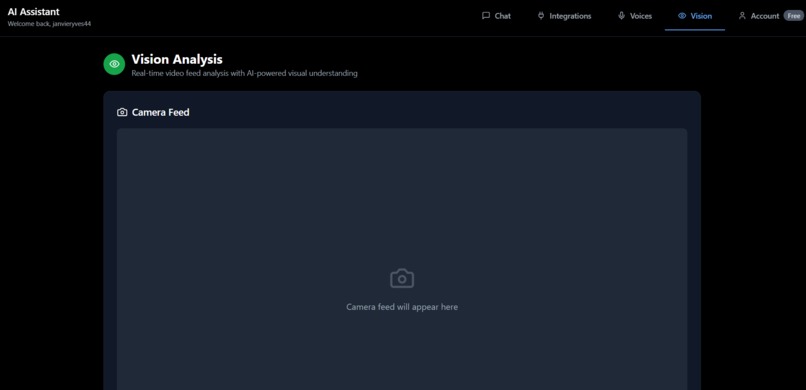
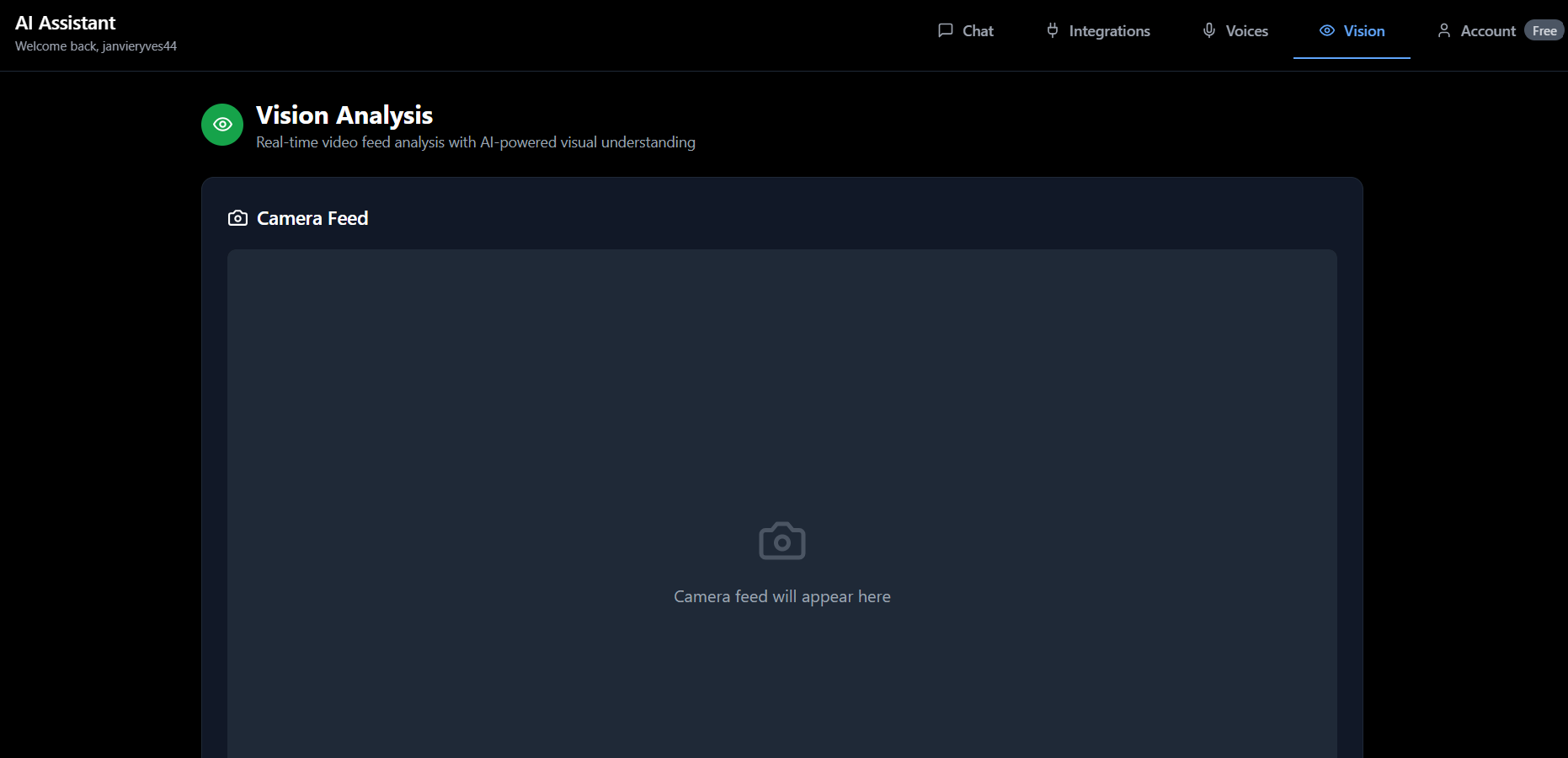
Video Analysis Page
-
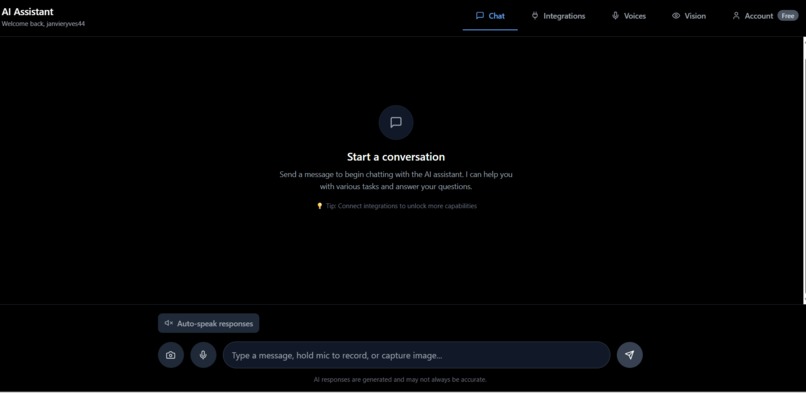
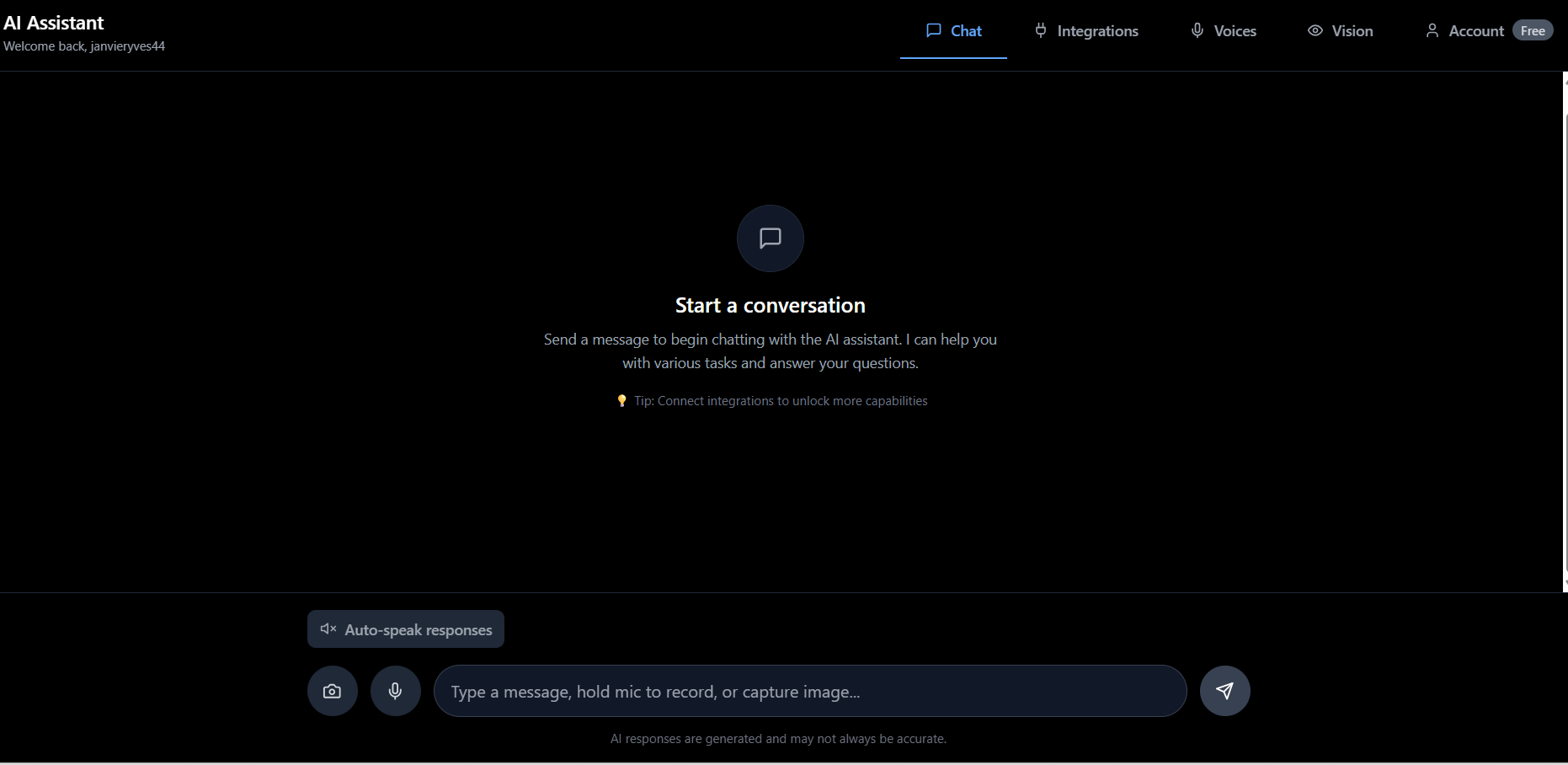
Chat Page
-
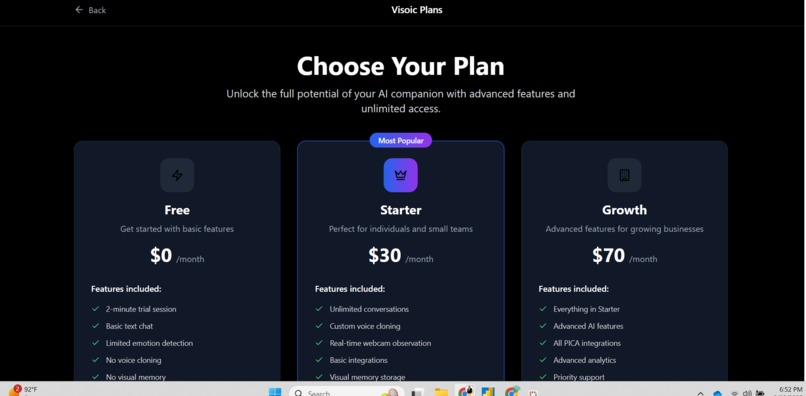
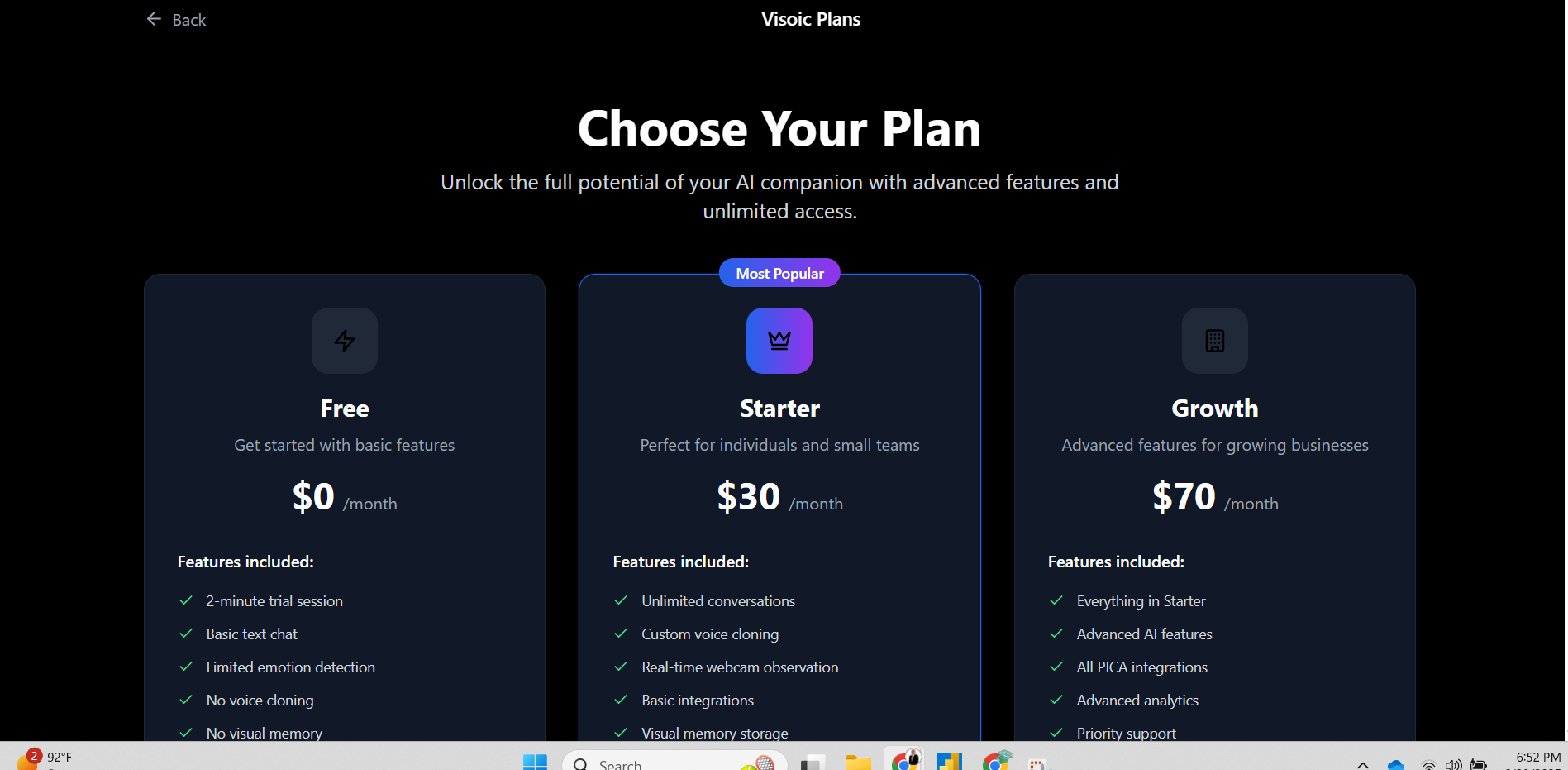
Plan Page
-
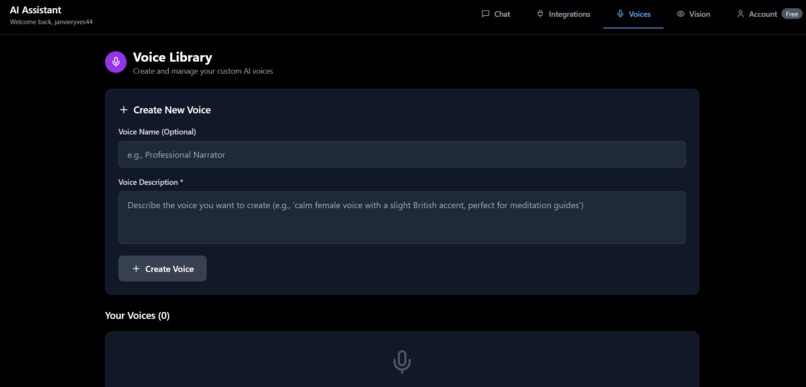
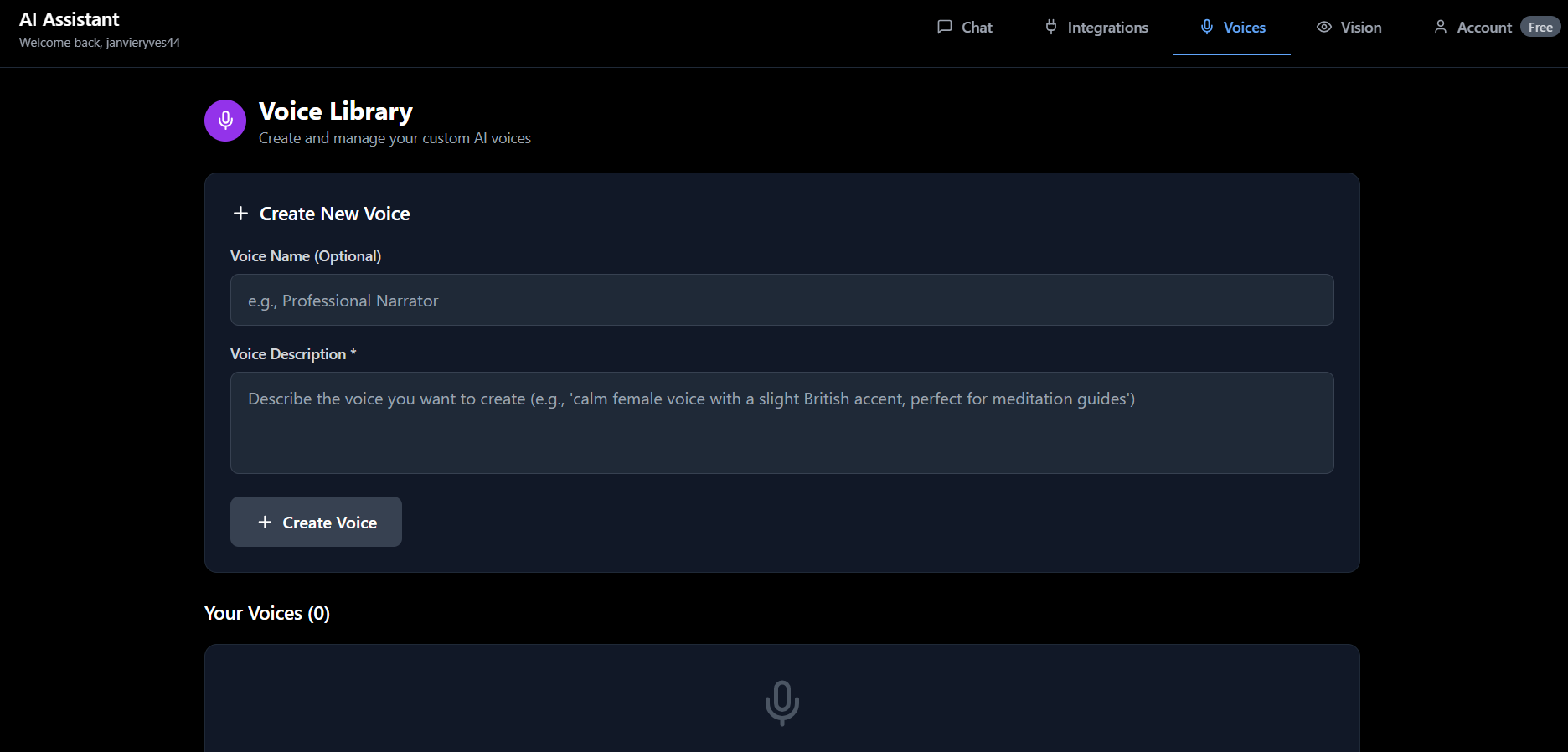
Create Voice Page
-
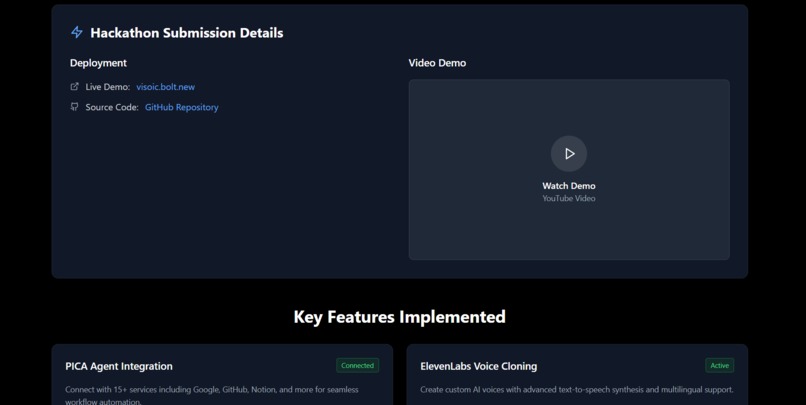
Home Page Middle
-
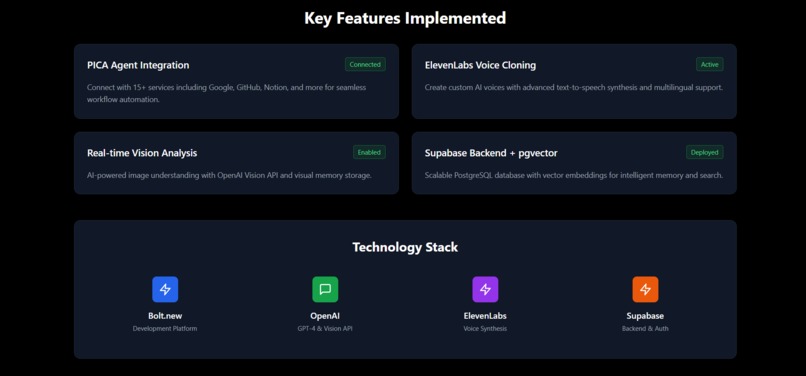
Home Page Bottom
-
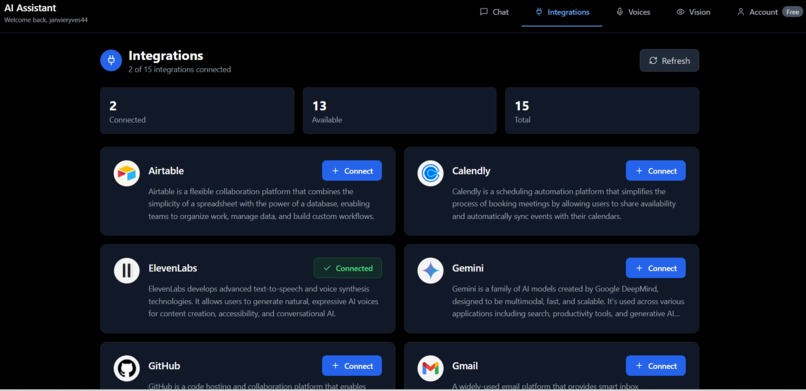
Integration List Page
-
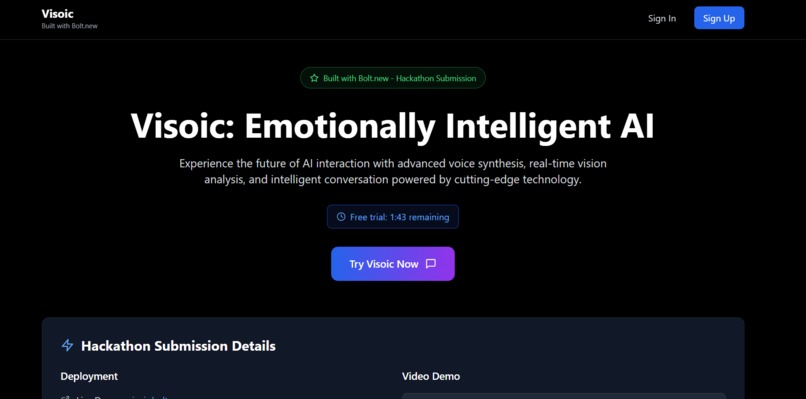
Home Page Top
About the Project
🧠 “What if everyone could control their digital life using just voice?”
VISOIC was inspired by the need for more inclusive technology. I wanted to build an assistant that users with limited mobility or visual impairments could rely on — one that listens, understands, and responds in a way that feels natural.
What It Does
🗣️ “Say 'Hey Visoic' followed by any request — and watch it respond.”
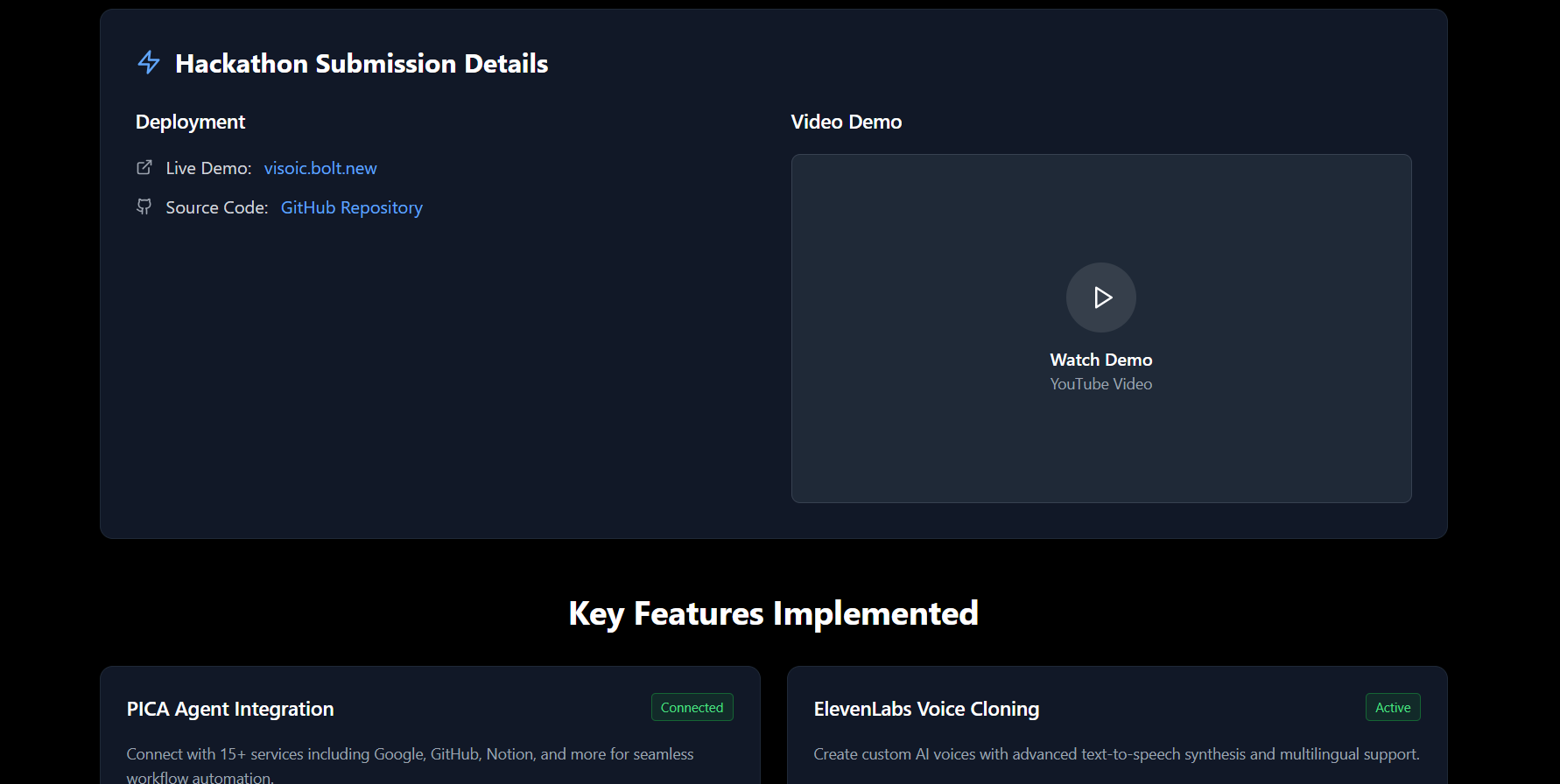
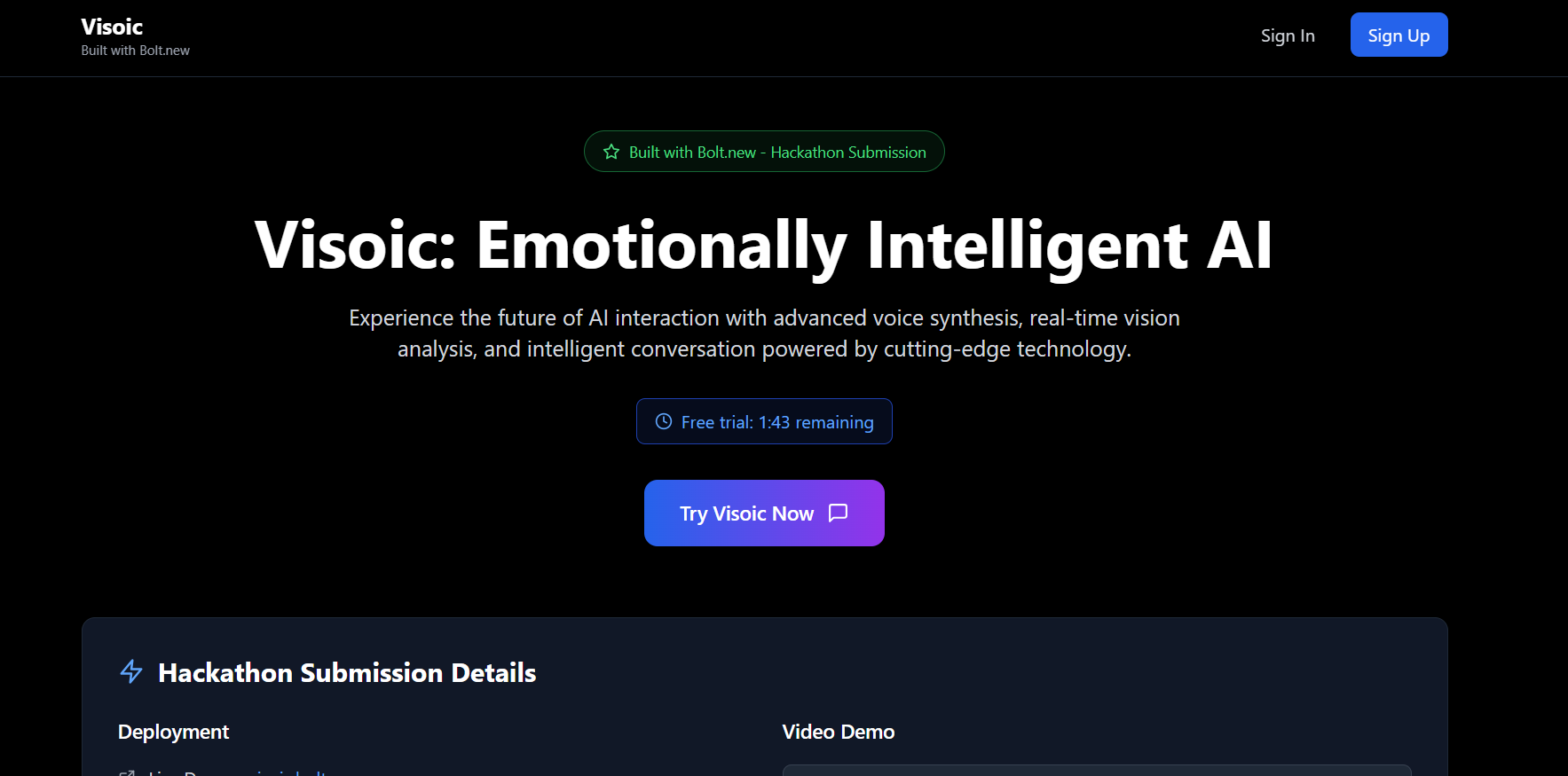
VISOIC is a voice-first AI assistant that interprets natural language commands and executes real-world actions like sending emails, navigating pages, or booking flights. It provides feedback through realistic voice (via ElevenLabs) and human-like video responses (via Tavus.io).
How I Built It
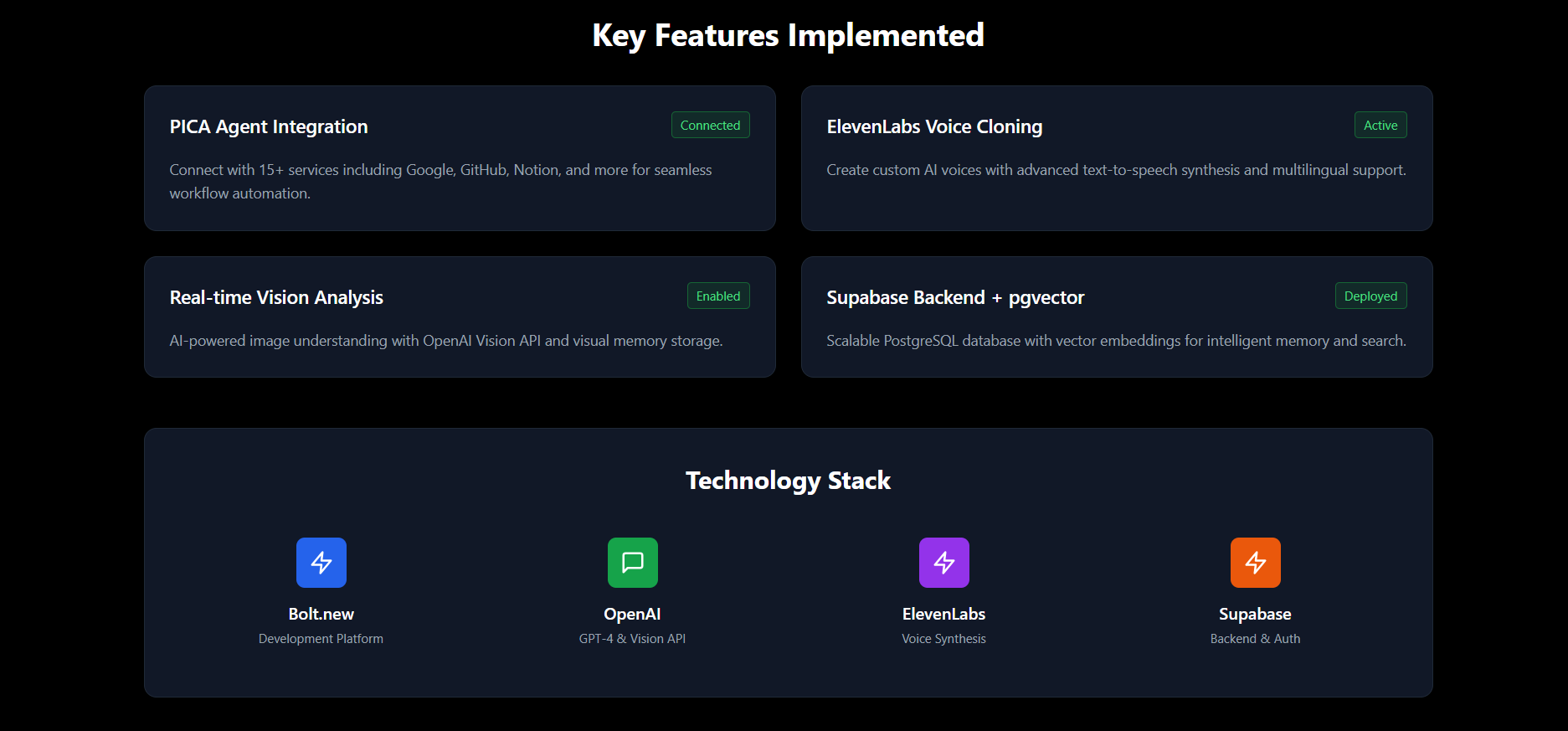
🛠️ “Built entirely with Bolt.new, React, Pica AI, Supabase, ElevenLabs, and Tavus.io.”
I used:
- Bolt.new – For hackathon-compliant hosting
- React + TypeScript – For a scalable frontend
- Pica AI – For agentic command parsing
- Supabase – For authentication and logging
- ElevenLabs – For natural-sounding TTS
- Tavus.io – For realistic avatar video responses
Everything connects seamlessly to create a fluid, accessible experience.
Challenges I Ran Into
⚠️ “Getting Pica AI to understand complex, context-rich commands wasn't easy.”
The biggest challenges were:
- Making sure wake word detection (“Hey Visoic”) was reliable
- Ensuring agentic command interpretation was accurate across contexts
- Syncing audio with Tavus video responses
- Handling accessibility edge cases for screen readers and keyboard-only navigation
Accomplishments I'm Proud Of
🏆 “A truly hands-free assistant — no mouse, no touch, just voice.”
I’m proud of building a working MVP where:
- Users can navigate and execute tasks using only voice
- The assistant responds via realistic audio and video
- Everything is fully accessible and responsive
This proves that AI can be inclusive, not just functional.
What I Learned
💡 “Voice-first design changes everything — from UX to backend logic.”
I learned how to:
- Use agentic AI for multi-step task execution
- Build fully accessible UIs
- Integrate real-time speech and video APIs
- Structure modular components for scalability
- Deploy a production-ready app using Bolt.new
What’s Next for VISOIC
🚀 “From voice assistant to full AI companion — human-like and always ready.”
Next steps include:
- Adding image input interpretation
- Supporting human-in-the-loop fallback
- Implementing blink detection for ultra-low mobility users
- Enabling multi-user sessions
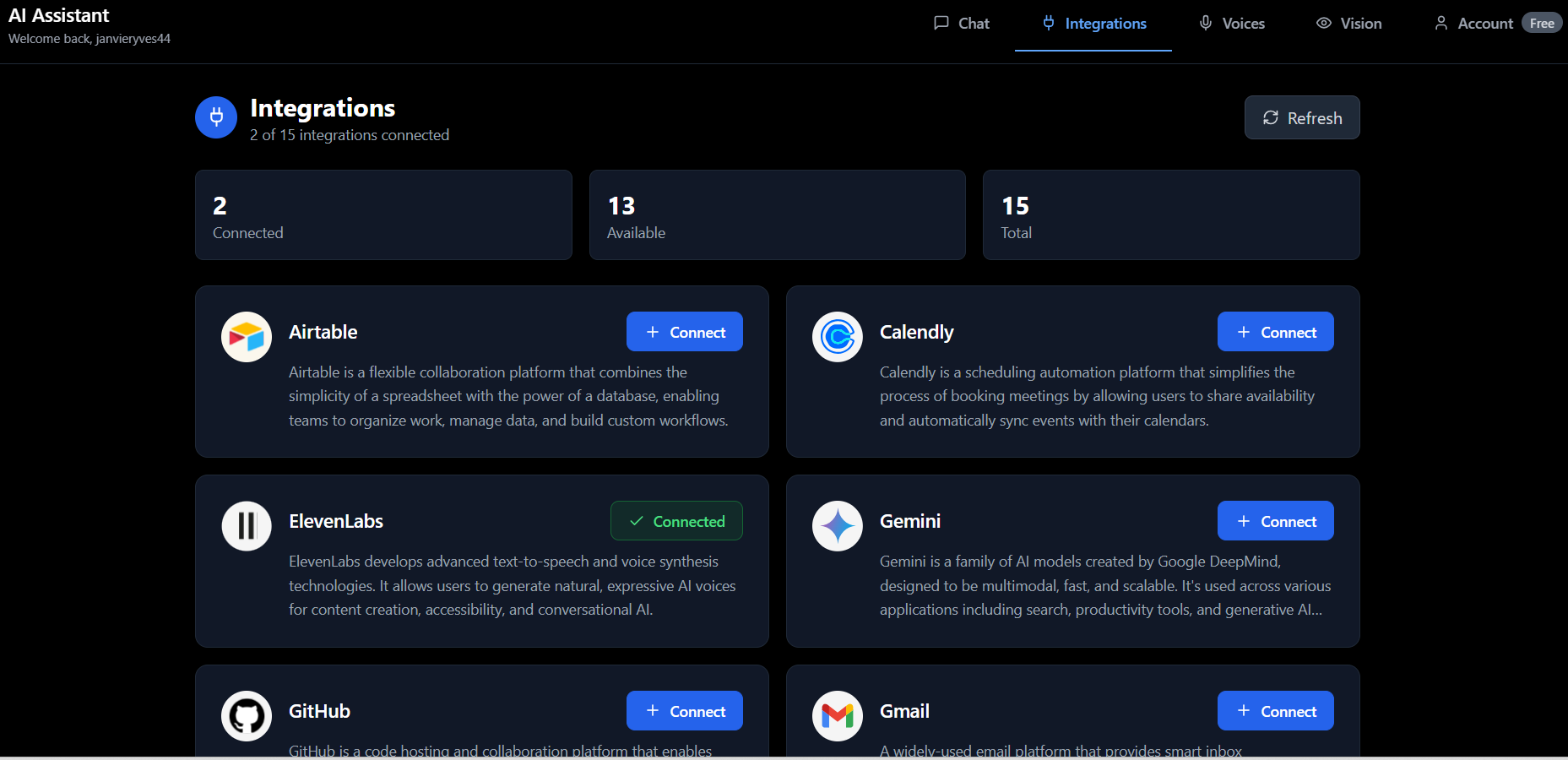
- Expanding integrations to calendar, CRM, and productivity tools
VISOIC will evolve into a full digital life assistant — built for everyone.
Built With
- agent
- ai
- authentication
- avatar
- backend
- bolt.new
- command
- commandlogs
- components
- cvi
- database
- deployment
- design
- edgefunctions
- elevenlabs
- engine
- file
- framework
- hosting
- language
- logging
- lucide
- management
- mobilefirst
- oauth
- parsing
- picaai
- postgresql
- react
- reactrouter
- recognition
- response
- responsive
- routing
- state
- storage
- styling
- supabase
- tailwind
- tavus
- tts
- typescript
- ui
- video
- voice
- webspeech
- zustand

Log in or sign up for Devpost to join the conversation.