-
-
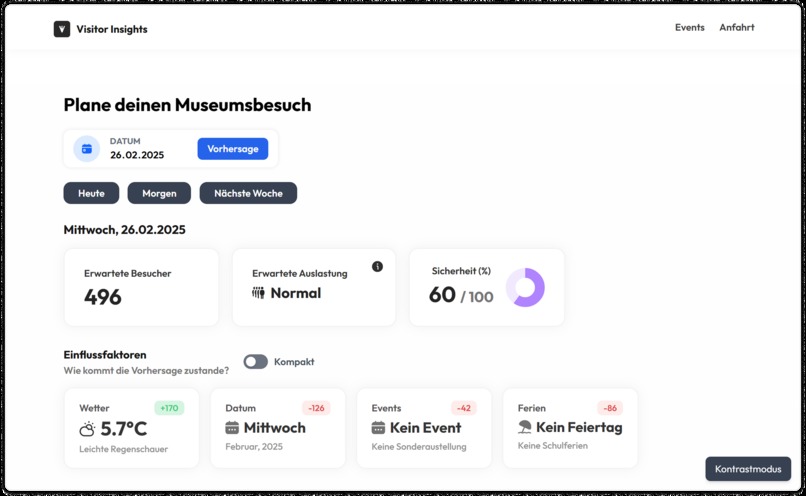
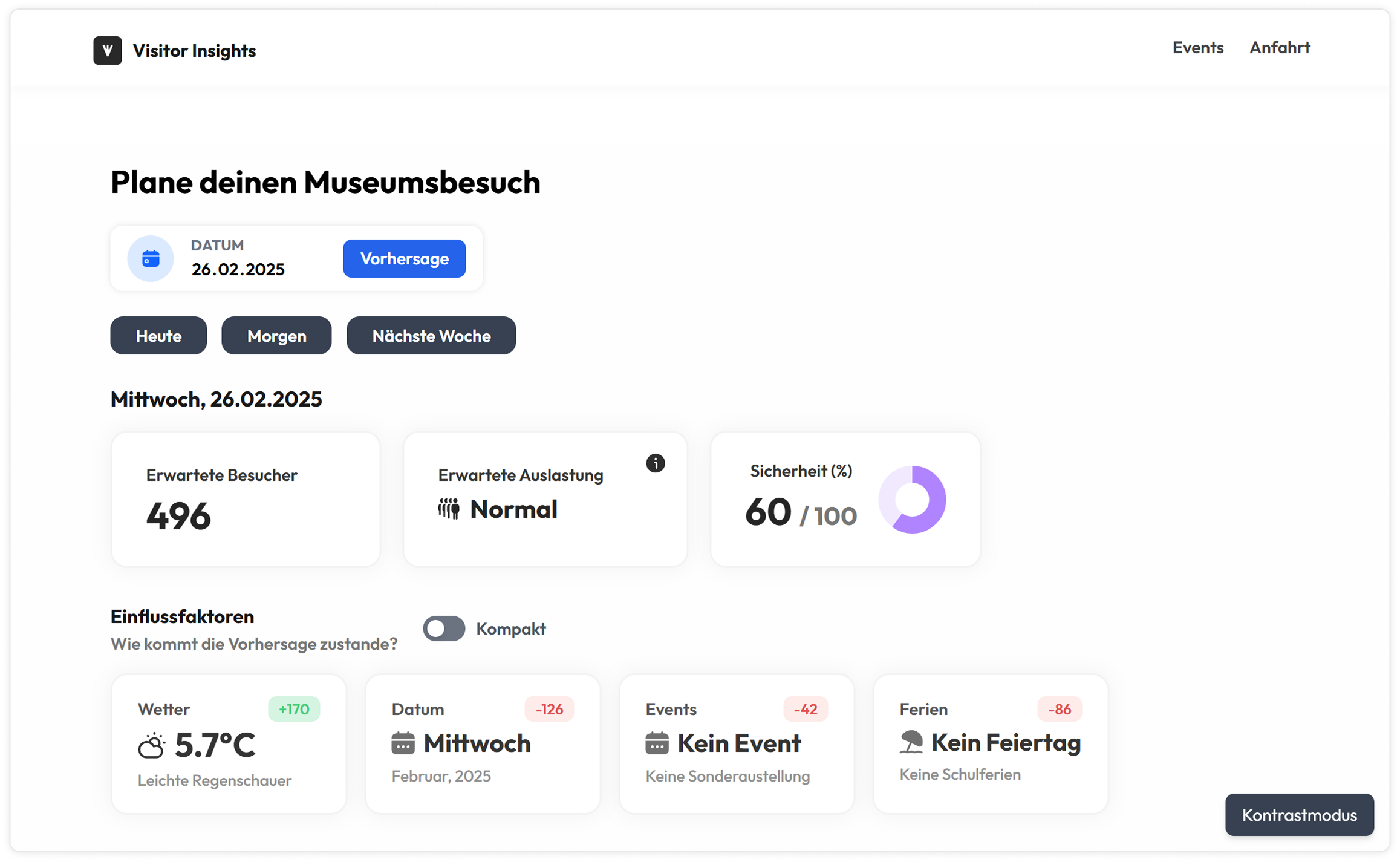
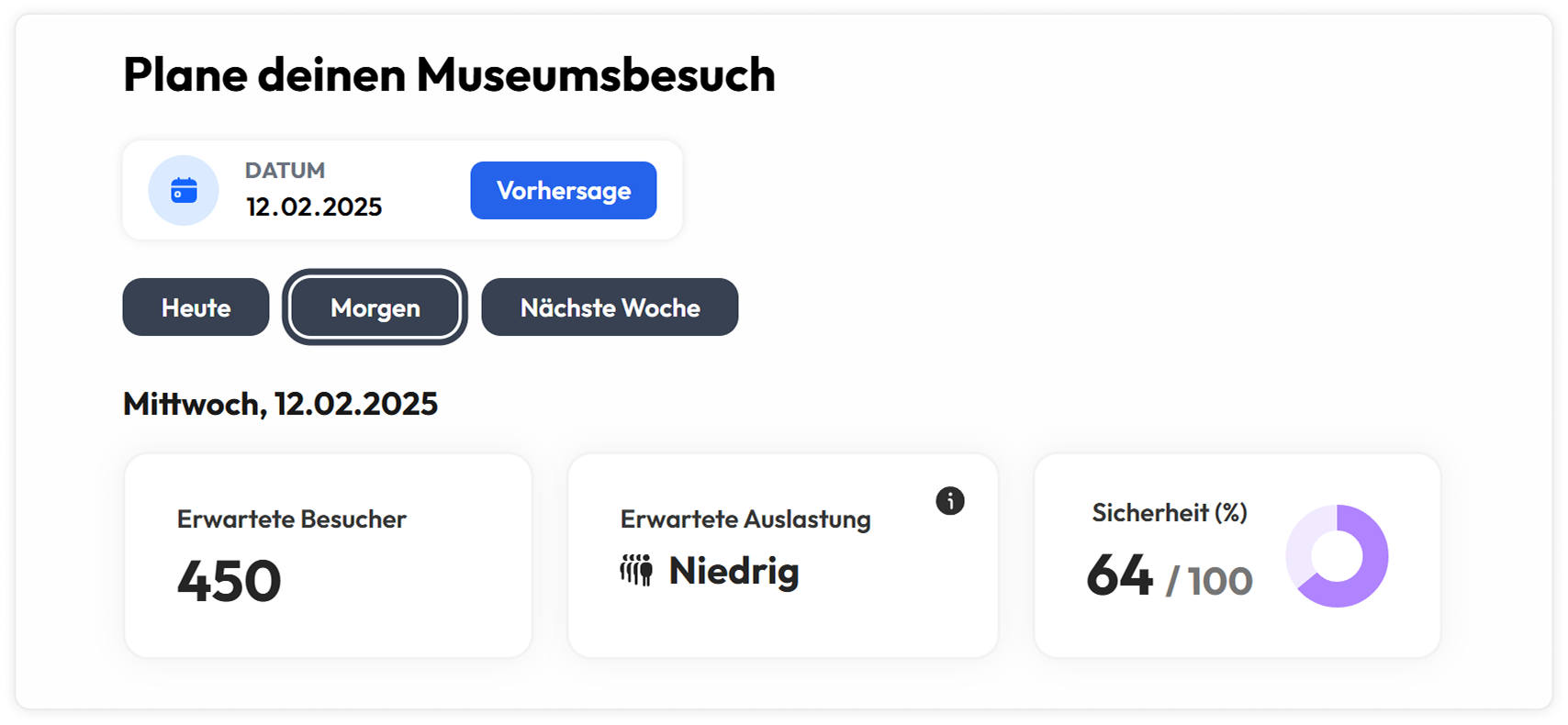
Home Page (Date Selection & Prediction Display)
-
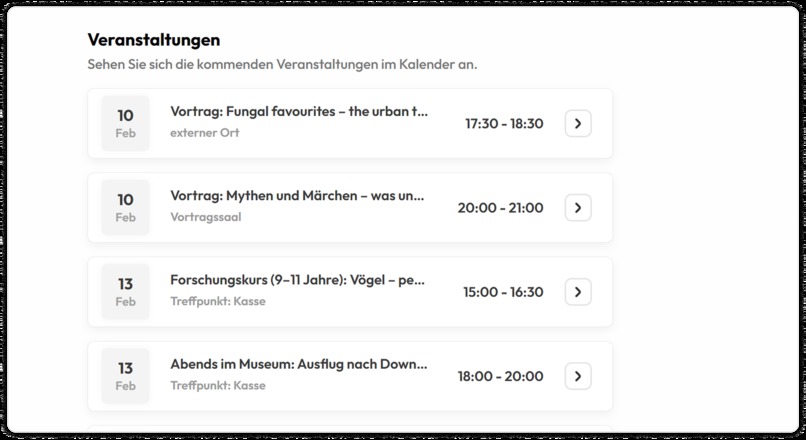
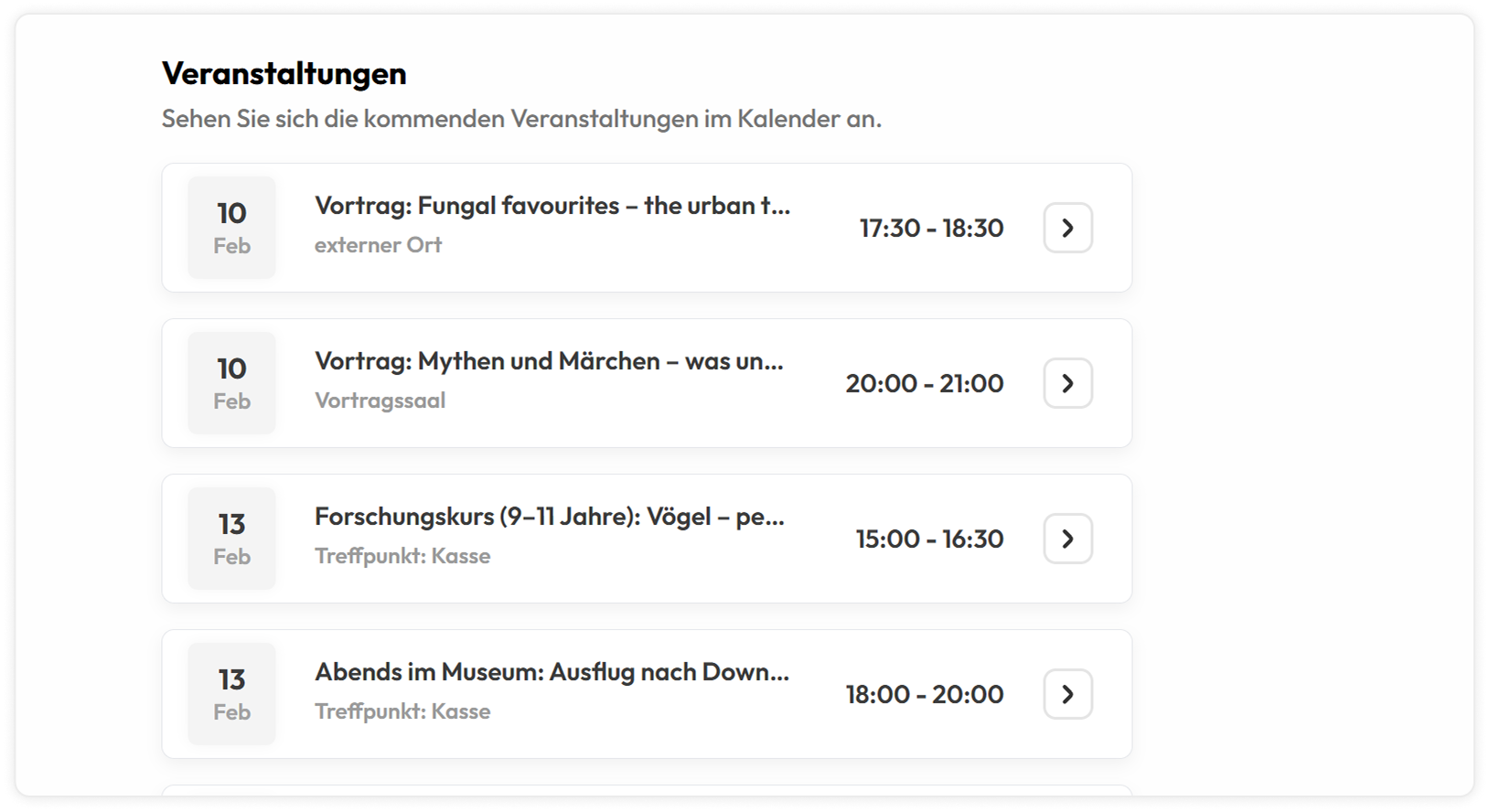
Museum Event Section
-
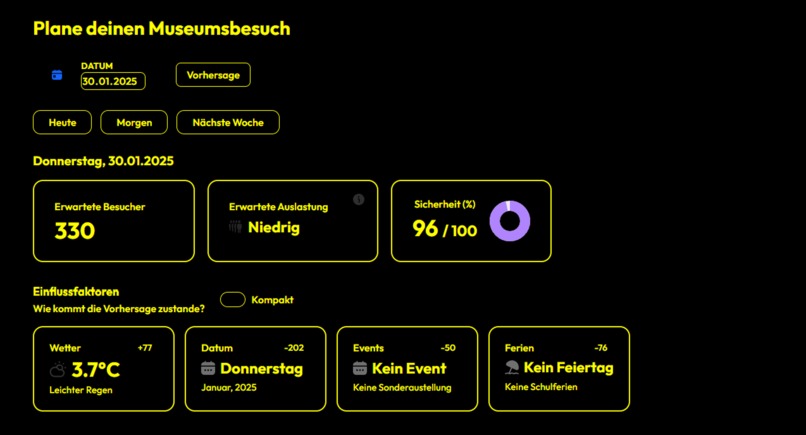
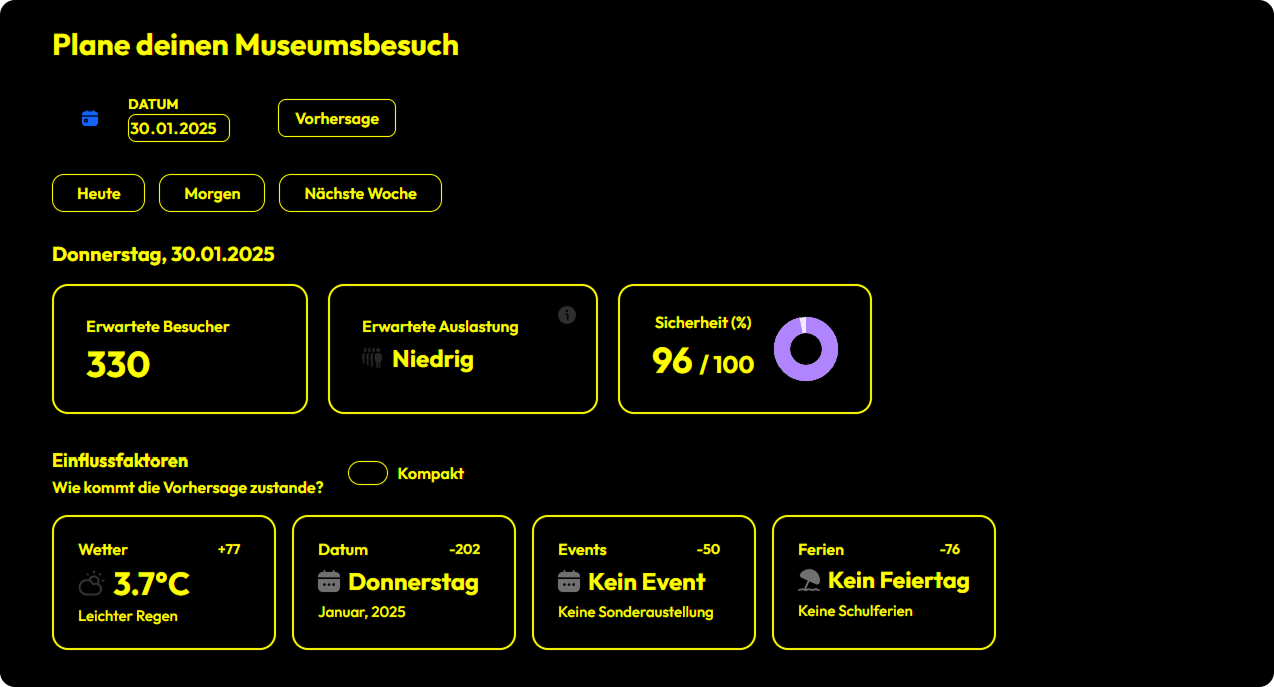
High Contrast Mode
-
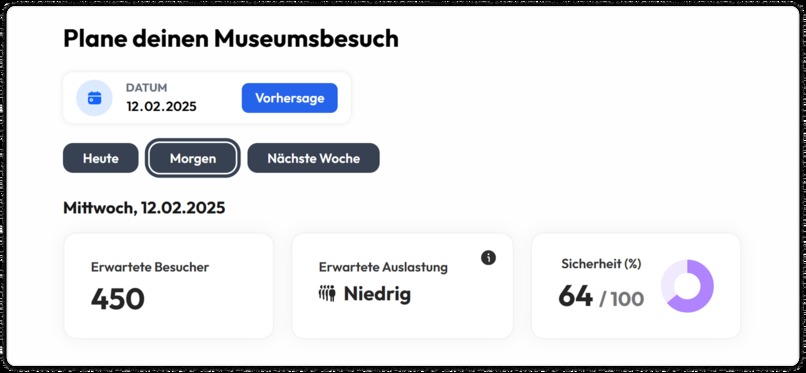
Keyboard Navigation Focus Borders (WCAG)
-
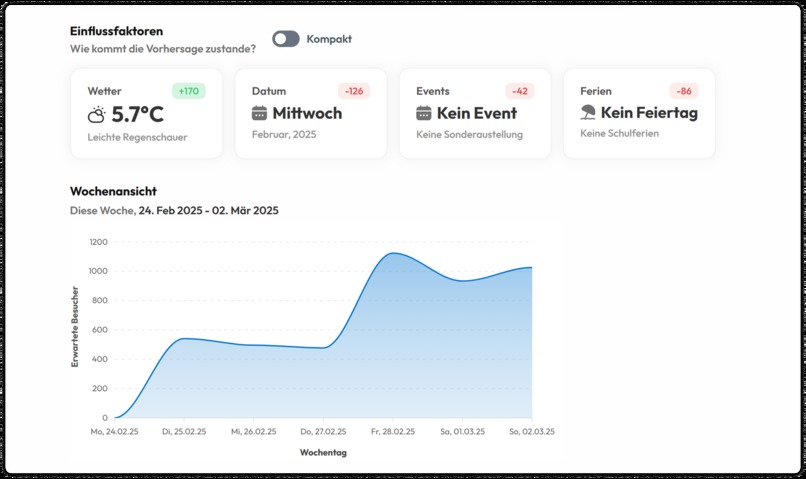
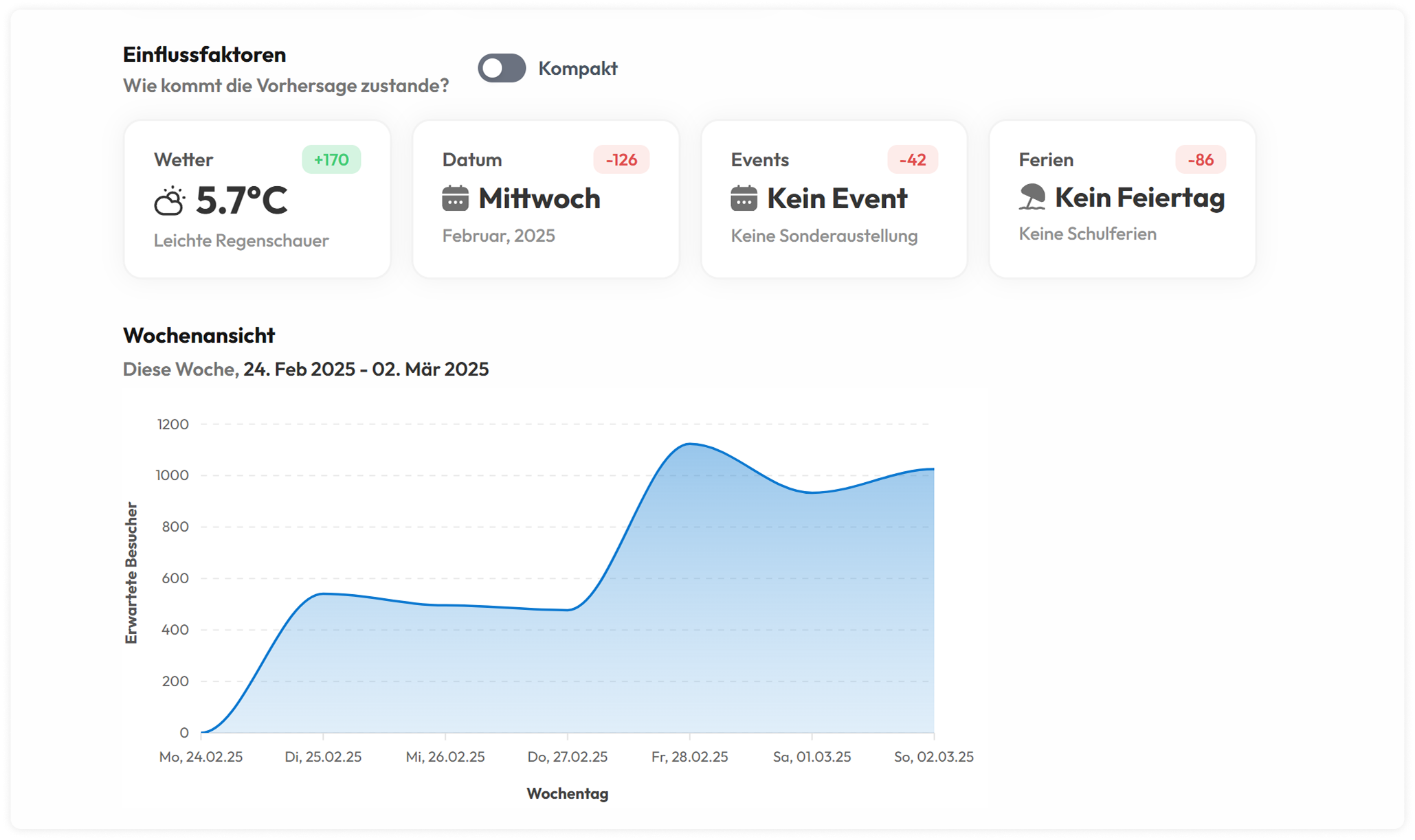
Future Visitor Load Development
Inspiration
Museums are unique places of learning and culture. At the same time, crowded rooms or unpredictable visitor flows often create barriers. For wheelchair users, exhibits may be blocked by large crowds. For neurodiverse visitors, noisy spaces can quickly become overwhelming. I was inspired to build a tool for the State Museum of Natural History Karlsruhe that makes visits more predictable and gives every person the chance to enjoy museums stress-free.
The Problem
Many museums collect visitor data, but this information is rarely made available in accessible formats. Visitors who need accurate planning support often cannot know in advance whether a museum will be crowded. The result is frustration, shortened visits, or people not visiting at all. This lack of transparency particularly affects people with disabilities, who rely on accurate forecasts to plan their visits safely and independently.
What it does
VisitorInsights predicts visitor density at the State Museum of Natural History Karlsruhe using machine learning on historical data combined with external factors such as weather, school holidays, and events.
- Regression models: XGBoost achieved an R² of 0.83 (MAE ≈ 147), outperforming Random Forest (R² = 0.76) and a linear baseline (R² = 0.46).
- Classification model: XGBoost reached 85% overall accuracy, with F1-scores of 0.92 (low load) and 0.89 (very high load).
Forecasts are visualized in a WCAG-compliant web app that includes:
- High-contrast mode for low-vision users
- Full screen reader compatibility through semantic HTML and ARIA labels
- Keyboard-only navigation for users with motor impairments
- Alternative text for all non-text elements
Predictions are made transparent by:
- Uncertainty indicators that show how confident the model is
- SHAP values to highlight key influence factors (events, holidays, rainfall)
- A clear breakdown of upcoming events directly from the museum’s website
This ensures that forecasts are not only accurate but also understandable and trustworthy.
How I built it
I analyzed real museum datasets, engineered features, and trained multiple machine learning models.
- XGBoost achieved the best regression and classification results.
- SHAP explainability was integrated to show which factors had the strongest influence.
The backend was built with Python Flask, exposing REST APIs for predictions. The frontend was developed in React, tested with screen readers, high-contrast checkers, and keyboard-only workflows to meet accessibility standards.
An event fetcher automatically integrates upcoming events from the museum’s website, standardizes them, and provides them to both the ML models and the user interface.
Challenges I ran into
- Preparing incomplete and inconsistent real-world data
- Handling unclear boundaries between medium and high visitor density classes
- Balancing prediction accuracy with explainability
- Designing accessible visualizations that remain simple and clear for all user groups
Accomplishments that I am proud of
- Developing a working end-to-end system from raw data to a deployed, accessible web app
- Training models with R² up to 0.83 and classification accuracy of 85%
- Implementing explainability with SHAP values and visual uncertainty displays
- Building accessibility features: WCAG compliance, screen reader support, high-contrast mode, keyboard navigation, and alt text
- Demonstrating how AI can reduce cultural barriers instead of only optimizing business metrics
What I learned
I learned how valuable it is to combine machine learning with human-centered design. Accessibility must be integrated from the very beginning, otherwise the result unintentionally excludes people. I also learned that explainability and uncertainty visualization are just as important as raw model performance when building trust.
Impact
VisitorInsights empowers visitors to plan cultural experiences with confidence. For the State Museum of Natural History Karlsruhe, it demonstrates inclusiveness by providing accessible forecasts with up to 85% predictive accuracy, while showing exactly which factors drive visitor peaks. The project proves how technology can make culture more open and equitable for all.
What's next for VisitorInsights
I want to extend the system to more museums and cultural institutions, integrate real-time updates from ticketing systems and sensors, and add personalization features for specific accessibility needs. A mobile-first design will allow spontaneous checks during the day. In the long run, I see potential to open source the project and build a community around inclusive AI for culture.
Code Repository (Zip File)
https://drive.google.com/file/d/1OndrnleiOnzzyqRZXbUm8gmOc_vNBA_W/view?usp=sharing
Built With
- flask
- html
- javascript
- python
- react
- rest
- scikit-learn
- shap
- tailwindcss
- typescript
- xgboost


Log in or sign up for Devpost to join the conversation.