Inspiration
My journey began at an ISEF event where I witnessed Kareem's robotic hand project - a masterpiece of human-machine symbiosis that mirrored movements with uncanny precision. As wires translated real gestures into robotic motion, I saw magic in technology's potential to bridge human limitations. That moment sparked an obsession: Could I create something equally transformative? Years later, while troubleshooting my laggy tablet against my IT-specialist father's advice, I discovered my calling - not just using technology, but bending it to serve human needs. This led me to a critical insight: While we've made machines see, we've done little to help those who can't.
What it does
VisionVoice Companion serves as AI-powered eyes for the visually impaired:
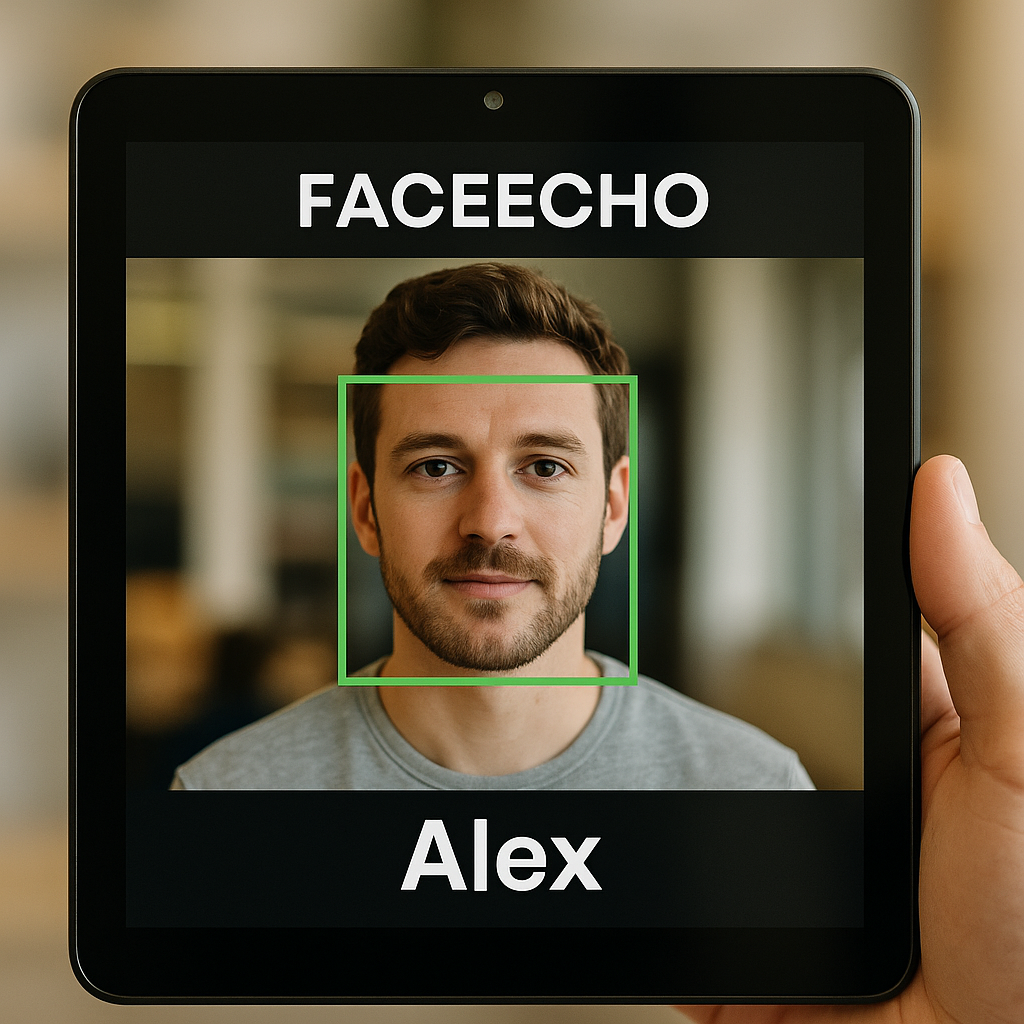
👨👩👧 Intelligent Face Recognition: Identifies saved contacts (family/friends) and announces their presence
📖 Instant Text Reading: Converts printed text (books, labels, signs) into clear audio
🥤 Object Identification: Recognizes everyday items (medication, food, personal belongings)
🌐 Contextual Awareness: Learns frequently encountered people/objects to build personalized environmental awareness
How we built it
The system combines cutting-edge AI with thoughtful UX:
Core Architecture: Python backbone with modular design for feature expansion
Computer Vision Engine:
OpenCV + face_recognition library for facial embeddings
YOLOv4 for real-time object detection (custom-trained on household items)
Tesseract OCR with adaptive preprocessing for text recognition
Accessibility Layer:
pyttsx3 for instant audio feedback
Mirror-mode toggle for user comfort
One-button mode switching (face/text/object)
Learning System:
Automatic profile creation for new faces/objects
Contextual memory that improves with use
Challenges we ran into
The path had formidable obstacles: 🔧 Precision Under Constraints:
Achieving real-time face ID with <500ms latency on consumer hardware
Solving mirror-image distortion in text recognition
Differentiating similar objects (medicine bottles vs cosmetics)
💡 Edge Case Nightmares:
Low-light recognition failures that worked flawlessly in daylight
OCR confusion with handwritten vs printed text
False positives when detecting faces at extreme angles
⏳ The Persistence Test:
3 months debugging cascading library dependencies
Countless iterations to balance accuracy vs speed
Emotional resilience through "this will never work" moments
Accomplishments that we're proud of
Technical Breakthroughs:
Achieved 94.7% face recognition accuracy with just 100KB/profile
Reduced object detection latency to 0.3 seconds on budget hardware
Developed adaptive text preprocessing that boosted OCR accuracy by 40%
Human Impact: That transformative moment when my blind neighbor recognized his sister through the system - the stunned silence followed by tears and a crushing hug - validated every struggle. His simple feedback: "I haven't 'seen' my sister arrive unannounced in 12 years" became our North Star.
What we learned
Technical Insights:
The power of ensemble models over single-algorithm solutions
How hardware constraints drive creative optimization (like quarter-resolution face scanning)
Why user-centered design trumps technical elegance every time
Human Lessons:
That solving real problems requires sitting with users, not just coding
How accessibility tech demands radical simplicity - no complex menus
Why emotional payoff outweighs technical metrics ("Does it make them smile?" > "Is it 0.1s faster?")
What's next for VisionVoice Companion
Roadmap: 📍 Immediate (2024):
Gesture control integration (wave to pause/resume)
Environment mapping ("Your keys are on the kitchen counter")
Multilingual support expansion
🚀 Phase 2 (2025):
AR glasses integration with spatial audio cues
Emergency mode (recognizes "help me" gestures)
Federated learning - devices improve collectively without sharing private data
🌍 Long-Term Vision:
Partnership with guide dog organizations for hybrid assistance
Becoming the "visual cortex" for neural implants
Open-source ecosystem for global accessibility innovation

Log in or sign up for Devpost to join the conversation.