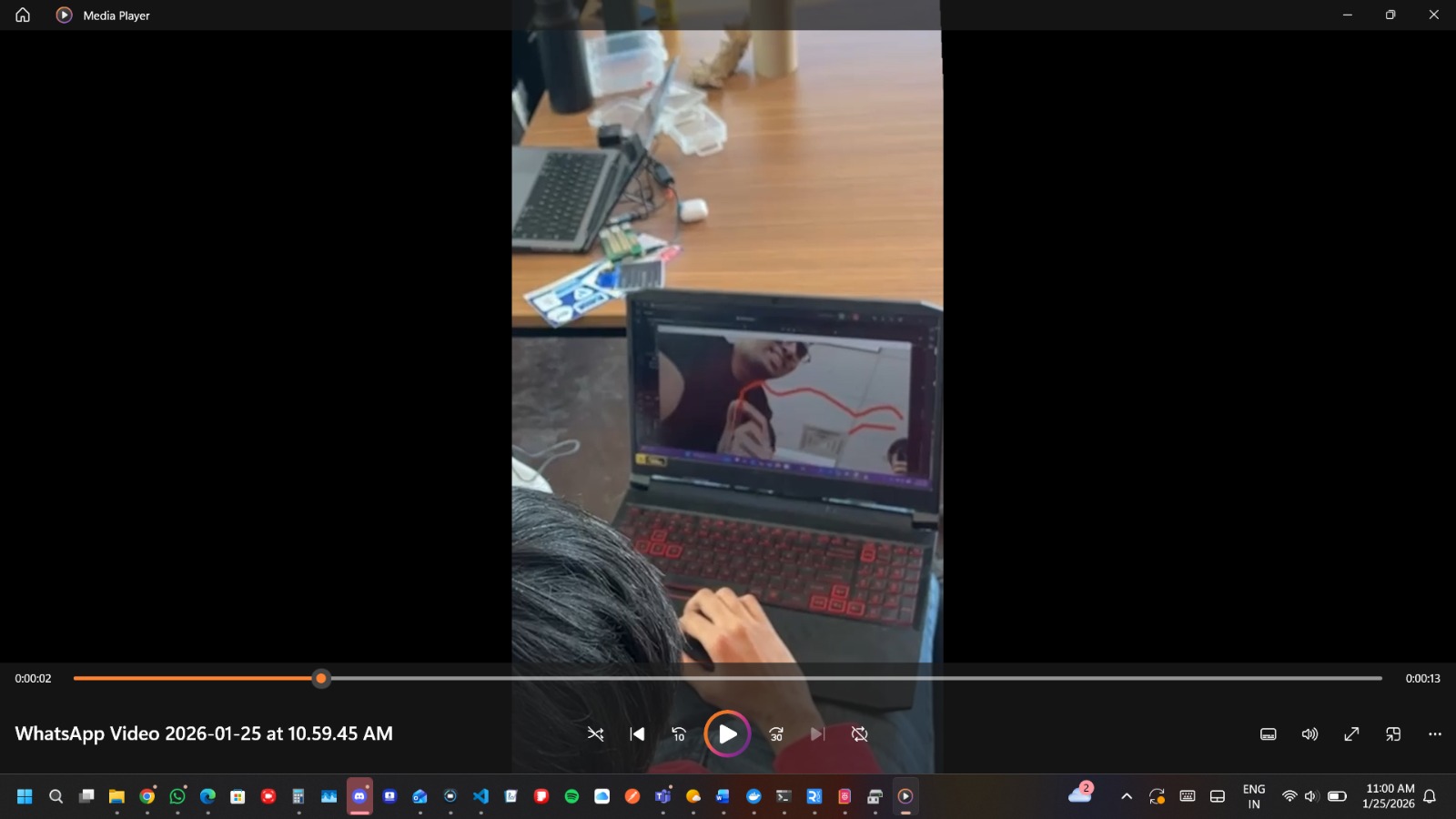
Our project, Air Motion Canvas, was born from a desire to redefine Human-Computer Interaction (HCI). We identified a significant gap in digital creativity: the reliance on physical hardware like mice and tablets, which limits accessibility and intuitive expression. Our goal was to build a touchless, gesture-based drawing system that felt natural and responsive.
The core challenge was optimizing heavy computer vision tasks for low-power hardware. We developed a modular pipeline that performs real-time Edge AI on a 15W Raspberry Pi. To achieve this, we utilized MediaPipe for 3D hand landmark tracking and OpenCV for persistent canvas rendering. We engineered a specific state machine to make interaction seamless: extending the index finger triggers "Drawing Mode," while a closed fist switches the system to "Hover Mode" for navigation.
By integrating a Flask-based backend with Server-Sent Events (SSE), we ensured zero-latency synchronization between the hardware and our real-time dashboard. Air Motion Canvas isn't just a tool; it's a demonstration of how high-performance, accessible software can turn the air into a digital workspace

Log in or sign up for Devpost to join the conversation.