-
-
Visionops Ai
Inspiration
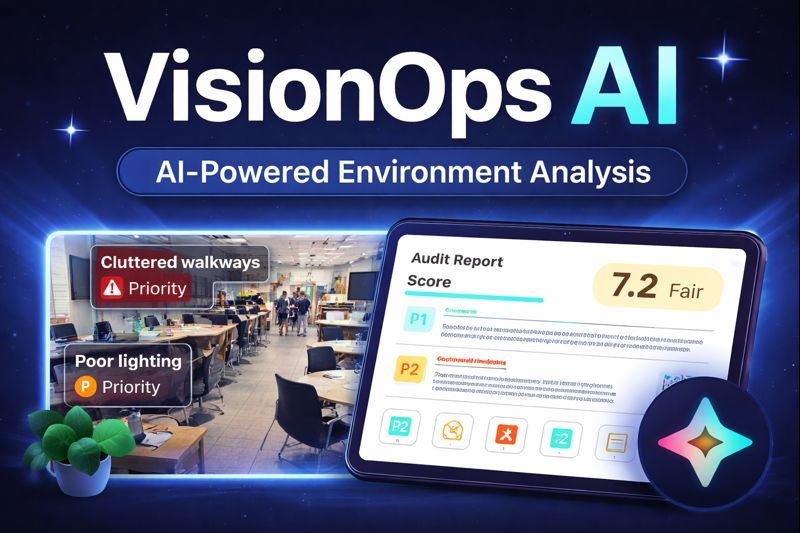
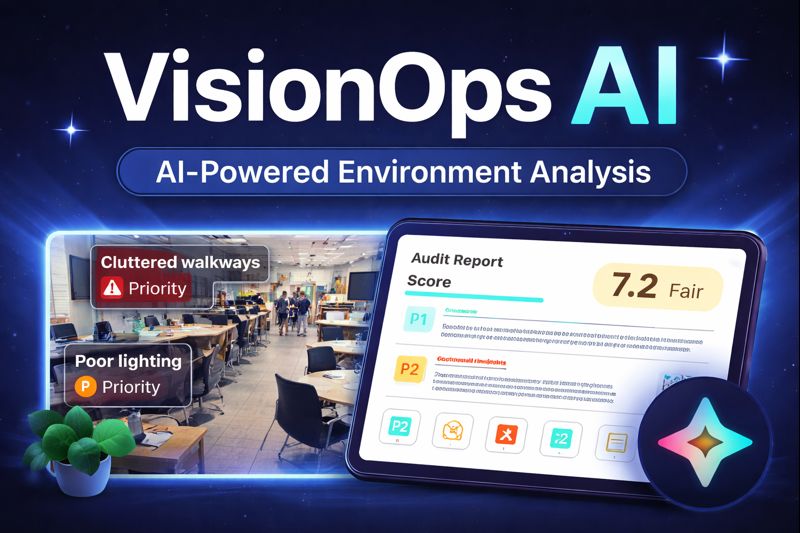
In many real-world settings—classrooms, offices, streets, or shared spaces—images and cameras are everywhere, yet they rarely translate into actionable understanding. Most AI tools stop at object detection or basic image descriptions. I wanted to explore a different question: What if an AI could actually reason about an environment and suggest meaningful improvements? This idea inspired VisionOps AI—an application that turns a single image into an intelligent audit report rather than a static description.
What I Built
VisionOps AI is a multimodal application that allows users to upload an image of a real-world environment. Using Gemini 3’s multimodal reasoning capabilities, the system analyzes the scene and generates a structured audit report that includes:
Scene understanding
Identified issues across safety, productivity, accessibility, and hygiene
Risk scores and priority levels
Evidence-based explanations linked directly to visual cues
Actionable improvement recommendations and a prioritized action plan
The output is intentionally structured, making it useful not just for reading, but for decision-making.
How I Built It
The project was built using Google AI Studio Apps with the Gemini 3 Flash Preview model. I designed strict system instructions to ensure the model produced structured, evidence-first outputs instead of free-form text. By enforcing clear rules—such as requiring visual evidence for every finding—the application consistently generates reliable, audit-style insights from images. AI Studio allowed rapid prototyping without complex infrastructure, making it ideal for experimentation and iteration.
What I Learned
This project taught me how powerful multimodal reasoning can be when paired with structured outputs. I learned how prompt design directly impacts reliability, how to guide models toward actionable insights, and how to design AI systems that feel more like decision-support tools than chatbots.
#Challenges Faced
The biggest challenges involved managing API quotas and ensuring consistent, structured responses. I addressed these by optimizing prompts, using Gemini 3 Flash Preview for stability, and leveraging AI Studio Apps to avoid deployment and billing limitations. Designing prompts that balance flexibility with strict structure was also a key learning experience.
Impact & Future Scope
VisionOps AI demonstrates how Gemini 3 can reason about real-world environments, not just describe them. With further development, this approach could be applied to smart cities, workplace safety audits, educational spaces, and infrastructure assessments—helping people make better decisions from visual data.


Log in or sign up for Devpost to join the conversation.