Inspiration
Industrial visual inspection often requires people to review images and video footage carefully to identify unusual patterns, image-quality issues, and regions that deserve further investigation. Manual inspection can be time-consuming, and visual findings are not always easy to explain or reproduce.
We built VisionGuard AI to explore how computer vision and explainable, evidence-driven analysis can make visual inspection more systematic, transparent, and accessible.
What it does
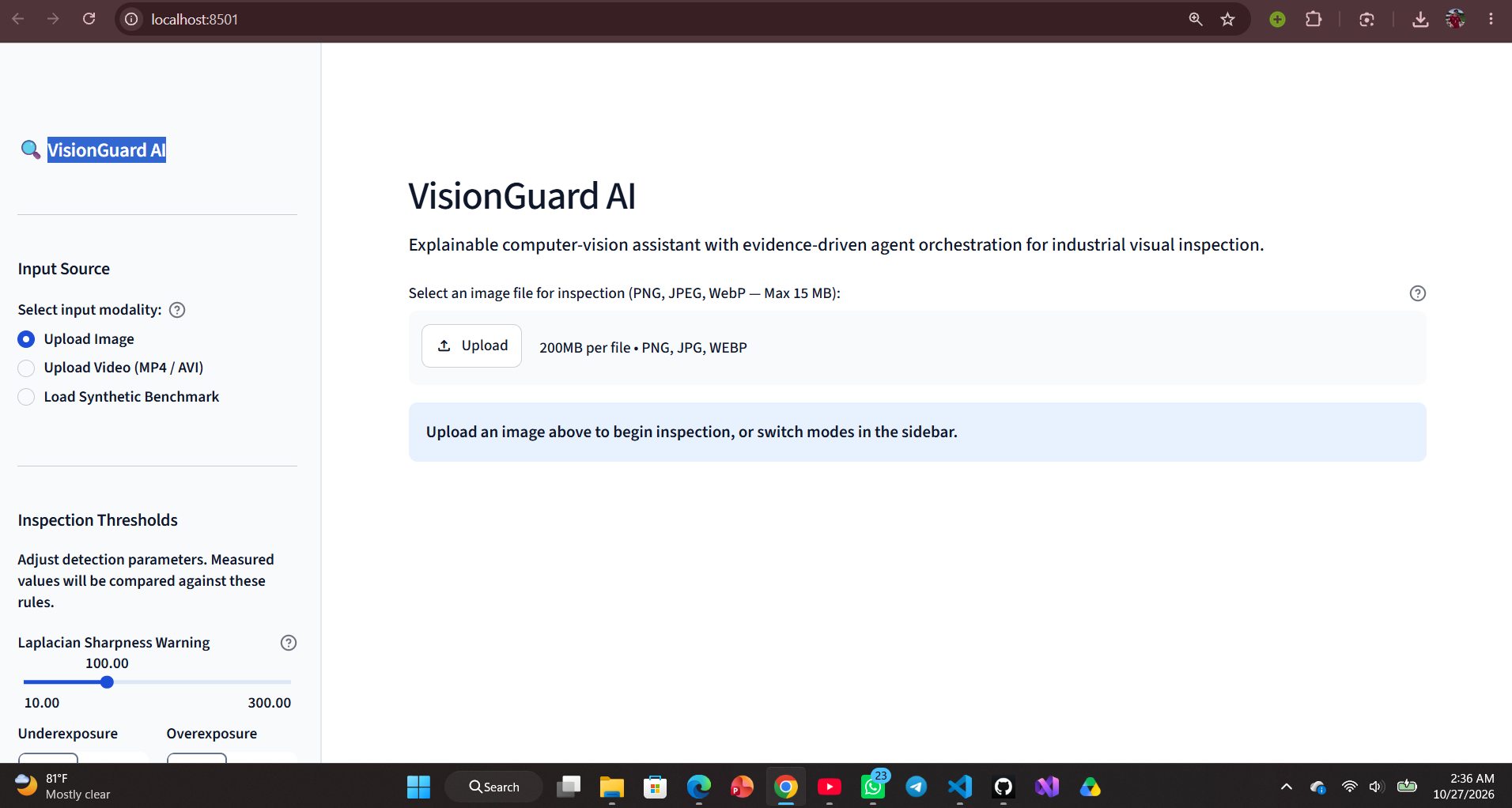
VisionGuard AI is an explainable computer-vision assistant for industrial visual inspection. It analyzes images and video frames using OpenCV-based image-quality measurements, visual-change detection, and candidate-region extraction.
Key capabilities include:
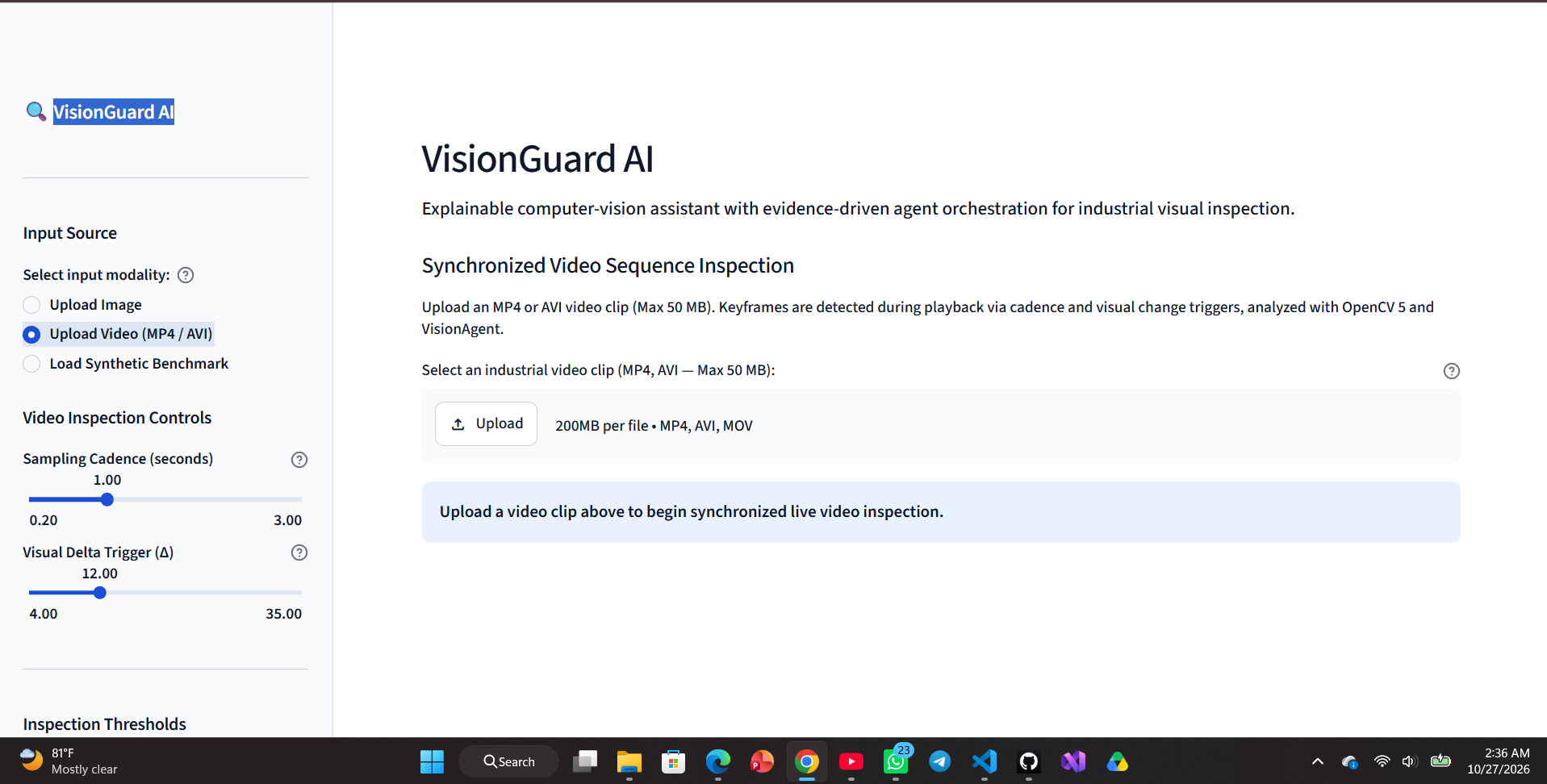
- Video inspection: Upload MP4 or AVI clips for frame-based inspection.
- Keyframe detection: Identify frames using sampling cadence and significant visual changes.
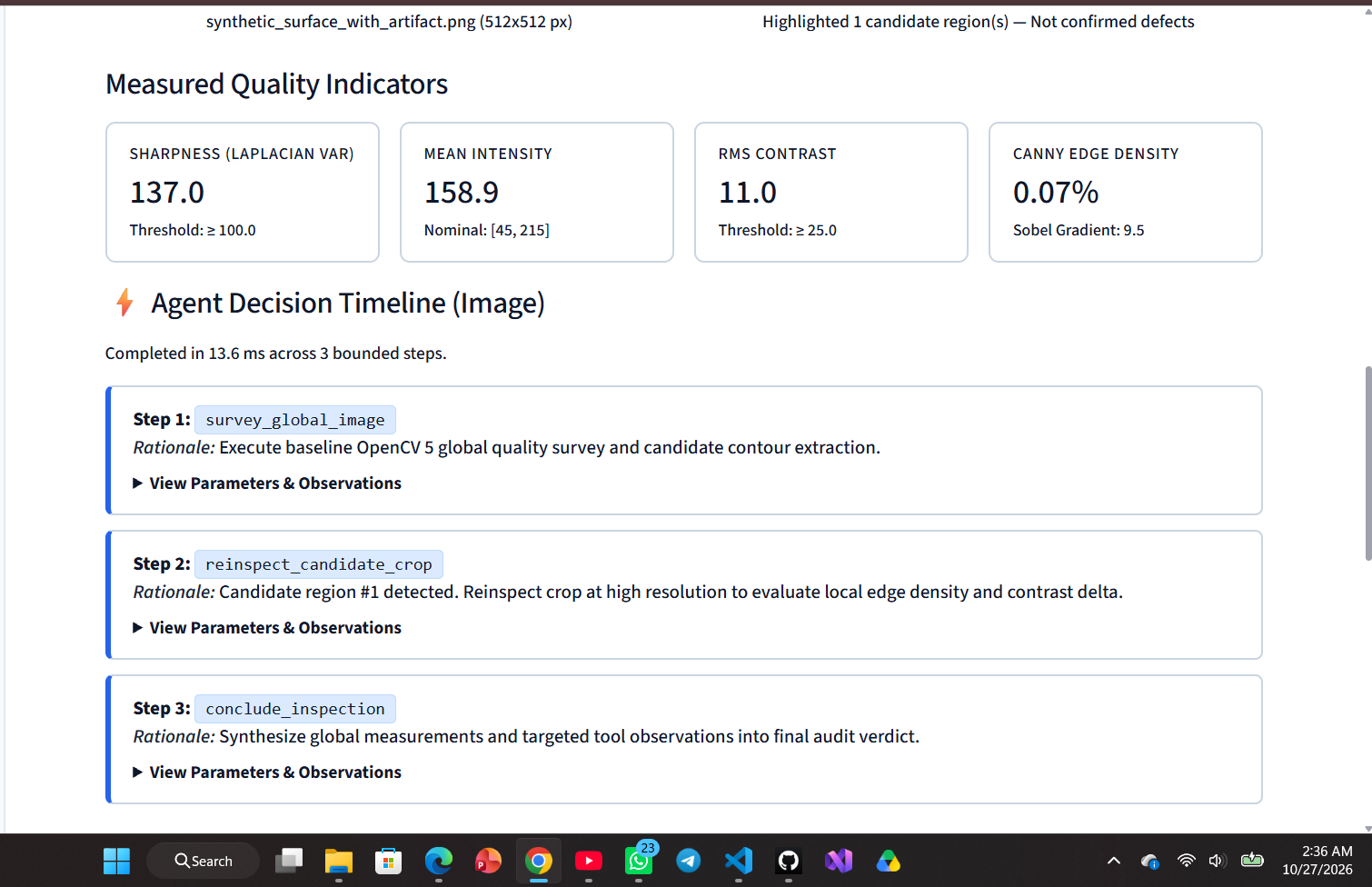
- Visual diagnostics: Measure sharpness, brightness, contrast, and edge density.
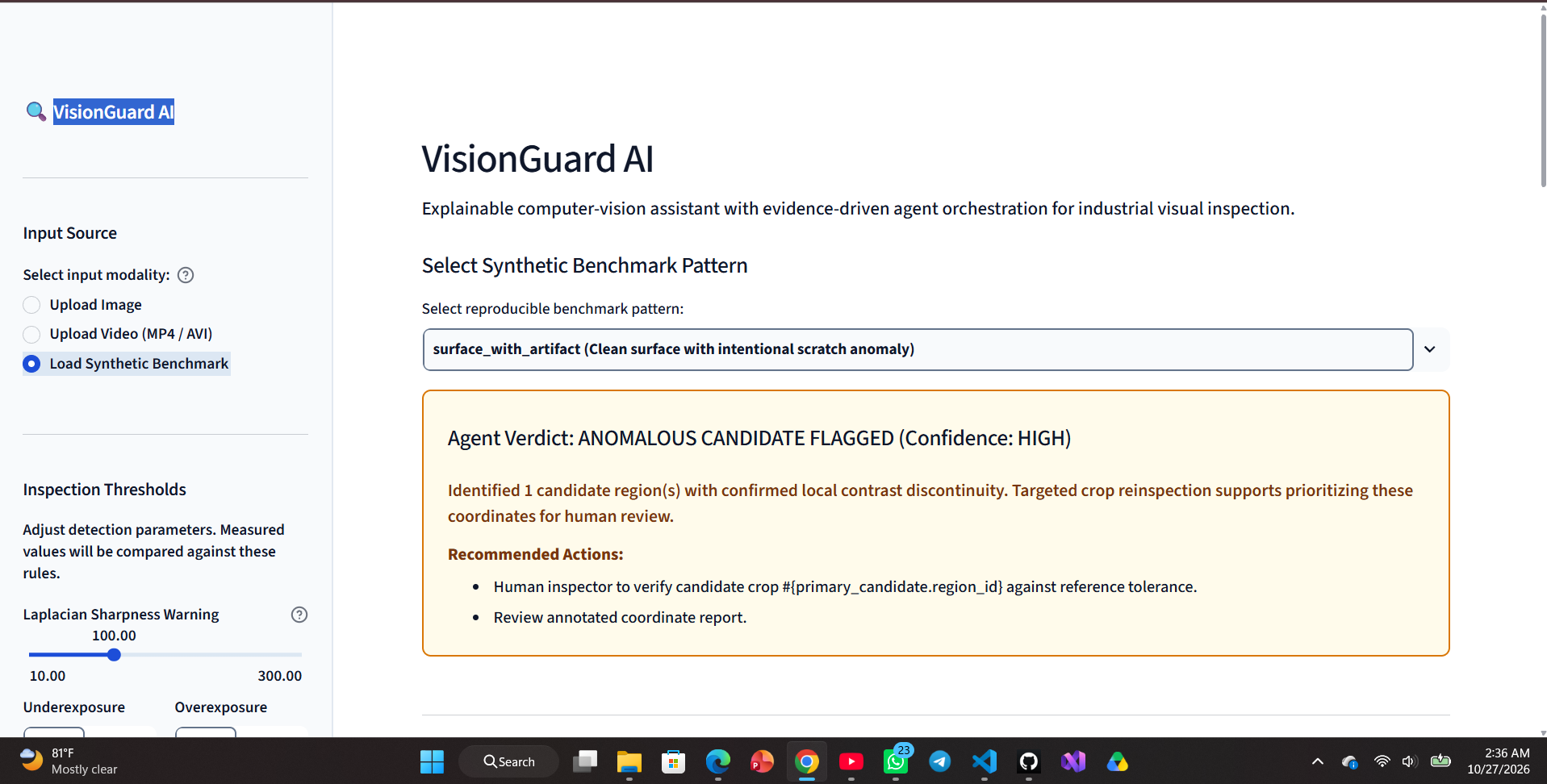
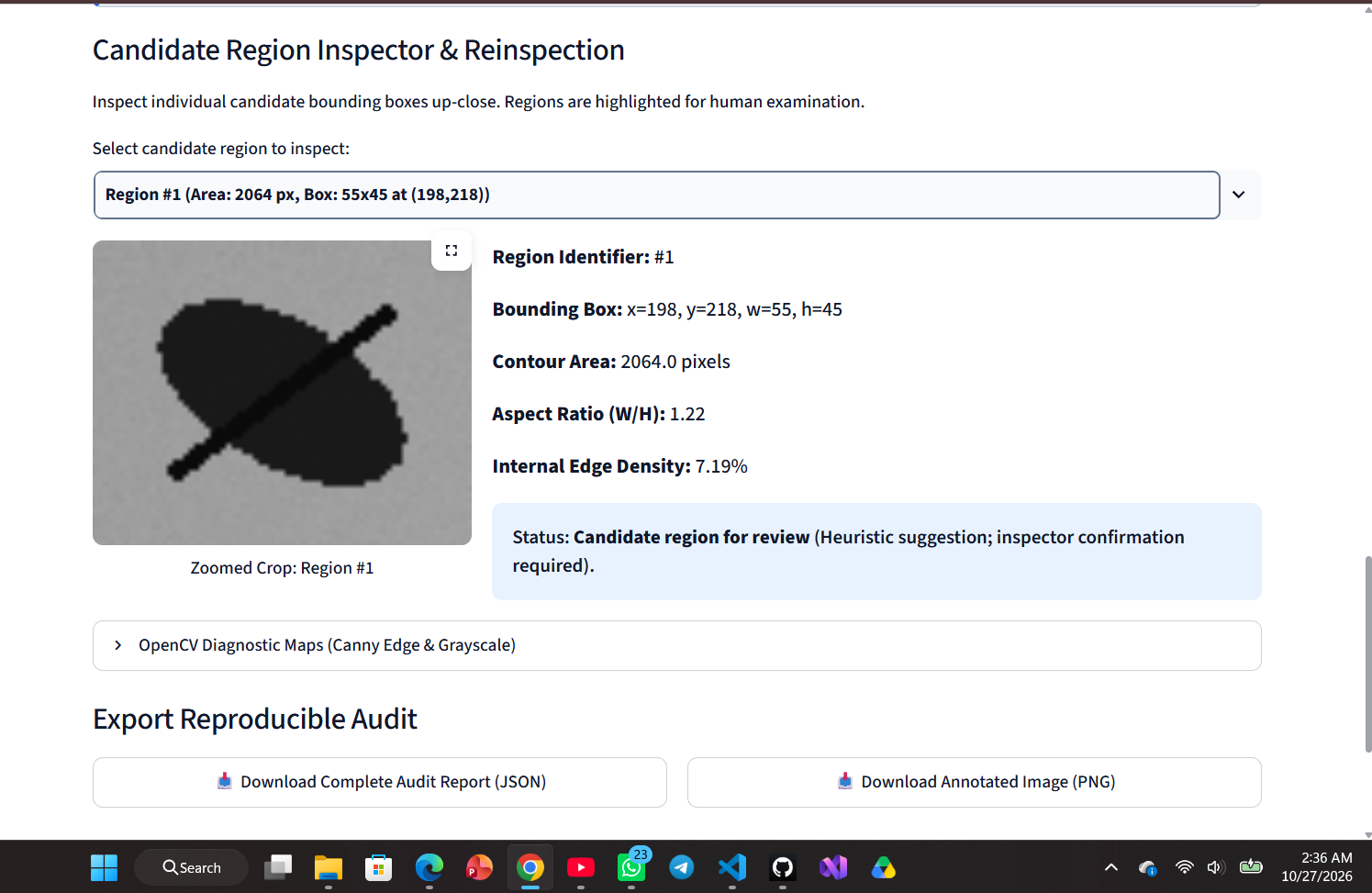
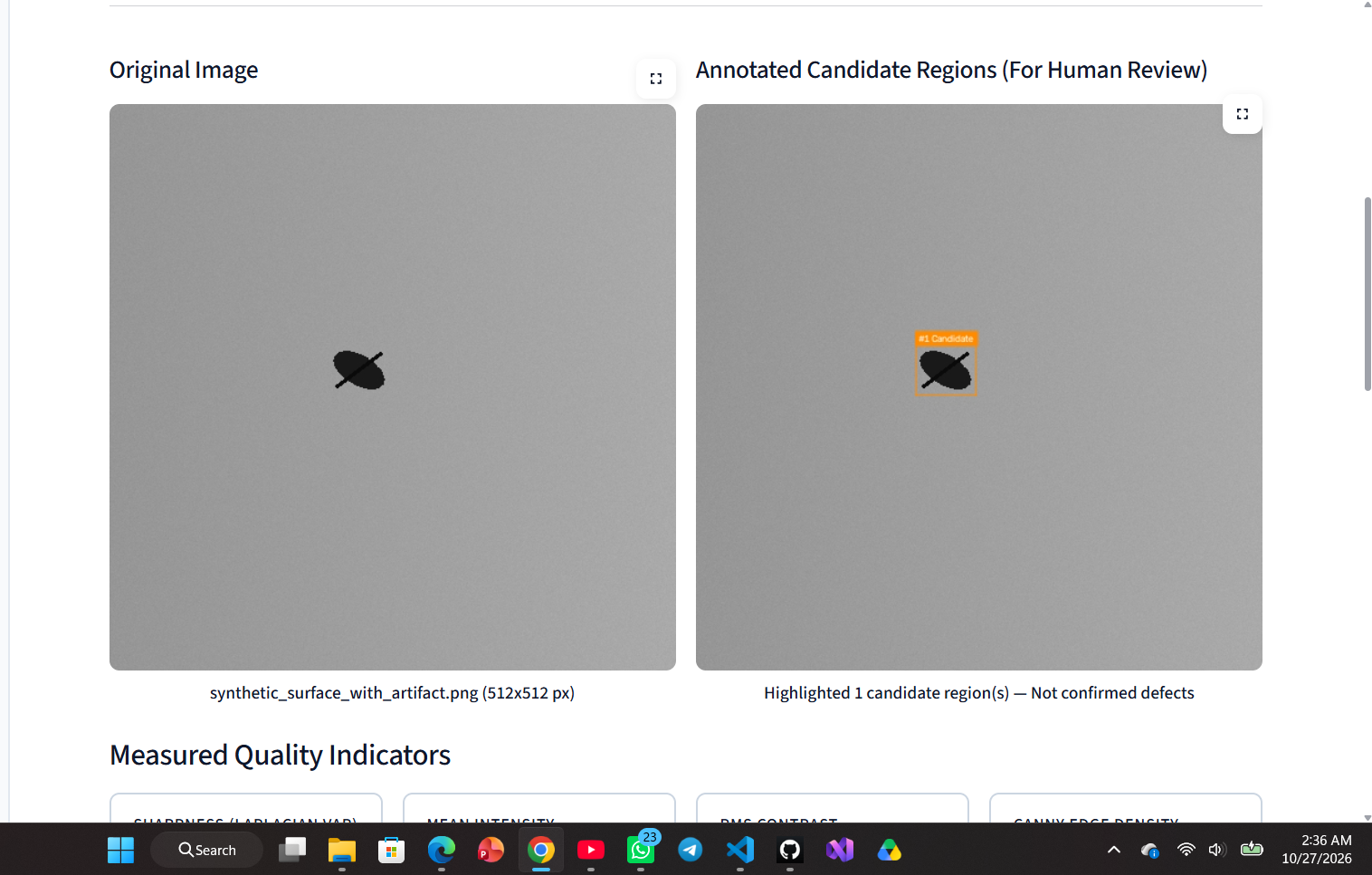
- Candidate-region analysis: Highlight regions that may deserve closer human inspection.
- Explainable analysis: Present measurements, candidate coordinates, supporting visual evidence, and inspection steps.
- Inspection reporting: Consolidate collected findings into a structured report.
VisionGuard AI is designed to assist human reviewers, not replace them. Highlighted regions are heuristic candidates and should not be treated as confirmed defects without further verification.
How we built it
We built VisionGuard AI in Python, using Streamlit for the application interface and OpenCV for computer-vision processing. The inspection workflow combines image-quality metrics, frame sampling, visual-change triggers, contour-based candidate extraction, and targeted regional reinspection.
The application presents original frames alongside annotated evidence, diagnostic measurements, candidate bounding boxes, and an inspection timeline. For video inspection, the goal is to connect findings with their corresponding timestamps so users can review the relevant moments.
We organized the implementation into separate modules for video processing, analysis, validation, and agent orchestration, making the system easier to test and extend.
Challenges we ran into
One of our biggest challenges was coordinating video playback with frame analysis while keeping the interface responsive. We also had to handle video encoding and browser compatibility for annotated output.
Another challenge was making the inspection report robust across different processing outcomes. Missing fields, incomplete analysis, and inconsistent report data can cause failures even when the visual inspection itself has completed.
Finally, we needed to distinguish unusual visual patterns from confirmed defects. Image-quality metrics and contour-based methods can identify areas of interest, but they do not independently establish the cause of an anomaly.
Accomplishments that we're proud of
- Built an integrated application for image and video inspection.
- Combined multiple OpenCV-based measurements in one workflow.
- Developed timestamped keyframe review and annotated candidate-region visualization.
- Made inspection evidence and intermediate analysis steps visible to users.
- Structured the codebase into modular components with testing support.
- Focused on explainability and human review rather than presenting every detected candidate as a confirmed defect.
What we learned
We learned that building a useful computer-vision application involves much more than detecting visual patterns. Reliable video handling, responsive interfaces, consistent data schemas, meaningful error handling, and reproducible testing are equally important.
We also learned that explainability requires showing the evidence behind a finding—including the measurements, coordinates, and limitations—not merely displaying a final score or label.
What's next for VisionGuard AI
Our next steps are to improve detection robustness across different industrial environments, evaluate performance on representative real-world datasets, and develop stronger anomaly-detection methods beyond heuristic image analysis.
We also plan to improve real-time processing efficiency, strengthen report validation, expand automated testing, and evaluate the system using clearly defined metrics such as precision, recall, latency, and frame-processing coverage.
Our long-term goal is to make VisionGuard AI a reliable, transparent assistant that helps human inspectors investigate visual anomalies more efficiently.
About the project
VisionGuard AI is an explainable computer-vision assistant for evidence-driven industrial visual inspection. It combines video keyframe analysis, image-quality diagnostics, candidate-region visualization, and structured reporting in one application.
The project explores how computer vision can support human decision-making through transparent evidence and reproducible analysis.


Log in or sign up for Devpost to join the conversation.