-
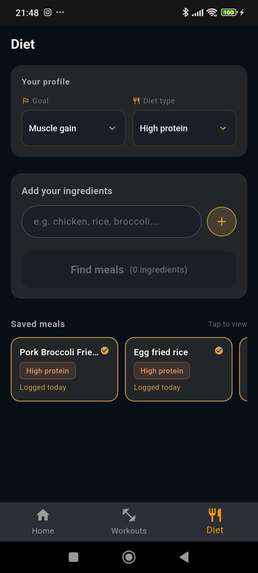
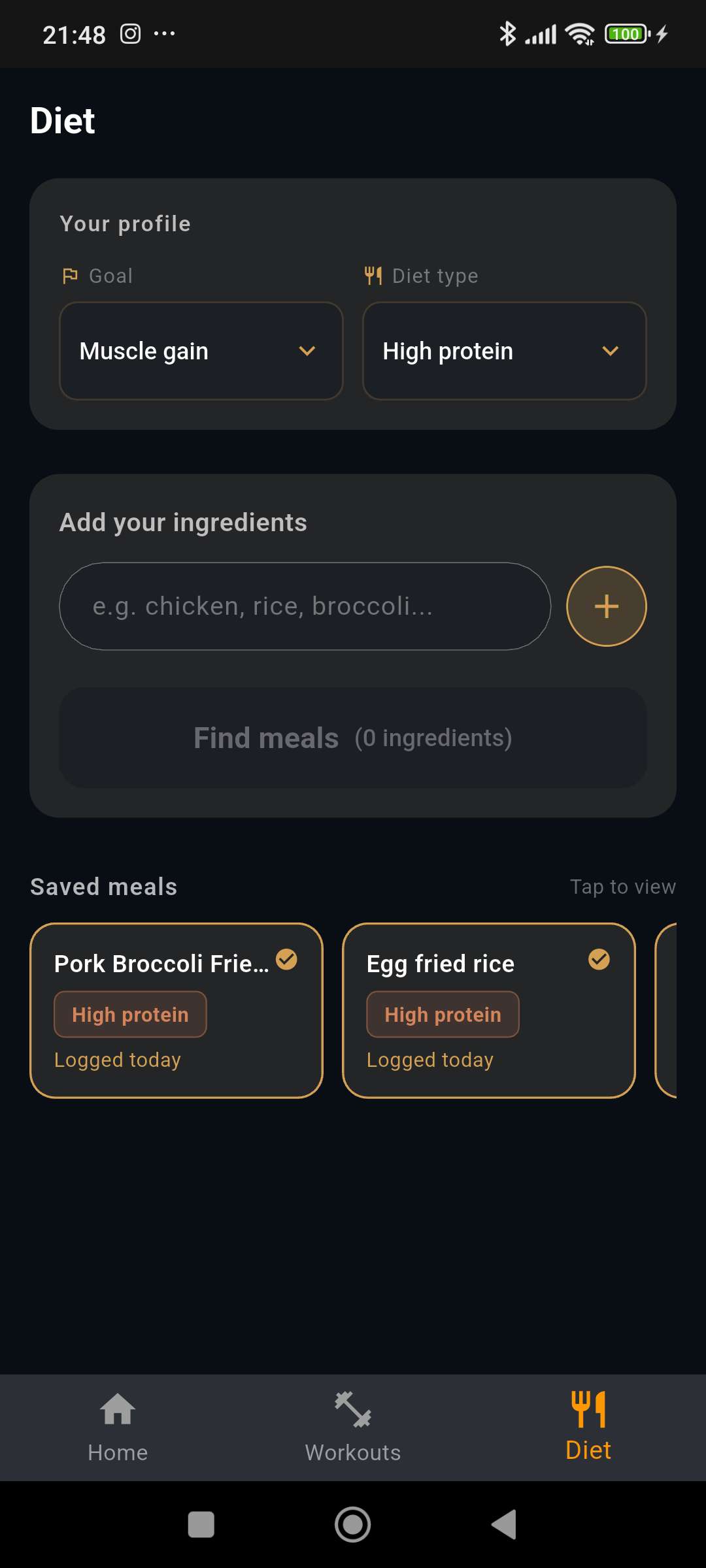
Diet
-
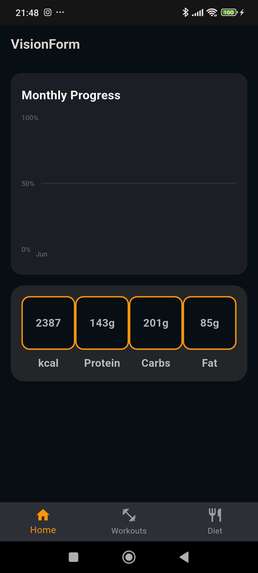
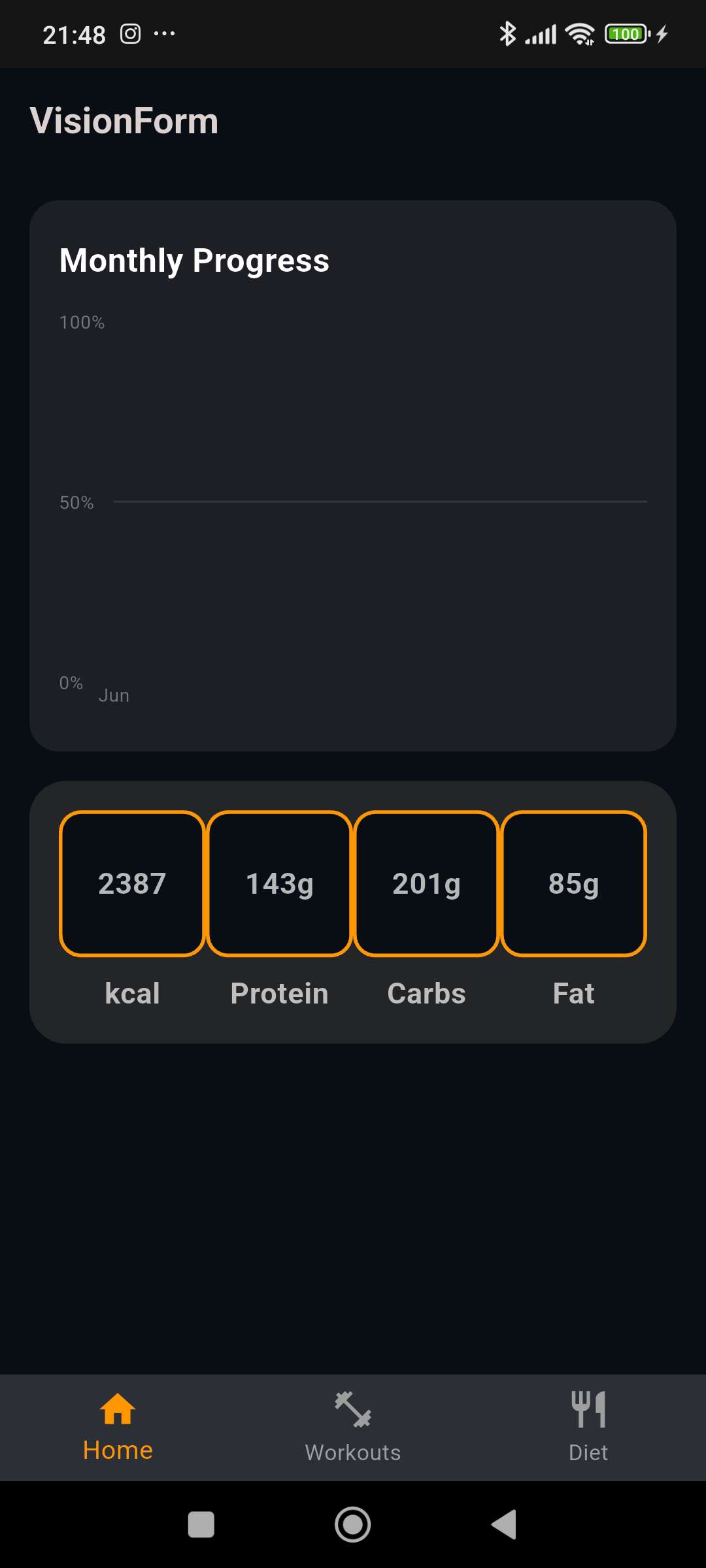
Home
-
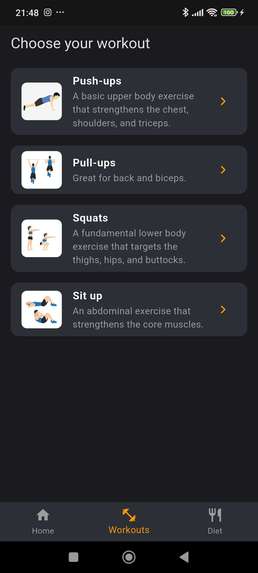
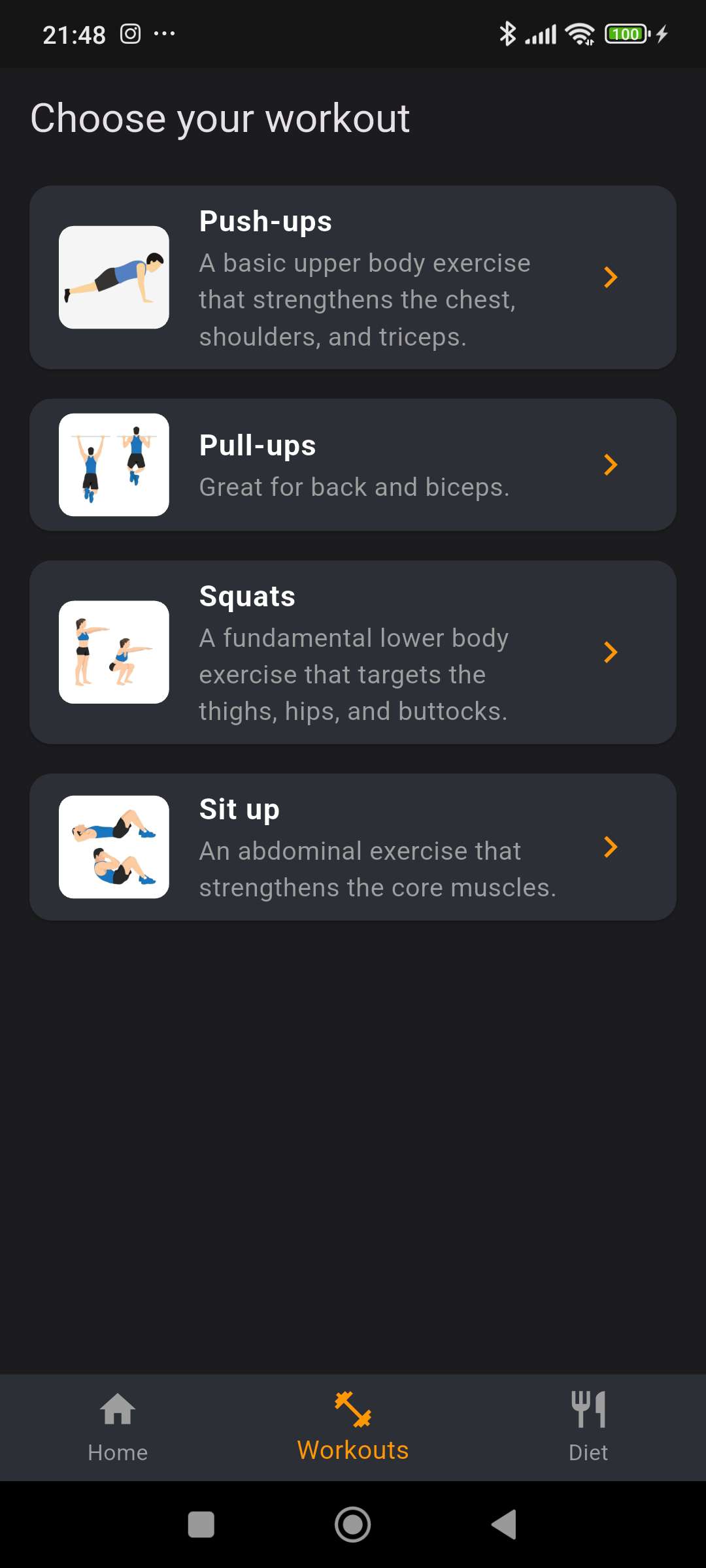
Workout
-
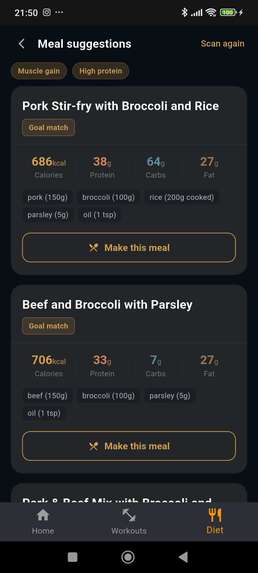
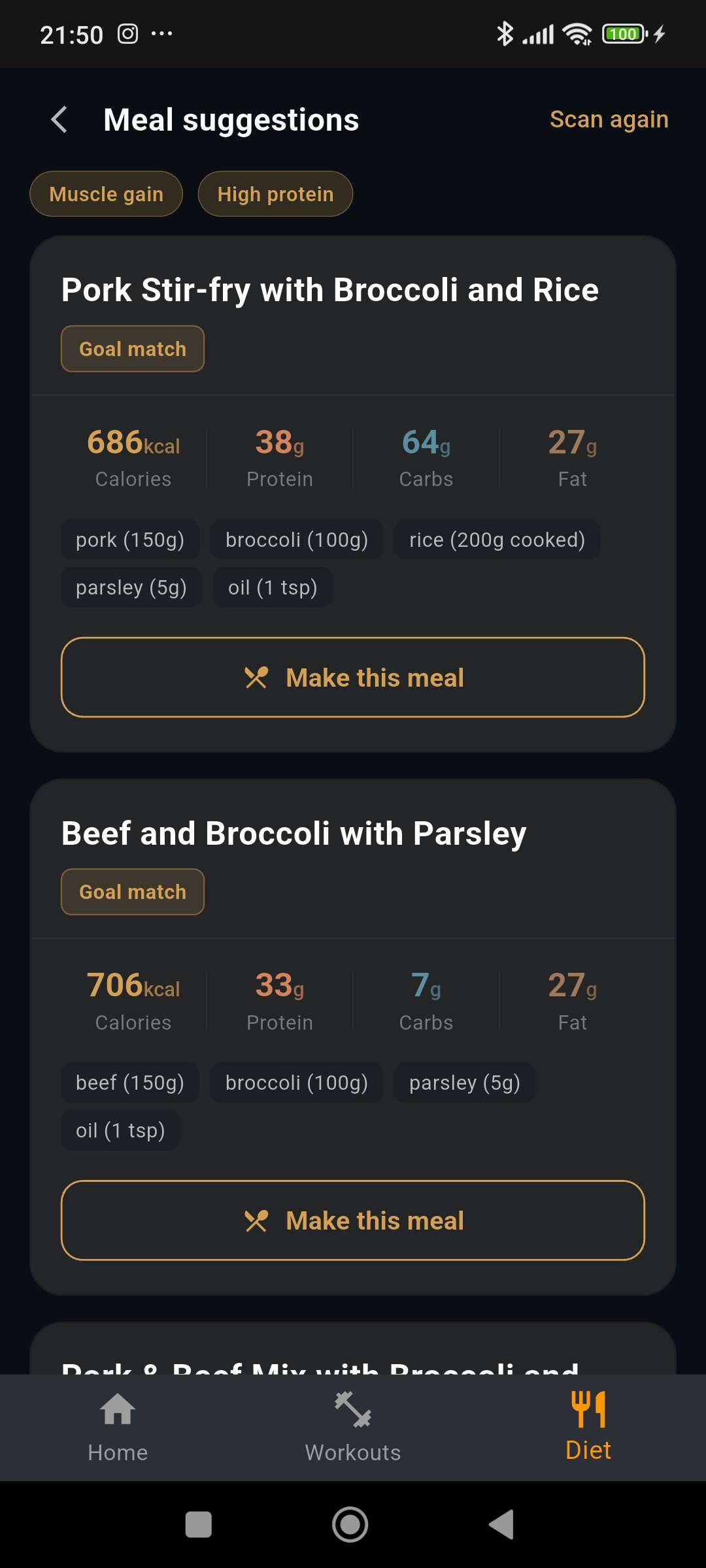
Generated meals
-
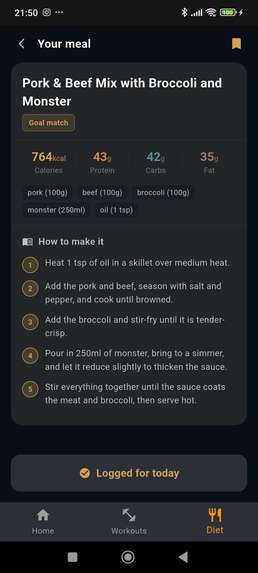
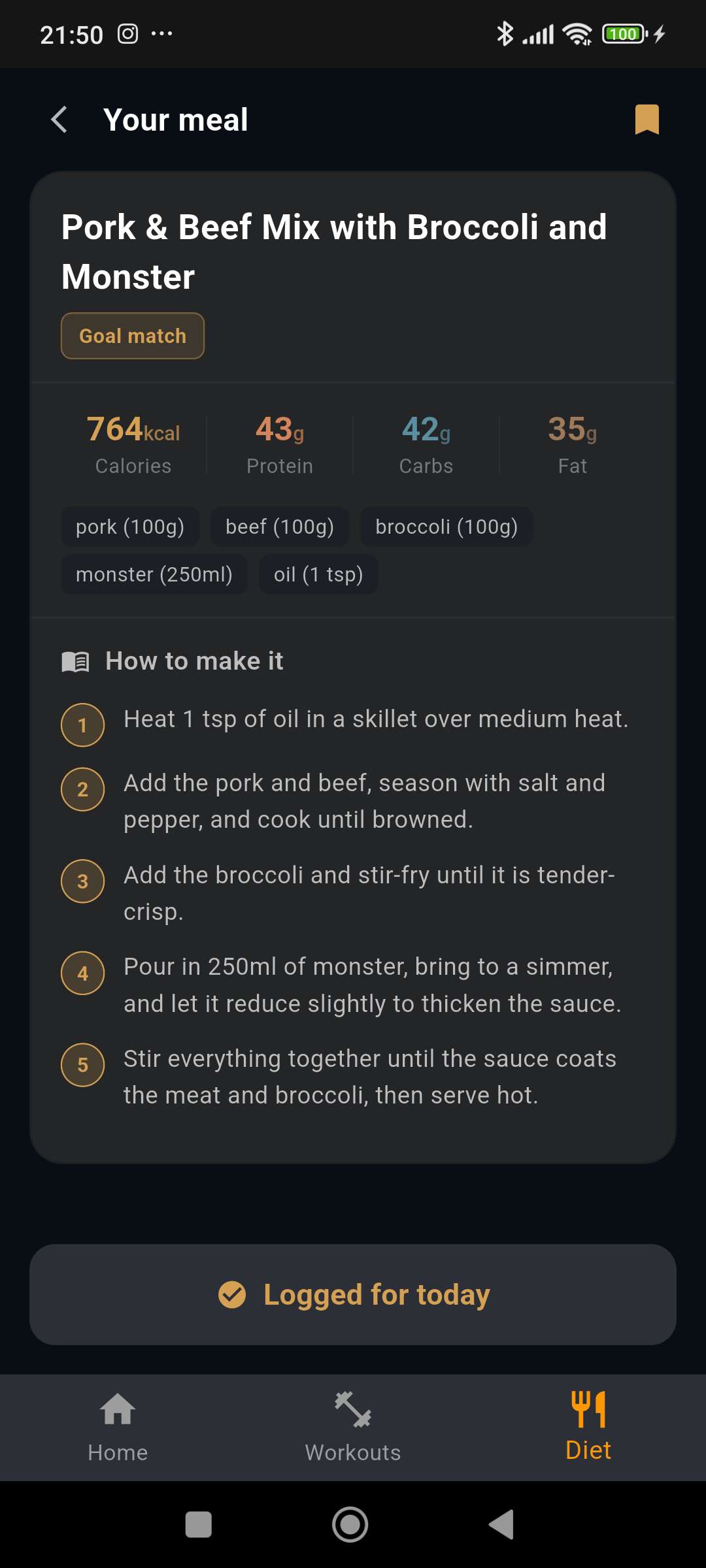
Generated instructions
Inspiration
The inspiration for this project originated from a core challenge prevalent in modern digital health systems: the fragmentation between motion tracking and cognitive health guidance. While many tools record passive workout counts, or provide generic static nutritional menus, few integrate real-time computer vision correction with personalized nutritional reasoning that remains resilient under any real-world connectivity limitations.
As the team at VisionForm observed during initial user evaluations:
"Fitness isn't just about counting repetitions blindly, and nutrition isn't about scanning a static food spreadsheet. True physical transformation happens when real-time tracking accuracy meets highly responsive, reliable intelligence that stays active—whether you are in a premium gym environment or a remote offline space."
This core vision shaped the foundation of VisionForm. We didn't want to construct just another simple tracking application. Instead, we designed a resilient digital ecosystem where real-time MediaPipe computer vision analyzes physical performance, while a multi-API waterfall pipeline crafts dietary blueprints, supported by a specialized local persistence architecture that guarantees zero runtime failure.
What it does
VisionForm is a Flutter-driven production-grade mobile application combining high-frequency edge pose estimation with adaptive backend routing. The application leverages custom real-time camera tracking streams to map skeletal landmarks, analyze motion trajectories (such as specific joint angle flexions in squats), count clean repetitions, and log detailed fault feedback records. Complementing the motion engine is a fully responsive diet tracking system featuring multi-database synchronization, contextual macro breakdown summaries, historical progression time-series graphs, and a resilient multi-API intelligence layout built to safeguard system stability during presentations and real-world deployment.
Key Architectural Highlights:
Resilient Manual Entry Interface: To guarantee zero permission-related crashes or hardware incompatibilities during live evaluations, the diet ingestion UI utilizes a highly responsive manual text-input system with real-time chip generation, bypassing the need for volatile camera hardware access while maintaining a premium user experience. Zero-Downtime AI Waterfall: A cascaded network architecture ensures that if primary cloud nodes fail, the app seamlessly routes to secondary high-speed nodes or local rule-based engines without ever showing an error screen to the user.
How we built it
Flutter & Provider – For a fluid, responsive frontend and low-latency state management
MediaPipe – Powers real-time biomechanics tracking and dynamic form analysis on the edge
Gemini AI & Groq – Drives dynamic nutritional planning with a resilient API fallback system
SQLite – Ensures isolated data integrity across decoupled databases for workouts, diets, and AI logs
FL Chart – Renders high-frequency historical tracking data and metrics
Custom UI – Delivers a high-contrast, distraction-free dark theme for immediate visual feedback
Challenges we ran into
Edge Landmarking Matrix Noise: Filtering raw spatial coordinate tracking data coming off the camera feed to establish precise repetition state triggers without suffering from jitter or landmark tracking drift.
Ensuring Presentation Durability: Minimizing user interruption during presentations or poor network environments. We resolved this by building a dedicated multi-node API cascade and local JSON fail-safes so that the nutrition engine remains robust under any connectivity status.
Concurrently Managing Multiple Databases: Managing safe asynchronous tracking reads and writes across three isolated local SQLite engines without causing structural lockups, main-thread latency, or UI presentation blocks.
Simplifying Complex Metrics: Stripping down raw computer vision coordinate telemetry data into simple, actionable visual logs (such as an intuitive accuracy score out of 100 and clear, localized fault warnings).
Handling Environmental Anomalies: Resolving tricky execution conditions like partial range-of-motion repetitions, shifting device orientations, or momentary skeletal tracking occlusions.
Accomplishments that we're proud of
We built a truly resilient multi-model orchestration framework that isolates network faults seamlessly, keeping the application fast and reliable.
Engineered a closed-loop interactive feedback loop: moving from live computer vision tracking to historical analytical telemetry aggregation, and culminating in highly contextualized AI macro mapping.
Developed a scalable, isolated multi-database pipeline that securely records diverse tracking domains without overlapping schema dependencies.
Created a beautiful, customized dual-axis charting design that overlays user workout repetition quantity directly against cumulative form accuracy tracking records.
What we learned
How to build a low-latency computer-vision environment directly inside Flutter, optimizing painter loops instead of offloading heavy video stream frame logic to an external web server.
The massive architectural value of designing local-first fail-safes and multi-node cloud systems to defend against downstream rate limits.
How to translate strict mathematical angular data sets generated by on-device AI model nodes into intuitive, encouraging user advice.
How to offload heavy timeline operations away from the main UI thread using specialized SQLite datetime filtering statements (DATE(created_at)) to group chronological entries efficiently.
What's next for VisionForm
Real-time Audio Coaching Interventions: Integrate live, low-latency audio cue synthesis into our pose painter loops to warn users about posture anomalies mid-repetition.
Broadened Biomechanics Portfolios: Expand landmarker tracking calculations to support multiple multi-joint training varieties (such as deadlifts, overhead presses, and lunges).
Advanced Analytical Scaling: Sync training volume data sets directly with the food synthesis engines, allowing the system to scale required dietary macro targets automatically depending on monthly structural fatigue rates.
Social Training Synchronization: Introduce local team channels and decentralized peer-to-peer tracking comparison scoreboards.

Log in or sign up for Devpost to join the conversation.