-
-
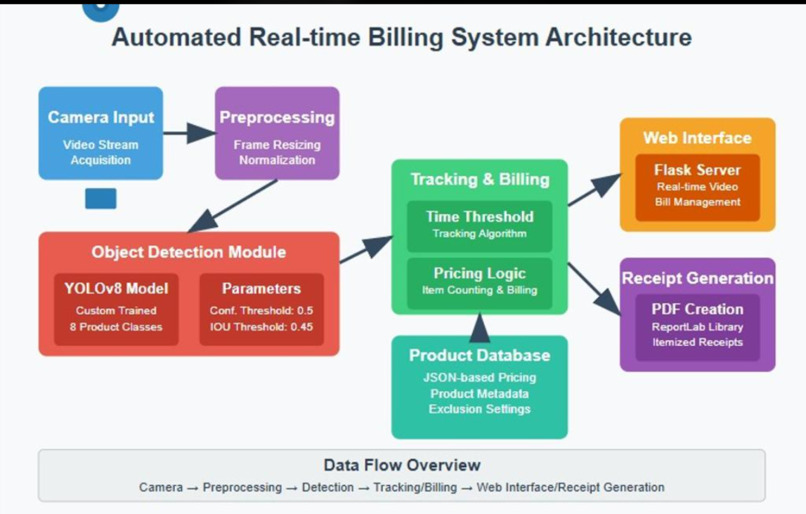
Upload the vertical black-and-white architecture diagram generated earlier.
-
-
VisionFlow AI: Real-Time Assembly-Line Bottleneck Detection
💡 Inspiration
In manufacturing, a delay at a single assembly-line station can affect the entire production process. Traditional monitoring methods may rely on manual observation, making it difficult to identify product accumulation and production delays quickly. We wanted to explore how artificial intelligence and computer vision could transform ordinary camera footage into useful production intelligence.
🎯 What It Does
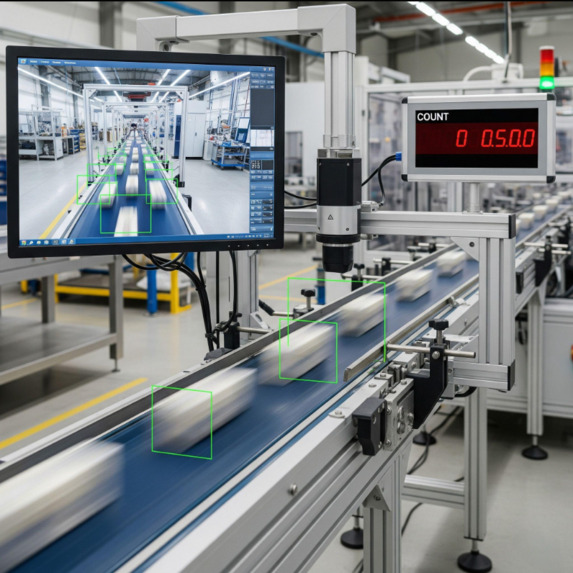
VisionFlow AI is an AI-powered machine vision system designed to monitor assembly-line production and identify potential bottlenecks.
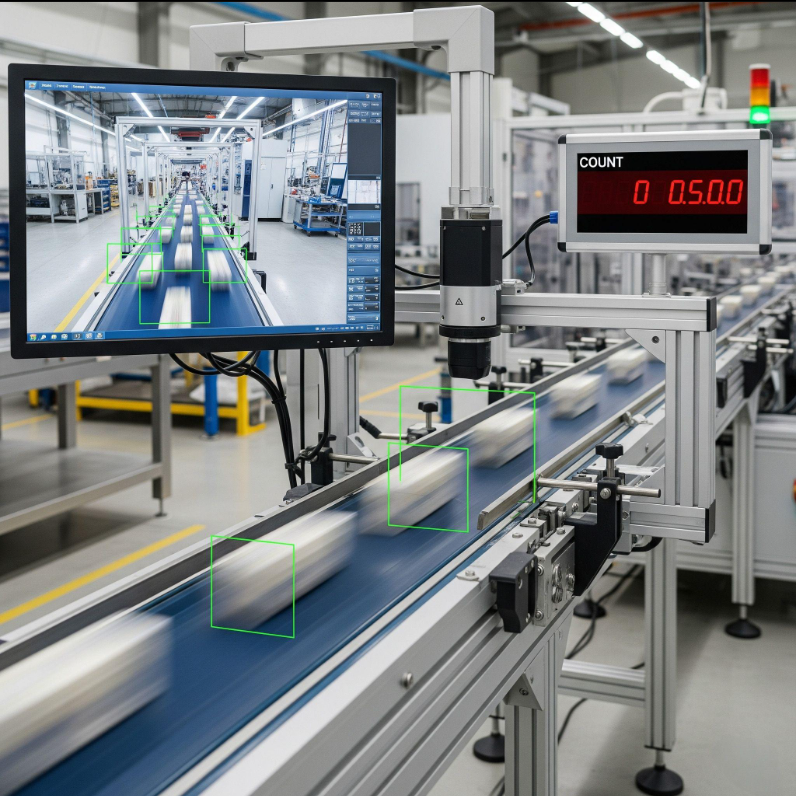
The system uses a camera to capture product movement, OpenCV to process video frames, and YOLOv8 to detect products. Object tracking and product counting help analyze production flow. The system evaluates parameters such as queue length, waiting time, production rate, and station efficiency to estimate potential bottleneck conditions.
A web-based dashboard presents production statistics, station status, and bottleneck alerts to support production monitoring.
⚙️ How We Built It
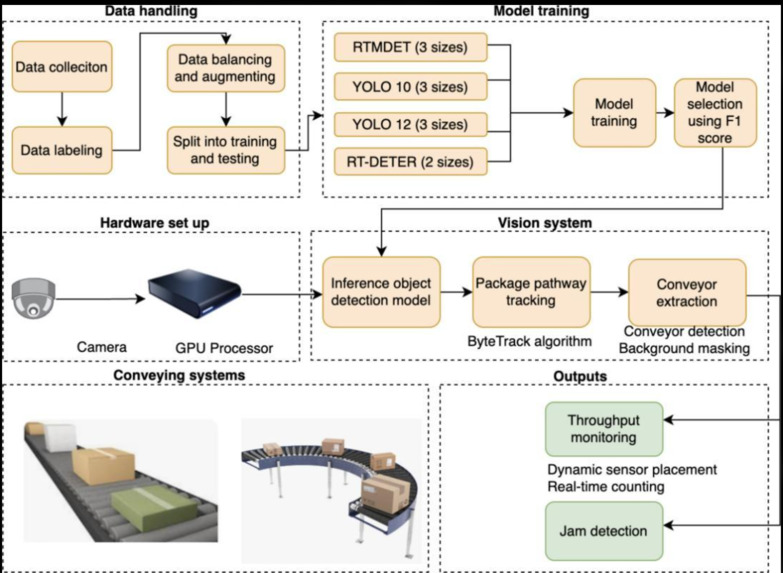
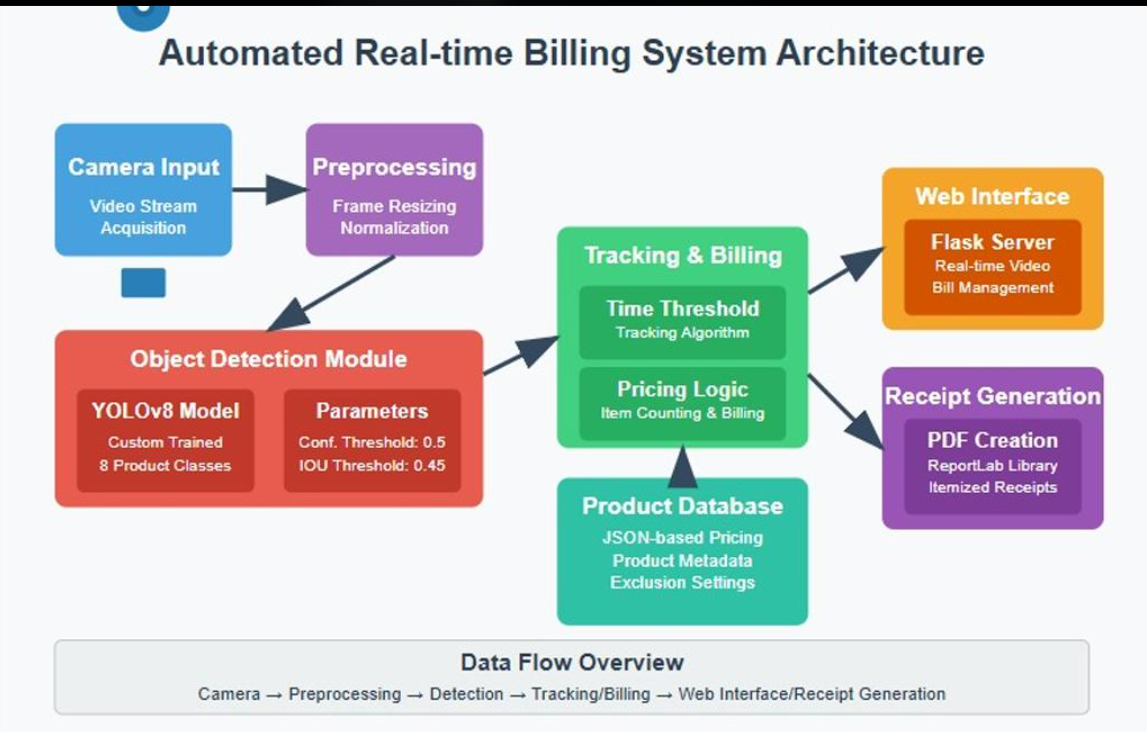
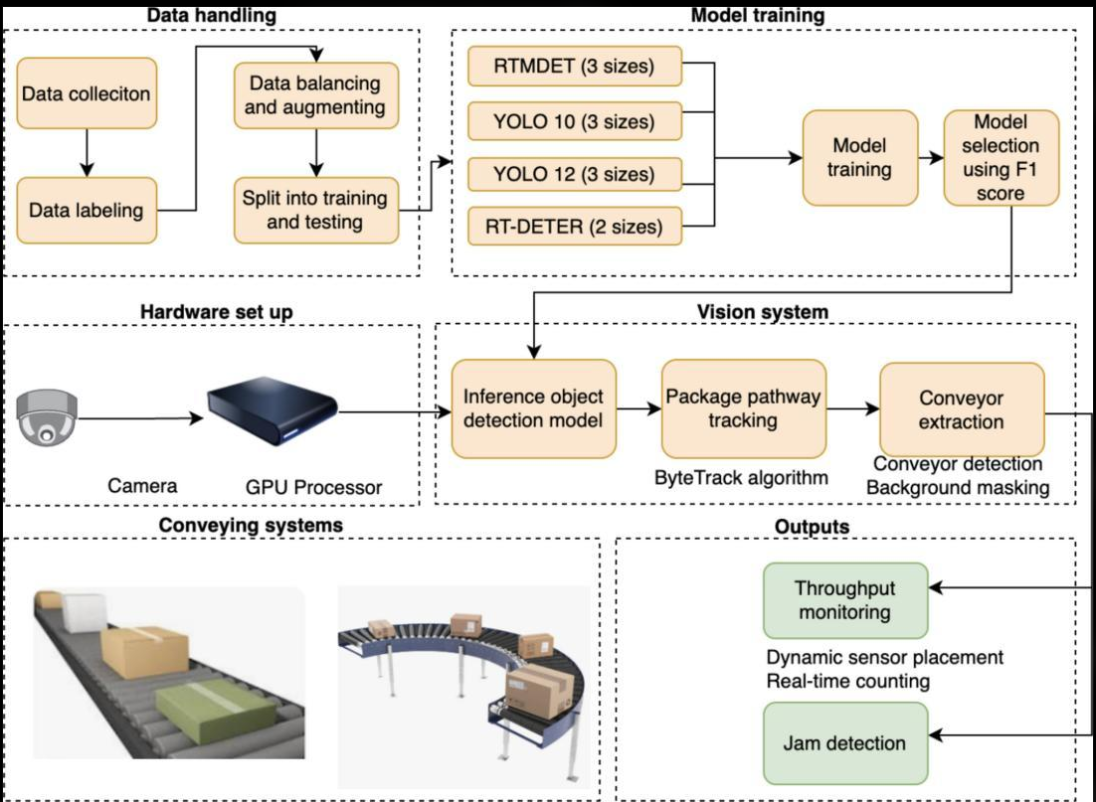
We designed a modular architecture combining computer vision, backend processing, data storage, and web-based visualization.
- OpenCV: Camera input and video-frame processing.
- YOLOv8: Product detection in video frames.
- Object Tracking: Tracking detected products across frames.
- Production Analysis: Product counting and analysis of queue length, waiting time, production rate, and station efficiency.
- Bottleneck Risk Engine: Combining production indicators into a configurable risk score.
- Flask: Backend processing and API communication.
- SQLite: Storage of production records and alerts.
- React.js: Interactive dashboard for production monitoring.
- Axios: Communication between the frontend and backend.
The overall workflow is:
Camera → OpenCV → YOLOv8 → Object Tracking → Product Counting → Station Analysis → Bottleneck Identification → Flask → SQLite → React Dashboard
🧠 Challenges We Faced
Important challenges include detecting products reliably under different lighting conditions, tracking products across consecutive frames, avoiding duplicate counts, and translating visual observations into meaningful production metrics.
Another challenge is selecting appropriate weights and thresholds for the Bottleneck Risk Score. These values need calibration and validation using actual production data.
📚 What We Learned
Through this project, we explored how deep learning and computer vision can be integrated with a full-stack web application. We gained experience with video processing, object detection, production-flow analysis, backend APIs, database integration, and dashboard visualization.
We also learned that detecting an object is only the first step; understanding its movement and relating it to production performance is essential for meaningful industrial monitoring.
🚀 Future Scope
Future improvements include monitoring multiple assembly-line stations, improving tracking and bottleneck-detection accuracy, using historical production data for predictive analysis, and integrating sensors or microcontrollers with conveyor systems for potential automated intervention.
🌍 Impact
VisionFlow AI aims to make production monitoring more visual, accessible, and data-driven. By highlighting potential bottlenecks and presenting production information in a centralized dashboard, the system can help operators and supervisors identify stations that may require attention.## Inspiration

Log in or sign up for Devpost to join the conversation.