-
-
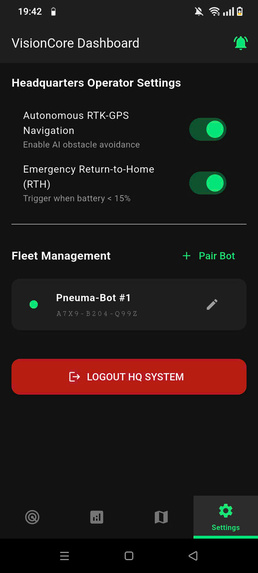
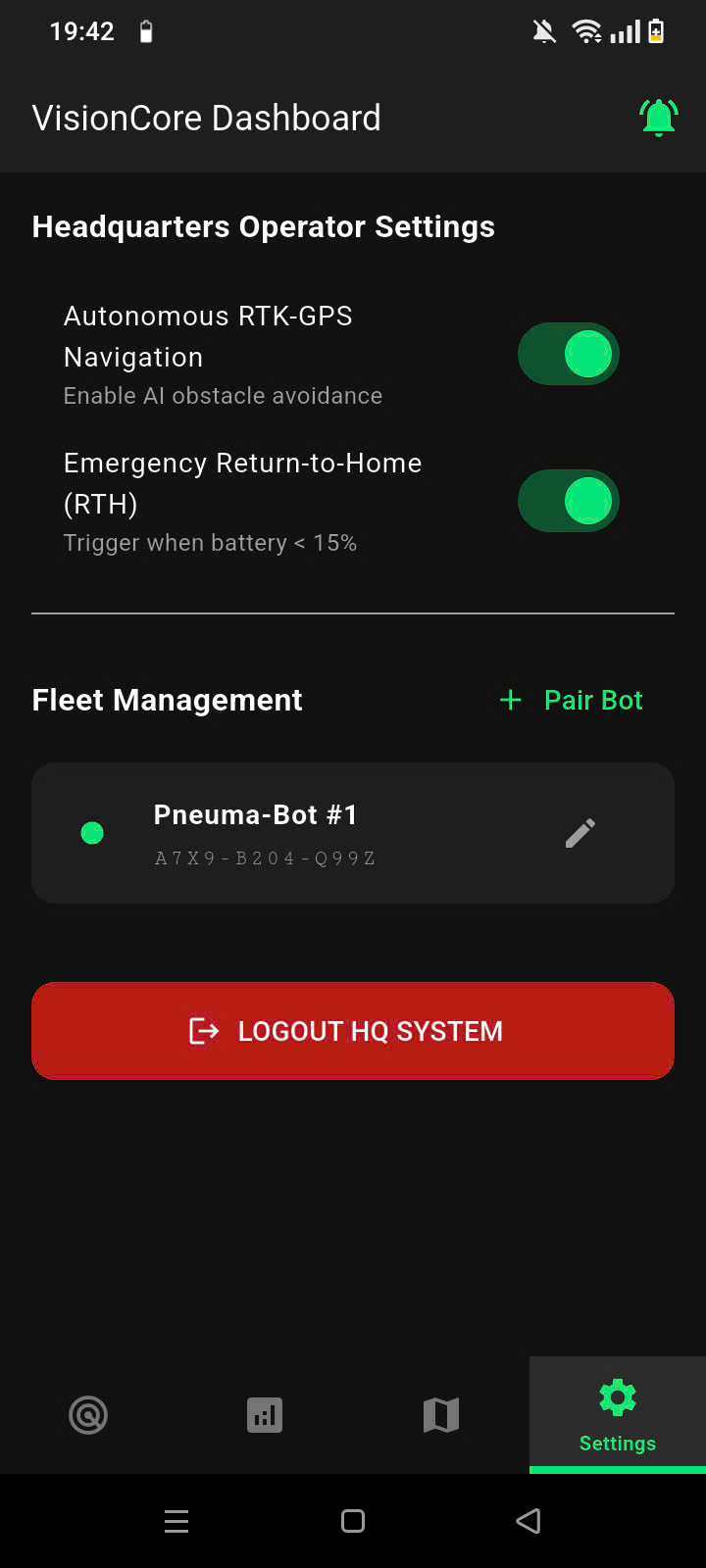
Configure auto RTK-GPS navigation, AI obstacle avoidance, and RTH thresholds
-
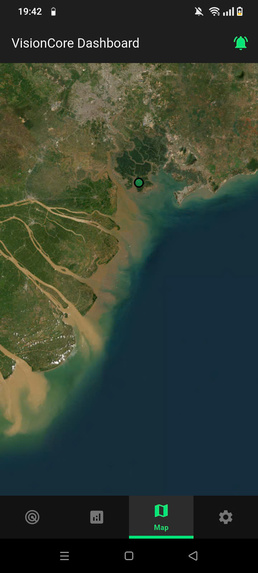
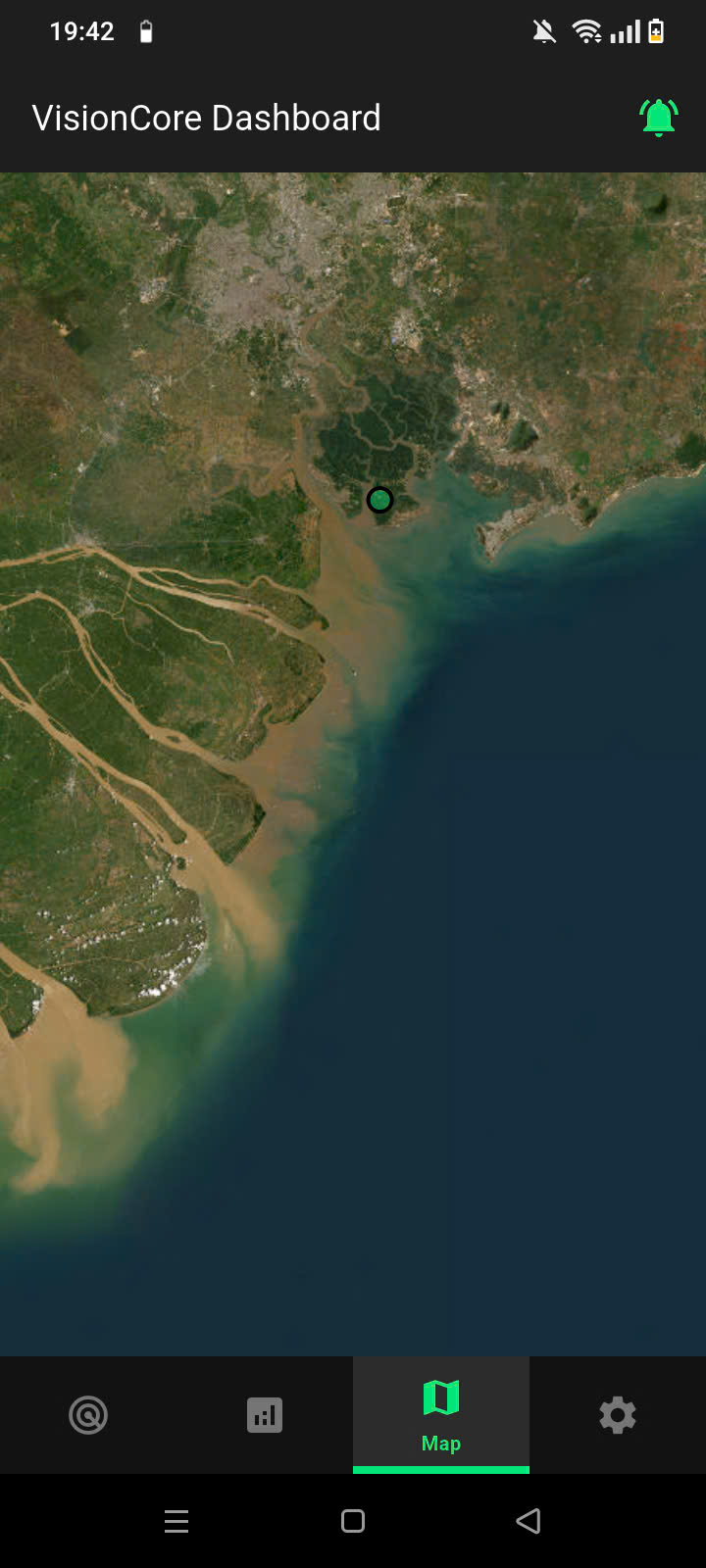
Real-Time GIS Map: Live satellite tracking and waypoint navigation across target mangrove zones like the Can Gio biosphere.
-
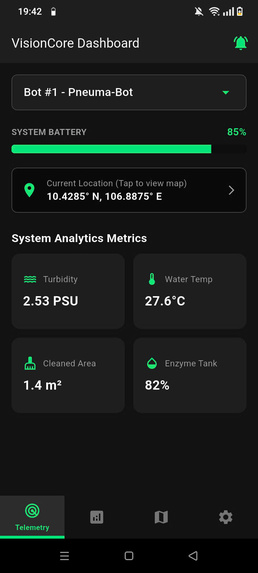
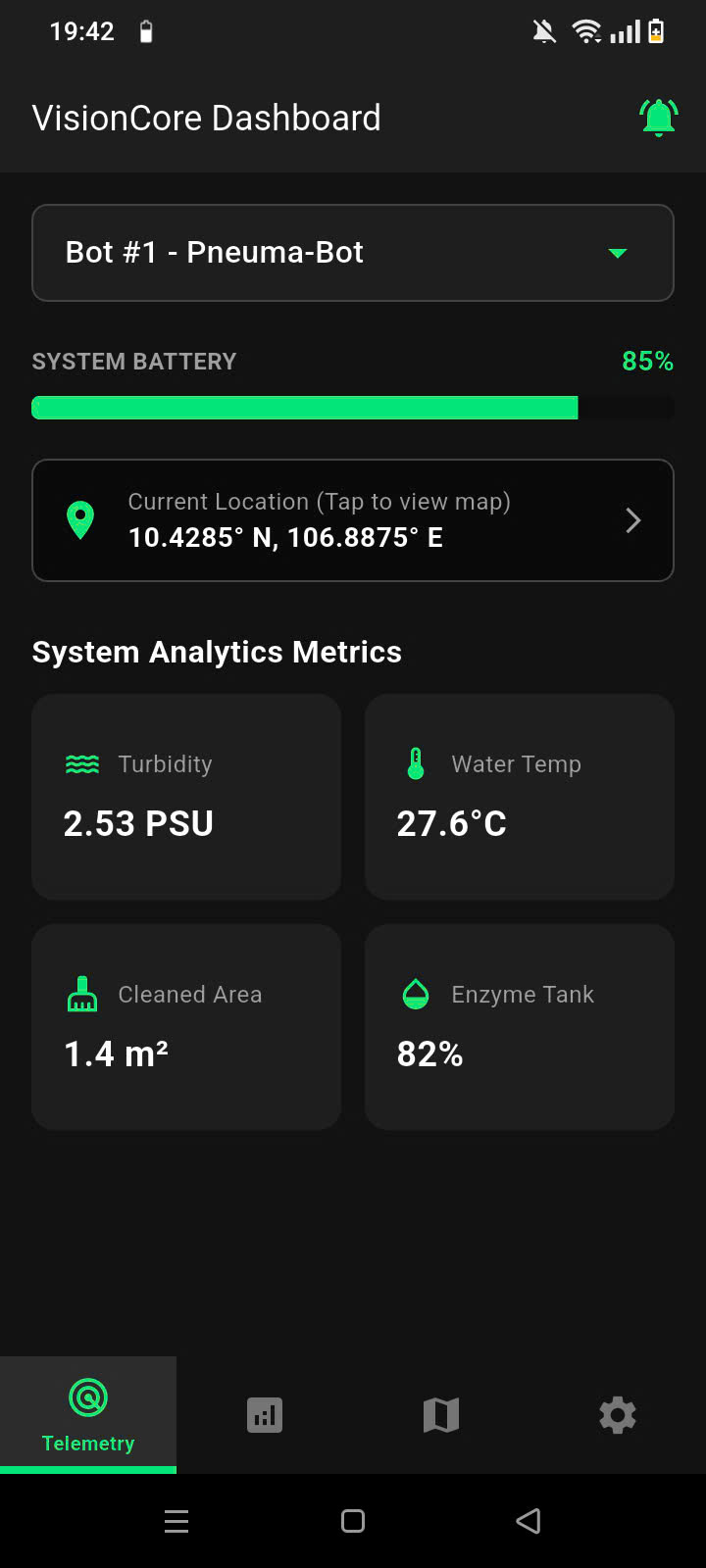
Monitor system battery, GPS, water metrics, cleaned area, and enzyme levels
-
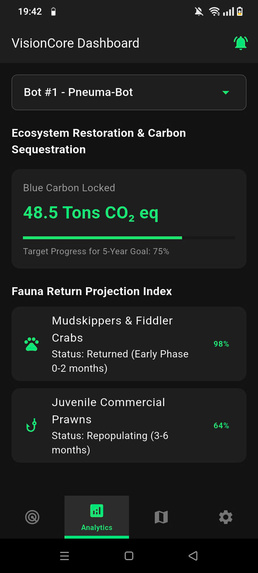
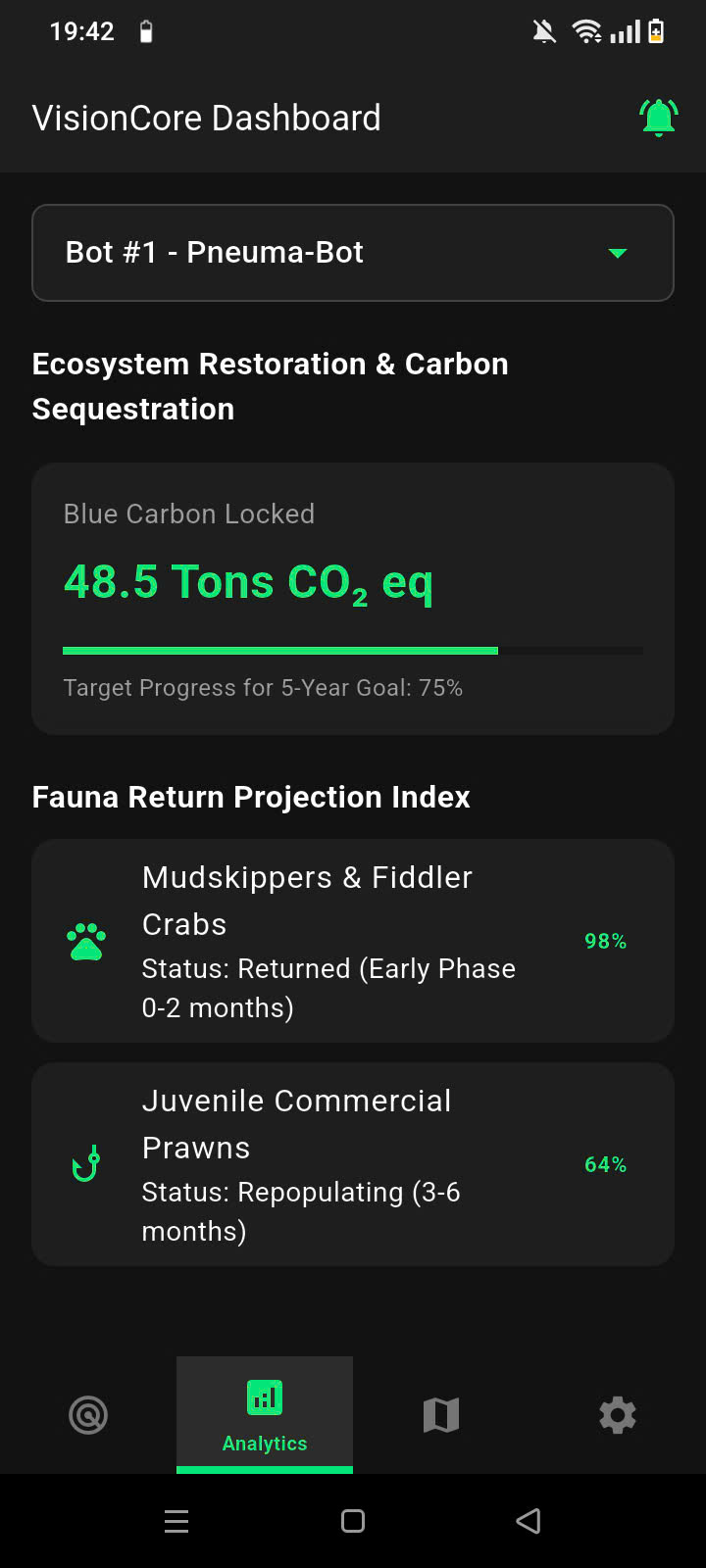
Ecosystem Analytics: Monitoring locked Blue Carbon sequestration levels and tracking the Fauna Return Projection Index
Inspiration & MotivationThe idea behind VisionCore stems from an alarming reality right here in the Can Gio mangrove forests near my hometown and across Southeast Asian coastal ecosystems: pneumatophores root suffocation. Although covering less than 0.1% of the Earth's surface, mangroves store Blue Carbon at rates 4 to 10 times higher per hectare than tropical rainforests. However, climate change, rising sea levels, and massive inflows of marine debris and oil slicks have sealed off the tiny pores (lenticels) on these vital root systems. Faced with projections that millions of hectares could vanish by 2100 and release billions of tons of trapped greenhouse gases, I asked myself: "Why can we launch rockets into space, but lack automated solutions to care for these critical ecological frontiers?" That exact question sparked the creation of VisionCore. How I Built the ProjectTo bring this vision to life, I applied an interdisciplinary systems-thinking approach, combining mechanical hardware, biotechnology, and artificial intelligence:Adaptive Mechanical Design: I engineered a 360' spherical exo-cage (45 cm diameter) built from carbon fiber and flexible BioTPU. Its center-of-gravity design allows the bot to collide with roots and roll past narrow gaps without breaking its propellers. Dual Cleaning Solution (Physical & Biological): Integrated a 40 kHz} ultrasonic transducer array mounted on a retractable linear actuator to break down oil films and strip stubborn mud at a precise $2\text{--}5\text{ cm}$ standoff distance. Concurrently, a peristaltic dosing pump dispenses eco-enzymes to neutralize mud acidity and restore natural O2 and CO2 gas exchange. Navigation & AI: Powered by a Raspberry Pi 5 coupled with a mini LiDAR module, infrared camera, and dual-band RTK-GPS to handle obstacle avoidance, root identification, and autonomous 3D routing under dense forest canopies. Challenges FacedHarsh Environments & Root Entrapment: Navigating dark, sticky mud swamps dense with tangled roots is a nightmare for standard drones. I overcame this by designing a protective exo-cage and programming an automated Return-to-Home (RTH) safety algorithm that triggers when battery levels fall below 15% or bio-film levels drop to 10%. Saltwater Corrosion & Durability: Electronic components face severe degradation in saline environments. To ensure resilience, I utilized IP67 marine-grade sealed housings, carbon bio-cages, and four fully epoxy-potted IP68 waterproof brushless thrusters. What I Learned Through developing VisionCore, I learned that a successful environmental project requires more than just a humanitarian vision—it demands technological feasibility and economic viability. Optimizing operational costs (achieving a 65% cost reduction compared to manual methods) and building transparent Blue Carbon GIS tracking dashboards for NGOs and ESG funds are what truly bridge the gap between concept and real-world impact
Built With
- bolt

Log in or sign up for Devpost to join the conversation.