-
-
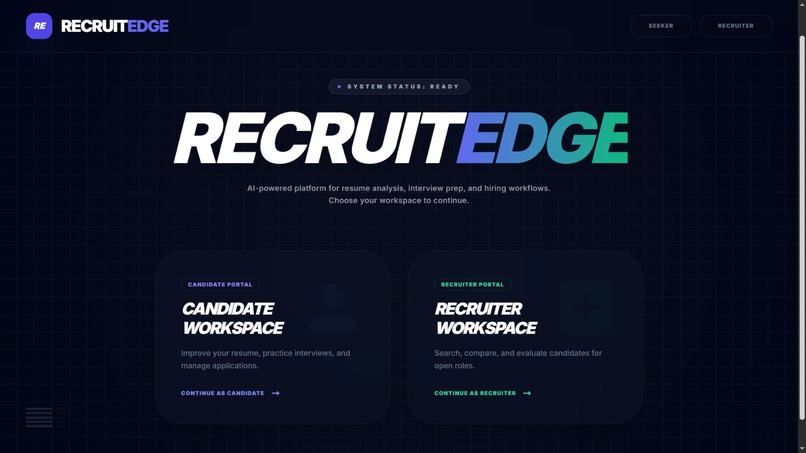
Front Page
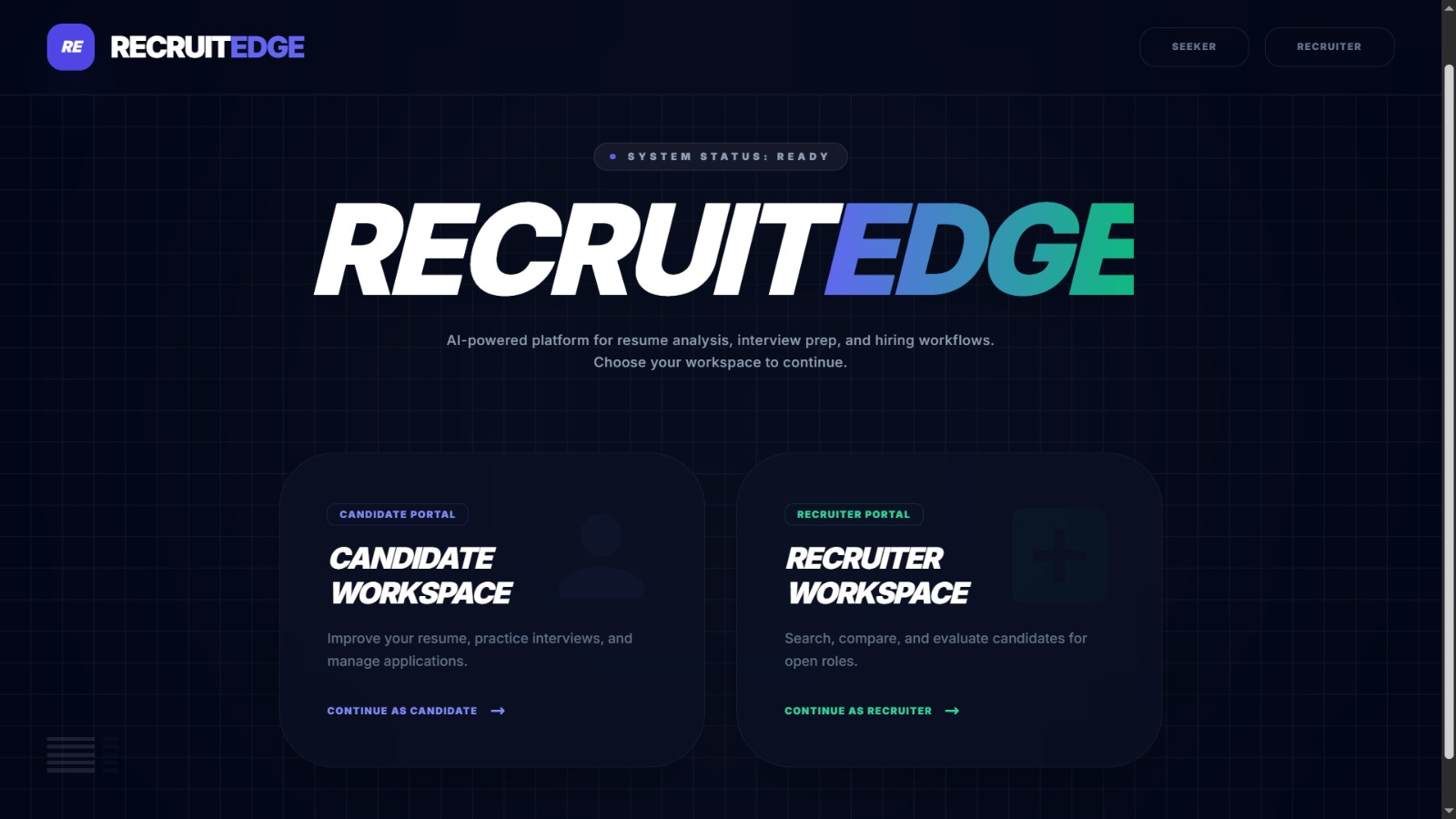
Inspiration
The job application process today is highly repetitive, time-consuming, and inefficient. Platforms like LinkedIn and Indeed simplify discovery, but the actual application process still requires manual effort for each role.
We were inspired by the frustration faced by students and job seekers who spend hours applying to multiple roles, often without proper tracking or personalization. At the same time, recruiters struggle with filtering large volumes of low-quality applications.
This led us to build a solution that improves efficiency for both sides using AI.
What it does
RecruitEdge is an intelligent job application automation system that:
- Automatically customizes resumes and cover letters for each job
- Matches candidates to roles using AI-based analysis
- Tracks all applications in a centralized dashboard
- Assists recruiters by ranking and filtering candidates
The platform reduces manual effort while improving the quality and relevance of applications.
How we built it
We combined modern AI tools with a lightweight full-stack architecture:
- Frontend + AI: Google Gemini is used to analyze job descriptions and generate tailored application content
- Database & Backend Services: Supabase manages authentication, stores user data, resumes, and application tracking
- Serverless Backend: Supabase Edge Functions handle secure job data fetching (via APIs or scraping)
- Automation Layer: Job data is processed and fed into the AI to generate personalized outputs
The system follows a pipeline: User Input → Job Data → AI Processing → Application Generation → Storage & Tracking
Challenges we ran into
- Lack of free candidate APIs: Most platforms do not provide open access to candidate data
- Scraping limitations: Websites like LinkedIn restrict automated access
- Balancing frontend vs backend: Deciding what logic should run client-side vs server-side
- AI accuracy: Ensuring generated resumes are relevant and not generic
Accomplishments that we're proud of
- Built a working AI-powered system that automates a real-world problem
- Successfully integrated AI with a database and application tracking
- Designed a scalable architecture using serverless backend tools
- Created a solution that benefits both job seekers and recruiters
What we learned
- How to integrate AI into real-world workflows, not just isolated features
- The importance of backend systems for scalability and security
- Limitations of public APIs in recruitment platforms
- How to design user-focused systems that solve practical problems
What's next for Visionary Minds
- Implement a more advanced candidate ranking algorithm
- Add real-time job fetching from multiple sources
- Improve automation for applying directly to job portals
- Enhance recruiter tools with better filtering and analytics
- Expand the platform into a full recruitment ecosystem


Log in or sign up for Devpost to join the conversation.