-
-
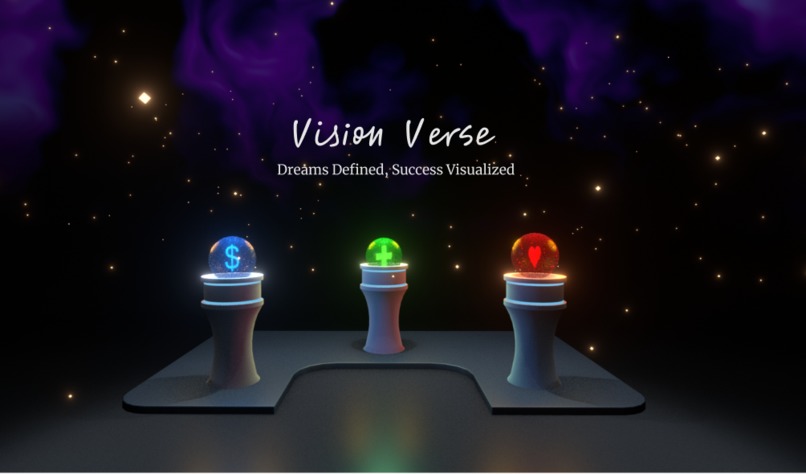
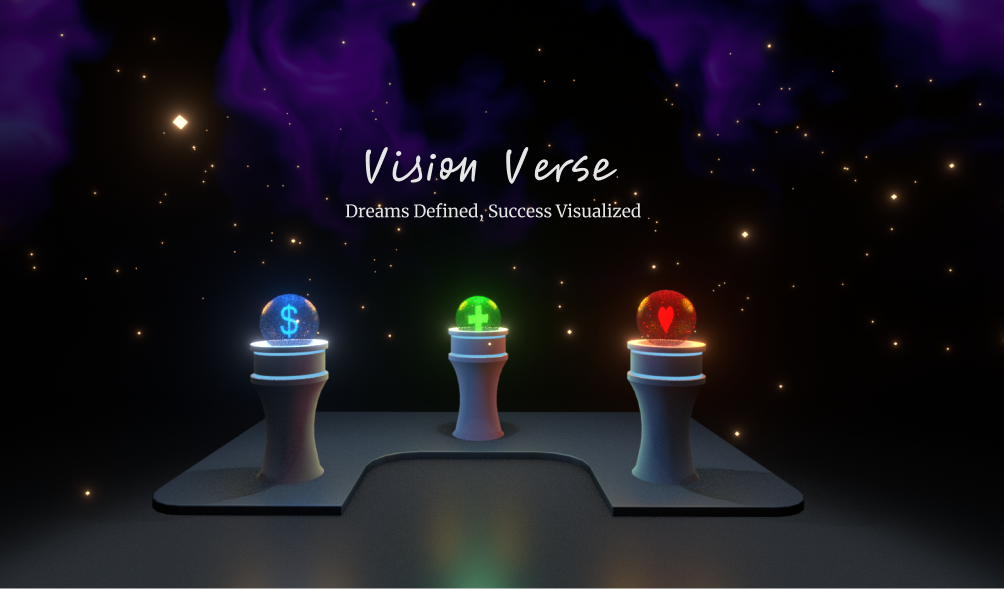
"Step into the Vision Verse: A landing space with crystal orbs to transcend to your spheres for Health, Love, and Career.
-
 GIF
GIF
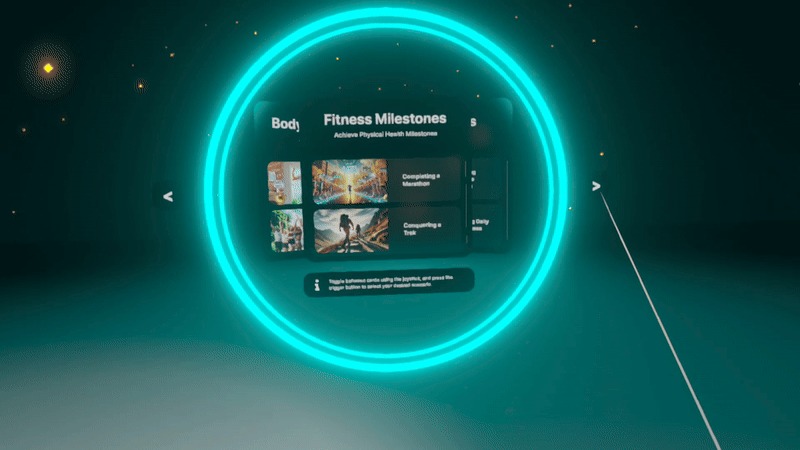
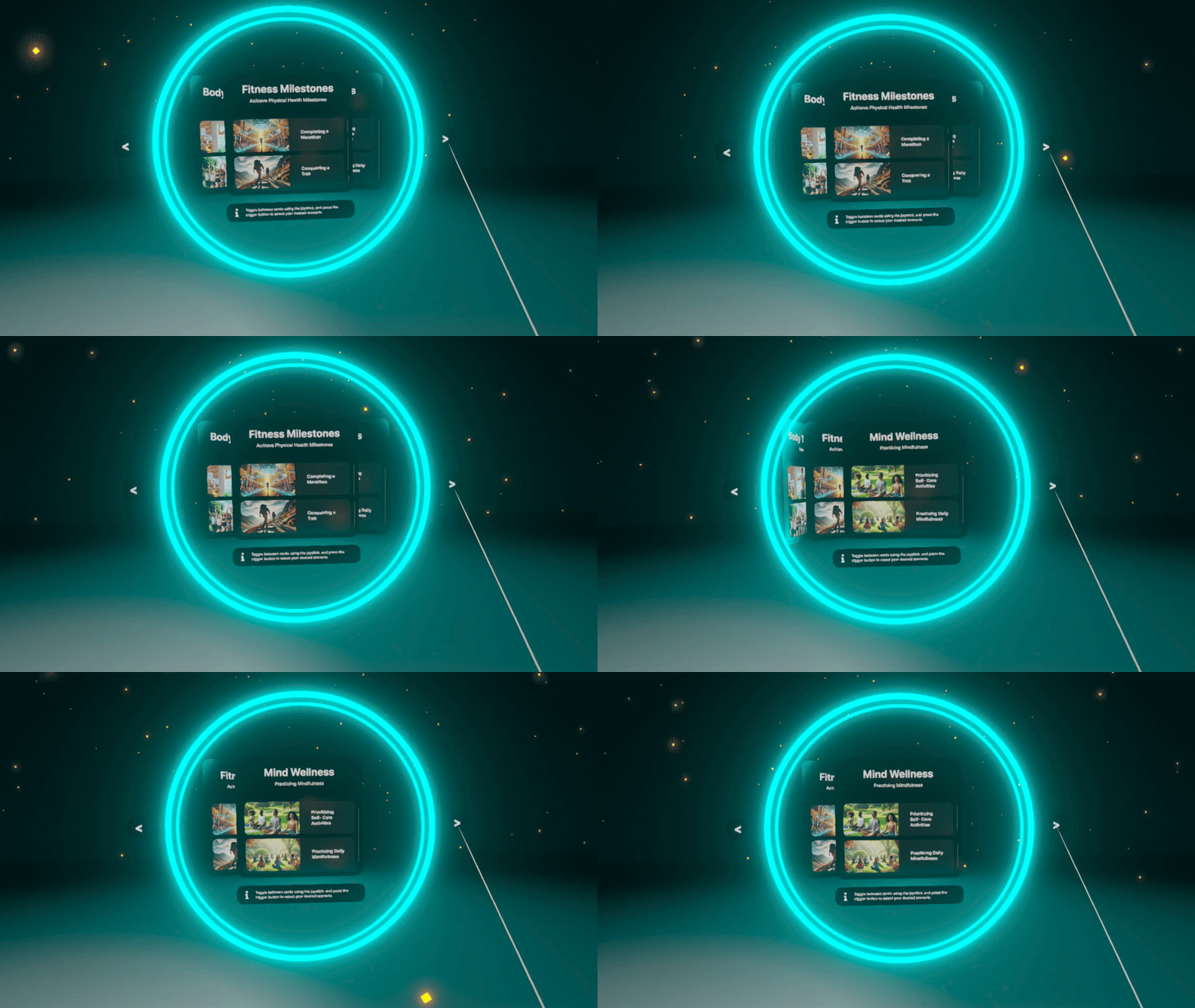
"Toggle health-focused cards to explore scenarios like fitness goals and their sub-scenarios. Confirm your choice to proceed."
-
 GIF
GIF
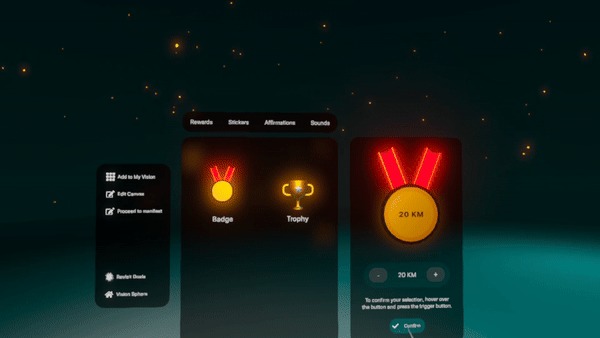
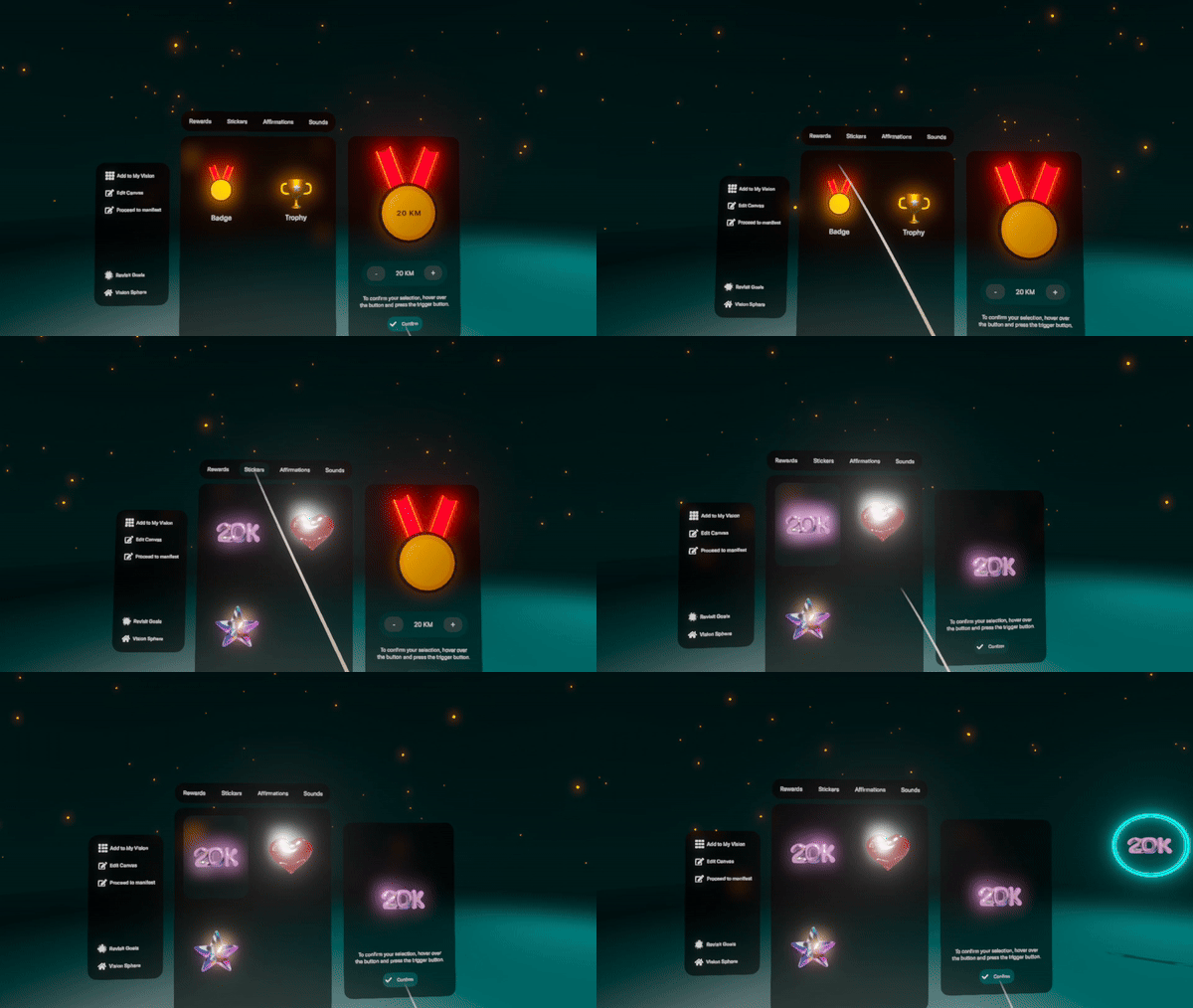
"Explore a menu of AI-generated customizations, dynamic objects, rewards, sounds, and more. Design your canvas with limitless creativity!"
-
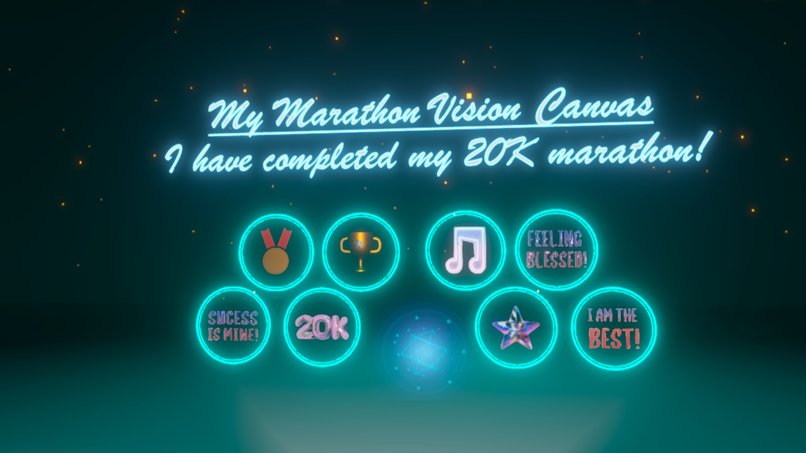
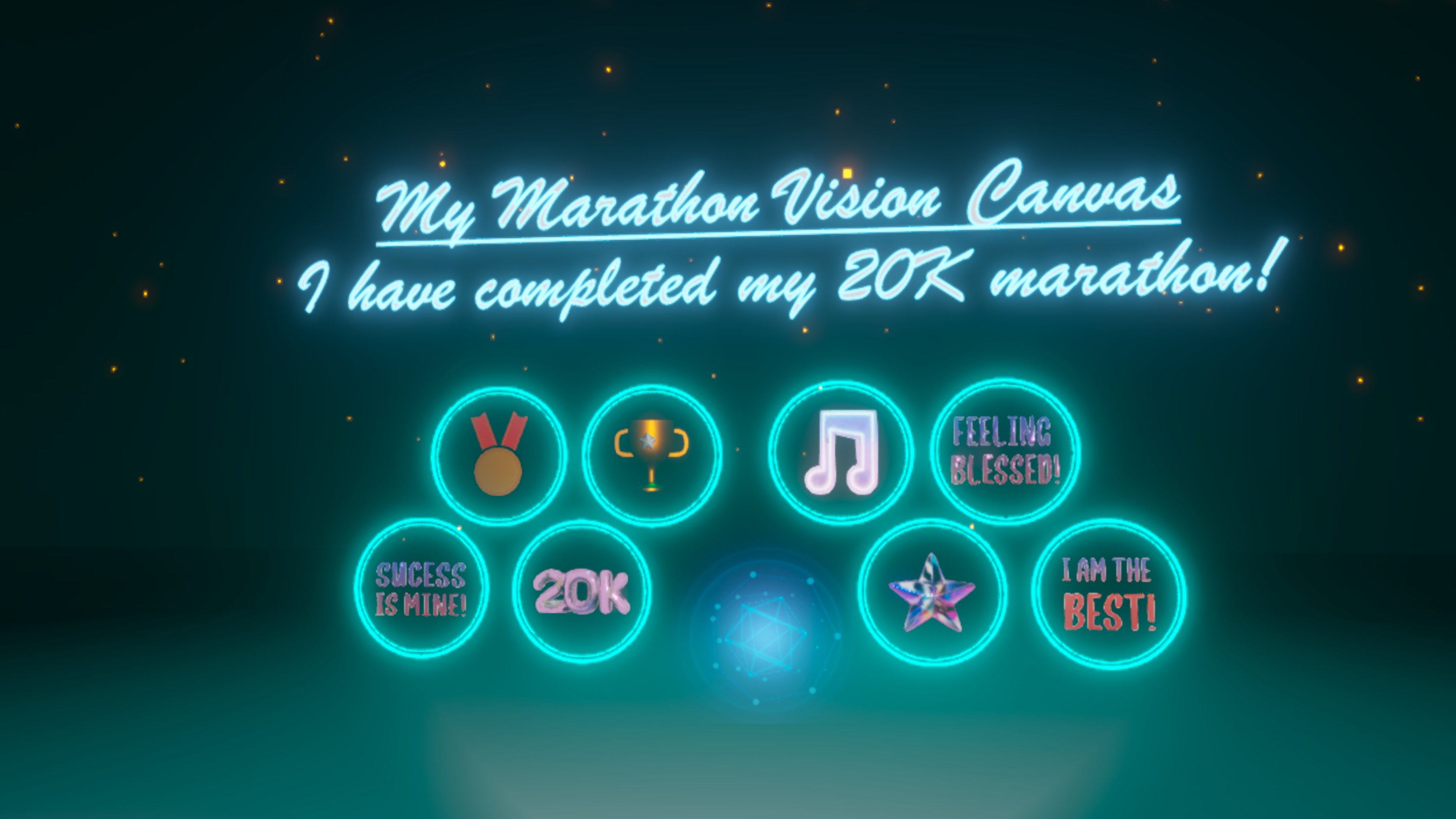
" Vision Canvas: a dynamic gallery of your goals, complete with sounds, affirmations, and visuals. Return to edit and stay inspired!"
-
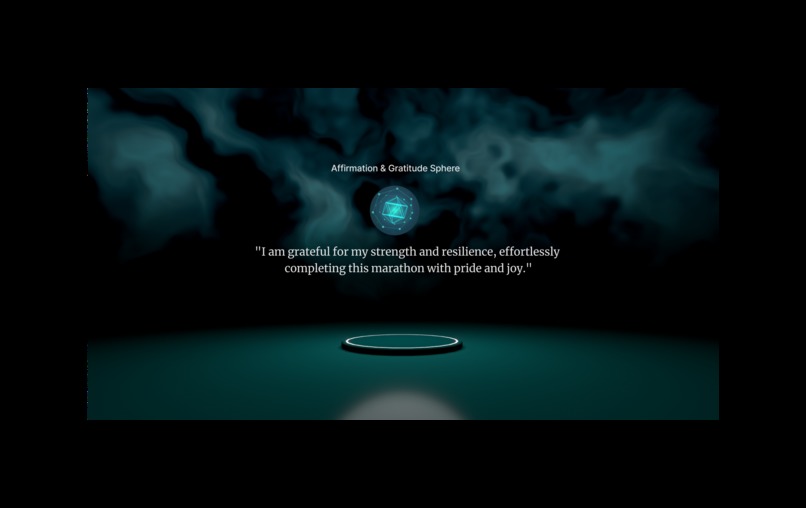
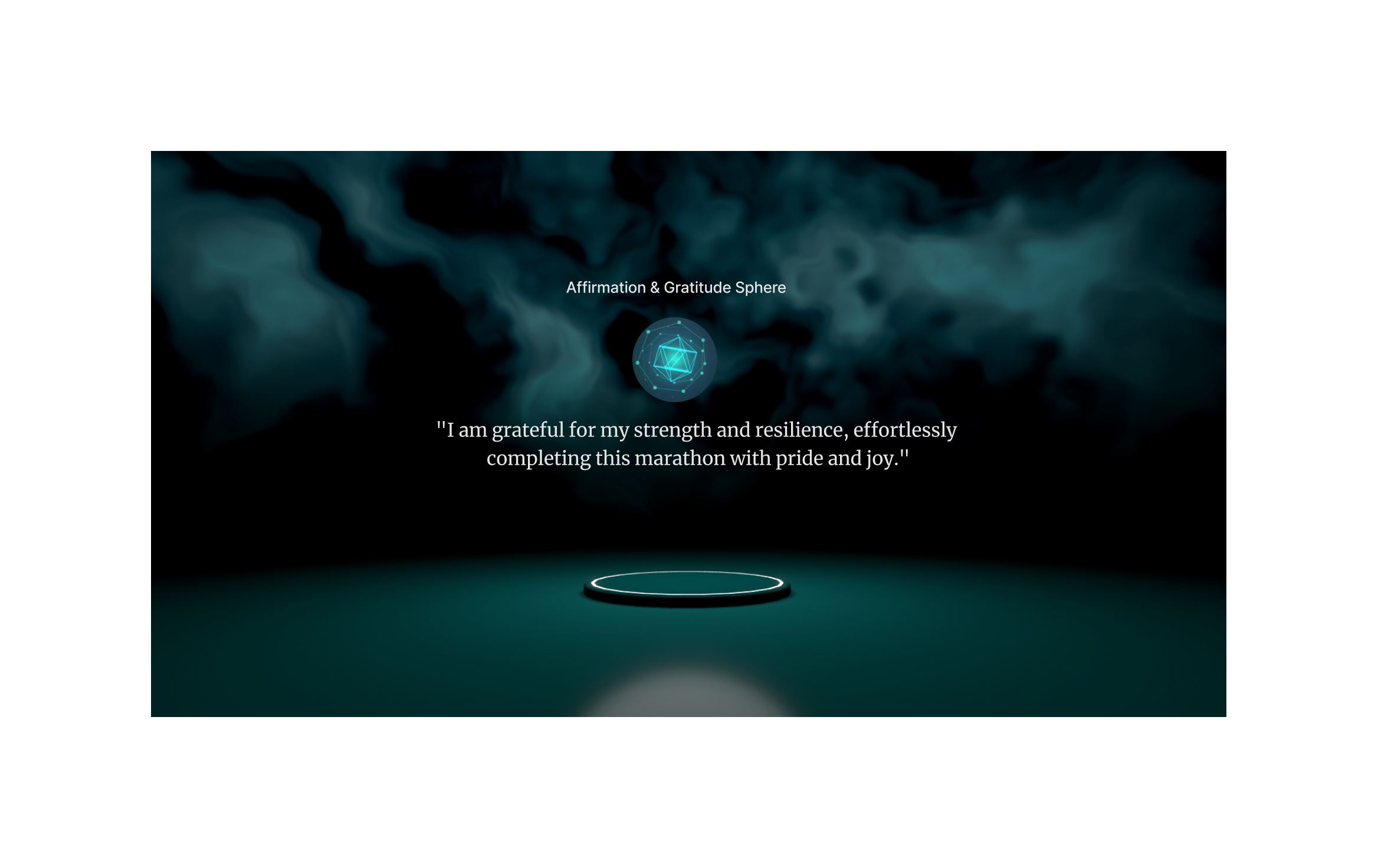
Gratitude & Affirmation Space: Record personalized affirmations crafted by AI, tailored to your goals. Chant, reflect, and empower
Inspiration
The concept behind Vision Verse draws inspiration from influential books such as The Power of the Subconscious Mind by Dr. Joseph Murphy, The Secret by Rhonda Byrne, and Words of Wisdom by Mahesh Toshniwal. These works, combined with extensive research on visualization, affirmations, and the subconscious mind, lay the foundation for our idea.
In a world where aspirations fuel progress, the need for clear, actionable pathways to achieving goals has never been more vital. While many recognize the importance of hard work and strategic planning, fewer are equipped with the tools to harness the mind's power to align thoughts, behaviors, and actions with their ambitions.
Visualization, a practice backed by research, is one such tool. Studies show that approximately 60% of individuals who set goals use some form of visualization to stay motivated and focused. This technique, widely adopted by athletes, entrepreneurs, and individuals across demographics, has been proven to:
- Activate neural pathways associated with success and goal achievement (Predoiu et al., 2020).
- Align subconscious behaviors with desired outcomes (Custers & Aarts, 2010).
- Foster confidence and focus by creating a clear mental roadmap.
However, existing tools often fall short—static vision boards and repetitive affirmations fail to engage users deeply or guide them scientifically. Vision Verse bridges this gap, transforming visualization into an immersive, multi-sensory experience. By combining VR’s immersive power with proven psychological principles, it offers users a tangible way to define, affirm, and vividly visualize their success, making the process engaging, accessible, and impactful.
What It Does
Vision Verse is a VR-powered application designed to empower users to define their goals, affirm their aspirations, and vividly visualize their success. The platform integrates scientific principles with immersive technology to provide a structured, engaging, and customizable approach to goal setting and achievement.
Key Features:
Vision Sphere: A central hub where users can select different areas of their life to focus on—health, career, love, or finances. Each category is represented by an interactive glowing orb, inviting users to embark on a personalized journey.
Vision Canvas: A multi-dimensional space where users bring their goals to life. Users can personalize their vision boards with:
- Interactive and dynamic elements like stickers, affirmations, objects, and more.
- AI-curated visuals, quotes, and soundscapes tailored to their aspirations.
- Tools that make the process engaging, creative, and uniquely their own.
Affirmation and Gratitude Space: Users generate personalized affirmations crafted using AI, ensuring scientifically sound phrasing. They can record and listen to these affirmations in their own voice, enhancing emotional resonance and subconscious alignment.
End Picture Visualization: This feature provides immersive 180-degree and 360-degree video scenarios that simulate achieving the user’s goals. For example, in the "Marathon Visualization" scenario, users experience running and crossing the finish line, complete with cheering crowds and celebratory confetti, bringing their aspirations vividly to life.
Progress Tracking and Habit Building: Vision Verse encourages disciplined practice through gamified milestones, streaks, and badges. Users are rewarded for consistent use, reinforcing the habit of visualization and goal-oriented thinking.
How We Built It
Conceptualization:
- Drawing from research and inspiration, the idea was meticulously planned to incorporate visualization, affirmation, and VR capabilities.
Prototyping:
- Tools like ShapesXR were used to prototype features, define distances, and simulate user interactions within virtual environments.
Development:
- Blender and Unity were used to create environments, models, and interactions.
- Sora and Luma AI tools were employed to generate 180-degree and 360-degree videos for immersive visualization scenarios.
Iterative Testing:
- Frequent testing ensured that the user flow, interactivity, and overall experience met the intended vision and quality.
Challenges We Ran Into
- Cross-Collaboration: Aligning the work habits and strengths of a diverse, remote team was challenging but rewarding.
- Scope Management: The broad potential of Vision Verse required careful prioritization and narrowing down key features.
- Technical Limitations: Generating immersive end-goal visualizations with limited time and tools was complex. Importing 3D models and animations into ShapesXR posed compatibility challenges.
- User Engagement: Designing interactions that felt natural, engaging, and aligned with user mental models required significant iteration.
Accomplishments That We're Proud Of
- Transitioning between spaces using an intuitive crystal orb interaction, allowing users to navigate seamlessly without breaking immersion.
- Developing the Vision Canvas with multi-dimensional customization options—stickers, objects, affirmations, and soundscapes.
- Creating a detailed, narrative-driven end-goal visualization scene for running a marathon, complete with immersive audio-visual elements.
- Building a structured and engaging application concept in just two weeks, grounded in scientific principles and supported by detailed user flows.
What We Learned
The Power of Structured Visualization:
- Breaking visualization into phases—goal definition, affirmation, and end-goal visualization—reinforced the importance of structured, step-by-step engagement.
Integrating Science with Immersive Design:
- Bridging scientific research on visualization with immersive VR design required balancing creativity and evidence-based techniques effectively.
Designing for Emotional Immersion:
- Emotional engagement involved soundscapes, narration, and subtle environmental cues, emphasizing the multi-sensory nature of VR.
Overcoming Limitations of Time and Tools:
- Constraints sparked innovative solutions like leveraging Sora and Luma for impactful 180-degree videos.
Collaboration Across Disciplines:
- Clear communication and adaptability were vital for aligning the team's diverse expertise and vision.
What's Next for Vision Verse
Progress Tracking and Habit Building:
- Implement a robust milestone system (e.g., 7-day streaks and 21-day habits).
- Reward users with badges and coins for continuous usage, enabling further canvas customization and unlocking advanced features.
Social Integration:
- Introduce multi-player functionality where users can explore each other's vision spaces for inspiration and accountability.
AI-Enhanced Customization:
- Integrate generative AI for real-time creation of 3D models, stickers, and affirmations tailored to user input.
Expanded Scenarios:
- Build additional goal-specific scenarios for diverse focus areas, enhancing personalization and relevance.
Seamless Integration:
- Work towards merging all features into a cohesive experience with streamlined transitions and polished aesthetics.


Log in or sign up for Devpost to join the conversation.