-
-
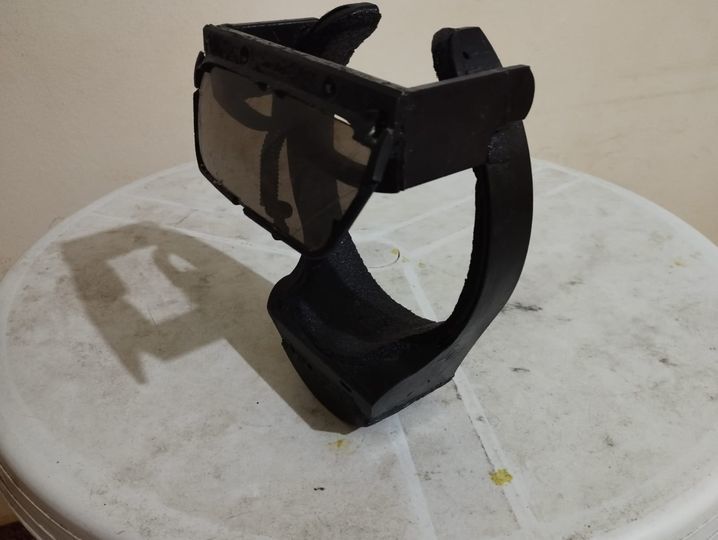
Prototype

Project Story
Inspiration
The inspiration behind our smart glasses for the blind and visually impaired stems from our desire to make the world more accessible and inclusive for everyone. We observed that current technologies for the blind are often limited and do not always meet daily needs. By leveraging advances in artificial intelligence, we saw an opportunity to create a device that could truly transform the lives of millions of people worldwide.
What We Learned
Throughout this project, we learned the importance of empathy and collaboration. By working closely with blind and visually impaired individuals, we gained a better understanding of their daily challenges and how our technology could assist them. We also acquired advanced technical skills in image processing, voice recognition, and artificial intelligence, while discovering the importance of accessibility in product design.
Building the Project
Developing the smart glasses was a complex and rewarding process. Here are some key steps in our journey:
Research and Design: We started with extensive research on the needs of potential users and the available technologies. We then designed several prototypes using VR headset components for their ergonomics and ability to integrate sensors and cameras.
Feature Development: We integrated 25 main features, including:
- Photo capture and text-to-speech conversion: Using computer vision to detect text and convert it to audio.
- Real-time obstacle avoidance: Using an AI-powered camera to detect obstacles and guide the user.
- Navigation and localization: Integrating GPS and mapping technologies to provide precise directions.
- Object recognition: Developing an AI model capable of recognizing over 1000 different objects.
Testing and Iteration: We conducted several phases of testing with blind and visually impaired users to refine our features and ensure intuitive and effective use.
Challenges Faced
We encountered several challenges during this project:
- Technical Complexity: Integrating multiple advanced technologies into a single compact device was a major challenge.
- Accessibility: Ensuring all features were accessible and easy to use for people with varying visual abilities required numerous iterations.
- User Feedback: Collecting and incorporating feedback from end users was crucial but sometimes difficult to coordinate due to diverse expectations and needs.
Conclusion
This project has been an incredibly rewarding experience. We are proud of the progress made and the potential impact of our technology on the lives of blind and visually impaired individuals. We hope these smart glasses will open up new possibilities for independence and inclusion for all.
![Smart Glasses]link
Join us on this journey and share our vision for a more inclusive world!
Built With
- camera
- python
- raspberry-pi
- sensor

Log in or sign up for Devpost to join the conversation.