Inspiration
We built Vision OPS because fabrication machines can fail silently. A 3D print can turn into spaghetti, a laser cutter can create too much smoke, and a CNC job can shift or chatter before the operator notices. Normal cameras only let you watch the problem happen. We wanted to build something smarter: a camera system that can understand the job, detect risk early, and help users prevent wasted time, wasted material, and safety issues.
What it does
Vision OPS is an AI-powered monitoring system for fabrication machines. It uses an intelligent camera and trained AI model to watch 3D printers, CNC machines, and laser cutters while they are running.
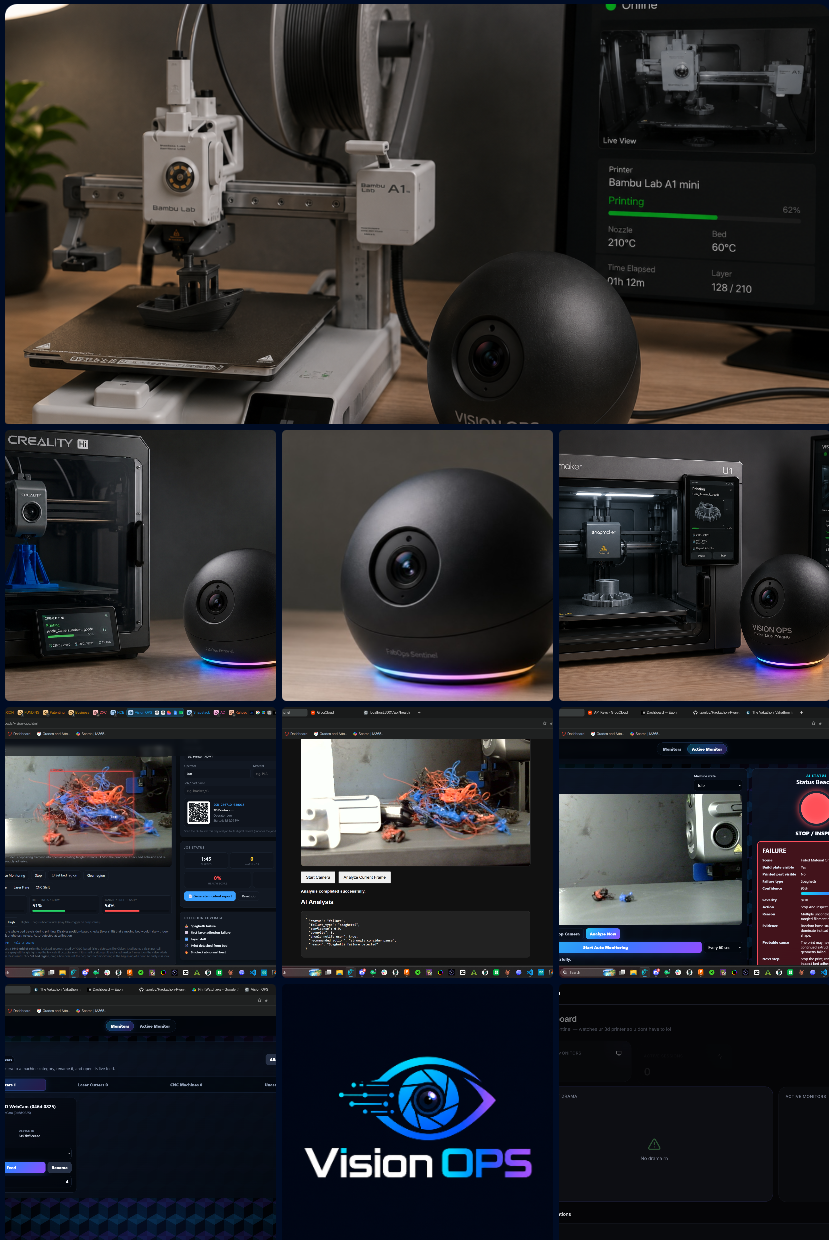
It can detect early signs of failures such as spaghetti prints, poor bed adhesion, layer shifts, smoke buildup, flame risk, tool chatter, and workpiece movement. When it sees a problem, it alerts the user, changes the RGB status light, and explains what likely went wrong. The system can also generate an incident report with snapshots, risk level, root cause, and recommended next steps.
How we built it
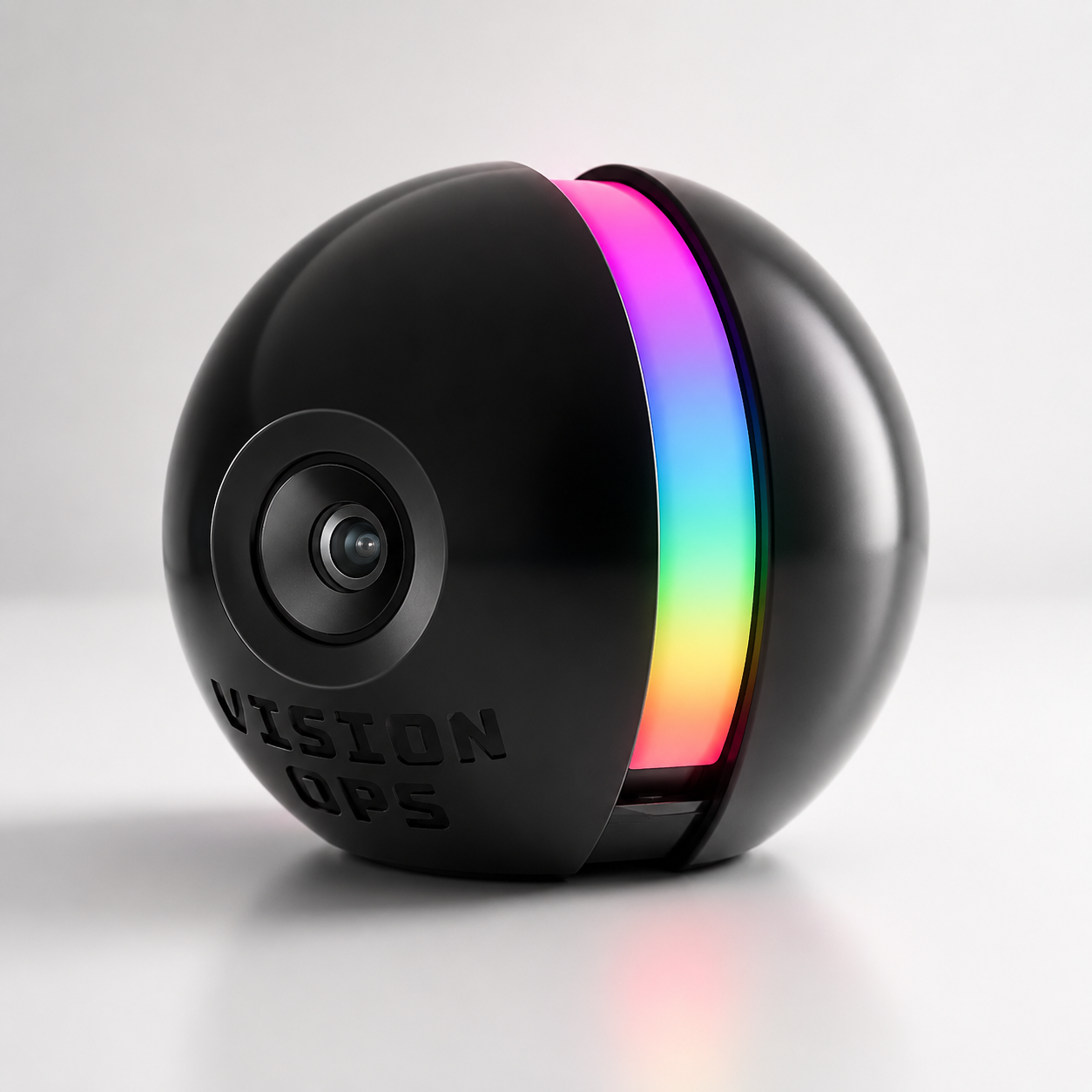
We designed Vision OPS as both a hardware and software project. For the hardware, we created a clean orb-style camera enclosure inspired by smart home devices. Inside the enclosure is a webcam, with a USB-A cable for power and data. We added RGB lighting so the device can visually show machine status, such as healthy, warning, alert, or processing.
For the software, we built a monitoring workflow that takes camera input, analyzes the machine state, and classifies possible problems. We designed the system around fabrication workflows, not just general security footage. The goal was to make the camera understand what it is seeing and turn machine footage into useful operational information.
Challenges we ran into
One major challenge was making the product simple enough to build for a hackathon while still feeling like a real product. We had to avoid overcomplicating the hardware, so we focused on a clean enclosure with one webcam inside.
Another challenge was defining what Vision OPS should detect. 3D printers, CNC machines, and laser cutters all fail in different ways, so we had to create a system that could feel universal while still being specific enough to be useful.
We also had to think about safety. Vision OPS should alert, explain, and document issues, but it should not automatically shut down dangerous machines unless that is done in a safe and supervised way.
Accomplishments that we're proud of
We are proud that Vision OPS is not just another camera. It is a full concept for AI-powered fabrication monitoring. We created a strong product identity, a clean physical design, a clear use case, and a workflow that connects camera input, AI detection, RGB alerts, and incident reports.
We are also proud that the hardware concept is realistic. The enclosure looks polished, but the internal build is simple: one webcam, one USB cable, and a clean housing. That makes the idea easier to prototype and explain.
What we learned
We learned that a strong product does not need to be overly complicated. The best version of Vision OPS is simple hardware combined with smart software. We also learned how important it is to explain the real-world problem clearly: fabrication failures waste time, materials, and sometimes create safety risks.
We learned that AI becomes more valuable when it is connected to a real workflow. Vision OPS is not just detecting images; it is helping operators understand what happened and what to do next.
What's next for Vision OPS
Next, we want to improve the AI model with more real machine footage from 3D printers, CNC machines, and laser cutters. We also want to build a stronger dashboard with job history, machine status, incident timelines, and user alerts.
Future versions could include QR job tracking, better failure classification, support for more machines, and optional sensor integration for temperature, smoke, vibration, or sound. Our long-term goal is for Vision OPS to become the standard AI monitoring layer for makerspaces, robotics labs, schools, and small fabrication shops.


Log in or sign up for Devpost to join the conversation.