-
images/pulse1.jpg
-
images/example1.png
-
images/example2.png
-
images/example3.png
-
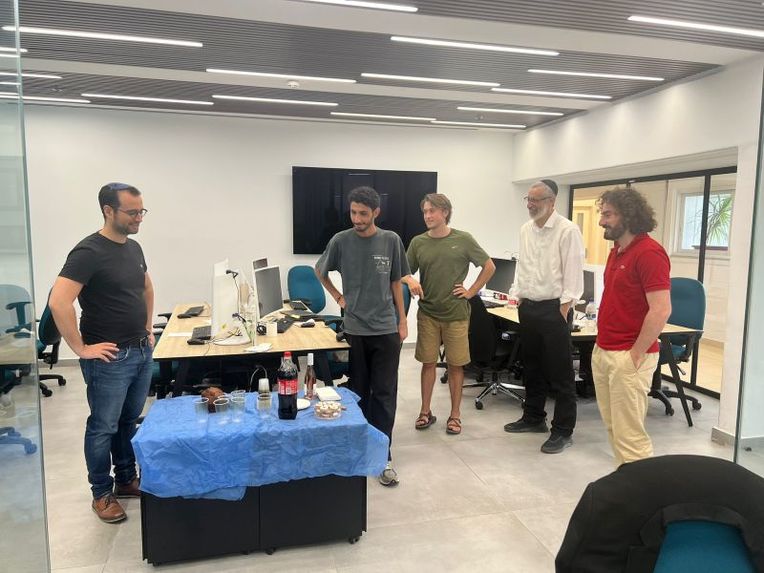
AIMLab - Team
Vision-Language Model for ECG Diagnostics
Master's Research Thesis – Technion, Israel Institute of Technology (AIM Lab)
Supervised by Assoc. Prof. Joachim Behar (Head of AI in Medicine Laboratory - AIMLab) and Jonathan Fhima (PhD Candidate, AIMLab)
Why This Project
ECG interpretation still depends on clinical expertise that isn't always available — especially in emergencies or resource-limited settings. Large proprietary models (GPT-4o, Claude, Gemini) and specialized 7B+ models can read ECG images, but they're costly to run and hard to deploy at the point of care. This project asks a narrower question: how far can a small, open, deployable VLM (256M parameters) get on real ECG interpretation tasks — and where does it fall short?
Project Overview
This repository presents my Master's research project on Vision-Language Models (VLMs) applied to electrocardiogram (ECG) diagnostics.
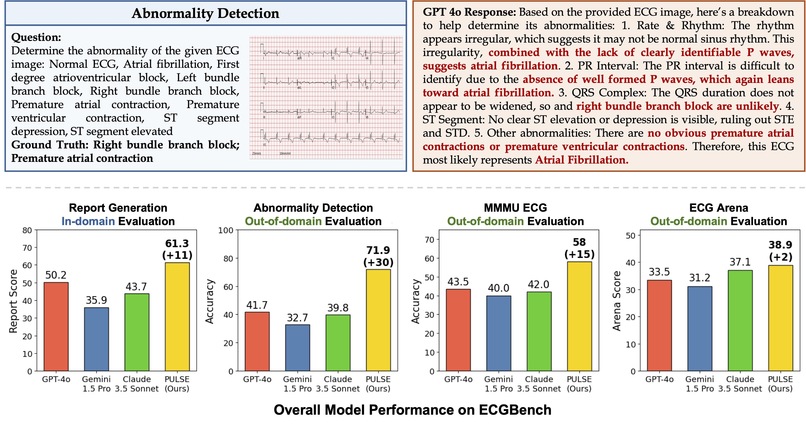
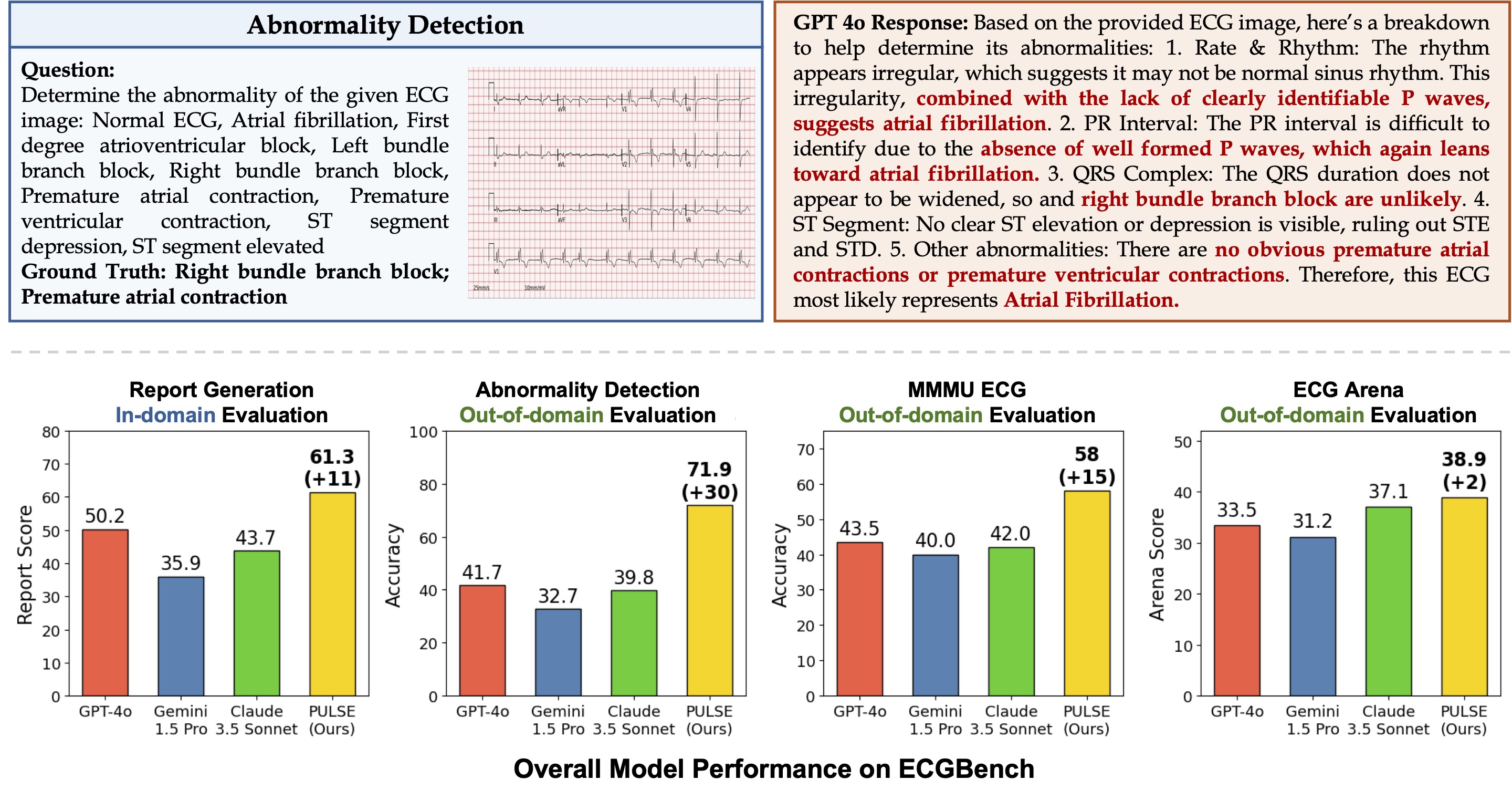
The work builds upon the PULSE benchmark and evaluates SmolVLM-256M-Instruct, a lightweight open-source VLM fine-tuned for ECG reasoning and classification tasks.
Objectives
- Fine-tune SmolVLM-256M-Instruct (256M parameters) for ECG-specific reasoning tasks.
- Benchmark performance against state-of-the-art proprietary and open-source models (PULSE-7B, GPT-4o, Gemini, Claude).
- Focus on the ECGBench benchmark, particularly the CODE15 dataset, using metrics such as F1-score, AUC, Hamming Loss (HL).
Results – CODE15% (In-Domain)
| Model | F1 | AUC | HL |
|---|---|---|---|
| GPT-4o | 24.9 | 59.9 | 15.7 |
| Gemini 1.5 Pro | 20.0 | 56.7 | 15.9 |
| Claude 3.5 Sonnet | 20.3 | 58.3 | 17.8 |
| LLaVA-Med | 27.0 | 69.2 | 33.4 |
| Phi-3 Vision | 22.6 | 69.6 | 38.8 |
| PULSE-7B | 85.4 | 90.7 | 5.0 |
| SmolVLM-256M (Ours) | 27.5 | 65.3 | 16.5 |
Key Insight: Our SmolVLM-256M performs in the upper range of open-source and generalist models — ahead of GPT-4o and Claude 3.5 Sonnet on F1, and ahead of GPT-4o, Gemini, and Claude on AUC — while remaining lightweight and efficient. PULSE-7B remains the clear leader, as expected for a specialized 7B-parameter model, but SmolVLM-256M demonstrates strong adaptability for its size.
Sample Predictions (CODE15)
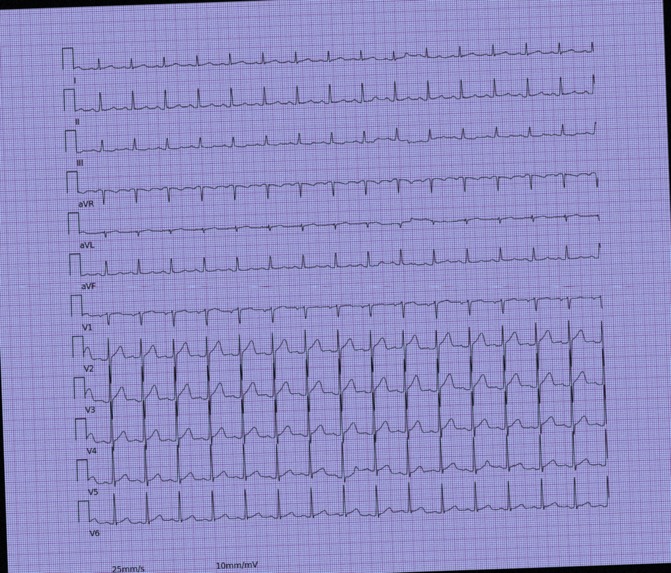
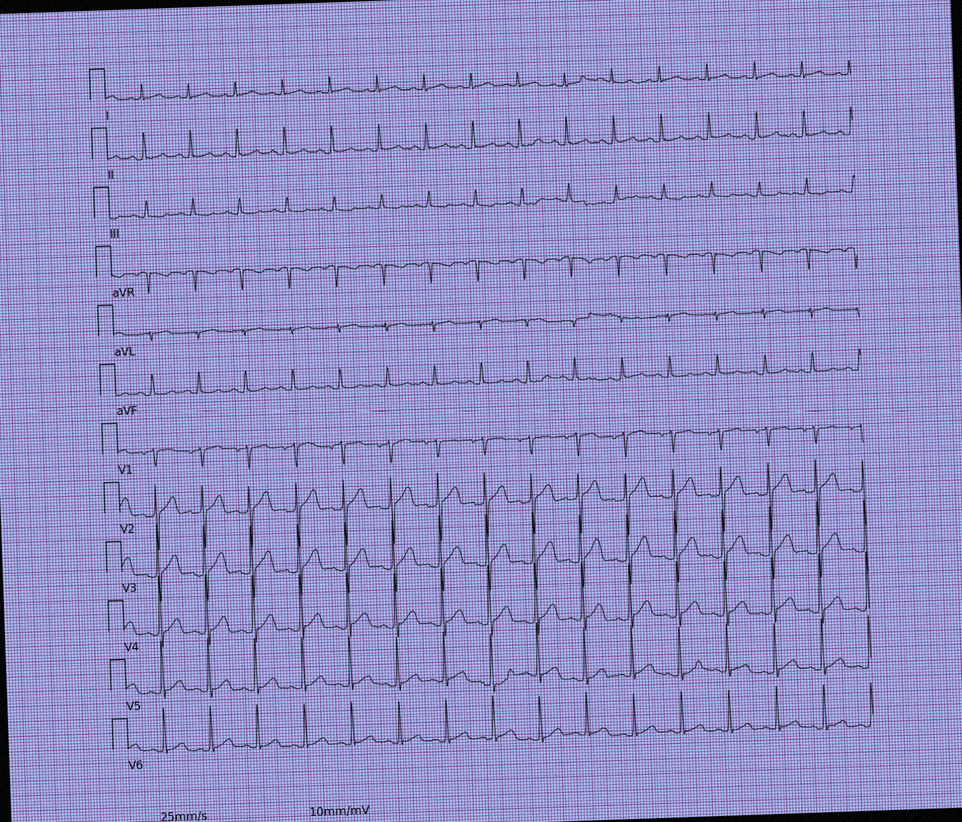
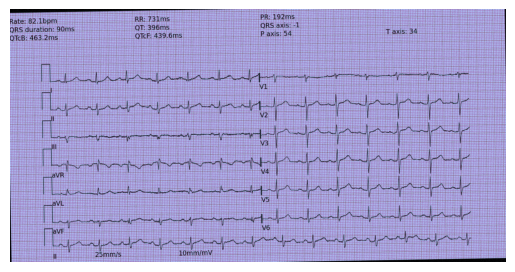
Example 1 – Correct Prediction
Prompt:
The ECG image above belongs to a 54-year-old patient. Identify the cardiac rhythm and classify whether it is NORMAL or ABNORMAL.
Ground Truth: ABNORMAL – Atrial Fibrillation
Prediction (Ours): ABNORMAL – Atrial Fibrillation
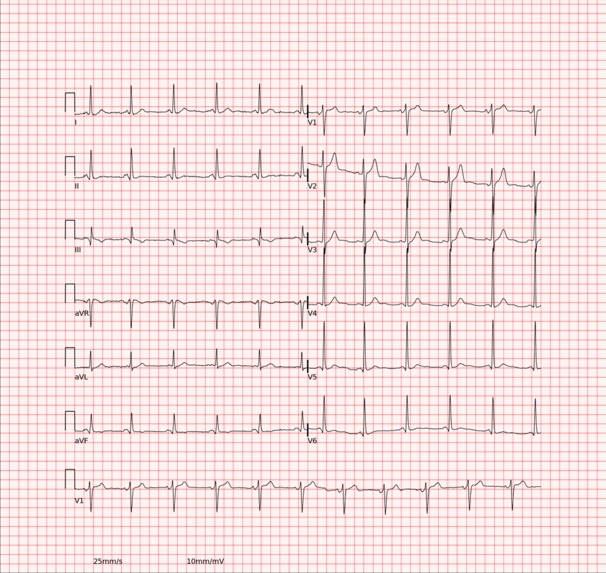
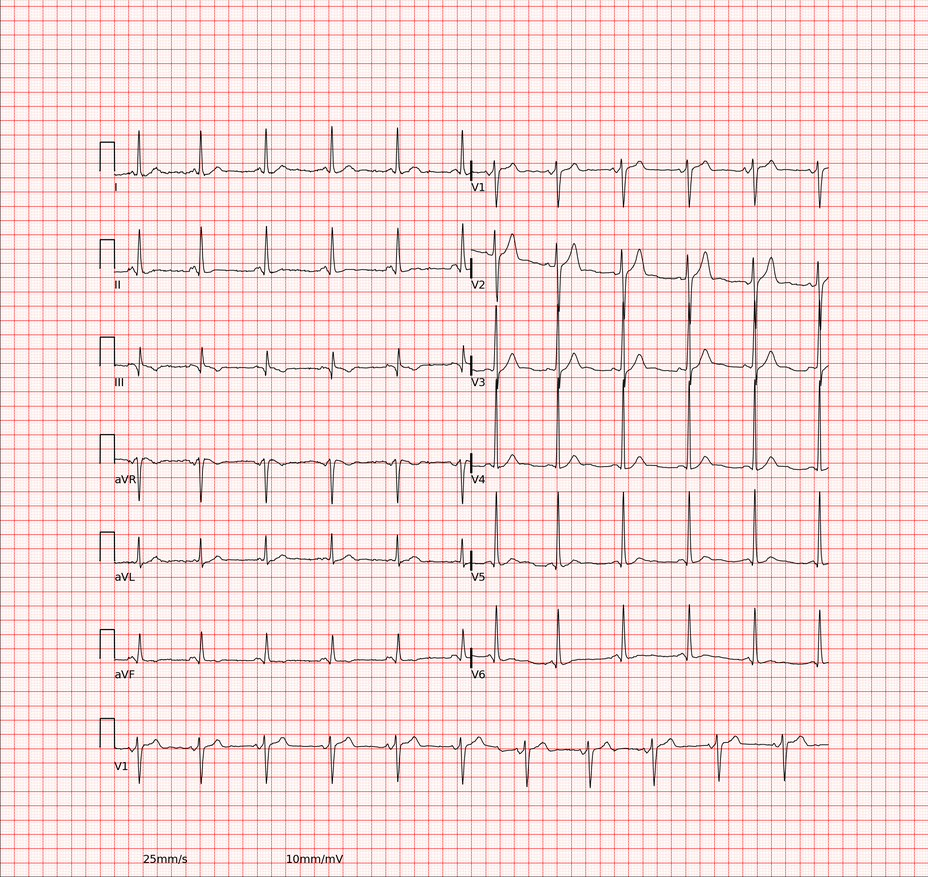
Example 2 – Diagnostic Report
Prompt:
Evaluate the ECG and write a comprehensive diagnostic report.
Ground Truth: Normal sinus rhythm, no arrhythmia or conduction issues.
Prediction (Ours): Sinus rhythm, low QRS voltages (may suggest mild conduction abnormalities).
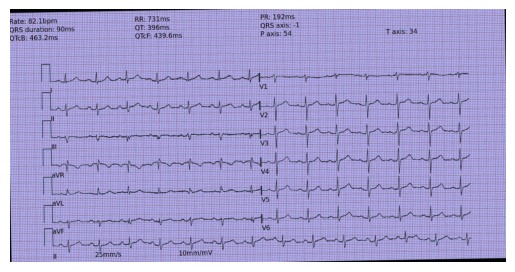
Example 3 – Incorrect Prediction
Prompt:
Classify the ECG condition (NORMAL or ABNORMAL) and specify the rhythm.
Ground Truth: ABNORMAL – Ventricular Tachycardia
Prediction (Ours): NORMAL – Sinus Rhythm
Research Context
This project draws inspiration from the PULSE benchmark, which sets a new standard for ECG reasoning with VLMs.
Our work demonstrates that smaller, optimized models like SmolVLM can achieve competitive results with targeted fine-tuning.
About Me
I hold a Master of Engineering in Computer Science — Diplôme d'Ingénieur from École Centrale d'Électronique (ECE Paris), and completed a Graduate Visiting Program (Master 2) in Data Science (Research Track) at the Technion – Israel Institute of Technology, where this research was conducted at the AI in Medicine Laboratory (AIMLab).
Focus areas:
- Vision-Language Models (VLMs) and Multimodal AI
- Deep Learning for Healthcare Applications
- Model Efficiency and Domain Adaptation
References
- PULSE: PULSE: A Unified Benchmark for ECG Reasoning with VLMs
- SmolVLM: SmolVLM-256M-Instruct – Hugging Face
- Lab: AI in Medicine Laboratory (AIMLab), Technion – https://www.aimlab-technion.com
Built With
- computer-vision
- deep-learning
- huggingface
- multimodal-ai
- numpy
- python
- pytorch
- scikit-learn
- smolvlm
- transformers
- vision-language-model

Log in or sign up for Devpost to join the conversation.