Inspiration Millions of visually impaired people struggle with safe, independent mobility. We wanted to build an affordable, wearable assistant that empowers them to navigate their surroundings confidently using AI.
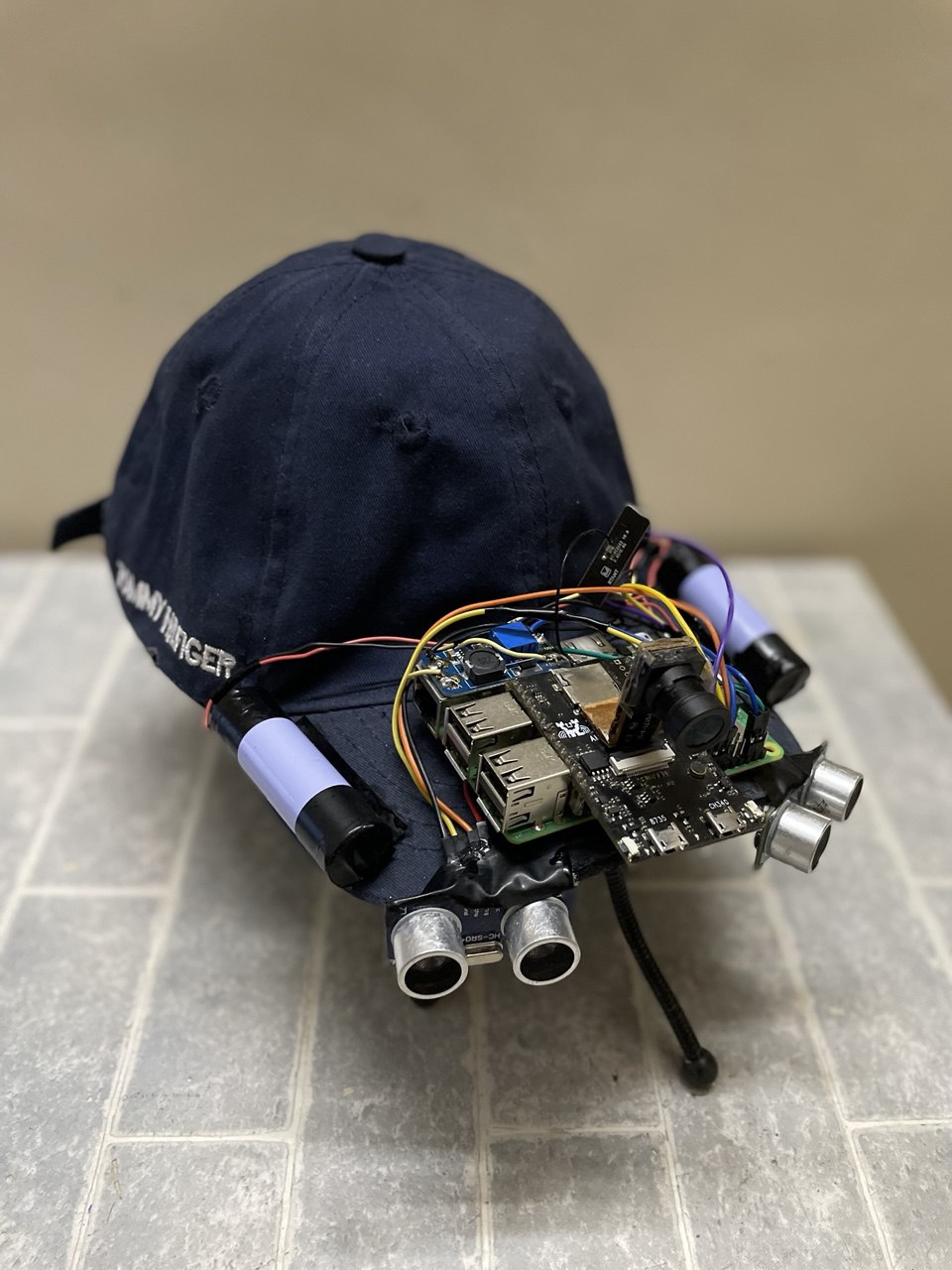
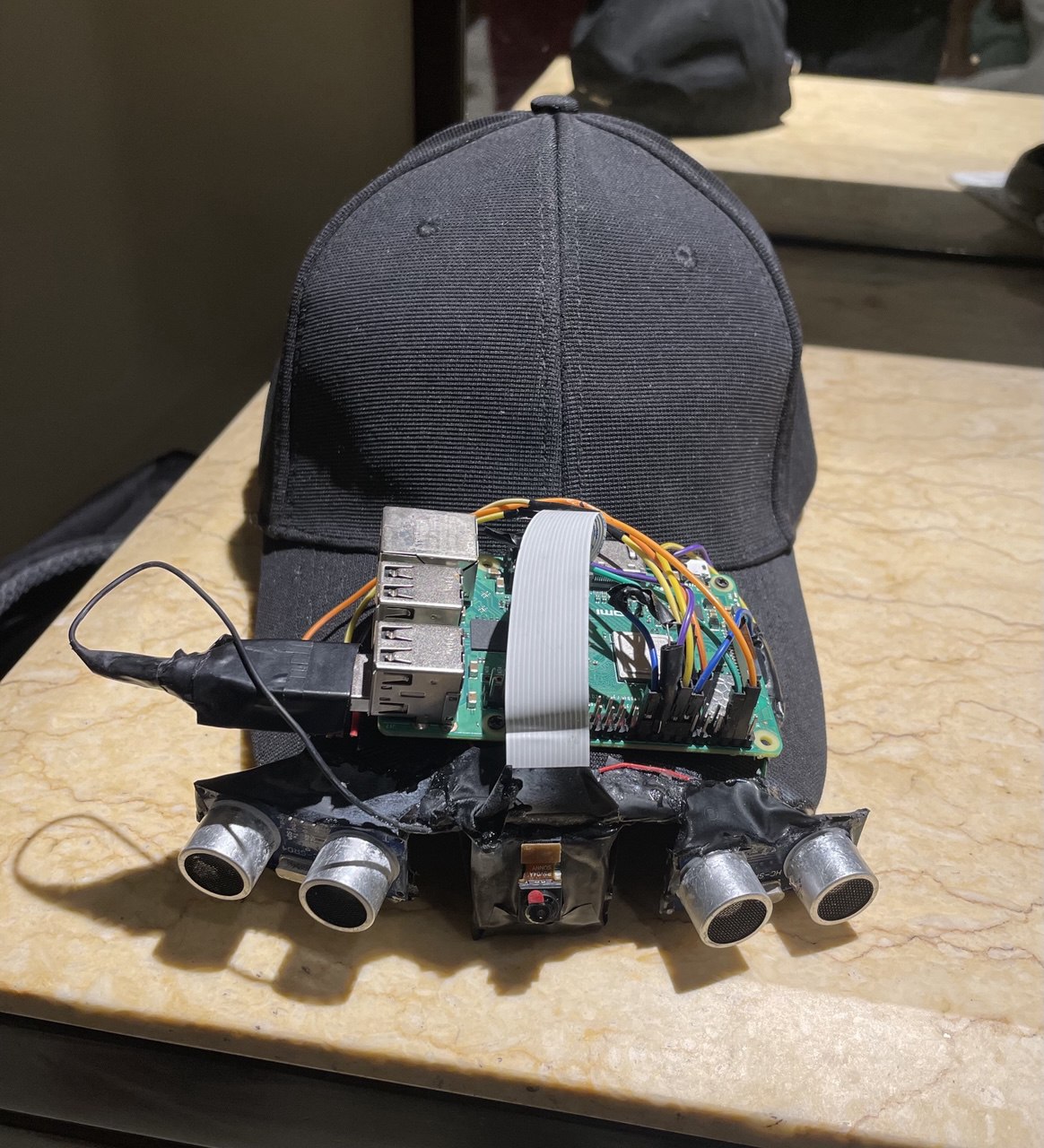
What it does Vision Assistant is a smart cap with an IoT camera and ultrasonic sensors that detect obstacles and surroundings in real-time. It processes this data with AI and delivers clear, timely audio guidance through Bluetooth earphones, helping users avoid obstacles and understand their environment.
How we built it We combined a Raspberry Pi, an Ameba IoT camera, and ultrasonic sensors mounted on a cap. Video and sensor data stream to a server running computer vision and LLM-powered voice interaction. The system analyzes the feed, plans navigation instructions, and communicates with the user through a wireless audio connection.
Challenges we ran into
- Ensuring real-time video/audio streaming with minimal latency.
- Integrating multiple hardware modules with stable connectivity.
- Balancing processing power, battery life, and lightweight design.
- Fine-tuning AI models to handle diverse outdoor conditions accurately.
Accomplishments that we're proud of
- Developed a fully working MVP that streams live video and audio.
- Integrated obstacle detection with accurate distance estimation.
- Delivered clear, real-time audio instructions via Bluetooth earphones.
- Made the system wearable, portable, and user-friendly.
What we learned
- Building real-time, low-latency vision systems on affordable hardware is challenging but achievable.
- Combining computer vision with conversational AI creates powerful assistive tools.
- User-centered design is critical when developing accessibility solutions.
What's next for Vision Ai
- Improve object recognition for richer scene understanding.
- Add GPS for outdoor navigation and route planning.
- Optimize hardware for longer battery life and lighter wearability.
- Pilot test with real users to gather feedback and refine the design.
Built With
- access
- ameba-iot-camera
- bluetooth-earphones-languages:-python
- data
- database:
- debugging
- fastapi-(server)
- for
- hardware:-raspberry-pi-3b+
- logging
- mongodb
- openai-llms-or-gemini-(for-conversational-guidance)
- optional)
- or
- pyaudio-(audio-i/o)
- remote
- sensor
- shell-frameworks-&-libraries:-opencv-(computer-vision)
- sqlite
- ssh
- torch/tensorflow-(for-ai-models)-cloud-&-platforms:-azure-vm-(for-backend-processing)
- ultrasonic-sensors
- user
- websockets/webrtc-(real-time-streaming)-apis-&-tools:-google-speech-to-text-&-text-to-speech

Log in or sign up for Devpost to join the conversation.