💡 Inspiration
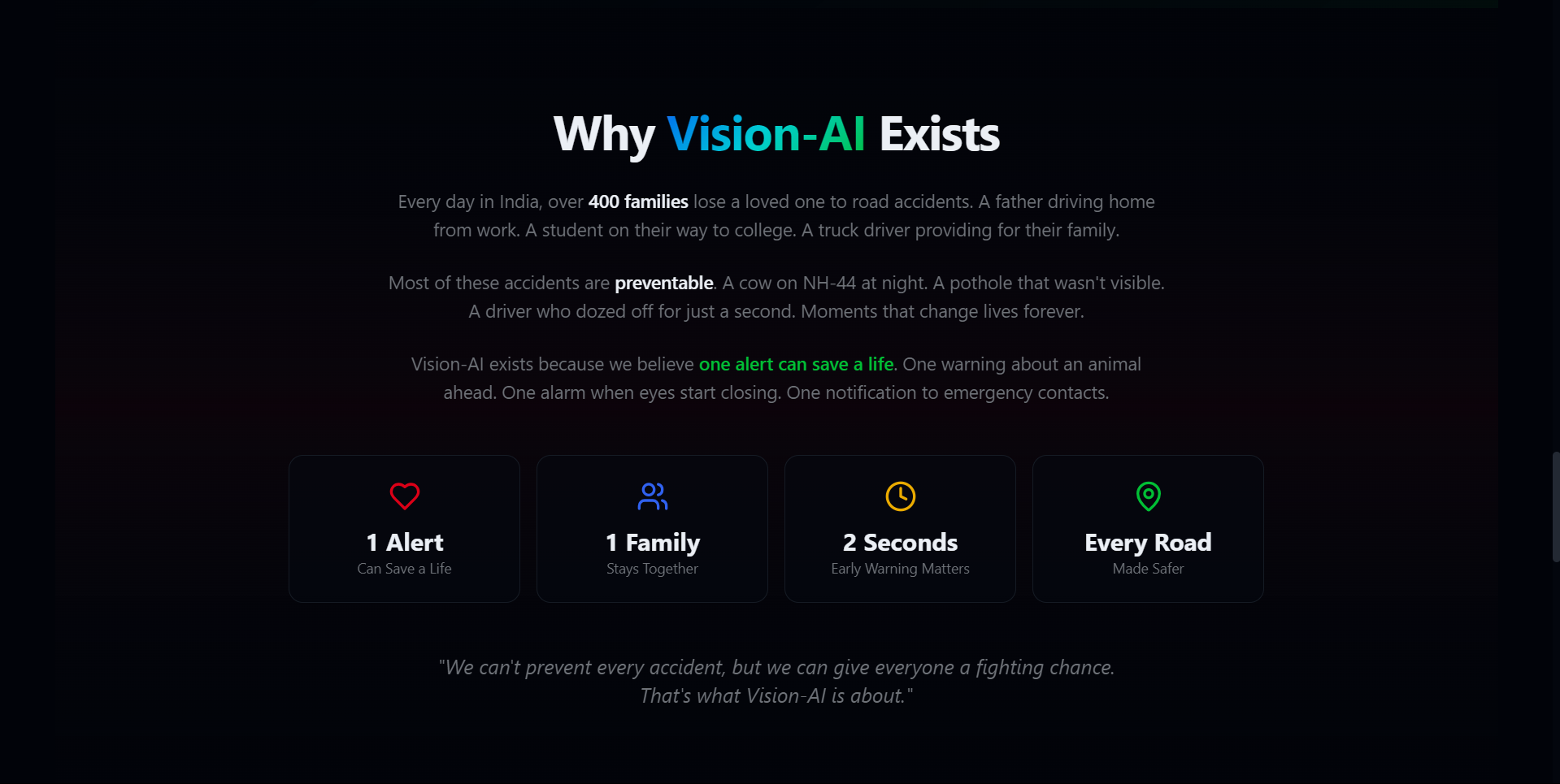
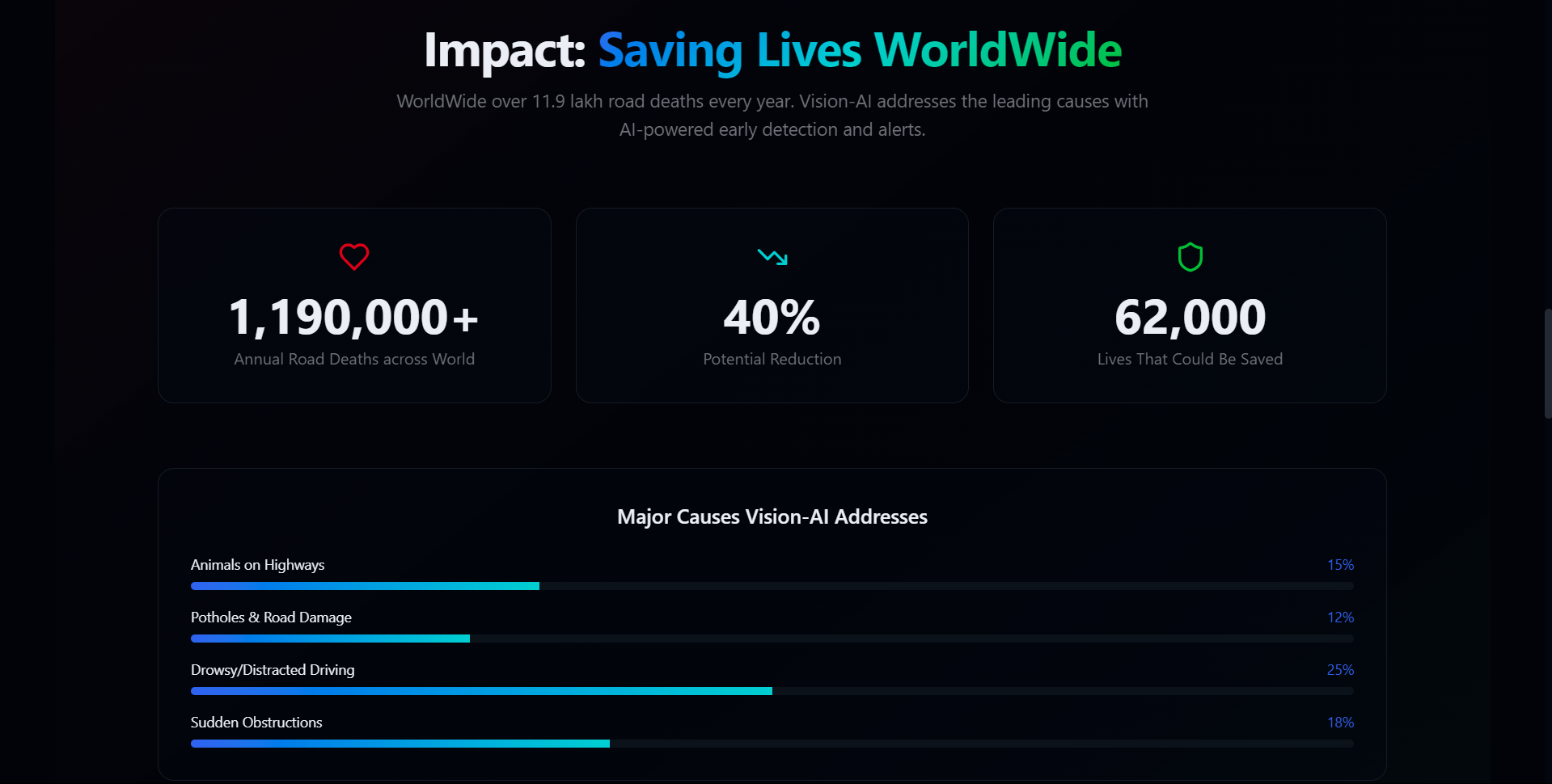
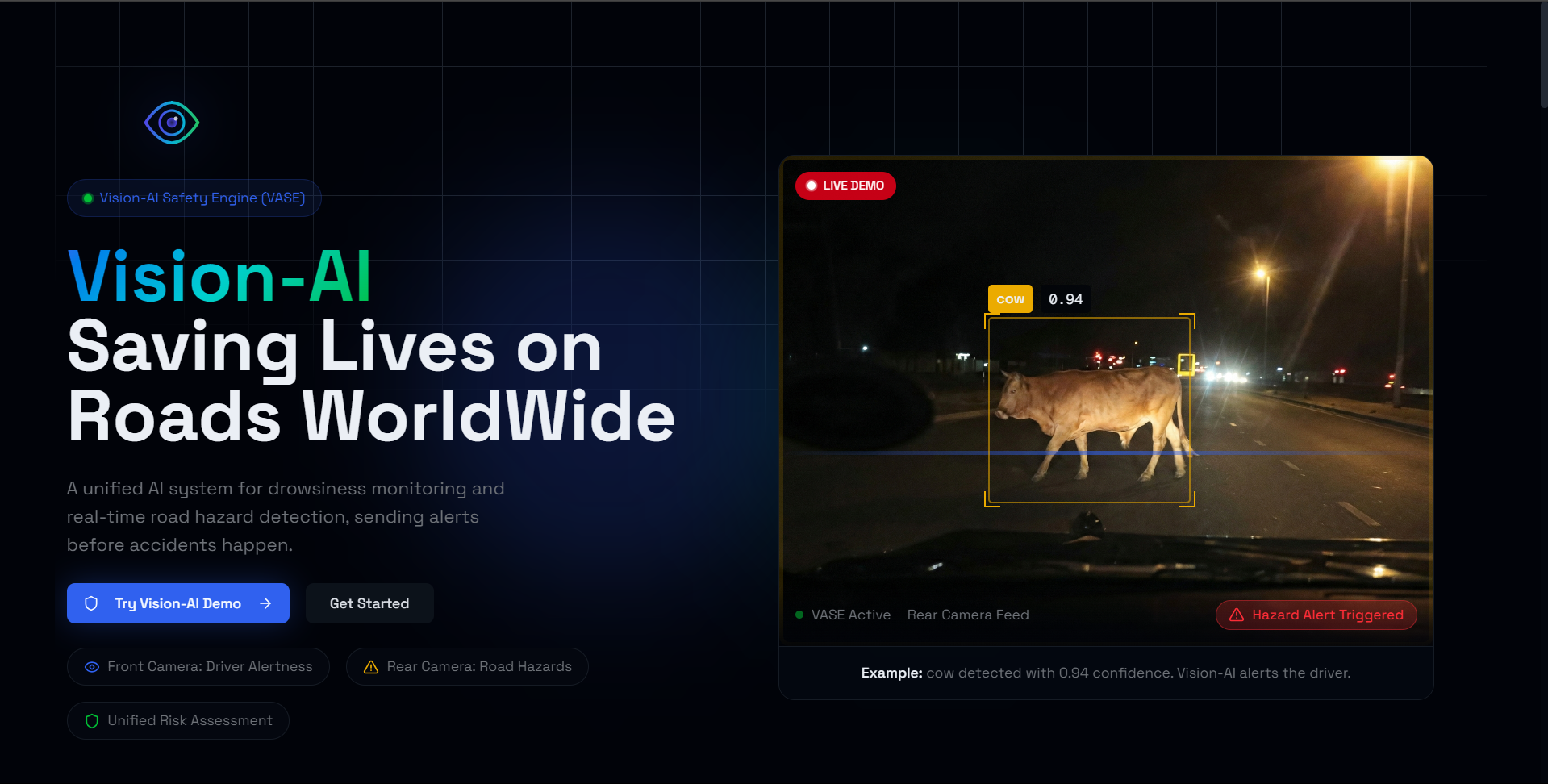
Vision-AI was inspired by the alarming reality of road safety. Every year, millions of lives are lost in preventable road accidents, often caused by driver drowsiness or unseen hazards. Having personally seen how suddenly a road accident can change lives, I wanted to build something practical that could actively prevent accidents rather than just record them. The goal was simple: make advanced road safety accessible to everyone, not just luxury car owners.
🛠️ How I Built It
Vision-AI is built as a software-first, hybrid AI system. The core detection runs entirely on-device using Edge AI, enabling instant response without internet latency. Driver drowsiness is detected using facial landmarks, where eye closure is analyzed mathematically using the Eye Aspect Ratio (EAR):
𝐸 𝐴
𝑅
∥ 𝑝 2 − 𝑝 6 ∥ + ∥ 𝑝 3 − 𝑝 5 ∥ 2 ⋅ ∥ 𝑝 1 − 𝑝 4 ∥ EAR= 2⋅∥p 1
−p 4
∥ ∥p 2
−p 6
∥+∥p 3
−p 5
∥
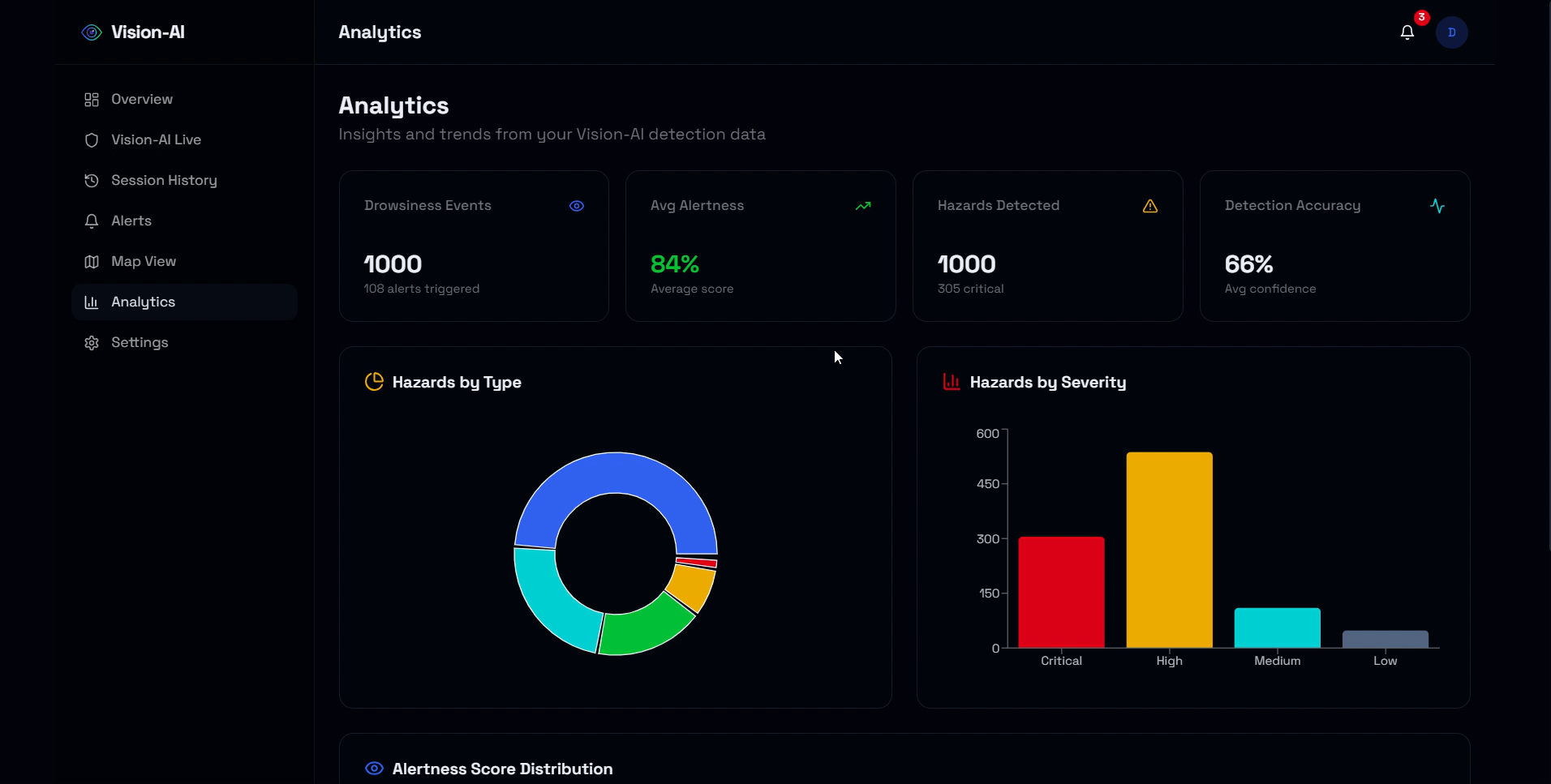
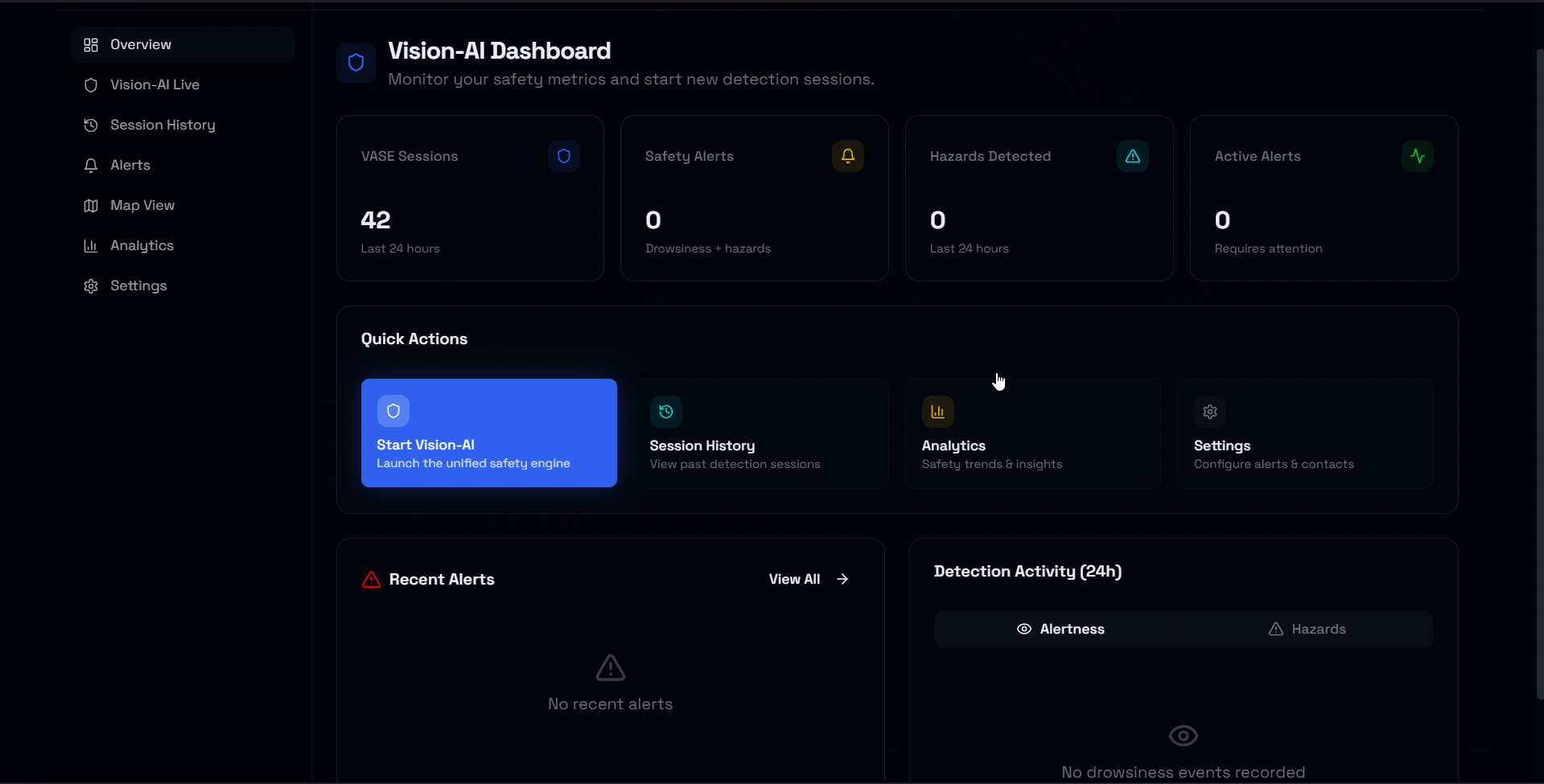
Simultaneously, road hazards such as animals and pedestrians are detected using real-time computer vision. When risk exceeds a threshold, cloud-based AI services are triggered to provide contextual safety guidance and validation. The system is delivered as a web application so it can run on commonly available devices like laptops and smartphones.
📚 What I Learned
This project taught me how to design low-latency AI systems where milliseconds matter. I learned how to balance performance, privacy, and cost by deciding what must run locally and what can be handled by the cloud. I also gained hands-on experience deploying production-ready web applications, integrating cloud services, and designing systems that scale beyond a prototype.
🚧 Challenges Faced
One of the biggest challenges was deploying a real-time AI application that depended on multiple cloud services. During deployment, the build repeatedly failed due to early initialization of backend clients before environment variables were available. I solved this by refactoring the code to use lazy initialization, ensuring services were only created at runtime.
Another challenge was reducing false alerts while maintaining real-time performance. This was addressed by combining fast on-device detection with cloud-based validation only when risk levels crossed a critical threshold.
🌍 Impact & Vision
Vision-AI demonstrates how AI for Good can be practical, affordable, and scalable. By using devices people already own, it removes financial barriers and has the potential to improve road safety globally—especially in regions where advanced vehicle safety systems are inaccessible.
Built With
- azure-ai-vision
- azure-maps
- azure-openai-service
- javascript
- mediapipe
- next.js-(react)
- node.js
- supabase-(postgresql)
- tailwind
- tensorflow.js
- webgl

Log in or sign up for Devpost to join the conversation.