-
-
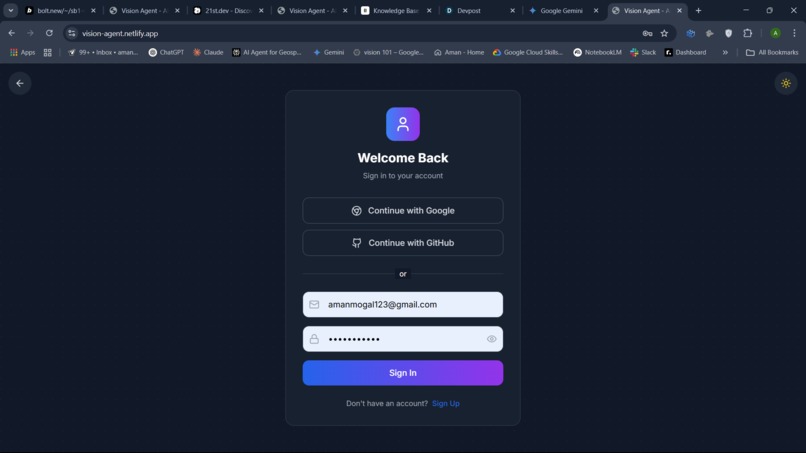
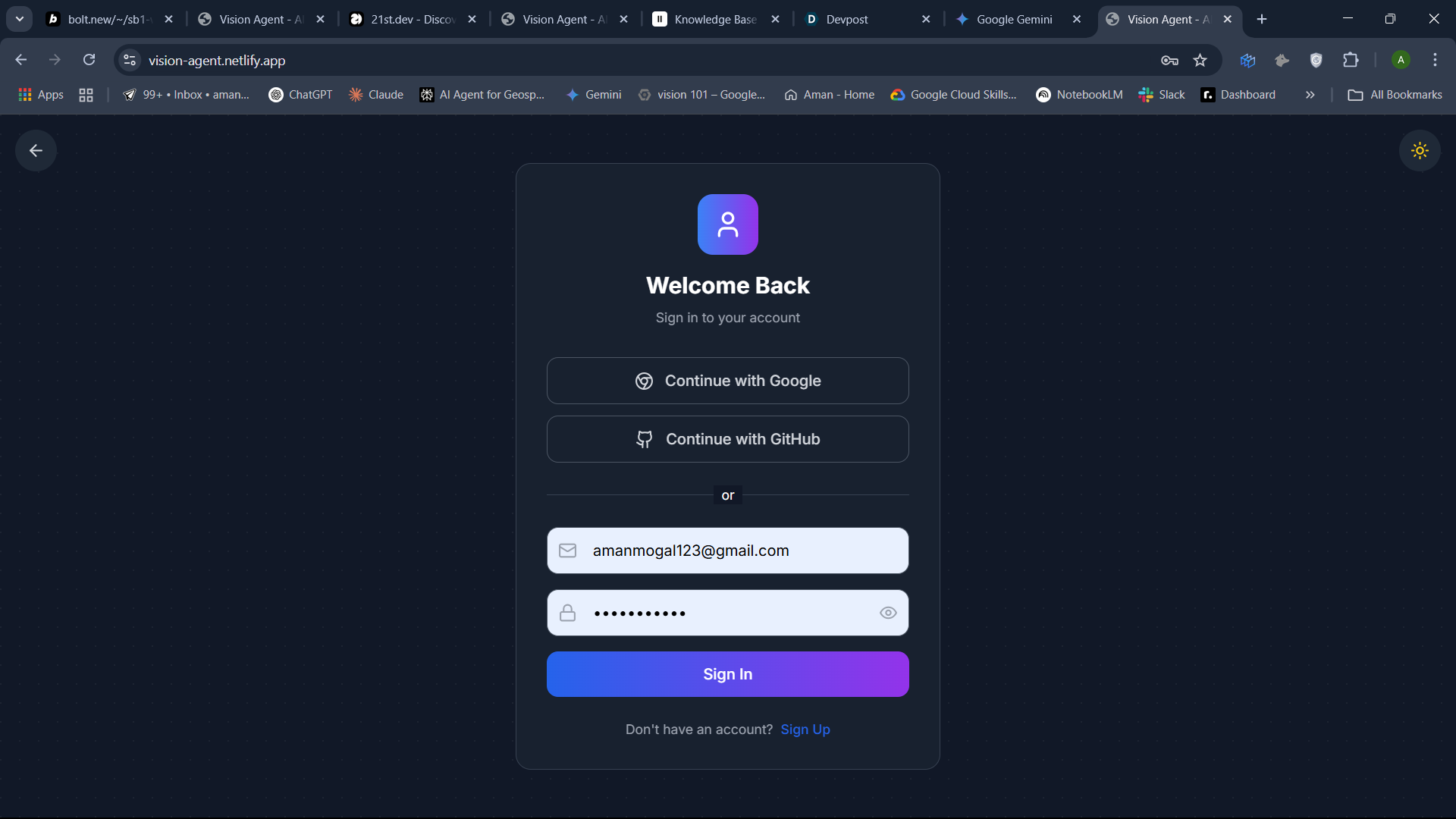
auth page
-
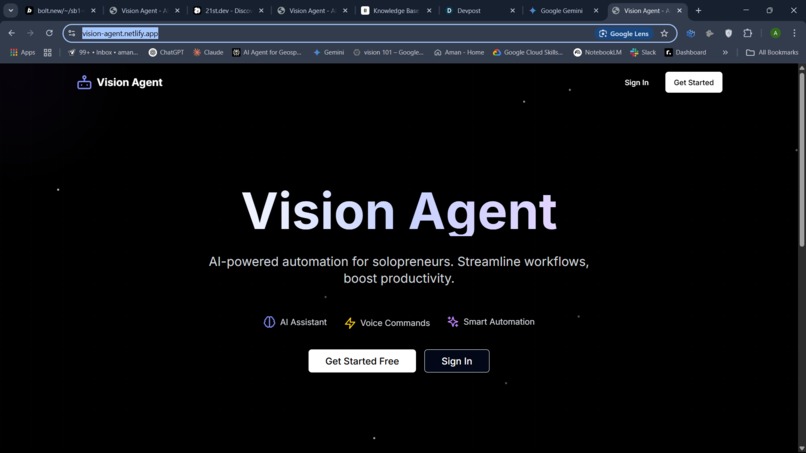
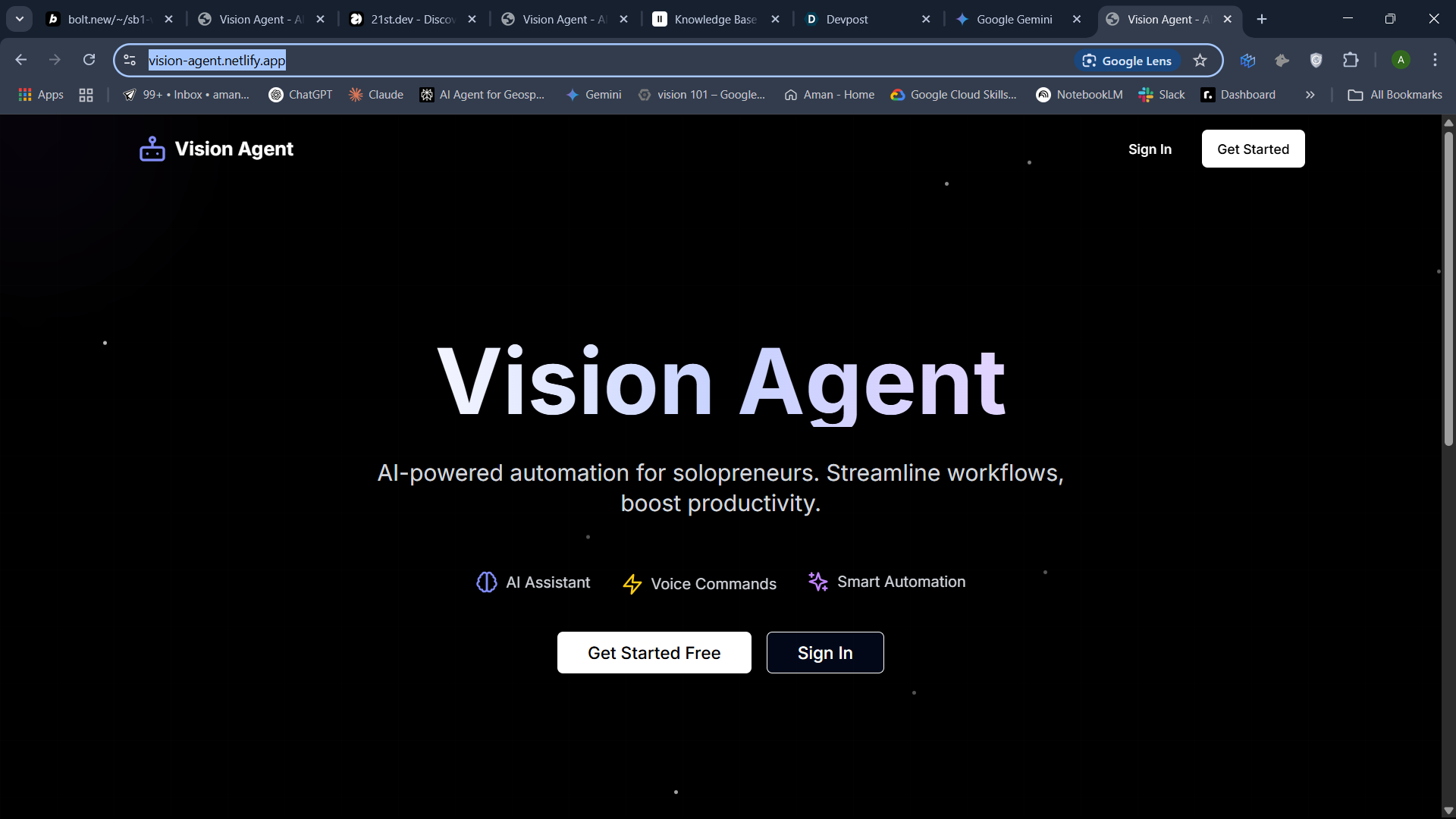
Landing page
-
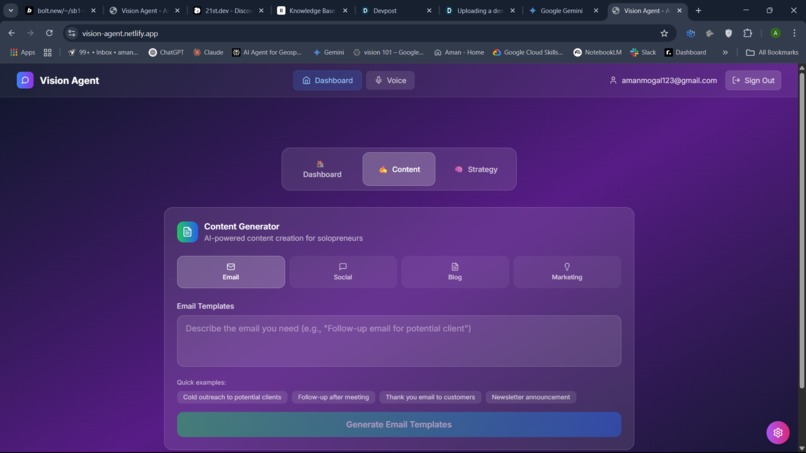
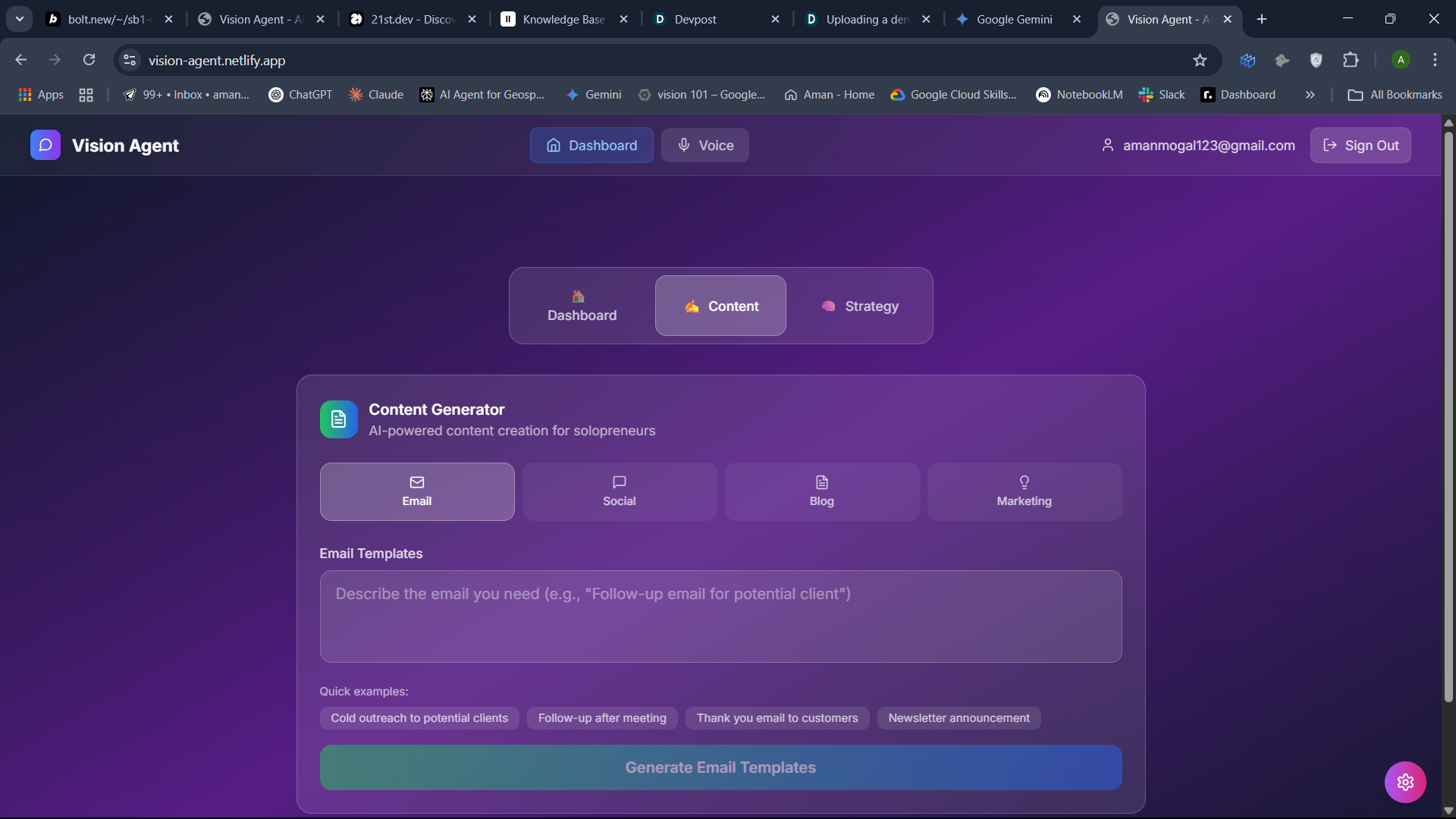
content generation page with voice conversation
-
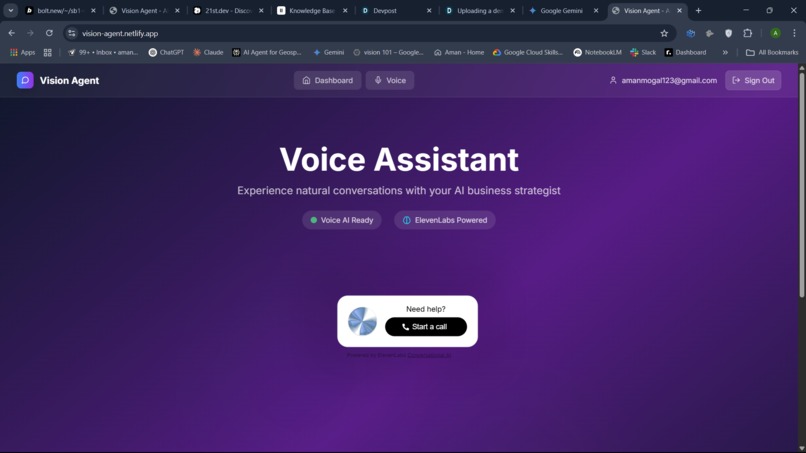
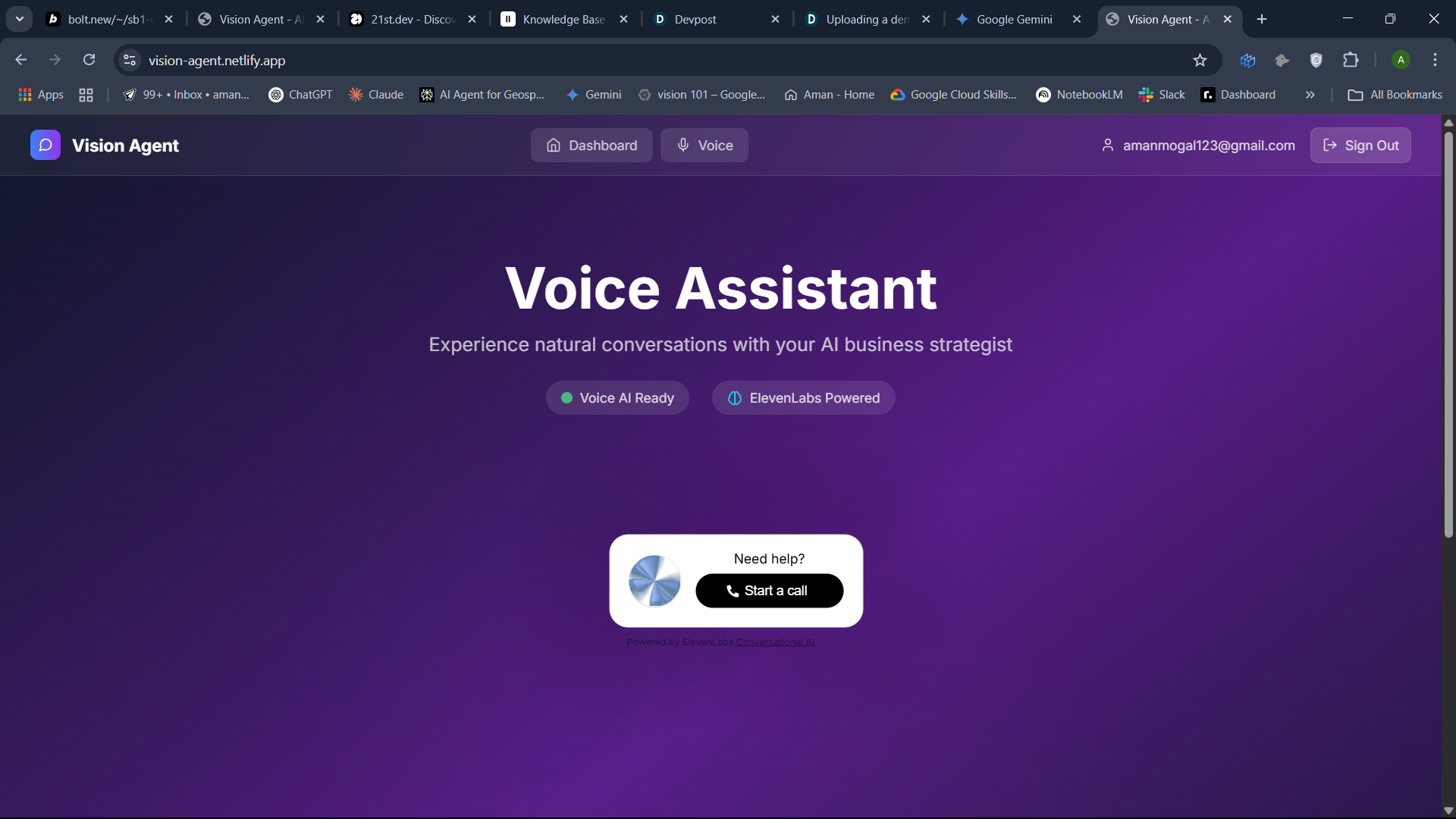
personal voice assistant for your task
-
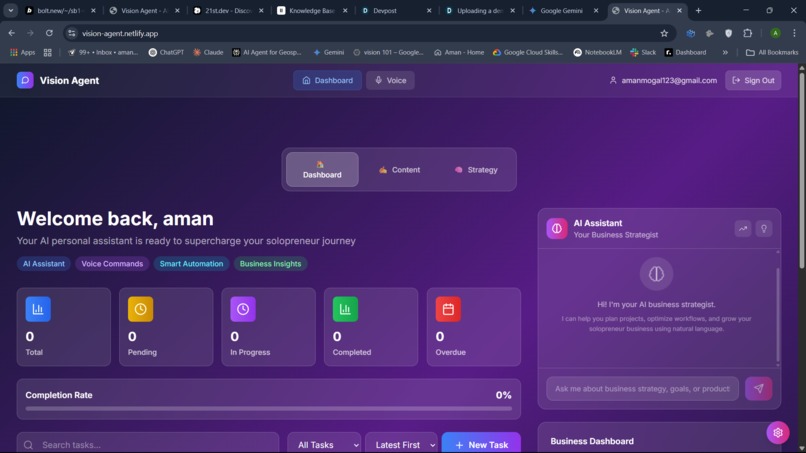
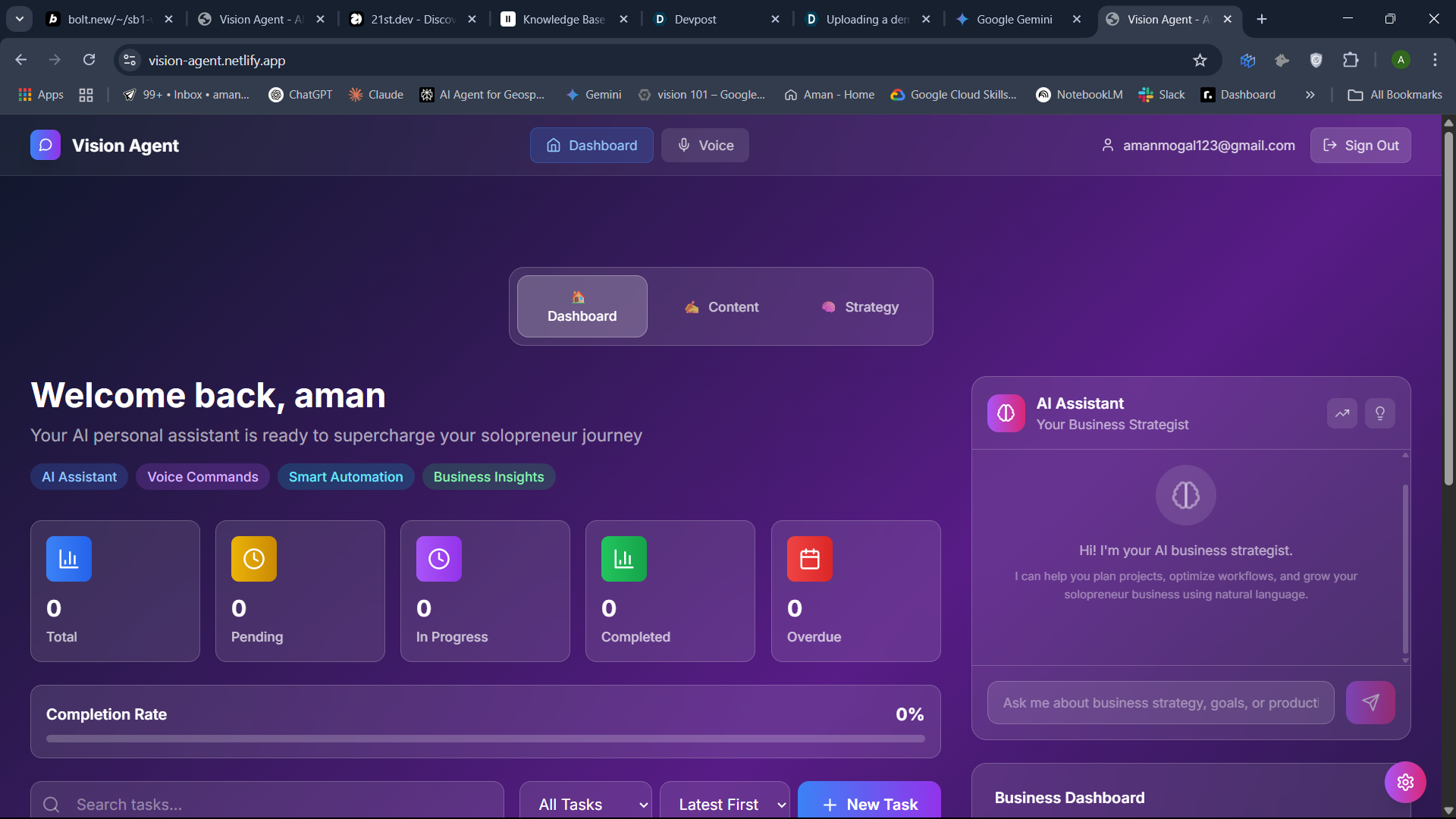
dashboard to track tatsk, schedules and progress
-
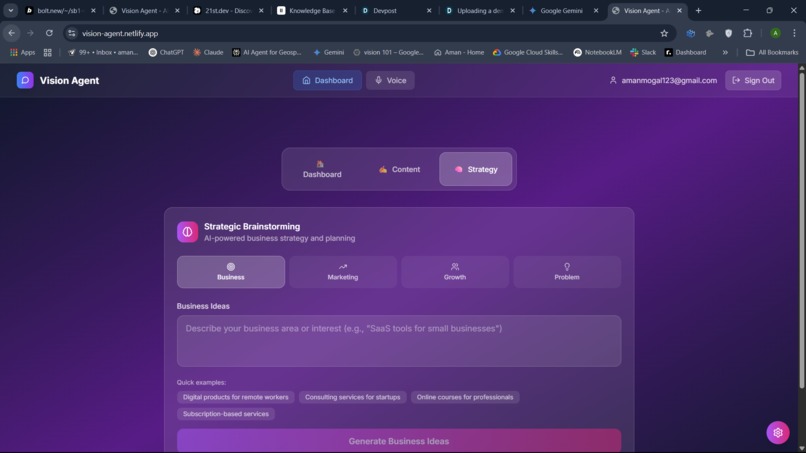
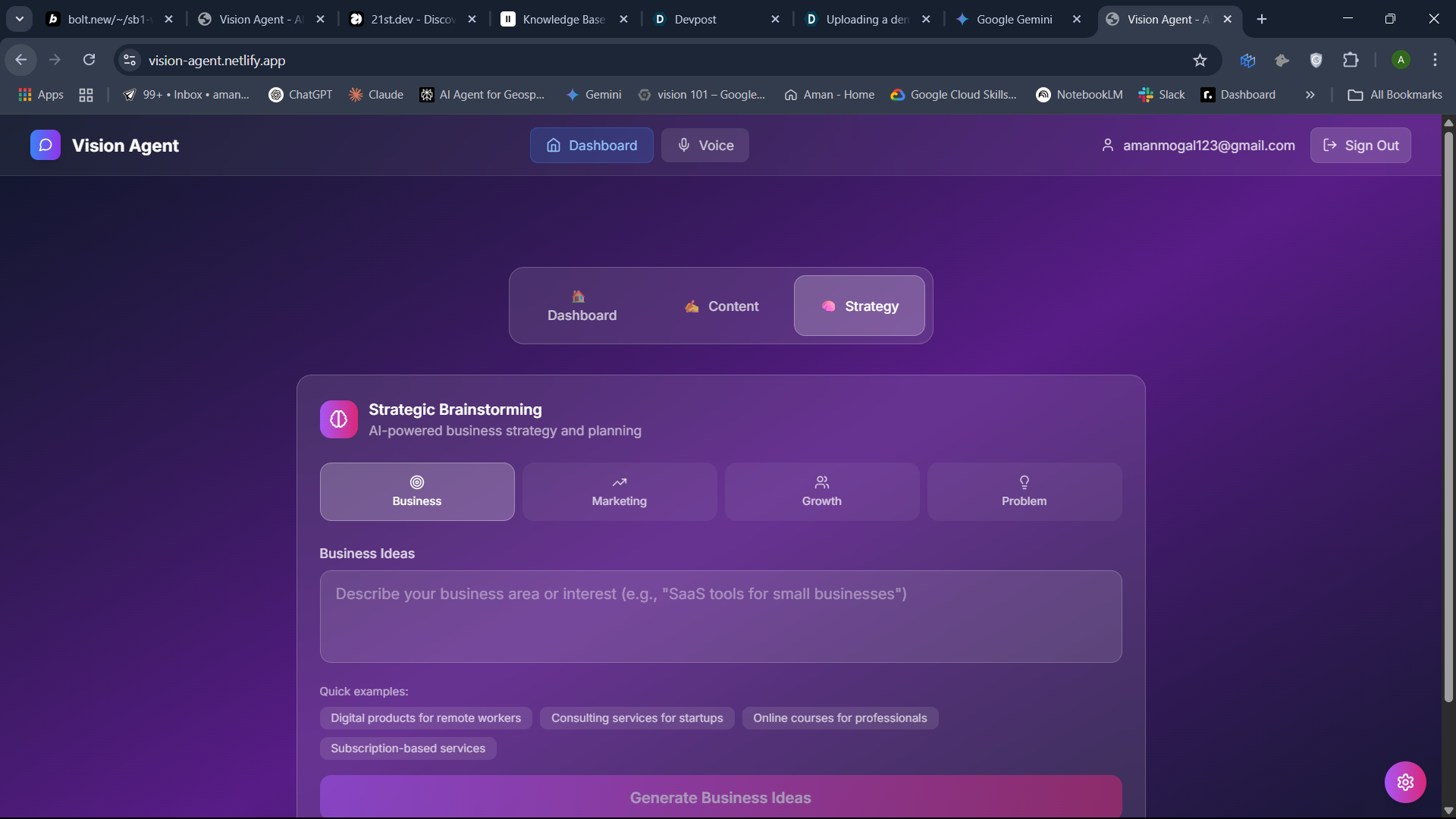
Strategies for business brainstorming
The journey of building Vision Agent began with a common challenge: the overwhelming juggle faced by solopreneurs. They're the strategists, the marketers, the project managers, and the hands-on doers, all rolled into one. While existing AI assistants offer convenience, they often lack the depth, context, and proactive capabilities truly needed to drive business growth. We envisioned a world where solopreneurs had a dedicated, intelligent partner – an AI that wasn't just a chatbot, but a true co-pilot capable of understanding nuanced business needs, taking action, and even presenting information in a human-like way. This desire to empower the bustling world of solopreneurship became our core inspiration.
The Build Journey: From Concept to Multimodal Reality
Building Vision Agent was an exhilarating sprint, bringing together cutting-edge AI and a robust web stack. We started with a solid foundation: a React web application for its dynamic UI capabilities, coupled with Tailwind CSS for rapid, responsive design that looks great on any device. The immediate challenge, and a significant learning curve, was an architectural pivot: midway, we decided to switch our backend from Firebase to Supabase. This provided us with a powerful, open-source alternative for secure user authentication and real-time data synchronization for task management, which proved invaluable for the agent's responsiveness.
The true magic of Vision Agent lies in its AI core. We harnessed the power of Google Gemini's function-calling capabilities, meticulously crafting prompts that allow the agent to move beyond simple conversation. It learns to understand intent and trigger specific actions – like adding a task to your Supabase-powered project board or retrieving key information.
To make the agent truly come alive, we dived into multimodal AI. ElevenLabs was integrated to give Vision Agent a high-quality, professional-sounding voice, transforming monotonous text-to-speech into an engaging auditory experience.
Challenges and Triumphs: Navigating the AI Frontier
Building Vision Agent within a tight hackathon deadline presented its share of hurdles:
- The Supabase Pivot: The decision to switch from Firebase to Supabase mid-project was a calculated risk. It required quickly learning a new ecosystem for authentication and database operations, refactoring existing code, and troubleshooting new integration points under pressure. This challenge ultimately strengthened our understanding of diverse backend solutions.
- Orchestrating Multimodal AI: Synchronizing ElevenLabs' audio output generation, all while the Gemini model was processing complex requests, proved to be a delicate dance. Ensuring smooth, real-time playback without noticeable delays required careful state management and asynchronous programming.
- Precise Prompt Engineering for Agentic Behavior: Getting Gemini to reliably identify specific intents and extract accurate parameters for our custom functions was an iterative process. It involved extensive testing and refinement of our prompts to ensure the agent consistently understood and executed actions as intended.
- API Key Management: With multiple powerful APIs (Gemini, ElevenLabs), securely handling API keys in a client-side web application while adhering to best practices was a constant consideration.
- Time-Boxing Features: The sheer potential of the project meant constant vigilance against scope creep. We learned to prioritize core, high-impact features for the demo, saving ambitious stretch goals for the future roadmap.
Despite these challenges, the triumphs of seeing Vision Agent come alive – hearing its clear voice, witnessing its avatar speak, and watching it intelligently manage tasks – fueled our determination. It's a testament to the power of collaborative problem-solving and the incredible capabilities offered by the Bolt.new builder pack. We're proud to present Vision Agent as a glimpse into the future of intelligent, multimodal assistance for solopreneurs.
Built With
- ai
- autoprefixer
- bolt.new
- clsx
- css
- elevenlabs
- eslint
- framer
- gemini)
- github
- javascript
- lucide
- motion
- node.js
- postcss
- postgresql
- radix
- react
- react-three/fiber
- sql
- supabase
- tailwind
- tailwind-merge
- three.js
- typescript
- ui
- vite

Log in or sign up for Devpost to join the conversation.