Inspiration
Visioant is a solo build - there is no team behind the name on the tin. It comes from a decade working in SEO: agency delivery, in-house ops, audits, content programs, and the recurring gap between what teams need to execute and what they can actually afford to run.
That experience shaped the product direction. Most SEO ops do not need another chat box that improvises prose. They need fast execution, transparent cost control, and outputs grounded in real data GSC, GA4, crawls, SERP APIs, site structure, rankings not generic LLM filler.
Visioant is for individuals and small teams who want agency-grade workflows without agency retainers: practitioners who move quickly, swap models by task, and still expect defensible, data-backed deliverables.
What it does
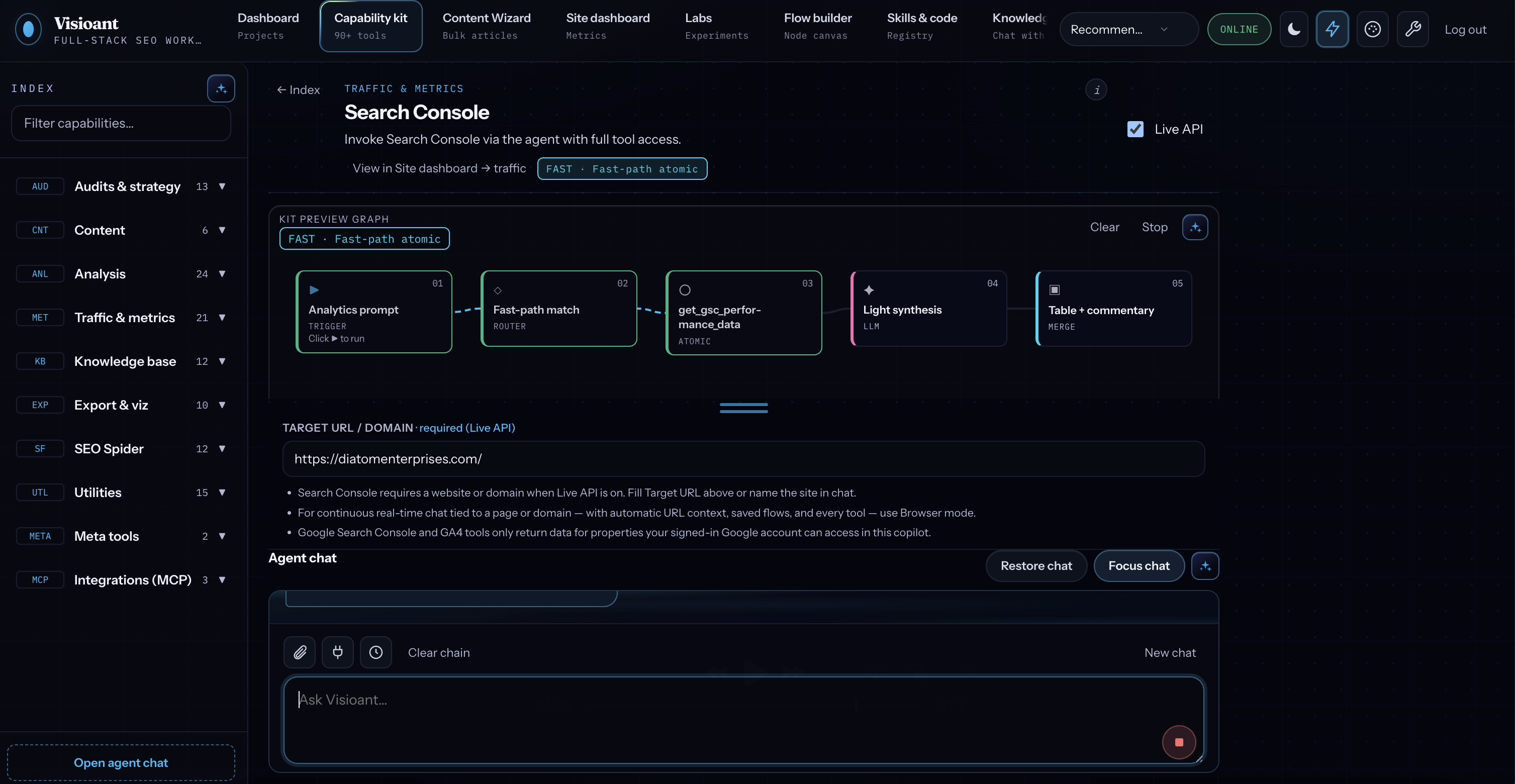
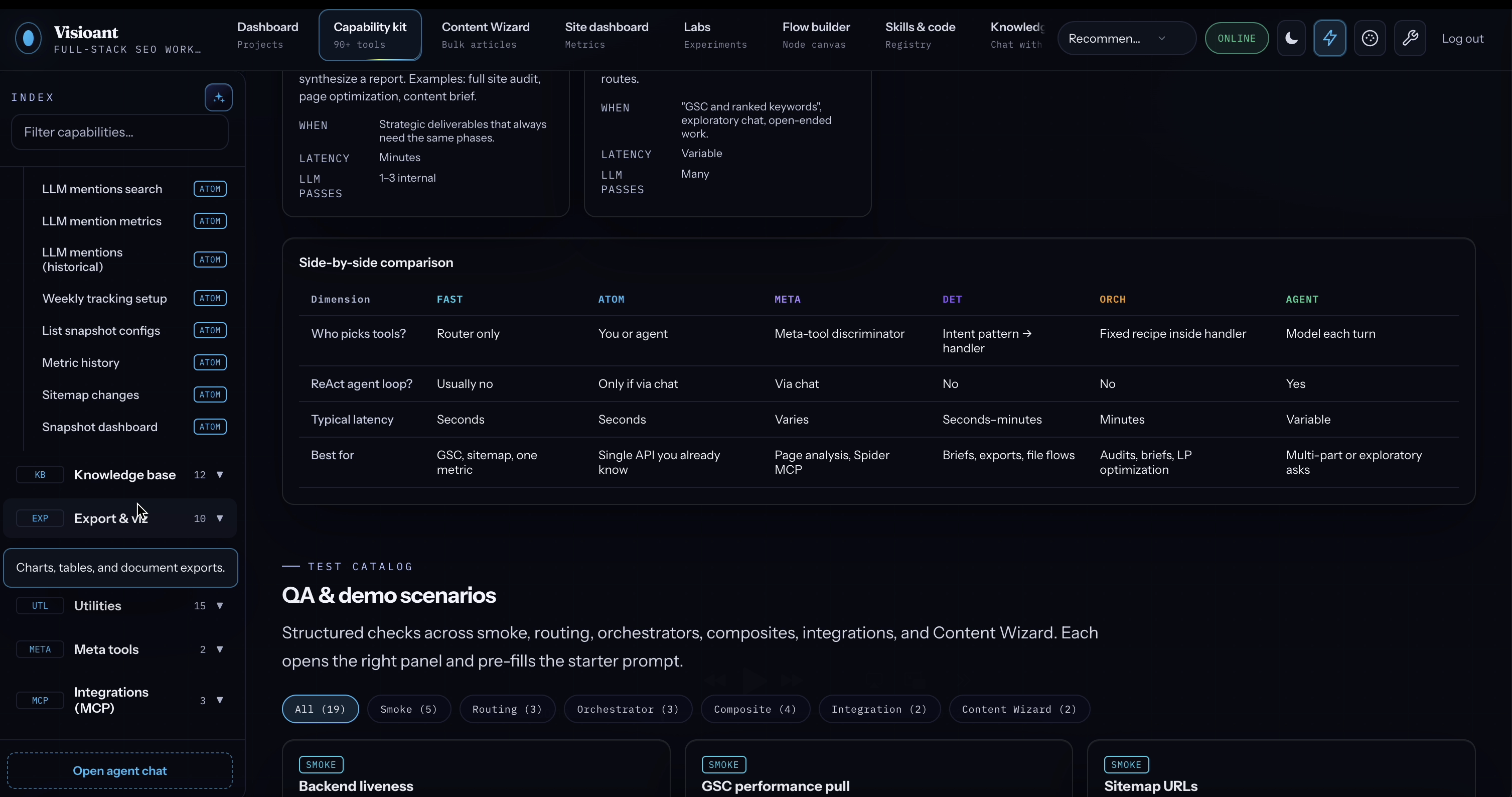
Visioant is a full-stack SEO workspace that combines:
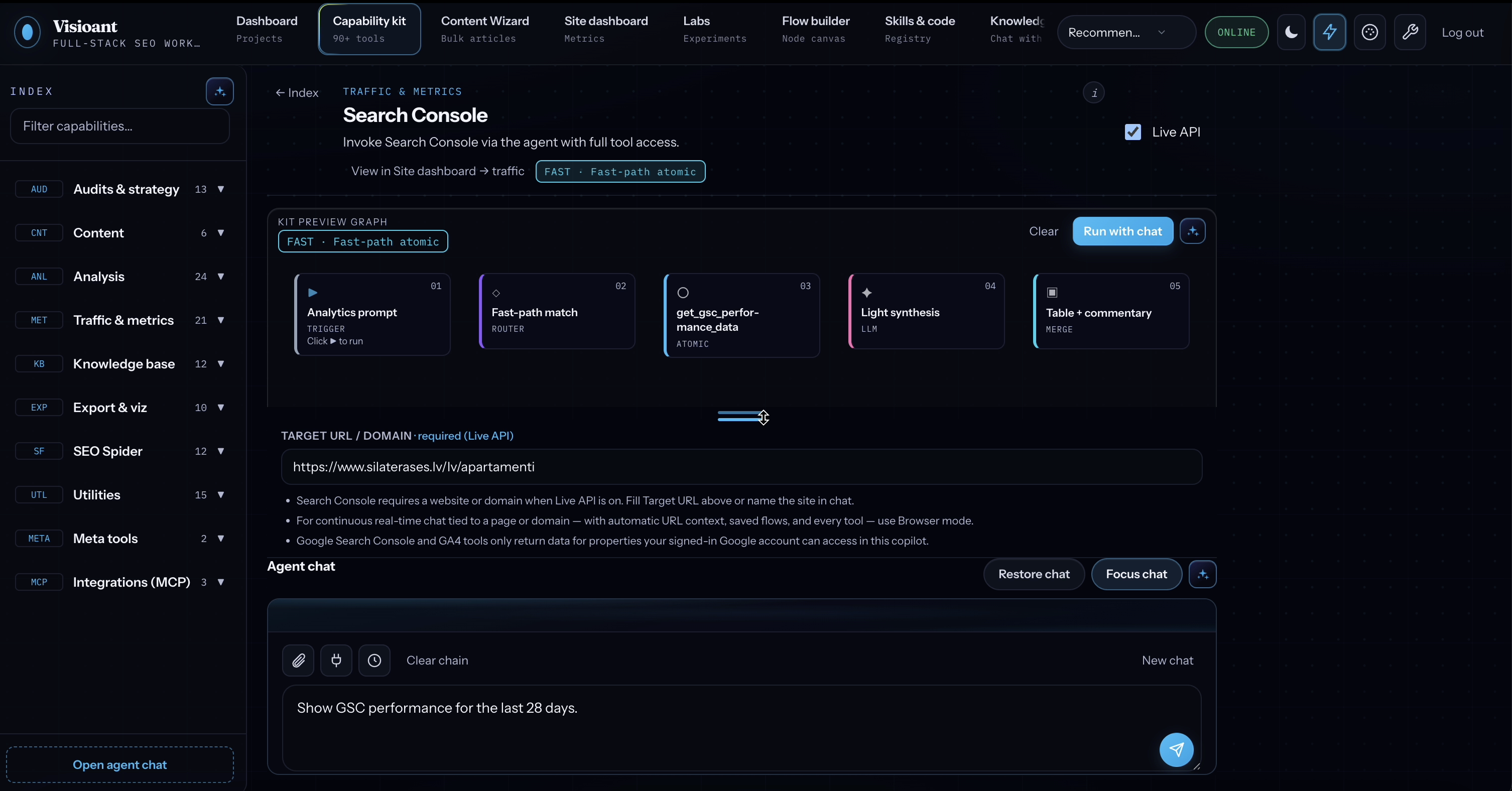
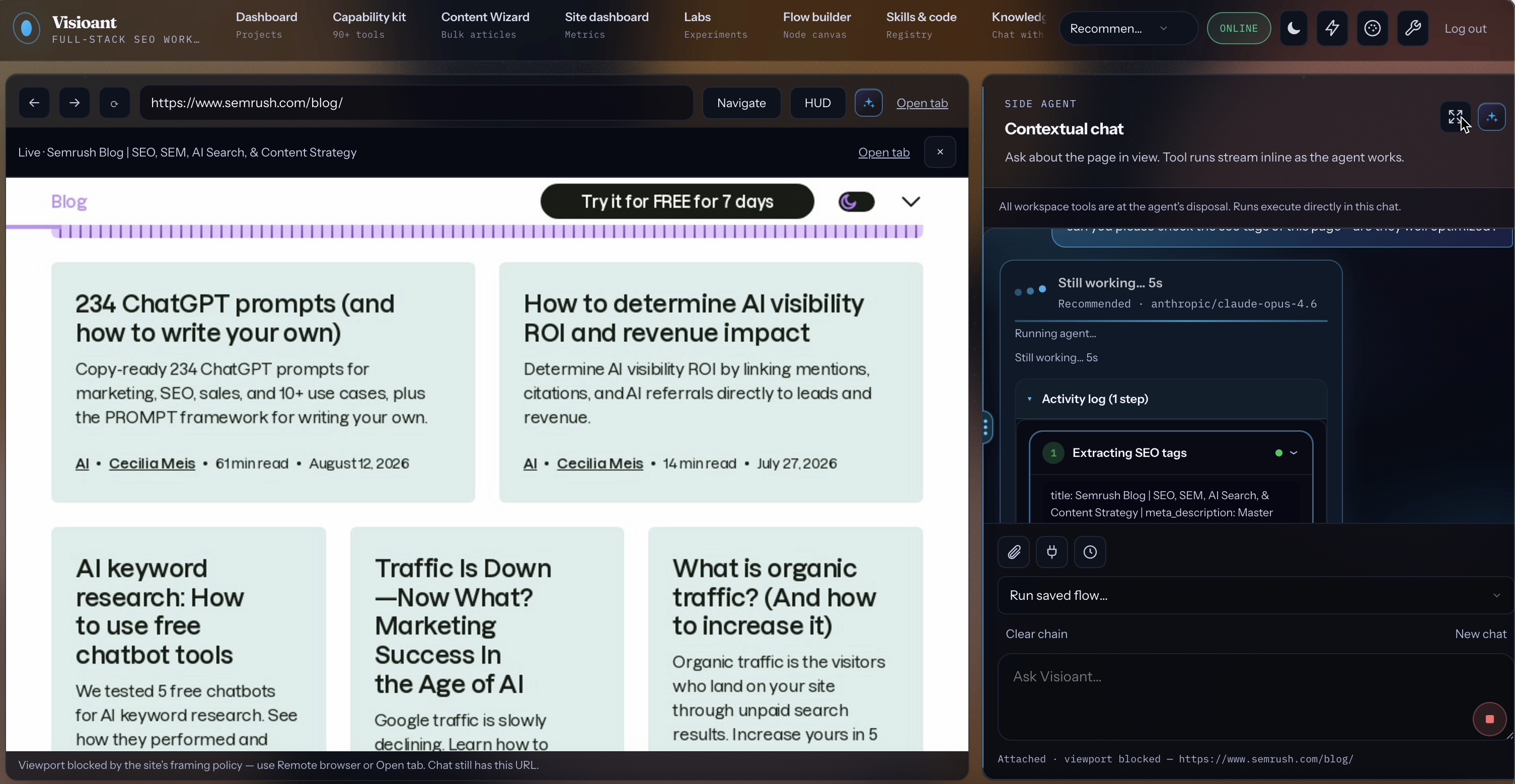
- Agent chat with 90+ governed tools (GSC, GA4, DataForSEO, technical audits, content workflows, and more)
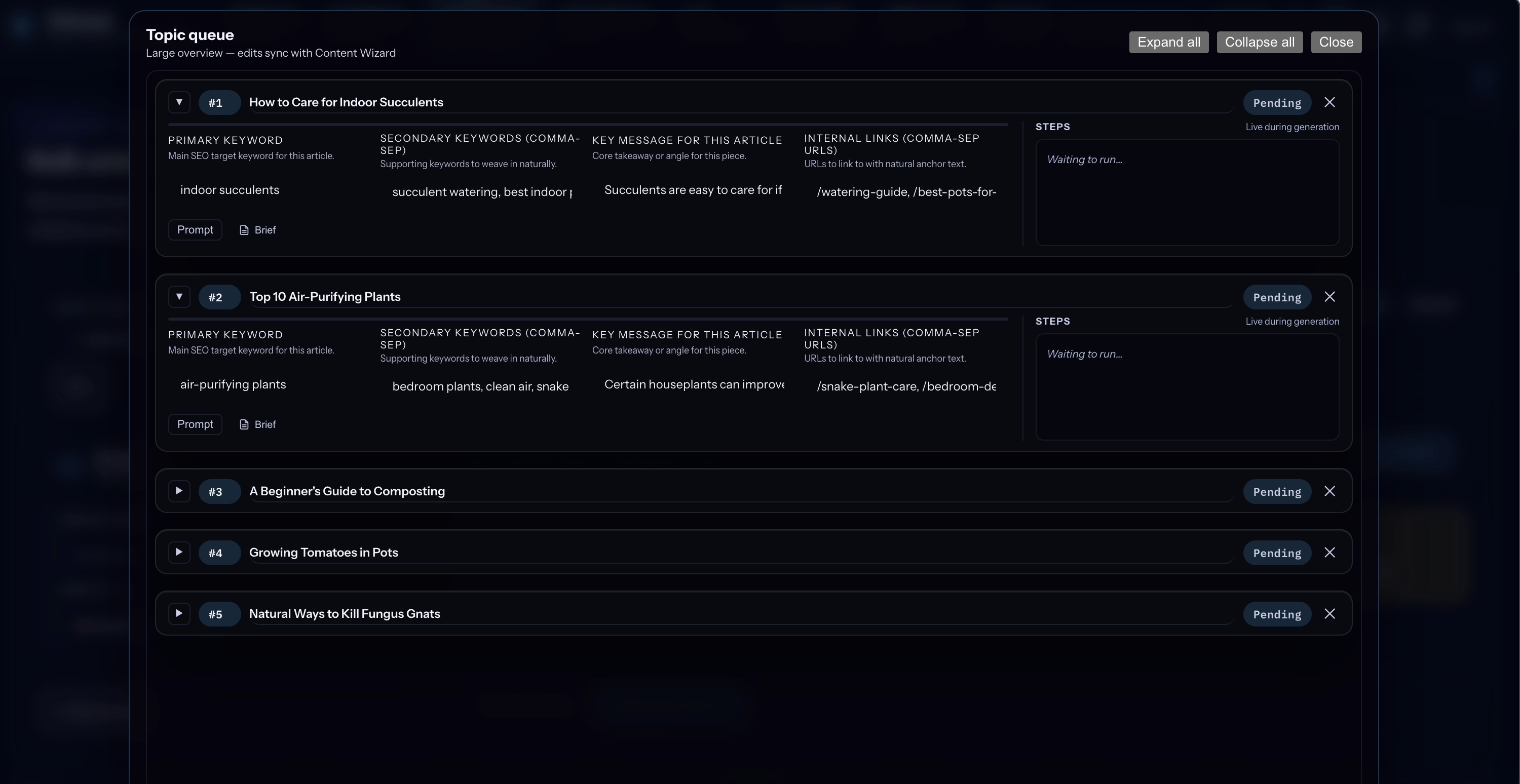
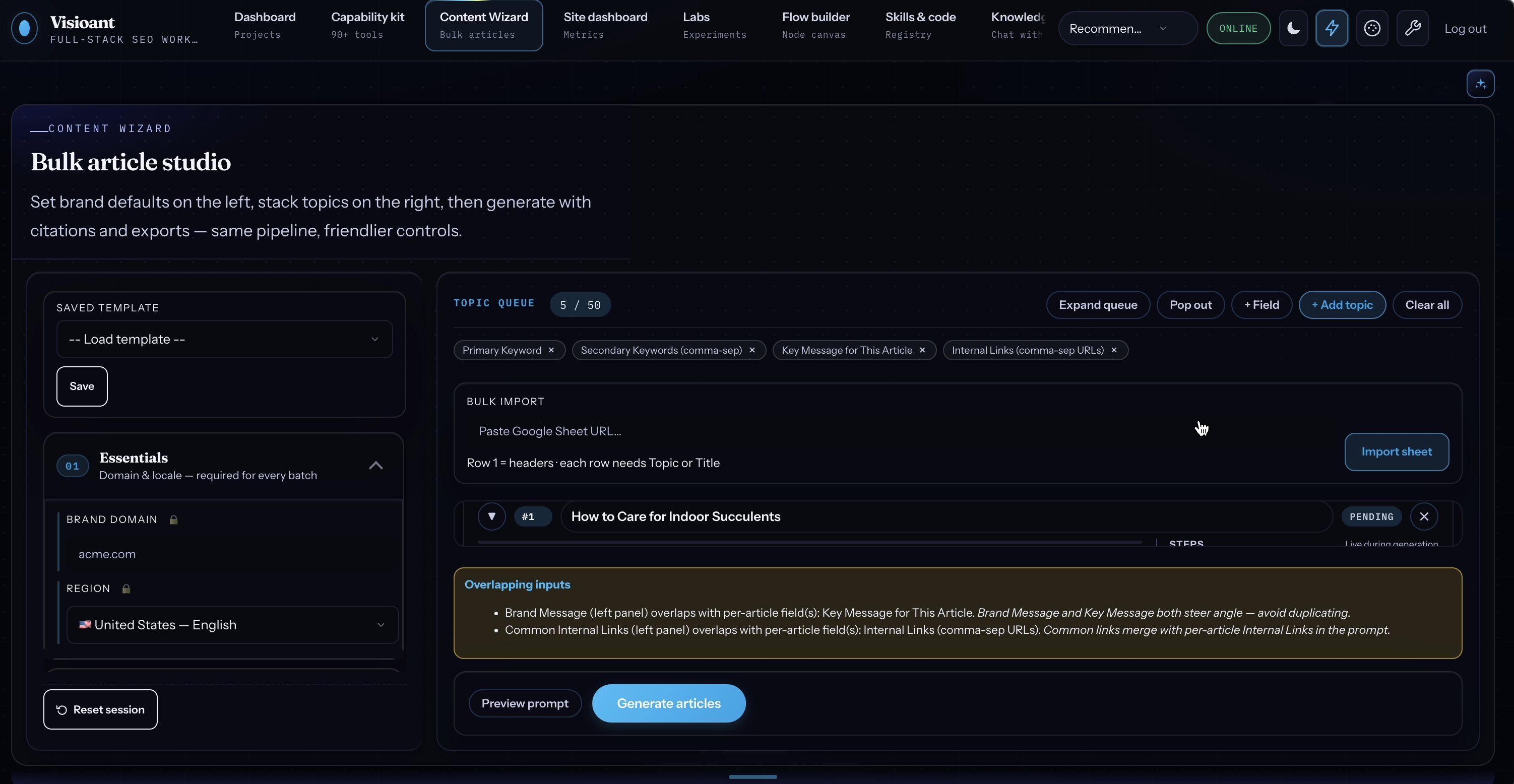
- Content Wizard for scaled, citation-aware article production
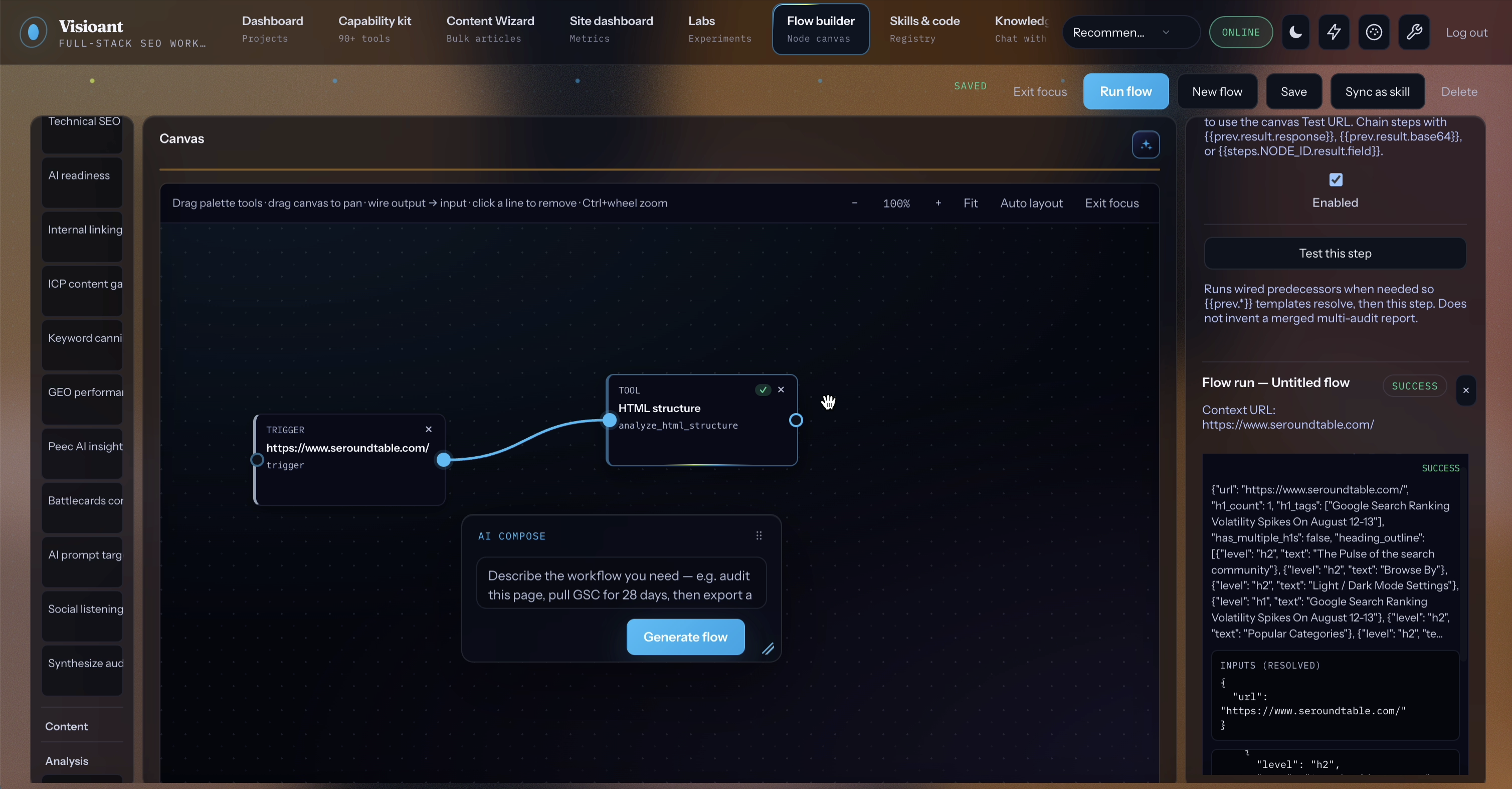
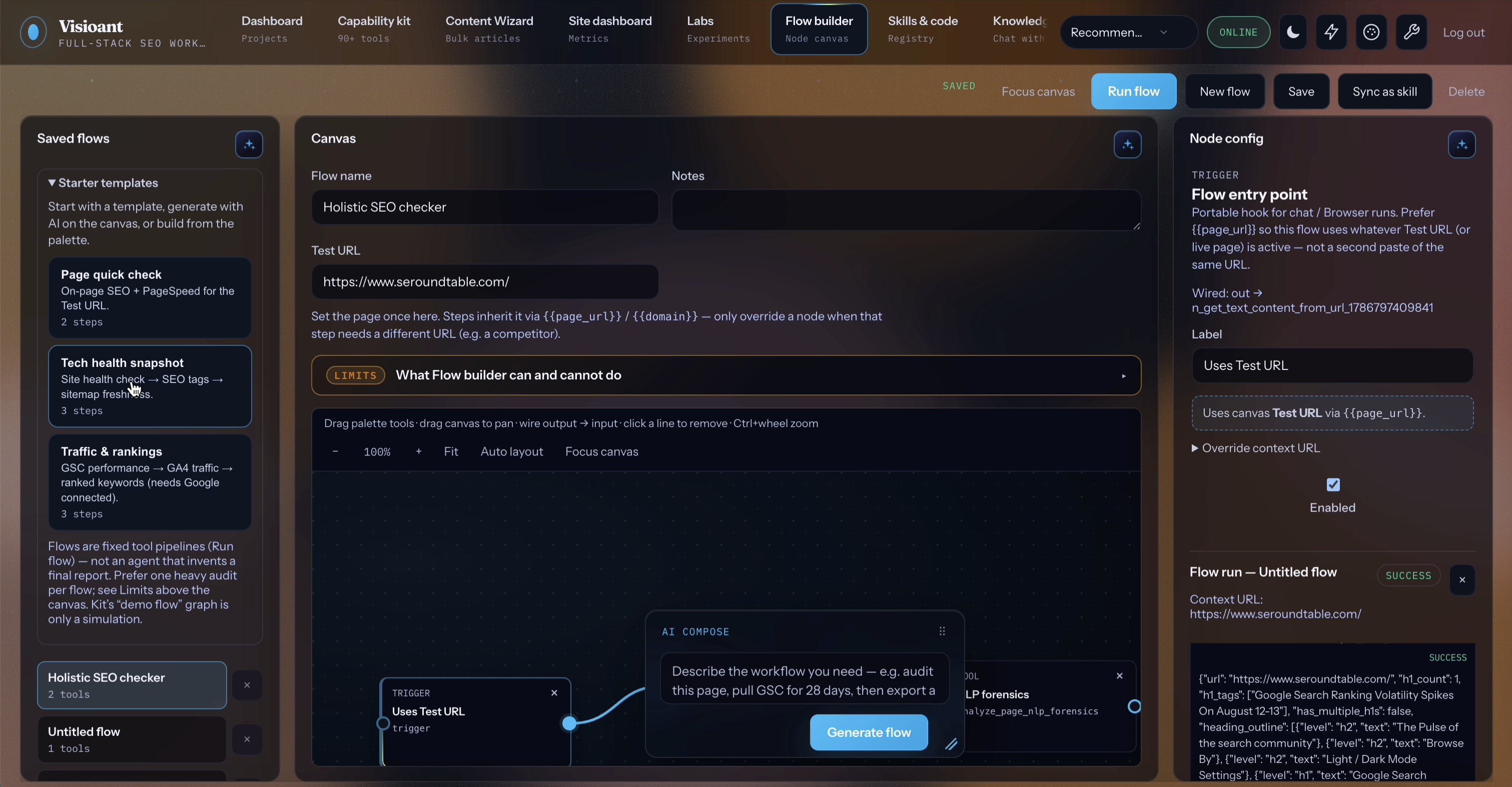
- Flow builder for repeatable multi-step SEO playbooks
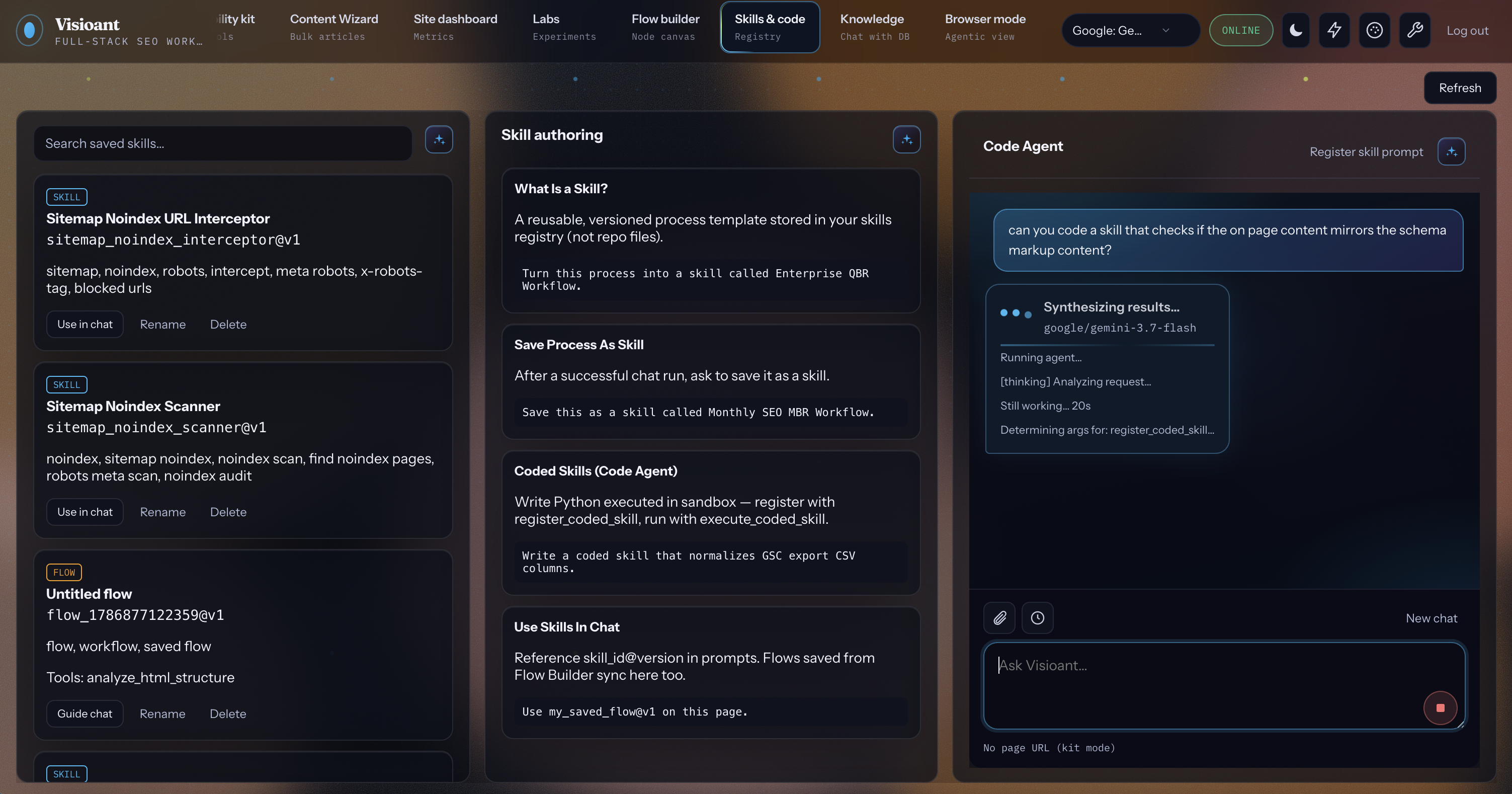
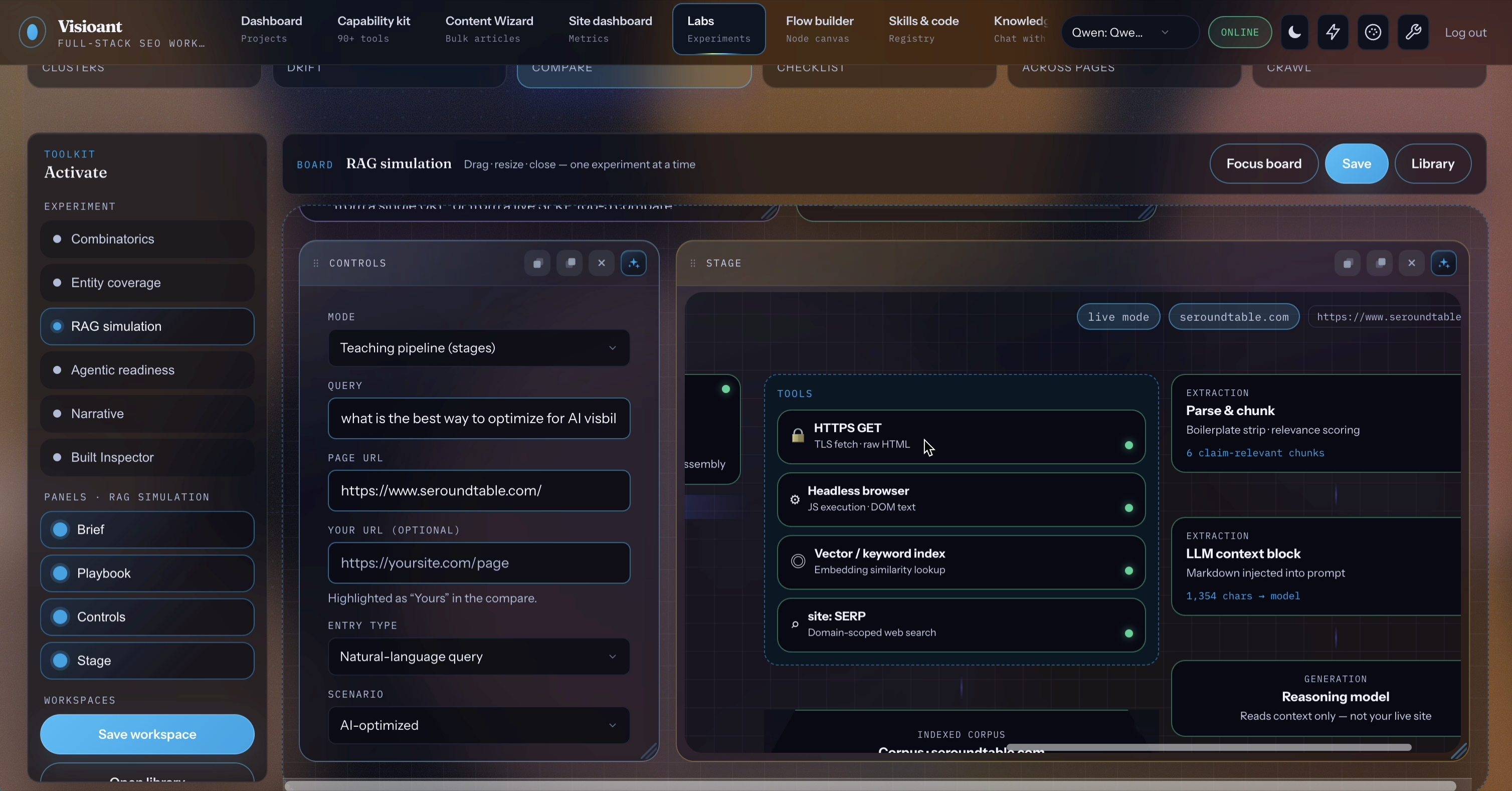
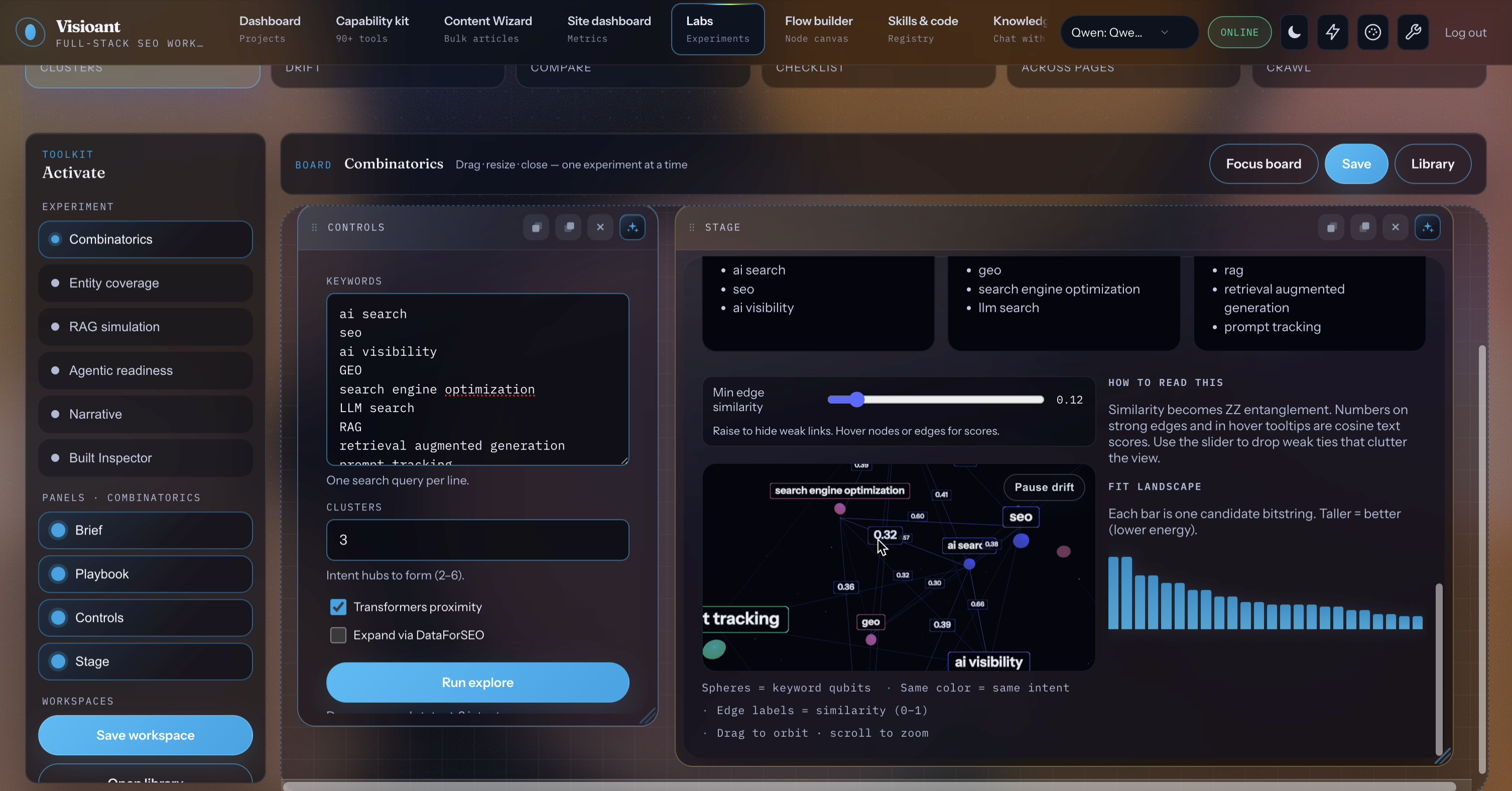
- Report Canvas, Browser mode, Labs (RAG simulation, combinatorics), Skills, and Knowledge bases
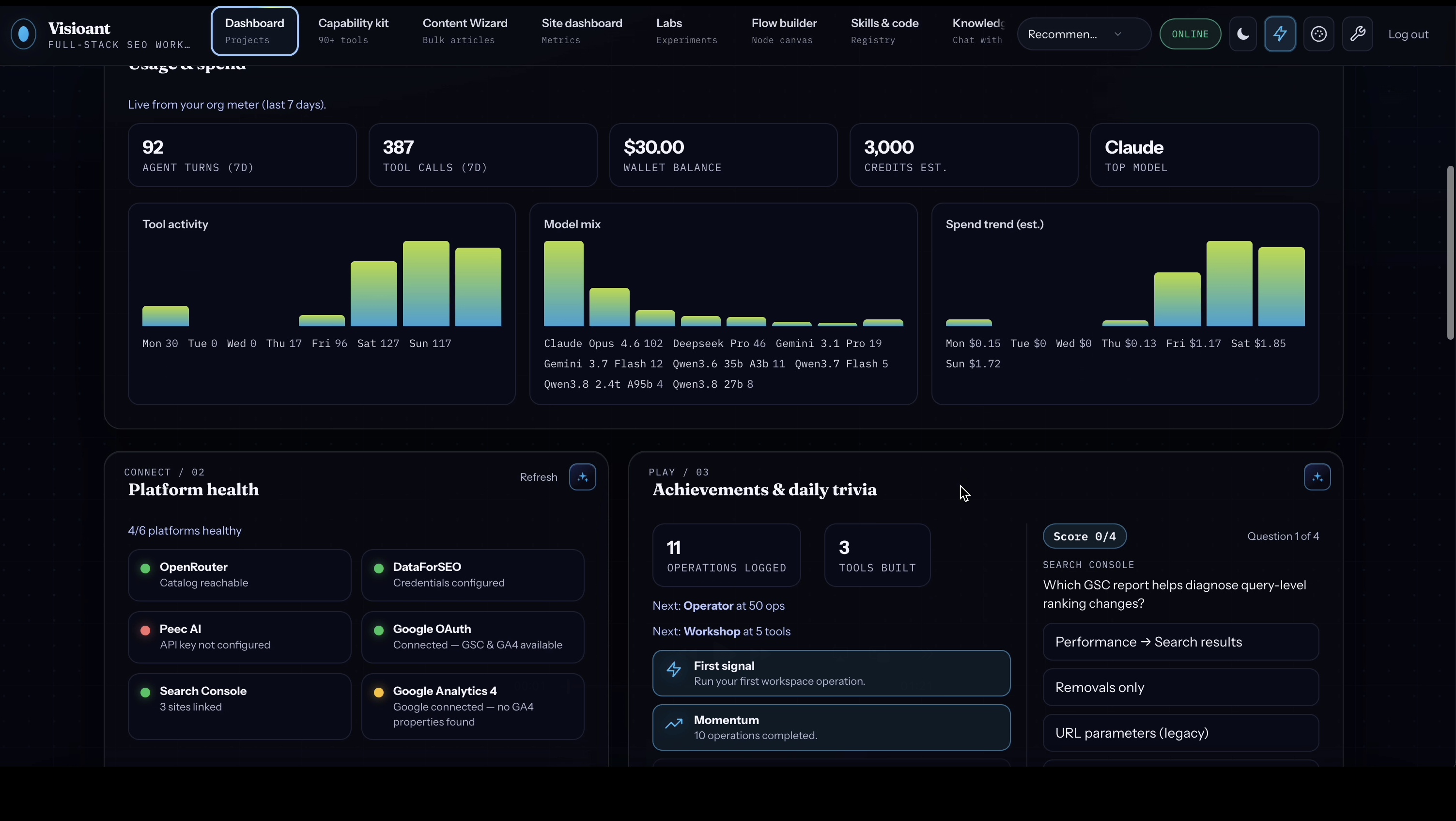
- Metered billing with a wallet model and an in-app model harness - pick economy vs recommended OpenRouter presets per job instead of burning budget on one default model
The agent is built to synthesize from tool results, not free-write SEO advice. When tools return structured data, the pipeline prefers direct, deterministic output; when synthesis is needed, it is constrained to what the tools actually observed.
How we built it
- Backend: Python / Flask, LangGraph agent, Postgres, Cloud Run, Secret Manager
- Frontend: Vanilla HTML/CSS/JS marketing site + app shell (
web/,web/site/) - Models: OpenRouter for LLM routing; Google Cloud Text-to-Speech (Gemini TTS) and Lyria for intro assets; GA4 on marketing pages with opt-in consent
- Billing: Stripe subscriptions + org wallet settlement for provider usage
- Ops: Staging/prod deploy via Cloud Build, closed-beta site gate, onboarding scripts
Major recent engineering focus: a sorted global post-tool synthesis pipeline so HTML structure reports, SEO tool runs, and single-tool turns bypass unnecessary LLM calls instead of dying on “Synthesizing report…”.
Challenges we ran into
Time. Building alone means every lane - product, infra, billing, marketing pages, legal copy, deploy, and demo assets - competes for the same hours. I did not manage to elevate Visioant into a fully polished go-to-market venture in time for submission, even though that remains the intent.
Scope vs. solo bandwidth. Shipping a credible SEO platform (not a demo wrapper) required wallet settlement, OAuth, Content Engine jobs, flow persistence, tool governance, and production hardening - work that usually spans a team.
Synthesis reliability. Early agent paths over-used LLM synthesis or skipped it inconsistently; tool payloads needed formatting, bypass rules, and salvage logic so users see complete reports instead of placeholders.
Presentation layer debt. Marketing, pricing calculators, cookie consent, and brand video assets lagged core product depth - acceptable for a beta, but visible when trying to tell the story quickly.
I submitted anyway because of the effort already invested, genuine belief the problem is worth solving, and early prospect interest from teams who want to pilot the workspace.
Accomplishments that we're proud of
- A working closed beta on Cloud Run with real billing, tool catalog, and Content Engine - not a mockup
- Data-first agent behavior: tool-grounded reports, direct bypass for strong structured outputs, deterministic salvage when synthesis fails
- Cost transparency: live OpenRouter pricing on the marketing calculator, economy/recommended model lanes, wallet + platform margin spelled out in-product
- Breadth in one surface: flows, skills, labs, browser audits, knowledge RAG, and dashboard modules without duct-taping five separate SaaS tools
- Prospects already interested in piloting before a formal launch push
What we learned
- SEO operators care less about “AI magic” and more about repeatable playbooks, auditability, and unit economics
- Model choice is a feature, not a settings footnote - the harness has to be first-class for solo operators watching spend
- Post-tool synthesis must be one predictable pipeline for every tool; special cases become production incidents
- Solo founders should ship the ops core first, then market - but you still need enough surface (pricing, privacy, consent, demos) for strangers to trust the product
- Consent, analytics, and legal baselines are part of the product, not a launch-week afterthought
What's next for Visioant
- Go-to-market polish - marketing site, tutorials, intro video, and clearer ICP messaging for teams escaping retainers
- Production promotion - move validated staging fixes (synthesis pipeline, billing) to prod and onboard pilot customers
- Pilot program - convert interested prospects into structured betas with success metrics (time-to-deliverable, cost per audit, content throughput)
- Depth on high-value lanes - Content Wizard scale, flow templates for common audits, and tighter GSC/GA4 dashboard defaults
- Team when ready - first hires likely support + GTM while engineering stays focused on agent reliability and tool coverage
Visioant’s bet: empower operators who need speed and cost flexibility, with outputs that stay data-informed - never pure LLM prose dressed up as SEO strategy.
Built With
- chromadb
- css3
- dataforseo
- docker
- flask
- gemini-api
- googel-oauth
- google-cloud
- google-cloud-run
- html5
- javascript
- langchain
- langgraph
- openrouter
- playwright
- postgresql
- posthog
- python
- pytorch
- spacy
- stripe

Log in or sign up for Devpost to join the conversation.