-
-
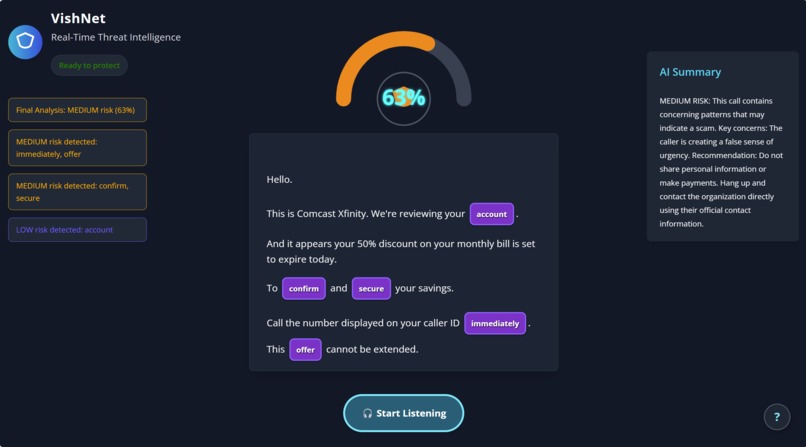
Image of a finished vishing analysis
Inspiration
Despite modern security safeguards, senior citizens still encounter vishing attacks and do not understand how to identify social engineering tactics. There is often no one around to advise them to safeguard personal information when someone claims to be a relative urgently needing money or the IRA threatening legal trouble. This is where VishNet steps in.
What it does
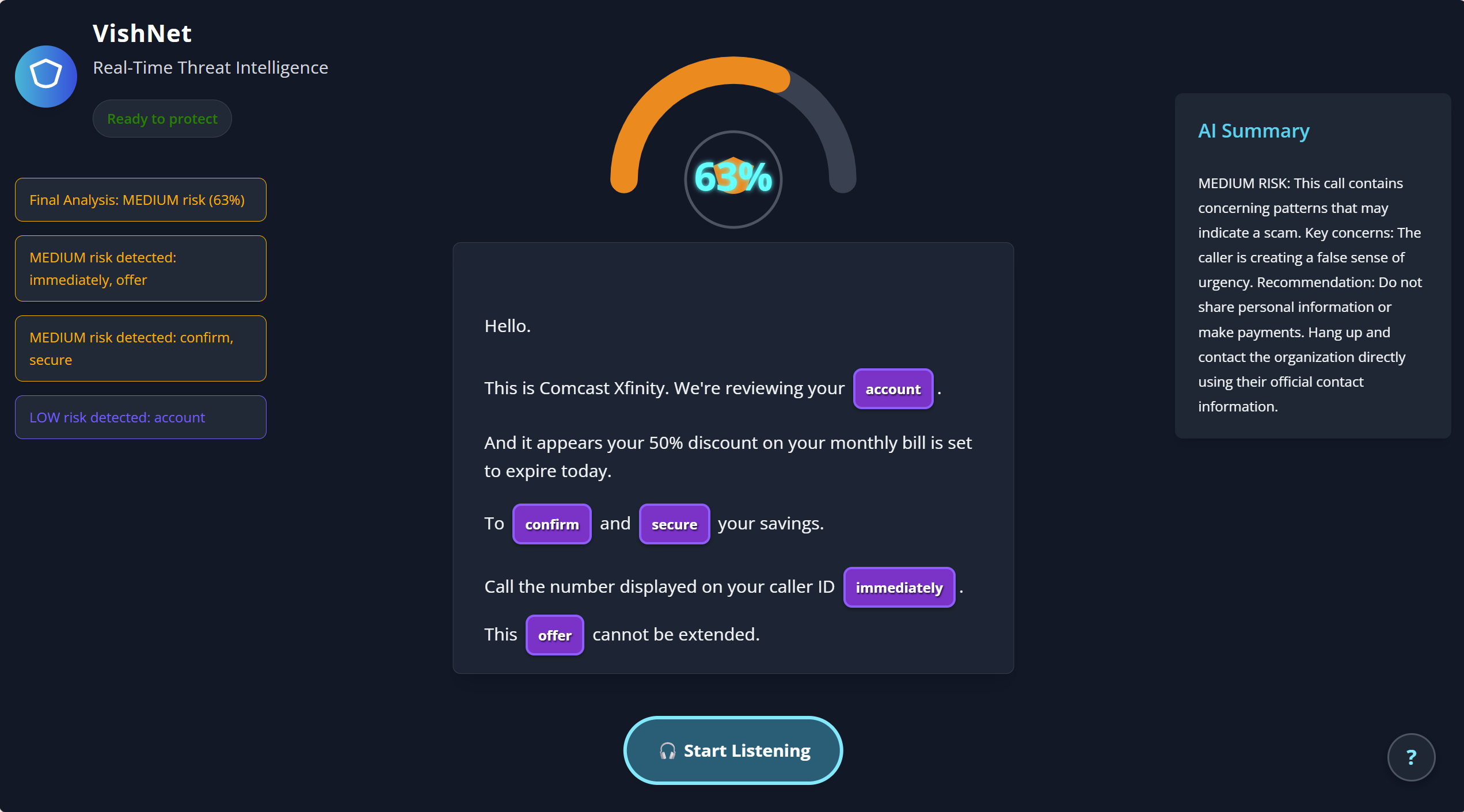
VishNet is a streamlined website that gives real time warnings in response to auditory keywords. It displays alerts, a highlighted audio transcript, a threat likelihood percentage, and an AI description of why flagged keywords are indicators of a vishing scam. The design is developed with accessibility in mind. It uses high contrast colors with a color-blind friendly pallet, large text in a simple font, and large spacing and margins. All content is on one page to prevent need for scrolling and navigation.
How we built it
We built VishNet using a Python and Flask stack. Assembly AI transcribes audio to a transcript. A preset list of keywords is used to identify signs of social engineering within the transcript. Intelligent scoring uses weighted threat indicators, analyzes word ratios, and identifies contextual patterns.
Challenges we ran into
While developing VishNet, our issues were mainly with working with the API. We accomplished transcription from pre-recorded audio, but it is important for our audience to use real-time transcription for quick decision-making. Because of this, we switched tech stacks part way through because Python better supported our API development needs.
Accomplishments that we're proud of
We are proud of the usability of our website. Not only does the website visually represent the needs of our target audience, but it also effectively serves its purpose by correctly identifying real world examples of vishing in real time. Our team also worked together very well by dividing the work, breaks, and providing a fresh set of eyes to problems.
What we learned
We learned about the distinctions between many different languages used by developers. We also learned about thoughtful design with a clear use-case in mind. We learned about smart use of AI and how it can be used to serve underrepresented populations. We also explored key cybersecurity concepts and their real-world impacts.
What's next for VishNet
The next steps for VishNet are better training the machine learning model and continuing development as new threats emerge. A mobile app is also one of the next steps as it could easily interact with calls and serve a broad audience.
Built With
- assemblyai
- css
- flask
- html
- javascript
- python


Log in or sign up for Devpost to join the conversation.