-
-
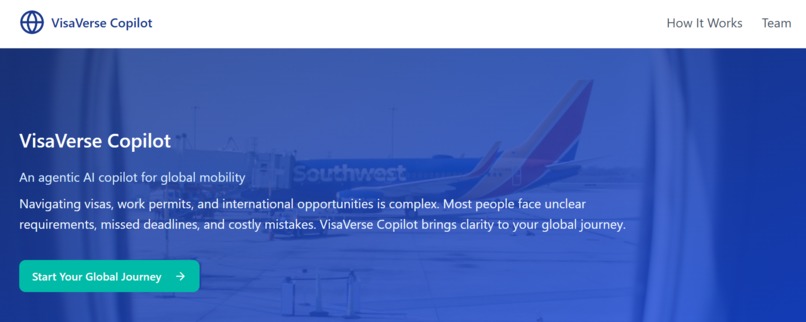
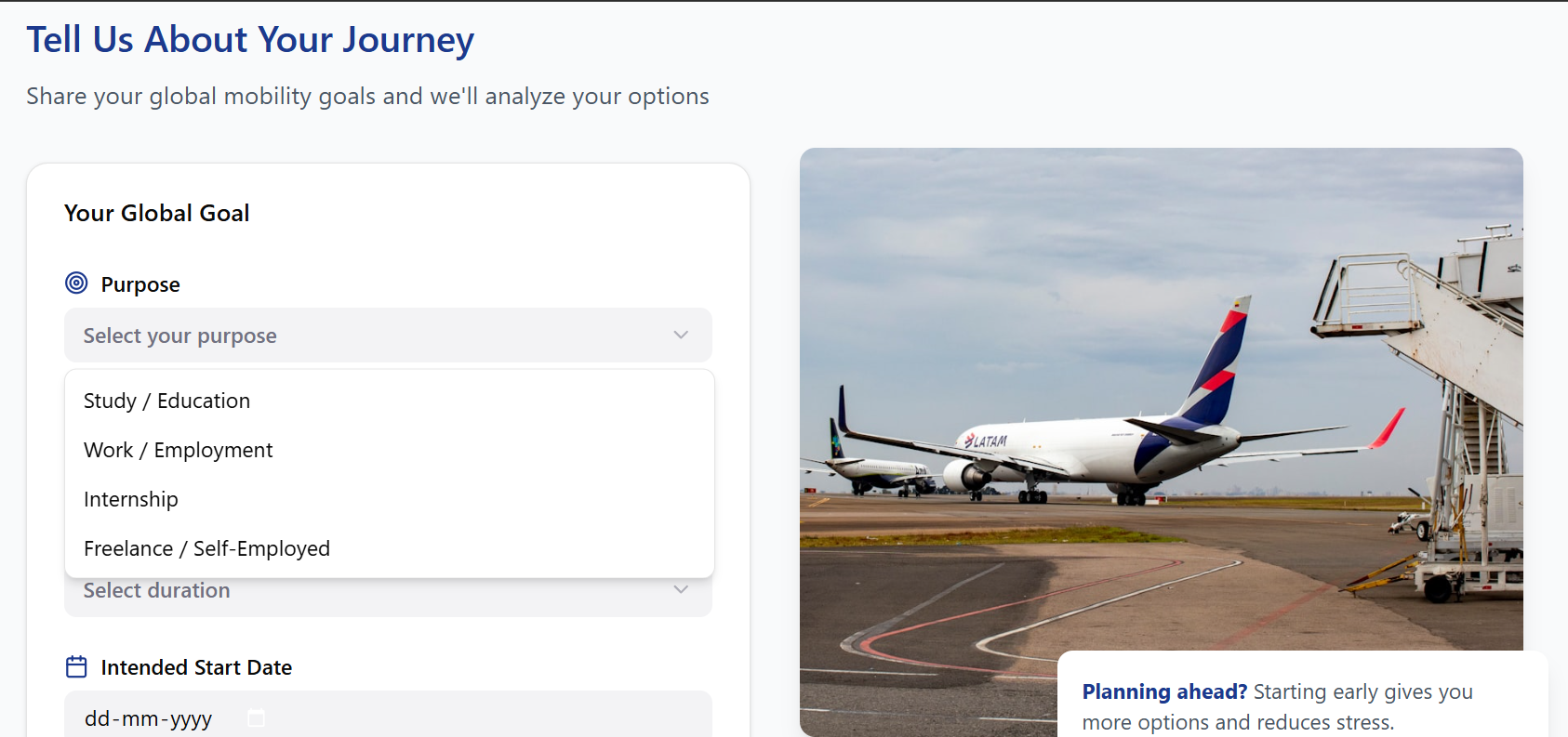
HOME PAGE
-
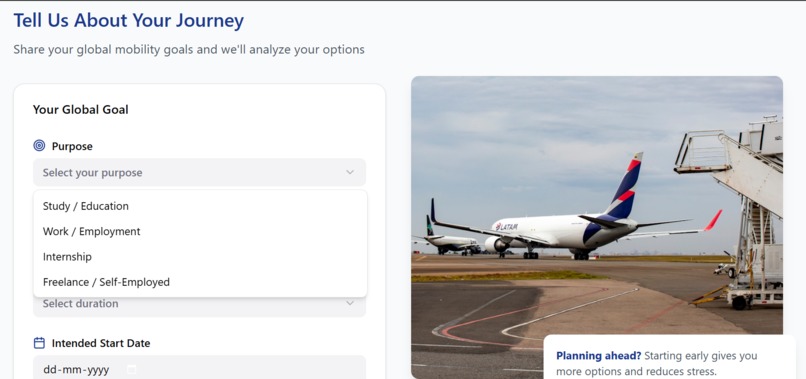
DETAIL COLLECTION PAGE
-
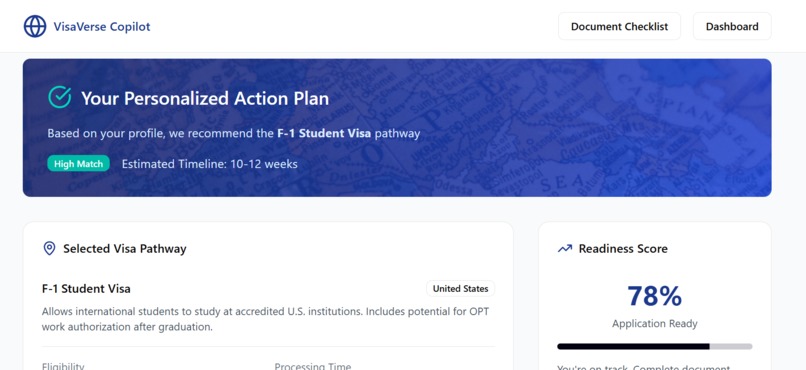
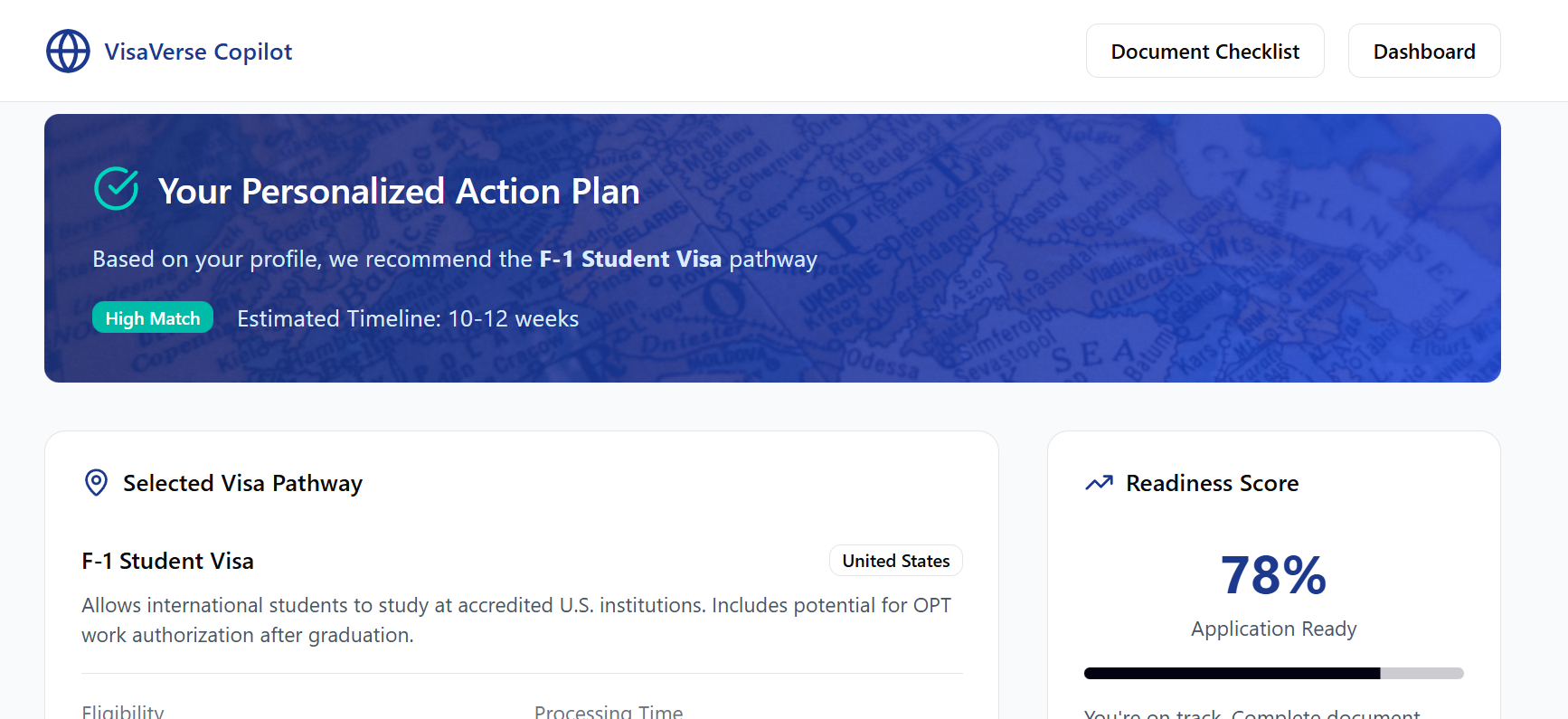
DASHBOARD
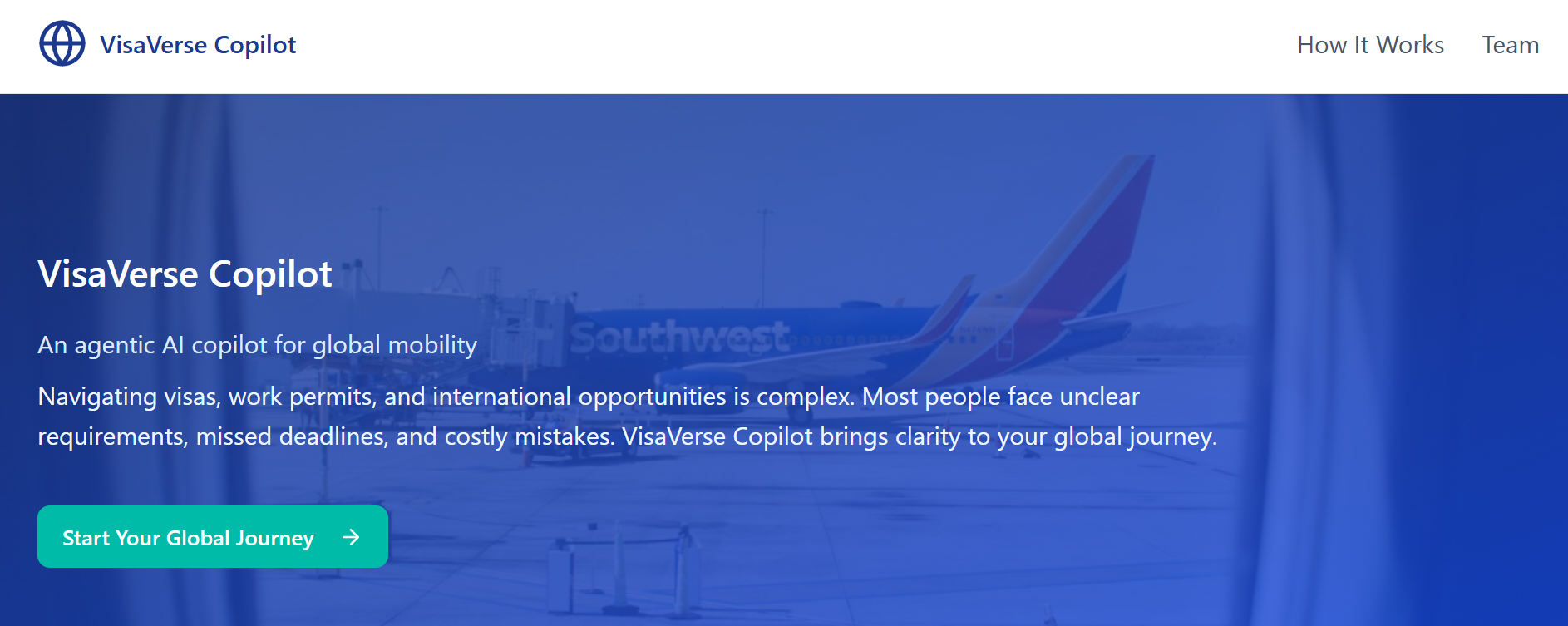
Inspiration
The inspiration for VisaVerse Copilot came from seeing how difficult and stressful global mobility still is, even in a digital world. Students miss opportunities because of small documentation errors, professionals lose offers due to misunderstood visa rules, and freelancers hesitate to work globally because the process feels risky and unclear. Information is available, but it is fragmented, complex, and rarely personalized. We realized the problem wasn’t a lack of rules — it was the absence of intelligent guidance that understands individual situations. We wanted to build something that reduces fear, prevents costly mistakes, and gives people the confidence to move, work, and collaborate across borders.
What it does
VisaVerse Copilot is an agentic AI system that helps people navigate global mobility with clarity and confidence. Users describe their goal — such as studying, working, or interning abroad — and the AI reasons through eligibility, timelines, and country-specific requirements. It asks the right questions, identifies potential risks, generates a personalized action plan, and assists with document readiness. Rather than simply explaining visa rules, it transforms complex regulations into practical, step-by-step guidance tailored to each individual.
How we built it
This project was developed as a design-driven AI concept supported by technical research and feasibility analysis. We mapped real-world mobility journeys, identified decision points where users commonly fail, and designed an agent-based workflow that breaks goals into structured steps. We explored how large language models, retrieval-based knowledge systems, and document analysis techniques could work together to support reasoning, risk identification, and personalization. The architecture and workflows were designed to be realistic, scalable, and implementable
Challenges we ran into
A major challenge was designing a solution that goes beyond simple rule explanation. Visa processes are highly conditional, and translating that complexity into a clear and human-friendly flow required careful thinking. Another challenge was balancing ambition with feasibility — ensuring the concept was innovative while still realistic for future development. Defining boundaries for responsible AI use in high-stakes decisions was also an important consideration.
Accomplishments that we're proud of
We are proud of clearly defining a real, high-impact problem and proposing an AI-driven approach that goes beyond traditional guidance systems. The project demonstrates how agentic AI could be applied to global mobility in a meaningful way, focusing on reasoning, personalization, and risk awareness. We also developed a well-structured architecture and narrative that shows strong potential for real-world implementation.
What we learned
We learned that the hardest problems are not always technical, but human. Understanding user anxiety, uncertainty, and trust is critical when designing AI for life-changing decisions. This project reinforced the importance of designing AI systems that prioritize clarity, responsibility, and user empowerment rather than just information delivery.
What's next for VisaVerse Copilot
Next steps include building a functional prototype, validating workflows with real users, and expanding the knowledge base to cover more countries and mobility scenarios. We also plan to explore partnerships with universities, employers, and global organizations to ensure accuracy and real-world relevance, and to continue refining the system with responsible AI principles at its core.
Built With
- agentic
- ai
- llm
- natural-language-processing
- python


Log in or sign up for Devpost to join the conversation.