Inspiration
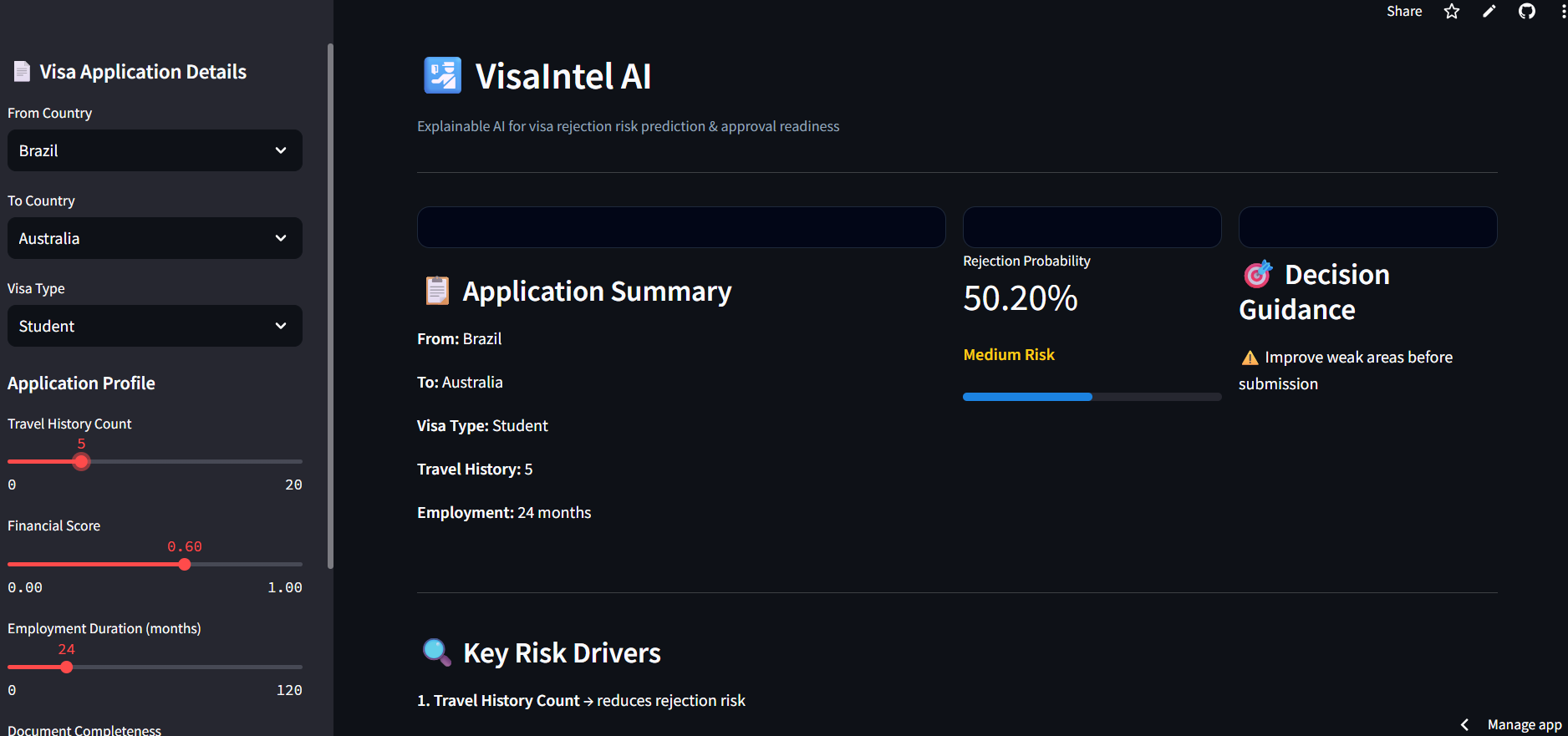
Visa applications are often opaque, leaving applicants unsure why they are rejected. We wanted to create a system that predicts visa rejection risk transparently, explains why, and provides actionable steps to improve approval chances.
What it does
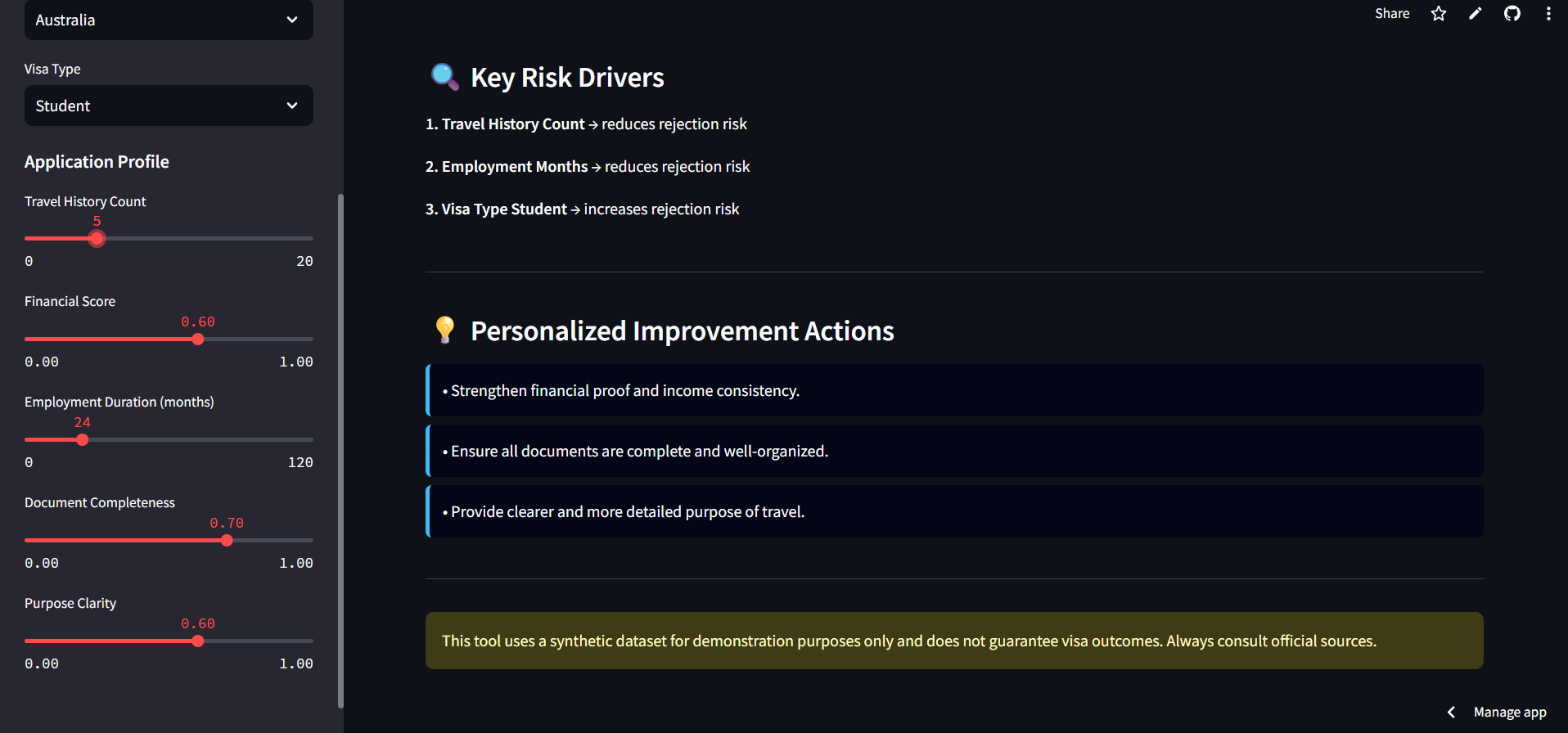
VisaIntel AI: Predicts visa rejection risk using an AI model Explains key factors influencing the decision with SHAP explainability Provides personalized improvement recommendations Displays results in a professional, fintech-style Streamlit UI
How I built it
Data: Synthetic, ethical dataset simulating real-world visa applications ML Model: Logistic Regression with balanced class weights Preprocessing: StandardScaler for numerical + OneHotEncoder for categorical features Explainable AI: SHAP for feature importance and human-readable insights UI: Streamlit app with tabs for Risk Assessment, Recommendations, and Model Transparency Evaluation: Separate evaluation.py for comprehensive model metrics, ROC-AUC, recall, confusion matrix, and technical reporting
Challenges I ran into
Handling imbalanced data (more approvals than rejections) Translating technical SHAP outputs into human-friendly explanations Designing a UI that balances professional aesthetics with clarity
Accomplishments that I'm proud of
Achieved a robust predictive model with strong recall (0.73) and ROC-AUC (0.78) Developed an end-to-end explainable AI pipeline Built a clean, user-friendly interface separating product experience and technical evaluation Created actionable, personalized recommendations for users
What I learned
The importance of explainability in AI for user trust How to handle imbalanced datasets and measure model performance beyond accuracy Building separation of concerns: product UI vs technical evaluation
What's next for VisaIntel AI
Add more visa types and country-specific rules Integrate real-world data (with privacy compliance) Enhance recommendation engine using advanced NLP Deploy as a cloud-accessible tool for hackathon judges and users
Built With
- matplotlib
- numpy
- pandas
- python
- scikit-learn
- seaborn-tools:-jupyter-notebook
- shap

Log in or sign up for Devpost to join the conversation.