-
-
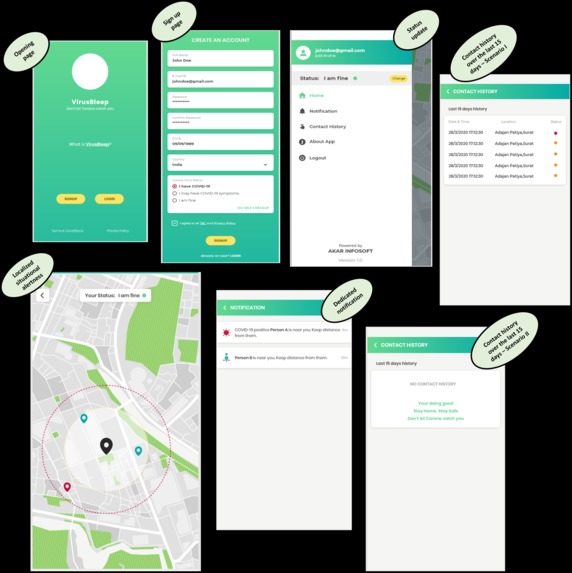
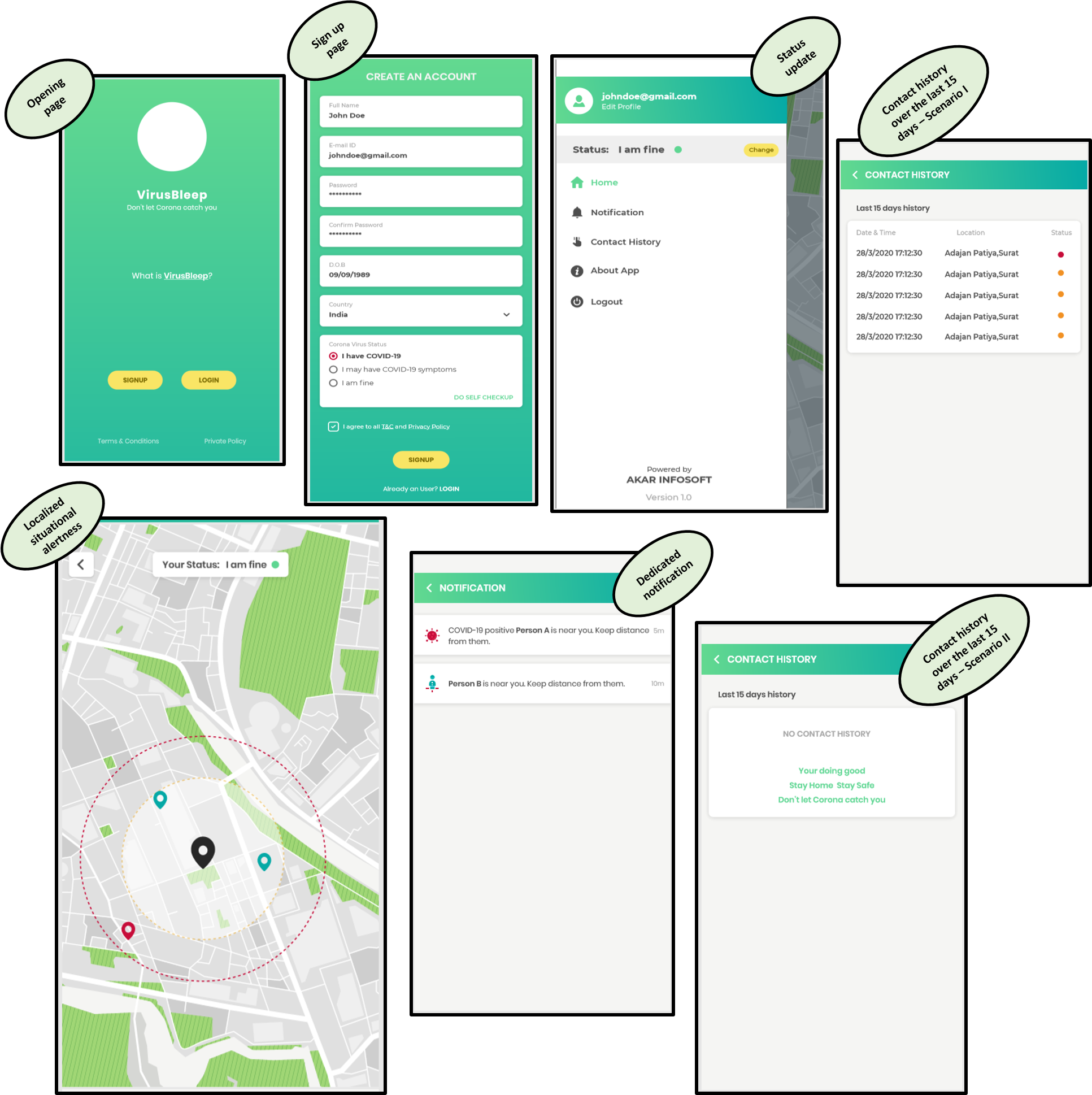
Prototype implementation of the mobile application
Inspiration
The effort to flatten the curve and reduce the spread of the COVID-19 (Coronavirus) has had little to almost no success, despite the strict measures taken by the multiple government agencies across the globe. Based on expert opinions, the only known measure that could potentially flatten the virus’ growth curve is the practice of social distancing. However, despite the strong advocacy for social distancing and the extreme measures of lock-down of cities, governments across the globe have been unable to “enforce” social (physical) distancing. This may be due to lack of civic awareness as to how such action might affect a whole society, or perhaps, for some individuals, it may just seem totally impractical to maintain such distancing.
What it does
We present a solution that could partially restore lost mobility. It offers a cloud-based platform that would allow individuals to assess their surroundings and make an informed choice regarding the need to avoid proximity or at least maintain distance from others, who may be infected or showing symptoms of infection. Our proposed platform will enable two-way data sharing to create a detailed, location-based mapping and awareness of those already infected (or showing symptoms), thus, helping to identify those at risk of developing the infection if they came into close proximity of such individuals over the last 15 days. Our self-reporting system stems from the notion (1) of “responsible citizenship” and (2) the readiness to “consent” to revealing health status within a small, localized region. We believe it would improve or even restore social mobility from its current state and without the need for total shut-down of the entire economy.
How I built it
Our cloud-based platform, VirusBleep, will communicate, in real-time, with two other products.
1) A mobile application (prototype available) that
• allows computer-based self-screening, if an individual suspects he/she may have the virus
• allows self-reporting of the current health status of the user through the app. (If the user is already affected by the virus or has started to show some symptoms and undergone self-screening.)
• can act as a situational awareness tool to inform the user when in close proximity of an infected person.
• issues an alert when an individual (1) infected or showing symptoms of infection approaches the user (2) comes within 6 feet of the user (excluding those living in the same residence).
• populates a list with date, time and location (without revealing the actual identity of the individual) with whom he/she may have had contact during the last 15 days, if/ when any of these individuals develop symptoms or is tested positive within a few days of the encounter.
2) a bracelet (will be built in the future) that • is worn by individuals who tested positive for COVID-19, if the current privacy policy allows this or can be relaxed in that country • interacts with the mobile application to notify the user of the app when an individual wearing the bracelet comes in close proximity to the user. • allows law enforcement, medical, and regulatory officials to track these individuals and monitor their health over time. Although it is up to the country’s administrative authority how they want to implement the bracelet idea, we envision it to be mandatory for individuals (with infection) to wear the bracelet until no longer contagious. • could potentially be worn by individuals with not smartphone. Nearly, half of the World’s population do not have a smartphone; the cheaper tracking bracelet, with slight modification, could offer an alternative to alert the user of any infected person nearby.
Given we need to get to the market as soon as possible, manufacturing the bracelets with the chip and making it available across the globe may be logistically impractical. We suggest only regional implementation of this idea where manufacturing and acquiring the chip (tracing device) is possible at an affordable price.
Challenges I ran into
Below are some of the major challenges we ran into
- Forming a cross-functional team within a day
- Brainstorming and conceptualizing the idea on Friday evening (March 27)
- Validating hypotheses on Saturday - Involves talking to several individuals on the viability of the idea.
- Designing and building the app over the weekends (March 27 - March 30)
Accomplishments that I'm proud of
Conceptualizing and building the prototype was the starting step. We need to launch the platform as soon as possible and we if are able to help flatten the spread curve (in whatever capacity), we will then be feeling proud of our effort.
What I learned
There will always be individuals to citric your idea, concept and raise doubts in your mind if the idea is feasible or practical to implement. Have a strong belief in yourself and the idea, do the hard work and there will always be a way to reach your goal.
What's next for VirusBleep
Key Activities We envision the following key activities that we need to accomplish in the next few days to launch the platform to the public.
- Seek collaboration with major government agencies, NGOs, public/private companies (next 7-14 days)
- Release the beta version of the platform (next 3-4 days)
- Create campaigns/advertisements to globally make people aware of the product and show instructional video on how enforcing social distancing, via this platform, could help flatten the growth curve of this pandemic (3-4 days from now)
- Develop the release version of the mobile application (7-10 days)
- Collaborate with individuals who have country-specific awareness of data privacy and the existing governing laws.
- Identify manufactures of the bracelet and chips and develop a supply chain logistic with the local medical authorities as a channel to distribute these bracelets and make them available to the people. We will also collaborate with the local vendors and make the bracelet available in stores like Walmart, Kroger, CVS, Walgreens. (next 15-20days)
Key Resources We have the right expertise to build, launch and maintain the mobile application in the cloud platform. We may need to upgrade our cloud space requirements based on application usage. Below is the estimated cost to support about 1 billion users.
- Production quality application development and deployment across Android and iOS platform: $7,500
- Dedicated server and its maintenance: $1,500 ($750 per month for two months)
- Application maintenance and updates: $3,000 ($1500 per month for two months)
- Website, server configurations, domain and other miscellaneous cost: $1,000
- Marketing campaign using bill boards, news channels and social media (need to spread awareness to remote locations): $10,000 Total anticipated expense $23,000
Key Partners For our idea to be effective, we seek collaboration with the government agencies, NGOs or any interested party with authorities. We need to reach out to a large number of people in a very short amount of time and provide them access to this service as soon as possible and we will not be able to accomplish this independently on our own.


Log in or sign up for Devpost to join the conversation.