-
-
/itinerary [dini-game]
-
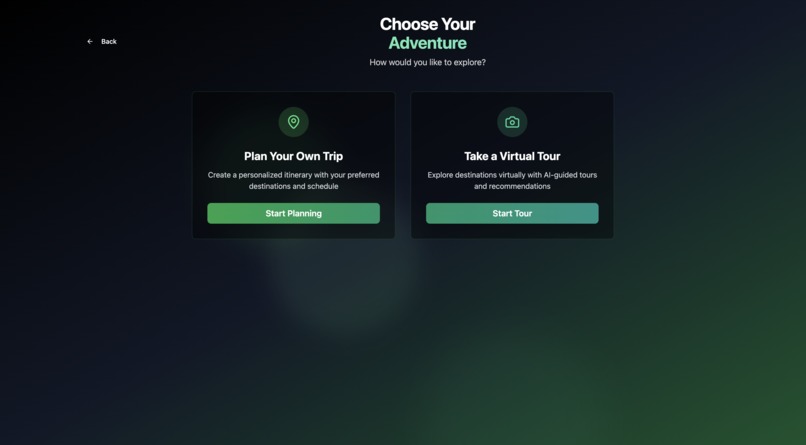
/options
-
/
-
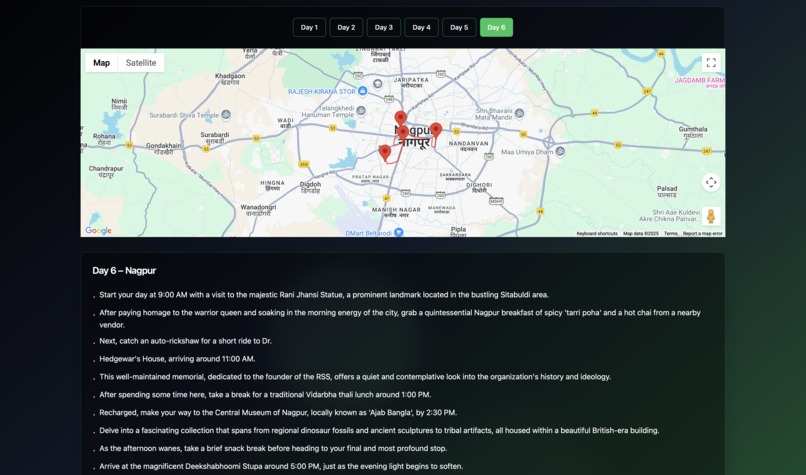
/itinerary [monument-route]
-
/itinerary [full-day]
-
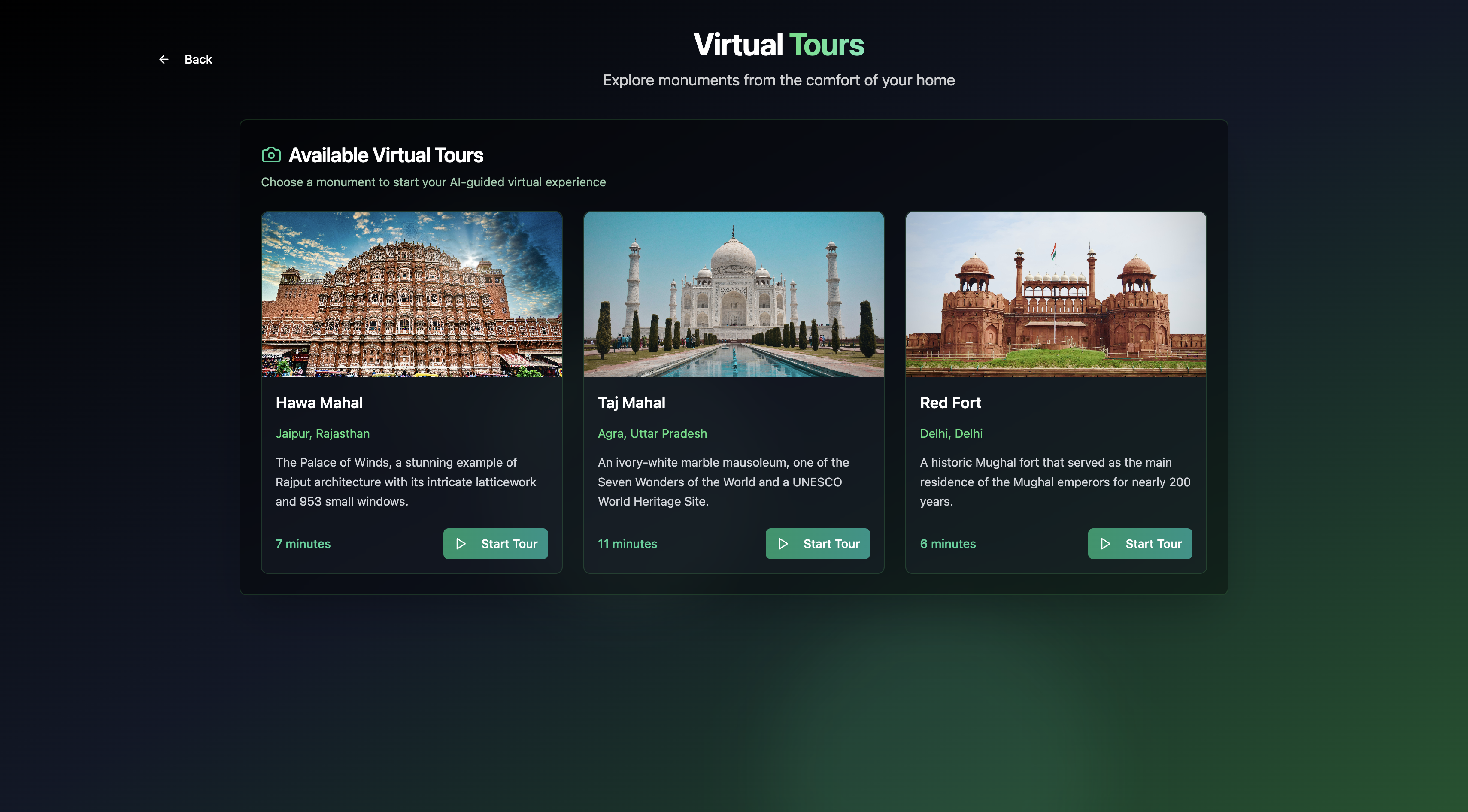
/virtual-tour
-
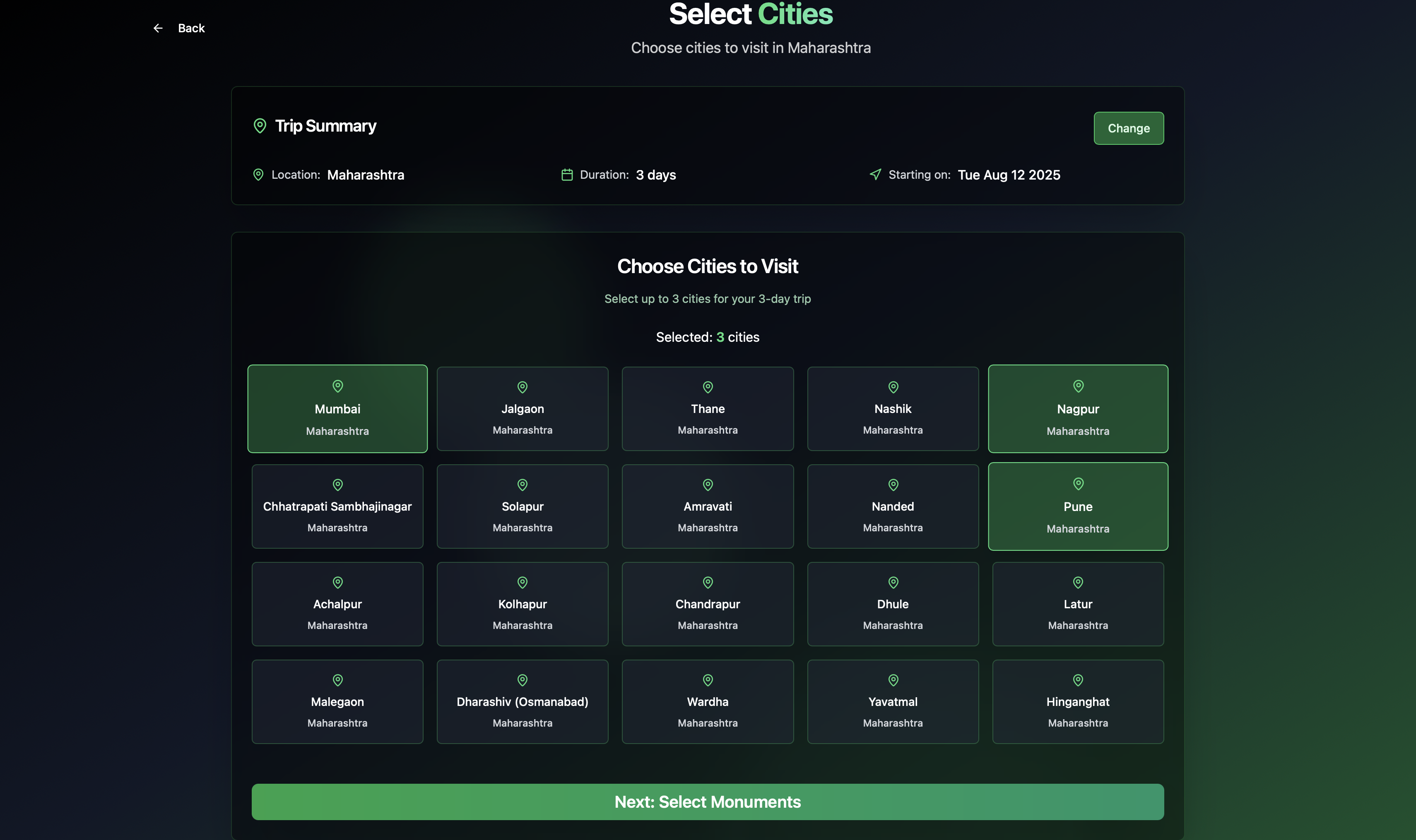
/cities
-
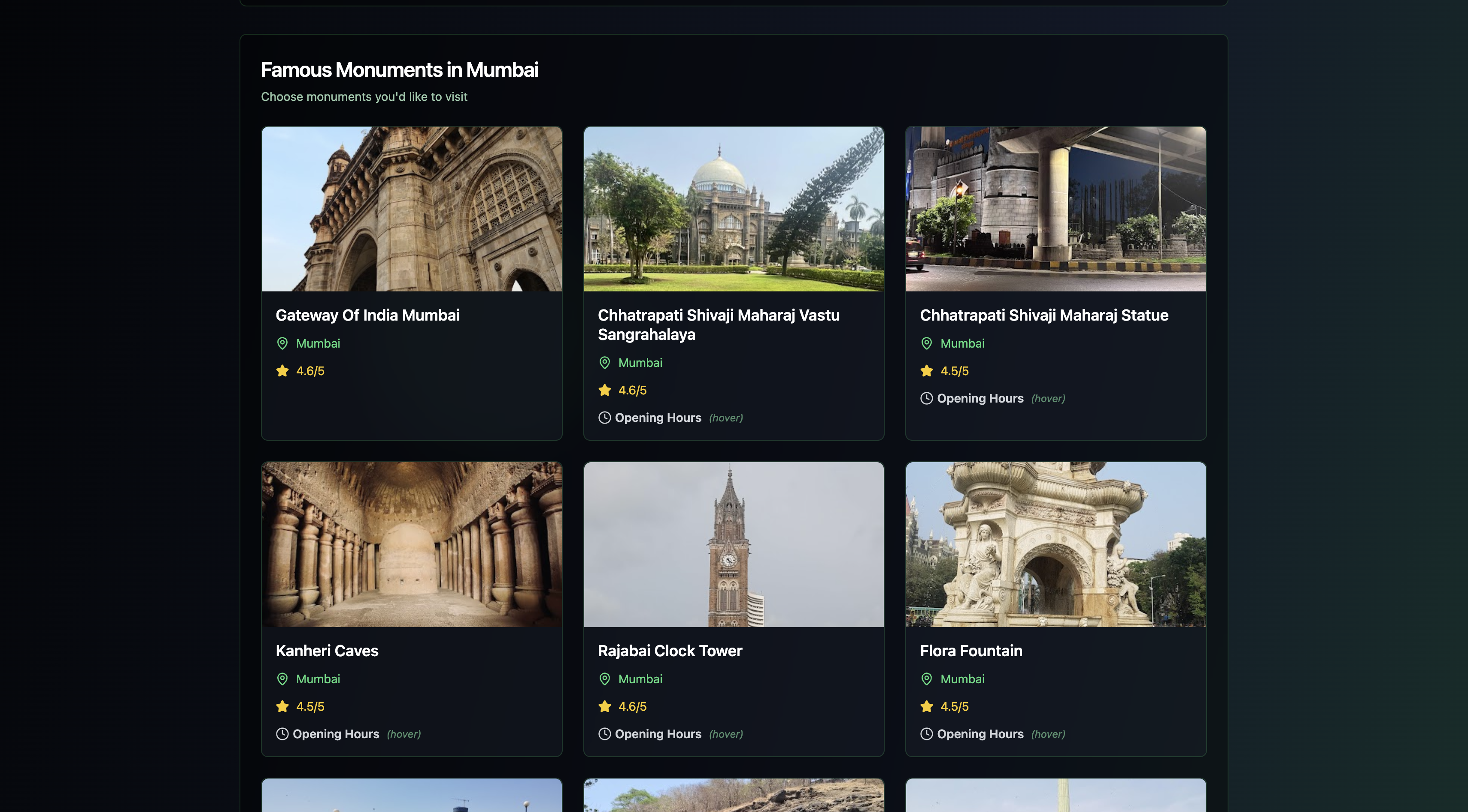
/monuments [monuments]
-
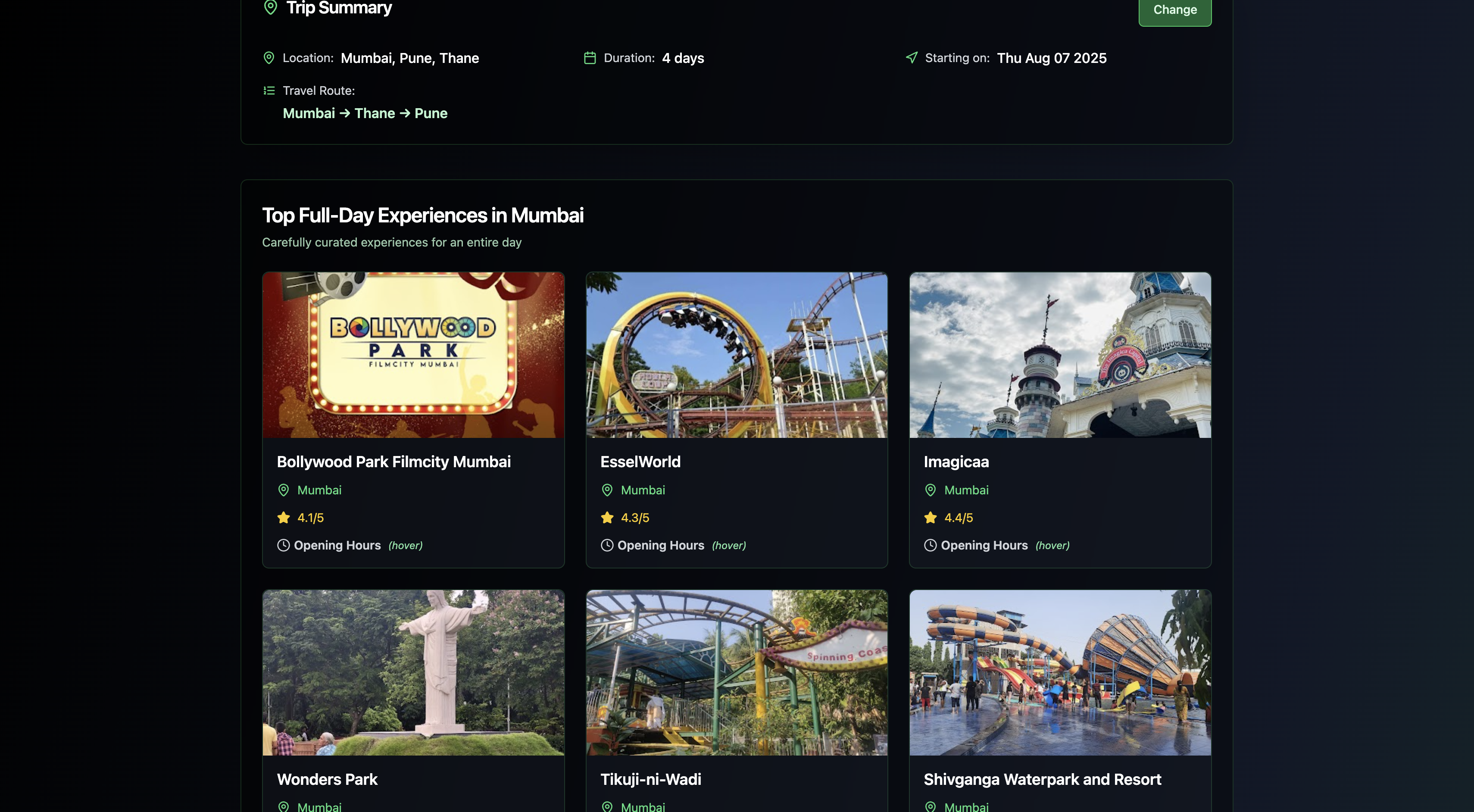
/monuments [full-day]
-
/overlay
-
/planner
Inspiration
VirtuVoyage was developed to simplify and personalize the way people plan their trips and explore monuments. Trip planning often involves juggling several sources, Google Maps, blogs, agents, and figuring out how to fit everything into a daily schedule. Our goal was to reduce this effort while enhancing the cultural experience using AI, by generating personalized itineraries and offering immersive, interactive virtual monument tours.
What it does
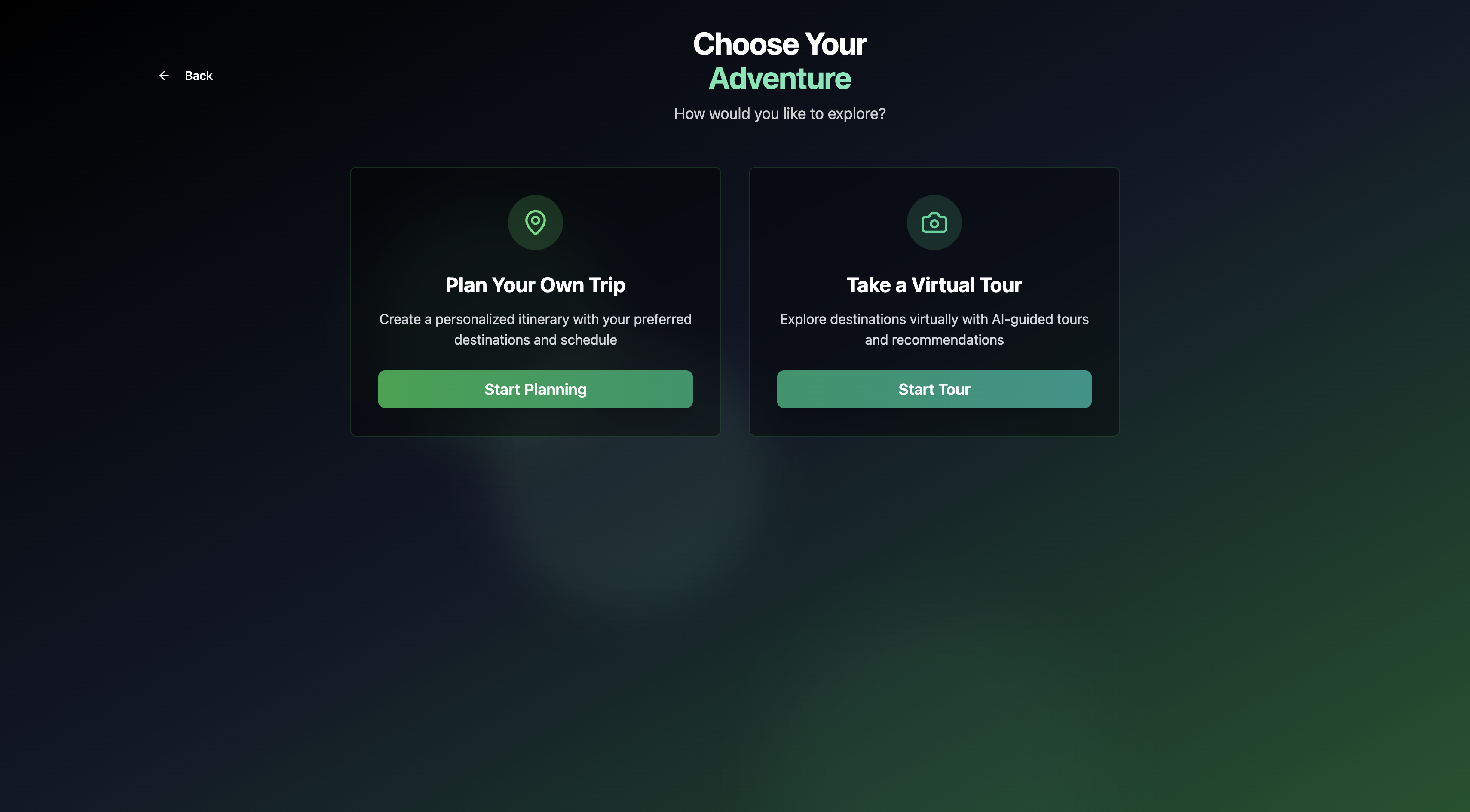
VirtuVoyage offers two main features:
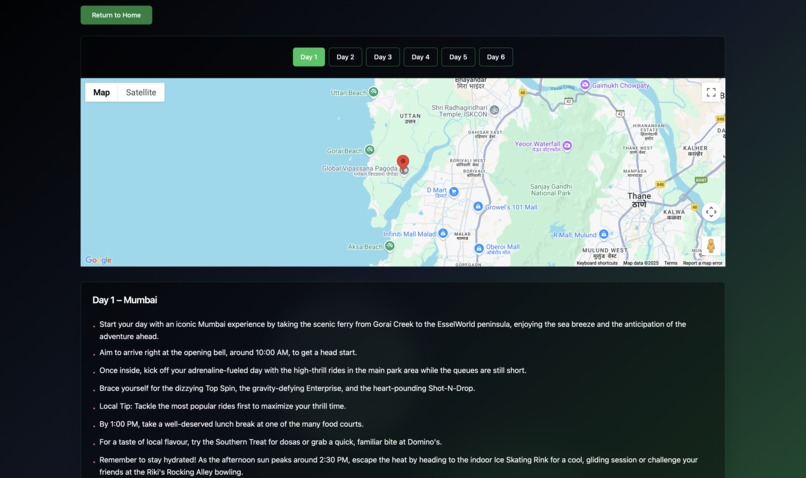
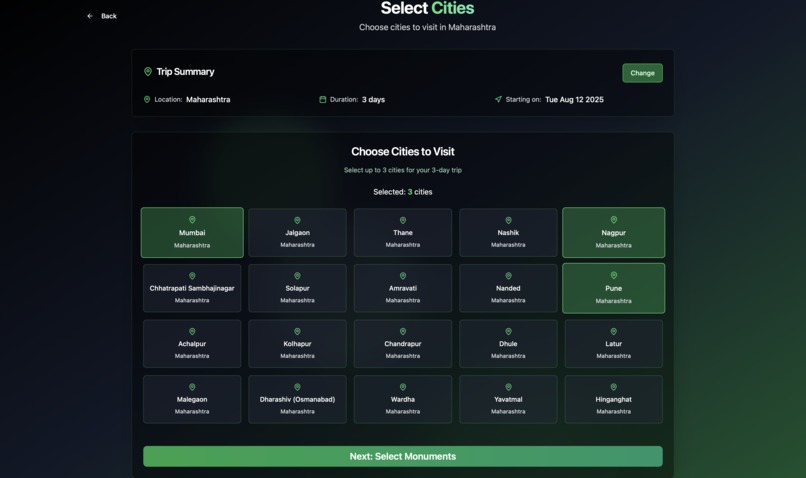
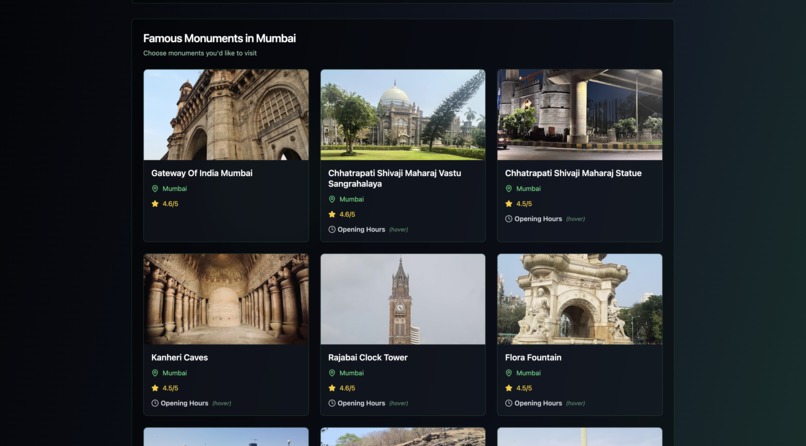
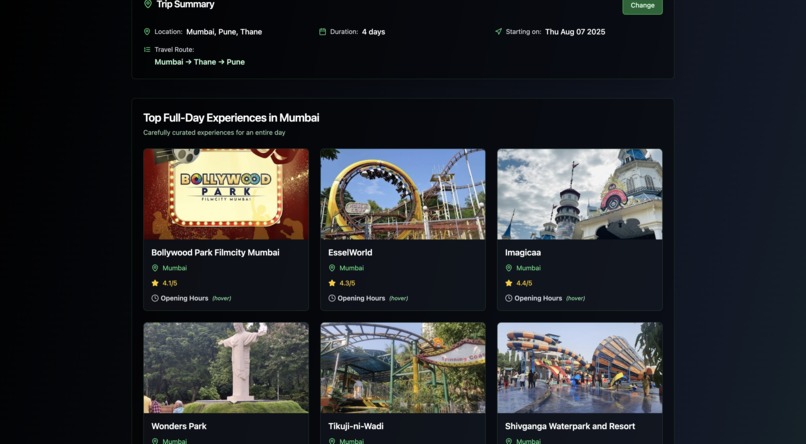
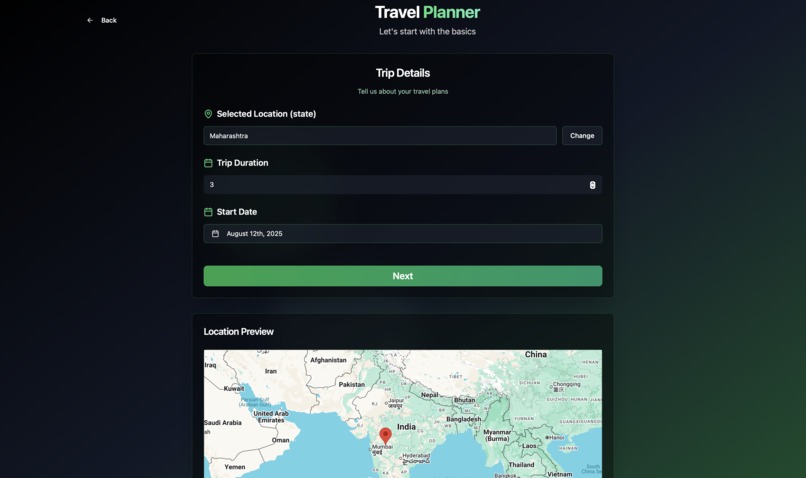
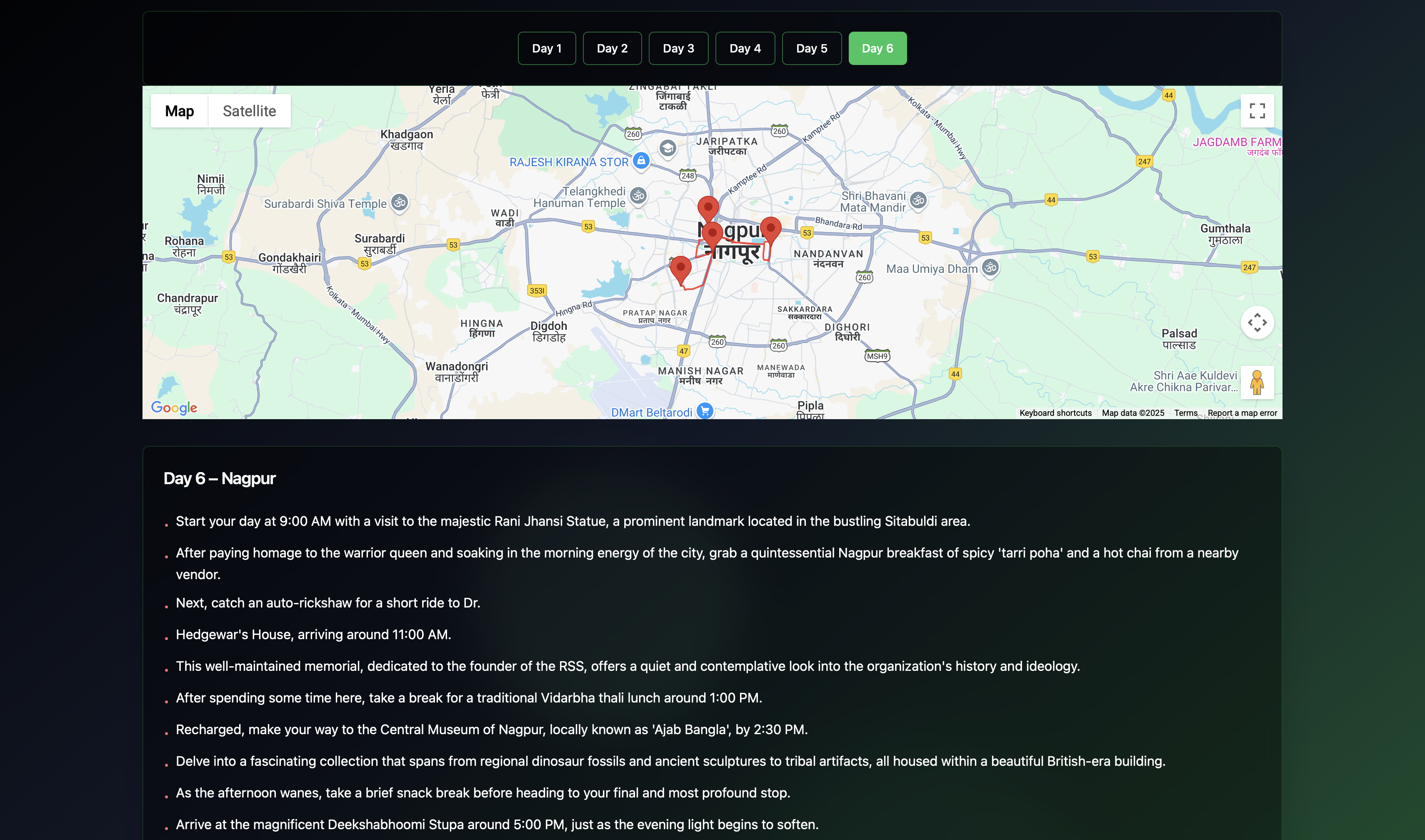
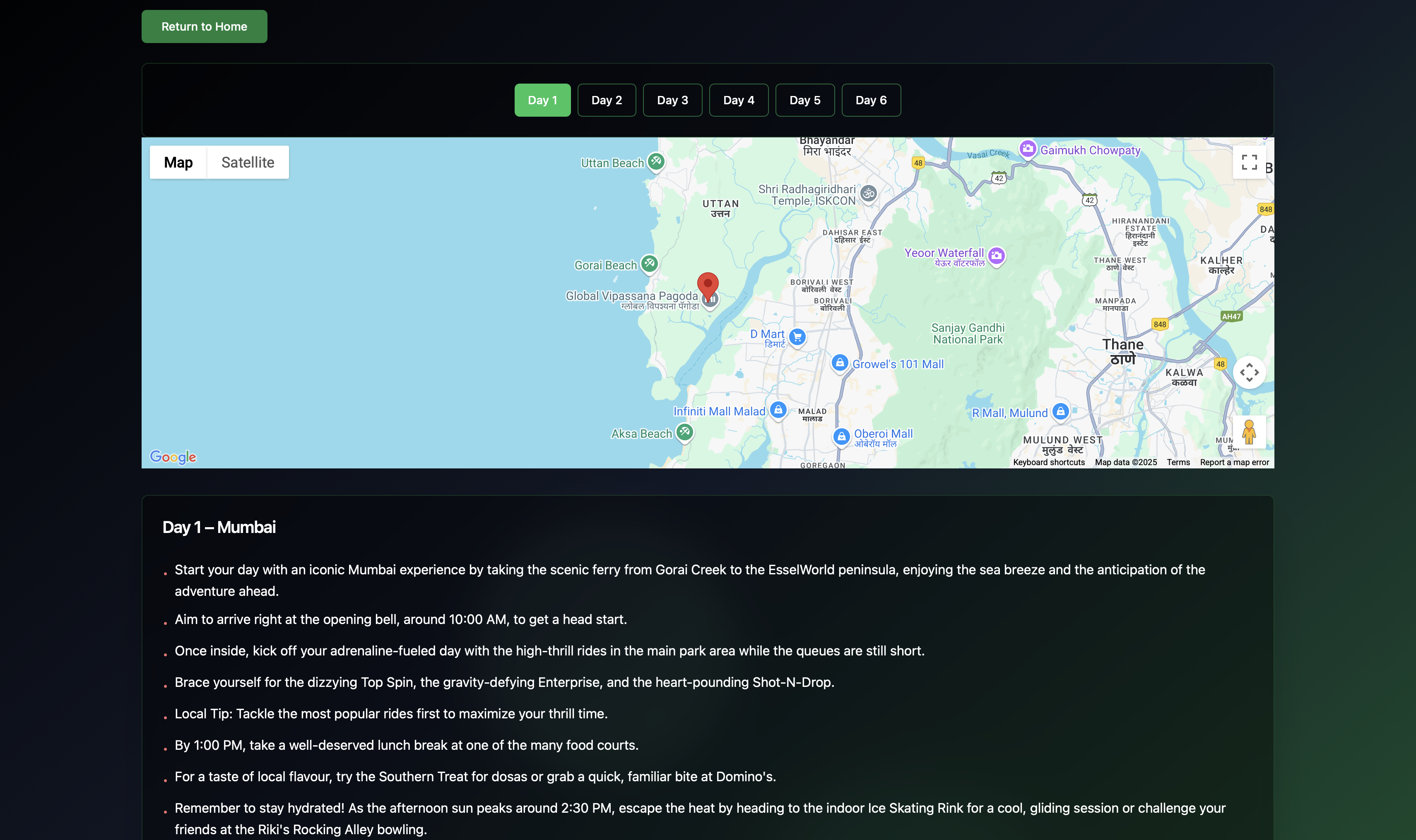
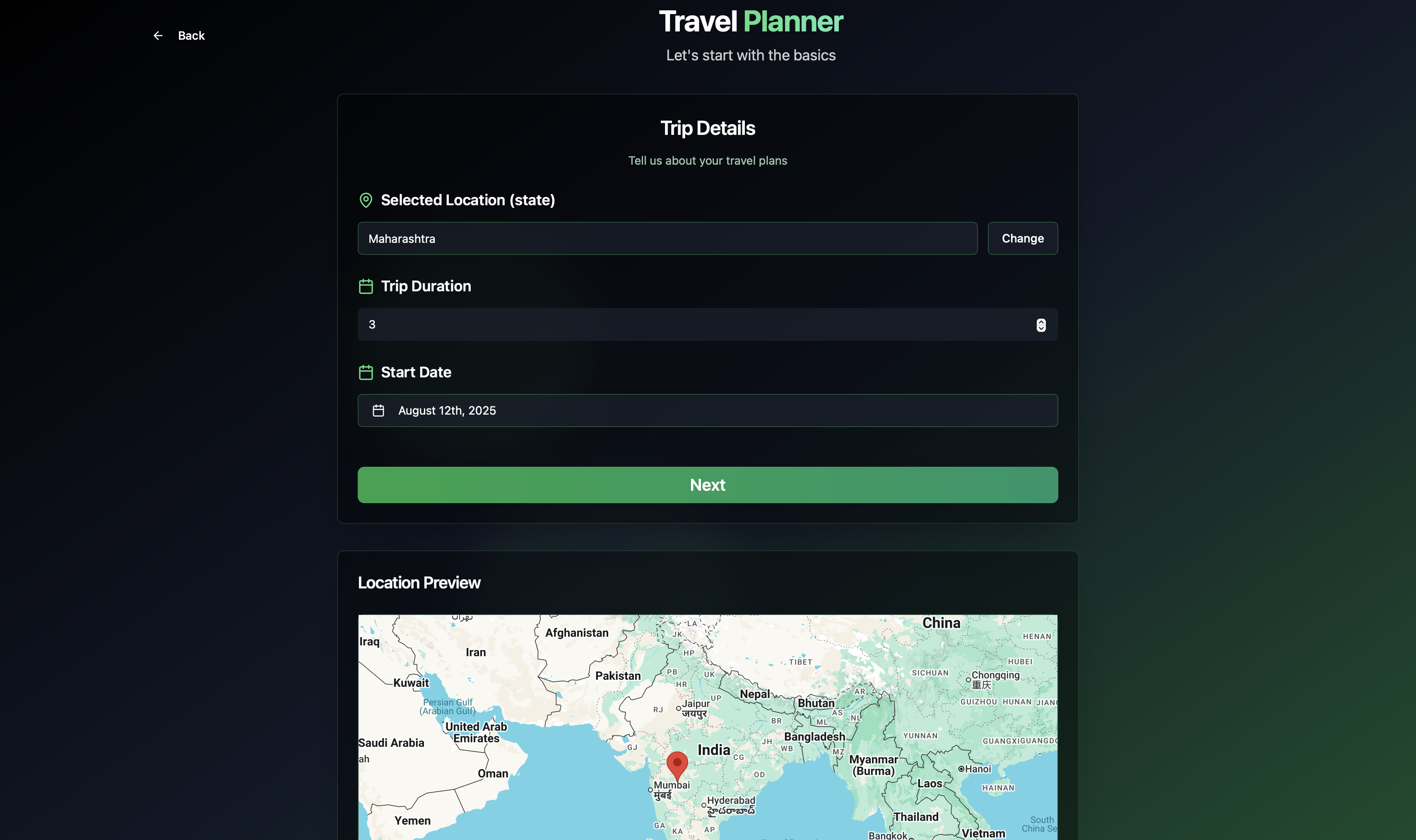
Smart Itinerary Planner – Users select monuments they'd like to visit, and the system generates a complete day-wise travel itinerary across cities. Each day is categorized as a full-day visit, intra-city travel, or inter-city travel, and is optimized for time and distance.
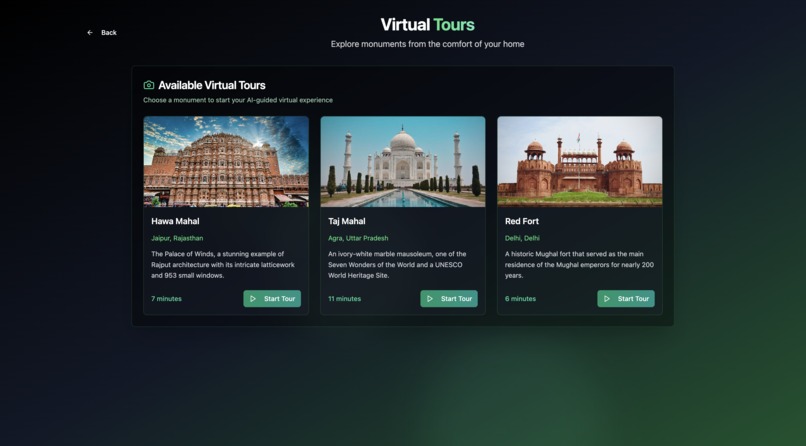
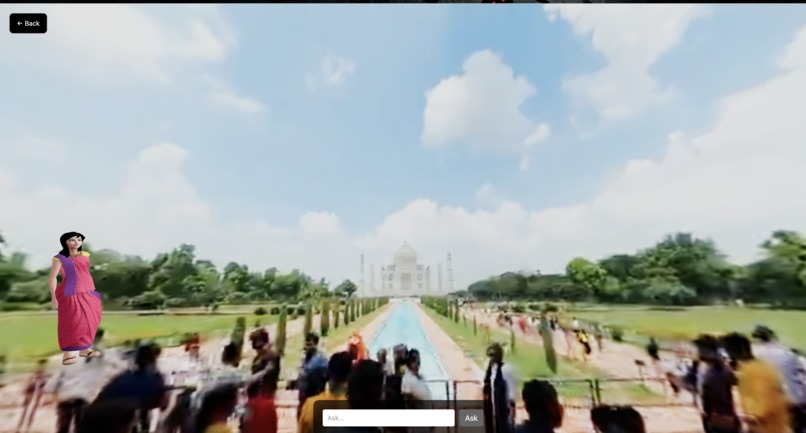
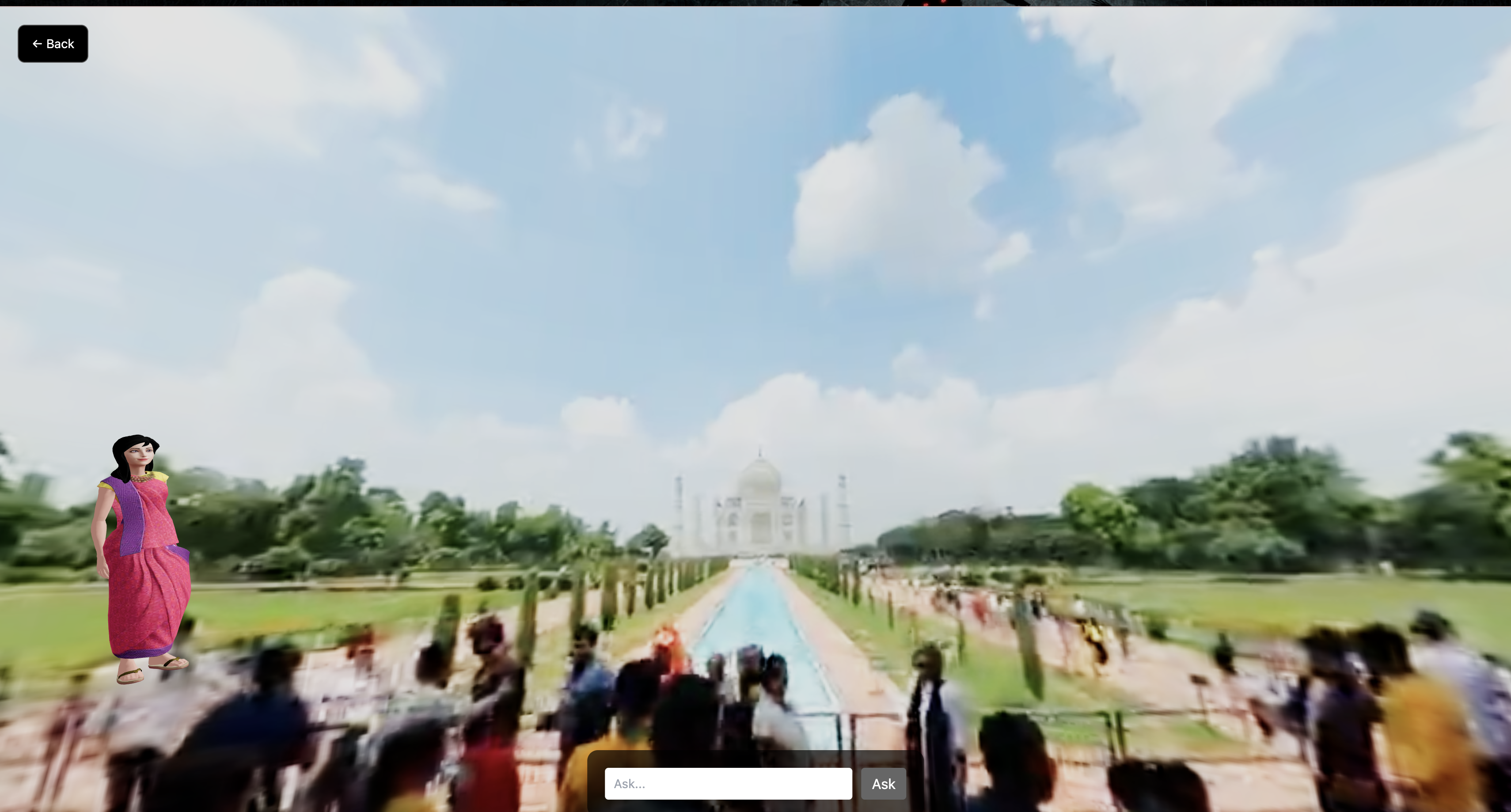
AI-Guided Virtual Tours – The platform presents 360-degree panoramic tours of monuments, with a virtual guide that narrates key information and answers questions in real time. The narration is natural and location-aware, giving users a more engaging way to explore.
How we built it
We began by categorizing monuments based on location and estimated visit duration. A custom clustering algorithm was implemented, combining K-Means and DBSCAN, to group nearby monuments and separate outliers for intercity travel. Within each group, we used Dijkstra’s algorithm to determine the most efficient visiting route. This route data was then converted into natural language itineraries using Gemini Pro 2.5, allowing for user-friendly summaries of complex travel plans.
For virtual tours, we sourced 360-degree images and paired them with narrations generated using Gemini 3 (12B multimodal). These were brought to life with natural-sounding voices created through ElevenLabs, using tones suited to each monument. To ensure that the assistant gave accurate and grounded responses during user interactions, we used Retrieval-Augmented Generation (RAG) with Gemini Flash 2.5, and integrated Faiss for semantic search within our custom document embeddings.
Challenges we ran into
- Tuning the clustering algorithm to work well across cities with variable monument density and visit patterns.
- Generating consistent, factual, and engaging narration while avoiding hallucinated details.
- Maintaining low latency and high accuracy in real-time responses from the assistant.
- Managing the integration between multiple services: AI models, voice synthesis, 360 imagery, and backend logic.
Accomplishments that we're proud of
- Designed and implemented a custom clustering + routing solution tailored for multi-day, multi-city travel.
- Created a seamless user experience where raw monument choices transform into narrated tours and optimized itineraries.
- Successfully integrated multimodal AI, vector search, and narration to deliver a lifelike tour guide experience.
- Built the backend to be easily extensible, so new monuments and features can be added without major refactoring.
What we learned
Working on VirtuVoyage helped us understand how to combine different AI technologies—clustering, pathfinding, LLMs, voice synthesis, and semantic search—to solve a real-world problem. It also showed us the importance of grounding AI outputs in factual data, and how retrieval systems can greatly improve response accuracy.
What's next for VirtuVoyage
We plan to expand our monument database across more countries and integrate public transport and ticketing information into the itinerary. We're also exploring multilingual support, mobile deployment, and live audio interaction for an even more immersive experience. Eventually, we aim to partner with tourism boards and cultural institutions to provide authentic, AI-powered travel experiences at scale.
Domain Justification
While VirtuVoyage fits best under the Travel domain, its core technologies heavily leverage Artificial Intelligence and offer an Immersive experience. From clustering algorithms and large language models to 360° virtual environments and voice synthesis, the project blends AI and immersive tech to elevate how users explore destinations. However, we selected the Travel category as it most directly reflects the user experience and purpose of the platform.
Built With
- eleven-labs
- faiss-vector-database
- fastapi
- gemini
- git
- google-maps
- html
- javascript
- mogodb
- numpy
- python
- react
- scikit-learn
- tailwind-css


Log in or sign up for Devpost to join the conversation.