-
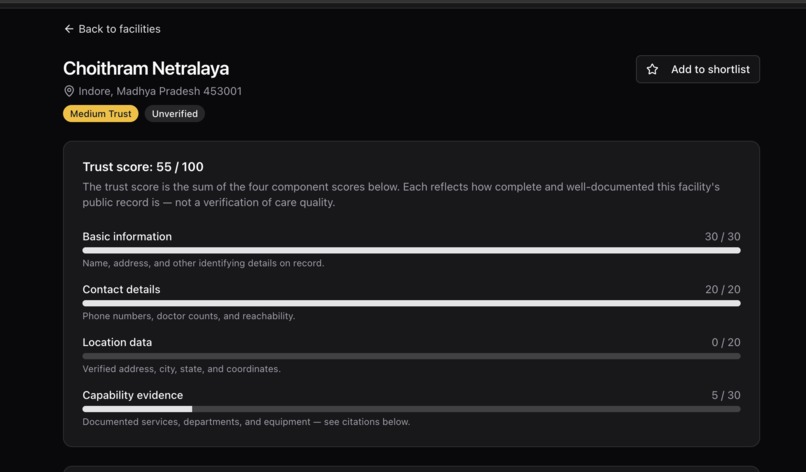
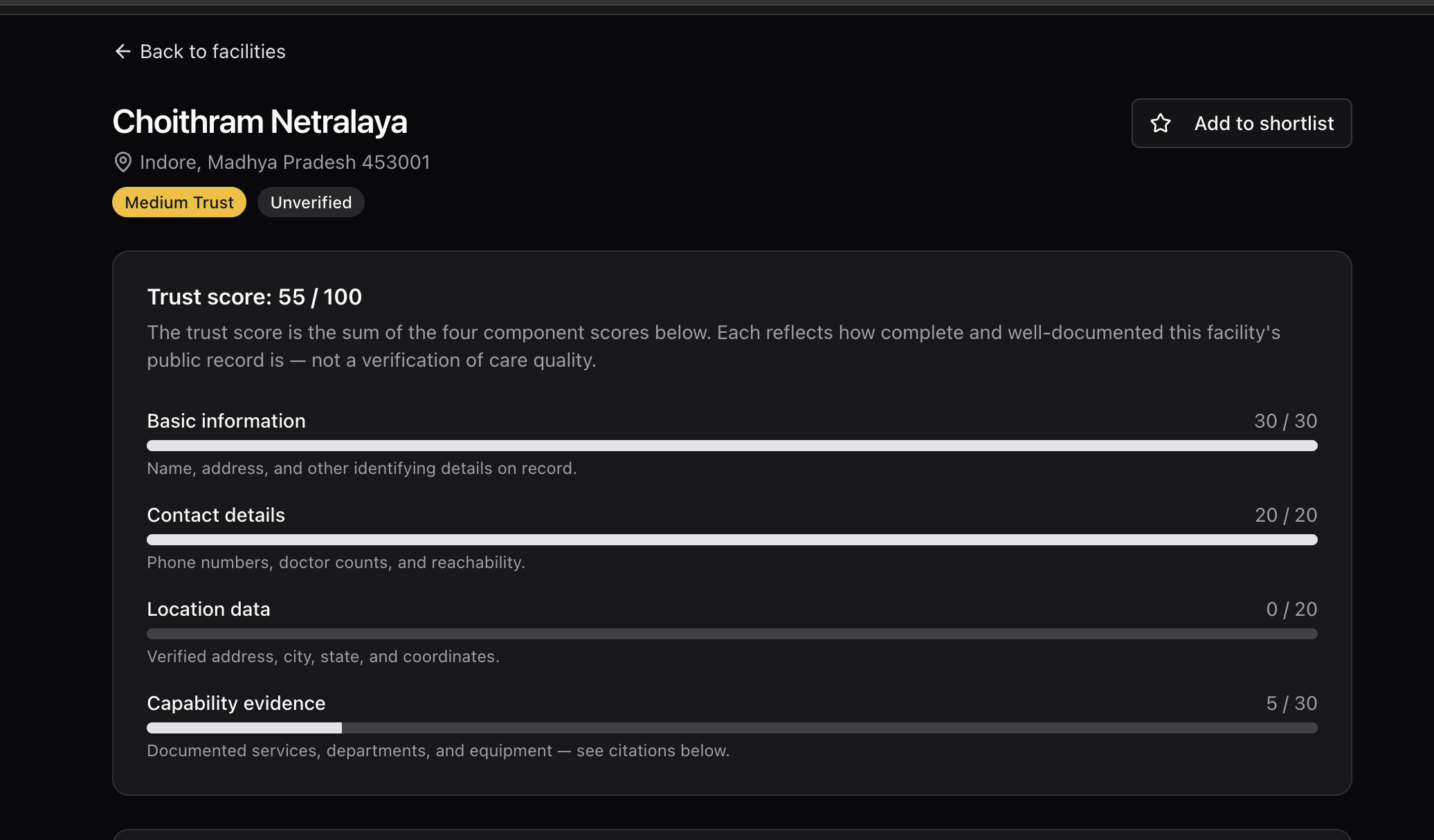
Transparent trust score breakdown
-
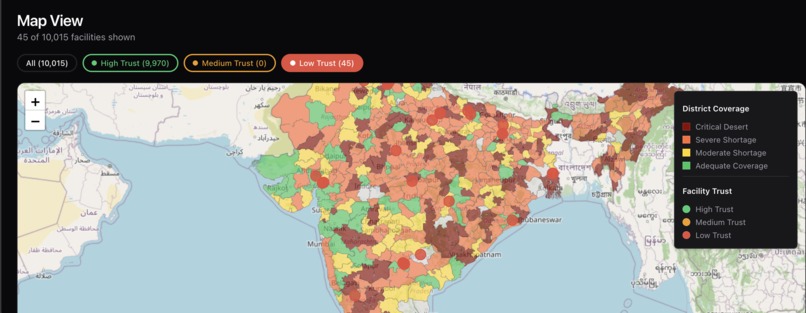
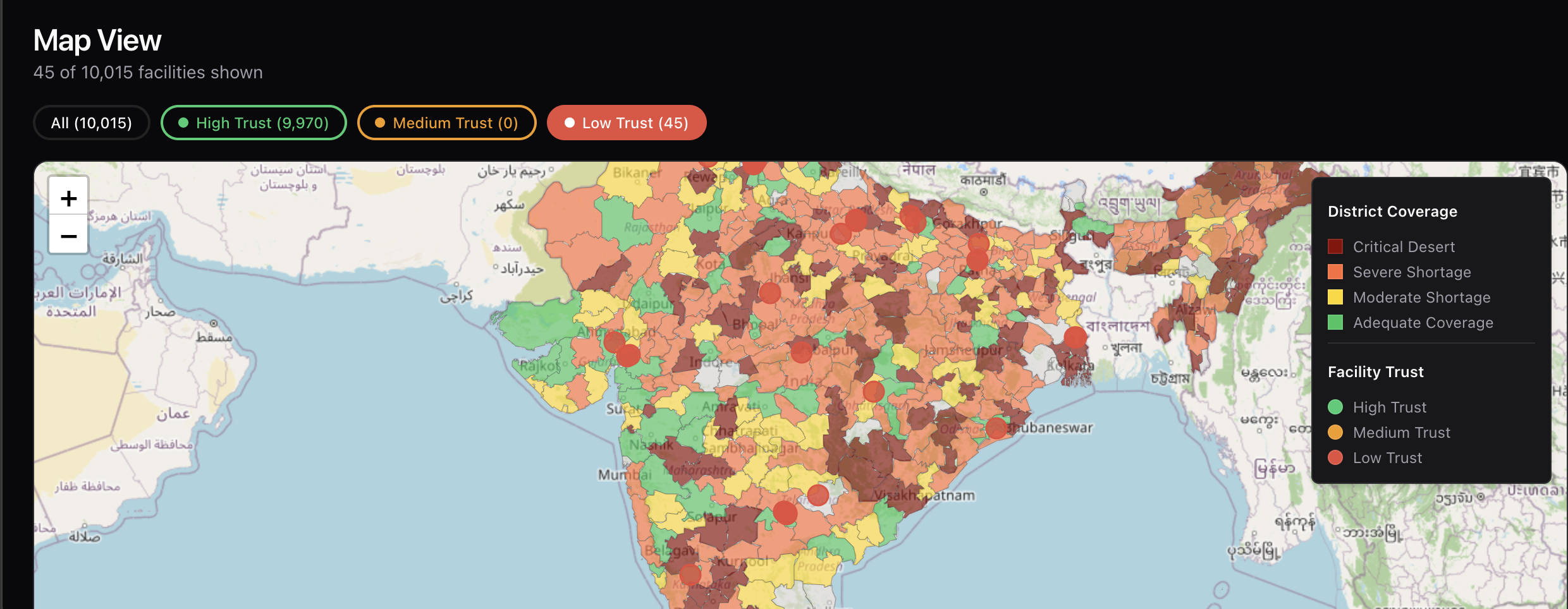
Dual-layer map: 706 districts colored by medical desert status with 10,015 facility trust pins overlaid
-
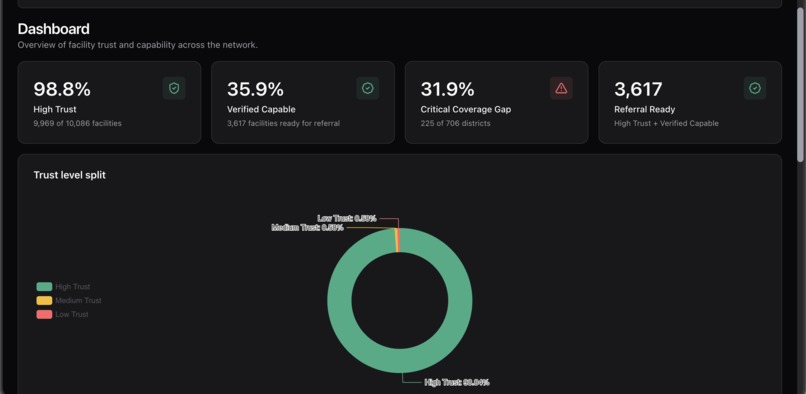
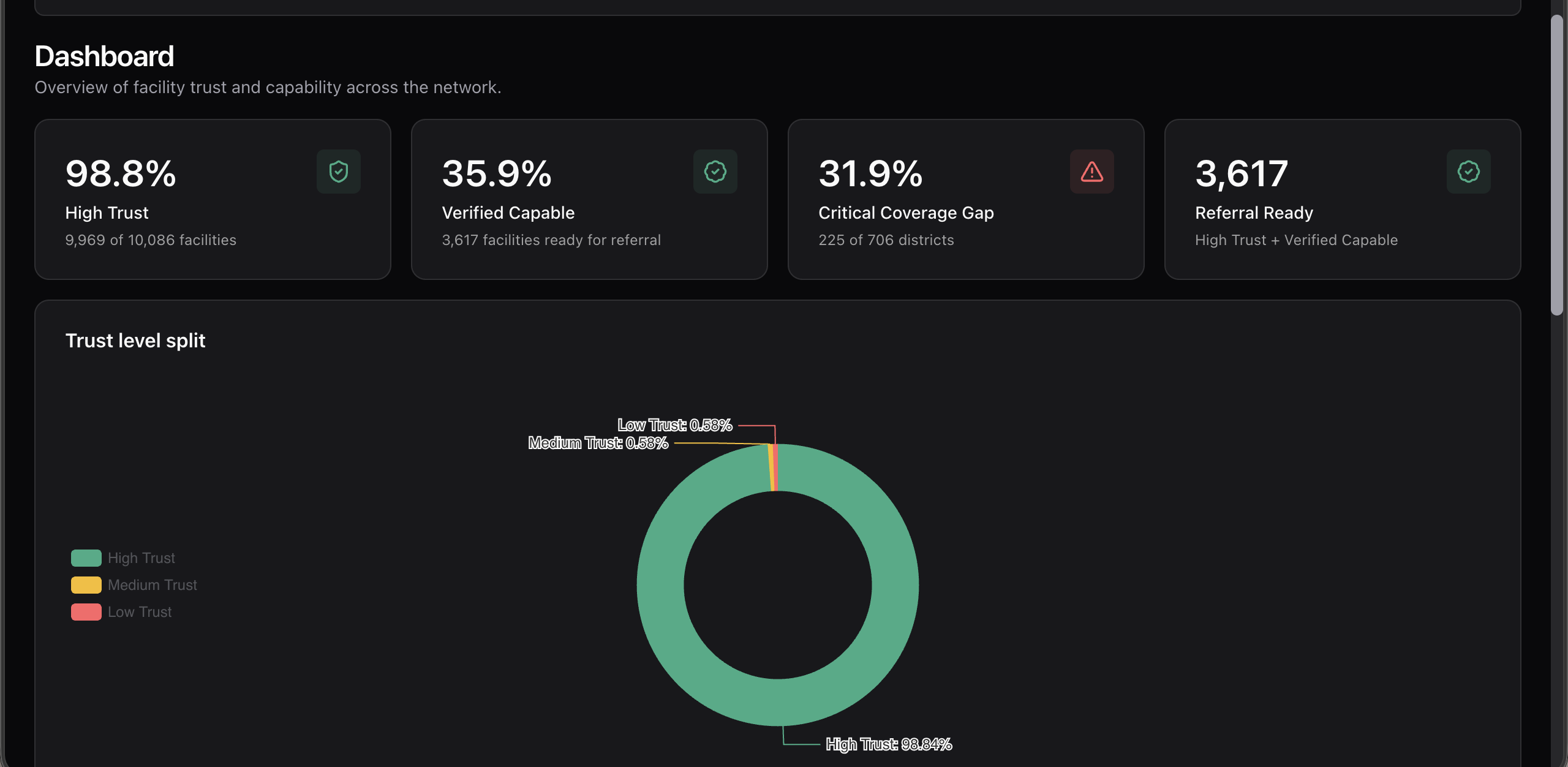
Dashboard: 3,617 facilities Referral Ready, 225 districts with Critical Coverage Gap, and trust distribution across 10,086 facilities
Inspiration
India has over 600,000 healthcare facilities but no standardized way to assess which ones are reachable and capable. For NGOs like Virtue Foundation working in medically underserved districts, a bad referral wastes time patients don't have.
What it does
The Facility Trust Desk scores 10,088 healthcare facilities across four evidence dimensions: basic information, contact reachability, location verification, and capability documentation. Each facility gets a transparent trust score from 0 to 100 with full breakdown.
The dual-layer map is the core insight: 706 Indian districts are color-coded by medical desert status (Critical Desert, Severe Shortage, Moderate Shortage, Adequate Coverage) with facility trust pins overlaid. A coordinator can instantly see a High Trust facility inside a Critical Desert district — that is where referrals matter most.
How we built it
Delta Lake for storage, Lakebase for persistence, Python for the scoring pipeline, React frontend deployed as a Databricks App. Leaflet.js choropleth for district coverage with facility pins by trust level.
Challenges we ran into
Source data had significant quality gaps. We joined against the India Post pincode directory to recover coordinates for additional facilities and implemented honest uncertainty communication throughout.
Accomplishments that we're proud of
Scoring 10,088 facilities with a transparent four-dimension model. Layering facility trust with district medical desert data to tell a richer story than either dataset alone.
What we learned
Data quality is part of the trust story. A facility with incomplete records is itself a signal — surfacing that honestly is more valuable than hiding it.
What's next for Virtue Foundation Facility Trust Desk
Real-time data validation, expanded coverage to additional countries, and integration with Virtue Foundation's existing referral workflows.
Built With
- databricks-apps
- delta-lake
- lakebase
- leaflet.js
- python
- react
- typescript

Log in or sign up for Devpost to join the conversation.