-
-
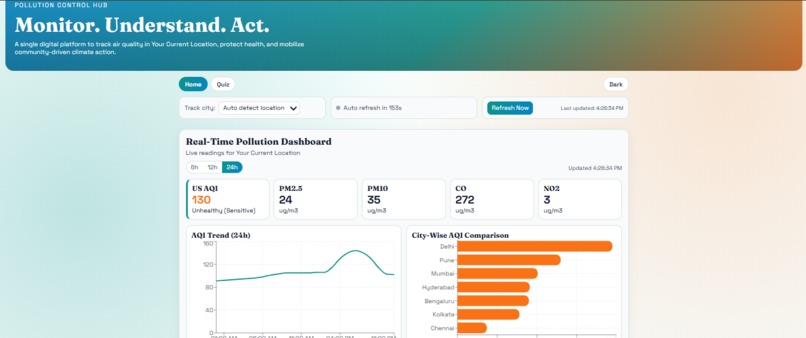
Home Page
-
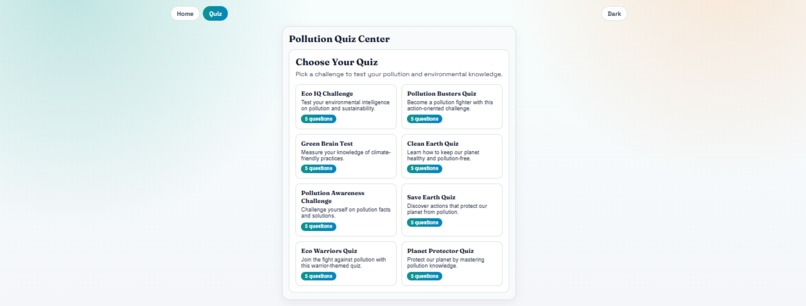
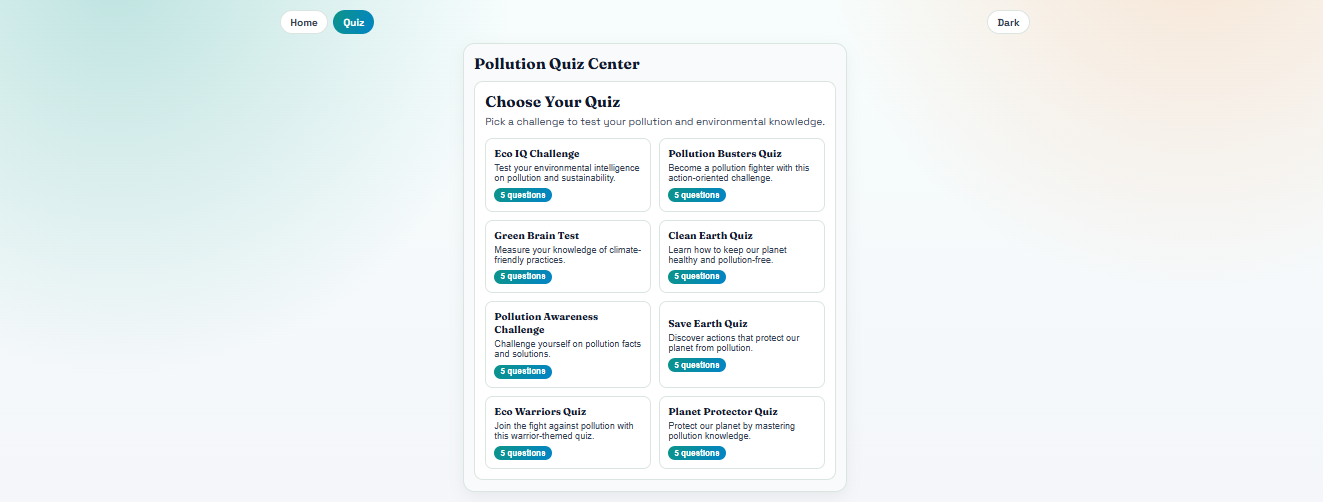
Quiz Section
-
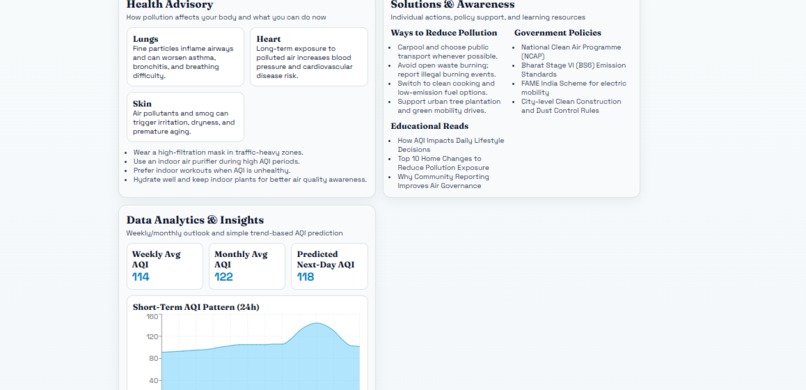
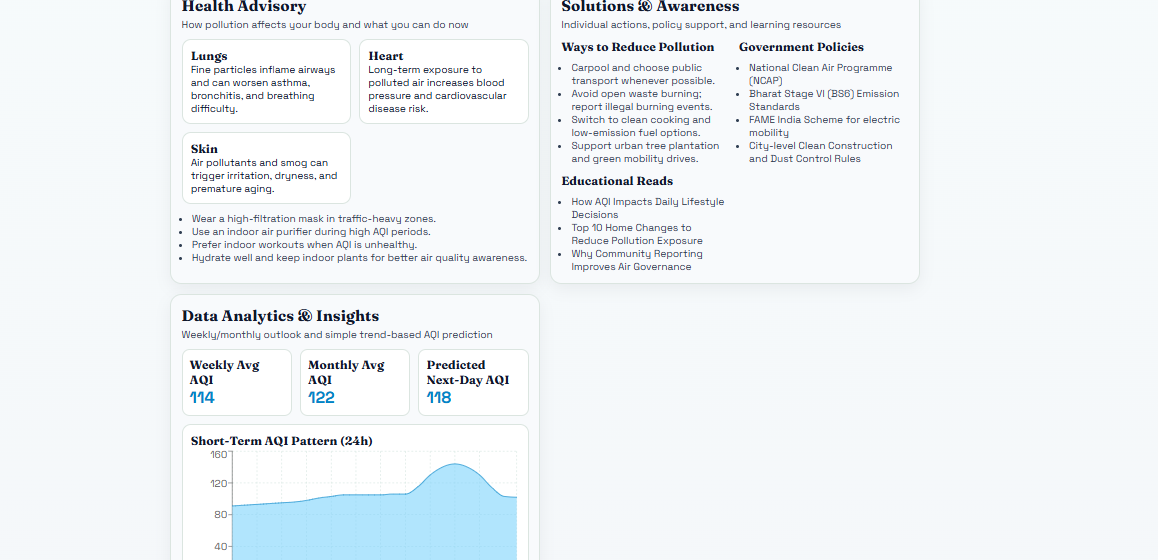
Proper Analysis
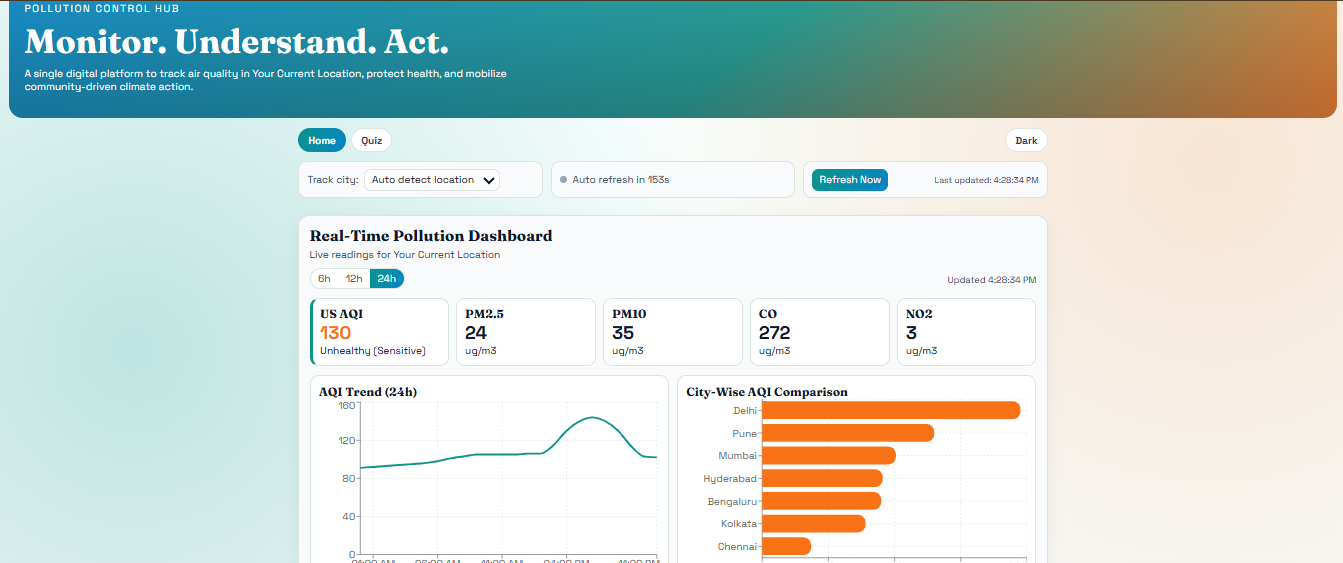
Inspiration
The idea for Pollution Control Hub came from the growing concern over rising pollution levels and their impact on human health and the environment. With increasing air, water, and noise pollution in urban areas, I wanted to create a platform that not only spreads awareness but also provides actionable insights. The lack of a centralized system to monitor and educate people about pollution motivated us to build a solution that empowers individuals to take informed steps toward a cleaner environment.
What I Built
Pollution Control Hub is a web-based platform designed to monitor, analyze, and educate users about different types of pollution. It integrates real-time data (or simulated data) to display pollution levels, provides interactive quizzes to raise awareness, and offers practical solutions to reduce pollution in daily life. The platform aims to bridge the gap between data and action.
How I Built It
I developed the frontend using modern web technologies like HTML, CSS, and JavaScript (optionally frameworks like React for better UI/UX). The backend was built using technologies such as Node.js or Python, handling data processing and user interactions. APIs were integrated to fetch pollution-related data, and a database was used to store user activity and quiz results. I focused on creating an intuitive and responsive interface to ensure accessibility across devices.
Challenges I Faced
One of the major challenges was integrating reliable and accurate pollution data APIs, as consistency and availability varied. Designing an engaging user interface that balances information with simplicity was also a challenge. Additionally, optimizing performance while handling real-time or large datasets required careful planning. Ensuring that the platform remains both educational and interactive without overwhelming users was another key hurdle.
What I Learned
Through this project, I gained hands-on experience in full-stack development, API integration, and data visualization. I also learned the importance of user-centric design and how to present complex environmental data in a simple and meaningful way. Beyond technical skills, the project deepened our understanding of environmental issues and the role technology can play in solving real-world problems.


Log in or sign up for Devpost to join the conversation.