-
-
Title Screen
-
Problem Statement
-
Opportunity Statement
-
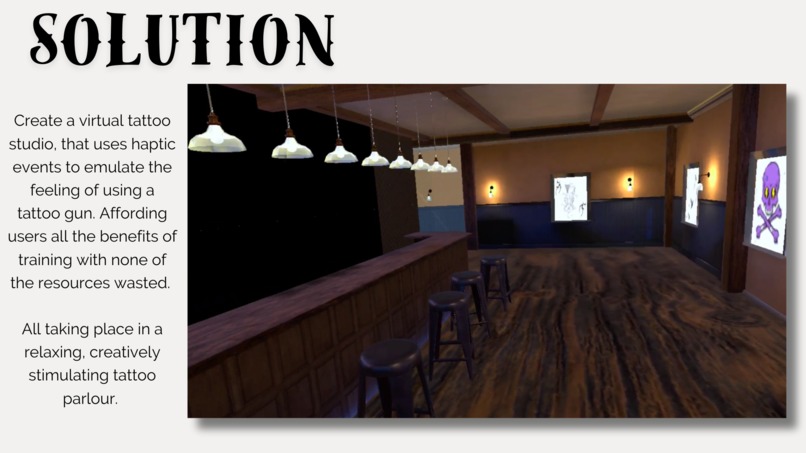
Solution Proposition
-
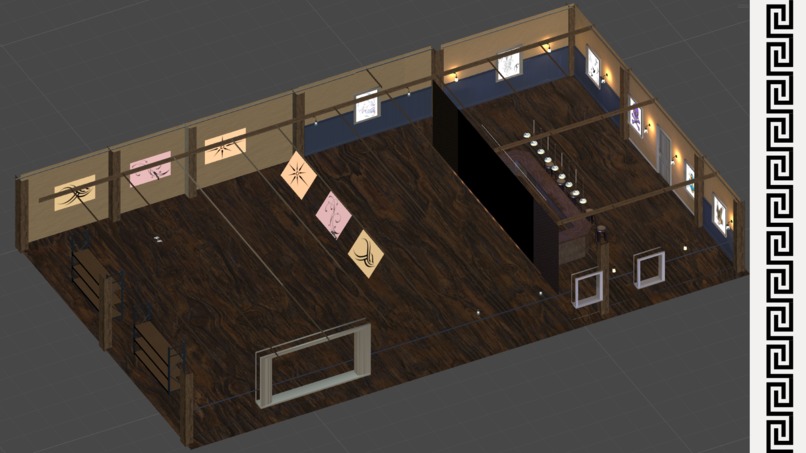
Floor layout
-
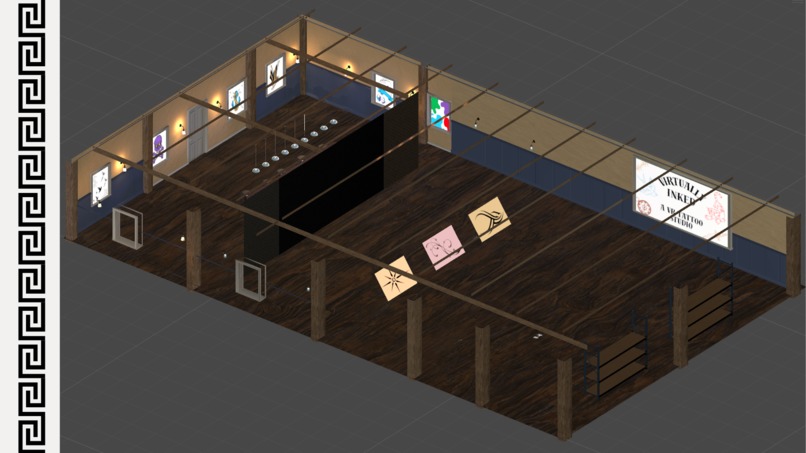
Floor layout reversed
-
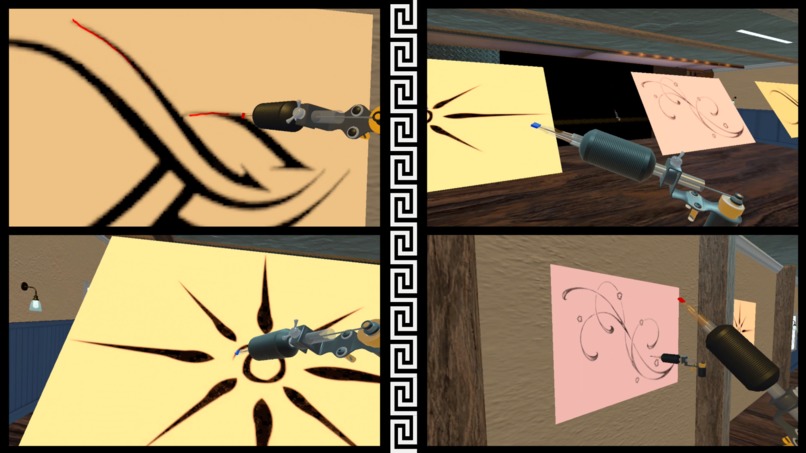
Screenshots of in-app usage
-
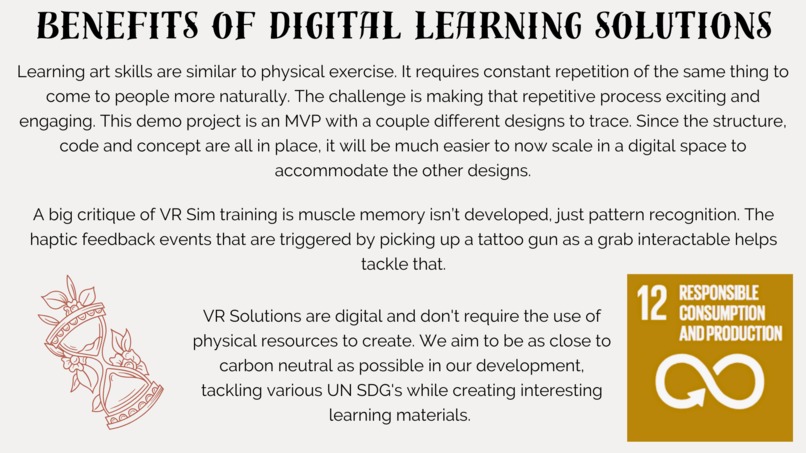
Business Proposition
-
Thanks/Contact Info
Inspiration
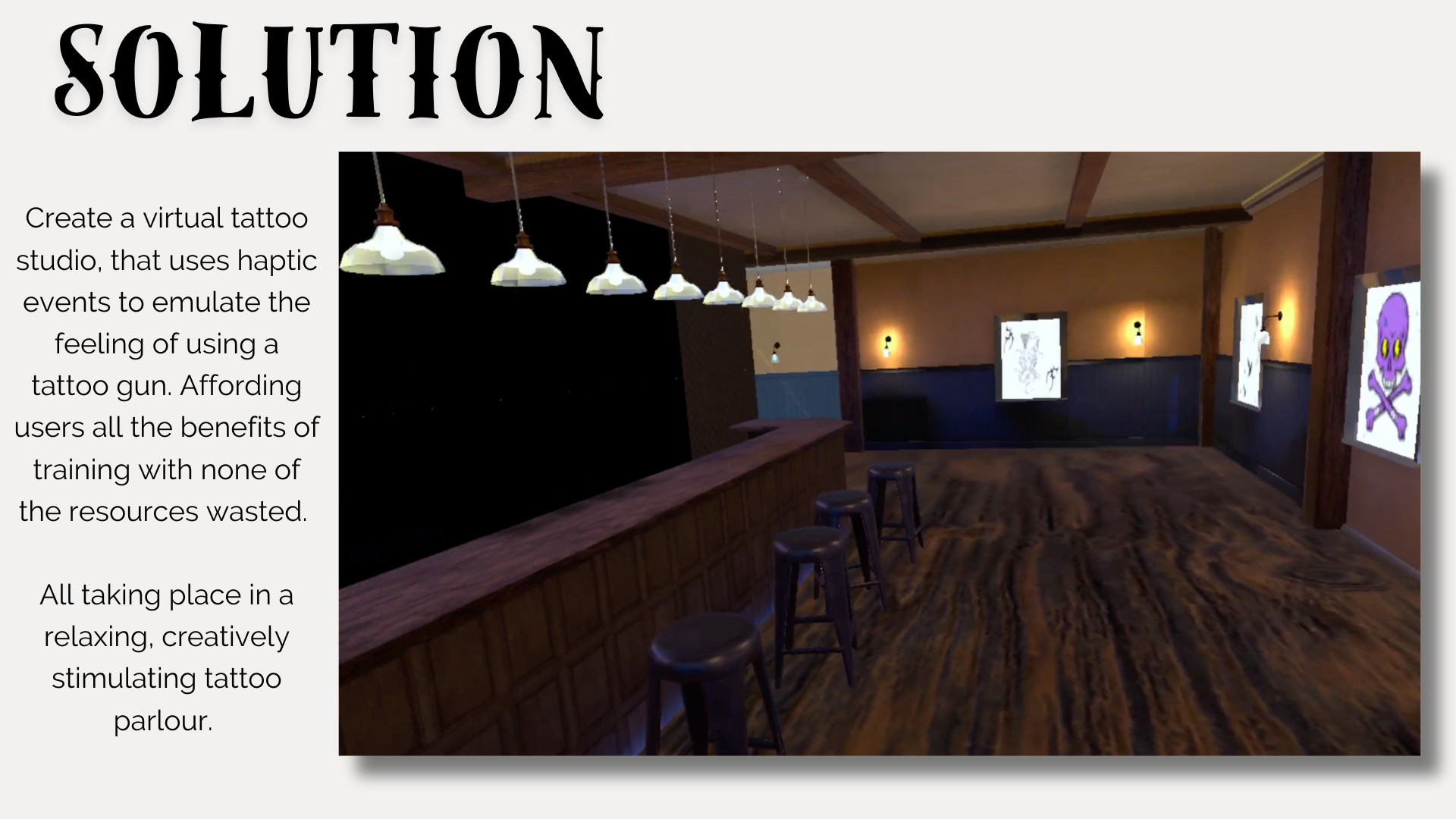
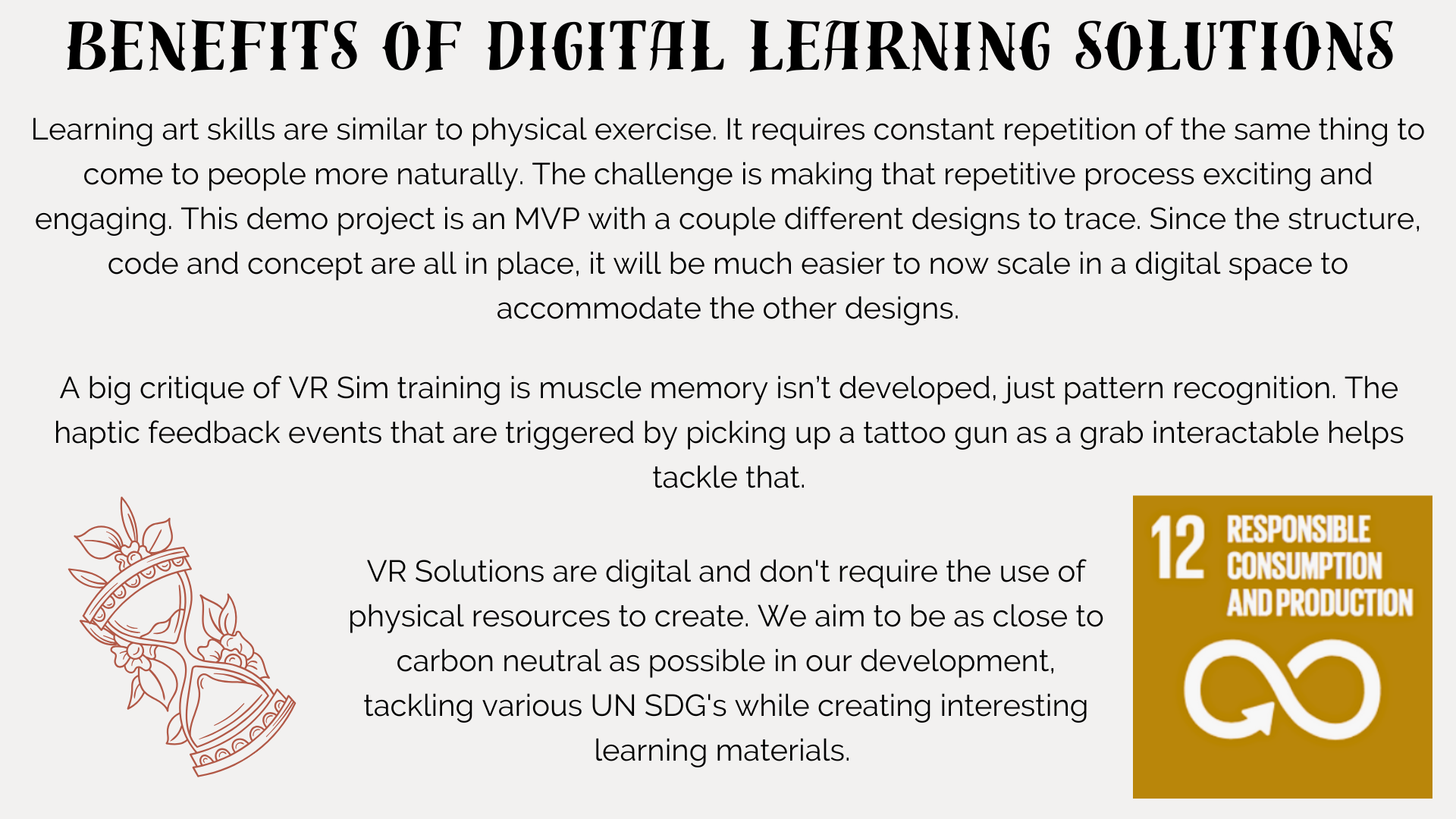
I don't think we see haptic feedback as a core gameplay mechanic enough, especially since VR sim training regularly falters at developing muscle memory. I wanted to use the capabilities in a more interesting and functional way. A virtual tattoo studio, using haptic events to emulate the feeling of using a tattoo gun. All the simulated training, with none resources wasted.
What it does
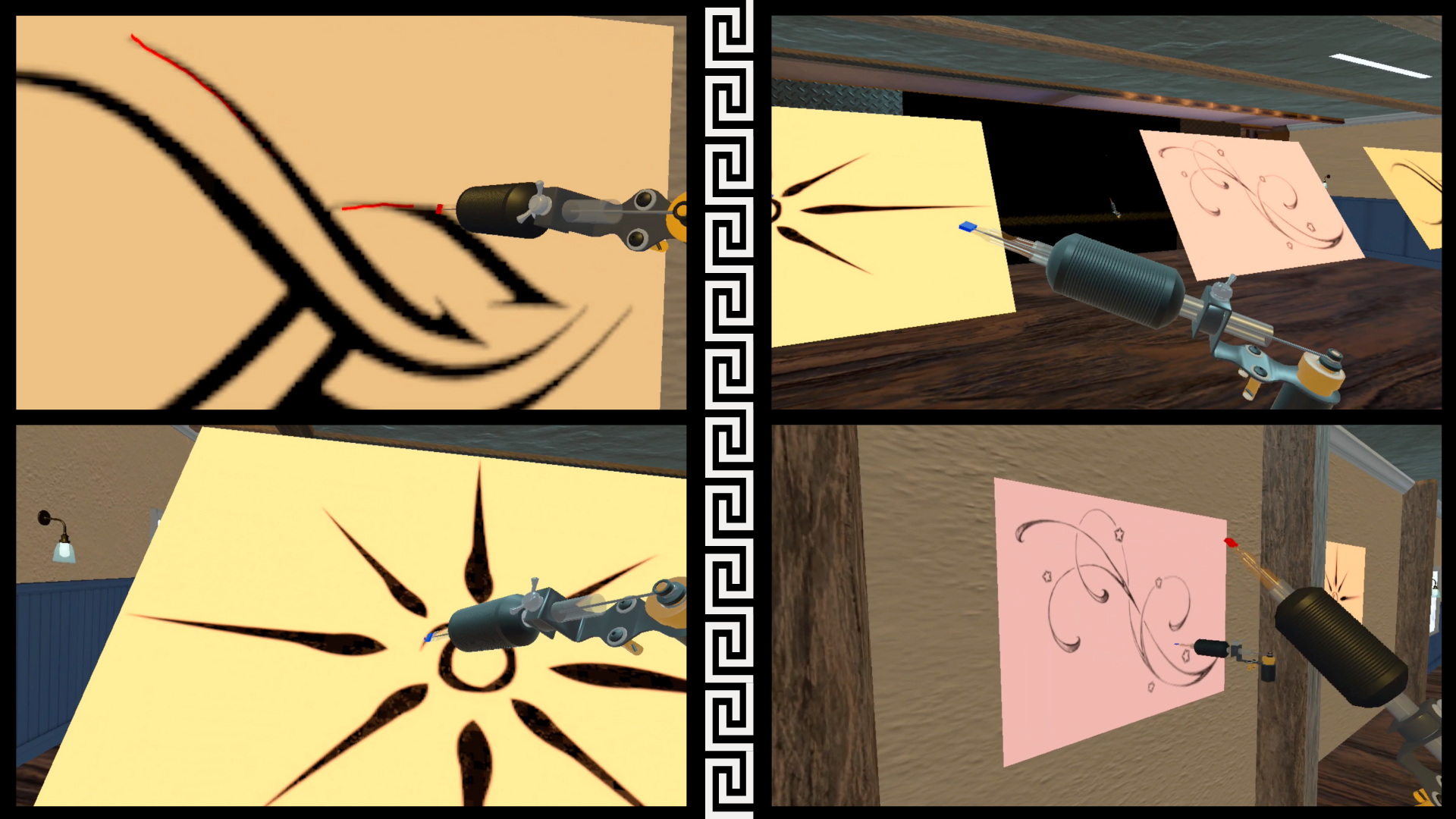
Press and hold the trigger button on your Meta Quest 2 controller to pick up a tattoo gun,as you would any grab interactable object (there is a light vibration when the controller is over the in game object, prompting the ability to pick up the tattoo gun, as per VR design norms), then trace the tattoo templates in the virtual tattoo studio. As you move the tattoo gun over the canvases, the haptics in the controller will emulate the vibration of using an actual tattoo gun. Releasing the trigger and in turn the game object with exit the vibration/haptic event as you would feel putting down a tattoo machine.
How we built it
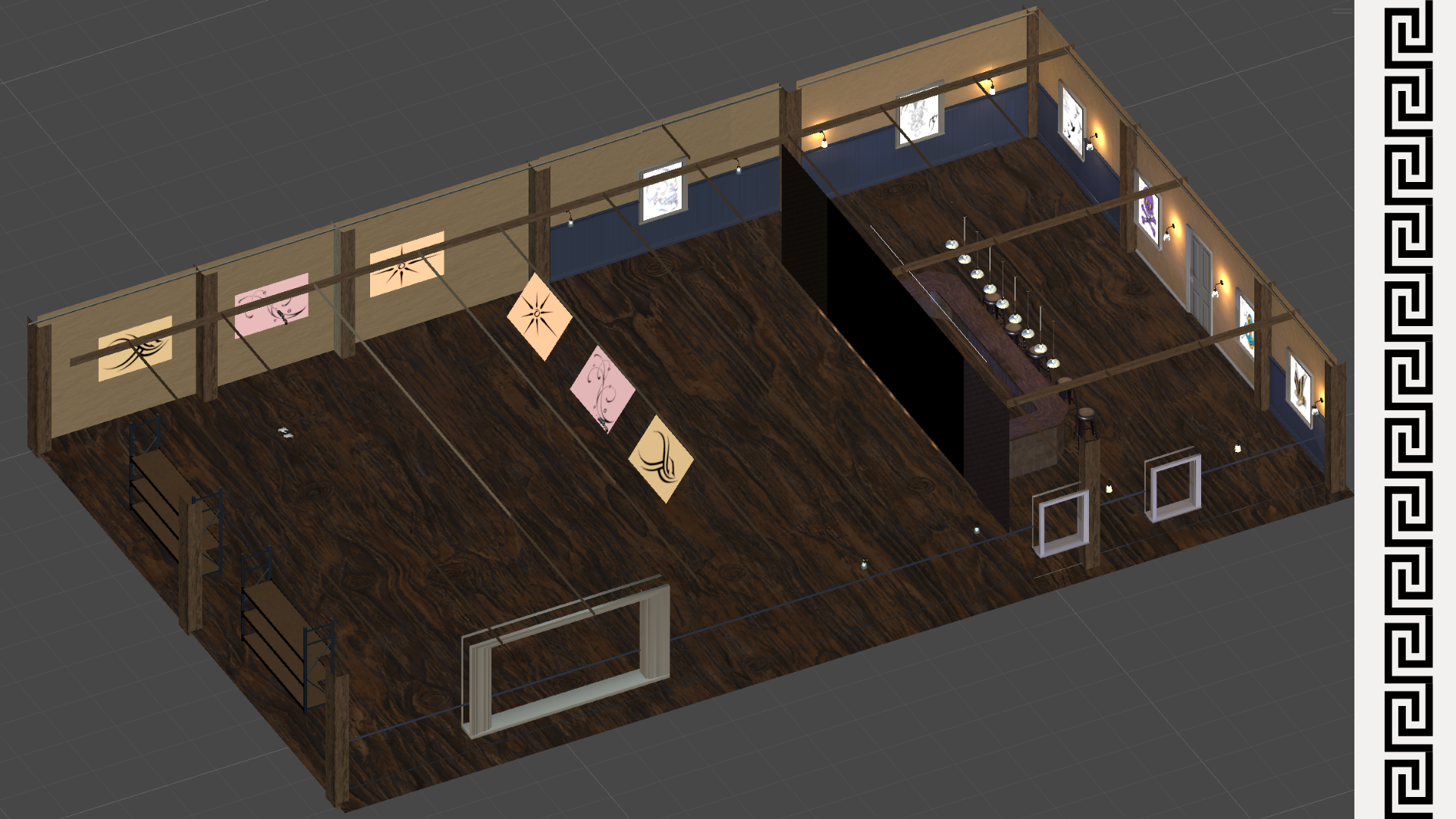
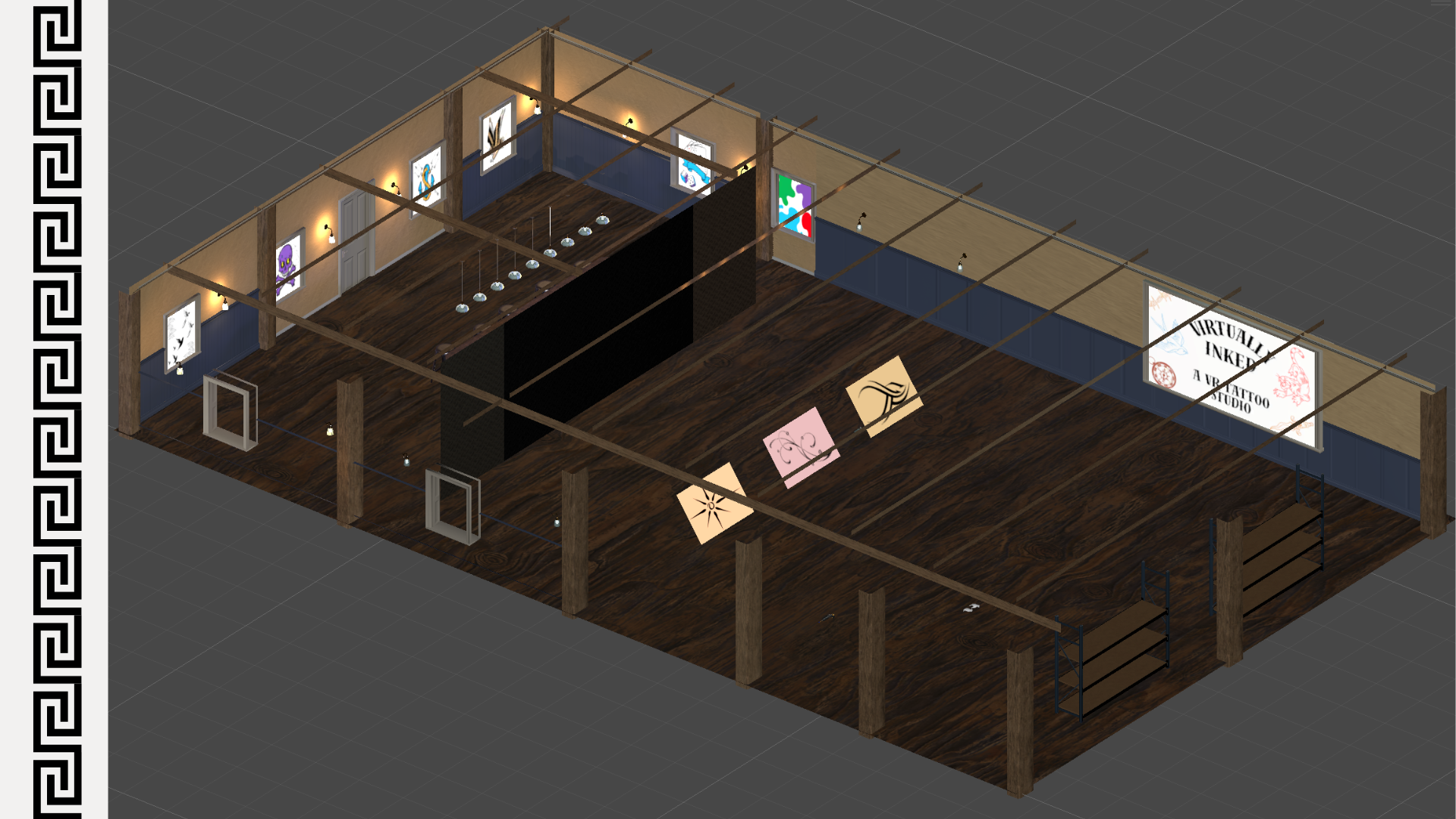
The OpenXR plugin and XR interaction toolkit was used for the VR player framework and controller set up. The 'Canvas' and tattoo gun elements and their interactions with one another were all coded in C#, the 3D environment was originally a purchased asset pack of a pub. I turned all the windows into light boxes for poster art developed in Canva. I then stripped out anything that didn't fit the aesthetic and rendered out and scaled the scene to fit into a VR (orthographic) space. All built in Unity 2022 Game Engine for the Meta Quest 2.
Challenges we ran into
Trying to emulate skin tones is a struggle (Mixing Brown on an RGB scale always gets you burnt orange). I tried mixing warm and cool lighting while tweaking the colouring on the panels and even though I did manage to get some tonal variance, to turn down the 'brightness' of the panels results on the stencil being less visible.
Accomplishments that we're proud of
Myself and my co-developers secured funding to develop educational prototypes like this, and that recognition and validation is something to be very proud of. Now we continue with the process to bring attention and funding to more educational immersive experiences.
What we learned
That there's a lot of room for improvement in VR sim training, and there are a lot of mechanics that seem to be exiled only to being novel opposed to serving a function.
What's next for Virtually Inked
Hoping to eventually make an MR design tool that allows for users to trace their own drawings, or turn the stencil board materials into public variables where users can drag and drop their drawings into the VR environment.


Log in or sign up for Devpost to join the conversation.